The Floral Industry's Ordering Problem -- and Why Chatbots Are the Solution
The U.S. floral industry generates over $35 billion in annual revenue according to IBISWorld, making it one of the largest specialty retail categories in the country. Yet the customer experience at most flower shops has barely evolved in decades. Walk into a busy florist on February 13 and you will find a line out the door, phones ringing unanswered, and staff so overwhelmed that personalized guidance is impossible. Call during after-hours and you reach voicemail. Browse the website and you see a static grid of arrangements with no help choosing the right one for your situation.
The core problem is that flower ordering is inherently consultative. Unlike most retail products, flowers are purchased for someone else, for a specific occasion, with emotional stakes attached. A customer buying anniversary flowers needs different guidance than one ordering sympathy arrangements. A first-time flower buyer needs hand-holding; a repeat customer wants speed. The quality of the recommendation directly affects whether the recipient feels celebrated, comforted, or loved -- and whether the sender comes back.
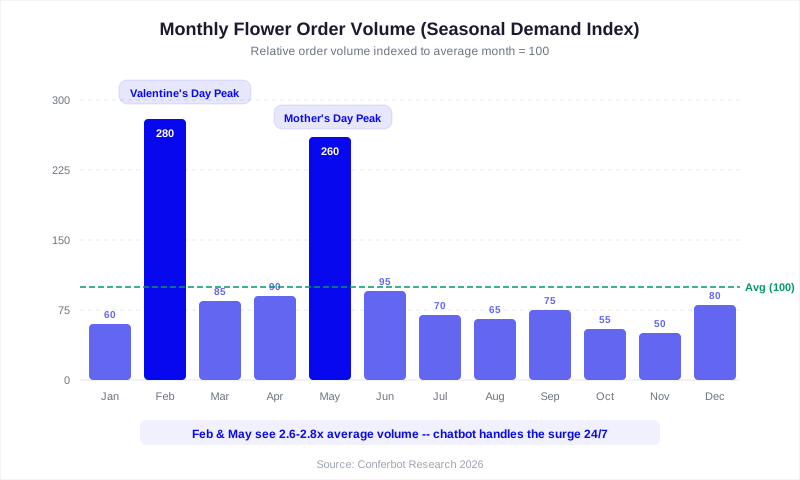
This consultative nature creates a scalability crisis. A skilled florist can guide 8-12 customers per hour through personalized recommendations. During Valentine's Day and Mother's Day -- which together generate 20-25% of annual revenue -- demand spikes 2.5-3x above normal. Phone lines jam, website visitors bounce without ordering, and social media DMs pile up unanswered. Every unanswered inquiry is a lost order worth $60-80 on average.
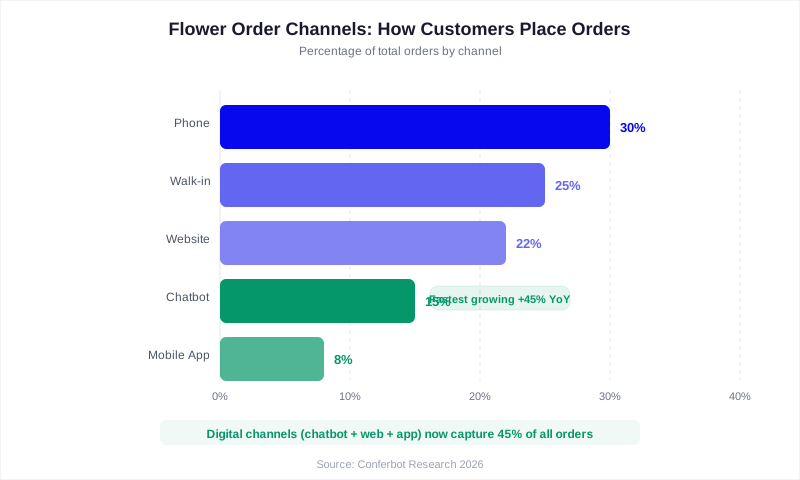
A florist chatbot transforms this equation. Deployed on the shop's website, WhatsApp, and Instagram, it provides the same personalized, occasion-based guidance as your best florist -- but simultaneously for unlimited customers, 24 hours a day, 7 days a week. It asks the right questions (occasion, recipient, budget, delivery timing), recommends arrangements with context about why each is a good fit, handles delivery scheduling down to the time slot, collects personalized card messages, upsells add-ons naturally, and manages recurring subscription enrollment. Florists using chatbot-guided ordering report 35-50% higher average order values, 40% more online orders, and 60% reduction in phone volume during peak seasons.
This guide covers everything you need to know about deploying a chatbot for your flower shop: how the recommendation conversation works, occasion-specific ordering flows, delivery scheduling, seasonal campaign management for Valentine's Day and Mother's Day, subscription automation, upselling and cross-selling strategies, ROI analysis, and a step-by-step implementation plan.
How a Florist Chatbot Works: From Browsing to Delivery Confirmation
A florist chatbot is an AI-powered conversational assistant trained on your arrangement catalog, delivery zones, pricing, and seasonal availability. It replicates the expertise of a skilled florist in a text-based conversation that customers can access from any device, at any time. Here is the complete customer journey through a florist chatbot.
Stage 1: Greeting and Occasion Discovery
The chatbot opens with a warm, helpful greeting that immediately establishes its purpose: "Welcome to [Your Shop Name]! I can help you find the perfect flowers for any occasion. Are you ordering for a birthday, anniversary, sympathy, wedding, or something else?" This opening question is strategic -- it activates the occasion-specific recommendation engine from the very first interaction rather than presenting a generic product catalog. Customers who engage with an occasion-based opening convert at 2.4x the rate of those who see a standard "Browse our arrangements" prompt because the conversation immediately feels personalized and purposeful.
Stage 2: Recipient and Context Gathering
After identifying the occasion, the chatbot collects the context that shapes the recommendation: Who is the recipient? (partner, parent, friend, colleague, client) Where will the flowers be delivered? (home, office, hospital, funeral home, event venue) Is this a surprise delivery? Each of these inputs narrows the recommendation set and adjusts the chatbot's tone and suggestions. Flowers for a romantic partner skew toward roses and premium arrangements. Flowers for a colleague stay professional and compact for desk display. Hospital deliveries exclude strong-fragrance arrangements and potted plants with soil (which some facilities restrict). This contextual awareness is what separates chatbot ordering from static catalog browsing.
Stage 3: Budget and Preference Collection
The chatbot collects budget conversationally: "Do you have a budget in mind? I can show you beautiful options at any price point." It accepts exact amounts, ranges, and qualitative descriptions. It also asks about preferences: flower types (roses, lilies, sunflowers, orchids, mixed), color palette (warm, cool, pastel, bold, classic whites), and arrangement style (hand-tied bouquet, vase, basket, boxed, potted plant). For customers who say "I do not know -- surprise me," the chatbot recommends the most popular arrangement for the stated occasion at a mid-range price point, with an easy upgrade path.
Stage 4: Personalized Recommendations
Using the occasion, recipient, budget, and preference data, the chatbot presents three to five curated recommendations. Each includes a photo, name, price, and a description explaining why it fits: "This sunlit garden bouquet is our most popular birthday arrangement -- the mix of sunflowers, gerbera daisies, and snapdragons creates a cheerful, celebratory feel that recipients love." The customer can ask follow-up questions, request alternatives, or customize: "Can I get this but in pink tones instead?" The chatbot responds with options, adjusting recommendations dynamically.
Stage 5: Add-Ons, Card Message, and Delivery
Once the arrangement is selected, the chatbot offers add-ons contextually: a premium vase for $15, artisan chocolates for $18, a stuffed bear for birthday orders, or a sympathy card with premium stock. It then collects the card message -- and for customers who need help, offers occasion-specific message suggestions. Finally, it moves to delivery: collecting the address, validating it against the delivery zone, offering available time slots, and confirming the total. The entire ordering process takes 4-7 minutes -- faster than a phone call and infinitely more guided than a website checkout form.
Stage 6: Post-Order Communication
After checkout, the chatbot sends an order confirmation with arrangement details, delivery date and time window, and a tracking link. On delivery day, it sends updates: "Your arrangement is being prepared," "Out for delivery," and "Delivered!" with an optional photo confirmation. For the sender, this eliminates the anxiety of wondering whether the flowers arrived. For the florist, it eliminates the #1 post-purchase phone inquiry: "Has my order been delivered yet?"
Occasion-Based Flower Recommendations: Why Context Is Everything
The flower industry is unique in retail because nearly every purchase is driven by a specific occasion, a pattern confirmed by Society of American Florists industry research with distinct emotional requirements. A chatbot that understands occasion context and adapts its recommendations accordingly outperforms generic product browsing by 2-3x on conversion rate. Here is how occasion-based recommendation works across the major ordering categories.
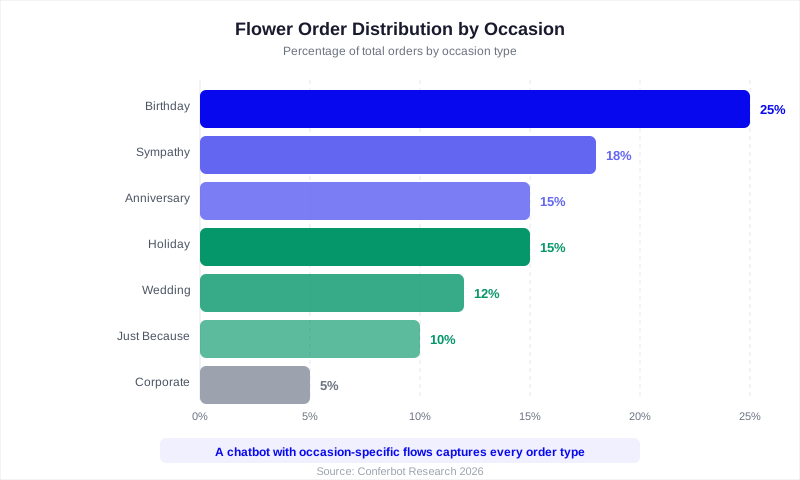
Birthday Flowers (25% of Orders)
Birthday orders are the largest single category and the most varied in terms of recipient preferences. The chatbot asks about the recipient's age range (milestone birthdays warrant premium arrangements), favorite colors, and the sender's relationship. It then recommends arrangements that match: bright, cheerful mixed bouquets for friends, premium rose or peony arrangements for partners, and lasting potted orchids for parents. The birthday flow includes a birthday add-on bundle (chocolates, balloon, birthday card) presented conversationally, which attaches at 45% rates compared to 12% through standard checkout upsells. Birthday orders also have the highest gift subscription conversion potential: "Would you like to make this a recurring monthly delivery? Your mom would love fresh flowers every month."
Sympathy and Funeral Flowers (18% of Orders)
Sympathy orders require the most nuanced conversation design. Many customers ordering sympathy flowers are doing so for the first time and have no idea what is appropriate. The chatbot uses measured, compassionate language: "I am so sorry for your loss. I will help you choose an appropriate arrangement." It asks whether the flowers are for the funeral service or the family's home, collects the funeral home name and service date for delivery coordination, and recommends appropriate arrangements: white lilies and soft pastels for services, peace lily plants or garden planters for the home as lasting tributes. The chatbot's text-based format is actually preferred by many customers for sympathy orders because it eliminates the emotional difficulty of making a phone call during a painful time.
Anniversary Flowers (15% of Orders)
Anniversary orders carry romantic expectations and offer premium upsell opportunities. The chatbot asks which anniversary year and can reference traditional flower associations: first anniversary (carnations), tenth (daffodils), fifteenth (roses), fiftieth (yellow roses and violets). It asks about delivery timing -- should the flowers arrive in the morning as a surprise, or be delivered for an evening at home? Premium anniversary add-ons (champagne pairing, luxury packaging, jewelry-style presentation box) convert at high rates because the occasion justifies the investment. Anniversary orders have the highest average order value of any occasion category, typically 30-40% above the overall average.
Holiday Flowers -- Valentine's Day and Mother's Day
Holiday orders are covered in detail in the seasonal strategy section below, but the key principle is that the chatbot activates holiday-specific flows that feature the appropriate arrangements, manage delivery capacity, and create urgency as the date approaches. Valentine's Day is dominated by red roses and romantic presentations. Mother's Day features spring bouquets, orchids, and garden planters. Each holiday flow is pre-configured and activates automatically on a schedule, so the florist does not need to manually switch the chatbot's behavior for each peak period.
Wedding, Corporate, and Other Occasions
Wedding flower orders range from simple ceremony arrangements to full-venue packages. The chatbot handles smaller orders through its standard flow and routes complex wedding inquiries to a human florist after collecting qualification details (date, venue, budget range, specific needs). For corporate orders -- lobby arrangements, event flowers, employee appreciation -- the chatbot asks about branding preferences, budget per delivery, and whether this is a one-time or recurring need. Corporate recurring arrangements represent the highest lifetime value customer segment: a single weekly lobby arrangement generates $200-400 per month in predictable revenue. For a deeper look at how chatbots drive ecommerce conversions across categories, see our guide on chatbots for ecommerce sales.
Same-Day Delivery, Scheduling, and Real-Time Tracking
Delivery is the operational backbone of the flower business, and it is where customer expectations are highest. A birthday bouquet that arrives a day late is worse than no bouquet at all. The chatbot manages every delivery variable to ensure on-time, accurate fulfillment.
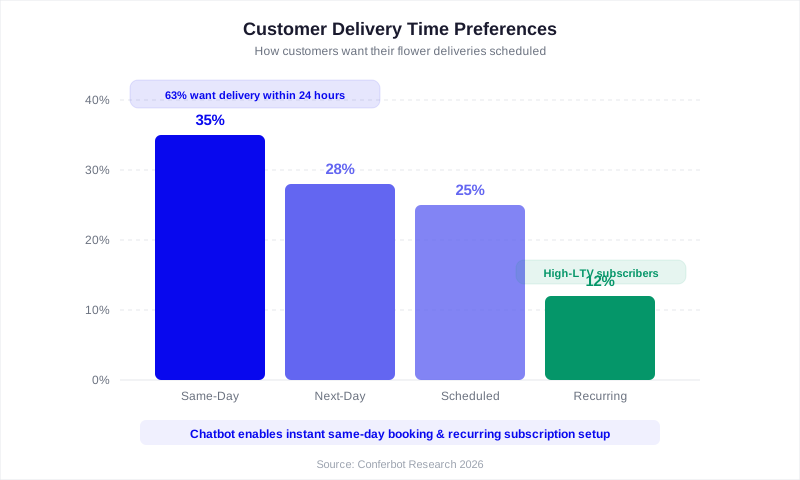
Same-Day Delivery: The Most Requested Service
35% of flower orders request same-day delivery -- making it the single most critical fulfillment capability for any florist. The chatbot handles same-day requests by checking three factors in real time: delivery zone eligibility (is the address within your service area?), time cutoff (is it before your same-day deadline?), and capacity (is there driver availability?). If all conditions are met, the chatbot confirms and offers time windows. If the cutoff has passed, it responds transparently: "Same-day delivery for your area closes at 1 PM, but I can schedule delivery for tomorrow morning between 9-11 AM. Would that work?" This honest alternative retains 60-70% of post-cutoff orders that a static website would lose entirely by simply displaying "same-day delivery unavailable."
Address Validation and Delivery Zone Management
The chatbot validates every delivery address against your configured zones before the order is completed. For out-of-zone addresses, it offers alternatives: a partner florist in that area, a pickup option, or an adjusted delivery date when your extended delivery route services that area. For incomplete addresses, it requests specifics: apartment number, building name, gate code, delivery instructions. This validation prevents failed deliveries, wasted driver time, and the costly customer service interactions that result from delivery problems.
Specialized Delivery Scenarios
Different delivery destinations require different handling, and the chatbot manages each scenario:
| Delivery Type | Special Requirements | Chatbot Handling |
|---|---|---|
| Home delivery | Recipient availability, surprise factor, safe drop option | Asks if it is a surprise, confirms recipient will be home, offers safe drop instructions |
| Office delivery | Company name, floor/suite, reception desk | Collects business details, recommends compact desk-friendly arrangements |
| Hospital delivery | Room number, patient name, fragrance/soil restrictions | Flags restricted units, recommends low-fragrance and no-soil arrangements |
| Funeral home | Deceased name, service date/time, arrangement type | Coordinates delivery before service time, confirms venue requirements |
| Event venue | Setup time, contact person, quantity, venue access | Collects event details, confirms delivery window for setup before event |
Real-Time Delivery Tracking
Post-order, the chatbot provides delivery status updates at each stage: order confirmed, arrangement being prepared, out for delivery, and delivered. The sender receives all notifications and can optionally enable delivery confirmation for the recipient. For surprise deliveries, the chatbot asks whether to notify only the sender upon delivery -- because many senders want to know the exact moment the recipient receives the flowers so they can call or text. This proactive tracking eliminates 30-40% of post-purchase phone inquiries, freeing staff for fulfillment work during busy periods.
Valentine's Day and Mother's Day: Managing the Biggest Revenue Windows
The floral industry has the most extreme seasonal demand concentration of any retail category. Valentine's Day, which National Retail Federation data ranks as the single largest floral spending event (February 14) and Mother's Day (second Sunday in May) together generate 20-25% of annual revenue for most florists. The chatbot is the most effective tool for capturing this demand without proportionally scaling staff, inventory waste, or delivery failures.
Valentine's Day Campaign Architecture
The chatbot's Valentine's Day flow activates in late January, at least two weeks before February 14. The campaign unfolds in three phases:
Phase 1 -- Early Bird (Jan 28 - Feb 7): The chatbot promotes advance ordering with a 10-15% early-bird discount. It proactively messages past Valentine's Day customers via WhatsApp: "Valentine's Day is two weeks away. Order now to guarantee your preferred arrangement and delivery time -- plus save 15%." Early orders allow the florist to plan inventory precisely and spread fulfillment workload.
Phase 2 -- Peak Ordering (Feb 8 - Feb 12): The chatbot features premium Valentine's collections (dozen red roses, luxury boxed arrangements, rose and chocolate pairings) with standard pricing. Urgency messaging increases: "Order by February 12 for guaranteed Valentine's Day delivery." The chatbot manages delivery slot capacity in real time, closing sold-out windows and redirecting to available alternatives.
Phase 3 -- Last Minute (Feb 13 - Feb 14): The chatbot switches to urgency mode, showing only arrangements available for same-day or next-morning delivery. Premium pricing may apply for last-minute orders. If physical delivery is fully booked, the chatbot offers alternatives: in-store pickup, digital gift cards paired with a delivery scheduled for after Valentine's Day, or a "Valentine's Week" arrangement for delivery on Feb 15-16.
Mother's Day Campaign Architecture
Mother's Day presents a unique opportunity because customers often order for multiple recipients: mother, grandmother, mother-in-law, stepmother. The chatbot's Mother's Day flow includes a multi-recipient prompt: "Are you sending flowers to one special mom or would you like to arrange deliveries for multiple recipients?" This prompt alone increases Mother's Day revenue per customer by 35-50%. The chatbot collects details for each delivery separately -- different arrangements, addresses, card messages, and delivery dates -- while keeping the ordering experience conversational rather than form-like.
Mother's Day arrangements emphasize lasting value: orchid plants that bloom for months, garden planters the recipient can enjoy all summer, and premium spring bouquets in keepsake vases. The chatbot highlights these "lasts longer than cut flowers" options because they justify higher price points and generate higher satisfaction. Average order value for Mother's Day is typically 15-20% higher than Valentine's Day because of the multi-recipient effect and the preference for lasting arrangements.
Post-Holiday Follow-Up and Retention
After each holiday peak, the chatbot executes a retention sequence. For Valentine's Day buyers, it sends a follow-up two weeks later: "How did the Valentine's arrangement go? Would you like to set up a monthly flower delivery for your partner? Subscribers save 20%." For Mother's Day buyers, it offers a subscription: "Your mom loved the flowers! Want to make her day every month?" Holiday buyers convert to subscribers at 8-12% rates when prompted by the chatbot -- significantly higher than email-based subscription offers. For more strategies on turning one-time buyers into repeat customers through intelligent conversations, read our guide on AI chatbot upselling and cross-selling.
Upselling Strategies: How Chatbots Drive Higher Average Order Values
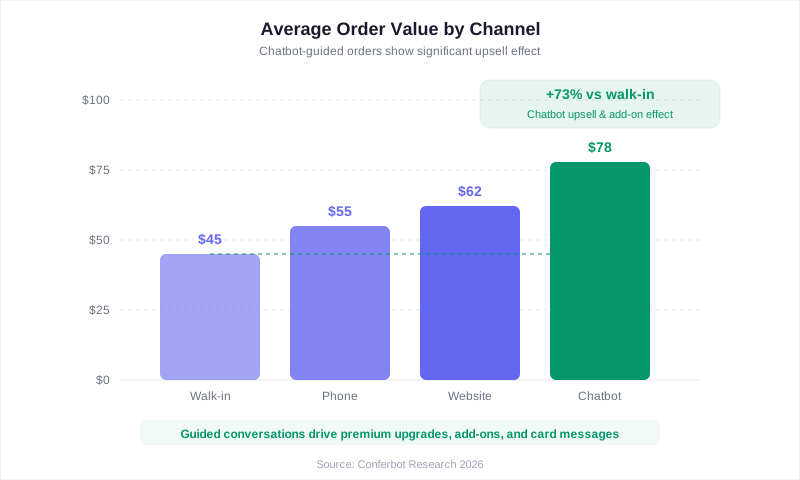
The average order value difference between chatbot-guided and unguided flower orders is one of the most striking metrics in floral retail automation. Chatbot-guided orders average $78 compared to $45 for walk-in and $55 for phone orders -- a 42-73% premium driven entirely by the conversation's structure and contextual recommendations.
The Good-Better-Best Tier Presentation
The chatbot presents arrangements in a tier structure that naturally guides customers toward mid-range and premium options. Rather than showing the cheapest option first (which anchors the customer to a low price), the chatbot leads with the recommended option for the stated occasion and shows alternatives above and below: "For a 10th anniversary, I would recommend our Premium Rose Collection at $85 -- it is our most popular anniversary arrangement. I also have a classic rose bouquet at $55 and our Signature Luxury Collection at $125 with orchids and premium roses." This presentation consistently shifts purchases upward from where they would land in a self-serve browsing experience.
Contextual Add-On Recommendations
The chatbot's add-on suggestions are contextual, not generic. A birthday order triggers chocolate and balloon suggestions. An anniversary order triggers champagne and premium packaging. A sympathy order triggers a sympathy card and a peace lily plant as a lasting companion to the arrangement. Because these suggestions are presented conversationally after the primary purchase decision is made, they feel like helpful additions rather than aggressive upselling. The result: 42% add-on attachment rate for chatbot orders versus 12-15% through standard checkout pages.
Size and Premium Flower Upgrades
The chatbot offers size upgrades and premium flower substitutions at natural conversation points: "This bouquet comes in a standard size ($55) and a premium size ($75) with 50% more flowers and a taller vase -- the premium is especially popular for special occasions." It also suggests seasonal premium substitutions: "Would you like to add peonies to this arrangement? They are in peak season and absolutely gorgeous right now -- $12 to upgrade." These micro-upgrades of $10-20 each add up to significant AOV increases across hundreds of orders.
Subscription Conversion at Checkout
After every completed order, the chatbot presents the subscription option: "Love sending flowers? Get a curated arrangement delivered every two weeks for 20% less than individual orders." This post-purchase prompt converts 5-8% of one-time buyers into subscribers -- and each subscriber represents $480-1,800 in annual recurring revenue depending on the subscription tier and frequency. The subscription pitch works at this moment because the customer has just experienced the value of guided flower ordering and is most receptive to continuing the relationship.
Multi-Channel Deployment: Website, WhatsApp, Instagram, and Beyond
Flower customers discover and order through multiple channels, and each channel serves a different role in the customer journey. The chatbot adapts its behavior to each channel while maintaining a unified customer profile and order system.
Website Chatbot
Your website chatbot is the primary ordering channel for customers who have already found your shop. It deploys as a persistent widget on every page, with a context-aware greeting: "Looking for the perfect flowers? Tell me the occasion and I will find the ideal arrangement for you." On arrangement detail pages, the chatbot can proactively offer: "Want this arrangement in a different color? Or would you like a recommendation based on your specific occasion?" The website chatbot captures after-hours visitors who would otherwise leave without ordering -- these after-hours conversions represent 15-20% of total chatbot orders.
WhatsApp Ordering
WhatsApp is the fastest-growing channel for flower ordering, especially for repeat customers and time-sensitive orders. Customers message the shop directly and the chatbot handles the entire ordering conversation within WhatsApp: browsing arrangements via image carousels, selecting options, providing delivery details, and completing payment. WhatsApp's 98% open rate makes it the most effective channel for proactive campaigns: Valentine's Day reminders, Mother's Day early-bird offers, and reorder prompts for past customers. Florists report that WhatsApp orders have the highest conversion rate of any channel because customers who initiate a WhatsApp conversation have strong purchase intent.
Instagram -- where Instagram for Business reports that 90% of users follow at least one business account Integration
For florists, Instagram is the primary discovery channel. Beautiful floral photography attracts followers, but converting followers to orders requires a frictionless path from a post to a purchase. When a follower comments "How much?" or sends a DM saying "I want to order these," the chatbot engages immediately with the ordering conversation. It can reference the specific arrangement from the post and guide the customer through customization, delivery, and checkout without the customer ever leaving Instagram. This seamless discovery-to-purchase flow captures orders that would be lost if the customer had to navigate to a separate website and find the arrangement again. For a comprehensive look at Instagram chatbot strategies, see our guide on Instagram chatbots for business.
Facebook Messenger
Facebook Messenger serves an older demographic that may prefer Messenger over WhatsApp or Instagram DM. The chatbot operates identically across Messenger, providing the same recommendation, ordering, and delivery experience. For florists with active Facebook pages and local community engagement, Messenger captures a customer segment that might not use other channels.
Unified Customer Profile
Regardless of which channel a customer uses, the chatbot recognizes returning customers and maintains their history: past orders, recipient preferences, delivery addresses, and subscription status. A customer who ordered Mother's Day flowers via WhatsApp and returns six months later through the website gets a personalized greeting: "Welcome back! Last time you sent a beautiful spring bouquet to [recipient]. Would you like to send flowers to them again, or is this for a different occasion?" This cross-channel recognition builds the personal relationship that turns first-time buyers into loyal customers.
ROI Analysis: What a Florist Chatbot Is Worth to Your Business
The financial impact of a florist chatbot is measurable across revenue growth, operational efficiency, and customer lifetime value -- a metric that Statista's flower market data confirms grows significantly with online ordering adoption. Here is a detailed breakdown for a typical local florist.
Baseline: A Local Florist Without Chatbot
| Metric | Value |
|---|---|
| Monthly revenue | $40,000 |
| Monthly orders | 650 |
| Average order value | $62 |
| Phone orders (% of total) | 30% (195 orders) |
| Walk-in orders | 25% (163 orders) |
| Website orders | 22% (143 orders) |
| After-hours orders captured | 0 (voicemail, lost) |
| Add-on attachment rate | 15% |
| Subscription revenue | $0 |
| Staff hours on phones/month | 48 hours |
With Chatbot Deployment (After 60 Days)
| Metric | Value | Change |
|---|---|---|
| Monthly revenue | $60,840 | +52% |
| Monthly orders | 780 | +20% |
| Average order value | $78 | +26% |
| Phone order volume | 78 orders | -60% |
| After-hours orders captured | 95/month | New revenue stream |
| Add-on attachment rate | 42% | +180% |
| Subscription revenue | $3,200/month | New revenue stream |
| Staff hours on phones/month | 16 hours | -67% |
Financial Summary
Additional monthly revenue: $20,840
Monthly labor savings: $1,600 (32 freed hours redirected to fulfillment)
Total monthly benefit: $22,440
Monthly chatbot cost: $100-200
Monthly ROI: 112-224x return
The revenue increase comes from three compounding sources. First, the chatbot captures after-hours, social media, and multi-channel orders that currently go to competitors or are abandoned. Second, guided conversation produces higher average order values through tier progression, add-on attachment, and customization upsells. Third, subscription enrollment creates a new recurring revenue stream. Even at the most conservative estimate -- 10% more orders and 15% higher AOV -- the chatbot generates $7,000+ in additional monthly revenue on a $100-200 investment. The payback period is measured in days, not months.
Implementation Guide: Launch Your Florist Chatbot in 48 Hours
A florist chatbot can be configured, tested, and deployed within two business days using Conferbot's no-code platform. Here is the step-by-step process.
Day 1: Catalog and Configuration
Morning -- Prepare your arrangement catalog (2-3 hours): Compile your arrangements with photos, prices, descriptions, occasion tags (birthday, sympathy, anniversary, romantic, wedding, corporate), color palettes, primary flower types, available sizes, and seasonal availability. For each arrangement, add a one-sentence "why this is a great choice" description that the chatbot can use in recommendations. Upload this data to the Conferbot knowledge base.
Afternoon -- Configure delivery and flows (2-3 hours): Set up your delivery zones by zip code or radius, same-day cutoff time, delivery time windows, pricing per zone, and capacity limits per slot. Customize the conversation flows for each occasion type, update the sample card messages with your shop's voice, configure add-on options and pricing, and set up the subscription tiers.
Day 2: Integration, Testing, and Launch
Morning -- Connect integrations and deploy (1-2 hours): Connect your POS or order management system for real-time inventory. Deploy the website chat widget on your homepage, arrangement pages, and delivery info page. Set up WhatsApp Business and Instagram channels. Configure channel-specific greetings.
Afternoon -- Test and go live (1-2 hours): Run 20+ test orders covering every occasion type, same-day delivery, scheduled delivery, out-of-zone addresses, subscription enrollment, and add-on attachment. Verify delivery tracking notifications and card message formatting. Brief your team on the chatbot's capabilities. Go live and monitor the first afternoon's conversations through the analytics dashboard.
Week 1 Optimization
After launch, review chatbot analytics daily for the first week. Look for: questions the chatbot cannot answer (add to the knowledge base), arrangements with low recommendation acceptance rates (improve photos or descriptions), delivery scenarios that cause confusion (refine the flow), and add-on suggestions that are not converting (adjust timing or pairing). Most florists find that the chatbot performs well out of the box and needs only minor refinements after the first few days of real customer interactions.
Getting Started: Transform Your Flower Shop's Ordering Experience
The flower retail landscape is shifting. Customers increasingly expect to order flowers the same way they order everything else: through a fast, personalized, mobile-friendly conversation that does not require a phone call or a trip to the shop. Florists who meet this expectation capture the growing digital ordering segment while maintaining the personal touch that distinguishes a local florist from a commodity delivery service.
A chatbot is the most cost-effective way to deliver that experience. It provides 24/7 availability, occasion-based expertise, same-day delivery management, subscription enrollment, and multi-channel ordering -- all for a fraction of the cost of a single part-time employee. The florists who deploy chatbots in 2026 will not just handle Valentine's Day and Mother's Day better. They will build a permanent competitive advantage: a customer experience so convenient and personalized that customers have no reason to order from anyone else.
Start today. Sign up for Conferbot, load your arrangement catalog, configure your delivery zones, and deploy the Florist Chatbot template on your website and WhatsApp. You can be taking chatbot-guided orders by tomorrow. Your Valentine's Day this year will be the smoothest -- and most profitable -- you have ever had.
Was this article helpful?
About the Author

Conferbot Team specializes in conversational AI, chatbot strategy, and customer engagement automation. With deep expertise in building AI-powered chatbots, they help businesses deliver exceptional customer experiences across every channel.
View all articles