What Is a Catering Chatbot?
A catering chatbot is an AI-powered conversational assistant that handles the front end of your catering business, addressing operational challenges identified by the National Restaurant Association's industry research: fielding event inquiries, collecting requirements, generating instant quotes, managing menu customization, scheduling tastings, and capturing bookings. It operates on your website, WhatsApp, social media, and other digital channels, giving prospective clients an immediate, responsive experience at any time of day or night.
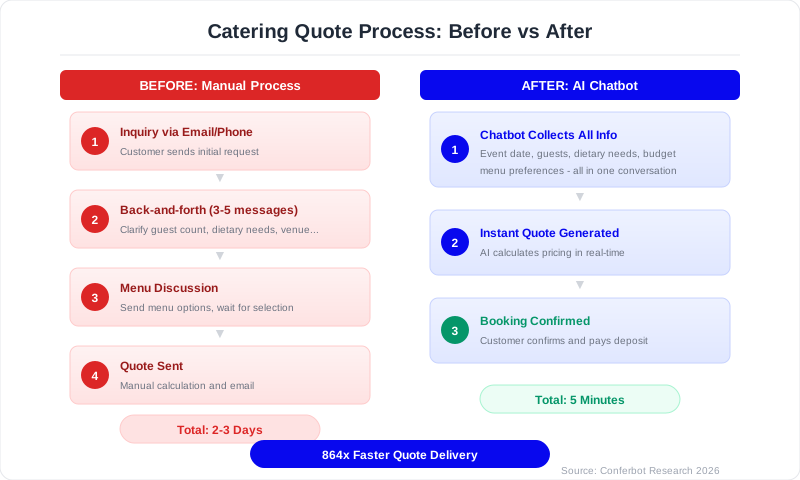
The catering industry has a unique challenge that makes it perfectly suited for chatbot automation. Every event is different: different date, guest count, dietary requirements, venue constraints, service style, and budget. Collecting all of these details from a potential client typically requires 2-3 back-and-forth phone calls or emails, stretching the inquiry-to-quote timeline to 24-72 hours. During that wait, the client is contacting other caterers who respond faster.
A chatbot compresses this entire process into a single, real-time conversation. The client provides their event details through a guided conversation -- date, type of event, guest count, dietary needs, service style, budget range -- and the chatbot generates an estimated quote in under 3 minutes. No waiting, no phone tag, no email chains. The client gets immediate value, and your business captures a fully qualified lead with every detail needed to follow up effectively.
Modern catering chatbots built on platforms like Conferbot combine structured quote-building flows with natural language AI that handles open-ended questions: "Can you do a taco bar for 100 people?" "Do you provide linens and tableware?" "What's your cancellation policy?" The chatbot answers from your knowledge base and seamlessly transitions between answering questions and building quotes.
This guide covers every aspect of deploying a catering chatbot: the event planning bottleneck it solves, the features that drive bookings, how to design quote automation, handling different event types, integration with catering operations software, real-world performance data, ROI analysis, and step-by-step implementation instructions.
The Event Planning Bottleneck
Catering businesses operate in a paradox: their most profitable season (wedding season, holiday parties, corporate events) is also when they are least available to respond to new inquiries. The owner or sales manager who handles quotes is the same person managing active events, coordinating staff, and overseeing operations. New inquiries pile up in email and voicemail, response times stretch to days, and potential clients book with competitors who responded faster.
The Response Time Problem
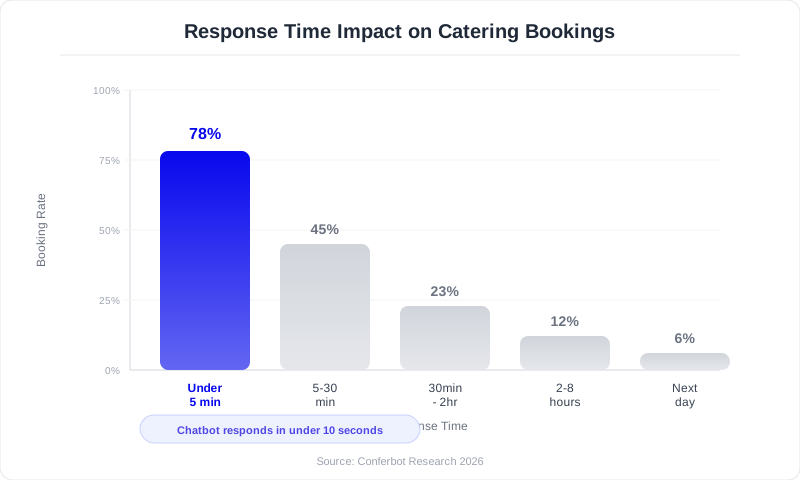
The average catering business takes 24-72 hours to respond to an initial inquiry. In an industry where clients often contact 3-5 caterers simultaneously, the first to respond with a clear quote has a massive advantage. Research from Harvard Business Review shows that leads contacted within 5 minutes are 21x more likely to convert than those contacted after 30 minutes. In catering, a 3-minute chatbot response versus a 48-hour email response is the difference between winning and losing the event.
The Qualification Problem
Not every inquiry is a good fit. A caterer specializing in weddings for 100-300 guests wastes time quoting a backyard birthday party for 15 people. Without qualification, the catering team spends equal time on a $500 event and a $50,000 event. A chatbot qualifies every inquiry by collecting event type, guest count, date, budget range, and service requirements before the lead reaches the sales team. Low-value or out-of-scope inquiries are handled automatically or declined gracefully, while high-value leads get immediate personal attention.
The Seasonal Capacity Problem
Catering is highly seasonal. During peak months (May-October for weddings, November-December for corporate events), a successful catering business may receive 50-100+ inquiries per week. The owner simply cannot respond to all of them promptly while also executing active events. Without a chatbot, many of these inquiries go unresponded for days. According to industry data from CatererSource, catering businesses lose an estimated 30-40% of potential bookings to slow response times during peak season.
The Information Repetition Problem
Every new client asks the same questions: What's your minimum guest count? Do you provide servers? Can you handle outdoor events? What's your cancellation policy? Do you accommodate allergies? The catering team answers these questions dozens of times per week, consuming hours that could be spent on event execution and business development. A chatbot answers these instantly from your knowledge base, freeing your team from repetitive communications.
The After-Hours Opportunity
Event planning happens on personal time. People research caterers in the evening, on weekends, and during lunch breaks at work. A catering business with a traditional phone-and-email model is effectively closed during the hours when their prospective clients are most actively shopping. A chatbot captures these after-hours inquiries instantly, ensuring no lead goes cold overnight or over the weekend.
How Chatbots Transform Catering Businesses
A chatbot addresses every bottleneck in the catering inquiry process, applying the speed-to-lead principles that Harvard Business Review identifies as critical for service businesses. Here is the specific impact on each pain point.
Instant Quote Generation
The chatbot collects event details through a guided conversation and generates an estimated quote in real time. The client sees a range ("Based on your requirements, estimated catering for your event is $4,200-$5,800") within minutes of starting the conversation. This immediate value delivery differentiates your business from every competitor who says "We'll get back to you."
24/7 Lead Capture
Every inquiry receives an immediate, professional response regardless of time of day, day of week, or whether your team is on-site at an event. The chatbot engages the prospect, qualifies the opportunity, and provides preliminary pricing. When your team reviews leads the next morning, they have fully qualified opportunities with detailed event specs, not vague contact form submissions.
Automated Qualification
The chatbot filters inquiries based on your business criteria. If your minimum order is 50 guests and a prospect asks about a dinner party for 12, the chatbot can gracefully explain your minimums and (optionally) recommend smaller caterers. If a prospect's budget is well below your pricing for their guest count, the chatbot manages expectations before your team invests time. This ensures your salespeople focus exclusively on opportunities within your target market.
Consistent Information Delivery
Every prospect receives the same accurate, up-to-date information about your services, policies, and pricing. There is no risk of a busy team member quoting an outdated price, forgetting to mention a policy, or providing inconsistent information that leads to client dissatisfaction later. The chatbot is the single source of truth.
Revenue Impact by the Numbers
- 3-5x more leads captured from existing website traffic through conversational engagement versus static forms
- Response time reduced from 48 hours to 3 minutes, capturing leads before competitors
- 30-40% increase in inquiry-to-booking conversion rate due to faster response and better qualification
- 15-20 hours per week saved on repetitive inquiry handling and basic question answering
- 25-35% higher average booking value because the chatbot systematically presents upsell options (premium menus, bar packages, decor services)
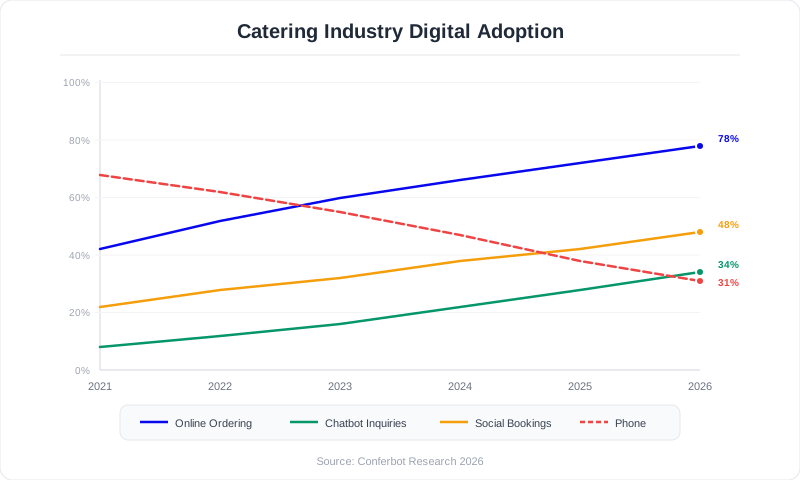
Key Features: Menu Customization, Guest Count, and Dietary Needs
The features that matter most for catering chatbots are specific to the industry's workflow. Here are the capabilities that drive bookings and operational efficiency.
1. Menu Customization Flow
Catering menus are not one-size-fits-all. The chatbot should present menu options in a guided format that helps clients build their ideal package:
- Service style: Buffet, plated, family-style, food stations, cocktail/passed appetizers
- Courses: Appetizers, salads, entrees, sides, desserts
- Cuisine type: Italian, Mexican, BBQ, Asian fusion, farm-to-table, international
- Customization: For each course, present 3-5 options with descriptions and per-person pricing
The chatbot calculates a running total as the client makes selections: "So far, your menu includes passed appetizers ($8/person), Caesar salad ($5/person), choice of chicken Marsala or grilled salmon ($22-28/person), and seasonal vegetables ($6/person). For 120 guests, your estimated food cost is $4,920-$5,640. Want to add dessert?"
2. Guest Count Handling
Guest count directly impacts pricing, staffing, equipment needs, and logistics. The chatbot collects this early and uses it throughout the quoting process. It should also handle nuanced guest count scenarios:
- "We're expecting 150-175 guests" -- the chatbot quotes for the maximum to ensure adequate preparation
- "We need a kids' menu for about 20 children" -- the chatbot adjusts per-person rates for children's portions
- "Some guests will only be at the cocktail hour" -- the chatbot separates appetizer-only and full-dinner counts
3. Dietary Requirements Collection
Dietary accommodations are no longer optional in catering. The chatbot should proactively ask about dietary needs and handle them competently:
- "Do any of your guests have dietary restrictions?" [Vegetarian / Vegan / Gluten-free / Nut allergy / Dairy-free / Halal / Kosher / Other]
- For each restriction, confirm how many guests are affected
- Present menu options that accommodate the restrictions
- Flag any restrictions that require special kitchen protocols (nut-free preparation areas, certified Kosher supervision)
Handling dietary needs well in the chatbot conversation demonstrates professionalism and builds trust. It also prevents the common issue of dietary requirements surfacing at the last minute, when it is too expensive and stressful to accommodate them.
4. Bar and Beverage Packages
Beverage service is a significant revenue line for caterers. The chatbot presents bar package options: open bar (premium, standard, beer/wine only), cash bar, consumption bar, or non-alcoholic packages. Each option includes per-person pricing and duration-based rates. This is an area where chatbot-guided selling consistently drives higher package selection than email-based quoting, because the chatbot presents options visually and makes upgrading frictionless.
5. Add-On Services
The chatbot systematically presents add-on services that increase booking value: table and chair rental, linens and tableware, floral arrangements, lighting, servers and bartenders, event coordination, cake cutting service, and cleanup. Caterers report that chatbot-guided upselling increases average booking value by 25-35% because every client sees the full range of available services in a no-pressure format.
Quote Automation: From Inquiry to Proposal
Quote generation is the core value proposition of a catering chatbot, and following the FDA's food safety standards, all menu offerings should include allergen information. Automating this process transforms a 24-72 hour wait into a 3-minute conversation. Here is how to design a quote automation system that works.
Quote Calculation Logic
Your chatbot needs a pricing engine that calculates estimates based on:
- Base per-person food cost: Varies by menu selections and service style
- Staff cost: Servers ($200-350/person for event), bartenders ($250-400/person for event), chef ($350-500 for event). Ratios: 1 server per 20 guests (buffet) or 1 per 10 guests (plated)
- Equipment and rentals: Based on guest count and venue requirements
- Travel and logistics: Based on venue distance from your kitchen
- Service fees and tax: Administrative fee (typically 18-22%) plus applicable tax
The chatbot calculates in real time and presents a clear breakdown: "Here's your estimated quote for 120 guests at a plated dinner: Food: $5,400 | Staff: $1,200 | Rentals: $800 | Administrative fee (20%): $1,480 | Estimated total: $8,880." Transparency builds trust and reduces sticker shock.
Range vs. Fixed Quotes
For chatbot automation, present quotes as ranges rather than fixed prices: "Your estimated catering cost is $8,200-$9,800 depending on final menu selections and guest count confirmation." This approach manages expectations (the final price may vary once all details are finalized), gives you negotiation room during the sales process, and accounts for menu price variations and seasonal ingredient fluctuations.
Proposal Delivery
After generating the quote, the chatbot delivers a formatted proposal to the client:
- In-chat summary: A clean breakdown visible within the conversation
- Email proposal: "I can email you a detailed proposal with menu descriptions, pricing breakdown, and photos of similar events we've catered. What's your email?" This is your soft lead capture moment.
- PDF download: For more formal proposals, generate a branded PDF that the client can share with event co-planners or decision-makers
Quote Follow-Up Automation
Not every quote converts immediately. Automated follow-up through the chatbot keeps the conversation alive:
- 24 hours after quote: "Did you have a chance to review the proposal for your [Event Type]? I'm here if you have any questions."
- 3 days after quote: "Your event date ([Date]) is getting closer. Shall I connect you with our event coordinator to finalize the details?"
- 7 days after quote (if no response): "Just checking in on your [Event Type] catering. We'd love to be part of your celebration. Any questions I can answer?"
- 14 days after quote: "We're filling up our calendar for [Month]. If you'd like to secure your date, I can help you get started with a deposit."
This systematic follow-up converts 20-30% of initially unresponsive leads into bookings -- leads that would otherwise be completely lost without automated nurture.
Handling Different Event Types
Catering covers a wide range of event types, each with unique requirements. Your chatbot should detect the event type early in the conversation and adjust its flow accordingly.
Weddings
Weddings are typically the highest-value catering events. The chatbot flow for weddings should include:
- Date and venue (indoor/outdoor, venue restrictions)
- Guest count with RSVP timeline considerations
- Cocktail hour and reception dinner details
- Cake cutting and dessert service
- Bar package selection
- Tasting appointment scheduling
- Coordination with wedding planner or venue coordinator
For weddings, the chatbot should offer to schedule a tasting: "Most couples book a tasting before finalizing their menu. Our tastings are complimentary for confirmed bookings, or $150 per couple for events still in consideration (credited toward your booking if you proceed). Want to schedule one?"
Corporate Events
Corporate events prioritize efficiency, reliability, and professional presentation. The chatbot flow should address:
- Company name and point of contact
- Event type (conference lunch, team dinner, product launch, annual party, board meeting)
- Budget per person or total budget
- AV and presentation needs
- Billing details (purchase order, corporate card, invoicing)
- Recurring event opportunity (monthly lunch, quarterly meetings)
For corporate clients, emphasize reliability and past corporate references. The chatbot can say: "We cater 50+ corporate events per year for companies like [Client names, with permission]. Shall I send references from similar events?"
Private Parties
Birthday parties, anniversaries, graduation celebrations, and holiday gatherings. These events vary widely in formality and budget. The chatbot should:
- Determine formality level (casual BBQ vs. formal dinner)
- Present menu packages at different price points
- Offer DIY-friendly options (drop-off catering, food trays)
- Handle smaller guest counts that may fall below minimums (offer per-tray pricing instead of per-person for events under 25 guests)
Drop-Off Catering
An increasingly popular service tier where the caterer delivers food but does not provide staff. The chatbot should handle this as a distinct product line:
- Menu selections focused on foods that hold temperature well
- Simplified pricing (per tray rather than per person)
- Delivery logistics (address, time, access instructions, setup preferences)
- Equipment notes (chafing dishes, serving utensils -- included or add-on?)
Event Type Detection
The chatbot should identify the event type early: "What type of event are you planning?" [Wedding / Corporate event / Private party / Drop-off catering / Holiday party / Fundraiser / Other]. Based on the selection, it loads the appropriate conversation flow with the right questions, pricing structure, and menu options. This event-type branching ensures every client gets a relevant, personalized experience rather than a one-size-fits-all questionnaire.
Integration with Catering Software and Business Tools
A catering chatbot delivers maximum value when it connects to your operational systems. Isolated chatbots that dump leads into an email inbox create more work than they save. Here is how to integrate effectively.
Catering Management Software
The major catering management platforms all support some form of API or integration:
- Total Party Planner: Event management, BEO creation, and invoicing
- CaterZen: Online ordering, delivery management, and CRM
- Caterease: Event planning, menu management, and financial tracking
- Better Cater: Cloud-based catering management for small operations
- FoodStorm: Order management and production planning
When the chatbot captures an event inquiry, the lead should flow directly into your catering management software as a new event with all collected details: date, event type, guest count, menu selections, dietary needs, quote amount, and client contact information. This eliminates manual data entry and ensures no lead falls through the cracks.
Calendar and Availability Management
Your chatbot must know your availability. If you are fully booked on a requested date, the chatbot should say so immediately and offer alternative dates: "We're fully committed on June 15th, but we have availability on June 14th and June 22nd. Would either of those work?" This prevents the frustration of a client completing the entire quote process only to learn the date is unavailable.
Calendar integration with Google Calendar, Outlook, or your catering management software's event calendar enables real-time availability checking.
Payment Processing
For deposit collection and prepayment, integrate payment processing into the chatbot flow. After the client accepts a quote: "To confirm your booking, we require a 25% deposit of $2,250. I can send you a secure payment link right now." Stripe, Square, and PayPal integrations enable in-conversation payment that converts verbal commitments into confirmed bookings before the client has time to reconsider.
CRM and Email Marketing
Not every inquiry converts immediately. Push all chatbot interactions to a CRM (HubSpot, Salesforce, or your catering software's built-in CRM) for long-term nurture. Segment leads by event type and timeline for targeted marketing: wedding prospects receive wedding menu inspiration and planning tips, corporate contacts receive seasonal corporate menu updates and early-bird booking offers.
Review and Reputation Management
After each catered event, the chatbot follows up to collect feedback: "How was our service at your [Event Type]? We'd love your honest feedback." High ratings (4-5 stars) trigger a Google review invitation. Low ratings (1-3 stars) alert the owner for immediate personal follow-up. This systematic approach builds your online reputation, which is critical for a business where 85% of clients check reviews before booking.
Customer Success Stories
These examples illustrate the measurable impact of chatbots across different types and sizes of catering businesses.
Example 1: Full-Service Catering Company
A full-service caterer handling 200+ events per year deployed a chatbot on their website and Instagram. Before the chatbot, their average response time to new inquiries was 36 hours. The owner personally handled all initial quotes, and during peak season (May-October), response times stretched to 3-4 days.
Results after 6 months:
- Response time: 36 hours down to instant (chatbot), with personal follow-up within 2 hours
- Inquiries captured: 40/month up to 95/month (138% increase)
- Quote-to-booking conversion: 25% up to 38%
- Average booking value: increased 28% (chatbot systematically presents add-on services)
- Owner's time on initial inquiries: reduced from 15 hours/week to 4 hours/week
- Annual revenue increase: $185,000 attributable to chatbot-generated bookings
Example 2: Corporate Catering Specialist
A corporate catering company deployed a chatbot focused on recurring lunch orders and meeting catering. The chatbot allowed office managers to browse menus, place orders, and set up recurring schedules without phone calls or email.
Results:
- Recurring order setup time: reduced from 20 minutes (phone) to 4 minutes (chatbot)
- New corporate accounts per month: 5 up to 14
- Order accuracy: improved from 94% to 99.2% (chatbot confirms every detail, eliminating miscommunication)
- Client satisfaction (NPS): increased from 42 to 67
- Repeat order rate: increased from 55% to 78%
Example 3: Wedding Catering Boutique
A wedding-focused caterer used the chatbot to handle initial inquiries and schedule tastings. The chatbot qualified leads by wedding date, guest count, budget range, and venue type before the owner's first phone call.
Results:
- Tasting bookings per month: 6 up to 15
- Qualification accuracy: 90% of chatbot-qualified leads were genuine fits (vs. 55% from web forms)
- Average time to first meaningful sales conversation: reduced from 4 days to 4 hours
- Wedding booking rate (from qualified leads): 45% up to 62%
- Off-season bookings: increased 40% thanks to chatbot engagement with early planners
Example 4: Food Truck Catering for Events
A food truck operation that offered event catering used a chatbot to handle the high volume of informal inquiries they received through Instagram and their website. The chatbot collected event details, provided package pricing, and booked dates.
Results:
- Event bookings per month: 8 up to 18
- Revenue per event: increased 22% through chatbot-presented add-on packages (dessert truck, signature cocktail station)
- Instagram inquiry response time: 8 hours down to instant
- Lost leads due to slow response: estimated 35% down to near zero
ROI Analysis for Catering Chatbots
Catering businesses operate with healthy margins, as IBISWorld's catering industry analysis confirms, but are constrained by the owner's time and seasonal capacity. A chatbot dramatically improves both revenue and efficiency. Here is the transparent math.
Investment
| Cost Category | Amount |
|---|---|
| Chatbot platform (Conferbot) | $50-150/month |
| Setup and customization | $0 (DIY with no-code builder) |
| Menu and pricing configuration | 4-6 hours one-time |
| Monthly maintenance | 1-2 hours/month |
Annual cost: $600-$1,800
Returns Model
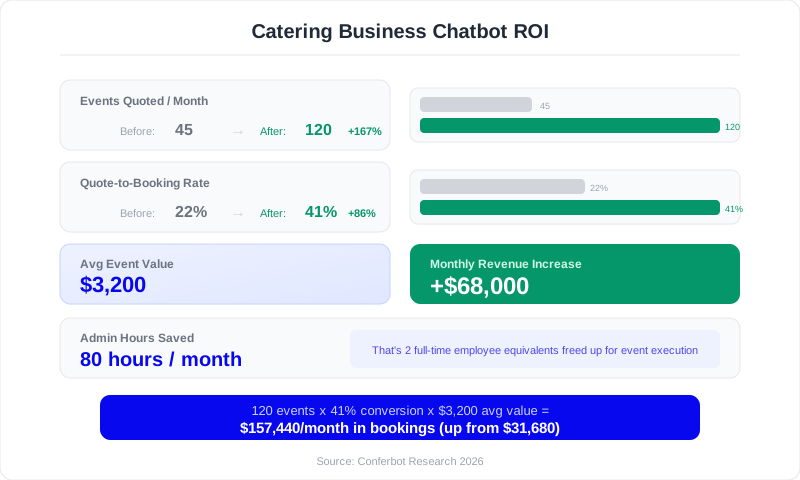
| Metric | Without Chatbot | With Chatbot |
|---|---|---|
| Inquiries captured/month | 40 | 95 |
| Qualified leads (fit criteria) | 28 (70%) | 76 (80%) |
| Quote-to-booking rate | 25% | 38% |
| Bookings per month | 7 | 29 |
| Average booking value | $4,500 | $5,760 (28% higher with upsells) |
| Monthly revenue | $31,500 | $167,040 |
Even accounting for capacity constraints (you cannot cater unlimited events), the chatbot's impact on inquiry capture, conversion rate, and average booking value creates a step-change in revenue. A caterer who can handle 15 events per month instead of 7 doubles their revenue, and the higher average booking value from systematic upselling adds another 25-35%.
Time Savings Value
Beyond revenue, the time savings have significant value for a business where the owner's time is the primary constraint:
- Inquiry handling: 15 hours/week saved on initial inquiries and FAQ answering
- Quote generation: 5 hours/week saved on building preliminary quotes
- Follow-up: 3 hours/week saved on quote follow-up reminders
At $75-150/hour owner equivalent value, that is $89,700-$179,400/year in recovered productive time. This time can be redirected to event execution, business development, menu innovation, or personal life -- all of which are constrained when the owner is buried in email responding to inquiries.
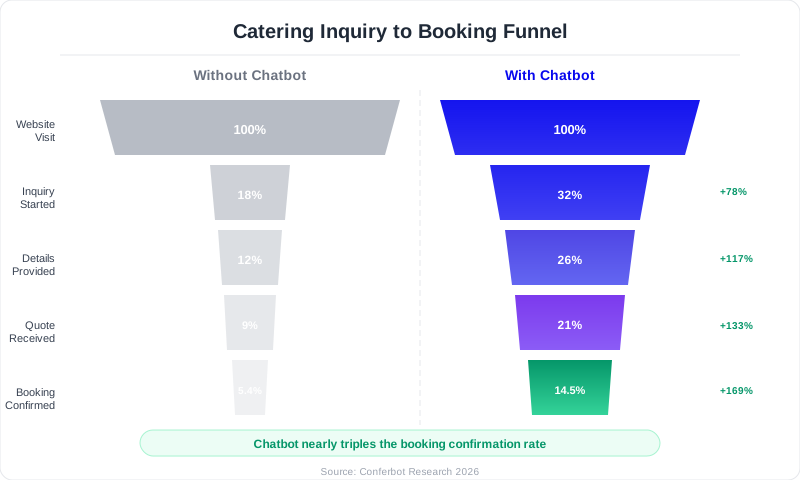
Booking Funnel Visualization
Step-by-Step Implementation Guide
Here is the complete roadmap to deploy a catering chatbot, designed for catering business owners and event sales managers who want results without technical complexity.
Week 1: Preparation and Setup
- Document your pricing: Create a pricing matrix that covers your core menu packages, per-person rates by service style, add-on services with pricing, minimums, and service area fees. The chatbot needs this data to generate accurate quotes.
- Compile your FAQ answers: Write clear answers to your 20 most common questions: cancellation policy, deposit requirements, dietary accommodations, setup/cleanup inclusion, travel radius, tasting policy, linen/tableware options, and staffing details.
- Choose your platform: Sign up for Conferbot and explore the template library for event and catering templates.
Week 2: Building the Chatbot
- Build the main conversation flow: Event type detection, date/guest count collection, menu customization, dietary needs, add-on services, quote calculation, and lead capture. Follow the flow designs outlined earlier in this guide.
- Configure the pricing engine: Input your per-person rates, package prices, service fees, and calculation logic so the chatbot generates accurate estimates.
- Upload FAQ content: Add all 20+ FAQ answers to your knowledge base so the AI can answer open-ended questions naturally.
- Set up lead scoring: Assign higher scores to high-value events (weddings, large corporate), soon-date events (within 60 days), and high-budget inquiries. Route hot leads for immediate personal follow-up.
Week 3: Deployment
- Install on your website: Add the chatbot widget to your homepage, catering menu page, and contact page. Use page-specific greetings: on the menu page, "Love what you see? I can build a custom quote for your event in under 3 minutes."
- Connect to WhatsApp and social channels: Many catering inquiries come through Instagram DMs and Facebook messages. The chatbot handles these with the same qualification flow.
- Integrate with your CRM and calendar: Ensure leads flow into your pipeline and the chatbot can check date availability.
- Configure payment processing: Set up Stripe or Square for deposit collection within the chatbot conversation.
Week 4 and Beyond: Optimize
- Review analytics weekly: Track inquiry volume, completion rate, quote amounts, and booking conversion.
- Add unanswered questions: When the chatbot cannot answer a question, add it to the knowledge base immediately.
- Update seasonal menus: Refresh menu options and pricing when your offerings change seasonally.
- A/B test opening messages: Test different greetings to find the highest engagement rate for your audience.
- Expand to new channels: Consider adding the chatbot to your Google Business Profile and email marketing campaigns.
The implementation timeline is aggressive by design. A catering chatbot does not need to be perfect on day one -- it needs to be live and capturing leads. You can refine menu descriptions, adjust pricing logic, and optimize conversation flows over time. The biggest mistake is spending months perfecting the chatbot before deploying it while leads continue to go uncaptured. Launch, learn, and iterate.
Was this article helpful?
About the Author
The Conferbot team specializes in conversational AI, chatbot strategy, and customer engagement automation. With deep expertise in building AI-powered chatbots, they help businesses deliver exceptional customer experiences across every channel.
View all articles