What Is a Cruise Booking Chatbot?
A cruise booking chatbot is an AI-powered conversational assistant that helps cruise lines, travel agencies, and online travel platforms guide potential passengers through the complex process of researching, comparing, and booking cruise vacations. It operates on websites, WhatsApp, social media, and mobile apps, providing travelers with instant, personalized voyage planning assistance at any hour of the day or night.
Cruise vacations are among the most complex travel products to sell. A single booking involves choosing a sailing date, selecting from dozens of itineraries spanning multiple destinations, comparing four to eight cabin categories at different price points, evaluating dining and beverage packages, selecting shore excursions at each port of call, understanding onboard amenities, and navigating group booking logistics for families or events. The sheer volume of options creates decision paralysis that kills conversions. Travelers spend an average of 45-60 days researching cruise options before booking, visiting 38 websites during the research phase according to Google's travel research data.
A cruise booking chatbot compresses this research cycle by acting as a knowledgeable travel advisor available around the clock. Instead of browsing through dozens of web pages comparing itineraries, the traveler has a conversation: "We're a family of four looking for a Caribbean cruise in February with a budget around $4,000. What do you recommend?" The chatbot filters options instantly, presents the top 3-4 matches with pricing, compares cabin types, and guides the traveler toward booking -- all in a single interactive session.
Modern cruise chatbots built on platforms like Conferbot combine structured booking flows with natural language AI that handles open-ended questions: "Is the Norwegian Fjords cruise good for first-timers?" "What's the difference between a balcony and a veranda cabin?" "Can we bring our own wine on board?" The chatbot draws from a comprehensive knowledge base of cruise information while seamlessly transitioning between answering questions and building bookings.
This guide covers every aspect of deploying a cruise booking chatbot: the unique challenges of selling cruise vacations, the features that drive bookings, how to design itinerary search and cabin comparison flows, handling group bookings and special occasions, shore excursion upselling, integration with cruise reservation systems, real-world performance data, ROI analysis, and step-by-step implementation instructions for cruise lines and travel agencies of all sizes.
The Cruise Industry in 2026: Growth and Digital Transformation
The cruise industry has entered a period of unprecedented growth and digital transformation. Understanding this landscape explains why chatbot technology is becoming a competitive necessity rather than a luxury.
Record-Breaking Demand
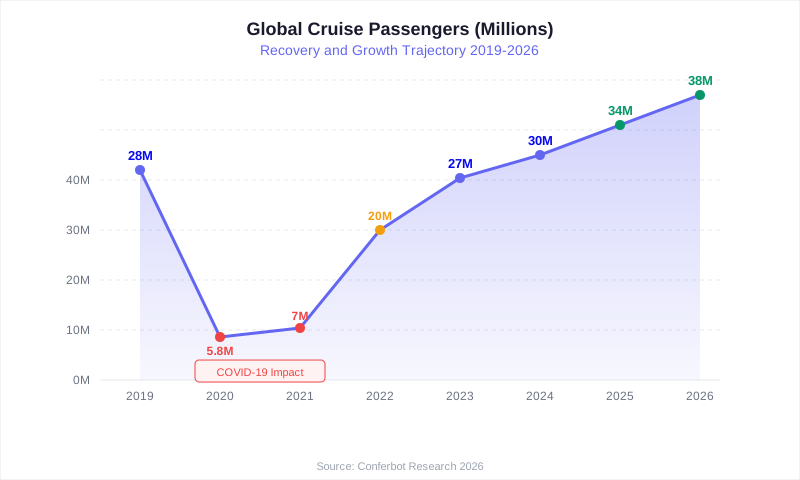
The global cruise industry carried 35.7 million passengers in 2024, surpassing pre-pandemic levels and setting a new industry record. The Cruise Lines International Association (CLIA) projects 39-40 million passengers by 2027, driven by new ship deployments, expansion into new markets (Asia-Pacific, Middle East, polar regions), and growing demand from younger demographics. Millennials and Gen Z now represent the fastest-growing segment of cruise customers, bringing different expectations for digital interaction and booking convenience.
The Digital Booking Shift
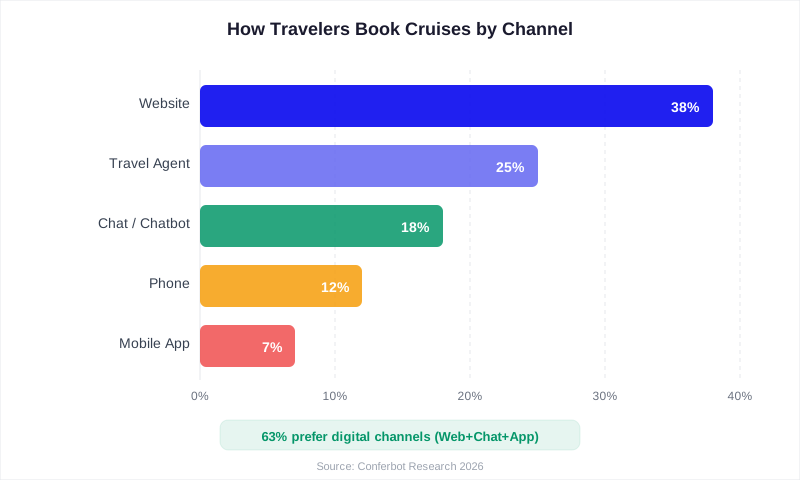
Historically, cruise vacations were booked primarily through travel agents. While travel agents still account for approximately 70% of cruise bookings, the direct-to-consumer digital channel is growing rapidly. Cruise lines are investing heavily in their websites and digital platforms to capture direct bookings (which carry no commission costs). Online cruise bookings grew 28% year over year in 2024-2025, with mobile bookings growing even faster at 42%. The cruise lines and agencies that provide the smoothest digital experience capture a disproportionate share of this growth.
The Complexity Problem
Cruise vacations have more variables than almost any other travel product. Consider what a single booking decision involves:
- Destination and itinerary: Caribbean, Mediterranean, Alaska, Northern Europe, Asia, transatlantic, world cruise -- each with dozens of specific routes
- Sailing dates: Season, duration (3-day to 200+ day world cruises), departure port
- Ship selection: Mega-ships (5,000+ passengers) versus small expedition ships (100-300 passengers), each with different vibes, amenities, and target demographics
- Cabin categories: Interior, ocean view, balcony, mini-suite, suite, haven/yacht club -- with specific deck and location preferences
- Pricing models: Cruise fare only, all-inclusive packages, beverage packages, Wi-Fi packages, specialty dining packages
- Shore excursions: 10-30 options per port of call, ranging from $50 to $500+ per person
- Special requirements: Accessibility needs, dietary restrictions, celebrations (birthdays, anniversaries, honeymoons), group coordination
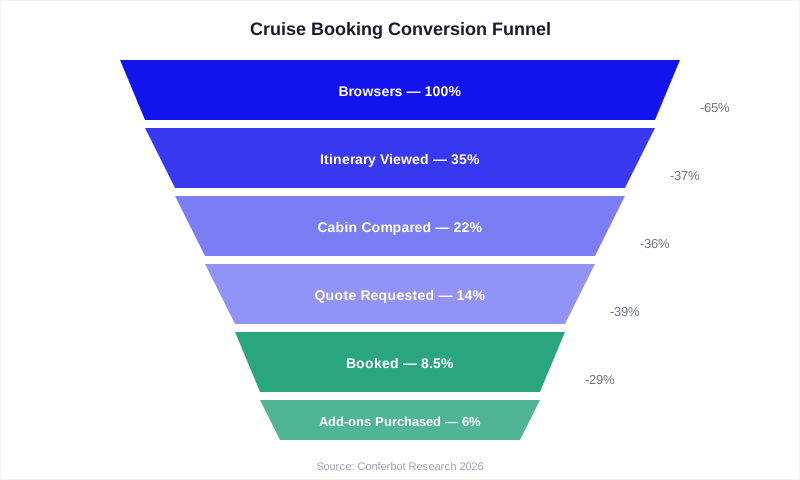
This complexity overwhelms many potential cruisers. They visit cruise line websites, get lost in pages of options, cannot easily compare, and abandon the research process. Industry data suggests that 75-80% of cruise website visitors who begin the search-and-compare process leave without booking or even requesting a quote. A chatbot that guides travelers through this complexity -- asking the right questions, filtering options, and presenting clear comparisons -- directly addresses the number one conversion barrier in cruise sales.
The After-Hours and Global Customer Base
Cruise customers are global. A cruise line selling Mediterranean itineraries serves customers across North America, Europe, Asia, and beyond -- all in different time zones. A traveler in Sydney researching a Mediterranean cruise at 8pm local time is calling at 4am in Miami. Without a chatbot, that traveler's interest cools overnight, and they may book with a competitor who provided instant assistance. A chatbot provides 24/7 global coverage without staffing a round-the-clock contact center.
Cruise Booking Conversion Challenges That Chatbots Solve
Selling cruise vacations online presents unique conversion challenges, as documented by the Cruise Lines International Association (CLIA) research that traditional web interfaces struggle to address. A chatbot directly solves each of these barriers.
Decision Paralysis From Too Many Options
When a traveler searches for "Caribbean cruises in February," they might see 200+ results across different cruise lines, ships, itineraries, and dates. Sorting and filtering helps, but the traveler still faces pages of options that all look similar on a grid. A chatbot eliminates decision paralysis by acting as a filter: "For a family of four in February with a budget of $4,000, I'd recommend these 3 sailings. Here's why each one stands out..." This curated approach converts browsers into bookers by simplifying the decision from 200 options to 3 recommendations.
The Cabin Category Confusion
Cabin selection is where many potential bookers get stuck. The difference between an ocean-view and a balcony cabin is significant in both price and experience, but website descriptions and floor plans do not convey this effectively. Common questions that stall the booking process: "Is a balcony worth the extra $800?" "What deck should I choose to minimize motion sickness?" "What's the actual size difference between a standard and a mini-suite?" A chatbot answers these questions conversationally with data and personal recommendations: "Most families find the balcony worth the upgrade -- kids love watching the ocean from the room, and you'll use it every morning for coffee. On a 7-day cruise, the upgrade works out to about $57 per night for the whole family."
The Group Booking Complexity
Group cruises (family reunions, wedding parties, corporate retreats, affinity groups) represent a significant revenue opportunity but are notoriously complex to coordinate. One person is typically designated as the group organizer, and they must manage cabin selections, dining preferences, and activity coordination for 10-50+ people across multiple cabins. Without assistance, many group organizers give up before completing the booking. A chatbot that guides group organizers through the process step by step -- collecting group size, preferred cabin mix, shared activities, and dining arrangements -- unlocks this high-value segment.
The Price Uncertainty Problem
Cruise pricing is dynamic and opaque. Fares change daily based on demand, cabin availability, and promotional offers. A traveler who sees a price today may see a different price tomorrow. This uncertainty causes hesitation: "Should I wait for a better deal?" "Is this price good?" A chatbot can address this by providing context: "This sailing is priced at $899/person, which is 12% below the average price for 7-day Caribbean cruises in February. We also have a limited-time promotion that includes a free beverage package (valued at $500/person). This offer expires in 48 hours."
The Pre-Sailing Anxiety
First-time cruisers have dozens of questions that, if unanswered, prevent them from booking: "What's the tipping policy?" "Can I bring my own drinks?" "What happens at port days?" "Is there a dress code?" "What if I get seasick?" "Can I use my phone onboard?" These questions represent genuine purchase barriers. Every unanswered question is a reason to delay the decision. A chatbot that provides immediate, comprehensive answers to these concerns removes friction and builds confidence, moving the traveler from research to booking.
The Post-Booking Revenue Opportunity
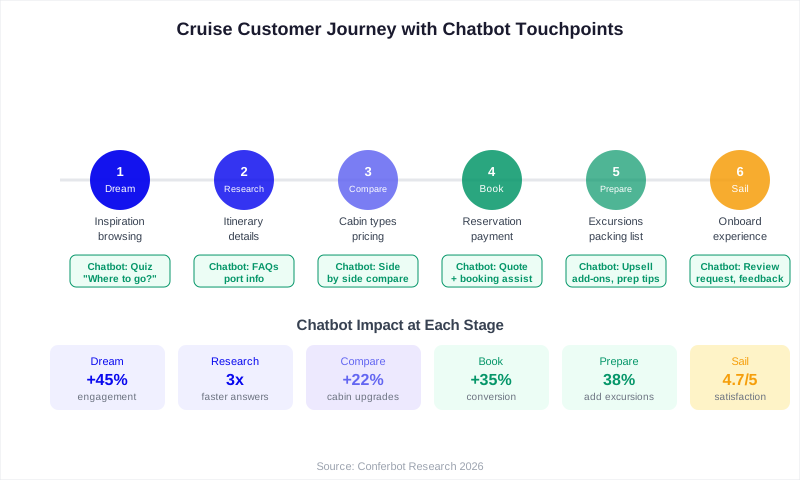
The booking confirmation is not the end of the sales process -- it is the beginning. Between booking and sailing (often 3-12 months), passengers make additional purchase decisions: shore excursions, beverage packages, specialty dining reservations, spa appointments, Wi-Fi packages, and celebration packages. These add-ons represent 30-40% of per-passenger revenue for cruise lines. A chatbot that engages passengers during this pre-sailing window with personalized recommendations drives significant incremental revenue.
Key Features of a Cruise Booking Chatbot
The features that drive results for cruise chatbots are specific to the complexities of voyage planning and cruise operations. Here are the capabilities that convert browsers into passengers and passengers into repeat cruisers.
1. Intelligent Itinerary Search and Matching
The core feature of a cruise chatbot is the ability to understand a traveler's preferences and match them with the right cruise. The chatbot should ask targeted questions and filter accordingly:
- Travel party: "Who are you traveling with?" [Couple / Family with kids / Family with teens / Group of friends / Solo]. This determines ship type and cabin recommendations.
- Destination preference: "Where would you like to cruise?" [Caribbean / Mediterranean / Alaska / Northern Europe / Asia / Open to suggestions]. For "open to suggestions," the chatbot asks follow-up preference questions (warm vs. cold, beach vs. cultural, adventure vs. relaxation).
- Date flexibility: "When are you thinking of cruising?" with specific dates, month range, or "whenever it's cheapest." Flexible date travelers can be matched to the best-value sailings.
- Duration: "How many nights?" [3-5 nights / 7 nights / 10-14 nights / 15+ nights]. Short cruises appeal to first-timers; longer voyages to experienced cruisers.
- Budget: "What's your budget per person?" with ranges. The chatbot presents options at and slightly above the stated budget (gentle upselling).
- Priorities: "What matters most to you?" [Best price / Best itinerary / Newest ship / All-inclusive / Family-friendly / Adult-only / Adventure activities]. This final filter narrows the recommendation to the best 2-4 options.
2. Cabin Comparison and Selection
Once the traveler selects a sailing, the chatbot walks them through cabin selection with clear comparisons:
- Present cabin categories with visual descriptions, square footage, and price per person per night
- Highlight the value difference: "The balcony cabin is $43/night more per person than the ocean-view. You get a private outdoor space, natural light, and the ability to watch port arrivals from your room."
- Address location concerns: "Mid-ship cabins on decks 8-10 have the least motion. Aft cabins have the best views but slightly more vibration. Forward cabins are closest to the buffet and pool."
- Show availability in real time: "There are only 4 balcony cabins left on this sailing. Want me to hold one while you decide?"
3. Shore Excursion Planning
Shore excursions are a major revenue driver and a key part of the cruise experience. The chatbot presents excursion options by port with intelligent filtering:
- "In Cozumel, you have 18 excursion options. Based on your interest in adventure, here are my top 3: snorkeling at Palancar Reef ($79/person), Mayan ruins at Tulum ($99/person), and a jungle Jeep tour with beach break ($89/person)."
- Handle family-specific needs: "This excursion is suitable for ages 8+. Your children are 6 and 10, so I'd recommend the Dolphin Encounter ($69/person, all ages) instead."
- Bundle suggestions: "Booking 3 or more excursions saves 10% on the total. Want to add excursions for your other ports?"
4. Package and Add-On Upselling
The chatbot presents add-on packages with value framing that drives higher attachment rates than static website listings:
- Beverage packages: "The unlimited beverage package is $89/day per person. If you typically have 2 cocktails, a couple of sodas, and a specialty coffee per day, you'd spend about $50-60 per day buying individually. For an extra $29/day, you get unlimited drinks with no mental math. Most of our passengers say it makes the vacation more relaxing."
- Wi-Fi packages: Present tiers based on use case: "Social media only ($12/day) or full streaming ($20/day). Pro tip: one person can buy streaming and hotspot to devices for the whole cabin."
- Specialty dining: "The Italian restaurant onboard is consistently rated 4.8/5 stars. A 3-course dinner is $45/person. Want me to book a table for your anniversary night?"
- Spa packages: "Sea day spa specials are 20% off port days. Your sailing has 3 sea days -- I can book a couples massage on the first sea day to start your trip right."
5. Group Booking Management
For group cruises, the chatbot serves as a coordination hub:
- Collect group details: size, mix of cabins needed, shared activities, and special events (wedding reception, corporate dinner)
- Present group rates and perks: "Groups of 8+ cabins receive one free cabin for the organizer plus a private cocktail party."
- Generate shareable booking links for group members to book their own cabins within the group block
- Track group completion: "12 of your 15 cabins are booked. Want me to send a reminder to the remaining 3 families?"
6. Pre- and Post-Sailing Support
The chatbot manages the entire customer lifecycle:
- Pre-sailing: Boarding pass and check-in assistance, luggage tag delivery, port parking information, embarkation day timeline, and travel document requirements
- Post-sailing: Feedback collection, loyalty program enrollment, future cruise credit redemption, and re-booking incentives. "How was your Mediterranean cruise? Passengers who book their next cruise within 30 days of disembarkation receive a $200/person onboard credit."
Designing the Itinerary Search and Comparison Experience
The itinerary search flow is the most critical conversion point in the cruise chatbot, reflecting UX principles from Nielsen Norman Group's travel booking research. It must balance thoroughness (gathering enough preferences to make good recommendations) with speed (not asking so many questions that the traveler abandons the conversation). Here is how to design it for maximum conversion.
The Progressive Disclosure Approach
Rather than asking all preference questions upfront, use progressive disclosure: start with 3-4 essential questions, present initial results, then refine based on the traveler's reactions. This approach gives the traveler a sense of progress and options quickly, maintaining engagement.
Phase 1 (3 questions): Destination, approximate dates, and number of travelers. This is enough to present an initial set of 5-8 matching sailings.
Phase 2 (after viewing initial results): "I found 7 sailings that match. Want to narrow down? Tell me your budget per person and whether you prefer a larger resort-style ship or a smaller, more intimate experience."
Phase 3 (final refinement): "Here are your top 3 options. Want me to compare them side by side?" Present a clear comparison with pricing, itinerary highlights, ship details, and cabin availability.
Side-by-Side Comparison
When the traveler has narrowed options to 2-3 sailings, the chatbot presents a comparison that highlights the meaningful differences:
"Here's how your top 2 options compare:"
- Option A - Norwegian Gem, Feb 8: 7 nights, Miami to Cozumel/Roatan/Belize/Costa Maya. Balcony from $1,149/person. Newer ship, waterslides and go-karts, great for families.
- Option B - Royal Caribbean Oasis, Feb 15: 7 nights, Fort Lauderdale to St. Thomas/St. Kitts/Cococay. Balcony from $1,279/person. Mega-ship, Broadway shows, Central Park garden, largest pool deck.
"Option A is $130 less per person and has more port stops. Option B has a newer ship with more onboard activities and includes a private island day. Which matters more to you -- saving money and more ports, or the ship experience?"
This comparison-with-guidance approach helps the traveler make a decision rather than continuing to research endlessly.
Handling Flexible Travelers
Many cruise shoppers are flexible on destination and dates -- they just want the best deal or the best experience. The chatbot should handle this common scenario:
- "I'm flexible on where -- just want warm weather and a good deal." The chatbot searches across Caribbean, Bahamas, and Mexican Riviera for the best value within the traveler's date range and budget.
- "What's the cheapest 7-day cruise in February?" The chatbot presents the 3-4 lowest-priced options with enough context to differentiate them.
- "What cruise would you recommend for a honeymoon?" The chatbot shifts to experience-based recommendations: adult-oriented ships, suite categories, spa and dining packages, and romantic shore excursion options.
Real-Time Pricing and Availability
Cruise pricing changes daily. The chatbot must display current, accurate prices. Stale pricing that changes at checkout destroys trust and kills conversion. Integrate with the cruise line's inventory API (or Global Distribution System for travel agencies) to pull live pricing for every recommendation. When availability is low, use urgency responsibly: "Only 3 balcony cabins remaining at this price. Prices for this sailing have increased $50/person in the last week as it fills up."
The "Convince My Spouse" Feature
Cruise purchases are often household decisions. One partner does the research and needs to convince the other. The chatbot should offer a shareable summary: "Want me to send a summary of this cruise to your partner? I'll include the itinerary, cabin photos, pricing, and the highlights you liked most." This email or WhatsApp-shared summary keeps the conversation alive after the initial research session and brings the second decision-maker into the process with curated information rather than asking them to start from scratch on the website.
Group Bookings and Special Occasion Cruises
Group bookings and special occasions represent high-value opportunities that are notoriously difficult to close through traditional web interfaces. A chatbot that handles these complex bookings captures revenue that would otherwise require dedicated sales staff or be lost entirely.
Family Reunion Cruises
Multi-generational family cruises are one of the fastest-growing segments. A typical family reunion cruise involves 15-40 people across 3 generations with widely different preferences, mobility levels, and budgets. The chatbot manages this complexity:
- Group overview: Collect total group size, number of families/cabins, age range of travelers, and any mobility or accessibility requirements
- Cabin mix: Grandparents may want a suite, parents want balcony cabins, and young adults want the cheapest interior. The chatbot builds a cabin mix that keeps the group on the same deck or section when possible.
- Shared activities: "Would you like to book a private group dinner one evening? We can reserve a section of the steakhouse for 25 people at $55/person." Group shore excursions, private photo sessions, and celebration events.
- Budget management: Different family branches have different budgets. The chatbot presents options at multiple price points without revealing what other families are spending.
- Communication: The chatbot sends booking updates to all group members: "14 of 18 cabins are booked for the Johnson Family Reunion cruise! Here's who still needs to book..."
Wedding and Honeymoon Cruises
Destination weddings on cruise ships are growing 15% annually. The chatbot handles:
- Ship-based ceremony options (wedding chapels, deck ceremonies, specialty venues) with pricing
- Wedding package selection (basic ceremony, premium with photographer and flowers, ultimate with reception)
- Guest room blocks for wedding attendees
- Honeymoon suite selection with romantic add-ons (champagne, in-room dining, couples spa)
- Pre-wedding group activities (rehearsal dinner venue, group shore excursion)
Corporate and Incentive Cruises
Companies use cruises for incentive trips, team building, and corporate retreats. These bookings are high-value but require specific capabilities:
- Meeting room and AV equipment availability on the ship
- Custom team-building activity coordination
- Corporate billing and invoicing (purchase orders, net terms)
- Branded materials (welcome letters, itineraries, name badges)
- Activity and meal scheduling for the group
Affinity Group Cruises
Themed cruises (music festivals, wellness retreats, fan conventions, culinary experiences, LGBTQ+ events) attract dedicated communities. The chatbot supports these with:
- Theme-specific information and event schedules
- Meet-and-greet or special access packages
- Community messaging: "Join 500 fellow jazz enthusiasts on this 5-night cruise featuring 12 live performances."
- Group rate structures and loyalty perks
Group Coordination After Booking
The chatbot continues to serve the group after the initial booking. It sends reminders about payment deadlines, collects dining time preferences across the group, coordinates matching shore excursions so the group stays together, manages cabin change requests, and provides a central information hub that the group organizer can share with all members. This post-booking support is where most competitors fall short, leaving group organizers to manage logistics through spreadsheets and group chats.
Integration with Cruise Reservation and Travel Systems
A cruise booking chatbot must connect to the complex technology ecosystem, following integration patterns recommended by Phocuswright's travel technology research that powers cruise reservations. Here is how to integrate effectively.
Cruise Line Reservation Systems
Major cruise lines operate proprietary reservation systems:
- Royal Caribbean Group (Royal Caribbean, Celebrity, Silversea): Uses the Espresso reservation platform. API access for booking, pricing, and inventory is available through their trade partner portal.
- Carnival Corporation (Carnival, Princess, Holland America, Costa): Uses the GoCCL partner platform. Booking and availability APIs for certified travel partners.
- Norwegian Cruise Line Holdings (NCL, Oceania, Regent): Partner Connect platform with booking APIs and real-time inventory access.
- MSC Cruises: MSC Book platform with API integrations for agencies and aggregators.
For travel agencies selling multiple cruise lines, integration through a Global Distribution System (GDS) like Amadeus, Sabre, or Travelport provides unified access to inventory across all major cruise lines.
Customer Relationship Management
Cruise booking chatbot interactions generate rich customer data that should flow into your CRM:
- Search preferences: What destinations, dates, and cabin types the traveler searched (valuable for retargeting even if they do not book immediately)
- Booking history: Past cruise details for personalized recommendations
- Loyalty status: Cruise line loyalty program tier for personalized perks and pricing
- Communication preferences: Preferred channel, time zone, and communication frequency
Integrate with Salesforce, HubSpot, or your agency's CRM to create a complete customer profile that informs every chatbot interaction.
Payment Processing
Cruise bookings involve significant transaction amounts ($2,000-$20,000+). Payment processing must be secure and flexible:
- Deposit collection: Most cruise bookings require a deposit (typically $250-$500/person) with final payment due 75-90 days before sailing. The chatbot collects deposits via Stripe or your payment processor and sets up final payment reminders.
- Payment plans: For higher-value bookings, offer payment plans: "Your total is $4,800. You can pay the $500 deposit today and split the remaining $4,300 into 4 monthly payments of $1,075. Want to set that up?"
- Credit card on file: Securely store payment methods (via tokenized processing) for add-on purchases (excursions, packages) during the pre-sailing period.
Email and Marketing Automation
The pre-sailing period is a revenue-generating opportunity. Integrate the chatbot with your email platform to send:
- Booking confirmation: Immediate confirmation with next steps (online check-in, travel documents, packing tips)
- Countdown series: "90 days until your cruise! Time to book your shore excursions." "60 days: Have you chosen your beverage package?" "30 days: Complete online check-in and get your boarding pass."
- Personalized upsell: Based on chatbot interactions, send targeted offers: families receive kids' activity package promotions, couples receive spa and dining package offers
- Post-cruise: Feedback request, loyalty enrollment, and re-booking offers
Review and Feedback Integration
After disembarkation, the chatbot collects structured feedback: ship rating, cabin satisfaction, dining quality, shore excursion experience, and overall value perception. High-satisfaction passengers receive re-booking offers. Low-satisfaction passengers are flagged for personal outreach. This feedback also informs chatbot recommendation algorithms -- if passengers consistently rate a specific excursion poorly, the chatbot adjusts its recommendations accordingly.
Cruise Industry Success Stories
These examples illustrate the measurable impact of chatbots across different types of cruise businesses.
Example 1: Large Online Cruise Travel Agency
An online travel agency specializing in cruise vacations deployed a chatbot on their website to handle the high volume of cruise comparison inquiries. Before the chatbot, their 12-person sales team could handle approximately 200 phone consultations per day. Website visitors who could not reach a salesperson (evenings, weekends, hold times exceeding 10 minutes) either booked elsewhere or abandoned their research.
Results after 8 months:
- Website-to-booking conversion: 2.1% up to 4.8% (129% increase)
- After-hours bookings: 0 (office closed) up to 35% of total bookings processed by chatbot
- Average booking value: increased 18% (chatbot systematically presented cabin upgrades and add-on packages)
- Sales team productivity: agents handled 40% more complex bookings because the chatbot filtered and qualified leads before handoff
- Customer satisfaction: 4.6/5 for chatbot-assisted bookings vs. 4.4/5 for phone bookings (faster, more visual experience)
- Annual revenue increase: $2.4 million attributable to chatbot-driven bookings and upsells
Example 2: Boutique Expedition Cruise Company
A small expedition cruise company operating 4 ships (150-300 passengers each) on Antarctic, Arctic, and Galapagos routes deployed a chatbot to handle the intensive research process typical of expedition cruise buyers. These customers ask 20-30 questions before booking, and the average research period was 90+ days.
Results:
- Research-to-booking timeline: 90 days down to 42 days (chatbot provided immediate, comprehensive answers)
- Lead qualification accuracy: 85% of chatbot-qualified leads were genuine prospects (vs. 50% from web forms)
- Booking consultation calls: reduced from 45 minutes to 20 minutes (chatbot pre-qualified and pre-informed the customer)
- Repeat booking rate: increased 22% (post-voyage chatbot engagement kept customers connected and offered loyalty incentives)
- Expedition-specific questions answered by chatbot: 78% (fitness requirements, packing lists, photography equipment, wildlife viewing expectations)
Example 3: Cruise Line Direct Sales Channel
A major cruise line deployed a chatbot on their direct booking website to compete with travel agency commissions by improving their direct-to-consumer conversion rate. The chatbot focused on itinerary matching, cabin comparison, and package upselling.
Results:
- Direct booking conversion: 1.8% up to 3.9% (117% increase)
- Beverage package attachment rate: 34% up to 58% (chatbot explained value proposition conversationally)
- Shore excursion pre-booking: 22% up to 47% (chatbot presented curated recommendations by port)
- Average revenue per passenger: increased $340 from higher package and excursion attachment
- Customer support call volume: reduced 30% (chatbot answered pre-booking and pre-sailing questions)
- Estimated annual commission savings: $8.7 million from direct bookings that would have otherwise gone through agencies
Example 4: River Cruise Specialist
A river cruise operator focused on European river cruises deployed a chatbot to help the predominantly older demographic navigate their booking process. The chatbot was designed with larger text, simpler navigation, and phone-call handoff options.
Results:
- Online booking rate for 60+ demographic: increased 85% (chatbot provided confidence and guidance)
- Pre-cruise excursion booking: 29% up to 52% (chatbot presented excursions with accessibility information)
- Dietary restriction collection: 100% of passengers prompted (previously 65%, leading to kitchen complications)
- Group/multi-cabin bookings: increased 35% (chatbot simplified the coordination process for couples traveling with friends)
- Phone call duration: reduced 38% (customers arrived at the call with clear preferences established through chatbot)
ROI Analysis for Cruise Booking Chatbots
Cruise businesses operate with high average transaction values, making even small conversion improvements significant. Here is the transparent ROI analysis.
Investment
| Cost Category | Amount |
|---|---|
| Chatbot platform (Conferbot) | $50-150/month |
| Setup and customization | $0 (DIY with no-code builder) |
| Cruise inventory and content setup | 10-20 hours one-time |
| Monthly maintenance and content updates | 3-5 hours/month |
Annual cost: $600-$1,800
Returns Model (Based on Mid-Size Cruise Travel Agency)
| Metric | Without Chatbot | With Chatbot |
|---|---|---|
| Website-to-booking conversion | 2.1% | 4.8% |
| Average booking value | $3,800 | $4,484 (18% higher) |
| After-hours booking rate | 0% | 35% of total |
| Add-on attachment rate | 28% | 52% |
| Research-to-booking timeline | 45 days | 21 days |
| Sales team calls per booking | 2.8 | 1.4 |
Revenue Impact Calculation
Consider a cruise travel agency with 10,000 unique website visitors per month:
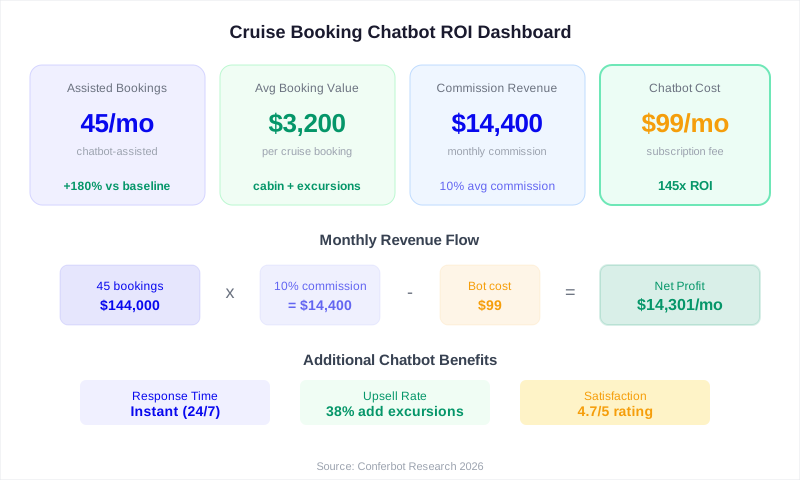
- Without chatbot: 10,000 visitors x 2.1% conversion = 210 bookings x $3,800 = $798,000/month
- With chatbot: 10,000 visitors x 4.8% conversion = 480 bookings x $4,484 = $2,152,320/month
- Monthly revenue increase: $1,354,320
This model assumes all other traffic sources remain constant. The chatbot's impact comes from three compounding factors: higher conversion rate (more visitors book), higher average booking value (systematic upselling of cabins and packages), and after-hours capture (bookings that previously went to competitors or were lost).
Even for a smaller agency with 2,000 monthly visitors, the calculation is compelling:
- Without chatbot: 2,000 x 2.1% = 42 bookings x $3,800 = $159,600/month
- With chatbot: 2,000 x 4.8% = 96 bookings x $4,484 = $430,464/month
- Monthly revenue increase: $270,864
Add-On Revenue Impact
Beyond the core booking, increased add-on attachment drives significant incremental revenue. For an agency processing 480 bookings/month with improved attachment rates, the chatbot drives an additional $120,000-$180,000/month in excursion commissions, package sales, and insurance commissions that would not have been captured through the standard website flow.
Sales Team Efficiency
The chatbot reduces the number of sales calls needed per booking from 2.8 to 1.4. For a 12-person sales team handling 480 bookings, this saves approximately 672 call hours per month. At $30/hour fully loaded cost, that is $20,160/month in labor efficiency -- or the equivalent capacity to handle significantly more bookings without adding staff.
Total First-Year ROI
For a mid-size cruise travel agency investing $1,500/year in a chatbot platform:
- Core booking revenue increase: millions (varies by agency size)
- Add-on revenue increase: $1.4-$2.1 million/year
- Sales team efficiency savings: $241,920/year
- ROI: effectively infinite relative to the $1,500 investment
The chatbot is the highest-ROI investment a cruise business can make in their digital sales channel. The transaction values are high enough that even one additional booking per month pays for the entire platform for the year.
Pre-Sailing and Post-Cruise Engagement
The period between booking and sailing is a revenue goldmine, a pattern McKinsey's travel industry research attributes to high customer engagement during anticipation phases. Passengers are excited about their upcoming trip and receptive to enhancements. The period after sailing is critical for loyalty and re-booking. A chatbot manages both phases systematically.
Pre-Sailing Engagement Timeline
After a booking is confirmed, the chatbot initiates a structured engagement sequence:
Immediately after booking:
- Confirmation with booking details, cabin assignment, and payment summary
- "Want to start planning your onboard experience? I can help you choose shore excursions, dining packages, and spa treatments."
- Introduction to the cruise line's app (if applicable) and online check-in process
90 days before sailing:
- Shore excursion recommendations based on itinerary and traveler profile
- Beverage and dining package presentation with value analysis
- Wi-Fi package options
- Travel insurance reminder (if not already purchased)
60 days before sailing:
- Online check-in reminder and walkthrough
- Travel document requirements (passport validity, visa needs for specific ports)
- "Have you booked flights to your departure port? Here's what you need to know about arriving the day before."
30 days before sailing:
- Final payment reminder (if applicable)
- Packing tips tailored to the destination and time of year
- Shore excursion last-chance offers ("Only 4 spots left on the Amalfi Coast private tour")
- Pre-arrival hotel and parking recommendations at the departure port
7 days before sailing:
- Boarding pass delivery and luggage tag instructions
- Embarkation day timeline: when to arrive, security procedures, muster drill expectations
- Weather forecast for the itinerary
- "Any last questions before your cruise? I'm here to help!"
Post-Cruise Re-Engagement
The chatbot re-engages passengers within 48 hours of disembarkation:
- Welcome home message: "Welcome back from your Mediterranean cruise! We hope you had an incredible voyage."
- Feedback collection: Short survey covering overall satisfaction, cabin quality, dining experience, excursion highlights, and improvement suggestions. "What was the highlight of your trip?"
- Photo sharing: "Your cruise photos are available to view and purchase. Here's your gallery link."
- Loyalty program: "You've earned 2,450 loyalty points from this cruise. You're now Silver status, which includes priority boarding and a discount on your next voyage."
- Re-booking incentive: "Passengers who book their next cruise within 30 days of disembarkation receive $200/person onboard credit. Want to see what's available?" This re-booking window captures travelers at peak satisfaction and nostalgia.
Long-Term Relationship Management
Between cruises, the chatbot maintains the relationship:
- Monthly destination inspiration: "Thinking about Alaska? June sailings just opened with early-bird pricing."
- Price alerts: "The Caribbean cruise you browsed last month just dropped $150/person. Want to take another look?"
- Loyalty tier updates: "You're 500 points from Gold status. Your next cruise will put you over!"
- Anniversary of past cruise: "One year ago today, you were sailing the Mediterranean! Ready for your next adventure?"
Step-by-Step Implementation Guide
Here is the complete roadmap to deploy a cruise booking chatbot, designed for cruise lines, travel agencies, and online cruise platforms of any size.
Week 1: Preparation
- Audit your sales process: Document your current booking flow, common customer questions (aim for 50-100), conversion rates at each stage, and sales team bottlenecks. Identify where customers drop off most frequently.
- Gather your content: Compile itinerary descriptions, cabin category details with photos and pricing, shore excursion catalogs by port, package descriptions and pricing (beverage, dining, Wi-Fi, spa), ship amenity guides, and FAQ answers covering the 50 most common pre-booking and pre-sailing questions.
- Choose your platform: Sign up for Conferbot and explore the template library for travel and booking templates.
- Plan your integrations: Identify which reservation system (cruise line direct, GDS, or API aggregator), CRM, payment processor, and email platform the chatbot needs to connect with.
Week 2: Building the Core Experience
- Build the itinerary search flow: Create the progressive-disclosure search conversation with destination, date, party size, budget, and preference filters. Connect to your inventory data source for real-time availability and pricing.
- Build the cabin comparison flow: Configure side-by-side cabin comparisons with pricing, photos, and value-based recommendations. Include deck location guidance and availability indicators.
- Configure upselling flows: Build package presentation modules (beverage, dining, Wi-Fi, excursions) with value framing and personalized recommendations based on traveler profile.
- Upload FAQ content: Add all common questions to your knowledge base: tipping policies, dress codes, port day procedures, embarkation logistics, and ship-specific amenity information.
Week 3: Integration and Advanced Features
- Connect reservation system: Integrate with your cruise booking platform for real-time inventory, pricing, and booking confirmation.
- Set up payment processing: Configure deposit collection and payment plan options through Stripe or your payment processor.
- Build group booking flows: Create specialized flows for family groups, weddings, and corporate bookings with group rate presentation and coordination tools.
- Configure pre-sailing engagement: Build the automated countdown sequence (90/60/30/7 days) with excursion upsells, check-in reminders, and packing tips.
- Install on your website: Add the chatbot to your homepage, search results pages, ship pages, and itinerary pages with context-specific greetings.
Week 4: Launch and Optimization
- Train your sales team: Show agents how the chatbot qualifies and pre-informs customers before handoff. Establish handoff protocols for complex bookings that exceed chatbot capabilities.
- Soft launch: Go live and monitor conversation quality for the first week. Review transcripts daily for accuracy and missed opportunities.
- Review analytics: Track search-to-booking conversion, average booking value, add-on attachment rates, and after-hours booking volume.
- A/B test messaging: Test different opening messages, cabin comparison formats, and upsell presentations to optimize conversion.
Ongoing Optimization
- Weekly: Update inventory and pricing feeds, add answers for newly identified questions, review and act on customer feedback
- Monthly: Analyze conversion funnel performance, optimize itinerary recommendations based on booking patterns, update seasonal content
- Seasonally: Refresh destination content for upcoming seasons, update promotional offers, add new ship and itinerary information
- After each sailing season: Comprehensive review of chatbot performance against sales targets, customer satisfaction analysis, and feature roadmap for the next season
The cruise industry moves fast, with new ships, itineraries, and promotions launching constantly. Your chatbot must be treated as a living sales channel that is updated as frequently as your website. The investment in keeping it current pays for itself many times over through the bookings it generates from travelers who would otherwise get lost in the complexity of cruise shopping or simply book with a competitor who made the process easier.
Was this article helpful?
About the Author

The Conferbot team specializes in conversational AI, chatbot strategy, and customer engagement automation. With deep expertise in building AI-powered chatbots, they help businesses deliver exceptional customer experiences across every channel.
View all articles