What Is a Car Trade-In Chatbot?
A car trade-in chatbot is an AI-powered conversational tool that guides vehicle owners through the trade-in valuation process directly on a dealership's website, WhatsApp, or social media channels. Instead of forcing customers to call the dealership, fill out a long web form, or drive in for an appraisal without knowing what to expect, the chatbot walks them through a conversational vehicle assessment and provides an estimated trade-in value in minutes.
The chatbot collects vehicle details through natural conversation: year, make, model, trim, mileage, condition, and any relevant history (accidents, modifications, outstanding loans). It then cross-references this information against valuation databases and provides the customer with an estimated range. More importantly, it captures the customer's contact information and buying intentions, creating a qualified lead for the dealership's sales team.
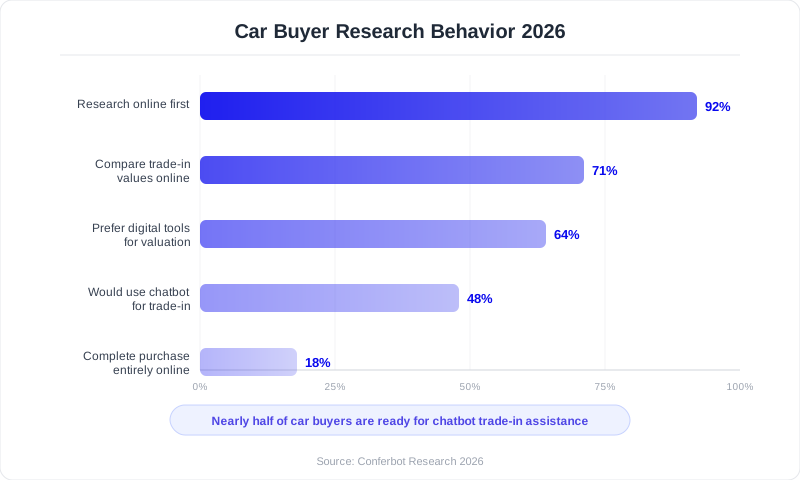
The automotive retail industry is overdue for digital transformation. According to Cox Automotive's 2025 Car Buyer Journey Study, 71% of car buyers now research their trade-in value online before ever contacting a dealership. They visit Kelley Blue Book, Edmunds, and Carfax to understand what their vehicle is worth. The problem? Those sites give them a value range but do not connect them to a specific dealership. A trade-in chatbot on your dealership website captures that customer at the moment of highest intent and creates a direct path from online valuation to in-dealership appointment.
Modern trade-in chatbots built on platforms like Conferbot combine structured valuation flows with natural language understanding so customers can ask follow-up questions ("Is my trade-in value affected by having aftermarket wheels?" or "Can I trade in a leased vehicle?"). The result is a digital experience that feels like talking to a knowledgeable salesperson, available 24 hours a day, 7 days a week.
This guide covers the complete picture: why dealerships need digital trade-in tools, how to design an effective valuation flow, integration with industry data sources, lead capture optimization, customer journey mapping, real-world dealership results, ROI analysis, and implementation instructions.
Why Dealerships Need Digital Trade-In Tools
The car buying journey has fundamentally shifted online. Dealerships that do not meet customers where they research -- on digital channels -- lose leads to competitors who do.
The Online Research Revolution
- 71% of buyers research their trade-in value online before visiting a dealership (Cox Automotive)
- 64% of customers say they would trade-in at the dealership that gives them the most convenient digital experience
- 83% of trade-in customers also buy a replacement vehicle from the same dealership -- making trade-in leads the highest-value leads a dealership can capture
- Average time on dealership websites has increased to 14 minutes per visit, signaling deep research intent
- 54% of website visitors who start a trade-in inquiry but encounter a long form abandon the process
Problem 1: Static Forms Kill Conversions
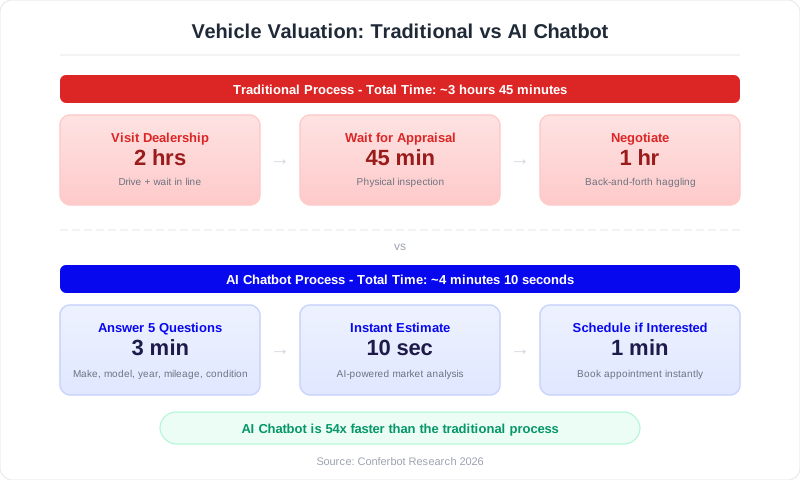
Most dealership websites use a trade-in form that asks for 15-20 fields: year, make, model, trim, VIN, mileage, condition of exterior, condition of interior, tire condition, accident history, modifications, ownership status, and contact details. These forms have completion rates of 8-15%. The customer fills out 6 fields, gets overwhelmed, and abandons. Their interest was real, but the friction was too high. A chatbot asks the same questions through a natural conversation, one at a time, achieving completion rates of 45-65%.
Problem 2: Phone Calls Are Declining
Younger buyers (under 45) increasingly avoid phone calls. They want to research, compare, and initiate transactions digitally. According to a HubSpot consumer survey, 62% of millennials and Gen Z consumers prefer messaging a business over calling it. Dealerships that rely primarily on phone-based trade-in inquiries are missing an entire generation of buyers.
Problem 3: Third-Party Sites Steal Your Leads
When customers visit KBB, Edmunds, or Carvana for trade-in values, those platforms capture the lead and may sell it to multiple dealerships (or in Carvana's case, buy the vehicle themselves). A trade-in chatbot on your own website captures the lead directly, exclusively, before the customer ever reaches a competitor or third-party platform.
Problem 4: After-Hours Opportunity Loss
Dealership sales floors are typically open 10-12 hours per day. But customers research vehicles and trade-in values throughout the evening and on Sundays. A chatbot captures trade-in leads 24/7, ensuring that the customer who decides at 11 PM on a Tuesday to trade in their car connects with your dealership first thing Wednesday morning -- not with a competitor who responded faster.
Designing the Vehicle Valuation Flow
The valuation flow is the core of a trade-in chatbot, leveraging vehicle data standards maintained by the National Automobile Dealers Association (NADA). It must be conversational enough to feel natural, structured enough to collect accurate data, and fast enough to respect the customer's time. Here is the optimal flow design.
Step 1: Entry and Intent
The chatbot opens with a clear, low-pressure invitation: "Thinking about trading in your vehicle? I can give you an estimated value in under 3 minutes -- no obligation, no pressure. Ready to start?" This sets expectations (fast, easy, no commitment) and gives the customer control.
Step 2: Vehicle Identification
Two paths for vehicle identification:
- VIN decode (fastest): "Do you have your VIN number handy? I can pull up your exact vehicle details automatically." A VIN decode via API provides year, make, model, trim, engine, transmission, and drivetrain instantly, eliminating 5-6 manual questions.
- Manual entry: "What year is your vehicle?" then make, model, trim. Use progressive dropdowns that narrow options at each step (selecting "Toyota" shows only Toyota models, selecting "Camry" shows only Camry trims).
Step 3: Condition Assessment
Keep the condition assessment simple but accurate. Use plain language, not industry jargon:
- Exterior condition: "How would you describe the outside of your vehicle?" [Excellent -- no visible damage / Good -- minor scratches or dings / Fair -- noticeable dents or paint damage / Needs work -- significant body damage]
- Interior condition: "And the inside?" [Excellent -- clean, no wear / Good -- normal wear, no stains or damage / Fair -- some stains or tears / Needs work -- significant damage]
- Mechanical condition: "Any mechanical issues? Check engine light, transmission problems, AC not working?" [Everything works great / Minor issues / Needs repairs]
Step 4: Key Value Factors
- "What's the current mileage?" (free text entry)
- "Has the vehicle been in any accidents?" [Yes / No]
- "How many keys do you have?" [Two sets / One set / None] (surprisingly impactful on value)
- "Any aftermarket modifications?" [None / Performance mods / Cosmetic mods / Lift kit or lowered]
Step 5: Valuation Delivery
Present the valuation as a range, not a single number: "Based on your 2021 Toyota Camry SE with 38,000 miles in good condition, your estimated trade-in value is $18,500 - $20,200. The final offer depends on an in-person inspection, which takes about 15 minutes. Would you like to schedule a free appraisal at our dealership?"
Presenting a range manages expectations and gives the sales team room to finalize based on the physical inspection. It also positions the in-person visit as a quick, simple next step rather than a commitment.
Step 6: Lead Capture and Appointment
"I'd love to connect you with our trade-in specialist. Can I get your name, email, and phone number? And would you like to schedule a time to bring your vehicle in for a final appraisal?" This captures the lead with a natural transition from value delivery to next step.
Integration with KBB, NADA, and Valuation APIs
The credibility of your trade-in chatbot depends on the accuracy of its valuations, drawing from industry-standard guides like Kelley Blue Book (KBB). Customers have already checked KBB or Edmunds before visiting your site -- if your chatbot's estimate is wildly different, they will not trust it. Integration with industry-standard valuation sources solves this.
Kelley Blue Book (KBB) API
KBB is the most recognized name in vehicle valuation among consumers. Their API provides trade-in values based on year, make, model, trim, mileage, condition, and regional market data. When your chatbot says "Based on Kelley Blue Book data, your vehicle's trade-in value is...," customers trust it because they recognize the brand.
Key integration details:
- API provides instant, retail, and trade-in values
- Regional market adjustments based on zip code
- Condition-based adjustments (excellent, good, fair, poor)
- Requires dealer licensing agreement
NADA Guides API
NADA is the valuation standard used by banks and financial institutions for loan decisions. It is particularly trusted for used vehicle wholesale values. For dealerships that want to show the "bank value" of a trade-in, NADA integration adds credibility with financially sophisticated customers.
Black Book / J.D. Power API
Black Book provides real-time wholesale auction data, reflecting what dealers actually pay for used vehicles at auction. This is the most accurate reflection of true wholesale value and helps dealerships set competitive trade-in offers. Some chatbot implementations show both KBB consumer-facing values and Black Book wholesale values to demonstrate transparency.
VIN Decode Services
VIN decoding (via DataOne, NHTSA, or ChromeData APIs) converts a 17-character VIN into complete vehicle specifications: year, make, model, trim, engine, transmission, drivetrain, factory options, and recall history. This eliminates manual data entry errors and speeds up the valuation process dramatically.
Integration Architecture
The optimal architecture for a trade-in chatbot:
- Customer provides VIN or year/make/model through the chatbot conversation
- Chatbot calls VIN decode API to verify and enrich vehicle data
- Chatbot collects mileage and condition through conversation
- Chatbot calls valuation API (KBB, NADA, or Black Book) with complete vehicle data
- Valuation response is formatted into a customer-friendly range and presented in the chat
- Lead data (vehicle details + customer contact + valuation) is pushed to the dealership's CRM
This flow executes in real time -- the customer experiences no delay between providing information and receiving their valuation estimate.
Lead Capture Optimization for Auto Dealerships
A trade-in chatbot is fundamentally a lead generation tool. The valuation is the value exchange -- customers share their information in return for knowing what their vehicle is worth. Here is how to optimize every step for maximum lead capture.
The Value-First Principle
Always deliver value before requesting contact information. Show the trade-in estimate first, then ask for the customer's name, email, and phone number. This inverts the traditional dealership form experience (contact info first, value later) and increases lead capture rates by 40-60%.
Soft Contact Capture
Instead of asking "What's your email?" (which feels transactional), position the request as a service: "I can email you a detailed valuation report with your vehicle's trade-in range, comparable sales data, and current market trends. What email should I send it to?" The customer receives genuine value (the report), and you capture their contact information naturally.
Buying Intent Qualification
Trade-in leads are uniquely valuable because they signal buying intent. A customer exploring trade-in value is almost always considering buying a replacement vehicle. The chatbot should qualify this intent:
- "Are you looking to trade in toward a new or used vehicle?"
- "Do you have a specific vehicle in mind, or are you still exploring options?"
- "What's your ideal monthly payment range?"
- "When are you looking to make the switch?"
This qualification data is gold for the sales team. A lead that says "I want to trade my 2021 Camry toward a 2026 RAV4, budget of $450/month, ready this month" is a deal waiting to happen.
Inventory Matching
Once you know the customer's replacement vehicle preferences, the chatbot can show matching inventory from your lot: "Based on your interest in a 2026 RAV4, we currently have 6 in stock. Here are the top matches for your budget." This transforms the conversation from a trade-in inquiry into an active sales opportunity, all within the chatbot.
Appointment Scheduling
The natural next step after valuation and inventory matching is scheduling an appraisal visit. The chatbot should offer specific times (not just "call us"): "Would you like to bring your Camry in for a free 15-minute appraisal? I have openings tomorrow at 10 AM, 2 PM, and 4 PM. Which works best?" Specific time slots convert 3x better than generic "schedule a visit" CTAs because they reduce the effort required from the customer.
Follow-Up Automation
Not every trade-in lead converts immediately. Some are 30-90 days away from action. Set up automated follow-up sequences through the chatbot:
- 24 hours after valuation: "Your trade-in valuation for your 2021 Camry is ready for review. Tap here to see the full report."
- 7 days later: "Market update: Values for 2021 Camrys in your area have [increased/held steady]. Your trade-in window is still strong."
- 30 days later: "Still thinking about trading in? We have new incentives this month that could increase your trade-in value. Want to chat?"
Customer Journey Mapping for Trade-In Leads
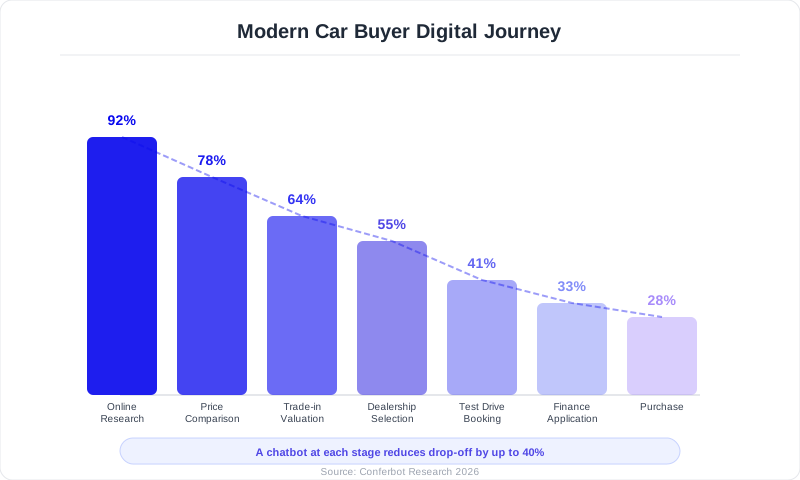
Understanding the complete customer journey from first trade-in thought to dealership visit, mapped against insights from Cox Automotive's market research, helps you position the chatbot at the right touchpoints and deliver the right message at each stage.
Stage 1: Awareness (Online Research)
The customer realizes their current vehicle is aging, has high mileage, or no longer fits their needs. They start researching: "What is my car worth?" They visit KBB, Edmunds, Google. Chatbot opportunity: Your chatbot on Google search landing pages or your website's trade-in page intercepts this research with an instant valuation offer.
Stage 2: Consideration (Comparing Options)
The customer knows their approximate trade-in value and starts exploring replacement vehicles. They compare dealerships, browse inventory, and look for the best overall deal (trade-in value + purchase price + financing). Chatbot opportunity: The chatbot combines trade-in valuation with inventory matching and payment estimates: "Your Camry trade-in of $19,000 plus $2,000 down puts your monthly payment for this RAV4 at approximately $420/month."
Stage 3: Decision (Dealership Selection)
The customer is ready to act and chooses a dealership based on trust, convenience, and perceived deal quality. Chatbot opportunity: The chatbot schedules the appraisal appointment, provides directions and parking information, and sets expectations for the visit: "Bring your vehicle, title, registration, and both key sets. The appraisal takes about 15 minutes."
Stage 4: Transaction (In-Dealership)
The customer visits the dealership for the in-person appraisal and (ideally) purchases a replacement vehicle. Chatbot opportunity: After the visit, the chatbot follows up: "How was your experience at [Dealership]? We'd love your feedback." This drives Google reviews and identifies unhappy customers before they post negative reviews.
Multi-Channel Presence
The customer journey spans multiple channels. Your chatbot should be present on each:
- Dealership website: Trade-in page, vehicle detail pages (VDPs), homepage
- Google Business Profile: Chat link for customers who find you through local search
- Facebook and Instagram: Respond to DMs with trade-in valuation flows
- WhatsApp: Especially effective for follow-up and appointment reminders
- Email: Embed chatbot links in marketing emails ("What's your current car worth? Find out in 2 minutes")
Dealership Case Studies
These examples demonstrate the measurable impact of trade-in chatbots across different dealership types and sizes.
Case Study 1: Single-Point Franchise Dealer
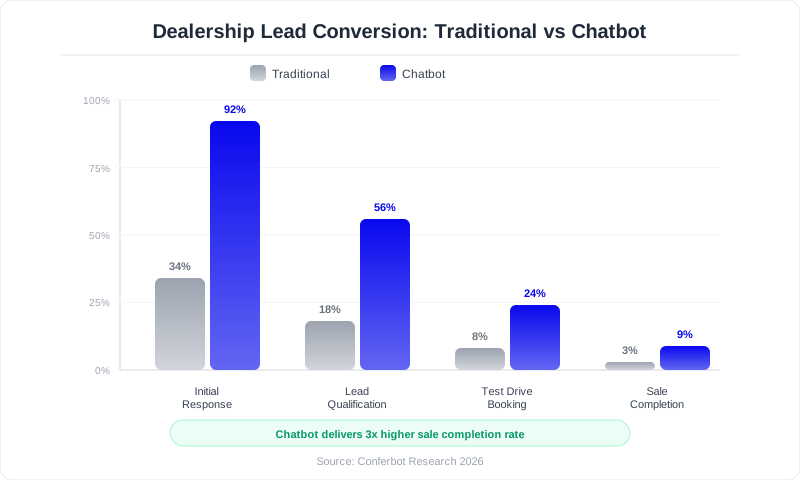
A Honda dealership in suburban Atlanta deployed a trade-in chatbot on their website and Facebook page. Before the chatbot, their website trade-in form generated 25-30 leads per month with a 12% form completion rate. After deploying the chatbot, the same traffic generated dramatically better results.
Results after 90 days:
- Trade-in leads per month: 30 up to 112 (273% increase)
- Valuation flow completion rate: 12% (form) up to 58% (chatbot)
- Lead-to-appointment rate: 22% up to 41%
- Trade-in transactions per month: 8 up to 27
- Since 83% of trade-in customers also purchased, this generated 22 additional vehicle sales per month
- Incremental monthly gross profit: $44,000 (at $2,000 average front-end gross per deal)
Case Study 2: Used Car Superstore
A used car retailer with 500+ vehicles in inventory deployed a chatbot specifically for trade-in acquisition. Their business model depends on acquiring quality used inventory, and traditional trade-in leads were expensive (averaging $85 per lead through third-party providers). The chatbot reduced acquisition costs dramatically.
Results:
- Cost per trade-in lead: $85 (third-party) down to $12 (chatbot on own website)
- Lead quality: chatbot leads had 2.3x higher appraisal show rate than third-party leads
- Monthly trade-in acquisitions: increased 40% while reducing marketing spend by 25%
- Inventory acquisition cost savings: $180,000 annually
Case Study 3: Multi-Rooftop Auto Group
A 7-dealership auto group deployed chatbots across all locations with centralized lead management. The chatbot routed trade-in leads to the nearest location based on the customer's zip code and matched replacement vehicle inquiries to the location with the best inventory match.
Results:
- Group-wide trade-in leads: increased from 180/month to 620/month
- Average time from lead capture to salesperson contact: reduced from 4.2 hours to 22 minutes
- Lead-to-sale conversion: improved from 6% to 14%
- Customer satisfaction (post-purchase survey): 4.7/5.0 for customers who started with the chatbot vs. 4.1/5.0 for traditional leads
Case Study 4: Electric Vehicle Specialist
An EV-focused dealership used a specialized trade-in chatbot that addressed unique EV trade-in considerations: battery health and warranty status, remaining EV tax credit eligibility, and charging infrastructure value. The chatbot educated customers about EV-specific trade-in factors that generic valuation sites do not address.
Results:
- EV trade-in inquiries: 45% increase in 60 days
- Customer education reduced pricing objections during in-person appraisals
- Average time to complete deal: reduced by 35 minutes because customers arrived informed
ROI Analysis for Dealership Trade-In Chatbots
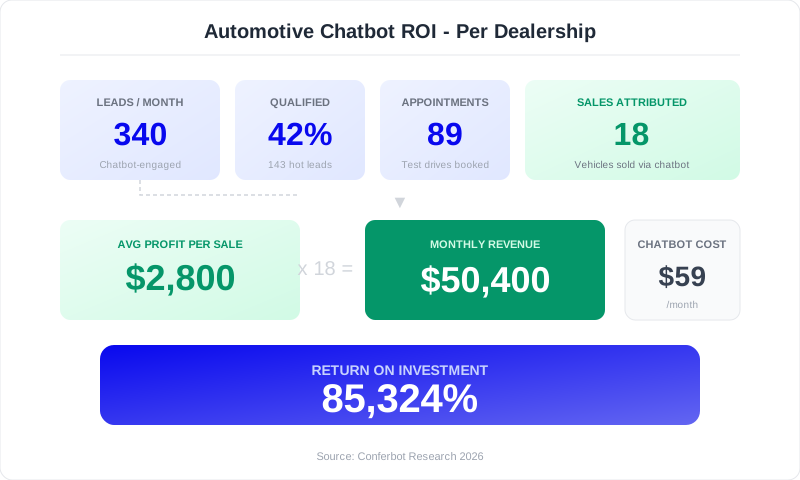
Auto dealerships operate on volume and margin. A trade-in chatbot needs to demonstrate clear impact on both. Here is the transparent math.
Investment
| Cost Category | Amount |
|---|---|
| Chatbot platform (Conferbot) | $100-300/month |
| Valuation API integration (KBB/NADA) | Varies by provider (often included in dealer subscription) |
| VIN decode API | $50-200/month depending on volume |
| CRM integration setup | $0-500 one-time |
| Monthly management | 2-3 hours/month (BDC or internet manager time) |
Annual cost: $2,400-$6,000
Returns (Single-Point Dealer)
| Metric | Value |
|---|---|
| Additional trade-in leads per month | 60-80 |
| Lead-to-appraisal appointment rate | 40% |
| Appraisal-to-trade rate | 65% |
| Trade-in customers who also buy | 83% |
| Additional vehicle sales per month | 13-17 |
| Average front-end gross per deal | $2,000 |
| Additional monthly gross profit | $26,000-$34,000 |
| Additional annual gross profit | $312,000-$408,000 |
ROI: 52x-170x return on investment.
The ROI is enormous because the chatbot captures leads from traffic you are already paying for. Your website visitors have intent -- they are on your trade-in page -- but without the chatbot, 85-90% of them leave without engaging. The chatbot converts that wasted traffic into real opportunities.
Additional Value: Inventory Acquisition Cost Reduction
Dealers who buy trade-ins also benefit from lower inventory acquisition costs. Acquiring a vehicle through trade-in costs $500-1,500 less than buying at auction (transport, auction fees, reconditioning from unknown history). Each additional trade-in acquired through the chatbot saves the dealership money on the acquisition side while generating profit on the retail side. For dealerships acquiring 15+ additional trade-ins per month via chatbot, this represents an additional $90,000-$270,000 in annual savings.
Cost Per Lead Comparison
| Lead Source | Average Cost Per Lead | Average Quality (Show Rate) |
|---|---|---|
| Third-party lead providers | $75-120 | 25-30% |
| Google Ads (search) | $35-65 | 20-35% |
| Website form (organic) | $15-30 | 35-45% |
| Trade-in chatbot (organic) | $8-15 | 45-60% |
Chatbot leads are not only the cheapest but also the highest quality because the conversational qualification process ensures every lead comes with detailed vehicle data and buying intent signals.
Implementation Guide for Dealership Chatbots
Here is the step-by-step deployment plan for a trade-in chatbot, designed for dealership internet managers, BDC directors, and general managers.
Week 1: Setup and Configuration
- Choose your platform: Select a no-code chatbot builder with automotive template support
- Configure the valuation flow: Build the vehicle identification, condition assessment, and valuation delivery conversation following the flow design outlined earlier in this guide
- Set up valuation API: Connect to KBB, NADA, or Black Book for real-time trade-in values
- Integrate VIN decode: Enable instant vehicle identification from VIN entry
- Connect your CRM: Push leads to VinSolutions, DealerSocket, elead, or your DMS with complete vehicle data and customer information
Week 2: Deployment and Training
- Install on your website: Add the chatbot widget to your trade-in page, VDP pages, and homepage. Use page-specific triggers: on the trade-in page, the chatbot opens with "Want to know what your car is worth?" On VDP pages: "Thinking about trading in toward this [Vehicle]?"
- Connect to social channels: Deploy on Facebook Messenger and Instagram for social media trade-in inquiries
- Train your BDC/sales team: Show them how chatbot leads appear in the CRM, what data is attached, and the expected follow-up SLA (under 30 minutes for hot leads)
- Create follow-up templates: Prepare email and text templates for BDC follow-up that reference the chatbot valuation ("Hi [Name], I see you received an estimated trade-in value of $[X]-$[Y] for your [Vehicle]. I'd love to finalize that for you...")
Week 3-4: Optimization
- Review analytics: Use chatbot analytics to track completion rates, drop-off points, and lead quality scores
- Optimize drop-off points: If customers drop off at the condition assessment, simplify the questions. If they drop off at contact capture, add more value before the ask
- A/B test opening messages: Test different greetings on your trade-in page to find the highest engagement rate
- Add FAQ content: Upload common trade-in questions to the knowledge base: "Can I trade in a car with a loan?" "What documents do I need for a trade-in?" "Do you accept trade-ins from out of state?"
The Future of AI in Automotive Retail
The trade-in chatbot is just the beginning of AI transformation in automotive retail, a trend that McKinsey's automotive research predicts will reshape the entire dealership model. Here are the trends that will reshape how dealerships operate over the next 2-3 years.
Visual Vehicle Assessment
AI-powered visual recognition will allow customers to take photos of their vehicle and receive condition-based valuation adjustments in real time. Snap a photo of a dent, and the chatbot estimates the repair cost deduction. This increases valuation accuracy and transparency while reducing the gap between chatbot estimates and in-person appraisal offers.
End-to-End Digital Retailing
The chatbot will expand from trade-in valuation to complete deal structuring within the conversation. Trade-in value + new vehicle selection + financing pre-approval + F&I product presentation + digital contract signing -- all through a conversational interface. Customers will arrive at the dealership with the deal already structured, reducing average transaction time from 3-4 hours to under 1 hour.
Predictive Trade-In Outreach
AI will predict when existing customers are likely to trade in based on patterns: vehicle age, mileage, lease maturity, service history, and market conditions. The chatbot will proactively reach out: "Your 2022 Civic is approaching 50,000 miles. Based on current market conditions, now is an optimal time to trade in -- values for your model are 8% above average. Want a valuation?" This turns the chatbot from a reactive tool into a proactive customer lifecycle management platform.
Voice-Enabled Valuations
Voice AI will enable trade-in valuations through smart speakers and phone assistants. A customer can say "What's my 2021 Toyota Camry with 40,000 miles worth?" and receive an instant valuation with a prompt to connect with the nearest dealer. This new channel will capture trade-in intent at the earliest stage of consideration.
Integration with Online Marketplaces
Chatbots will integrate with Facebook Marketplace, Craigslist, and other platforms where consumers list vehicles for private sale. When a private seller's listing is not selling, the chatbot can reach out: "Having trouble selling your [Vehicle]? We can offer you $[X] as a trade-in toward a new vehicle, eliminating the hassle of private sale." This creates a new acquisition channel that competitors are not yet exploiting.
Dealerships that invest in conversational AI today will be best positioned to adopt these advanced capabilities as they mature. The chatbot infrastructure -- customer data, conversation history, integration architecture -- compounds in value over time, creating a competitive advantage that is difficult for late adopters to replicate.
Was this article helpful?
About the Author

The Conferbot team specializes in conversational AI, chatbot strategy, and customer engagement automation. With deep expertise in building AI-powered chatbots, they help businesses deliver exceptional customer experiences across every channel.
View all articles