What Is a Physical Therapy Chatbot?
A physical therapy chatbot is an AI-powered conversational assistant designed for PT clinics, rehabilitation centers, and outpatient therapy practices. It handles patient intake forms, insurance verification, appointment scheduling, exercise program reminders, progress tracking, and patient communication across digital channels. The chatbot operates on your clinic's website, WhatsApp, SMS, and patient portals, providing patients with immediate, helpful interaction at any time of day.
Physical therapy clinics face a set of operational challenges that make them uniquely suited for chatbot automation. The intake process for a new PT patient is one of the most form-heavy in healthcare: medical history, current condition details, pain assessments, insurance information, prior authorization status, referring physician details, and consent forms. Completing this paperwork typically consumes 20-35 minutes of in-office time per new patient, creating bottlenecks at the front desk, delaying treatment start times, and frustrating patients who arrived expecting therapy, not clipboard duty.
Beyond intake, PT clinics struggle with a challenge unique to rehabilitation: patient adherence to home exercise programs (HEPs). Studies published in the Journal of Orthopaedic & Sports Physical Therapy consistently show that 50-70% of PT patients do not complete their prescribed home exercises. This non-adherence extends treatment timelines, reduces outcomes, and ultimately costs the clinic revenue as patients plateau and drop off before completing their plan of care.
A physical therapy chatbot addresses both challenges. It collects intake information through a guided conversation before the patient's first visit, reducing in-office paperwork to a quick signature. Between visits, it sends exercise reminders, tracks adherence, collects pain and progress ratings, and alerts the therapist when a patient reports unusual symptoms or declining progress. Modern PT chatbots built on platforms like Conferbot combine structured clinical flows with natural language AI that handles open-ended patient questions: "Is it normal for my knee to swell after exercises?" "Can I reschedule my Thursday appointment?" "Do you accept Blue Cross insurance?"
This guide covers every aspect of deploying a PT chatbot: the patient intake bottleneck, exercise adherence challenges, key features, HIPAA compliance requirements, integration with practice management systems, real-world performance data, ROI analysis, and step-by-step implementation instructions for clinics of all sizes.
The Physical Therapy Industry in 2026: Challenges and Opportunities
The physical therapy market is growing rapidly, but the operational challenges facing clinics are intensifying. Understanding this landscape explains why chatbot automation is becoming essential rather than optional.
Market Growth and Demand Surge
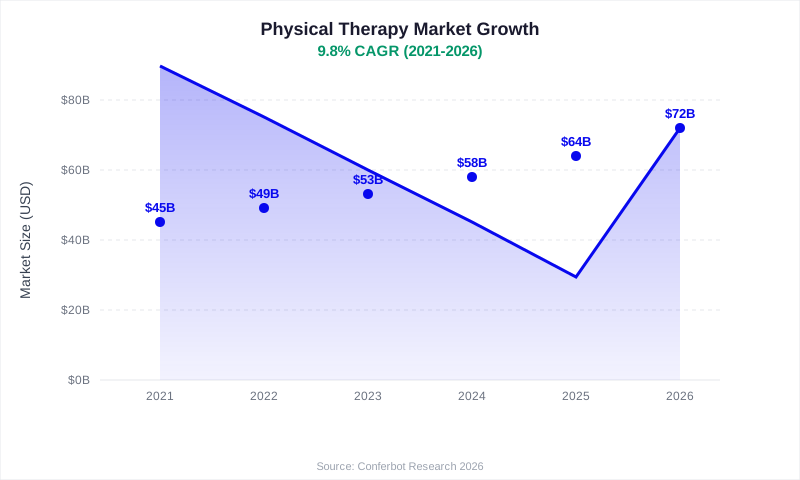
The global physical therapy market is projected to reach $72.5 billion by 2028, growing at a compound annual rate of 6.2%. In the United States alone, an aging population, rising sports participation, post-surgical rehabilitation demand, and growing awareness of physical therapy as a first-line treatment for musculoskeletal conditions are driving patient volumes higher each year. The Bureau of Labor Statistics projects 15% employment growth for physical therapists through 2032, significantly faster than average for all occupations.
The Staffing Crisis
Despite demand growth, PT clinics face a severe staffing shortage. The American Physical Therapy Association (APTA) reports that clinic staff vacancies average 18-24% nationwide. Front desk staff turnover is even higher, with many clinics cycling through administrative employees every 6-12 months. This staffing instability makes it impossible to maintain consistent patient communication, efficient intake processing, and timely appointment management. Every task that can be automated frees human staff for patient-facing activities that require clinical judgment and empathy.
The Referral-to-Visit Conversion Problem
Not every referral becomes a patient. When a physician refers a patient to physical therapy, there is a gap between the referral and the first visit. According to industry data, 30-40% of PT referrals never convert to an initial evaluation. Patients lose momentum, get busy, forget to call, or encounter friction when trying to schedule. A chatbot that engages referred patients immediately -- confirming insurance, checking schedule availability, and booking the initial evaluation -- dramatically improves referral conversion.
Insurance Complexity
Physical therapy billing is among the most complex in healthcare. Insurance verification alone (checking coverage, remaining visits, copay amounts, prior authorization requirements, and deductible status) consumes 15-25 minutes per patient for front desk staff. Patients frequently ask questions about their coverage that staff cannot answer without making phone calls to insurance companies. A chatbot that collects insurance information upfront and provides preliminary verification reduces this administrative burden significantly.
The Home Exercise Compliance Gap
The single biggest factor determining PT outcomes is patient adherence to their home exercise program. Yet compliance rates are dismal. Research from BMC Musculoskeletal Disorders found that only 35% of patients fully adhere to their prescribed exercises, while another 30-35% partially adhere, and 30-35% rarely or never do the exercises. The primary barriers are forgetting, uncertainty about proper form, lack of perceived progress, and absence of accountability between visits. A chatbot that sends daily reminders, checks in on completion, and reports adherence data to the therapist addresses each of these barriers directly.
Patient Intake Automation: From 35 Minutes to 5 Minutes
Patient intake is the first experience a new patient has with your clinic, and according to the American Physical Therapy Association (APTA), it sets the tone for the entire therapeutic relationship. It sets the tone for the entire therapeutic relationship. A chatbot transforms intake from a frustrating paperwork exercise into a smooth, guided conversation.
The Traditional Intake Problem
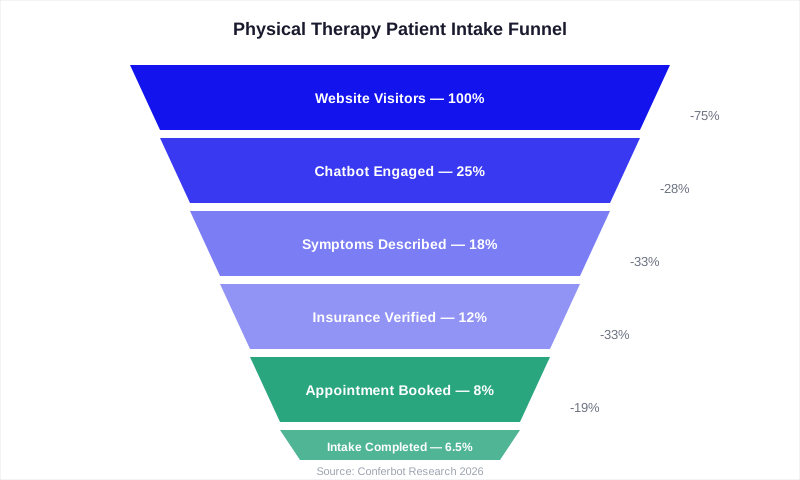
In a typical PT clinic, new patient intake follows this pattern: the patient arrives 15-20 minutes early, receives a clipboard with 6-10 pages of forms, fills them out by hand (often illegibly), hands them to the front desk staff, who then manually enters the information into the practice management system (introducing transcription errors), while the therapist waits or starts late. The total process consumes 20-35 minutes of the patient's time and 10-15 minutes of staff time. It is a poor first impression for a healthcare provider that promises to make people feel better.
Chatbot-Guided Pre-Visit Intake
With a chatbot, intake happens before the patient sets foot in the clinic. The process works as follows:
- Trigger: When a new appointment is booked (via chatbot, phone, or referral), the system sends the patient a link to complete intake via the chatbot on the clinic's website or through WhatsApp/SMS.
- Personal information: The chatbot collects name, date of birth, address, phone, email, and emergency contact through a guided conversation. Each question is presented individually, which feels less overwhelming than a full-page form.
- Insurance information: The chatbot asks for insurance provider, member ID, group number, and subscriber relationship. It can photograph the insurance card (front and back) for verification.
- Medical history: Rather than a dense checklist, the chatbot walks through medical history conversationally: "Do you have any of the following conditions?" with grouped categories (cardiovascular, respiratory, neurological, musculoskeletal, endocrine). It only digs deeper into categories where the patient indicates relevance.
- Current condition: "Tell me about the issue that's bringing you to physical therapy." The chatbot collects onset date, mechanism of injury, pain location (using a body diagram), pain intensity (0-10 scale), aggravating and relieving factors, and functional limitations.
- Medications: "Are you currently taking any medications?" with the ability to list each medication, dosage, and frequency.
- Consent and acknowledgments: Present clinic policies, HIPAA notice, consent to treat, and financial responsibility acknowledgment. Collect electronic signatures.
- Referring physician: If applicable, collect the referring provider's name, practice, and fax number for documentation.
Benefits of Chatbot Intake
- Time reduction: Average intake time drops from 35 minutes to 5-8 minutes (patients complete at home at their own pace)
- Data accuracy: Typed responses eliminate handwriting interpretation errors. Structured fields prevent missing information.
- Staff time savings: Eliminates 10-15 minutes of manual data entry per new patient
- Patient satisfaction: Patients appreciate completing paperwork from their couch rather than in a waiting room. Pre-visit intake also means the therapist can review the case before the patient arrives, leading to more productive first visits.
- No-show reduction: Patients who invest time in completing intake are more committed to attending. Clinics report 20-30% lower no-show rates for patients who complete chatbot intake versus those who planned to fill out forms on arrival.
Exercise Reminders and Home Program Adherence
Home exercise program adherence is the single most important factor in PT outcomes, a finding confirmed by research published in the National Library of Medicine (PubMed), and it is where chatbots deliver their most transformative value. The difference between a patient who does their exercises and one who does not is often the difference between a 6-visit recovery and a 20-visit recovery (or no recovery at all).
Why Patients Do Not Do Their Exercises
Understanding the barriers to adherence is essential for designing effective chatbot interventions:
- Forgetting: Life gets busy. The exercises prescribed on Tuesday are forgotten by Thursday. Without a prompt, many patients simply do not remember.
- Uncertainty: "Am I doing this right?" Patients worry about performing exercises incorrectly and potentially worsening their condition. This anxiety causes them to avoid the exercises entirely.
- Lack of perceived progress: Rehabilitation is gradual. Without regular feedback, patients feel like the exercises are not working and lose motivation.
- Pain and fear: Some exercises cause temporary discomfort. Without guidance on what is "normal" discomfort versus problematic pain, patients stop at the first sign of soreness.
- No accountability: Between visits (often 2-3 times per week), there is no check-in. Patients know that their therapist has no way of knowing whether they did the exercises or not.
Chatbot-Driven Adherence System
A PT chatbot creates an accountability and support system between visits:
Daily Exercise Reminders
The chatbot sends a reminder at the patient's preferred time: "Good morning, Alex! Time for your knee rehabilitation exercises. Today's program: quad sets (3x15), straight leg raises (3x10), and hamstring stretches (3x30 seconds). Ready to start?" The patient can respond "Done," "Partially done," or "Skipping today."
Progress Tracking
After each exercise session, the chatbot collects brief feedback:
- "How was your pain level during exercises today?" (0-10 scale)
- "Any new symptoms or concerns?" (Yes/No with detail if yes)
- "How confident are you in your exercise form?" (1-5 scale)
This data creates a longitudinal record that the therapist reviews before each visit, enabling targeted adjustments and encouragement.
Adaptive Reminders
The chatbot adjusts its approach based on patient behavior:
- For compliant patients: Positive reinforcement. "Great job this week, Alex! You've completed all 5 sessions. Your therapist will be impressed."
- For partially compliant patients: Gentle nudges. "You've done 3 of 5 sessions this week. Even one more session before your appointment will make a difference. Can you do your exercises tonight?"
- For non-compliant patients: Motivational messaging with barrier identification. "I noticed you haven't done exercises this week. Is there something making it difficult? [Too busy / Pain during exercises / Not sure about form / Other]" The response triggers appropriate support.
Symptom Monitoring and Alerts
When a patient reports unusual symptoms through the chatbot -- sudden increase in pain, new numbness or tingling, swelling, or loss of range of motion -- the system alerts the therapist immediately. This early warning system catches complications between visits that might otherwise go unreported until the next appointment, potentially preventing setbacks and emergency visits.
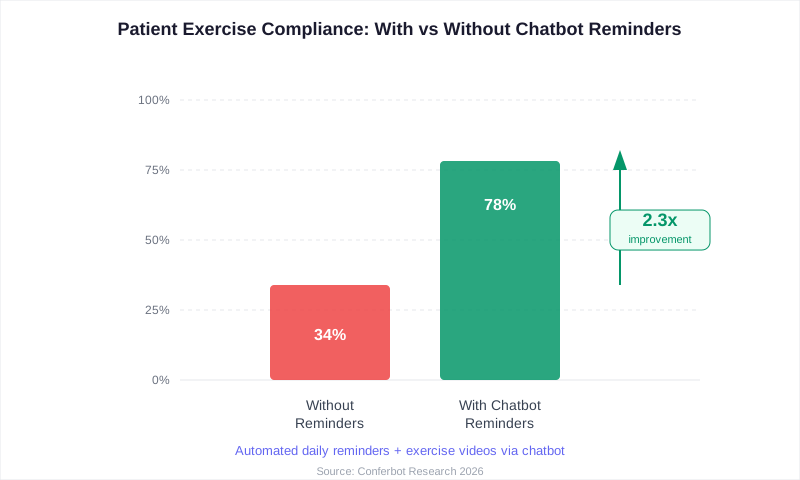
Impact on Clinical Outcomes
Clinics implementing chatbot-driven exercise reminders report significant improvements:
- Exercise adherence: increases from 35% to 72-80%
- Average visits to discharge: decreases by 15-25% (patients progress faster with consistent exercise)
- Patient satisfaction scores: increase 20-30% (patients feel supported between visits)
- Plan of care completion rate: increases from 55% to 78% (fewer patients drop off before completing treatment)
Appointment Scheduling and Insurance Verification
Beyond intake and exercise reminders, chatbots automate two of the most time-consuming administrative tasks in a PT clinic: appointment scheduling and insurance verification.
Intelligent Appointment Scheduling
PT scheduling is more complex than general medical scheduling. Appointments must consider:
- Therapist specialization: A hand therapy patient should see a certified hand therapist. A vestibular patient needs a therapist trained in vestibular rehabilitation. The chatbot matches patients to appropriate therapists.
- Equipment availability: Certain treatments require specific equipment (pool for aquatic therapy, dry needling room, traction table). The chatbot checks equipment availability alongside therapist availability.
- Visit frequency: Most PT prescriptions call for 2-3 visits per week. The chatbot books multiple appointments at once: "Dr. Johnson prescribed 3 visits per week. I have Monday at 10am, Wednesday at 2pm, and Friday at 9am available this week. Shall I book all three?"
- Insurance authorization limits: If a patient's insurance authorizes 12 visits, the chatbot tracks remaining authorized visits and alerts when approaching the limit: "You have 3 authorized visits remaining. Your therapist will discuss a re-authorization request at your next appointment."
Automated Appointment Reminders
PT clinics experience no-show rates of 12-18%, each representing lost revenue and a wasted therapist slot. Chatbot reminders reduce no-shows significantly:
- 48 hours before: "Reminder: You have a PT appointment with Dr. Rivera on Wednesday at 2pm. Reply CONFIRM to confirm or RESCHEDULE to change."
- Day of, 2 hours before: "Your PT appointment is in 2 hours at [Clinic Name], 123 Main St. Remember to wear comfortable clothing and bring your insurance card."
- After a no-show: "We missed you at your appointment today. Regular therapy sessions are important for your recovery. Would you like to reschedule? I have openings tomorrow and Thursday."
Clinics using chatbot reminders report no-show reductions of 35-45%, translating directly to revenue recovery.
Insurance Verification Flow
The chatbot streamlines insurance verification by collecting information before the first visit:
- Insurance card capture: "Please share a photo of the front and back of your insurance card, or enter your insurance details manually."
- Preliminary verification: The chatbot confirms the insurance company, plan type, and member ID. For common insurers, it can provide general information: "Blue Cross PPO plans typically cover PT with a $30 copay per visit and a 20-visit annual limit. We'll verify your specific benefits before your first visit."
- Prior authorization check: "Does your insurance require a referral or prior authorization for physical therapy? [Yes / No / Not sure]" If unsure, the chatbot flags the case for staff to verify before the appointment.
- Financial responsibility: "Based on your insurance information, your estimated copay is $30 per visit. We'll confirm this after full verification. Are you comfortable proceeding?"
This pre-visit verification prevents the common and frustrating scenario where a patient arrives, fills out paperwork, waits for their appointment, and then discovers their insurance is not accepted or requires prior authorization -- wasting the patient's time and the therapist's slot.
HIPAA Compliance for Physical Therapy Chatbots
Any chatbot handling patient health information (PHI) in a healthcare setting must comply with HIPAA, as detailed on HHS.gov's HIPAA resource page (Health Insurance Portability and Accountability Act) regulations. Non-compliance carries penalties of $100-$50,000 per violation, with annual maximums of $1.5 million per violation category. Here is how to ensure your PT chatbot is HIPAA-compliant.
What Constitutes PHI in a Chatbot?
Protected health information includes any individually identifiable health information transmitted or maintained by the chatbot:
- Patient name combined with any health condition, treatment, or insurance information
- Pain ratings, exercise adherence data, and symptom reports
- Insurance member IDs and coverage details
- Appointment dates and therapist assignments
- Medical history collected during intake
- Photographs of insurance cards or body diagrams showing pain locations
Essentially, if the chatbot knows who the patient is and anything about their health or healthcare, it is handling PHI.
Technical Safeguards
- Encryption: All chatbot data must be encrypted in transit (TLS 1.2 or higher) and at rest (AES-256 encryption). This applies to conversation transcripts, stored intake data, and any cached information.
- Access controls: Role-based access to chatbot conversation data. Front desk staff may see scheduling conversations; only therapists see clinical data; only administrators see billing information.
- Audit trails: Maintain logs of who accessed what patient data and when. This is a core HIPAA requirement.
- Session management: Auto-expire chatbot sessions after inactivity to prevent unauthorized access on shared or unattended devices.
- Data minimization: Collect only the PHI necessary for the chatbot's function. Do not store complete medical histories if the chatbot only needs current condition information.
Business Associate Agreement (BAA)
Your chatbot platform provider is a business associate under HIPAA because it processes PHI on your behalf. You must have a signed Business Associate Agreement (BAA) with your chatbot vendor before deploying the system. The BAA specifies how the vendor protects PHI, how breaches are reported, and the vendor's compliance obligations. If your chatbot vendor will not sign a BAA, they are not HIPAA-compliant and cannot be used for patient-facing healthcare chatbots.
Patient Consent
Before collecting PHI through the chatbot, obtain patient consent:
- Clearly identify the chatbot as an automated system: "You are chatting with [Clinic Name]'s virtual assistant, not a healthcare provider."
- Explain what data will be collected and how it will be used
- Provide a link to the clinic's HIPAA privacy notice
- Obtain affirmative consent before collecting sensitive information: "To prepare for your visit, I'll collect some medical and insurance information. This is protected under HIPAA. Do you consent to provide this information? [Yes / No]"
Communication Channel Considerations
Not all communication channels are equally HIPAA-appropriate:
- Website chatbot (with authentication): HIPAA-compliant when properly secured with encryption and access controls
- SMS: Standard SMS is not encrypted and is not inherently HIPAA-compliant. Use for appointment reminders (minimal PHI) but not for collecting detailed health information.
- WhatsApp: End-to-end encrypted, but WhatsApp's terms of service and data handling practices require careful review for HIPAA compliance.
- Patient portal integration: The most HIPAA-appropriate channel for exchanging detailed health information. The chatbot operates within the authenticated patient portal environment.
What the Chatbot Should NOT Do
To maintain HIPAA compliance and avoid clinical liability:
- Never provide medical diagnoses or clinical recommendations
- Never modify a treatment plan or exercise prescription
- Never tell a patient to stop or change their exercises without therapist approval
- Never store PHI longer than necessary for its intended purpose
- Always include a disclaimer: "This virtual assistant provides administrative support and general information. For medical questions or concerns, please contact your physical therapist directly."
Integration with Practice Management and EMR Systems
A PT chatbot delivers maximum value when it connects to your clinic's practice management and electronic medical records systems. Here is how to integrate effectively.
Practice Management Software
The major PT practice management platforms support API integrations:
- WebPT: The most widely used PT-specific EMR/practice management system. Integrate chatbot intake data, appointment scheduling, and insurance information directly into WebPT patient records.
- Clinicient (now part of WebPT): Cloud-based practice management with scheduling, documentation, and billing. Sync chatbot-captured data for seamless workflow.
- TheraOffice: Comprehensive PT management system. Map chatbot data fields to TheraOffice patient records, scheduling, and authorization tracking.
- StrataPT: Billing and practice management focused on revenue cycle. Push chatbot-captured insurance data for faster verification and claims processing.
- Prompt EMR: Modern cloud-based PT platform. Direct integration for scheduling, intake, and patient communication.
The critical data flows from chatbot to practice management system include: new patient demographics and contact information, insurance details and card images, medical history and current condition information, appointment bookings and modifications, exercise adherence data and patient-reported outcomes, and symptom alerts requiring therapist review.
Home Exercise Program Platforms
Many clinics use dedicated HEP software to prescribe and deliver exercise programs:
- MedBridge: Exercise library with video demonstrations and patient engagement tools
- PT Pal: Mobile-first exercise delivery with adherence tracking
- PhysiApp: Video exercise prescription and outcome tracking
- HEP2go: Free exercise handout generator
Integrating the chatbot with your HEP platform creates a powerful adherence loop: the HEP platform provides the exercise content (videos, descriptions, sets/reps), and the chatbot provides the engagement layer (reminders, check-ins, progress tracking, symptom monitoring). Together, they keep patients connected to their program between visits.
Scheduling and Calendar Integration
Sync the chatbot with your clinic's scheduling system (whether built into your practice management software or a standalone system like Calendly or Acuity) for real-time availability. The chatbot should show only available slots, account for therapist specialties and equipment requirements, and automatically block time for initial evaluations (which typically require longer slots than follow-up visits).
Billing and Payment
Integrate payment processing for copay collection. When a patient books an appointment, the chatbot can collect the copay in advance: "Your copay for this visit is $30. Would you like to pay now to save time at check-in?" Pre-visit copay collection reduces check-in time and improves collections. Integrate with Stripe, Square, or your practice management system's built-in payment processing.
Analytics and Reporting
Connect chatbot data to analytics dashboards to track operational metrics: intake completion rates, appointment booking conversion, no-show rates, exercise adherence by patient, symptom alert frequency, and patient satisfaction scores. These metrics should flow into your clinic's KPI dashboard for management review and continuous improvement.
PT Clinic Success Stories
These examples illustrate the measurable impact of chatbots across different types and sizes of physical therapy practices.
Example 1: Multi-Location Orthopedic PT Practice
A practice with 4 locations and 18 therapists deployed a chatbot to handle intake, scheduling, and exercise reminders across all locations. Before the chatbot, each location had 1.5 FTE front desk staff dedicated primarily to phone scheduling, intake processing, and insurance verification.
Results after 10 months:
- New patient intake time: 32 minutes down to 6 minutes (81% reduction)
- Front desk phone volume: reduced 45% (scheduling and basic questions handled by chatbot)
- No-show rate: 16% down to 9% (chatbot reminders with easy rescheduling)
- Referral-to-first-visit conversion: 62% up to 81% (chatbot engaged referred patients within hours)
- Exercise adherence (self-reported): 38% up to 74% (daily reminders and tracking)
- Average visits to discharge: reduced from 14.2 to 11.8 (faster progress with better adherence)
- Annual revenue impact: $340,000 from reduced no-shows, improved referral conversion, and faster throughput
Example 2: Solo Practitioner PT Clinic
A solo physical therapist running a small clinic with one part-time front desk employee deployed a chatbot to manage patient communication and reduce administrative burden. The therapist was spending 8-10 hours per week on administrative tasks after clinic hours.
Results:
- Administrative time for therapist: reduced from 10 hours/week to 3 hours/week
- Patient capacity: increased from 28 to 35 patients/week (reduced intake time freed up treatment slots)
- After-hours appointment requests: 100% captured by chatbot (previously lost or delayed until morning)
- Patient satisfaction (NPS): increased from 54 to 78
- Plan of care completion: 58% up to 76% (exercise reminders kept patients engaged)
- Monthly revenue increase: $4,800 from additional patient capacity and reduced no-shows
Example 3: Sports Medicine PT Clinic
A sports medicine PT clinic serving athletes deployed a chatbot focused on exercise adherence and return-to-sport progression. The chatbot tracked athletes' home exercise completion, pain levels, and functional milestones.
Results:
- Exercise adherence for athletes: 52% up to 88% (competitive athletes responded well to tracked accountability)
- Average return-to-sport timeline: reduced 18% (consistent exercise adherence accelerated recovery)
- Patient re-injury rate (within 6 months of discharge): reduced from 14% to 7%
- Referrals from satisfied patients: increased 45% (athletes referred teammates and training partners)
- Team contract acquisitions: 3 local sports teams signed seasonal PT contracts after positive individual experiences
Example 4: Geriatric and Home Health PT Practice
A practice specializing in geriatric patients and home health PT deployed a chatbot through SMS (the most accessible channel for their elderly patient population). The chatbot sent simple, large-text exercise reminders and collected pain ratings via easy 1-10 responses.
Results:
- Exercise adherence for geriatric patients: 28% up to 61% (simple SMS reminders were remarkably effective)
- Fall incidents among active patients: reduced 32% (consistent balance exercise adherence)
- Caregiver engagement: 70% of caregivers opted in to receive the patient's chatbot updates, creating a support system
- Hospital readmission rate (for post-surgical patients): reduced 22%
- Patient retention (completing full plan of care): 48% up to 71%
ROI Analysis for Physical Therapy Chatbots
PT clinic owners need clear financial justification for any technology investment, following ROI methodologies recommended by CMS (Centers for Medicare & Medicaid Services). Here is the transparent analysis for a chatbot deployment.
Investment
| Cost Category | Amount |
|---|---|
| Chatbot platform (Conferbot) | $50-150/month |
| Setup and customization | $0 (DIY with no-code builder) |
| Intake form configuration | 6-10 hours one-time |
| Exercise program setup | 4-8 hours one-time |
| Monthly maintenance | 2-3 hours/month |
Annual cost: $600-$1,800
Returns Model (Based on Mid-Size PT Clinic: 2 therapists, 120 patient visits/week)
| Metric | Without Chatbot | With Chatbot |
|---|---|---|
| No-show rate | 16% | 9% |
| Referral-to-visit conversion | 62% | 81% |
| Intake time per new patient | 32 min | 6 min |
| Exercise adherence | 35% | 74% |
| Plan of care completion | 55% | 78% |
| Front desk phone time/day | 4 hours | 2.2 hours |
Revenue Impact Calculation
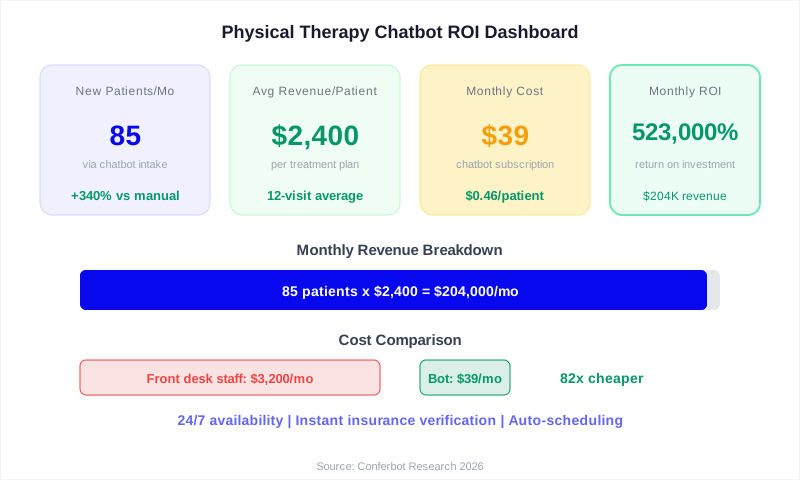
No-show recovery: 120 visits/week x 16% no-show = 19.2 missed visits/week. Reducing to 9% = 10.8 missed visits/week. Recovery of 8.4 visits/week x $125 average reimbursement = $1,050/week or $54,600/year.
Referral conversion improvement: If the clinic receives 20 new referrals/month, improving conversion from 62% to 81% adds 3.8 new patients/month. Each new patient averages 12 visits at $125 = $1,500 lifetime value. 3.8 patients x $1,500 = $5,700/month or $68,400/year.
Faster plan of care completion with better adherence: Patients who complete their plan of care represent full revenue realization. Improving completion from 55% to 78% means fewer patients dropping off mid-treatment. For a clinic with 40 active patients, this represents approximately $45,000/year in retained revenue that would otherwise be lost to attrition.
Total Annual Revenue Impact
- No-show recovery: $54,600
- Referral conversion: $68,400
- Plan of care completion: $45,000
- Total: $168,000
- ROI on $1,200/year investment: 13,900%
Time Savings Value
Front desk time saved: 1.8 hours/day x 260 workdays = 468 hours/year. At $18-22/hour, that is $8,424-$10,296 in recovered staff time. Therapist time saved on administrative tasks: 7 hours/week x 52 weeks = 364 hours/year. At $45-65/hour therapist equivalent, that is $16,380-$23,660 in recovered clinical time that can be allocated to additional patient visits.
Step-by-Step Implementation Guide
Here is the complete roadmap to deploy a PT chatbot, designed for clinic owners and practice managers who want results without technical complexity or disruption to clinical operations.
Week 1: Preparation
- Audit your current workflow: Document your intake process (forms, time, data entry), scheduling method (phone, online, referral handling), exercise prescription delivery, and common patient questions. Identify the biggest time sinks and friction points.
- Compile your content: Gather your intake forms (convert paper forms to structured data fields), insurance accepted list with general coverage information, exercise library (or decide on a HEP platform integration), and 30-50 common patient questions with answers.
- Choose your platform: Sign up for Conferbot and explore the template library for healthcare and appointment-based templates. Verify the platform offers a HIPAA-compliant tier with BAA.
- Confirm HIPAA compliance: Request and sign a Business Associate Agreement with your chatbot vendor. Document your compliance approach for your clinic's HIPAA policy manual.
Week 2: Building
- Build the intake flow: Create the guided intake conversation with demographic collection, insurance capture, medical history, current condition assessment, and consent forms. Test with 3-5 staff members for clinical accuracy and conversational flow.
- Build the scheduling flow: Configure appointment booking with therapist matching, visit frequency handling, and automated reminders. Connect to your practice management system's scheduling API.
- Configure exercise reminders: Set up the daily exercise reminder system with adherence tracking, pain rating collection, and symptom alert triggers. Define escalation rules (what symptoms trigger an immediate therapist notification).
- Upload FAQ content: Add common questions to your knowledge base: insurance questions, preparation for first visit, what to wear, parking, cancellation policy, and general PT questions.
Week 3: Integration and Testing
- Connect your practice management system: Integrate with WebPT, Clinicient, or your EMR so chatbot-captured data flows directly into patient records.
- Connect your HEP platform: If using MedBridge, PT Pal, or similar, integrate exercise program data so the chatbot sends accurate, patient-specific reminders.
- Set up payment processing: Configure copay collection through Stripe or Square integration.
- Install on your website: Add the chatbot to your homepage, new patient page, and scheduling page with context-specific greetings.
- Complete testing: Run through the entire patient journey: referral engagement, intake completion, appointment booking, exercise reminders, and progress tracking. Verify data flows correctly to your EMR and scheduling system.
Week 4: Launch and Training
- Train your staff: Show front desk staff how the chatbot handles intake, scheduling, and FAQs. Explain that the chatbot reduces their workload rather than replacing them. Train therapists on how to access chatbot-collected adherence data and symptom alerts.
- Soft launch with new patients: Begin sending intake links to new patients via chatbot. Monitor completion rates and data quality for the first week.
- Activate exercise reminders: Begin enrolling active patients in the exercise reminder program. Start with willing patients and expand based on results.
- Review analytics daily: Track intake completion rates, appointment booking conversion, reminder engagement, and exercise adherence. Identify and fix issues immediately.
Ongoing Optimization
- Weekly: Review unanswered questions and add answers to the knowledge base. Check symptom alert accuracy.
- Monthly: Analyze no-show rates, exercise adherence trends, and referral conversion. Adjust reminder timing and messaging based on data.
- Quarterly: Review patient satisfaction surveys mentioning the chatbot. Update intake forms for any clinical or regulatory changes. Assess ROI against projections.
Launch the chatbot in phases if needed: intake first, then scheduling, then exercise reminders. Each phase delivers standalone value, and a phased approach lets you validate the system before expanding. The most important step is the first one: getting the chatbot live and capturing data. Every day without automated intake is a day of wasted front desk time, and every day without exercise reminders is a day of missed adherence opportunities that extend treatment timelines and reduce outcomes.
Was this article helpful?
About the Author
The Conferbot team specializes in conversational AI, chatbot strategy, and customer engagement automation. With deep expertise in building AI-powered chatbots, they help businesses deliver exceptional customer experiences across every channel.
View all articles