What Is a Painting Contractor Chatbot?
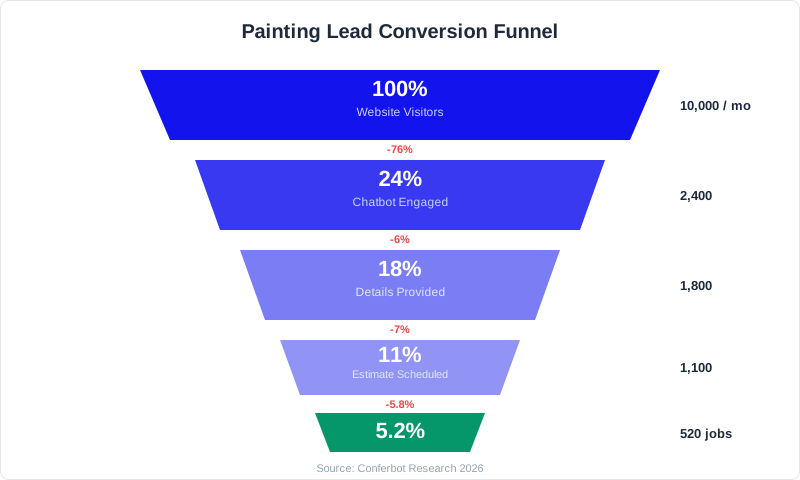
A painting contractor chatbot is an AI-powered conversational assistant that sits on your website, WhatsApp, or social media profiles and handles the tasks that normally eat up your evenings and weekends: answering prospect questions, qualifying leads, collecting project details, and booking estimates. Instead of a static contact form that goes unanswered until the next business day, the chatbot starts a conversation the moment a homeowner lands on your site.
Think about how most painting leads work today. A homeowner searches "house painters near me," clicks on your ad or listing, lands on your website, and sees a phone number and a contact form. If it is 8 PM on a Tuesday -- which is when most homeowners research home improvement projects -- nobody picks up the phone, and the contact form feels like dropping a message into a void. The homeowner clicks the back button and moves to the next contractor on the list. That click just cost you $30 to $60 in wasted ad spend.
A painting contractor chatbot changes this dynamic entirely. The moment that homeowner arrives, the chatbot greets them: "Hi! Looking for a painting estimate? I can help. What type of project are you planning -- interior, exterior, or both?" Within two minutes, the chatbot has collected the project type, number of rooms or square footage, timeline, and the homeowner's contact information. The lead is qualified, warm, and sitting in your inbox before the homeowner even considers clicking away.
Modern chatbots built on platforms like Conferbot's AI chatbot builder combine structured conversation flows for lead qualification with natural language processing for open-ended questions. A homeowner can ask "Do you do cabinet refinishing?" or "Are your painters licensed and insured?" and get an instant, accurate answer without waiting for a callback. This hybrid approach gives painting contractors the reliability of a scripted intake process and the flexibility of AI-driven conversation.
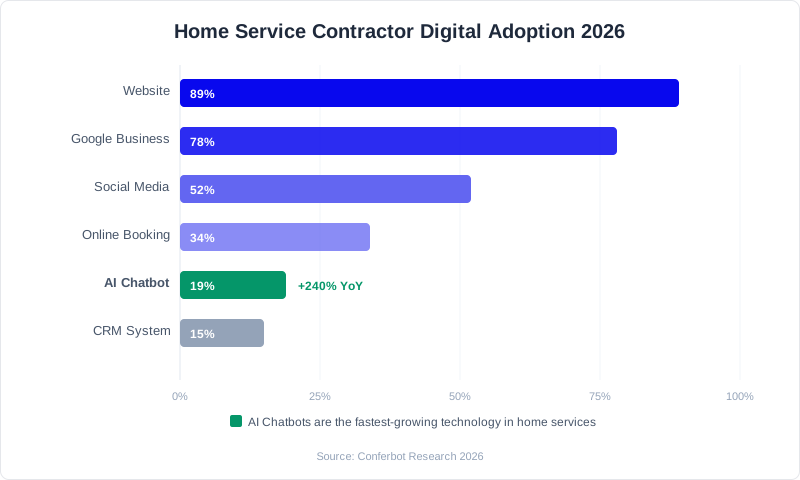
Whether you are a solo painter looking to grow, a crew of five trying to fill your schedule, or a multi-crew operation managing dozens of estimates per week, this guide covers everything you need to know: why chatbots matter for painters, the features that drive results, how to build one without code, integration with your estimating workflow, cost analysis, and best practices that separate the contractors who win leads from those who lose them.
Why Painters Need Digital Lead Capture in 2026
The painting industry has a lead generation problem, and it is getting worse. The cost of acquiring a single lead has risen dramatically, while homeowner expectations for instant responses have made traditional methods increasingly ineffective.
The Cost-Per-Click Crisis
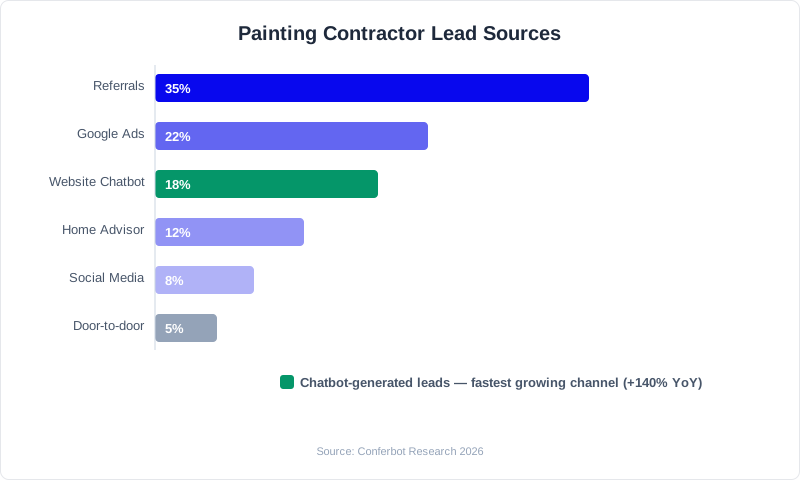
Painting contractors face some of the highest advertising costs in the home services industry. According to WordStream's industry benchmarks, the average cost-per-click for painting keywords on Google Ads ranges from $30 to $60. "House painters near me" can exceed $50 per click in competitive metro areas. At a typical 3-5% landing page conversion rate, that means you are paying $600 to $2,000 per lead before you even pick up the phone to schedule an estimate.
Now consider that 60-70% of those leads never convert to paying customers because they were never properly qualified, the follow-up was too slow, or they went with the first contractor who responded. You are burning thousands of dollars per month on leads that evaporate before you can reach them.
The After-Hours Problem
Here is the uncomfortable truth about painting leads: 68% of homeowner inquiries happen after 5 PM or on weekends. Homeowners research and request estimates during their personal time -- evenings, lunch breaks, Saturday mornings. But most painting contractors operate during business hours and are on job sites during the day. By the time you see the lead notification the next morning, the homeowner has already contacted three other painters and may have already booked an estimate with whoever responded first.
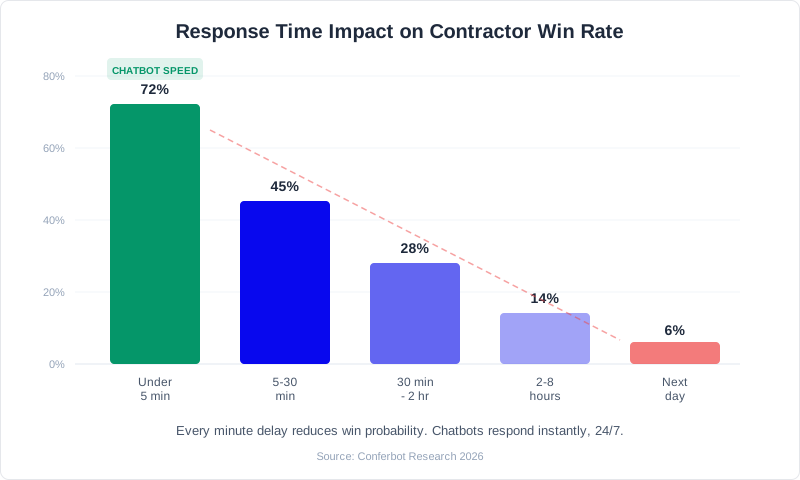
Research from Harvard Business Review found that companies who respond to leads within five minutes are 21 times more likely to qualify that lead compared to those who respond within 30 minutes. For painting contractors who respond the next morning, the odds are even worse. A website chatbot responds in under two seconds, every time, day or night.
Lead Platform Dependency Is Expensive
Many painters rely on platforms like Angi (formerly Angie's List), HomeAdvisor, Thumbtack, or Houzz for leads. While these platforms deliver volume, they come at a steep cost: $25-$75 per lead, shared with multiple contractors, with no guarantee of exclusivity. You are competing against 3-5 other painters for the same homeowner. A chatbot on your own website generates exclusive leads that belong only to you, at a fraction of the cost per acquisition.
The Numbers That Matter
- $30-$60 average cost per click for painting keywords on Google Ads
- 68% of homeowner inquiries happen outside business hours
- 78% of customers hire the first contractor who responds (ServiceTitan data)
- 21x higher qualification rate when responding within 5 minutes vs. 30 minutes
- 35-50% of website contact forms are never followed up on within 24 hours
- Chatbot-qualified leads convert at 2-3x the rate of raw form submissions
Key Features of a Painting Contractor Chatbot
An effective painting chatbot is not just a fancy contact form. It is a virtual estimator that qualifies leads, gathers project details, and sets expectations -- all before your phone rings. Here are the features that drive results for painting contractors.
1. Service Type Selection
The first question the chatbot asks narrows the scope immediately: interior painting, exterior painting, cabinet refinishing, deck staining, commercial painting, or specialty finishes. This simple selection determines the entire conversation flow that follows and helps you prioritize leads by profitability. A whole-house exterior repaint is a very different lead than a single accent wall.
2. Room and Area Estimation
For interior projects, the chatbot walks homeowners through a room-by-room inventory: "How many bedrooms need painting? How about bathrooms? Living areas? Any hallways or stairwells?" For exterior projects, it asks about the home's approximate square footage, number of stories, and siding material. This information gives you a rough scope before you ever visit the property, so you can prioritize your estimate schedule by project size.
3. Condition and Prep Assessment
Experienced painters know that prep work determines both the price and the timeline. The chatbot asks about wall condition ("Are there any areas with peeling paint, water damage, or drywall repairs needed?"), the current surface ("What color are the walls currently?"), and any special considerations ("Do you have textured walls or ceilings?"). This pre-screening identifies projects that need extensive prep -- and the higher bids that come with them.
4. Timeline and Urgency Qualification
Not all leads are equal. A homeowner who needs painting done before a house sale next month is a very different prospect than someone "thinking about it for later this year." The chatbot asks about timeline preferences and tags leads accordingly, so you can prioritize hot prospects who are ready to move forward.
5. Photo Upload Capability
A picture is worth a thousand words, especially in painting estimation. The chatbot invites homeowners to upload photos of the rooms or exterior they want painted. This allows you to give a more accurate ballpark range before the on-site estimate and helps you identify projects that match your expertise and equipment capabilities.
6. Instant Ballpark Range
While no chatbot can replace an in-person estimate, providing a general price range ("Based on what you've described, interior painting for a 3-bedroom home typically ranges from $3,000 to $6,000 depending on prep work and paint quality") sets expectations and demonstrates transparency. Homeowners who receive a range upfront are 40% more likely to proceed with scheduling an estimate because there are no surprises.
7. Automated Estimate Scheduling
The chatbot connects to your calendar and offers available time slots for on-site estimates. The homeowner picks a slot, confirms their address, and receives an automatic confirmation with your company details and what to expect during the estimate visit. No phone tag. No back-and-forth texting. No missed appointments because someone wrote down the wrong date.
How to Build a Painting Contractor Chatbot with Conferbot
You do not need a web developer, a marketing agency, or technical skills to build a painting chatbot. With Conferbot's no-code builder, you can have a professional lead capture chatbot live on your website in under an hour. Here is the step-by-step process.
Step 1: Define Your Lead Qualification Criteria (5 Minutes)
Before building anything, decide what makes a qualified lead for your business. Most painting contractors care about: project type (interior/exterior), number of rooms or square footage, timeline, budget range, and location (within your service area). Write these down -- they become the backbone of your chatbot conversation.
Step 2: Choose a Template (5 Minutes)
Start with a pre-built contractor lead generation template from Conferbot's template library. The home services templates include proven conversation flows for lead qualification, estimate scheduling, and follow-up sequences. Starting with a template saves time and gives you a structure that is already optimized for conversion.
Step 3: Customize the Conversation Flow (20 Minutes)
Adapt the template to your specific business. Here is a proven flow for painting contractors:
- Welcome message: "Hi! Thanks for visiting [Your Company Name]. Looking for a painting estimate? I can help you get started in just 2 minutes."
- Service type: "What type of painting project are you planning?" (Interior / Exterior / Both / Cabinet Refinishing / Other)
- Scope: For interior: "How many rooms need painting?" For exterior: "What's the approximate square footage of your home?"
- Condition: "What condition are the surfaces in?" (Good / Some repairs needed / Significant prep work / Not sure)
- Timeline: "When would you like the work completed?" (Within 2 weeks / Within a month / Within 2-3 months / Just exploring options)
- Contact: "Great! To schedule your free estimate, I just need your name, phone number, and address."
- Confirmation: "Thanks, [Name]! A team member will reach out within [X hours] to schedule your free on-site estimate. In the meantime, here's what to expect: [link to estimate process page]."
Step 4: Add Your Knowledge Base (10 Minutes)
Upload answers to common questions homeowners ask: Do you offer color consultations? What paint brands do you use? Are your painters licensed and insured? Do you move furniture? How long does a typical interior paint job take? Upload these to the knowledge base so the AI can answer them naturally in conversation.
Step 5: Set Up Notifications (5 Minutes)
Configure instant notifications so you receive an email, text, or app notification the moment a lead completes the qualification flow. Speed to lead is everything in the painting business -- the faster you follow up, the more estimates you book.
Step 6: Deploy on Your Website (5 Minutes)
Add the chatbot to your website with a single JavaScript snippet. Place it on your homepage, service pages, and especially your landing pages for Google Ads campaigns. The chatbot appears as a widget in the bottom corner and can be configured to proactively greet visitors after a set time on the page (recommended: 5-10 seconds for ad traffic, 15-20 seconds for organic traffic).
Step 7: Test Every Path
Walk through the chatbot as if you were a homeowner. Test the interior path, the exterior path, each timeline option, and the scheduling flow. Submit a test lead and verify you receive the notification. Check the experience on mobile -- over 70% of home services traffic comes from smartphones.
Integration with Estimating and CRM Software
A chatbot that collects lead information but does not feed it into your existing workflow creates a data silo and extra manual work. Integration with your estimating and customer management tools is what transforms a chatbot from a fancy form into a business automation engine.
CRM Integration
Most painting contractors use some form of customer tracking, whether it is a dedicated CRM like Jobber, Housecall Pro, or ServiceTitan, or simply a spreadsheet. Chatbot integration automatically creates a new customer record with all the details collected during the conversation: name, phone, email, address, project type, scope, timeline, condition notes, and any uploaded photos. This eliminates manual data entry and ensures no lead falls through the cracks.
Popular integrations for painting contractors:
- Jobber: Automatic lead creation with project details, scheduling, and invoicing
- Housecall Pro: Lead capture, estimate scheduling, and customer communication
- ServiceTitan: Full lead-to-invoice workflow for larger painting operations
- Painter's Companion / PaintScout: Specialized painting estimate software integration
- CompanyCam: Photo documentation linking chatbot-submitted photos to job records
Calendar and Scheduling Integration
Connect the chatbot to your Google Calendar, Calendly, or CRM scheduling module so homeowners can book estimate appointments directly in the conversation. The chatbot shows your available slots, the homeowner picks one, and the appointment appears on your calendar with all the project details attached. Automated reminders go out 24 hours before the estimate to reduce no-shows.
Estimate Software Integration
For contractors using digital estimating tools like PaintScout, Estimate Rocket, or your CRM's built-in estimator, the chatbot pre-populates the estimate with room counts, square footage, surface conditions, and project notes. When you arrive at the property for the estimate, you already have a head start. Contractors report saving 15-20 minutes per estimate when chatbot data is pre-loaded into their estimating tool.
Google Ads and Analytics Integration
Connect your chatbot to Google Ads conversion tracking so you can see exactly which keywords and campaigns generate chatbot-qualified leads. This data is gold for optimizing your ad spend. If "interior house painters" generates leads at $40 each through the chatbot while "house painting services" costs $120 per lead, you know exactly where to shift your budget. Integration with chatbot analytics gives you conversion rates, drop-off points, and engagement metrics to continuously improve your lead capture flow.
Lead Qualification Flow Design for Painters
Not every lead deserves a two-hour drive and an on-site estimate. A well-designed lead qualification flow separates the serious homeowners from the tire-kickers, so you spend your time on projects that actually close. Here is how to design a qualification flow that filters leads without scaring off genuine prospects.
The Qualification Framework
Every question in your chatbot serves one of three purposes: it qualifies the lead, it collects project details for your estimate, or it builds trust and rapport. The best chatbot flows do all three simultaneously.
Here is a tiered scoring system that works for painting contractors:
- Hot Lead (Score 8-10): Interior or exterior project, 3+ rooms or whole-house, timeline within 30 days, homeowner (not tenant), within service area
- Warm Lead (Score 5-7): Smaller project (1-2 rooms), timeline 1-3 months, within service area, responsive to conversation
- Cool Lead (Score 1-4): "Just getting prices," no timeline, outside service area, tenant needing landlord approval
Service Area Filtering
One of the most valuable qualification steps is confirming the homeowner is within your service area. Ask for a zip code early in the conversation. If the zip code is outside your range, the chatbot can politely explain your service boundaries and, optionally, recommend a trusted painter in their area. This prevents wasted estimate visits -- which, for painting contractors who drive 30-60 minutes each way, represent a significant time cost.
Budget Expectation Setting
Many painters avoid discussing price before an on-site estimate, but setting ballpark expectations in the chatbot conversation actually improves close rates. When you provide a general range ("Interior painting for a home your size typically runs between $4,000 and $8,000 depending on prep work, paint quality, and ceiling heights"), homeowners who proceed are pre-qualified on price. You waste fewer estimates on people who expected a $1,500 quote for a job that costs $6,000. Try our ROI calculators to see how better lead qualification impacts your bottom line.
The Handoff to Human
The chatbot should never try to close the sale. Its job is to qualify the lead and schedule the estimate. At the end of the qualification flow, the chatbot either schedules an estimate automatically or notifies you for a personal follow-up call. For hot leads, the notification should be immediate -- a text message or push notification that gets you on the phone within minutes. For warm leads, a same-day follow-up email is appropriate. Conferbot's live chat handoff feature lets you jump into the conversation in real time if you are available.
Handling Objections in the Flow
Common objections homeowners raise during the chatbot conversation -- "I'm just looking for a price," "I'm comparing multiple painters," "I need to talk to my spouse" -- should be anticipated and addressed. For price shoppers, the chatbot can emphasize your value proposition: "We include a 2-year warranty, use premium Benjamin Moore paints, and our painters average 12 years of experience. Would you like to see reviews from homeowners in your neighborhood?" For comparison shoppers, offer a unique differentiator: "We provide a detailed written estimate with color mockups so you can see the result before we start."
Cost vs. ROI Analysis: Chatbot vs. Paying for Leads
Painting contractors are practical people. You want to know what this costs and what you get back. Here is a transparent comparison between a chatbot investment and the alternatives you are likely spending money on today.
Current Lead Costs for Painting Contractors
- Google Ads: $30-60 per click, 3-5% conversion rate = $600-$2,000 per lead
- Angi/HomeAdvisor: $25-$75 per lead, shared with 3-5 competitors
- Thumbtack: $15-$50 per lead, pay-per-contact model
- Facebook Ads: $10-$30 per lead, lower intent than search
- Door-to-door / yard signs: Low cost, but very low volume and inconsistent
Chatbot Investment
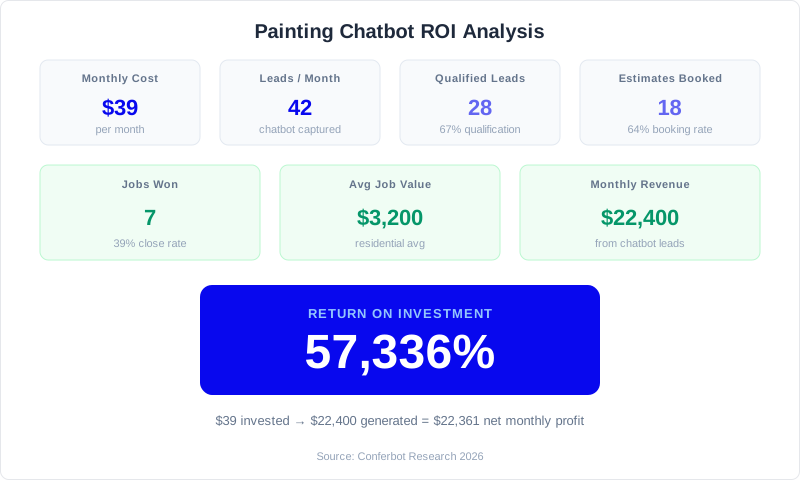
- Platform subscription: $50-$150/month (mid-tier plan handles most painting contractors' needs). Conferbot pricing starts with a free tier.
- Setup: $0 (DIY with no-code builder) or $200-500 (if you hire someone)
- Ongoing optimization: 1-2 hours per month reviewing analytics and refining flows
- Total first-year cost: $600-$2,300
The ROI Math
Let us run a conservative scenario for a painting contractor spending $2,000/month on Google Ads:
- Without chatbot: 40 clicks/month at $50 CPC, 3% conversion rate = 1.2 leads/month from ads. Cost per lead: $1,667.
- With chatbot: Same 40 clicks, but the chatbot engages visitors who would otherwise bounce. Conversion rate jumps to 12-18% (industry average for chatbot-assisted home services landing pages). That is 5-7 leads/month. Cost per lead: $286-$400.
The chatbot does not reduce your ad spend -- it makes your existing spend 4-5x more efficient by converting visitors who would have bounced. At an average painting job value of $4,000-$8,000 and a close rate of 30-40% on qualified estimates, those additional 4-6 leads per month represent $5,000-$19,000 in additional monthly revenue.
Comparison to Lead Platforms
If you spend $500/month on Angi leads, you receive approximately 7-10 shared leads. Each lead is also sent to 3-5 other contractors. Your win rate on shared leads is typically 15-20%, meaning you close 1-2 jobs from that spend. Your chatbot generates exclusive leads -- no competition. The close rate on exclusive, pre-qualified chatbot leads is 35-45%, nearly double the shared lead close rate.
Over 12 months, a painting contractor using a chatbot alongside their existing marketing typically sees:
- 3-5x reduction in effective cost per lead
- 40-60% increase in estimate appointments booked
- 20-30% improvement in estimate-to-close ratio (because leads are better qualified)
- $30,000-$80,000 in additional annual revenue attributable to chatbot-captured leads
Best Practices for Painting Contractor Chatbots
These best practices come from analyzing hundreds of contractor chatbot deployments. The difference between a chatbot that generates leads and one that sits unused is in the details.
1. Speed to Lead Above All Else
Configure your chatbot to send you an instant notification -- text message, not email -- the moment a lead completes the qualification flow. Then call that lead within 5 minutes. Not 5 hours. Not tomorrow morning. Five minutes. The contractor who calls first wins 78% of the time, according to ServiceTitan's industry research. Your chatbot creates the window; your follow-up speed closes it.
2. Use Photos to Build Trust
Include a professional headshot or team photo in the chatbot's greeting. Homeowners are letting strangers into their homes -- they want to see who they are dealing with. Also include links to your portfolio, before-and-after photos, and reviews within the chatbot conversation. Trust-building elements increase lead completion rates by 25-35%.
3. Keep It Conversational, Not Interrogative
Your chatbot should feel like a helpful conversation, not a government form. Limit each message to one question. Use friendly, plain language. Add acknowledgment messages between questions: "Great choice! Interior painting is our specialty." or "Got it -- a 3-bedroom home with some prep work needed." These micro-confirmations keep homeowners engaged and reduce abandonment.
4. Offer Value Before Asking for Contact Information
The biggest mistake contractors make is asking for name and phone number in the first message. Homeowners are not ready to share contact info until they have received value. Lead with project-related questions, offer a ballpark estimate range, and then ask for contact information as the natural next step to "schedule your free on-site estimate." This approach achieves 60-70% contact info completion rates versus 15-25% for forms that lead with contact fields.
5. Segment Your Follow-Up by Lead Score
Hot leads (large project, immediate timeline) get a phone call within 5 minutes. Warm leads (smaller project, flexible timeline) get a personalized email within 2 hours with a link to your portfolio. Cool leads (just exploring) get added to a drip email sequence with seasonal tips and promotions. This tiered approach ensures your time goes to the highest-value opportunities first.
6. Seasonal Optimization
Painting is a seasonal business in many regions. Update your chatbot's messaging to match the season. In spring, emphasize exterior painting and curb appeal. In winter, focus on interior projects ("Brighten up your home during the long winter months"). During your slow season, the chatbot can offer promotions or early-booking discounts to fill your schedule.
7. Retarget Chatbot Visitors Who Did Not Convert
Not every homeowner completes the full chatbot conversation on the first visit. Set up retargeting ads on Facebook and Google to bring these visitors back. Because they already engaged with your chatbot, they are warmer than cold traffic and convert at 2-3x the rate of first-time visitors.
Common Mistakes Painting Contractors Make with Chatbots
Avoid these pitfalls that derail contractor chatbot deployments. Each one is a lesson learned from real painting businesses that struggled before finding the right approach.
Mistake 1: Asking Too Many Questions
Homeowners want a quick estimate, not a 20-question survey. If your chatbot asks about paint brand preference, wall texture, ceiling height, trim type, number of doors, number of windows, baseboard condition, and color choices before collecting contact info, you will lose 80% of visitors by question five. Limit the initial qualification to 5-7 questions. Save the detailed scope questions for the on-site estimate or a follow-up call.
Mistake 2: Not Following Up Fast Enough
The chatbot does its job in two minutes. If you take 48 hours to follow up, the homeowner has forgotten the conversation, called three other painters, and possibly already booked someone. 67% of chatbot leads that go unfollowed for more than 4 hours never convert. Set up instant text notifications and treat chatbot leads with the same urgency as a phone call.
Mistake 3: No Service Area Filter
Without a zip code or city filter, you will receive leads from homeowners 60 miles outside your service area. This wastes their time and yours. Add a service area check within the first three questions. If the homeowner is outside your range, offer a polite explanation and, if possible, a referral to a trusted painter in their area. This builds goodwill even when you cannot do the job.
Mistake 4: Generic, Impersonal Messaging
A chatbot that sounds like it could belong to any business -- "Hello! How can I help you today?" -- fails to differentiate your company. Customize the chatbot's voice to match your brand. Mention your company name, your service area, your specialties, and your unique value propositions. "Hey there! Welcome to [Company Name]. We've been painting homes in [City] for 15 years. Looking for a free estimate?" is infinitely more effective than a generic greeting.
Mistake 5: Ignoring Mobile Experience
Over 70% of home services website traffic comes from mobile devices. If your chatbot widget covers the entire mobile screen, has buttons too small to tap, or loads slowly on cellular connections, mobile visitors will close it immediately. Test your chatbot on a real phone -- not just a desktop browser's mobile emulator -- before going live. Ensure buttons are large enough to tap, text is readable, and the conversation loads quickly.
Mistake 6: No Human Handoff Option
Some homeowners have complex projects that do not fit neatly into a chatbot flow: multi-story commercial buildings, historic home restoration, lead paint abatement, specialty finishes. Always include a "Talk to a human" option that either triggers a live chat connection or displays your direct phone number. The chatbot should make reaching you easier, not harder.
Success Metrics: How to Measure Your Chatbot's Performance
You cannot improve what you do not measure. Here are the key metrics every painting contractor should track to ensure their chatbot is delivering results.
1. Engagement Rate
The percentage of website visitors who interact with the chatbot (click on it, send a message, or click a button). A healthy engagement rate for contractor chatbots is 15-30%. If yours is below 10%, your chatbot's proactive greeting may need adjustment -- it is either triggering too late, not visible enough, or the message is not compelling.
2. Completion Rate
The percentage of visitors who start a chatbot conversation and complete the full qualification flow (provide contact information). Target: 40-60%. If this number is low, look for the question where most people drop off. That question is either too invasive, too confusing, or too early in the flow.
3. Lead-to-Estimate Rate
The percentage of chatbot leads that result in a scheduled on-site estimate. Target: 50-70%. If this rate is low, the problem is usually follow-up speed or follow-up quality, not the chatbot itself. Track the average time between lead submission and your first outreach.
4. Estimate-to-Close Rate
The percentage of chatbot-originated estimates that convert to signed contracts. A well-qualified chatbot lead should close at 35-45%, compared to 20-25% for unqualified leads from forms or lead platforms. If your close rate is not higher on chatbot leads, your qualification questions may need refinement -- you are not filtering effectively enough.
5. Cost per Qualified Lead
Divide your total chatbot cost (subscription + any ad spend driving traffic to chatbot-equipped pages) by the number of qualified leads generated. Compare this to your cost per lead from other channels. For most painting contractors, chatbot cost per qualified lead is $15-$50 -- a fraction of the $200+ cost from Google Ads alone.
6. After-Hours Lead Capture
Track what percentage of your chatbot leads come in outside business hours (evenings, weekends, holidays). This metric quantifies the revenue your chatbot captures that you would otherwise miss entirely. Most painting contractors find that 55-70% of chatbot leads arrive outside traditional business hours.
7. Revenue Attribution
The ultimate metric: how much revenue can you directly attribute to chatbot-generated leads? Track each chatbot lead from initial conversation through estimate, close, and final invoice. Over a 90-day period, this number gives you a clear picture of your chatbot's ROI. For painting contractors doing $300,000-$1,000,000 in annual revenue, chatbot-attributed revenue typically represents 15-25% of total sales within the first year of deployment.
Monthly Review Checklist
Set aside 30 minutes at the start of each month to review these metrics using Conferbot's analytics dashboard:
- Review engagement and completion rates -- identify drop-off points
- Read through chatbot conversations to find unanswered questions (add these to your knowledge base)
- Check after-hours lead volume and follow-up response times
- Compare chatbot lead quality to other channels
- Update seasonal messaging, promotions, or service area information
- Calculate month-over-month ROI and adjust ad spend accordingly
Getting Started: Your First Week with a Painting Chatbot
You do not need to overhaul your entire marketing strategy to start benefiting from a chatbot. Here is a practical week-one action plan designed specifically for busy painting contractors.
Day 1: Build and Launch (1 Hour)
Sign up for Conferbot, choose a contractor lead generation template, customize it with your company name, service area, and services offered, and deploy it on your website. If you do not have a website, deploy on WhatsApp and share the link on your Google Business Profile and social media.
Day 2: Set Up Notifications
Configure instant text message notifications for new leads. Test the entire flow by submitting a lead yourself and verifying you receive the notification within 60 seconds. Speed to lead is the single biggest factor in converting chatbot leads -- your notification system must be bulletproof.
Day 3: Optimize Your Google Business Profile
Add a mention of your chatbot in your business description: "Get a free estimate instantly -- chat with us on our website." Update your website URL to point directly to a landing page with the chatbot. Add a post promoting instant online estimates.
Day 4: Update Your Voicemail
Record a new voicemail greeting: "Thanks for calling [Company Name]. We're currently on a job site. For the fastest response, visit [your website] and chat with our estimate assistant -- it's available 24/7 and will have your estimate started before we call back." This redirects after-hours callers to the chatbot.
Day 5-7: Monitor and Refine
Watch the first leads come in. Read through the chatbot conversations. Note any questions homeowners ask that the chatbot cannot answer and add those answers to your knowledge base. Check for any conversation paths where homeowners drop off and simplify those steps.
Week Two and Beyond
After the first week, you will have data. Use it to refine your chatbot's messaging, adjust your qualification criteria, and start comparing chatbot lead quality to your other sources. Within 30 days, most painting contractors see a clear pattern: chatbot leads are better qualified, easier to close, and cost less to acquire than leads from any other channel. The chatbot pays for itself within the first month and continues to compound its value as you optimize the conversation flow, build your knowledge base, and increase the volume of traffic reaching your chatbot-equipped pages.
Every lead you lose to a slow response or an unanswered after-hours inquiry is revenue walking out the door. A chatbot stands at that door 24 hours a day, 7 days a week, and turns visitors into qualified leads while you focus on what you do best -- delivering exceptional paint jobs.
Was this article helpful?
About the Author

The Conferbot team specializes in conversational AI, chatbot strategy, and customer engagement automation. With deep expertise in building AI-powered chatbots, they help businesses deliver exceptional customer experiences across every channel.
View all articles