
Appliance Repair Dispatcher
Free Home Services Chatbot Template
A complete appliance repair dispatcher chatbot template - deploy in minutes to automate conversations, capture leads, and provide 24/7 assistance.

How this template opens - rendered from its flow. Use the interactive preview to click through the full conversation.
What Is an Appliance Repair Dispatcher Chatbot?
An appliance repair dispatcher chatbot is a conversational AI system designed specifically for home appliance repair companies to automate the entire service request lifecycle - from initial customer contact through diagnostics, scheduling, parts verification, cost estimation, and technician dispatch. It replaces the traditional phone-based dispatcher model where customers wait on hold, describe their problem to a call center agent, and then wait again for scheduling confirmation. In 2026, appliance repair businesses that deploy AI-powered dispatch automation report faster response times, fewer scheduling errors, and higher first-visit resolution rates because the chatbot collects comprehensive diagnostic information before the technician arrives on site.
Why Appliance Repair Companies Need Dispatch Automation
The appliance repair industry faces a unique operational challenge: every service call requires specific diagnostic information to determine which technician to send, what parts to carry, and how long the job will take. When this information is collected poorly - as it frequently is during rushed phone calls - the result is wasted trips, return visits, and dissatisfied customers. A technician who arrives without the correct replacement part wastes hours of productive time and creates a second appointment that the customer must accommodate. Inadequate pre-visit diagnostics are a leading cause of return visits in the appliance repair sector.
The dispatcher chatbot solves this by conducting structured diagnostic conversations that systematically collect the information a technician needs: appliance type, brand, model number, age, symptom description, error codes, and environmental factors. This structured intake produces a diagnostic profile that enables accurate technician matching, parts pre-staging, and realistic time estimates. The chatbot operates 24/7, capturing service requests that would otherwise go to voicemail during evenings and weekends - peak hours for appliance failures when customers discover problems while using their home equipment.
Who Deploys This Template
- Independent appliance repair shops: Small operations with 2-10 technicians that need to maximize first-visit resolution without hiring dedicated dispatch staff.
- Multi-brand authorized service centers: Businesses servicing multiple appliance brands that need brand-specific diagnostic flows and warranty verification.
- Home warranty companies: Organizations managing networks of repair technicians that need to qualify claims and route service requests to appropriate providers.
- Property management companies: Firms managing rental properties that need to triage appliance repair requests from tenants and coordinate with service providers.
- Appliance retail chains with service departments: Retailers offering installation and repair services alongside sales that need to differentiate warranty versus paid service calls.
Built on Conferbot's AI chatbot builder, this template supports the complex branching logic required for multi-appliance diagnostic flows and integrates with field service management tools through the API integration framework. Deploy on your website for web-based service requests or on WhatsApp where customers can easily share photos of error codes and appliance model labels.
How the Appliance Repair Dispatcher Chatbot Works
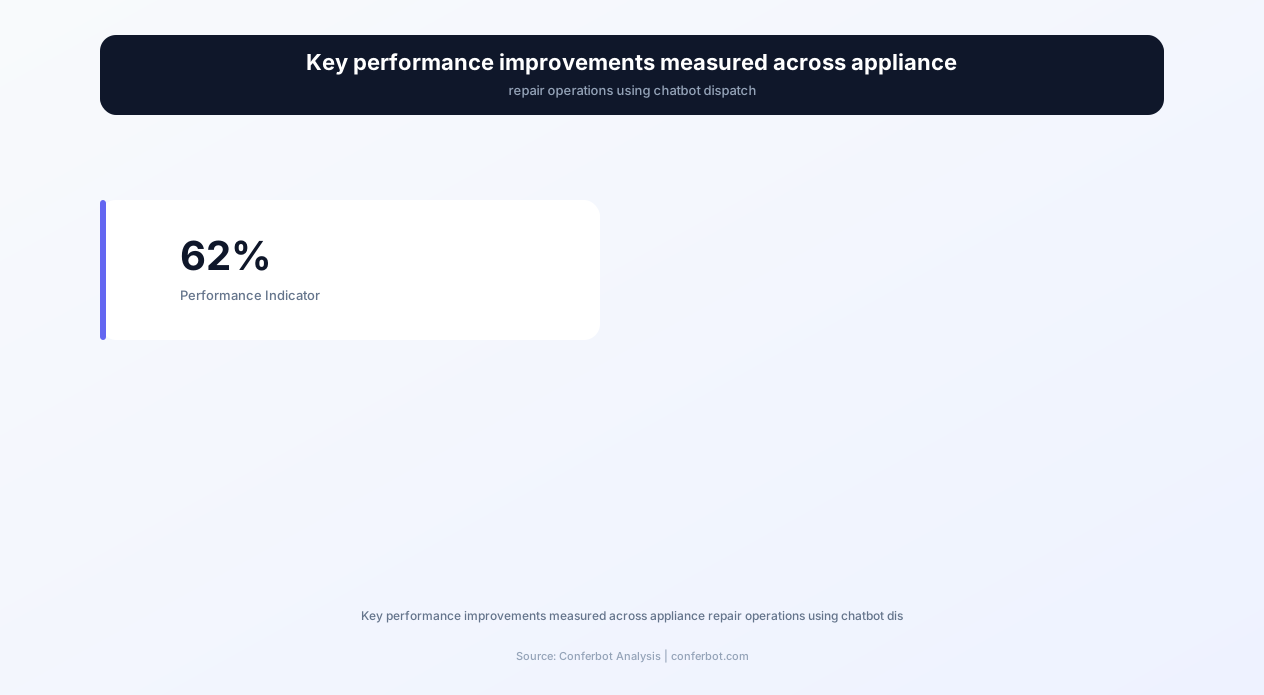
The appliance repair dispatcher chatbot follows a structured multi-stage conversation designed to collect complete diagnostic information, verify service eligibility, generate accurate cost estimates, and schedule the optimal technician for the job. Each stage builds on the previous one, creating a comprehensive service request profile that eliminates the information gaps responsible for failed first visits and scheduling inefficiencies.
Stage 1: Appliance Identification and Problem Intake
The conversation begins with appliance identification. The customer selects the appliance category - refrigerator, washer, dryer, dishwasher, oven/range, microwave, garbage disposal, ice maker, or other - and then provides the brand and model information. The chatbot assists with model number location, providing visual guides showing where each major brand places their model and serial number labels. For customers who cannot locate the label, the chatbot uses brand, approximate age, and physical description to narrow the identification. This information determines which diagnostic pathway to follow, as failure modes are appliance-specific and often model-specific.
After appliance identification, the chatbot conducts symptom intake using guided questions rather than open-ended description requests. Instead of asking "what is the problem?" - which produces inconsistent and often incomplete descriptions - the chatbot asks specific questions based on the appliance type. For a refrigerator: "Is the unit running but not cooling? Is it making unusual noises? Is there water leaking? Is the ice maker not producing ice? Is the freezer working but the fridge section is warm?" Each symptom selection triggers follow-up questions that narrow the probable diagnosis and determine the parts and expertise required for repair.
Stage 2: Diagnostic Deep-Dive
Based on the symptom selection, the chatbot conducts a targeted diagnostic conversation. For a refrigerator that is running but not cooling, the diagnostic questions include: temperature reading on the thermostat display, whether the compressor is audibly running, whether frost is visible on the evaporator coils (with instructions for checking), and whether the condenser fan is spinning. These questions map to specific failure modes - a running compressor with no cooling and frost-free coils suggests a refrigerant leak, while visible frost buildup suggests a defrost system failure. The chatbot records these diagnostic findings in structured format for the technician.
For appliances displaying error codes, the chatbot maintains a database of manufacturer error codes and their meanings. When a customer reports error code "F2 E1" on a Whirlpool oven, the chatbot identifies this as a stuck key on the control panel, notes the required replacement part (control board assembly), and flags the specific repair procedure. This error code interpretation capability enables accurate parts pre-ordering and time estimation before the technician is dispatched.
Stage 3: Service Eligibility and Warranty Check
Before generating a quote, the chatbot verifies service eligibility factors: Is the appliance under manufacturer warranty? Is the customer covered by a home warranty or extended service plan? Is the appliance within a serviceable age range where repair is economically justified versus replacement? For warranty claims, the chatbot collects purchase date and proof of purchase information, verifies the claim falls within the warranty period, and routes the request through the appropriate warranty authorization process rather than generating a paid service quote.
Stage 4: Cost Estimation and Parts Availability
Using the diagnostic profile - appliance type, model, identified failure mode, and required parts - the chatbot generates a cost estimate with a transparent breakdown: diagnostic fee (often waived if repair is authorized), parts cost by component, labor time estimate, and total projected cost. Parts availability is checked against inventory if your parts management system is connected through the API integration. When parts are in stock, same-day or next-day service is offered. When parts require ordering, the chatbot provides a timeline estimate and offers to schedule the appointment for after the expected delivery date, preventing a wasted first visit.
Stage 5: Technician Scheduling and Dispatch
The scheduling engine matches the service request to available technicians based on multiple criteria: certification for the appliance brand, experience with the specific failure mode, geographic proximity to the customer's address, available time slots, and vehicle inventory of commonly needed parts. The chatbot presents available appointment windows using your calendar integration, confirms the selected time with the customer, and creates the dispatch record with all diagnostic information, estimated parts requirements, and special instructions attached. The technician receives a complete job briefing before departure.
Key Features of the Appliance Repair Dispatcher Template
The appliance repair dispatcher template includes capabilities specifically engineered for the operational requirements of appliance service businesses. These features address the workflow challenges unique to appliance repair - multi-brand certification requirements, parts logistics, diagnostic accuracy, and the critical importance of first-visit resolution to profitability and customer satisfaction.
Feature Matrix
| Feature | Description | Operational Benefit | Customer Benefit |
|---|---|---|---|
| Guided diagnostic flows | Appliance-specific symptom trees with follow-up logic for 200+ failure modes | Accurate pre-diagnosis enabling correct parts and technician selection | Higher first-visit fix rate means fewer disrupted days |
| Error code interpreter | Database of manufacturer error codes with part and procedure mapping | Instant identification of required parts and repair complexity | Immediate understanding of what the error means and expected cost |
| Warranty verification engine | Checks purchase date, serial number, and coverage status against warranty terms | Correct routing of warranty versus paid service from first contact | No surprise bills for covered repairs |
| Parts inventory check | Real-time verification of part availability in warehouse and vehicle stock | Schedules appointments when parts are confirmed available | Technician arrives prepared with correct parts |
| Multi-criteria technician matching | Routes jobs by certification, experience, proximity, and schedule | Optimal resource utilization across the technician fleet | Right expert for the specific appliance and problem |
| Photo and video upload | Accepts images of error codes, model labels, and visible damage | Visual confirmation of customer-reported symptoms | Easy way to communicate the problem without technical vocabulary |
| Cost transparency calculator | Itemized estimate with parts, labor, and diagnostic fee breakdown | Reduces price objections and quote disputes at completion | Clear understanding of costs before authorizing service |
| Repair vs. replace advisor | Calculates economic repair justification based on age, cost, and remaining life | Prevents investing in repairs on appliances near end-of-life | Informed decision-making with total cost of ownership data |
| Emergency priority routing | Identifies urgent situations (gas leak, flooding) and escalates immediately | Critical safety issues reach human dispatchers within seconds | Fastest possible response for dangerous situations |
| Follow-up satisfaction check | Post-service survey with review request and warranty registration | Systematic review generation and service quality monitoring | Easy channel to confirm satisfaction or report issues |
Guided Diagnostic Flows in Detail
The diagnostic flow system is the template's most impactful feature for first-visit resolution rates. Each appliance category contains a branching diagnostic tree built from actual repair data - the questions technicians wish customers had answered before they arrived on site. A dishwasher diagnostic flow, for example, branches based on the primary complaint (not cleaning, not draining, leaking, not starting, making noise) and then asks targeted questions for each branch. "Not draining" triggers questions about standing water depth, filter condition, garbage disposal connection, and recent food types washed - information that differentiates between a clogged filter (5-minute fix), a failed drain pump (30-minute repair with part), and a blocked drain hose (15-minute fix).
These diagnostic flows are configurable without technical expertise. Service managers can add new diagnostic paths when they identify recurring failure modes, adjust questions based on seasonal patterns (ice maker failures spike in summer, heating element failures in winter), and update the flows as new appliance models with different diagnostic requirements enter the market. The flows produce a structured diagnostic summary that technicians access in their field service app before arriving at the customer's location.
Ready to try Appliance Repair Dispatcher?
Deploy this template in under 10 minutes. No coding required.
Use This Template Free →Before and After: Measurable Dispatch Performance Improvements
Appliance repair businesses that implement chatbot-based dispatch automation consistently measure significant improvements across the operational metrics that determine profitability: first-visit resolution rate, average time-to-schedule, technician utilization, and customer satisfaction scores. These improvements are not theoretical - they reflect the elimination of specific failure modes in the traditional phone-based dispatch process.
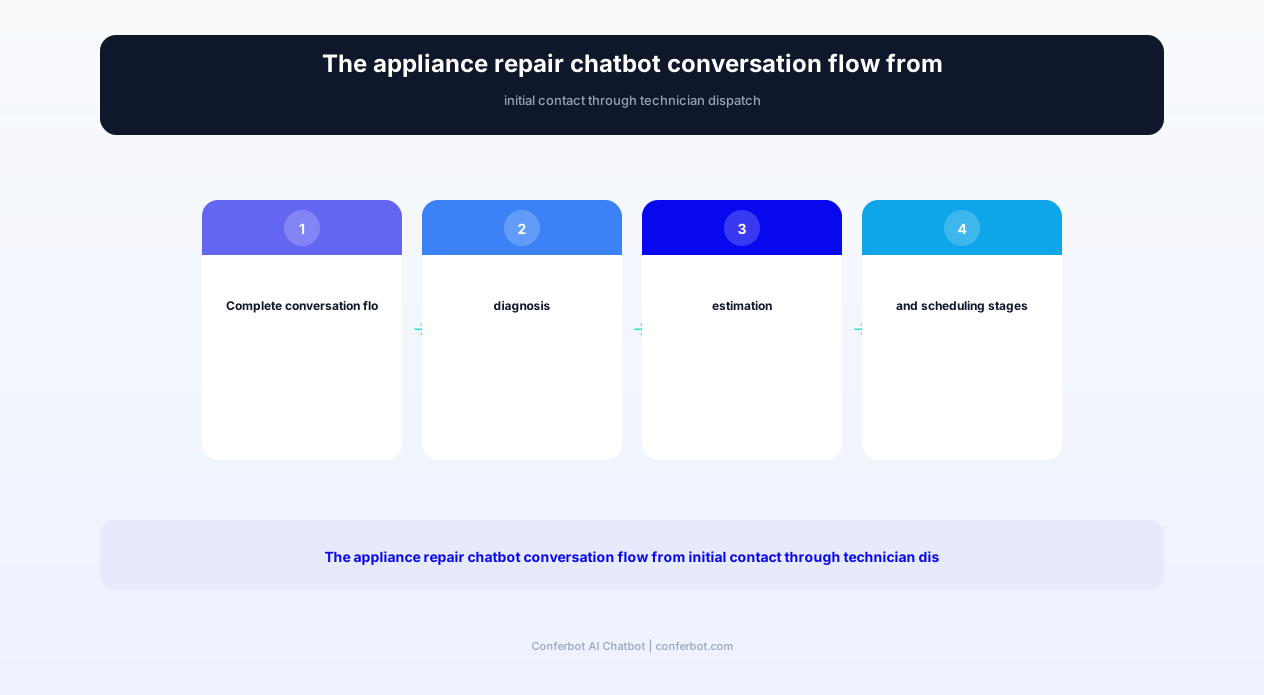
Performance Comparison: Manual Dispatch vs. Chatbot Dispatch
| Metric | Before (Phone Dispatch) | After (Chatbot Dispatch) |
|---|---|---|
| First-visit resolution rate | Limited by incomplete pre-visit information | Higher, driven by structured diagnostic intake |
| Time from inquiry to scheduled appointment | Hours, pending a callback | Minutes, booked in the same conversation |
| After-hours service request capture | Voicemail, often not returned | Immediate response, day or night |
| Scheduling errors (wrong technician/parts) | More frequent with rushed phone intake | Fewer, from structured diagnostic data |
| Diagnostic information completeness | Inconsistent across calls | Consistently thorough, every conversation |
| Customer no-show/not-home rate | Higher, without confirmation touchpoints | Lower, with automated reminders |
| Daily service calls per technician | Limited by return visits and gaps | Higher, from fewer wasted trips |
| Return visits due to wrong parts | A meaningful share of jobs | Substantially reduced |
Understanding the First-Visit Resolution Impact
First-visit resolution (FVR) is the single most important operational metric for appliance repair profitability. Every return visit represents a complete cost center: technician drive time, vehicle fuel, scheduling slot consumed, and customer relationship damage. Improving FVR by even a handful of percentage points on a typical monthly job volume eliminates a meaningful number of return visits, generating direct savings before accounting for the revenue from jobs that now fill those freed slots. The chatbot drives this improvement through comprehensive pre-visit diagnostics that enable correct parts staging and appropriate technician assignment.
After-Hours Capture Value
Appliance failures happen disproportionately outside business hours - evenings when families are cooking dinner, weekends when laundry accumulates, and holidays when heavy usage stresses aging equipment. Traditional phone-based dispatch captures these requests on voicemail, where a large share are never returned. The chatbot captures after-hours requests around the clock with immediate acknowledgment, diagnostic intake, and provisional scheduling. Customers who receive an immediate response - even without a same-day appointment - are considerably more likely to book with your company versus calling competitors the next morning.
Revenue Impact Analysis
The combined effect of higher FVR, more captured leads, faster scheduling, and improved technician productivity translates directly to revenue growth. A multi-technician appliance repair operation implementing chatbot dispatch can expect meaningful incremental revenue from three sources: captured after-hours leads that previously went to competitors, additional jobs completed per technician due to fewer return visits, and higher average ticket values from the chatbot's systematic add-on service presentation and repair-vs-replace advisory that occasionally converts to new appliance sales referrals.
Appliance-Specific Diagnostic Capabilities
The dispatcher chatbot contains pre-built diagnostic flows for every major home appliance category, each engineered from repair industry data on the most common failure modes, their symptoms, and the diagnostic questions that differentiate between possible causes. These flows transform the vague "my fridge isn't working" into a specific, actionable repair brief that tells the technician exactly what to expect and what to bring.
Refrigerator and Freezer Diagnostics
Refrigerators are among the most common appliance repair calls and typically carry the highest average ticket value for major repairs. The chatbot's refrigerator diagnostic flow covers: not cooling (compressor, condenser fan, evaporator fan, thermostat, refrigerant leak, sealed system failure), temperature fluctuation (defrost system, door seal, thermostat calibration), ice maker failure (water supply, inlet valve, ice maker module, temperature), water leak (drain line clog, inlet valve, water filter housing, condensation pan), and unusual noise (condenser fan obstruction, evaporator fan bearing, compressor mount). Each pathway identifies the probable component, typical repair cost range, and whether the repair justifies the investment based on appliance age.
Washer and Dryer Diagnostics
Laundry equipment accounts for a large share of service calls, with distinct diagnostic pathways for front-load versus top-load washers and gas versus electric dryers. Washer diagnostics cover: not draining (pump, lid switch, drain hose, control board), not spinning (motor coupling, belt, clutch, lid switch), leaking (door boot seal, pump, inlet valve, tub seal), excessive vibration (shock absorbers, suspension springs, load balance), and error codes (brand-specific code interpretation). Dryer diagnostics address: not heating (heating element, thermal fuse, gas valve, igniter, timer), running but not drying (vent restriction, lint buildup, moisture sensor), making noise (drum rollers, belt, idler pulley, bearing), and not starting (door switch, thermal fuse, start switch, timer). The chatbot identifies vent restriction as the most common cause of "not drying" complaints and provides instructions for customer-side vent cleaning before scheduling a service call when appropriate.
Dishwasher Diagnostics
Dishwasher diagnostic flows address the most common failure modes: not cleaning effectively (spray arm obstruction, water temperature, detergent dispenser, wash motor), not draining (drain pump, check valve, garbage disposal connection, air gap), leaking (door gasket, spray arm seal, tub crack, inlet valve), not filling (inlet valve, float switch, water supply), and not starting (door latch, control board, thermal fuse). The chatbot differentiates between issues requiring service - a failed drain pump - and issues the customer can resolve independently - a clogged filter or obstructed spray arm. This differentiation prevents unnecessary service calls while ensuring genuine mechanical failures receive prompt attention.
Oven, Range, and Cooktop Diagnostics
Cooking equipment diagnostics require careful attention to safety, particularly for gas appliances. The chatbot's oven diagnostic flow immediately escalates any report of gas odor to emergency protocols with instructions to evacuate and call the gas utility. For non-emergency issues, diagnostics cover: not heating (igniter, bake element, broil element, temperature sensor, control board), temperature inaccuracy (sensor calibration, element cycling, convection fan), self-clean failure (door lock mechanism, temperature sensor, control board), and burner issues (igniter, spark module, gas valve, burner cap alignment). Electric range diagnostics address element failures, infinite switch problems, and glass cooktop cracking patterns that indicate whether replacement is necessary.
Garbage Disposal and Small Appliance Diagnostics
For smaller appliances, the chatbot provides diagnostics that frequently enable customer self-resolution: garbage disposal humming but not spinning (jam - instructions to use allen wrench reset), disposal not responding (reset button, circuit breaker), microwave not heating (magnetron, door switch, capacitor - always technician-required due to high-voltage components), and range hood issues (motor, switch, filter condition). The chatbot clearly identifies which small appliance repairs are safely self-serviceable and which require professional attention due to electrical or safety concerns, building trust through honest guidance rather than scheduling unnecessary service calls.
Field Service Management and Parts Integration
The appliance repair dispatcher chatbot achieves its full potential when integrated with your field service management platform and parts inventory system. These integrations transform the chatbot from an information collection tool into a complete dispatch automation system that creates jobs, assigns technicians, verifies parts availability, and updates schedules without manual intervention.
Field Service Platform Integrations
Conferbot's API integration framework connects with the major field service management platforms used in appliance repair operations. Each integration enables bidirectional data flow: chatbot-collected information flows into the platform as structured job records, while technician schedules, parts inventory, and service history flow back to the chatbot for real-time availability and pricing accuracy.
| Platform | Integration Depth | Key Capabilities | Best For |
|---|---|---|---|
| ServiceTitan | Full bidirectional | Job creation, dispatch, invoicing, customer history, parts ordering | Large operations (10+ technicians) |
| Housecall Pro | Full bidirectional | Scheduling, dispatch, payments, customer communication | Mid-size operations (3-10 technicians) |
| Jobber | Full bidirectional | Quotes, jobs, scheduling, invoicing, client management | Growing operations with quoting needs |
| FieldEdge | API integration | Dispatch, flat-rate pricing, parts, agreements | Operations using flat-rate pricing |
| Service Fusion | API integration | Estimates, jobs, dispatch, inventory, GPS tracking | Operations needing GPS fleet management |
| mHelpDesk | Webhook integration | Job creation, scheduling, customer records | Smaller operations seeking simplicity |
Parts Inventory Integration
Parts availability is the primary determinant of first-visit resolution for appliance repair. A technician who arrives with the correct replacement part resolves the issue in a single visit; a technician without the part must order it and return for a second appointment. The chatbot's parts integration checks availability at three levels: vehicle stock (parts currently on the technician's truck), warehouse inventory (parts in your local warehouse that can be loaded before dispatch), and supplier availability (parts that can be ordered for delivery within a specified timeframe). This three-tier check enables the chatbot to offer realistic scheduling: "We have this part in stock and can repair tomorrow" versus "This part needs to be ordered - earliest available appointment is Thursday after delivery."
Customer History and Service Records
When the chatbot identifies a returning customer - through phone number, email, or address matching - it accesses their service history to provide contextualized assistance. Previous repair records inform current diagnostics: a refrigerator that had a condenser fan replaced six months ago and is now experiencing cooling issues likely has a different failure mode than the same symptom on a unit with no repair history. The chatbot references prior repairs in its diagnostic output, helping technicians avoid re-diagnosing previously resolved issues and identifying patterns that suggest systemic problems (multiple repairs on the same unit indicating it may be approaching end-of-life).
Automated Parts Ordering Workflow
For identified repairs requiring parts not currently in inventory, the chatbot can initiate the ordering process automatically. After the customer authorizes the repair and provides payment or payment authorization, the chatbot triggers a parts order through your supplier integration - Marcone, Reliable Parts, or manufacturer direct - with the correct part number identified during the diagnostic flow. The appointment is automatically scheduled for the day after expected delivery, and the customer receives tracking updates as the part ships. This automated workflow eliminates the manual steps that traditionally delay parts-dependent repairs by 2-3 additional days.
businesses worldwide use Conferbot templates to automate conversations
Cost Estimation Engine and Warranty Management
Transparent pricing and warranty management are two of the highest-friction points in the traditional appliance repair customer experience. Customers frequently report frustration with vague pricing ("it depends on what we find"), unexpected charges discovered only at service completion, and confusion about warranty coverage boundaries. The chatbot addresses both friction points with systematic processes that set accurate expectations before any technician is dispatched.
How the Cost Estimation Engine Works
The chatbot generates estimates using a multi-factor calculation model that accounts for the variables affecting repair cost: diagnosed failure mode, required parts and their current supplier pricing, estimated labor time based on repair complexity, diagnostic fee policy, and any applicable discounts or service agreement pricing. The estimate is presented as a range - "$185 to $245 for thermostat replacement including parts and labor" - that accounts for the variability in actual repair conditions while giving the customer a concrete expectation.
Cost estimates are built from your configured pricing data: hourly labor rates or flat-rate pricing by repair type, parts markup percentages, diagnostic fee amounts, service call minimums, and discount schedules for repeat customers or service agreement holders. Flat-rate pricing is supported for the most common repairs where time variability is low - a standard heating element replacement on a common dryer model is priced the same regardless of which technician performs it. For complex repairs where actual conditions may vary, the chatbot presents a range and explains the factors that could push the final cost toward the higher end.
Warranty Verification Process
The chatbot manages three warranty categories: manufacturer warranty (typically 1 year parts and labor), extended warranty plans (purchased at time of sale or separately), and home warranty coverage (third-party plans covering multiple home systems). For each category, the verification process differs:
- Manufacturer warranty: The chatbot collects the serial number and purchase date, verifies the unit is within the warranty period, and checks whether the reported issue is covered (manufacturer warranties typically exclude cosmetic damage, customer-caused damage, and issues from improper installation). Covered claims are routed through the manufacturer's authorization process.
- Extended warranty plans: The chatbot collects the plan number and provider, verifies active coverage, and initiates a claim with the warranty company. Many extended plans require pre-authorization before service - the chatbot manages this communication automatically.
- Home warranty coverage: The chatbot identifies the home warranty provider, confirms the appliance type is covered under the customer's plan, and submits the service request through the warranty company's contractor portal. Home warranty jobs typically require the customer to pay a service fee ($75-$125) with the warranty company covering the remainder.
Repair vs. Replace Decision Support
For older appliances requiring expensive repairs, the chatbot provides repair-versus-replace analysis that helps customers make informed decisions. The calculation considers: current repair cost, appliance age versus expected lifespan, energy efficiency of the current unit versus modern replacements, frequency of recent repairs (indicating declining reliability), and the total cost of ownership over the next 3-5 years under repair versus replacement scenarios. A 12-year-old refrigerator requiring a $450 compressor repair, for example, may be approaching the end of its expected 15-year lifespan - the chatbot presents this context alongside the repair quote, noting that a new Energy Star refrigerator would reduce electricity costs by an estimated $65 per year while providing a full new warranty period.
This advisory function builds trust with customers by demonstrating that your business prioritizes their financial interest over maximizing repair revenue. Customers who receive honest replace recommendations frequently purchase new appliances through your company's referral partnerships, creating revenue through a different channel while maintaining the trust relationship.
Implementation Guide: Deploying Your Appliance Repair Chatbot
Implementing the appliance repair dispatcher chatbot requires configuring your specific service parameters, connecting your operational systems, and training the chatbot on your business rules. This guide walks through the complete implementation process from template activation through production deployment, with timeline estimates for each phase.
Phase 1: Service Configuration (Days 1-2)
Begin by configuring the chatbot with your service-specific parameters. This includes defining your service area (zip codes or geographic boundaries), entering your pricing structure (hourly rates or flat-rate pricing by repair type), setting your operating hours and emergency availability, and configuring the appliance types and brands you service. The template includes pre-built diagnostic flows for all major appliance categories - you select which ones apply to your business and customize the questions based on your technicians' preferences for pre-visit information.
Key configuration decisions during this phase:
- Pricing model: Flat-rate by repair type (preferred for customer transparency) or hourly rate plus parts (simpler configuration but less predictable for customers).
- Diagnostic depth: How many diagnostic questions to ask before scheduling. More questions improve first-visit resolution but extend the conversation. Most businesses find 4-6 diagnostic questions per appliance type optimal.
- Authorization threshold: The estimated repair cost above which the chatbot recommends waiting for the technician's assessment rather than committing to a price.
- Emergency criteria: Which situations trigger immediate human escalation (gas leaks, flooding, electrical sparking).
Phase 2: System Integration (Days 2-4)
Connect the chatbot to your field service management platform, parts inventory system, and payment processor. Integration complexity varies by platform - ServiceTitan and Housecall Pro have well-documented APIs that Conferbot's integration framework connects to with pre-built adapters, while custom platforms may require webhook configuration or API mapping. During integration, test the complete data flow: chatbot creates service request → job appears in field service platform → technician receives dispatch → customer receives confirmation.
Phase 3: Diagnostic Flow Customization (Days 3-5)
While the template includes comprehensive diagnostic flows for all major appliances, your specific business may need adjustments. Review each diagnostic pathway with your senior technicians - they know which questions provide the most diagnostic value and which commonly reported symptoms actually indicate specific failure modes in the brands you most frequently service. Customize the diagnostic questions, add brand-specific paths for your most-serviced appliance brands, and configure the parts mapping that connects diagnosed failure modes to specific part numbers in your inventory system.
Phase 4: Testing and Soft Launch (Days 5-7)
Test the complete workflow with your team before customer-facing deployment. Have technicians and office staff role-play customer scenarios covering each appliance type, warranty status, emergency escalation, and scheduling pathway. Verify that jobs created by the chatbot contain complete information in the format your technicians expect. Test edge cases: an appliance outside your service area, a warranty claim for an expired plan, a scheduling request when no technicians are available, and a customer who cannot identify their appliance model.
Phase 5: Production Deployment and Optimization (Week 2+)
Deploy the chatbot on your primary customer touchpoints - typically your website and WhatsApp number - alongside your existing phone intake to capture overflow and after-hours requests. Monitor the first 50 conversations for completion rate, diagnostic accuracy, and scheduling success. Adjust diagnostic flows based on technician feedback about pre-visit information quality. After two weeks of parallel operation, evaluate whether the chatbot's diagnostic accuracy and scheduling efficiency justify routing more volume from phone to chatbot channels. Most businesses achieve substantial chatbot handling of routine intake within 30 days of deployment.
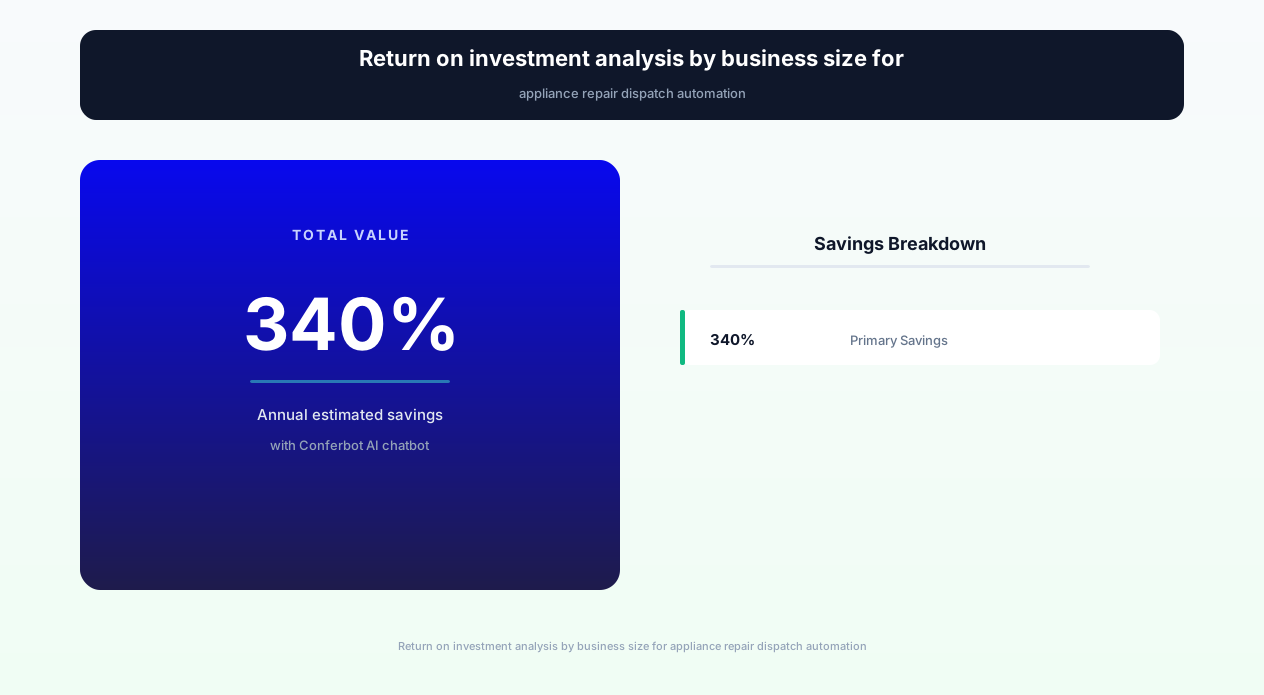
Use Cases and ROI Analysis by Business Size
The appliance repair dispatcher chatbot delivers different ROI profiles depending on business size, service mix, and current operational efficiency. Understanding where the greatest value lies for your specific operation helps prioritize features during implementation and set realistic performance expectations.
Solo Technician / Owner-Operator (1-2 technicians)
For solo operators, the chatbot's primary value is eliminating missed calls and enabling service while on the job. A technician working under a sink cannot answer the phone - every missed call during working hours is a potential lost customer who calls the next company in their search results. The chatbot captures these inquiries, conducts diagnostic intake, and offers scheduling based on the technician's available slots. ROI for solo operators centers on captured revenue that would otherwise be lost: every missed-call lead recovered and converted to a booked job adds directly to monthly revenue against a minimal deployment cost.
Mid-Size Operation (3-8 technicians)
Mid-size operations gain the highest ROI from the chatbot because they experience all the efficiency problems of scale without the resources to solve them through staffing. A 5-technician operation with a single dispatcher is frequently overwhelmed during peak hours, leading to hold times, rushed intake conversations, and incomplete diagnostic information. The chatbot handles unlimited simultaneous conversations, conducts thorough diagnostics regardless of volume, and eliminates the scheduling errors that cause expensive return visits. For a mid-size operation, the combined value comes from four sources: fewer return visits from better pre-visit diagnostics, more after-hours leads captured instead of lost to voicemail, improved technician productivity from tighter scheduling, and reduced dispatcher overtime -- typically adding up to a strong return relative to the chatbot's modest monthly deployment cost.
Large Operation / Franchise (10+ technicians)
Large operations and franchise networks benefit from dispatch consistency across locations and technicians. The chatbot ensures every service request receives the same diagnostic thoroughness regardless of which location answers, which dispatcher is on duty, or what time the request arrives. For franchises, the chatbot enforces brand standards - consistent pricing presentation, warranty handling procedures, and customer communication tone - across all franchise locations. Additional large-operation benefits include: centralized data collection for identifying service trends, standardized parts forecasting across locations, and unified customer communication that supports multi-location service coverage when the nearest location is at capacity.
Home Warranty Company Use Case
Home warranty companies use the chatbot as a front-end claim qualification and routing system. The chatbot verifies the customer's coverage status, determines whether the reported issue is covered under their plan (excluding pre-existing conditions, code violations, and cosmetic damage), collects diagnostic information, and routes the qualified claim to an available service provider in the customer's area. This automation eliminates the claim qualification call that traditionally requires trained agents to navigate complex coverage terms - the chatbot handles the decision tree with perfect consistency, meaningfully cutting claim processing time and freeing agents for complex claims that require human judgment.
Property Management Use Case
Property management companies use the chatbot as a tenant-facing service request system that qualifies repair requests before dispatching vendors. The chatbot determines whether the issue requires professional service or is tenant-resolvable (garbage disposal reset, GFCI outlet trip, clogged filter), verifies that the repair is landlord-responsibility versus tenant-responsibility under the lease terms, and routes qualified requests to the property management company's preferred vendor network with the diagnostic information needed for efficient service. This qualification step prevents unnecessary service calls that cost the property owner money, since a meaningful share of tenant-reported appliance issues are resolvable with basic guidance that the chatbot provides.
Appliance Repair Dispatcher FAQ
Everything you need to know about chatbots for appliance repair dispatcher.
Why Use a Template vs Building from Scratch?
Templates give you a proven starting structure instead of a blank canvas.
| Factor | Conferbot Template | Build from Scratch | Hire a Developer |
|---|---|---|---|
| Time to deploy | 10 minutes | 2-8 hours | 2-6 weeks |
| Cost | Free | Your time | Custom dev quote |
| Proven flows | Yes, pre-built | No | Depends |
| Updates included | Automatic | Manual | Paid |
| Multi-channel | 8+ channels | 1 channel | Extra cost |
| Analytics | Built-in | Must build | Extra cost |
Related Home Services Templates
Explore more chatbot templates like this one





Learn More About Chatbots
Go deeper on how home services chatbots work and how to pick the right builder.
Ready to Deploy Appliance Repair Dispatcher?
Start with a free-forever plan. No credit card required.