The Insurance Chatbot Opportunity in 2026
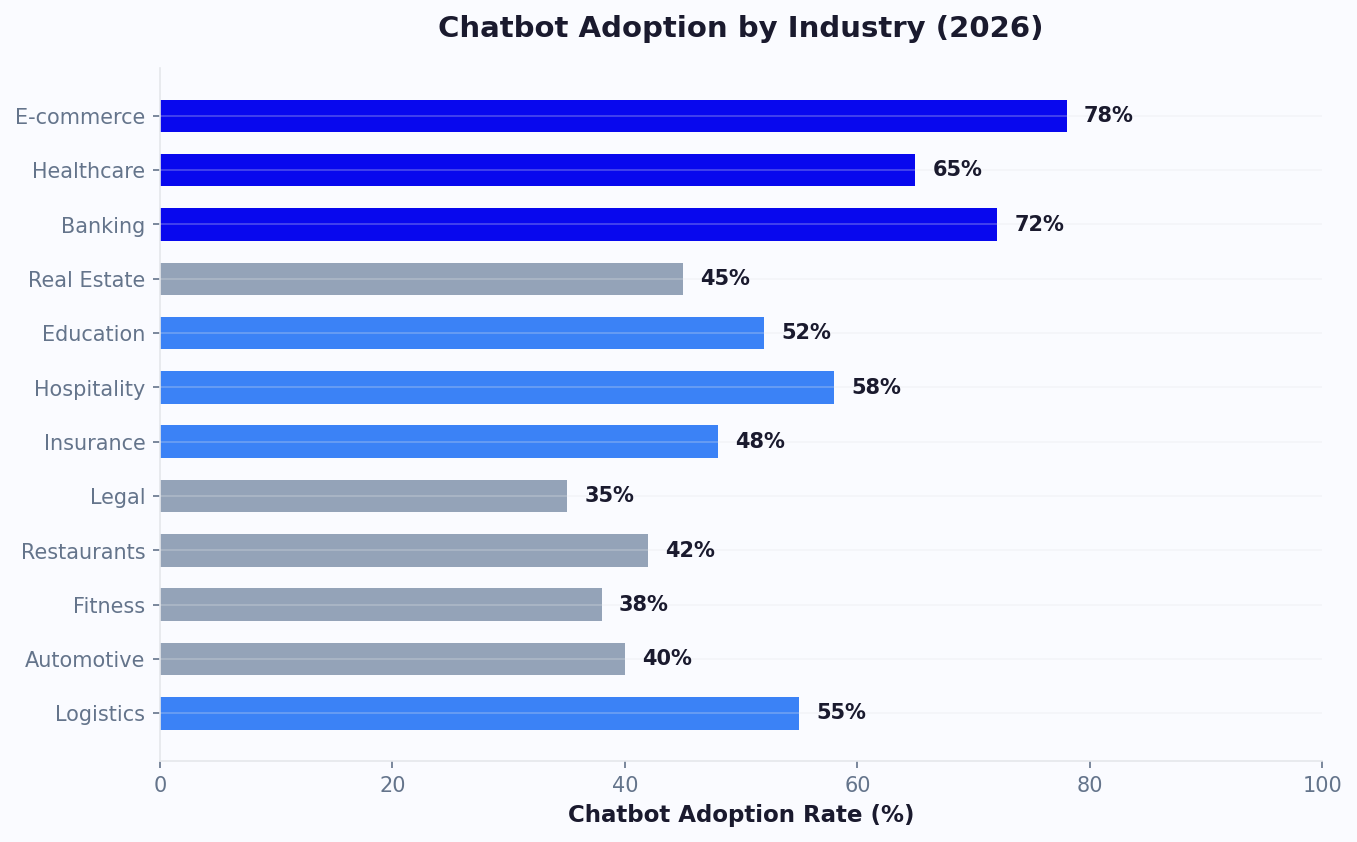
The insurance industry has historically been among the slowest to adopt digital innovation, but 2026 marks a tipping point. Rising customer expectations, pressure to reduce combined ratios, and competition from digital-first insurtechs have made AI chatbots a strategic priority for insurance organizations of every size — from independent agencies to national carriers.
Consider the current state of insurance customer service: the average insurance customer service call takes 12-15 minutes, policy documents are dense and confusing, claims processes are opaque and slow, and customers typically interact with their insurer only when something goes wrong. This creates a relationship defined by frustration rather than trust.
AI chatbots transform this dynamic. According to Juniper Research, insurance chatbots will save the industry $1.3 billion annually by 2027 through automated customer interactions, reduced call center volume, and faster claims processing. But the value goes beyond cost savings — chatbots create new revenue opportunities through automated quote generation, cross-selling, and improved customer retention.
The adoption data tells a clear story. A 2025 Accenture survey found that 74% of insurance customers are comfortable interacting with AI chatbots for routine transactions, up from 43% in 2021. Among millennials and Gen Z — the next generation of insurance buyers — comfort levels exceed 85%. Insurers that fail to offer digital-first service channels are increasingly perceived as outdated and unresponsive.
Insurance chatbots — powered by NLP technology — deployed on your website serve as always-available insurance advisors, handling everything from initial quote requests to policy renewals and claims filing. They explain coverage options in plain language, guide customers through complex forms, and provide instant answers to policy questions that would otherwise require a 20-minute phone call.
This guide covers the most impactful use cases for insurance chatbots, implementation strategies, compliance considerations, and measurable outcomes you can expect. Whether you are an independent agency looking to scale without adding staff or a carrier modernizing your customer experience, the strategies here will help you deploy a chatbot that drives real business results.
Automated Quote Generation and Lead Capture
Quote generation is the front door of insurance sales, and it is where many insurers lose the most prospects. Traditional quote processes require customers to fill out lengthy forms, wait for a callback, or navigate confusing online portals. The result: over 60% of potential customers who start an insurance quote online abandon the process before completion.
A chatbot-based quoting experience replaces these friction-filled processes with a conversational flow that feels natural and takes a fraction of the time.
How Quote Chatbots Work
The chatbot guides the prospect through a series of questions tailored to the insurance product:
Auto insurance example:
- Vehicle information (year, make, model — or VIN for automatic lookup)
- Driver information (age, driving history, annual mileage)
- Coverage preferences (liability limits, comprehensive, collision, deductibles)
- Current insurance status (switching from another carrier? lapse in coverage?)
Based on these responses, the chatbot provides an instant ballpark quote or, for more complex products, schedules a call with an agent who already has all the prospect's information. Either way, the prospect gets immediate value rather than filling out a form and waiting.
Conversion Rate Impact
The numbers are striking. Insurance agencies using chatbot-based quoting report:
- Quote completion rates of 40-60% vs. 15-25% for traditional online forms
- 3-5x more quote requests captured from the same website traffic
- 50% reduction in cost per lead since the chatbot qualifies and captures leads without agent time
The key to these improvements is the conversational format. Instead of presenting 20 form fields at once (which overwhelms prospects), the chatbot asks one question at a time, providing context and explanations along the way. If the prospect asks a question mid-flow ("What does comprehensive coverage actually cover?"), the chatbot answers immediately and continues the quote process without losing progress.
Multi-Product Quoting
Once the chatbot has captured information for one product, it can seamlessly offer quotes for related products. A customer getting an auto insurance quote might also need renters insurance, and the chatbot already has their contact information and address. This cross-selling capability can increase policies per customer by 20-40%, directly improving customer lifetime value and retention rates. Integrate your quote chatbot with your rating engine APIs to provide real-time, accurate quotes based on your actual underwriting guidelines, and deploy across your website to capture leads around the clock. Build your quoting flows with the no-code chatbot builder and use templates to get started quickly.
Lead Nurturing After Initial Quote
Not every prospect who starts a quote is ready to buy immediately. A sophisticated insurance chatbot builds a nurture pipeline for these incomplete quotes. When a prospect exits mid-flow, the chatbot saves their progress and follows up 24-48 hours later with a personalized message: "Hi [NAME], you were getting a quote for auto insurance — would you like to pick up where you left off? I saved your answers." This re-engagement campaign recovers 15-25% of abandoned quotes, representing substantial revenue that would otherwise be lost entirely. The chatbot can also segment prospects by readiness — those who provided most information get a more aggressive follow-up cadence, while early abandoners receive educational content about the value of proper coverage first.
Insurance Chatbot Capabilities: Traditional vs AI-Powered
Insurance organizations choosing a chatbot solution must decide between traditional rule-based approaches and modern AI-powered platforms. Understanding the capabilities of each helps insurers make the right investment for their specific needs and compliance requirements.
| Capability | Rule-Based Chatbot | AI-Powered Chatbot | Best for Insurance |
|---|---|---|---|
| Quote Generation | Structured forms only | Conversational + form hybrid | AI (40-60% completion rate) |
| Policy Questions | Pre-written FAQ only | Understands varied phrasing | AI (handles 5x more variations) |
| Claims FNOL | Step-by-step guided form | Natural language + guided | Hybrid (compliance + flexibility) |
| Compliance Disclosures | 100% predictable wording | Configurable guardrails | Rule-based (exact wording) |
| Cross-Selling | Triggered by specific actions | Context-aware recommendations | AI (20-40% higher uptake) |
| Multilingual Support | Separate flows per language | Built-in 50+ languages | AI (single configuration) |
For most insurance organizations, the optimal approach is a hybrid: AI-powered understanding for customer-facing conversations combined with rule-based guardrails for compliance-critical responses (disclosures, legal disclaimers, coverage limitations). Conferbot's AI chatbot builder supports this hybrid approach natively, letting you leverage AI flexibility while maintaining the regulatory precision insurance demands.
Claims Filing and Processing Automation
Claims handling is the moment of truth for insurance companies — it is when customers most need their insurer, and when the experience most profoundly shapes their perception of value. Unfortunately, traditional claims processes are characterized by long wait times, repetitive information requests, and a lack of transparency. AI chatbots address every one of these pain points.
First Notice of Loss (FNOL)
The chatbot handles the initial claims intake — the First Notice of Loss — by guiding the policyholder through a structured conversation:
- Policy verification: Confirm the policyholder's identity and active coverage using policy number, date of birth, or other verification methods.
- Incident details: What happened? When and where did it occur? Were there any injuries? Were police or emergency services called?
- Documentation collection: The chatbot requests and receives photos of damage, police report numbers, other party information (for auto claims), and any other relevant documentation — all within the chat interface.
- Claim creation: All collected information is structured and submitted to the claims management system, creating a complete FNOL record without manual data entry by claims staff.
Impact on Claims Processing
Insurance organizations using chatbots for FNOL report significant improvements:
- FNOL processing time reduced from 15-30 minutes to 5-8 minutes per claim
- Claims data completeness improved by 30-50% because the chatbot ensures all required fields are captured before submission
- After-hours FNOL capability: Over 35% of incidents occur outside business hours. A chatbot captures these claims immediately rather than forcing policyholders to call back during business hours.
- Reduced claims leakage: More complete initial documentation and faster processing reduce opportunities for fraud and errors.
Claims Status and Communication
After FNOL, the chatbot continues to add value throughout the claims lifecycle:
- Status checks: Policyholders can check claim status at any time without calling an adjuster. "Your claim #12345 is currently being reviewed by an adjuster. Estimated completion: 3-5 business days."
- Document requests: When the adjuster needs additional documentation, the chatbot sends an automated request with clear instructions on what is needed and how to submit it.
- Payment updates: Notify policyholders when claim payments are issued, the amount, and the expected delivery method and timeline.
- Repair coordination: For auto or property claims, the chatbot can connect policyholders with approved repair vendors, schedule inspections, and coordinate rental car arrangements.
By providing instant, transparent communication throughout the claims process, chatbots transform what has traditionally been the most frustrating aspect of insurance into a positive, trust-building experience. Integrate with your claims management system through API integrations and leverage NLP capabilities to understand the varied ways policyholders describe incidents and damage.
The combination of faster processing, better data completeness, and round-the-clock availability makes chatbot-powered claims handling a competitive differentiator in an industry where customer experience during claims is the strongest predictor of retention. Agencies that deploy claims chatbots consistently outperform their peers on both customer satisfaction and operational efficiency metrics.
Policy Information and Self-Service Management
Insurance policies are among the most complex consumer documents, filled with legal terminology, coverage limits, exclusions, and conditions that confuse even sophisticated customers. This confusion drives a massive volume of calls to insurance service centers — many of which are simple questions that a chatbot can answer in seconds.
Common Policy Questions Chatbots Handle
An insurance chatbot on your website can instantly answer:
- Coverage confirmation: "Am I covered if my basement floods?" — The chatbot reviews the policy details and provides a clear, plain-language answer about what is and is not covered.
- Deductible information: "What is my deductible for collision?" — Instant retrieval from policy data.
- Payment and billing: Current balance, next payment date, payment history, and the ability to make payments through the chat interface.
- Policy documents: Request and receive copies of declarations pages, ID cards, and certificates of insurance — all delivered through the chat without calling or logging into a portal.
- Coverage explanations: "What does uninsured motorist coverage mean?" — The chatbot explains coverage types in plain language with relevant examples.
Self-Service Policy Changes
Beyond answering questions, the chatbot can process routine policy changes without agent involvement:
- Address updates: Policyholder moves to a new address — the chatbot updates records and recalculates premium if applicable.
- Vehicle changes: Adding or removing a vehicle from an auto policy, with instant premium adjustment quotes.
- Coverage modifications: Increasing or decreasing coverage limits, adding or removing optional coverages (roadside assistance, rental car coverage).
- Beneficiary updates: For life insurance, updating beneficiary designations through a guided conversation with appropriate documentation.
- Payment method changes: Switching payment frequency, updating credit card information, or setting up autopay.
Renewal Management
Policy renewal is a critical retention moment, and chatbots can significantly improve renewal rates by proactively engaging policyholders before their renewal date:
- 60 days before renewal: The chatbot sends a summary of the current policy, any changes in premium, and an invitation to review coverage.
- 30 days before renewal: If the policyholder has not responded, the chatbot follows up with a comparison showing what has changed and why.
- 14 days before renewal: Final reminder with one-click renewal option through the chatbot.
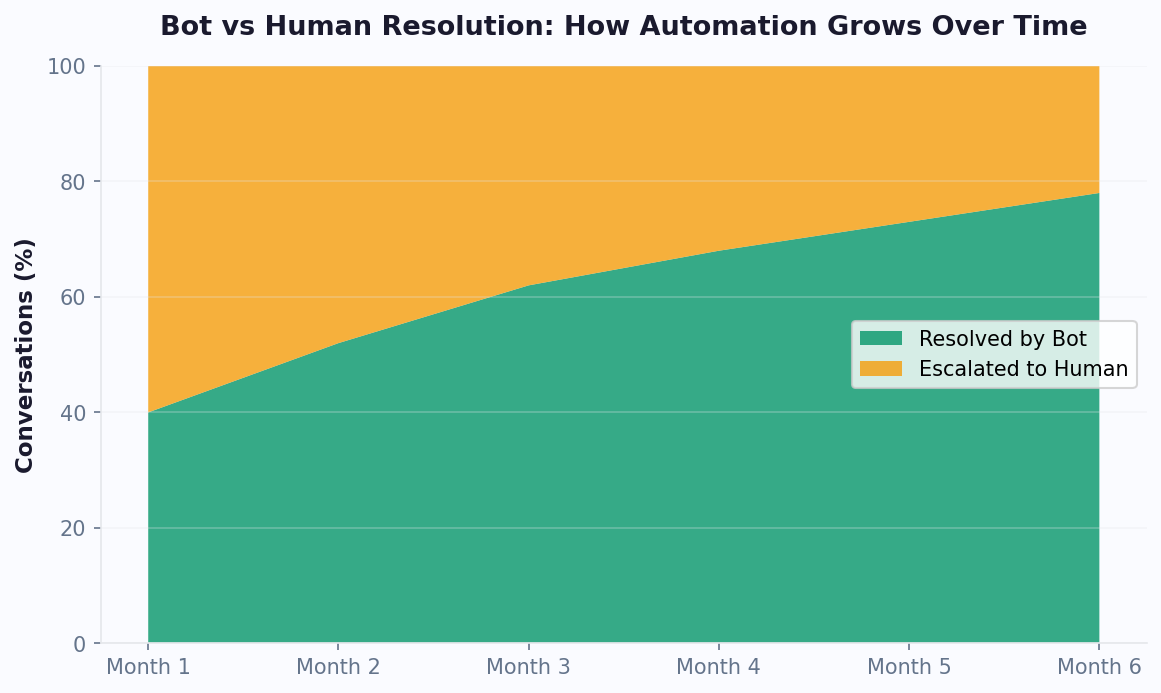
Insurance agencies using chatbot-based renewal campaigns report 5-15% improvements in retention rates, which, given the high cost of acquiring new policyholders, translates directly to improved profitability. The chatbot handles routine renewals automatically while flagging complex situations (significant premium increases, coverage changes, at-risk customers) through the ticket system for agent review.
Insurance Education and Advisory Through Conversational AI
One of the biggest challenges in insurance is the knowledge gap between providers and customers. Most consumers do not understand their coverage, cannot explain their deductible, and have no idea whether they are adequately insured. This knowledge gap leads to underinsurance, claims disputes, and customer dissatisfaction. Chatbots are uniquely positioned to bridge this gap through accessible, on-demand education.
Interactive Insurance Guides
Instead of static blog posts or PDFs that few customers read, the chatbot delivers insurance education through interactive conversation:
- Coverage assessments: Drawing from the knowledge base, "Am I adequately insured?" — The chatbot asks about the customer's assets, liabilities, family situation, and current coverage to identify potential gaps. This is not a hard sell — it is a genuine advisory service that builds trust and often reveals legitimate coverage needs.
- Product comparisons: "What is the difference between term and whole life insurance?" — The chatbot explains the differences, advantages, and disadvantages of each in conversational language, with examples relevant to the customer's situation.
- Scenario-based learning: "What happens if I cause a car accident and the damages exceed my coverage limits?" — The chatbot walks through realistic scenarios that help customers understand why adequate coverage matters.
Risk Assessment and Prevention
Proactive risk management chatbots help policyholders reduce their risk, which benefits both the customer (fewer incidents) and the insurer (fewer claims):
- Home safety: Interactive checklists for fire prevention, water damage prevention, and security improvements — with information about discounts available for completed improvements.
- Auto safety: Seasonal driving tips, vehicle maintenance reminders, and defensive driving course recommendations that can lower premiums.
- Health and wellness: For health insurance, wellness program information, preventive care reminders, and healthy lifestyle resources.
Life Event Triggers
Major life events typically create insurance needs that customers do not always recognize. A chatbot can proactively check in about life events and provide relevant guidance:
- Getting married: Bundling policies, updating beneficiaries, considering umbrella coverage
- Having a baby: Life insurance needs, beneficiary updates, increasing liability coverage
- Buying a home: Homeowners insurance, title insurance, increased personal property coverage
- Starting a business: Commercial insurance, professional liability, workers compensation
- Retirement: Medicare supplemental insurance, long-term care, annuity options
By providing genuine educational value rather than just sales pitches, the chatbot positions your agency or carrier as a trusted advisor. This advisory relationship drives higher customer lifetime value, more referrals, and stronger retention — the three metrics that matter most in insurance. Leverage NLP technology to understand the diverse ways customers describe their situations and concerns, ensuring the chatbot responds with relevant, helpful information regardless of how the question is phrased. Deploy across your website and WhatsApp for maximum accessibility.
Forward-thinking insurance organizations are also using chatbot interaction data to identify coverage gaps across their book of business, enabling proactive outreach campaigns that both serve customer needs and drive revenue growth through appropriate coverage increases.
Regulatory Compliance and Data Security for Insurance Chatbots
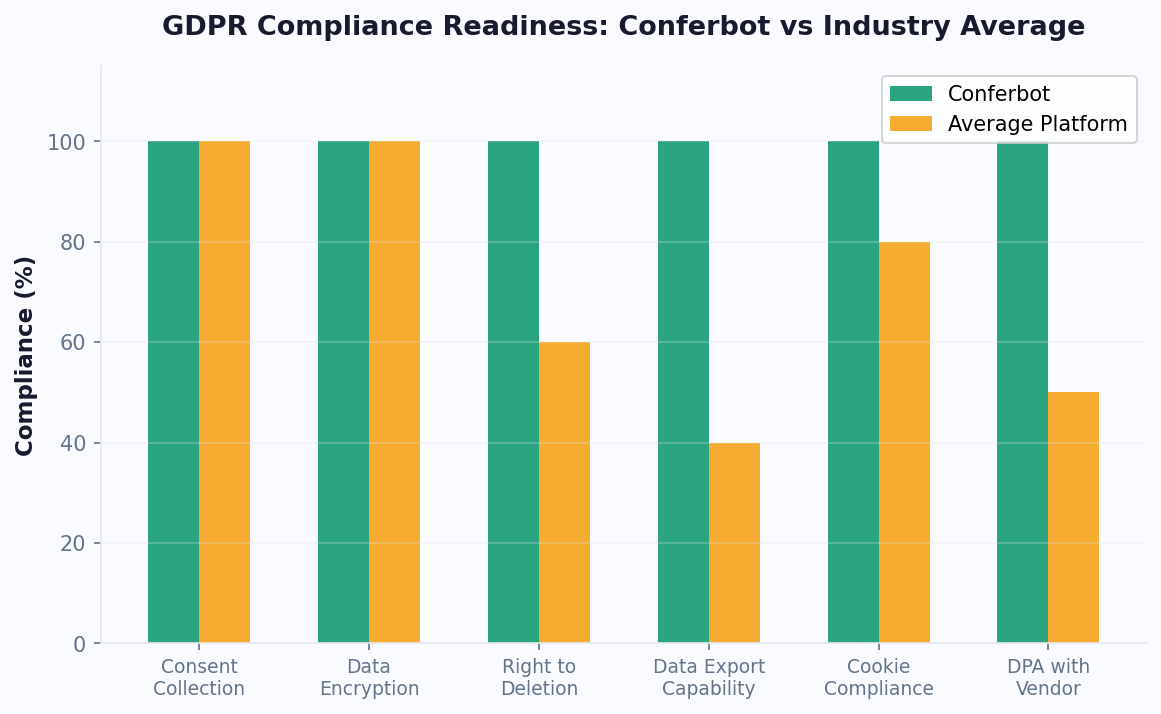
Insurance is one of the most heavily regulated industries, and chatbot implementations must navigate a complex web of state and federal regulations, data privacy requirements, and industry-specific compliance standards. Getting compliance right is not optional — violations can result in fines, license revocations, and reputational damage.
Key Regulatory Considerations
Licensing requirements: In most jurisdictions, providing specific insurance advice or quotes requires a license. Your chatbot must be designed so that it provides general information and processes transactions within defined parameters, while directing advisory conversations to licensed agents. The line between information and advice can be nuanced — work with your compliance team to define clear boundaries.
Disclosure requirements: Many states require specific disclosures when customers interact with automated systems. Your chatbot should clearly identify itself as an AI assistant, disclose that it is not a licensed agent (if applicable), and provide easy access to a licensed professional for advisory needs.
Record retention: Insurance regulators require retention of customer communications for specified periods (typically 3-7 years depending on jurisdiction). All chatbot conversations must be logged, stored securely, and available for regulatory examination.
Data Privacy and Security
Insurance chatbots handle sensitive personal and financial information that requires robust protection:
- Personal information: Names, addresses, dates of birth, Social Security numbers (for quoting), driver's license numbers
- Financial data: Payment card numbers, bank account details, income information
- Health information: For health and life insurance, medical history and health conditions (subject to HIPAA in some contexts)
- Claims data: Incident details, damage photos, police reports
Your chatbot platform must provide:
- End-to-end encryption for all data in transit and at rest
- SOC 2 Type II compliance (at minimum)
- Data residency controls to meet state-specific requirements
- Access controls and audit logging for all administrative access
- Data retention and deletion capabilities aligned with regulatory requirements
Practical Compliance Framework
- Classify interactions: Map each chatbot function (quoting, claims, policy changes, general FAQ) to its regulatory requirements. General FAQ has minimal regulatory burden; quoting and policy changes require more controls.
- Build compliance into flows: Embed required disclosures, consent captures, and regulatory warnings into conversation flows rather than treating compliance as an afterthought.
- Regular audits: Conduct quarterly reviews of chatbot conversations to ensure compliance with regulatory requirements and company policies.
- Staff training: Train agents who receive escalations from the chatbot on compliance requirements specific to chatbot-originated interactions.
Deploy your insurance chatbot through Conferbot's website integration with enterprise-grade security and API integrations that connect securely with your policy administration and claims management systems. Use chatbot analytics to monitor conversation patterns and flag any compliance concerns proactively.
Insurance Chatbot Implementation: From Strategy to Results
Implementing a chatbot in an insurance organization requires careful planning due to regulatory requirements, system integrations, and the need for accuracy in policy-related communications. Here is a structured implementation roadmap that balances speed-to-market with the thoroughness insurance demands.
Phase 1: Foundation (Weeks 1-3)
- Use case prioritization: Rank potential chatbot functions by business impact and implementation complexity. Start with high-impact, low-complexity use cases: FAQ automation, quote lead capture, and claims status inquiries.
- Compliance framework: Work with your compliance team to establish chatbot interaction guidelines, required disclosures, and escalation criteria. Document which functions require licensed agent involvement.
- Data and system audit: Inventory the systems the chatbot will need to access — rating engines, policy administration systems, claims management, CRM — and assess API availability and data quality.
- Vendor selection: Evaluate platforms on insurance-specific criteria: compliance features, security certifications, integration capabilities with insurance systems, and experience with insurance deployments.
Phase 2: Build and Integrate (Weeks 4-6)
- Build FAQ and general information flows. Start with the questions your service center handles most frequently. These are low-risk, high-volume interactions that deliver immediate ROI. Centralize answers in a knowledge base for consistent, accurate responses.
- Build quote capture flows. Design conversational quoting experiences for your primary products. Integrate with your rating engine to provide real-time or near-real-time quotes where possible.
- Configure claims intake. Build FNOL flows for each product line with appropriate documentation collection, urgency assessment, and claims system integration.
- Implement compliance controls. Embed disclosures, consent captures, and escalation triggers. Set up conversation logging and retention policies.
Phase 3: Test and Validate (Weeks 7-8)
- Functional testing: Test every flow with realistic scenarios, including edge cases (multi-vehicle policies, complex claims, unusual coverage questions).
- Compliance review: Have your compliance team review all chatbot conversations for regulatory adherence.
- Accuracy verification: For quoting and policy information flows, verify that the chatbot provides accurate information by comparing against known test cases.
- Security testing: Penetration testing and vulnerability assessment of the chatbot infrastructure and integrations.
Phase 4: Launch and Scale (Weeks 9-12)
- Pilot launch: Deploy to a subset of your website traffic or a single product line. Monitor closely for accuracy, compliance, and customer satisfaction.
- Agent training: Train your service center and sales team on handling chatbot escalations, reviewing chatbot-captured leads, and providing feedback on chatbot performance.
- Full deployment: Based on pilot results, expand to full traffic and all product lines. Enable multi-channel deployment across website and messaging platforms.
- Continuous optimization: Establish a weekly review cadence for chatbot analytics, conversation quality, and conversion metrics. Use these insights to refine flows, update content, and expand capabilities.
Insurance organizations that follow this structured approach typically see 30-40% reduction in routine service call volume, 2-3x increase in online quote completion rates, and measurable improvements in customer satisfaction scores within the first quarter of deployment. The chatbot becomes a core component of the customer experience, handling the routine while empowering agents to focus on the complex, advisory interactions that build lasting client relationships.
Measuring Long-Term Success
Insurance chatbot ROI extends far beyond initial deployment metrics. Track these key performance indicators quarterly to validate ongoing value and identify expansion opportunities:
- Cost per interaction: Compare chatbot cost ($0.05-0.15 per conversation) versus phone support cost ($8-15 per call) and monitor the ratio as automation coverage expands
- Quote-to-bind conversion rate: Measure how chatbot-captured quote requests convert versus traditional web form submissions — the industry benchmark for chatbot-captured leads is 2.5-3x higher
- Claims cycle time: Track average days from FNOL to settlement for chatbot-initiated claims versus phone-initiated claims
- Net Promoter Score (NPS): Monitor customer satisfaction specifically for chatbot interactions and compare against overall agency or carrier NPS
- Policy-per-customer growth: Measure cross-sell success driven by chatbot recommendations
According to McKinsey's financial services insights, insurance companies that invest in digital self-service channels see customer satisfaction scores improve by 20-30% within the first year. Research from Accenture's insurance practice shows that carriers leveraging AI automation reduce claims processing costs by 40-50% while improving accuracy. The National Association of Insurance Commissioners (NAIC) provides additional regulatory guidance for AI adoption in the insurance sector, and Insurance Times regularly publishes benchmarks for digital transformation ROI in the industry.
For a deeper exploration of chatbot implementation strategies in related industries, see our guides on chatbots for banking and finance, chatbots for healthcare, and chatbot GDPR compliance. Insurance professionals looking for broader context on chatbot ROI should also review our chatbot ROI calculator guide and 2026 chatbot statistics report.
Was this article helpful?
AI Chatbots for Insurance FAQ
Everything you need to know about chatbots for ai chatbots for insurance.
About the Author
Conferbot Team specializes in conversational AI, chatbot strategy, and customer engagement automation. With deep expertise in building AI-powered chatbots, they help businesses deliver exceptional customer experiences across every channel.
View all articles