Why Real Estate Professionals Need AI Chatbots in 2026
Real estate is a relationship-driven business, but it is also a numbers game. The average real estate agent juggles dozens of leads at various stages of the buying or selling journey, and the speed of response often determines whether a lead becomes a client or goes to a competitor. According to the National Association of Realtors (NAR), 78% of buyers work with the first agent who responds to their inquiry. Yet the average agent response time to a new lead is over 15 hours — a gap that costs the industry billions in lost commissions annually.
AI chatbots close this response gap permanently. A chatbot on your real estate website responds to every inquiry instantly, 24 hours a day, 7 days a week. It qualifies leads by asking about budget, timeline, location preferences, and pre-approval status. It showcases relevant property listings with photos, virtual tours, and neighborhood details. And it schedules viewings directly on the agent's calendar — all while the agent is showing properties, attending closings, or sleeping.
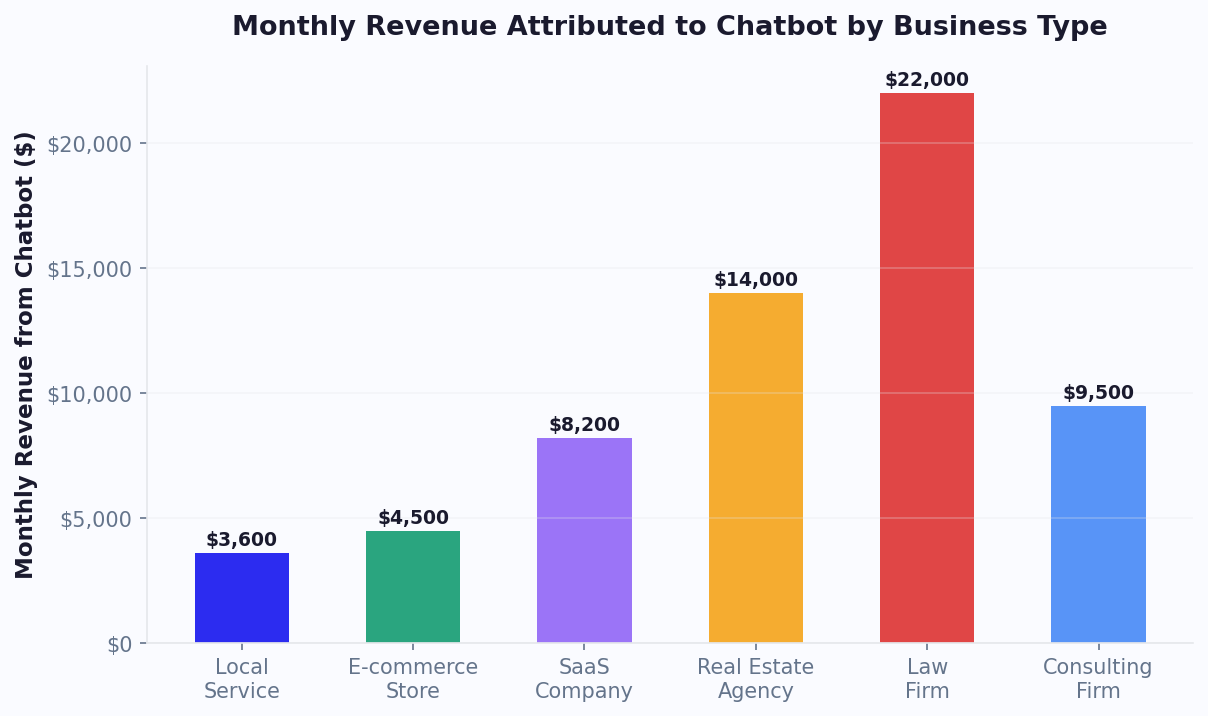
The ROI is compelling. Real estate professionals using chatbots report 3-5x more qualified leads captured from the same website traffic, 40-60% reduction in time spent on initial lead qualification, and 15-25% higher conversion rates from lead to client. For a business where a single closed transaction generates thousands in commission, even a modest improvement in lead capture and conversion translates to significant revenue growth.
Beyond individual agents, brokerages and property management companies are deploying chatbots at scale to handle tenant inquiries, maintenance requests, rental applications, and property marketing. The technology has matured rapidly — modern real estate chatbots understand natural language, integrate with MLS listings, and can be built without any coding knowledge using the AI chatbot builder or no-code chatbot builder.
This guide covers every major use case for real estate chatbots, from lead capture to closing support, with practical implementation strategies you can apply immediately.
Automated Lead Qualification: Separating Buyers from Browsers
Not all leads are created equal, and one of the biggest time drains for real estate professionals is manually qualifying each inquiry to determine who is a serious buyer and who is casually browsing. A qualification chatbot handles this instantly, ensuring agents spend their time on the leads most likely to convert.
The Qualification Framework
An effective real estate qualification chatbot asks questions across four key dimensions, often remembered by the acronym BANT:
- Budget: What is their price range? Are they pre-approved for a mortgage? Do they need a lender referral?
- Authority: Are they the decision-maker? Is a spouse or partner involved in the decision?
- Need: What type of property are they looking for? How many bedrooms and bathrooms? Any must-have features (garage, yard, specific school district)?
- Timeline: When do they need to move? Is there a lease expiration or current home sale driving the timeline?
Based on these responses, the chatbot assigns a lead score and routes accordingly. Hot leads (pre-approved, moving within 60 days, specific requirements) get an immediate notification to the agent with a prompt to call within 5 minutes. Warm leads (researching, 3-6 month timeline) enter an automated nurturing sequence. Cold leads (just curious, no timeline) receive periodic market updates to stay top-of-mind.
Conversational Lead Capture
The key to effective lead qualification is making it feel like a conversation, not an interrogation. Instead of a static form with 10 required fields (which has a typical completion rate of 5-15%), a chatbot asks one question at a time in a natural, conversational flow. This approach achieves 30-50% completion rates — a massive improvement.
For example, instead of a form field labeled "Budget Range," the chatbot says: "To help me find the best properties for you, what price range are you considering? No worries if you are still figuring this out — I can help with that too!" This friendly, low-pressure approach encourages honest responses and captures more complete lead profiles.
Deploy your qualification chatbot across multiple channels for maximum coverage. Your WhatsApp chatbot can qualify leads who inquire through messaging, while your website chatbot captures visitors browsing property pages. Use lead generation templates as a starting point and customize the qualification criteria to match your market and specialty.
Real Estate Chatbot Features: Channel Comparison
Real estate professionals can deploy chatbots across multiple channels, each with distinct advantages depending on the target audience and use case. Understanding which channels perform best for different real estate scenarios helps you allocate resources effectively.
| Channel | Best For | Lead Capture Rate | Response Speed | Rich Media Support |
|---|---|---|---|---|
| Website Chatbot | Property page visitors, SEO traffic | 15-25% | Instant | Full (photos, tours, maps) |
| International buyers, mobile-first leads | 30-50% | Instant | Photos, PDFs, location pins | |
| Instagram DM | Luxury listings, visual marketing | 20-35% | Instant | Photos, reels, stories |
| Facebook Messenger | Marketplace listings, local community | 20-30% | Instant | Full media support |
| SMS/Text | Sign riders, print ads, follow-ups | 25-40% | Instant | Limited (MMS photos) |
For maximum coverage, deploy an omnichannel chatbot strategy that covers your website, WhatsApp, and at least one social media platform. This ensures you capture leads regardless of their preferred communication channel, and all conversations feed into a single dashboard for unified lead management.
Interactive Property Listings and Virtual Property Search
Static property listing pages are passive — they wait for the buyer to find the right property through search filters and scrolling. A property search chatbot is active — it asks what the buyer wants and delivers matching listings in seconds, often surfacing properties the buyer would have missed through manual search.
Conversational Property Search
The chatbot acts as a personal property concierge. A typical interaction might look like this:
Chatbot: "What area are you interested in?"
Buyer: "Something near downtown or the west side, close to good schools"
Chatbot: "Great choices! What's your ideal number of bedrooms?"
Buyer: "At least 3, preferably 4"
Chatbot: "And your budget range?"
Buyer: "Under $450K"
Chatbot: "I found 12 properties matching your criteria. Here are the top 3 based on your priorities..."
Each listing is presented as a rich card with the property photo, key details (price, bedrooms, bathrooms, square footage), and action buttons (view full listing, schedule a viewing, ask a question). This interactive format keeps buyers engaged and moving forward in the search process.
Handling Complex Search Criteria
Real buyers have complex, often subjective requirements that do not fit neatly into search filters: "a quiet neighborhood," "good natural light," "near hiking trails," or "not on a busy street." Advanced chatbots with natural language understanding can interpret these preferences and match them against property descriptions, neighborhood data, and listing agent notes to surface genuinely relevant results.
New Listing Alerts
For buyers who have not found their perfect property yet, the chatbot can set up personalized new listing alerts. When a property matching their saved criteria hits the market, the chatbot sends a message through the buyer's preferred channel with the listing details and an option to schedule an immediate viewing. In competitive markets where desirable properties sell within days, this speed advantage can be the difference between getting the home and missing out.
Virtual Tour Integration
Modern real estate chatbots integrate with virtual tour platforms (Matterport, Zillow 3D Home, etc.) to offer immersive property experiences directly within the chat. A buyer can ask, "Can I see the kitchen?" and receive a link to the specific room in the virtual tour. This pre-screening through virtual tours means that by the time a buyer requests an in-person viewing, they are already genuinely interested in the property — dramatically improving the agent's showing-to-offer ratio and reducing wasted time on properties that are not a fit.
Automated Viewing Scheduling and Open House Management
Scheduling property viewings is a logistical puzzle that consumes hours of an agent's week. Coordinating between buyer availability, seller schedules, property access, and the agent's own calendar requires multiple back-and-forth communications per viewing. A scheduling chatbot eliminates this friction entirely.
How Viewing Schedulers Work
The chatbot integrates with the agent's calendar using Conferbot's calendar booking feature (supporting Google Calendar, Outlook, or CRM-based calendars) and the property's showing instructions to present available time slots to the buyer. The entire process takes under 60 seconds:
- Buyer selects the property they want to view
- Chatbot checks the agent's availability and any showing restrictions (tenant notification requirements, lockbox access hours)
- Buyer selects a preferred time slot
- Chatbot confirms the viewing, sends calendar invites to all parties, and provides directions and parking information
- Automated reminders are sent 24 hours and 2 hours before the viewing
Multi-Property Tour Planning
Serious buyers often want to see multiple properties in a single outing. The chatbot can help plan efficient multi-property tours by:
- Identifying available properties within the buyer's criteria
- Organizing viewings geographically to minimize driving time
- Suggesting a logical route between properties
- Allocating appropriate time at each property (15-30 minutes depending on property size)
- Building a complete tour itinerary with addresses, listing details, and time slots
Open House Management
Open houses generate leads, but capturing and qualifying those leads effectively is challenging. A chatbot-based open house registration system solves this by:
- Pre-registration: Visitors register through the chatbot before the open house, providing their contact information and property preferences. This gives the agent a qualified lead list before the event.
- On-site engagement: A QR code at the open house connects visitors to the chatbot, which captures their information and asks follow-up questions about their interest level and timeline.
- Post-event follow-up: The chatbot automatically follows up with every registered visitor within 2 hours of the open house, asking about their interest and offering to schedule private viewings for similar properties.
Agents using chatbot-based open house management report 2-3x more lead information captured compared to paper sign-in sheets, with significantly higher follow-up response rates. Build your scheduling flows with Conferbot's no-code builder and integrate with your CRM through the API integration to ensure every lead is tracked from first interaction through closing.
Chatbots for Property Management and Tenant Communication
Property management companies face a unique set of challenges that chatbots are perfectly positioned to address: high volumes of repetitive tenant inquiries, maintenance request coordination, lease management, and 24/7 emergency response requirements. A well-implemented chatbot can reduce property management overhead by 30-50% while improving tenant satisfaction and retention.
Maintenance Request Handling
Maintenance requests are the highest-volume interaction in property management. A chatbot streamlines the process by:
- Categorizing the issue: Plumbing, electrical, HVAC, appliance, structural, pest control, or other. The chatbot asks specific questions to help maintenance staff understand the problem before arriving.
- Assessing urgency: Is this an emergency (flooding, no heat in winter, gas smell) that requires immediate dispatch, or a routine issue (dripping faucet, squeaky door) that can be scheduled?
- Collecting documentation: The chatbot requests photos or videos of the issue, which help maintenance teams diagnose problems remotely and arrive with the right tools and parts.
- Scheduling repairs: For non-emergency issues, the chatbot presents available time slots and confirms with the tenant.
- Status updates: Tenants can check the status of their maintenance request at any time through the chatbot, reducing follow-up calls to the management office.
Tenant Communication and FAQs
Property managers answer the same questions hundreds of times: rent payment dates, pet policies, guest parking rules, amenity hours, move-out procedures, lease renewal terms. A chatbot armed with this information handles these inquiries instantly, freeing property managers to focus on higher-value activities like leasing and capital improvements.
Rental Applications and Leasing
For vacant units, the chatbot serves as a 24/7 leasing agent:
- Answers questions about available units, pricing, and lease terms
- Pre-qualifies prospective tenants by asking about income, move-in date, and credit score range
- Schedules tours of available units
- Guides qualified prospects through the online application process
- Follows up with applicants about missing documentation
Property management companies using chatbots for leasing inquiries report 40-60% faster time-to-lease for vacant units, directly reducing vacancy losses. Combined with WhatsApp deployment for maintenance communications, chatbots create a modern, responsive tenant experience that drives higher retention rates and positive reviews — critical differentiators in competitive rental markets.
Providing Market Insights and Neighborhood Information
Buyers and renters do not just choose a property — they choose a neighborhood, a community, a lifestyle. Real estate chatbots that provide rich local market data and neighborhood insights position the agent as a knowledgeable local expert, building trust and differentiating them from agents who simply list properties.
Neighborhood Information
When a buyer asks about a specific area, the chatbot can provide comprehensive neighborhood profiles including:
- School information: School district ratings, nearby schools with enrollment data and test scores, private school options
- Safety data: Crime statistics, trends, and comparisons with surrounding areas
- Walkability and transit: Walk scores, transit scores, nearby public transportation options, commute times to major employment centers
- Amenities: Restaurants, shopping, parks, gyms, healthcare facilities, and entertainment within a defined radius
- Demographics: Population composition, household income ranges, and community characteristics
- Market activity: Average sale prices, days on market, price trends, and inventory levels for the specific neighborhood
Comparative Market Analysis
For sellers considering listing their property, a chatbot can provide a preliminary comparative market analysis (CMA) by asking a few key questions about the property:
- Property address or neighborhood
- Number of bedrooms and bathrooms
- Approximate square footage
- Year built and any major renovations
- Condition (move-in ready, needs work, recently updated)
Based on these inputs and recent comparable sales data, the chatbot provides an estimated value range and invites the seller to schedule a detailed, in-person CMA with the agent. This approach captures seller leads that would otherwise leave the website without engaging.
Market Update Subscriptions
The chatbot can offer personalized market update subscriptions, sending weekly or monthly reports on:
- New listings matching the buyer's criteria
- Price changes on watched properties
- Sold properties in their target neighborhoods (showing what homes are actually selling for)
- Interest rate updates and their impact on purchasing power
- Local market trend summaries
These automated touchpoints keep leads engaged over the long buying cycle — the average homebuyer searches for 4-5 months before purchasing — without requiring ongoing manual effort from the agent. Each market update is an opportunity for the chatbot to check in: "Ready to schedule some viewings based on these new listings? I can check agent availability right now." This gentle, data-driven nurturing converts long-cycle leads at significantly higher rates than generic drip email campaigns.
Mortgage Pre-Qualification and Financing Assistance
One of the biggest barriers in real estate transactions is financing uncertainty. Buyers who have not explored their mortgage options are slower to make offers, more likely to drop out of the process, and harder for agents to serve effectively. A chatbot that helps buyers understand their financing options accelerates the buying process and reduces transaction fallout.
Pre-Qualification Estimator
The chatbot walks buyers through a quick pre-qualification assessment:
- Income information: Annual household income, employment type (W-2, self-employed, retired)
- Debt obligations: Monthly debt payments (car loans, student loans, credit cards)
- Down payment: Estimated amount available for down payment
- Credit score range: Self-reported credit score range (excellent, good, fair, needs improvement)
Based on these inputs, the chatbot calculates an estimated maximum purchase price, estimated monthly payment at current interest rates, and the approximate down payment required for different loan types (conventional, FHA, VA). This gives buyers a realistic framework for their property search before they speak with a lender.
Important note: The chatbot should clearly state that this is an estimate, not an actual pre-approval, and recommend that buyers obtain formal pre-approval from a licensed lender before making offers.
Lender Matching and Referrals
For buyers who need financing, the chatbot can connect them with preferred lending partners based on their profile:
- First-time buyers might be matched with lenders specializing in FHA loans or down payment assistance programs
- Self-employed buyers are connected with lenders experienced in non-traditional income documentation
- Veterans are directed to VA loan specialists
- Investors are matched with lenders offering investment property financing
These referrals create value for all parties: buyers get connected with appropriate lenders, lenders receive pre-qualified referrals, and agents earn referral relationships with lending partners. The chatbot tracks referral conversions to help agents optimize their lender partnerships over time.
Financing Education
Many buyers, especially first-time buyers, are confused by mortgage terminology and the financing process. The chatbot serves as an always-available educational resource, explaining concepts like:
- Fixed vs. adjustable rate mortgages
- Private mortgage insurance (PMI) and how to avoid it
- Closing costs and what to expect
- The difference between pre-qualification and pre-approval
- How interest rate changes affect purchasing power
By building a no-code chatbot that educates while qualifying, real estate professionals position themselves as trusted advisors rather than transactional salespeople. This trust translates directly to higher conversion rates and more referrals — the lifeblood of any successful real estate business. Combine these financing flows with your lead generation templates to create a comprehensive buyer engagement system that works around the clock.
Implementing Your Real Estate Chatbot: Best Practices and Pitfalls
Deploying a real estate chatbot successfully requires more than just setting up a tool — it requires strategic thinking about how the bot fits into your overall client acquisition and service workflow. Here are the best practices and common pitfalls to avoid.
Best Practices
1. Lead response time is everything. Configure your chatbot to notify you instantly (push notification, SMS, email) when a hot lead is captured. The industry data is clear: contacting a lead within 5 minutes of their inquiry makes you 21x more likely to qualify them compared to waiting 30 minutes. Your chatbot buys you time by engaging immediately, but human follow-up with hot leads should happen within minutes, not hours.
2. Personalize by page context. The chatbot on a specific property listing page should open with: "I see you are looking at 123 Main Street. Would you like to know more about this property or schedule a viewing?" On a neighborhood page: "Interested in the Westside area? I can show you current listings and recent sales data." Contextual opening messages increase engagement by 40-60% compared to generic greetings.
3. Integrate with your CRM. Every chatbot interaction should sync to your CRM (Follow Up Boss, kvCORE, BoomTown, or similar) with full conversation history, lead score, and property interests. This ensures continuity when you follow up personally and prevents leads from falling through the cracks.
4. Use rich media. Real estate is visual. Your chatbot should share property photos, virtual tour links, neighborhood maps, and video walkthroughs directly in the conversation. Rich media messages see 2-3x higher engagement than text-only messages.
5. Build for mobile first. Over 70% of real estate searches happen on mobile devices. Ensure your chatbot experience is optimized for smaller screens with concise messages, easy-to-tap buttons, and mobile-friendly media.
Common Pitfalls to Avoid
- Asking too many questions upfront: Do not try to capture every detail in the first interaction. Qualify on the essentials (budget, timeline, location, contact info) and gather details in subsequent conversations.
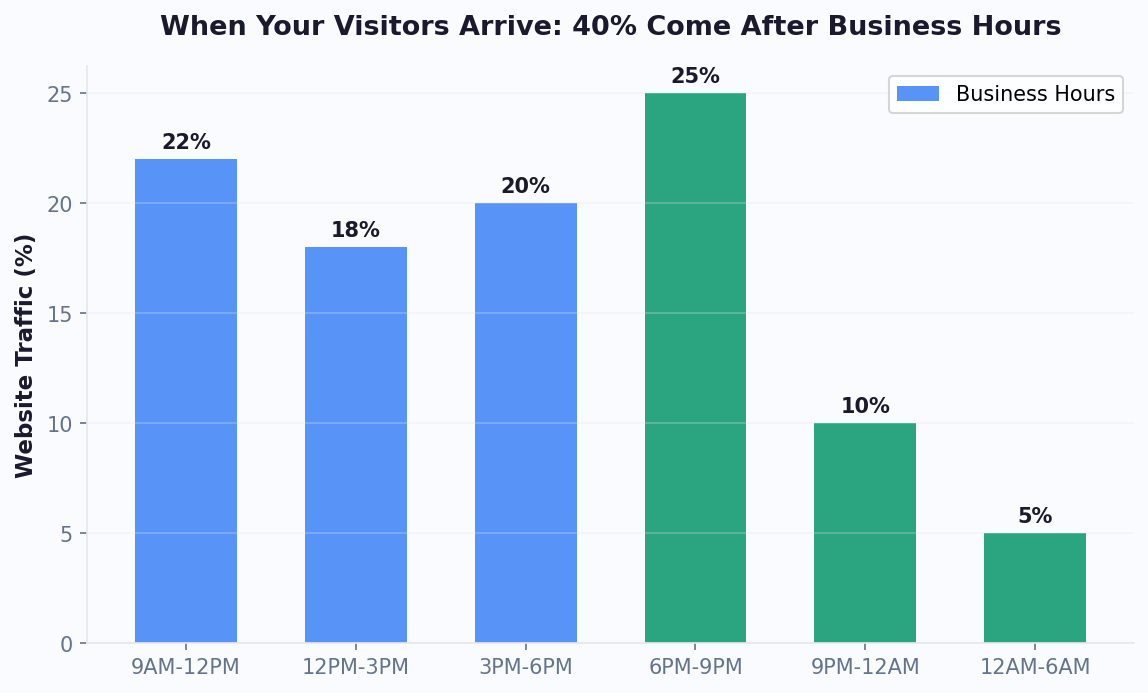
- Ignoring after-hours leads: If your chatbot captures a lead at 10 PM but you do not follow up until the next afternoon, you have wasted the chatbot's advantage. Set up automated nurturing sequences for leads captured outside business hours.
- Generic responses: Real estate is local. Your chatbot content should reference specific neighborhoods, local landmarks, school districts, and market conditions relevant to your area. Generic real estate advice adds no value.
- No human handoff path: Always make it easy for prospects to reach a real person. Some buyers will never be comfortable making a major financial decision through a chatbot, and that is perfectly fine. The bot's job is to qualify and engage, not to replace the agent relationship.
Start with your WhatsApp and website chatbot channels, use pre-built lead generation templates, and iterate based on the leads you capture in your first 30 days. The most successful real estate chatbot implementations treat the first month as a learning phase, continuously refining conversation flows based on actual prospect interactions and feedback. Use chatbot analytics to identify which questions prospects ask most and optimize your flows accordingly.
Technology Stack Integration for Real Estate Teams
The most effective real estate chatbot deployments integrate deeply with the technology stack that agents and brokerages already use. Key integrations include MLS/IDX feeds for real-time property data, CRM systems (Follow Up Boss, kvCORE, LionDesk, Wise Agent) for lead management, calendar tools (Google Calendar, Calendly) for showing scheduling, and transaction management platforms (Dotloop, SkySlope) for closing coordination.
When evaluating chatbot platforms for real estate, prioritize those offering native integrations with your existing tools rather than requiring custom development or third-party middleware. According to NAR's technology survey, agents who use integrated technology stacks close 30% more transactions annually than those using disconnected tools. A chatbot that automatically creates CRM records, schedules showings on the agent's calendar, and logs all communication eliminates the manual data entry that causes leads to fall through the cracks.
For teams and brokerages, the chatbot should also integrate with lead routing and distribution systems. When a new inquiry comes in at 11 PM, the chatbot qualifies the lead and routes it to the appropriate agent based on geographic expertise, property type specialization, or simple round-robin distribution — ensuring no lead waits until morning for attention. Explore Inman's real estate technology coverage for additional insights on integration best practices, and review benchmarks from Tom Ferry's coaching resources on how top-producing agents leverage automation to scale their business.
For related strategies, see our guides on the comprehensive real estate chatbot guide, chatbots for mortgage brokers, and lead generation chatbot best practices for additional conversion optimization techniques specific to real estate professionals.
Was this article helpful?
AI Chatbots for Real Estate FAQ
Everything you need to know about chatbots for ai chatbots for real estate.
About the Author

Conferbot Team specializes in conversational AI, chatbot strategy, and customer engagement automation. With deep expertise in building AI-powered chatbots, they help businesses deliver exceptional customer experiences across every channel.
View all articles