Why Pet Grooming Businesses Need AI Chatbots in 2026
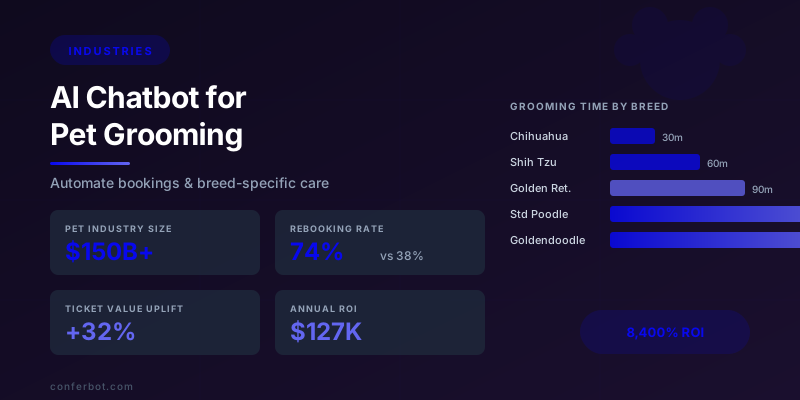
The pet care industry has become one of the most resilient and fastest-growing sectors in the global economy. According to Grand View Research, the global pet care market surpassed $150 billion in 2025 and is projected to reach $232 billion by 2030, growing at a compound annual growth rate of 6.2%. Within this massive market, pet grooming services represent one of the fastest-growing segments, driven by the humanization of pets -- the well-documented trend of pet owners treating their animals as family members and spending accordingly on premium care.
The United States alone has over 65,000 pet grooming businesses, according to IBISWorld industry data, ranging from single-groomer mobile operations to multi-location grooming salons and franchise chains. These businesses share a common set of operational challenges: phone lines that go unanswered during busy grooming sessions, scheduling complexity driven by vastly different service times across breeds and sizes, inconsistent upselling of add-on services, no-shows that create revenue gaps in the schedule, and the inability to capture after-hours bookings from pet owners who research grooming services in the evening.
The economics of pet grooming make these challenges particularly costly. The average grooming appointment generates $55-$85, but groomer time is the binding constraint -- a skilled groomer can handle 6-8 appointments per day depending on breed complexity. Every missed call, every no-show, and every failed upsell directly impacts daily revenue with no way to recover the lost capacity. A groomer who loses one appointment per day to no-shows or missed bookings loses $16,000-$25,000 in annual revenue.
An AI chatbot addresses every one of these pain points. It answers inquiries 24/7, books appointments with breed-appropriate time allocation, sends automated grooming reminders, upsells add-on services at the moment of booking, tracks pet health notes for returning customers, and manages the complex scheduling requirements of mobile grooming operations. For pet grooming businesses competing in an increasingly crowded market, the chatbot is the most cost-effective way to increase bookings, reduce no-shows, and grow revenue per appointment.
This guide covers the complete chatbot implementation for pet grooming businesses: breed-specific scheduling, grooming cycle reminders, pet health tracking, add-on upselling, mobile grooming dispatch, multi-pet household management, and a detailed ROI model. Whether you operate a single-groomer salon, a mobile grooming van, or a multi-location chain, this playbook provides the framework to automate operations and increase revenue through intelligent chatbot deployment.
The competitive dynamics of the pet grooming industry make this investment increasingly urgent. National chains like PetSmart and Petco have invested heavily in online booking systems and mobile apps, creating a convenience gap that independent groomers cannot bridge with phone-only booking. Meanwhile, the explosion of mobile grooming services -- which grew 300% between 2020 and 2025 according to the American Pet Products Association (APPA) -- has introduced new competitors who market themselves on convenience. A chatbot gives independent and small-chain groomers the digital booking and customer communication capabilities that match or exceed the technology deployed by well-capitalized competitors.
Breed-Specific Scheduling: The Core Innovation
Pet grooming scheduling is fundamentally different from any other appointment-based business. A haircut at a human salon takes roughly the same time regardless of the client. A pet grooming appointment varies by a factor of 4x or more depending on the breed, coat type, size, and condition. A Chihuahua bath-and-trim takes 30-45 minutes. A Standard Poodle full groom with breed-specific clip takes 2.5-3 hours. A severely matted Goldendoodle requiring de-matting can take 3+ hours. This extreme variability makes manual scheduling error-prone and chatbot-assisted scheduling transformative.

How Breed-Specific Booking Works
The chatbot guides pet owners through a structured booking flow that captures the information needed to allocate the right amount of time and assign the right groomer:
- Pet identification: The chatbot asks for the pet's name, breed (with a searchable breed database covering 200+ breeds and common mixes), weight, and age. For mixed breeds, it collects the dominant breeds to estimate coat type and size.
- Service selection: Based on the breed profile, the chatbot presents appropriate services with accurate pricing. A bath-and-brush for a Labrador is a fundamentally different service than a full groom for a Bichon Frise, and the chatbot prices and describes each accordingly.
- Coat condition assessment: The chatbot asks when the pet was last groomed, whether there is matting or tangles, and whether the owner wants a specific style or length. For breeds prone to matting (Doodles, Poodles, Cocker Spaniels), the chatbot explains that matting may require a shorter clip and additional time.
- Behavioral considerations: First-time customers are asked about their pet's temperament with grooming -- whether they are anxious, reactive to clippers, or have handling sensitivities. This information helps the groomer prepare and allocate buffer time for nervous pets.
- Time slot allocation: Based on breed, service, coat condition, and behavioral notes, the chatbot calculates the required appointment duration and shows only time slots with sufficient availability. A 90-minute Golden Retriever appointment cannot be booked into a 60-minute gap.
The Breed Database Advantage
The chatbot maintains a comprehensive breed database that maps each breed to default grooming parameters: typical coat type (double coat, single coat, wire, curly, smooth), standard grooming time, common clip styles, recommended grooming frequency, and breed-specific health considerations (e.g., Bulldogs need facial fold cleaning, Cocker Spaniels need ear cleaning emphasis). When a customer enters their breed, the chatbot automatically populates these defaults, reducing the information the customer must provide and ensuring accurate scheduling.
For the increasingly common designer mixes -- Labradoodles, Goldendoodles, Bernedoodles, Cockapoos, Cavapoos -- the chatbot uses the parent breed data to estimate grooming requirements. A Goldendoodle inherits the Poodle's curly coat maintenance needs and the Golden Retriever's size, resulting in grooming times closer to the Poodle parent. This accurate estimation for mixed breeds is something that generic booking systems cannot handle, and it eliminates the chronic underscheduling that frustrates both groomers and customers.
Impact on Scheduling Efficiency
Grooming businesses that deploy breed-specific chatbot scheduling report a 25-35% improvement in schedule utilization. The primary driver is the elimination of scheduling gaps -- when a 45-minute Yorkie appointment is followed by a 2.5-hour Poodle appointment, the chatbot can fill the gap with another small-breed appointment rather than leaving 45 minutes of dead time. This improved utilization translates directly to revenue: a groomer who serves 7 dogs per day instead of 6 due to better scheduling generates an additional $55-$85 per day, or $16,500-$25,500 per year. For businesses evaluating appointment scheduling features, breed-specific time allocation is the highest-impact capability in pet grooming.
The chatbot also helps manage groomer specialization. Some groomers excel at specific breeds or clip styles -- one may be the go-to for hand-stripping Terriers, another may specialize in Asian Fusion cuts for Poodles. The chatbot routes appointments to the groomer whose skills match the breed and requested style, improving service quality and customer satisfaction simultaneously. This intelligent routing is invisible to the customer (they simply see available time slots), but it ensures that complex breed-specific grooms are handled by the most qualified groomer on staff.
Automated Grooming Cycle Reminders That Drive Repeat Revenue
Pet grooming is inherently recurring -- every dog needs regular grooming, and the frequency depends on breed, coat type, and lifestyle. A Poodle needs grooming every 4-6 weeks. A Golden Retriever benefits from professional grooming every 6-8 weeks. A short-coated breed like a Beagle may only need professional grooming every 8-12 weeks. Yet most grooming businesses rely entirely on the pet owner to remember and initiate the next appointment, leaving predictable recurring revenue on the table.

How the Reminder System Works
The chatbot maintains a grooming calendar for each pet based on breed-appropriate intervals and adjusts timing based on the specific services performed at each visit:
Breed-based default intervals: When a new pet is groomed, the chatbot sets the recommended rebooking interval based on breed. A Bichon Frise is scheduled for a reminder in 4 weeks. A Labrador in 8 weeks. A Maltese in 5 weeks. These defaults are based on professional grooming standards from the National Dog Groomers Association of America and can be adjusted by the business owner.
Progressive reminder sequence: Rather than a single reminder, the chatbot sends a multi-touch sequence designed to maximize rebooking:
- Pre-reminder (1 week before due): "Hi [Owner Name]! [Pet Name]'s next grooming appointment is coming due. Based on [his/her] [Breed] coat, we recommend grooming every [X] weeks to prevent matting and keep [him/her] comfortable. Would you like to book?"
- Due date reminder: "[Pet Name] is due for grooming this week! We have openings on [Day 1], [Day 2], and [Day 3]. Which works best for you?"
- Overdue gentle nudge (1 week after due): "It has been [X+1] weeks since [Pet Name]'s last groom. For [Breed]s, waiting too long can lead to matting that may require a shorter cut. Book this week to keep [his/her] coat in great shape."
The Matting Prevention Message
For breeds prone to matting -- Poodles, Doodles, Cocker Spaniels, Shih Tzus, Maltese, Yorkshire Terriers -- the chatbot includes educational context about why regular grooming matters. This is not just a marketing technique; it is genuinely valuable pet care information that builds trust with the owner. A message like "Goldendoodle coats can develop mats within 6-8 weeks without professional brushing and grooming. Mats pull on the skin and can cause discomfort. Keeping to a 6-week schedule prevents matting and keeps the groom comfortable for [Pet Name]" communicates expertise and care rather than sales pressure.
Revenue Impact of Automated Reminders
Research from PetMD grooming guidelines confirms breed-specific intervals are critical for coat health. Grooming businesses without automated reminders see an average rebooking rate of 38% -- meaning 62% of customers do not return within the recommended timeframe (or at all). Businesses using chatbot reminders achieve a 74% rebooking rate, nearly doubling repeat visit frequency. For a grooming salon averaging 30 appointments per week at $70 average ticket value, increasing the rebooking rate from 38% to 74% represents approximately 10.8 additional appointments per week, or $39,312 in annual incremental revenue.
The reminder system also reduces the severity of grooming sessions. Pets that are groomed on schedule have maintained coats that require less time and effort. Pets that skip grooming cycles arrive with mats, tangles, and overgrown nails that extend the appointment time by 30-60 minutes without proportionally higher revenue. By keeping pets on schedule, the chatbot improves both the grooming experience for the pet and the productivity of the groomer. This operational efficiency complements the broader appointment booking automation strategy that drives recurring revenue in service businesses.
Seasonal Grooming Campaigns
The chatbot automates seasonal grooming campaigns that address breed-specific needs throughout the year. In spring, it promotes de-shedding treatments for double-coated breeds: "Shedding season is here! [Pet Name]'s [Breed] coat is about to blow -- our de-shedding treatment removes up to 80% of loose undercoat. Book now before spring appointments fill up." In summer, it promotes summer clips and cooling treatments. Before winter, it suggests leaving coats longer for warmth. And during flea and tick season, it promotes preventive treatments and medicated baths. These seasonal touchpoints keep the grooming business top-of-mind and drive bookings that might otherwise be delayed or forgotten.
Pet Health Notes and Grooming History Tracking
Every pet is unique, and the best groomers know their regular clients intimately -- which dogs are anxious about nail trimming, which have skin allergies requiring hypoallergenic shampoo, which have lumps that need to be noted and monitored, and which require muzzle protocols for safety. This institutional knowledge traditionally lives in the groomer's memory or in handwritten notes that are easily lost. The chatbot digitizes this critical information, creating a comprehensive pet profile that any groomer on staff can access.
What the Pet Health Profile Captures
The chatbot builds a progressive health profile through initial intake questions and ongoing grooming visit notes:
Medical and health information:
- Known allergies (food, topical, environmental)
- Skin conditions (hot spots, dry skin, dermatitis)
- Current medications that may affect skin or coat
- Vaccination status and veterinary contact
- Age-related considerations (senior pets requiring gentle handling, puppy first-groom protocols)
- Previous injuries or surgeries affecting handling
Grooming-specific notes:
- Preferred clip style and length with reference photos
- Areas of sensitivity (feet, face, ears, tail)
- Matting history and prone areas
- Behavioral notes (anxious with dryer, reactive to other dogs, needs breaks)
- Product preferences or requirements (medicated shampoo, sensitive skin formula)
Owner preferences:
- Communication preferences (text, email, WhatsApp)
- Photo approval before finishing (some owners want to approve the cut length)
- Pickup notification preferences
- Special instructions ("leave ears fluffy", "round feet preferred")
How the Chatbot Uses Health Data
The pet health profile is not just a static record -- it actively informs the chatbot's behavior. When an owner books a returning pet, the chatbot references the profile to personalize the experience:
- "Welcome back, [Owner]! I see [Pet Name] was last groomed on [Date] with a #4 blade puppy cut. Would you like the same style, or would you prefer something different this time?"
- "I have a note that [Pet Name] uses hypoallergenic oatmeal shampoo. We will make sure that is ready for [his/her] appointment."
- "Last visit, our groomer noted some matting behind [Pet Name]'s ears. We recommend a shorter trim in that area this time to prevent skin irritation. Our groomer will discuss options with you at drop-off."
This level of personalization transforms the booking experience from transactional to relational. Pet owners feel that the business truly knows and cares about their pet, which dramatically increases loyalty and reduces price sensitivity. The chatbot delivers the personalized care experience that pet owners expect from boutique groomers, but at a scale that a busy groomer answering phones between appointments could never match.
Grooming Report Cards
After each appointment, the chatbot sends a grooming report card that includes photos of the completed groom, notes from the groomer about coat condition, any health observations (lumps, skin irritation, dental concerns), and the recommended next appointment date. This report card serves multiple purposes: it provides immediate satisfaction (pet owners love seeing their freshly groomed pet), it demonstrates professional thoroughness, it creates a sharable moment for social media (word-of-mouth marketing), and it establishes the groomer as a health advocate who notices changes in the pet's condition between visits.
The health observation component is particularly valuable. As the American Veterinary Medical Association (AVMA) emphasizes, groomers are often the first to notice skin lumps, ear infections, dental issues, or weight changes because they handle pets thoroughly during every appointment. Documenting these observations in the chatbot-delivered report card and recommending veterinary follow-up positions the grooming business as a partner in pet health -- not just a cosmetic service provider. This positioning justifies premium pricing and builds deep customer loyalty that transcends convenience or price competition.
Upselling Add-On Services: Growing Average Ticket Value by 32%
Pet grooming businesses operate on tight margins, and the difference between a profitable and struggling operation often comes down to average ticket value. The base grooming service covers the groomer's time and fixed costs, but add-on services -- teeth brushing, nail grinding, de-shedding treatments, flea baths, cologne, bandanas, and specialty shampoos -- represent high-margin incremental revenue. The challenge is consistent upselling: when groomers are busy grooming, they cannot pitch add-ons, and front desk staff often forget or lack the expertise to recommend the right add-ons for each breed.

How the Chatbot Upsells Intelligently
The chatbot presents breed-relevant add-ons at the moment of booking, when the customer is already in a purchasing mindset. The recommendations are not generic -- they are tailored to the breed, season, and pet history:
Breed-specific recommendations:
- Double-coated breeds (Huskies, Golden Retrievers, German Shepherds): "[Pet Name] has a double coat that benefits from our de-shedding treatment. It removes up to 80% of loose undercoat and reduces shedding at home for 4-6 weeks. Add it for $25?"
- Breeds prone to dental issues (Small breeds, Greyhounds): "Small breeds like [Breed] are especially prone to dental disease. Our teeth brushing service helps maintain oral health between vet cleanings. Add it for $12?"
- Breeds with fast-growing nails (Basset Hounds, Dachshunds): "[Breed]s benefit from nail grinding rather than clipping -- it is smoother and less likely to split. Upgrade from standard nail trim to precision grinding for $8?"
- Long-coated breeds (Shih Tzu, Maltese, Yorkshire Terrier): "Would you like to add our silk protein conditioning treatment? It helps prevent tangles and keeps [Pet Name]'s coat soft between grooms. Just $15."
Seasonal upsells:
- Spring/Summer: Flea and tick preventive treatments, cooling cucumber shampoo, paw pad conditioning
- Fall/Winter: Moisturizing treatments for dry skin, paw balm application, anti-static conditioning
History-based upsells: For returning pets, the chatbot references previous add-on selections: "Last time you added the blueberry facial scrub for [Pet Name] -- would you like to include it again?" This convenience-based prompt achieves acceptance rates of 60-70% because the customer has already tried and valued the service.
The Revenue Mathematics
The chatbot's upselling impact is substantial and measurable. Across grooming businesses using chatbot-driven add-on recommendations, the average ticket value increases by 32%. For a business averaging $70 per base groom, that represents $22.40 in additional revenue per appointment. At 30 appointments per week, the weekly uplift is $672, or $34,944 annually. This upselling capability mirrors the proven upselling and cross-selling patterns documented across service industries, with pet grooming achieving some of the highest acceptance rates due to the emotional connection owners have with their pets.
The acceptance rate for chatbot-presented add-ons is significantly higher than verbal upsells at the counter. The chatbot achieves 35-45% acceptance on at least one add-on, compared to 12-18% for verbal pitches. The primary reasons are: (1) the customer has time to read the description and consider the value, rather than making a snap decision at a busy counter, (2) the breed-specific framing makes the recommendation feel relevant rather than generic, and (3) the chatbot presents the add-on at booking time, when the customer is planning and budgeting, rather than at drop-off, when they are in a hurry.
Package Building for Higher Margins
Beyond individual add-ons, the chatbot presents curated packages that bundle popular add-ons at a slight discount, encouraging customers to purchase multiple services. A "Spa Day Package" might include the base groom plus teeth brushing, nail grinding, de-shedding treatment, and blueberry facial for 15% less than purchasing each individually. The package framing increases average ticket value even further while giving the customer a sense of getting premium care at a value price. These packages can be customized by breed group -- the "Doodle Deluxe" or the "Small Breed Spa" -- adding a personalized touch that resonates with breed-proud pet owners.
Multi-Pet Household Management and Family Accounts
According to the APPA, 44% of pet-owning households have multiple pets, and multi-pet households represent the highest-value customer segment for grooming businesses. A household with three dogs of different breeds may book $200-$300 in grooming services in a single visit. Managing multi-pet scheduling is complex -- different breeds need different appointment lengths, and owners typically want all pets groomed on the same day for convenience. The chatbot handles this complexity seamlessly.

Family Account Architecture
The chatbot creates a family account that links all pets under one owner profile. Each pet has its own breed profile, health notes, grooming history, and service preferences, but scheduling, reminders, and billing are managed at the household level. When the owner contacts the chatbot, it recognizes them and presents all their pets: "Hi [Owner Name]! Would you like to book for [Pet 1], [Pet 2], or both?"
Coordinated Multi-Pet Scheduling
For same-day bookings, the chatbot calculates the total time needed across all pets and finds time blocks that accommodate the entire family. If the household has a Standard Poodle (150 minutes) and a Shih Tzu (75 minutes), the chatbot looks for a 225-minute block (or a block where two groomers can work in parallel). It can stagger drop-off and pickup times: "Drop off both [Pet 1] and [Pet 2] at 9 AM. [Pet 2] will be ready for pickup at 10:15 AM, and [Pet 1] will be ready at 11:30 AM. Or we can hold [Pet 2] until [Pet 1] is done for a single pickup at 11:30 AM."
Multi-Pet Pricing and Discounts
Many grooming businesses offer multi-pet discounts to incentivize household bookings. The chatbot applies these discounts automatically: "Great news -- booking both [Pet 1] and [Pet 2] on the same day qualifies you for our 10% multi-pet discount. Your total is $[Amount] instead of $[Higher Amount]." This automatic discount application increases booking conversion for multi-pet households and encourages owners to groom all pets at the recommended frequency rather than staggering visits to spread costs.
Independent Reminder Schedules
Different breeds in the same household have different grooming cycles. The Poodle needs grooming every 4-6 weeks; the Labrador needs it every 8-10 weeks. The chatbot manages independent reminder schedules for each pet while intelligently identifying opportunities to align appointments: "[Pet 1] is due for grooming next week, and [Pet 2] is due in 3 weeks. Would you like to bring both in together next week? [Pet 2] would be slightly early, but it keeps their schedules aligned and earns you the multi-pet discount."
This alignment suggestion is a powerful booking driver. Multi-pet owners consistently prefer single-visit convenience over optimal scheduling intervals, and the chatbot's alignment recommendations increase multi-pet booking frequency by 20-30%. The multi-channel delivery ensures these reminders reach pet owners wherever they are -- SMS, WhatsApp, or email -- maximizing response rates.
Mobile Pet Grooming: The Chatbot as Dispatcher
Mobile pet grooming is the fastest-growing segment of the grooming industry, driven by pet owners who value the convenience of at-home service and pets who experience less stress when groomed in familiar surroundings. Mobile grooming operations charge 20-40% premiums over salon pricing, with the average mobile grooming appointment generating $90-$130. However, mobile grooming presents unique operational challenges that the chatbot is uniquely suited to solve.
Route-Based Scheduling
The chatbot manages geographic scheduling to minimize drive time between appointments. When a customer requests a booking, the chatbot considers the service address relative to existing appointments on that day and offers time slots that create an efficient route. A mobile groomer serving 5-6 dogs per day who reduces average drive time from 25 minutes to 15 minutes between appointments saves nearly an hour per day -- enough time for one additional appointment worth $90-$130.
Service Area and Access Verification
Mobile groomers operate within defined service areas and need specific access conditions at each location. The chatbot collects and verifies:
- Service address: Verified against the service area radius, with surcharge options for locations outside the standard zone
- Water and power access: Most mobile grooming vans are self-contained, but some setups require external water hookups. The chatbot clarifies requirements based on the groomer's equipment.
- Parking requirements: The grooming van needs a specific amount of space. The chatbot asks about driveway availability, street parking restrictions, and HOA rules about commercial vehicles.
- Pet access: Whether the pet will be brought to the van or the groomer needs to enter the home. Gate codes, leash availability, and pet containment details.
Real-Time Schedule Management
Mobile grooming schedules are more dynamic than salon schedules. Traffic delays, overrun appointments (a severely matted dog that takes 30 minutes longer than expected), and last-minute cancellations all impact the day's schedule. The chatbot can send proactive updates to upcoming customers: "Hi [Owner Name]! Your groomer is running approximately 20 minutes behind schedule today. Your updated arrival time is [Time]. We apologize for the delay." This proactive communication dramatically improves the customer experience and eliminates the frustration of waiting for a groomer who is late without explanation.
For cancellations and gaps, the chatbot can automatically reach out to nearby customers from the waitlist: "We had a cancellation in your area today at [Time]. Would you like to bring [Pet Name]'s appointment forward?" This fill-rate optimization keeps the mobile groomer's schedule full despite the day-of changes that are inevitable in mobile operations.
Multi-Groomer Fleet Management
For mobile grooming businesses with multiple vans and groomers, the chatbot serves as a full dispatching system. It tracks each groomer's location, schedule, equipment capabilities, and specializations. When a customer books, the chatbot assigns the optimal groomer based on geographic proximity, breed expertise, and schedule availability. A business with 3-4 mobile grooming units that would typically require a dedicated dispatcher can use the chatbot to handle 80-90% of scheduling coordination automatically, with the business owner reviewing only exceptions and complex bookings through the analytics dashboard.
New Client Acquisition and First-Visit Conversion
Acquiring new grooming clients is expensive. Google Ads for terms like "dog grooming near me" cost $4-$8 per click in competitive markets, and the conversion rate from click to booked appointment averages just 8-12% when the booking process requires a phone call. The chatbot transforms this conversion funnel by engaging website visitors immediately and guiding them through booking in a single conversation.
The First-Visit Welcome Flow
New visitors to a grooming website are typically researching services and comparing options. The chatbot engages them with a breed-specific opening that demonstrates expertise: "Welcome! Tell me about your pet -- what breed and how old? I will show you our recommended services and pricing." This approach immediately personalizes the experience and differentiates the business from competitors whose websites display a generic price list.
Once the breed is identified, the chatbot presents breed-appropriate service options with descriptions that demonstrate knowledge: "For a 2-year-old Goldendoodle, we recommend our Full Groom package which includes bath, breed-specific haircut, nail trim, ear cleaning, and sanitary trim. Based on typical Goldendoodle coat density, this appointment will take approximately 2-2.5 hours. The price is $85. Would you like to see available times?"
New Client Incentives
The chatbot can present first-visit offers to convert researchers into booked clients: "As a first-time client, you will receive 15% off your first groom plus a complimentary teeth brushing (a $12 value). This offer is available for appointments booked this week." The time-limited framing creates urgency without being pushy, and the teeth brushing add-on introduces the customer to premium services they may continue purchasing at full price.
Puppy First Groom Programs
Puppies represent the highest-lifetime-value new clients because they establish a grooming relationship that can last 12-15 years. The chatbot identifies puppy owners through the age question and presents a specialized first-groom program: "Congratulations on your new puppy! We offer a special Puppy Introduction Groom designed for dogs under 6 months. It is a gentle, abbreviated session that helps [Pet Name] get comfortable with the grooming process -- bath, light trim, nail clipping, and lots of treats. $35 for the introductory session."
After the puppy's first visit, the chatbot enrolls the owner in an age-appropriate grooming schedule: monthly puppy grooms for the first 6 months (building comfort), then transition to the breed's standard grooming interval. This early enrollment in the grooming cycle creates a recurring revenue stream from day one and prevents the common pattern where owners attempt home grooming for the first year, create grooming anxiety, and then bring in a difficult-to-handle adult dog.
Google Review Generation
After every grooming appointment, the chatbot sends a satisfaction check: "How was [Pet Name]'s groom today? Rate 1-5." For customers who rate 4 or 5, the chatbot immediately presents a Google review request with a direct link: "We are so glad you are happy! Would you mind leaving us a quick Google review? It helps other pet parents find us." This automated review generation builds the business's local SEO presence, which drives organic discovery and reduces dependence on paid advertising. Grooming businesses that implement chatbot review automation typically accumulate 3-5x more Google reviews than competitors, creating a significant competitive advantage in local search results. This approach follows the proven lead generation methodology that drives conversion across service businesses.
ROI Analysis: AI Chatbot for Pet Grooming Businesses
The ROI for a pet grooming chatbot operates across six revenue dimensions. We model a mid-size grooming salon: 2 groomers, 12 appointments per day average, $70 average base ticket, operating 6 days per week.
Revenue Stream 1: Improved Rebooking Rate -- $39,312/year
Automated reminders increase rebooking rate from 38% to 74%, generating 10.8 additional appointments per week:
- 10.8 appointments x $70 x 48 operating weeks = $36,288
- Plus reduced no-shows (42% reduction): approximately $3,024 in recovered revenue
- Total: $39,312
Revenue Stream 2: Add-On Upselling -- $34,944/year
Chatbot-driven upselling increases average ticket by $22.40 (32% uplift):
- $22.40 x 60 weekly appointments x 48 weeks x 35% acceptance rate on upsell-eligible appointments
- Total: $34,944
Revenue Stream 3: After-Hours Booking Capture -- $21,840/year
The chatbot captures bookings from the 52% of website visitors who browse outside business hours, generating approximately 6 additional appointments per week:
- 6 appointments x $70 x 52 weeks = $21,840
Revenue Stream 4: Multi-Pet Revenue Growth -- $14,560/year
Multi-pet alignment suggestions and automatic discounts increase multi-pet booking frequency by 25%, representing approximately 4 additional multi-pet sessions per week:
- 4 sessions x $70 x 52 weeks = $14,560
Revenue Stream 5: New Client Conversion -- $10,920/year
Improved website-to-booking conversion (from 10% to 22%) captures 3 additional new clients per week:
- 3 new clients x $70 x 52 weeks = $10,920
Revenue Stream 6: Review and Referral Growth -- $5,460/year
Automated review generation and referral programs drive organic growth:
- Estimated 1.5 additional appointments per week from improved local search ranking
- 1.5 x $70 x 52 weeks = $5,460
Total Annual ROI
| Revenue Stream | Annual Value |
|---|---|
| Improved rebooking rate | $39,312 |
| Add-on upselling | $34,944 |
| After-hours booking capture | $21,840 |
| Multi-pet revenue growth | $14,560 |
| New client conversion | $10,920 |
| Review and referral growth | $5,460 |
| Total | $127,036 |
Against a chatbot platform cost of $1,200-$1,800/year with Conferbot pricing, the ROI exceeds 8,400%. Even achieving half of these projected figures produces a compelling return that justifies immediate deployment.
Implementation Guide: Deploying a Pet Grooming Chatbot
Deploying a pet grooming chatbot follows a structured path that gets most businesses live within 5-7 days using Conferbot's website chatbot builder and service business templates.
Day 1-2: Configuration and Breed Database
Start with the grooming template and customize it with your business information, branding, and service menu. The critical configuration step is the breed database: enter your standard services and pricing by size/breed category. Most groomers price by size tier (small/medium/large/extra-large) with breed-specific adjustments, and the chatbot should reflect this pricing structure. Upload your clip style photos and service descriptions.
Day 3-4: Integrations and Automation
Connect your scheduling system if you use grooming-specific software (PetExec, Gingr, DaySmart Pet, or general platforms like Square Appointments). Set up automated reminder sequences based on breed-appropriate intervals. Configure the upselling rules -- which add-ons to present for which breed categories and seasons. Set up the Google review automation with your review link.
Day 5-7: Testing and Launch
Test the booking flow with your most common breeds (Goldendoodles, Poodles, Labs, Shih Tzus typically represent 40-50% of grooming appointments). Verify that time allocation is accurate and pricing is correct. Deploy the chatbot on your website, Google Business Profile messaging, Facebook Messenger, and WhatsApp -- covering all the channels where pet owners reach out.
Best Practices for Pet Grooming Chatbots
- Use pet names liberally: Pet owners respond positively when the chatbot addresses their pet by name. Every message should reference the pet's name rather than speaking generically about "your dog."
- Include grooming photos: Visual examples of clip styles, before-and-after grooming results, and add-on service results significantly improve booking conversion and upsell acceptance.
- Set matting expectations early: The chatbot should educate owners about matting consequences at booking time, not at drop-off. This prevents the difficult conversation where a groomer must shave a matted dog against the owner's wishes.
- Capture emergency and last-minute requests: Pet owners sometimes need urgent grooming (unexpected guests, special events, post-skunk encounters). The chatbot should handle same-day availability checks and waitlist management for urgent requests.
- Integrate with pet health records: If your local veterinary clinics use shareable records, integrating vaccination verification into the chatbot booking flow eliminates the manual verification step that delays check-in. This is especially important as more groomers require proof of rabies and bordetella vaccination, aligning with the broader pet services chatbot approach.
- Build a puppy pipeline: New puppy registrations at local breeders, rescues, and pet stores represent your highest-LTV acquisition channel. Partner with these businesses and use the chatbot's puppy first-groom program to enroll new puppies from day one.
The pet grooming industry is at a technology inflection point. As pet spending continues to grow and consumer expectations for digital booking increase, grooming businesses that deploy AI chatbots will capture a disproportionate share of market growth. The $150 billion pet industry rewards businesses that combine genuine pet care expertise with operational efficiency -- and a well-configured chatbot delivers both. Start with Conferbot's feature set to build your pet grooming chatbot today.
Was this article helpful?
AI Chatbot for Pet Grooming FAQ
Everything you need to know about chatbots for ai chatbot for pet grooming.
About the Author

Conferbot Team specializes in conversational AI, chatbot strategy, and customer engagement automation. With deep expertise in building AI-powered chatbots, they help businesses deliver exceptional customer experiences across every channel.
View all articles