What Is Customer Self-Service and Why It Matters in 2026
Customer self-service is the practice of empowering customers to find answers, resolve issues, and complete tasks without contacting a human support agent. It encompasses knowledge bases, FAQ pages, community forums, help centers, and increasingly, AI-powered chatbots that act as intelligent self-service portals.
The shift toward self-service is not a trend — it is a structural change in how customers prefer to interact with businesses. According to Gartner's 2025 Customer Service Research, 85% of customer interactions will be handled without a human agent by 2026, up from 70% in 2023. The reason is straightforward: customers do not want to wait in queues, repeat their issues to multiple agents, or work within business hours to get simple answers.
Here is the fundamental problem with traditional support models in 2026:
| Support Model | Average Wait Time | Available Hours | Cost Per Resolution | Customer Satisfaction |
|---|---|---|---|---|
| Phone support | 8-12 minutes | 8-12 hrs/day | $12-25 | 72% |
| Email support | 4-24 hours | Business hours | $8-15 | 68% |
| Live chat (human) | 2-5 minutes | 8-16 hrs/day | $6-12 | 78% |
| Static FAQ page | Self-service | 24/7 | $0.10 | 55% |
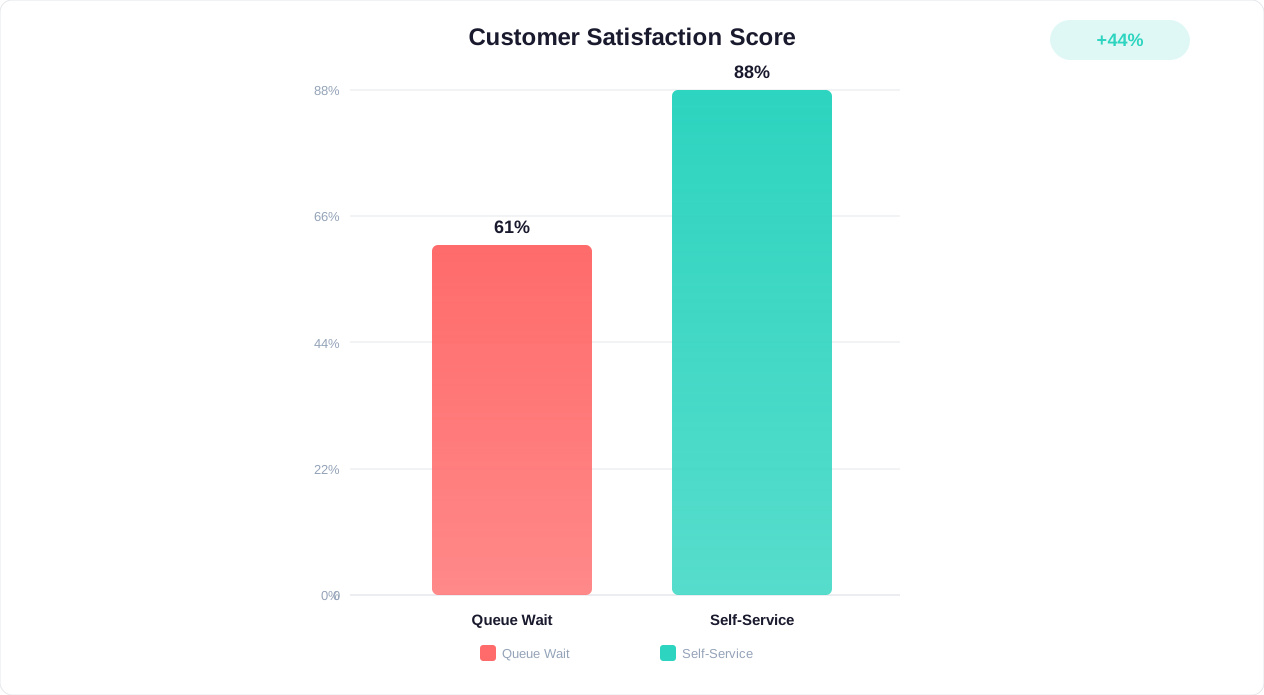
| AI chatbot self-service | Instant (under 3 sec) | 24/7 | $0.50-2.00 | 82-88% |
The AI chatbot self-service model combines the best of both worlds: instant availability at near-zero marginal cost with satisfaction scores that exceed even live agent interactions for routine queries. This is because customers value speed and convenience above all else when their question is simple. Nobody wants to wait 8 minutes on hold to hear "Have you tried turning it off and on again?"
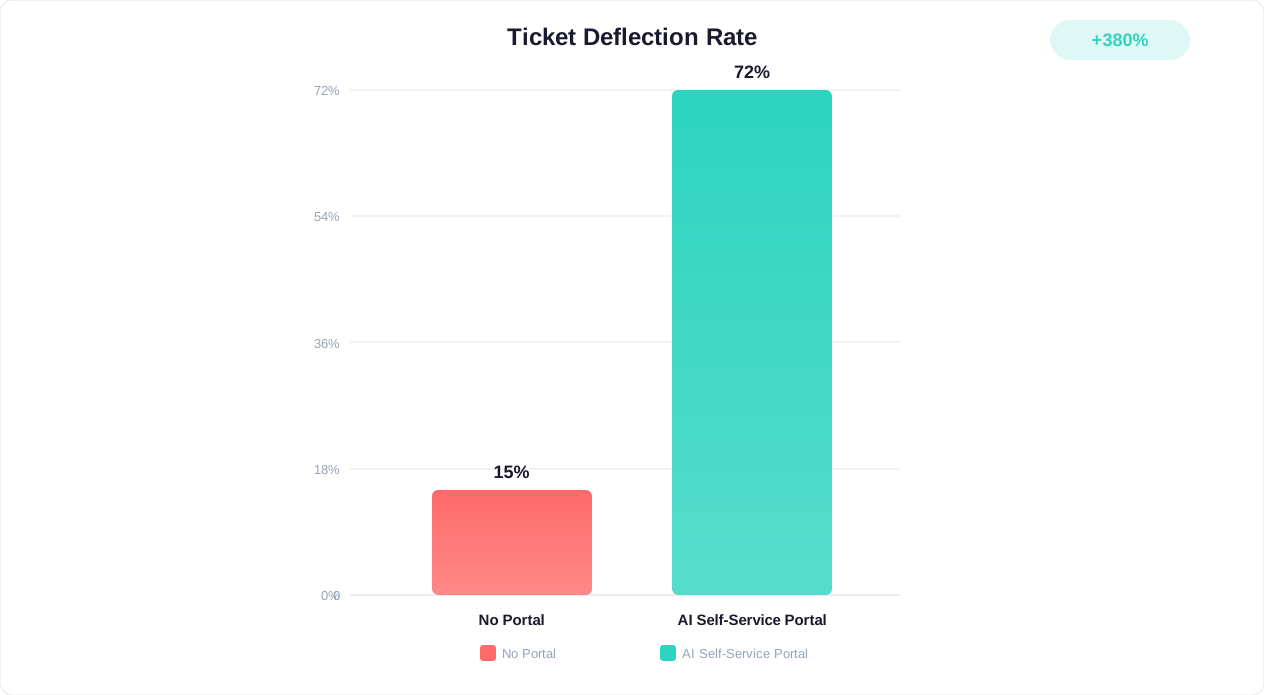
A Forrester study found that 72% of customers prefer self-service over calling or emailing support, and this preference increases to 81% among millennials and Gen Z consumers. The business case is equally compelling: companies that implement effective self-service portals reduce their cost per resolution by 60-80% while simultaneously improving customer satisfaction.
But there is a critical distinction between offering self-service and effective self-service. A static FAQ page with 200 questions buried under collapsible headers is technically self-service — but it solves nothing when customers cannot find the answer they need. This is where AI chatbots fundamentally change the equation, transforming self-service from a passive document library into an active, conversational experience that guides customers to resolution.
Why AI Chatbots Beat Static FAQs: The Intelligence Gap
Static FAQ pages have been the backbone of self-service for two decades. They are cheap to build, easy to maintain, and technically available 24/7. But they fail at the one thing that matters most: actually helping customers find answers. According to McKinsey's research on AI-enabled customer service, only 14% of customer issues are fully resolved by static self-service content, compared to 58-72% for AI-powered conversational self-service.
Here is why chatbots fundamentally outperform static FAQs:
1. Natural Language Understanding vs. Keyword Matching
A customer searching a FAQ page for "my order hasn't arrived" will only find help if that exact phrase (or something close) exists as a question title. An AI chatbot understands intent regardless of phrasing. Whether the customer says "where's my package," "delivery is late," "order not received," or "I've been waiting a week" — the chatbot recognizes the same underlying intent and provides the relevant answer.
2. Conversational Clarification
Static FAQs assume every question has a single answer. Reality is different. "How do I cancel my subscription?" has different answers depending on whether you are on a monthly plan, an annual plan, within a free trial, or under a contract. A chatbot asks clarifying questions: "Are you on a monthly or annual plan?" and then provides the precise, relevant answer. This personalized approach dramatically increases resolution rates.
3. Guided Problem-Solving
Many support issues require multi-step troubleshooting. "My internet isn't working" could involve checking the router, verifying account status, testing connections, or scheduling a technician visit. A chatbot walks the customer through each step sequentially, adapting based on their responses. A FAQ page can only present all steps in a single document and hope the customer follows along.
4. Proactive Engagement
FAQ pages are entirely reactive — customers must know they exist, navigate to them, and search for their issue. AI chatbots can be proactive: detecting when a customer is struggling on a checkout page, offering help when they have been idle on a support page for 30 seconds, or surfacing relevant answers based on the page they are viewing.
5. Continuous Learning
FAQ pages only improve when someone manually updates them. AI chatbots learn from every interaction — identifying new question patterns, recognizing which answers resolve issues and which lead to escalation, and automatically surfacing gaps in knowledge coverage.
Comparison: Resolution Rates by Self-Service Method
| Self-Service Method | Resolution Rate | Time to Answer | Customer Effort Score | Maintenance Effort |
|---|---|---|---|---|
| Static FAQ page | 12-18% | 3-8 minutes (searching) | High | Manual updates monthly |
| Searchable help center | 22-30% | 2-5 minutes | Medium-High | Regular content updates |
| Interactive troubleshooter | 35-45% | 3-6 minutes | Medium | Flow updates quarterly |
| AI chatbot (basic) | 45-55% | 1-2 minutes | Low | Weekly retraining |
| AI chatbot + knowledge base | 65-78% | 30-90 seconds | Very Low | Auto-learning + weekly review |
The data is unambiguous: an AI chatbot connected to a comprehensive knowledge base resolves 4-5x more issues than a static FAQ page, in one-quarter the time, with dramatically lower customer effort. This is not incremental improvement — it is a category shift in what self-service can accomplish. Platforms like Conferbot combine the AI knowledge base with conversational intelligence to achieve these resolution rates without requiring technical expertise to set up.
Building a Self-Service Strategy: Knowledge Base + Chatbot + Escalation
An effective self-service portal is not a single tool, as Gartner's customer service research emphasizes — it is a layered system where each component handles the queries it is best suited for. The three pillars of a modern self-service strategy are: a comprehensive knowledge base (the brain), an AI chatbot (the interface), and intelligent escalation (the safety net).
Pillar 1: The Knowledge Base — Your Chatbot's Brain
Your chatbot is only as good as the information it can access. Before deploying any AI chatbot, you need a structured knowledge base that covers:
- Product/service documentation: Features, specifications, how-tos, limitations
- Policy documents: Returns, refunds, warranties, SLAs, terms of service
- Troubleshooting guides: Common issues with step-by-step resolution paths
- Account management: Password resets, billing inquiries, plan changes, cancellations
- Onboarding content: Getting started guides, setup instructions, first-time user flows
- FAQ repository: Top 100 questions from actual support tickets (not assumed questions)
The critical mistake most companies make is building a knowledge base from assumptions rather than data. Pull your top 200 support tickets from the past 90 days, categorize them, and build your knowledge base around what customers actually ask — not what you think they will ask. This data-driven approach is the foundation of effective ticket deflection.
Pillar 2: The AI Chatbot — Your Conversational Interface
The chatbot sits between the customer and the knowledge base, translating natural language questions into precise answers. Its role is to:
- Understand what the customer is asking (intent recognition)
- Gather any additional context needed (clarifying questions)
- Retrieve the relevant information from the knowledge base
- Present it in a conversational, digestible format
- Confirm the issue is resolved or offer next steps
The chatbot should not try to answer everything — it should answer what it can with confidence and escalate what it cannot. Setting appropriate confidence thresholds (typically 80-85% minimum) ensures customers get accurate answers while preventing the bot from confidently delivering wrong information.
Pillar 3: Intelligent Escalation — The Safety Net
No self-service system handles 100% of queries. The measure of a great system is not whether it escalates — it is how it escalates. Intelligent escalation means:
- Detecting when the chatbot cannot resolve an issue (confidence too low, complex query, emotional customer)
- Passing full conversation context to the human agent (no repeat explanations)
- Routing to the right specialist based on issue type
- Setting expectations with the customer ("A billing specialist will respond within 2 hours")
The goal is a seamless handoff where the customer never feels abandoned and the agent never starts blind. Read our complete human handoff best practices guide for implementation details.
The Three-Pillar Architecture
| Layer | Component | Handles | % of Volume | Customer Experience |
|---|---|---|---|---|
| 1 (Front) | AI Chatbot | Routine queries, FAQs, guided troubleshooting | 60-75% | Instant resolution, 24/7 |
| 2 (Middle) | Knowledge Base + Self-Service Actions | Complex lookups, account changes, order tracking | 10-15% | Self-directed with AI guidance |
| 3 (Back) | Human Escalation | Complex issues, complaints, edge cases | 15-25% | Warm handoff with full context |
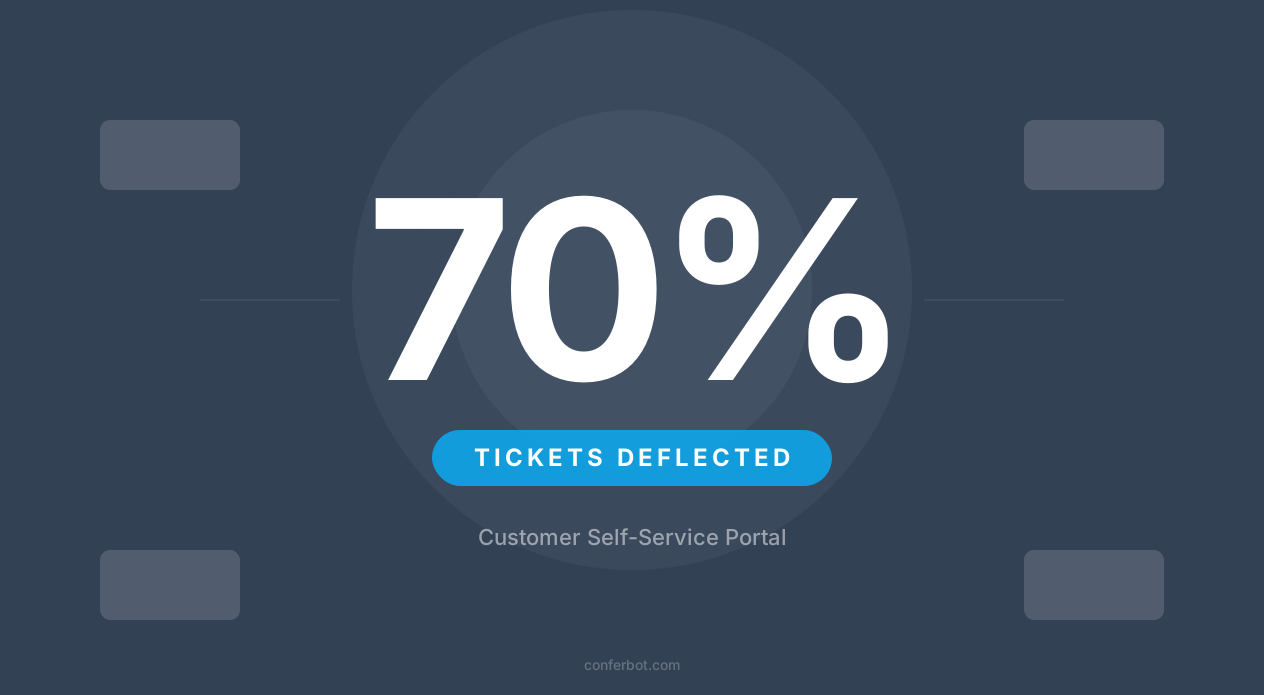
When these three pillars work together, you achieve the 70%+ ticket deflection rate that this guide targets. The chatbot handles the volume, the knowledge base provides depth, and escalation ensures no customer falls through the cracks.
Ticket Deflection Benchmarks by Industry: What to Expect
Ticket deflection rate — the percentage of support inquiries resolved without human intervention — is the primary metric for self-service success. But expectations should be calibrated by industry, because the complexity and nature of support queries vary dramatically across sectors.
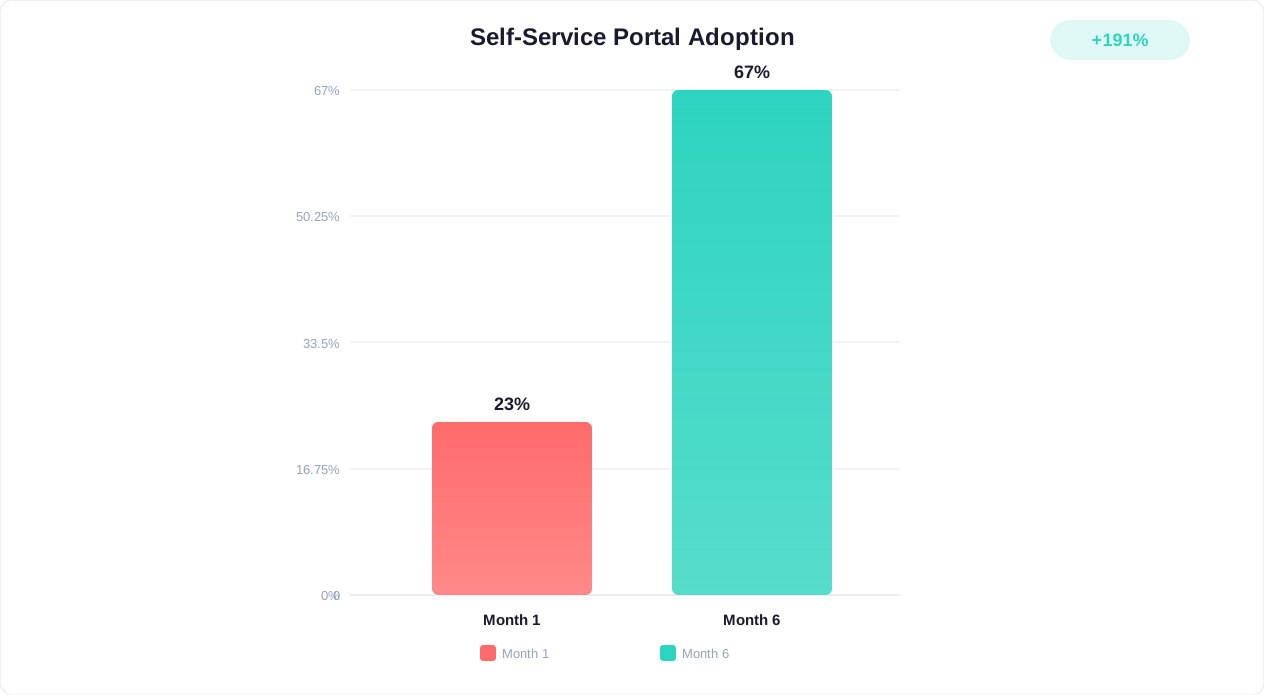
Based on aggregated data from Zendesk's Customer Service Benchmark Report and industry research from Forrester and Gartner, here are realistic deflection benchmarks:
Deflection Rate Benchmarks by Industry
| Industry | Avg. Deflection (No Chatbot) | Avg. Deflection (Basic Chatbot) | Avg. Deflection (AI + KB) | Top Performer | Primary Deflectable Topics |
|---|---|---|---|---|---|
| E-commerce / Retail | 15-20% | 40-50% | 65-78% | 82% | Order tracking, returns, sizing, availability |
| SaaS / Technology | 12-18% | 35-45% | 60-72% | 75% | Setup help, billing, feature questions, bugs |
| Financial Services | 10-15% | 30-40% | 55-65% | 70% | Balance inquiries, transactions, card issues |
| Telecommunications | 18-25% | 45-55% | 68-78% | 83% | Bill explanations, plan changes, troubleshooting |
| Healthcare | 8-12% | 25-35% | 45-55% | 60% | Appointments, prescriptions, insurance questions |
| Travel / Hospitality | 12-18% | 38-48% | 58-68% | 72% | Booking changes, policies, amenity questions |
| Education | 15-20% | 40-50% | 62-72% | 76% | Enrollment, schedules, requirements, deadlines |
| Insurance | 10-14% | 28-38% | 50-62% | 67% | Claims status, coverage questions, policy changes |
What Drives Deflection Differences
Industries with higher deflection rates share common characteristics:
- Repetitive, predictable queries: E-commerce ("Where's my order?") and telecom ("Why is my bill higher?") have highly repetitive query patterns
- Structured data access: When the chatbot can pull real-time data (order status, account balance), it resolves issues definitively
- Clear policies: Industries with well-documented, consistent policies (return windows, cancellation terms) enable confident bot answers
Industries with lower deflection rates face challenges like:
- Regulatory complexity: Healthcare and financial services have compliance constraints on automated advice
- Emotional sensitivity: Insurance claims and healthcare queries often carry emotional weight requiring human empathy
- High variability: Every situation is unique, making pattern matching less effective
Setting Your Target
Use the "AI + KB" column as your 6-month target. If you are starting from scratch, expect to reach the "Basic Chatbot" level within 30 days of deployment and the full AI + knowledge base level within 90-180 days of continuous optimization. The gap between basic and optimized is where most companies stall — bridging it requires the analytics-driven optimization practices covered later in this guide.
For a detailed methodology on calculating the financial impact of your specific deflection rate, see our chatbot ROI calculator guide which models cost savings per deflection point gained.
Implementation Roadmap: From Zero to 70% Deflection in 90 Days
Building a self-service portal that achieves 70% ticket deflection, a benchmark validated by Forrester's customer service research, is not an overnight project, but it does not need to take a year either. Here is a proven 90-day implementation roadmap broken into four phases.
Phase 1: Foundation (Days 1-14)
Goal: Build your knowledge base and deploy a basic chatbot that handles the top 30% of queries.
| Day | Task | Output |
|---|---|---|
| 1-3 | Audit last 500 support tickets; categorize by topic | Top 50 question categories identified |
| 4-7 | Write/collect answers for top 50 questions | Knowledge base with 50 articles |
| 8-10 | Upload to AI knowledge base; configure chatbot | Chatbot trained on core content |
| 11-12 | Configure escalation triggers and human handoff | Seamless fallback to agents |
| 13-14 | Deploy on website with proactive triggers | Live chatbot handling queries |
Expected result: 30-40% deflection rate immediately. This handles the most common, repetitive queries that consume 40-50% of agent time.
Phase 2: Expansion (Days 15-45)
Goal: Expand knowledge coverage, add integrations, and reach 50% deflection.
| Week | Focus Area | Key Actions |
|---|---|---|
| Week 3 | Knowledge expansion | Add 50 more articles based on unanswered queries from Week 1-2 analytics |
| Week 4 | Integration setup | Connect to helpdesk (Zendesk/Freshdesk), CRM, and order management systems |
| Week 5 | Self-service actions | Enable account lookups, order tracking, password resets via chatbot |
| Week 6 | Multi-channel deployment | Deploy on WhatsApp, Messenger, and email auto-responder |
Expected result: 50-55% deflection rate. The addition of real-time data access (order status, account info) eliminates a huge category of queries that knowledge base content alone cannot address.
Phase 3: Optimization (Days 46-75)
Goal: Refine bot accuracy, reduce false positives, and reach 60% deflection.
- Review all escalated conversations — identify patterns where the bot should have resolved but failed
- Add decision trees for complex troubleshooting flows (network issues, billing disputes, product compatibility)
- Implement confidence-based routing: high confidence = auto-resolve, medium = suggest + verify, low = escalate
- A/B test chatbot messages for higher engagement and resolution rates
- Add proactive deflection: trigger bot on common support page visits before tickets are submitted
Expected result: 60-65% deflection rate. The refinement phase eliminates the "almost resolved" category — queries where the bot had the information but did not present it effectively.
Phase 4: Intelligence (Days 76-90)
Goal: Add predictive capabilities and reach 70%+ deflection.
- Implement predictive engagement: identify users likely to submit tickets based on behavior patterns and proactively offer help
- Add sentiment analysis to detect frustration early and adjust bot behavior
- Create personalized self-service paths based on customer segment, history, and account type
- Deploy in-app guidance (tooltips, walkthroughs) triggered by chatbot analytics showing common confusion points
- Automate knowledge base updates by converting resolved conversations into new articles
Expected result: 68-75% deflection rate. Predictive engagement catches issues before they become tickets, and personalization ensures returning customers get streamlined experiences.
90-Day Deflection Trajectory
| Week | Deflection Rate | Tickets Deflected (per 1,000) | Agent Hours Saved (per week) | Cumulative Cost Savings |
|---|---|---|---|---|
| Week 2 | 32% | 320 | 40 hrs | $4,800 |
| Week 4 | 42% | 420 | 52 hrs | $11,000 |
| Week 6 | 52% | 520 | 65 hrs | $18,800 |
| Week 8 | 60% | 600 | 75 hrs | $27,800 |
| Week 10 | 66% | 660 | 82 hrs | $37,600 |
| Week 12 | 71% | 710 | 89 hrs | $48,200 |
Assumptions: 1,000 tickets/week, $12 average cost per ticket, 12 minutes average handle time.
This roadmap is aggressive but achievable. The companies that hit 70% in 90 days share one trait: they commit to the weekly optimization cadence in Phase 3 and 4 rather than deploying and forgetting. Use Conferbot's analytics dashboard to track your deflection trajectory week by week.
Measuring Success: CSAT, Deflection Rate, Resolution Time, and Beyond
Deploying a self-service chatbot without measurement is like running advertising without tracking conversions — you are spending money with no visibility into returns. Here are the six metrics that matter most, how to measure them, and what good looks like.
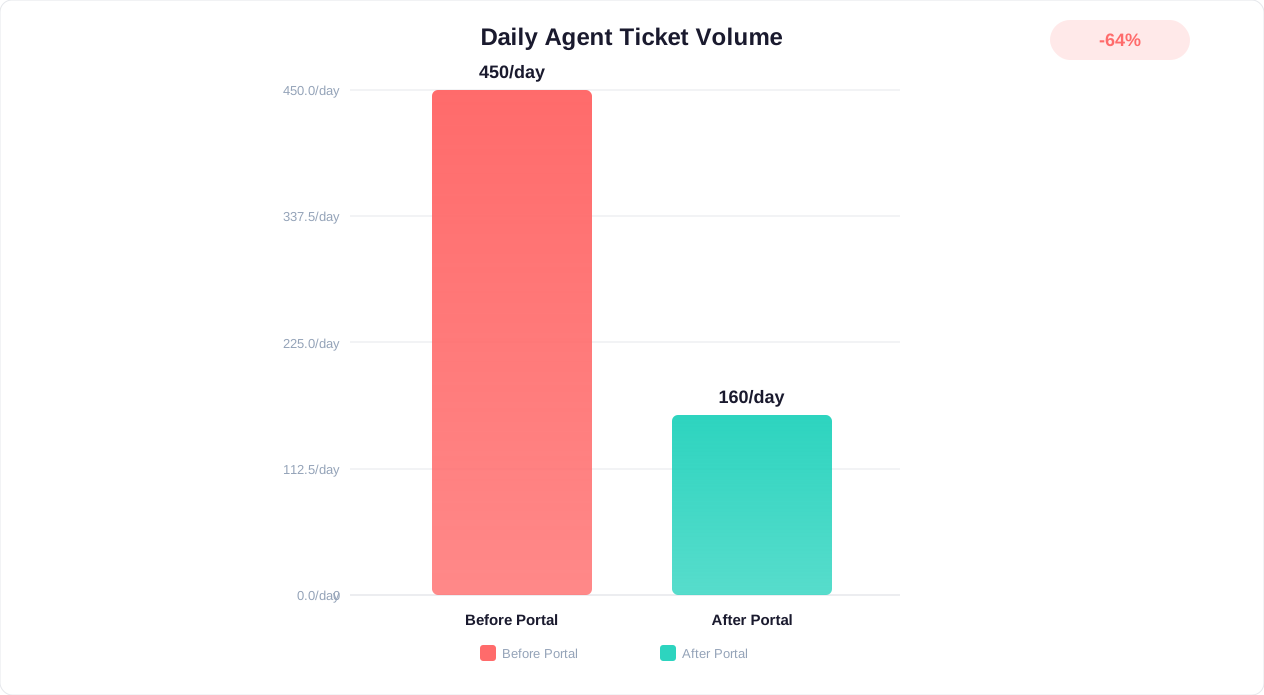
Metric 1: Ticket Deflection Rate
Formula: (Queries resolved by chatbot without escalation / Total queries) x 100
Good: 55-65% | Great: 65-75% | World-class: 75%+
Track this weekly. A declining deflection rate signals either new query types emerging (knowledge gap) or decreasing bot accuracy (retraining needed).
Metric 2: Customer Satisfaction Score (CSAT)
Formula: (Satisfied responses / Total responses) x 100 — measured via post-conversation survey
Good: 78-82% | Great: 82-88% | World-class: 88%+
Critical nuance: measure CSAT separately for bot-resolved conversations and escalated conversations. Bot CSAT below 75% means the bot is resolving issues but leaving customers unhappy — often because answers are correct but poorly delivered.
Metric 3: First Contact Resolution (FCR)
Formula: (Issues resolved in first interaction / Total issues) x 100
Good: 65-72% | Great: 72-80% | World-class: 80%+
FCR matters because repeat contacts are 3-5x more expensive than first-contact resolutions. Track whether customers who interact with the chatbot come back within 24 hours with the same issue — that indicates a false resolution.
Metric 4: Average Resolution Time
Bot-resolved: 30-90 seconds (target under 60 seconds for simple queries)
Escalated: Under 15 minutes (bot pre-qualification should reduce agent handling time by 40-60%)
Resolution time is the single biggest driver of customer satisfaction in self-service. Every second over 60 seconds for a routine query decreases satisfaction by approximately 2%.
Metric 5: Self-Service Adoption Rate
Formula: (Customers who attempt self-service / Total customers with issues) x 100
Good: 60-70% | Great: 70-80% | World-class: 80%+
Low adoption despite available self-service indicates discoverability problems. The chatbot is there but customers are not using it — likely because it is not proactively engaging or is poorly positioned on the page.
Metric 6: Cost Per Resolution
Formula: Total support cost / Number of resolutions
| Resolution Type | Avg. Cost (2026) | With Effective Self-Service | Savings |
|---|---|---|---|
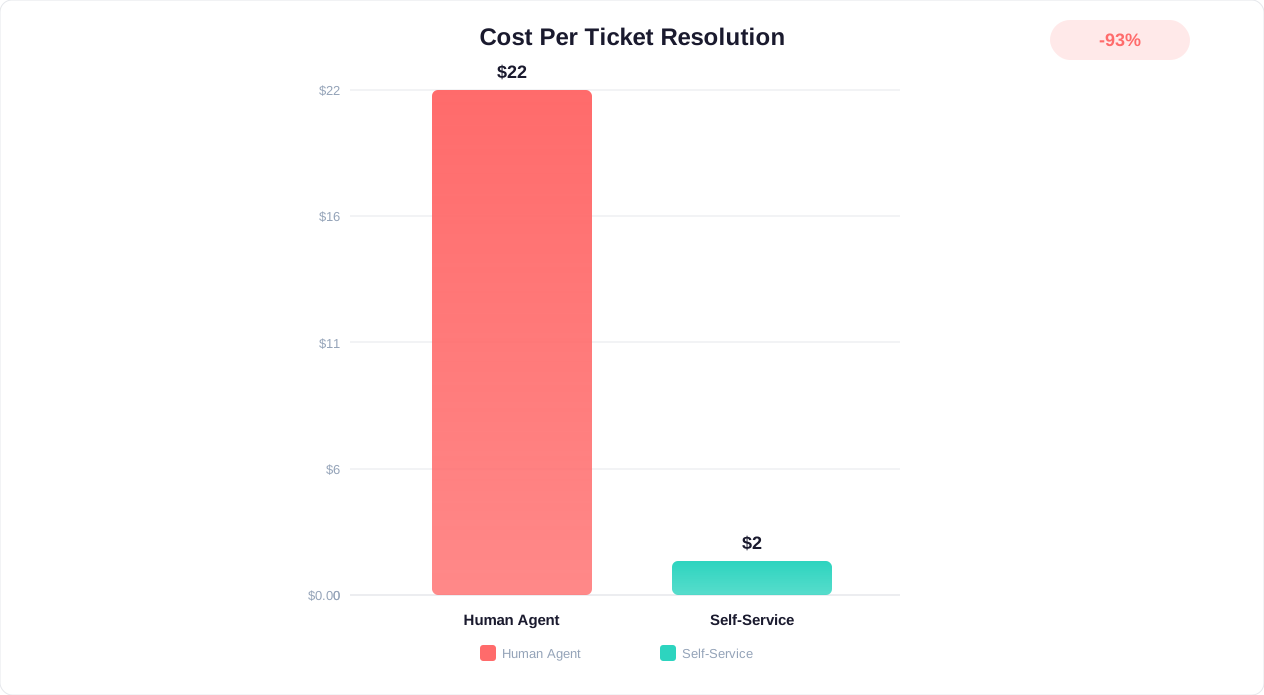
| Phone call | $15-25 | Deflected: $1.50 | 90% |
| Email ticket | $8-15 | Deflected: $1.00 | 87-93% |
| Live chat (human) | $6-12 | Deflected: $0.75 | 87-94% |
| Chatbot self-service | $0.50-2.00 | — | Baseline |
Track all six metrics on a weekly dashboard. Conferbot's built-in analytics provides automated tracking for deflection rate, CSAT, resolution time, and cost per resolution — giving you real-time visibility into your self-service portal's performance without manual data assembly.
Building a Self-Service Scorecard
Create a monthly scorecard that combines these metrics into a single self-service health score. Weight the metrics based on your priorities:
| Metric | Suggested Weight | Your Target | Current Score | Status |
|---|---|---|---|---|
| Ticket deflection rate | 30% | 70% | — | — |
| CSAT (bot-resolved) | 25% | 85% | — | — |
| First contact resolution | 20% | 75% | — | — |
| Average resolution time | 10% | Under 60s | — | — |
| Self-service adoption | 10% | 75% | — | — |
| Cost per resolution | 5% | Under $2 | — | — |
Review this scorecard monthly with stakeholders. It transforms self-service from a vague initiative into a measurable program with clear success criteria and actionable levers for improvement.
The Cost Savings Model: Quantifying Self-Service ROI
Budget holders do not approve projects based on customer satisfaction improvements alone, as McKinsey's operations research confirms — they need financial justification. Here is a detailed cost savings model that quantifies the ROI of a chatbot-powered self-service portal.
The Basic ROI Formula
Annual savings = (Monthly ticket volume x Deflection rate x Average cost per ticket x 12) - Annual platform cost
Let us work through three scenarios:
Scenario A: Small Business (500 tickets/month)
| Variable | Value |
|---|---|
| Monthly ticket volume | 500 |
| Deflection rate achieved | 60% |
| Tickets deflected/month | 300 |
| Average cost per ticket (human) | $12 |
| Monthly savings from deflection | $3,600 |
| Annual savings from deflection | $43,200 |
| Annual chatbot platform cost | $3,600 ($300/month) |
| Net annual savings | $39,600 |
| ROI | 1,100% |
Scenario B: Mid-Market (3,000 tickets/month)
| Variable | Value |
|---|---|
| Monthly ticket volume | 3,000 |
| Deflection rate achieved | 68% |
| Tickets deflected/month | 2,040 |
| Average cost per ticket (human) | $14 |
| Monthly savings from deflection | $28,560 |
| Annual savings from deflection | $342,720 |
| Annual chatbot platform cost | $12,000 ($1,000/month) |
| Implementation cost (one-time) | $15,000 |
| Net Year 1 savings | $315,720 |
| ROI | 1,169% |
Scenario C: Enterprise (15,000 tickets/month)
| Variable | Value |
|---|---|
| Monthly ticket volume | 15,000 |
| Deflection rate achieved | 72% |
| Tickets deflected/month | 10,800 |
| Average cost per ticket (human) | $18 |
| Monthly savings from deflection | $194,400 |
| Annual savings from deflection | $2,332,800 |
| Annual chatbot platform cost | $60,000 ($5,000/month) |
| Implementation cost (one-time) | $75,000 |
| Net Year 1 savings | $2,197,800 |
| ROI | 1,627% |
Hidden Savings Not Captured Above
The direct deflection savings above are conservative because they exclude several secondary benefits:
- Reduced hiring costs: Every 500 tickets/month deflected eliminates the need for approximately one full-time agent ($45,000-$65,000/year including benefits)
- After-hours coverage: Without a chatbot, after-hours queries queue until morning, creating backlogs. Self-service eliminates the morning queue entirely.
- Reduced agent burnout: Agents handling only complex, interesting queries report 35% higher job satisfaction and 20% lower turnover
- Faster scaling: When traffic spikes (seasonal, viral, product launch), the chatbot absorbs volume that would otherwise require temporary staff at $25-40/hour
- Data collection: Every chatbot interaction generates structured data about customer needs, product issues, and content gaps — data that would cost thousands in market research to obtain otherwise
For a personalized ROI calculation based on your specific ticket volume, cost structure, and industry, use our chatbot ROI calculation methodology or explore real-world examples in our cost savings case studies.
Integration With Helpdesks: Zendesk, Freshdesk, Intercom, and Beyond
A self-service chatbot that operates in isolation from your existing support infrastructure creates more problems than it solves. Customers end up repeating information, agents lose context, and reporting becomes fragmented. The power of a chatbot-driven self-service portal multiplies when it integrates deeply with your helpdesk platform.
Why Integration Matters
Without integration, your chatbot and helpdesk are separate systems with no shared context. A customer might spend 5 minutes troubleshooting with the chatbot, escalate, and then have an agent ask "What seems to be the problem?" — erasing all progress and destroying satisfaction. With integration, the agent sees the full chatbot transcript, the steps already tried, and the bot's assessment of the issue — enabling them to pick up exactly where the bot left off.
Zendesk Integration
Zendesk is the most common helpdesk platform, used by 170,000+ businesses. Key integration capabilities:
- Ticket creation: When the chatbot escalates, it automatically creates a Zendesk ticket with full conversation context, customer data, and priority tagging
- Knowledge base sync: Pull articles from Zendesk Guide into your chatbot's knowledge base automatically, keeping answers current
- Agent workspace: Surface chatbot conversations in the Zendesk Agent Workspace alongside email, phone, and social tickets
- Macro triggers: Chatbot interactions can trigger Zendesk automations (tags, assignments, SLA timers)
- Reporting unification: Chatbot deflection metrics appear in Zendesk Explore dashboards alongside traditional ticket metrics
Freshdesk Integration
Freshdesk powers 60,000+ businesses and offers deep chatbot integration:
- Freddy AI synergy: Conferbot works alongside or replaces Freshdesk's native Freddy AI with more advanced conversational capabilities
- Ticket routing: AI-classified tickets from chatbot escalation route to the correct Freshdesk group automatically
- Knowledge base: Bidirectional sync with Freshdesk Solutions articles
- Customer 360: Chatbot accesses Freshdesk customer history to personalize responses ("I see you contacted us about this last week — let me check the status")
- SLA management: Escalated tickets inherit SLA policies based on chatbot-determined priority
Intercom Integration
Intercom's conversational platform meshes naturally with external AI chatbots:
- Inbox unification: Chatbot conversations appear in the Intercom inbox alongside human conversations
- Custom bot handoff: Transition from Conferbot's AI to Intercom's operator workflows or directly to agents
- User data enrichment: Pull Intercom user attributes into chatbot personalization
- Product tours: Trigger Intercom product tours from chatbot conversations when users need guided help
Integration Comparison Matrix
| Capability | Zendesk | Freshdesk | Intercom | Jira Service Mgmt | HubSpot Service Hub |
|---|---|---|---|---|---|
| Auto ticket creation | Yes | Yes | Yes | Yes | Yes |
| KB sync | Bidirectional | Bidirectional | One-way | One-way | Bidirectional |
| Agent context transfer | Full transcript | Full transcript | Full transcript | Summary + link | Full transcript |
| Customer history access | Yes (API) | Yes (API) | Native | Limited | Native (CRM) |
| SLA management | Full | Full | Basic | Full | Basic |
| Reporting integration | Explore dashboards | Analytics module | Custom reports | Jira dashboards | Service reports |
| Setup complexity | Medium | Low-Medium | Low | Medium-High | Low |
Conferbot offers native integrations with all five platforms through its integrations hub, enabling one-click connection to your existing helpdesk. The integration handles ticket creation, context transfer, and knowledge base synchronization automatically — no custom development required.
Integration Best Practices
- Sync knowledge bases bidirectionally: When agents update Zendesk articles, those updates should flow to your chatbot automatically
- Include structured metadata: When creating tickets, include chatbot-determined category, priority, sentiment score, and customer effort score
- Map agent groups: Configure routing so escalated tickets go to the specialist team (billing, technical, sales) identified by the chatbot
- Unify reporting: Ensure your total support metrics include both chatbot-resolved and agent-resolved queries for an accurate picture
- Test the handoff experience monthly: Submit test queries, escalate them, and verify the agent experience includes full context
10 Common Self-Service Portal Mistakes That Kill Deflection Rates
After analyzing hundreds of self-service implementations, these are the mistakes that most commonly prevent organizations from reaching their deflection targets. Each mistake includes the fix and the expected impact of correcting it.
Mistake 1: Building Knowledge Base From Assumptions
The most damaging mistake is writing KB articles based on what internal teams think customers ask rather than what they actually ask. Fix: Audit 500+ recent tickets, extract the exact language customers use, and build articles around real queries. Impact: +15-25% deflection rate improvement.
Mistake 2: No Proactive Engagement
Deploying a chatbot as a passive icon in the corner and expecting customers to find it. Only 3-5% of visitors engage with a passive chatbot widget versus 15-25% with proactive, behavior-triggered engagement. Fix: Configure page-specific triggers that offer help after 15-30 seconds on support pages. Impact: +200-400% chatbot engagement rate.
Mistake 3: One-Size-Fits-All Responses
Providing the same generic answer regardless of customer context, plan level, or history. A basic plan user asking about a feature that only exists on premium should get a different response than a premium user asking the same question. Fix: Implement personalization rules based on customer attributes. Impact: +12-18% resolution rate improvement.
Mistake 4: No Escalation Path
Chatbots that loop endlessly without offering a human option. According to Salesforce's State of the Connected Customer report, 83% of customers expect immediate escalation when the chatbot cannot help. Fix: Always display a visible "Talk to a person" option and auto-escalate after 2 failed resolution attempts.
Mistake 5: Ignoring Mobile Users
Self-service portals designed for desktop that break on mobile. With 67% of support interactions starting on mobile devices, this eliminates two-thirds of potential deflection. Fix: Test every chatbot flow on mobile, use short messages (under 60 words), and prioritize tap-friendly buttons over text input.
Mistake 6: Stale Knowledge Base
Launching with accurate content then never updating it as products, policies, and pricing change. Within 6 months, 30-40% of articles become partially or fully outdated. Fix: Schedule weekly 30-minute KB review sessions and auto-flag articles older than 90 days for review.
Mistake 7: No Feedback Collection
Not asking customers whether the chatbot resolved their issue. Without this data, you cannot distinguish between true resolutions and customers who gave up silently. Fix: Add a simple "Did this solve your problem?" yes/no prompt after every chatbot interaction. Track resolution confirmation rate separately from deflection rate.
Mistake 8: Over-Engineering the First Version
Spending 6 months building a perfect self-service portal before deploying anything. During those 6 months, thousands of tickets go undeflected. Fix: Deploy a basic chatbot covering the top 20 questions in Week 1, then iterate weekly. You will learn more from 2 weeks of live customer interactions than 6 months of planning.
Mistake 9: Treating Self-Service as Cost Reduction Only
Positioning self-service purely as a cost-cutting measure alienates support teams who feel threatened. Fix: Frame self-service as agent empowerment — it eliminates repetitive queries so agents can focus on complex, rewarding work. Agents who no longer answer "What's your return policy?" 50 times a day report 40% higher job satisfaction.
Mistake 10: No Cross-Channel Consistency
Different answers on the website chatbot versus WhatsApp versus email. Customers who get contradictory information across channels lose trust entirely. Fix: Use a single knowledge base that powers all channels, ensuring consistent answers regardless of where the customer asks. An omnichannel chatbot approach eliminates this problem.
Mistake Impact Matrix
| Mistake | Deflection Impact | Fix Effort | Priority |
|---|---|---|---|
| Building from assumptions | -15-25% | 1-2 days | Critical |
| No proactive engagement | -10-15% | 2 hours | Critical |
| No escalation path | -8-12% (+ brand damage) | 1 hour | Critical |
| Stale knowledge base | -10-20% (compounds over time) | 30 min/week | High |
| Ignoring mobile | -8-12% | 4 hours | High |
| One-size-fits-all | -5-10% | 1 day | Medium |
| No feedback collection | Unknown (blindspot) | 30 min | Medium |
| Over-engineering v1 | Delayed ROI by months | Mindset shift | Medium |
| Cost-reduction framing | Team resistance | Communication | Low |
| Cross-channel inconsistency | -3-5% | 2-4 hours | Low |
Advanced Self-Service: AI Features That Push Deflection Above 75%
Once you have achieved 65-70% deflection with the fundamentals (knowledge base, chatbot, escalation), reaching 75%+ requires advanced AI capabilities that go beyond simple question-answering.
1. Predictive Self-Service
Instead of waiting for customers to ask, predict their needs based on behavior patterns and proactively surface answers. For example:
- Customer views billing page 3 times in a day → Chatbot proactively offers: "Looks like you have a billing question — I can help with invoice downloads, payment method changes, or plan upgrades"
- Customer's subscription renews in 3 days → Send proactive message: "Your plan renews on Friday. Want to review your usage or make any changes?"
- Customer just completed onboarding → Trigger guided setup assistance: "Welcome aboard! Here are the 3 things most customers set up first"
Predictive self-service typically adds 5-8% to deflection rates because it resolves issues before customers even articulate them.
2. Multi-Turn Diagnostic Flows
For complex troubleshooting (network issues, software bugs, configuration problems), build diagnostic decision trees that the chatbot navigates based on customer responses. These flows can be 8-15 turns deep and resolve issues that would otherwise require a specialized technician.
Example flow structure for "internet not working":
- Chatbot checks account status (automated) → Identifies if outage, overdue bill, or device issue
- If device issue → Asks about device type (router, modem, mesh)
- Based on device → Walks through power cycle, indicator light check
- Based on indicator lights → Identifies specific issue and solution
- If unresolved after 3 steps → Escalates with full diagnostic data
These flows resolve 45-60% of technical issues that would otherwise require human agents.
3. Authenticated Self-Service Actions
Move beyond just answering questions to actually performing actions on behalf of the customer:
- Password resets: Verify identity and trigger reset (deflects 8-12% of all support tickets alone)
- Order modifications: Cancel, change address, add items before shipping
- Plan changes: Upgrade, downgrade, or cancel subscriptions
- Refund processing: Auto-process refunds for items that meet policy criteria
- Appointment scheduling: Book, reschedule, or cancel appointments
Each action-enabled capability typically adds 3-5% to deflection rates because it eliminates an entire category of tickets that information alone cannot address.
4. Contextual Knowledge Surfacing
Rather than waiting for queries, embed contextual help throughout your product or website:
- Error pages display chatbot with pre-loaded context about the error
- Complex form fields show tooltip chatbot that explains requirements
- Feature pages include embedded chatbot trained specifically on that feature
- Checkout pages have chatbot pre-loaded with shipping, payment, and return policy information
5. Community-Augmented Self-Service
Integrate community knowledge into your chatbot's responses. When the chatbot finds relevant community discussions about a question, it can cite peer solutions alongside official documentation. This works particularly well for:
- Workarounds for known issues
- Creative use cases and tips
- Integration-specific guidance
- Platform-specific troubleshooting
Feature Impact on Deflection
| Advanced Feature | Additional Deflection | Implementation Effort | Maintenance Effort | Best For |
|---|---|---|---|---|
| Predictive self-service | +5-8% | Medium | Low (auto-learning) | SaaS, subscription businesses |
| Multi-turn diagnostics | +8-12% | High | Medium (flow updates) | Telecom, tech support, utilities |
| Authenticated actions | +10-15% | High | Low | Any business with account management |
| Contextual surfacing | +3-5% | Low | Low | Product companies, SaaS |
| Community augmentation | +2-4% | Medium | Auto (community driven) | Developer tools, platforms |
Implementing even two of these advanced features on top of a solid foundational self-service portal pushes most organizations above the 75% deflection mark. Conferbot's platform supports predictive engagement, multi-turn diagnostic flows, and authenticated actions through its AI chatbot builder and integrations hub — enabling these advanced capabilities without custom development.
Real-World Results: Self-Service Portal Case Studies
Theory is useful, but results speak louder. Here are three real-world examples of companies that implemented chatbot-powered self-service portals and the measurable outcomes they achieved.
Case Study 1: E-Commerce Retailer — 74% Ticket Deflection in 60 Days
Company profile: Mid-size online fashion retailer, 800,000 monthly visitors, 4,200 support tickets/month
Challenge: Customer service team of 12 was overwhelmed during peak seasons (Black Friday, holiday). Average response time had ballooned to 18 hours. 65% of tickets were repetitive (order tracking, return policy, sizing questions).
Implementation:
- Deployed AI chatbot trained on 3 years of support transcripts (18,000 conversations)
- Integrated with Shopify for real-time order tracking within the chatbot
- Built automated return initiation flow (chatbot processes return requests end-to-end)
- Added sizing recommendation engine based on past purchase data
Results after 60 days:
| Metric | Before | After | Change |
|---|---|---|---|
| Ticket deflection rate | 18% | 74% | +311% |
| Average response time | 18 hours | 12 seconds (bot) / 2 hours (escalated) | -99% / -89% |
| Monthly ticket volume (human) | 4,200 | 1,092 | -74% |
| CSAT score | 71% | 87% | +22% |
| Monthly support cost | $52,000 | $24,000 | -54% |
| Return processing time | 3-5 days | Instant (automated) | -100% |
Key insight: The biggest deflection driver was not FAQ answering — it was the order tracking integration. "Where is my order?" alone accounted for 28% of all tickets and was 100% automatable with Shopify integration.
Case Study 2: SaaS Company — 67% Deflection With 91% CSAT
Company profile: B2B SaaS platform for project management, 45,000 customers, 2,800 tickets/month
Challenge: Support team spending 60% of time on onboarding questions and feature discovery rather than actual technical issues. New customers churning at 15% in the first 30 days due to poor onboarding experience.
Implementation:
- Built comprehensive onboarding chatbot flow (10 guided setup steps)
- Created feature discovery engine ("What are you trying to accomplish?" → tailored feature recommendations)
- Integrated with product analytics to detect confusion patterns and proactively offer help
- Deployed in-app chatbot triggered by specific user behaviors (e.g., visiting settings page 3+ times)
Results after 90 days:
| Metric | Before | After | Change |
|---|---|---|---|
| Ticket deflection rate | 22% | 67% | +205% |
| 30-day churn rate | 15% | 8% | -47% |
| Onboarding completion | 42% | 78% | +86% |
| Time to first value | 14 days | 3 days | -79% |
| CSAT (bot interactions) | N/A | 91% | — |
| Support FTEs needed | 8 | 5 | -37.5% |
Key insight: Self-service is not just about support cost reduction — it directly impacts revenue through reduced churn. The 7% improvement in 30-day retention translated to $380,000 in additional ARR within the first year.
Case Study 3: Telecom Provider — 78% Deflection Across 3 Channels
Company profile: Regional telecom provider, 250,000 subscribers, 12,000 tickets/month across phone, email, and chat
Challenge: Average handle time of 14 minutes per call. 45% of calls were for bill explanations, 20% for plan changes, and 15% for basic troubleshooting. Phone support costs were $2.1M annually.
Implementation:
- Deployed omnichannel chatbot across website, WhatsApp, and mobile app
- Integrated with billing system for real-time balance, usage, and charge explanations
- Built automated plan change flow (compare plans, select, confirm, process)
- Created network diagnostic flow that checks tower status and guides router troubleshooting
Results after 120 days:
| Metric | Before | After | Change |
|---|---|---|---|
| Ticket deflection (all channels) | 24% | 78% | +225% |
| Phone call volume | 8,400/month | 2,940/month | -65% |
| Annual support cost | $2,100,000 | $890,000 | -58% |
| NPS score | 32 | 51 | +59% |
| Average handle time (remaining calls) | 14 min | 8 min | -43% |
Key insight: WhatsApp became the highest-deflection channel (82%) because customers could troubleshoot asynchronously — starting a diagnostic at work, completing it at home — without needing to stay on a call. The omnichannel strategy was critical to reaching the 78% overall rate.
These case studies demonstrate that 70%+ deflection is achievable across industries when the three pillars (knowledge base, AI chatbot, intelligent escalation) work together. For more real-world ROI data, explore our chatbot ROI case studies collection.
Getting Started: Building Your Self-Service Portal With Conferbot
Conferbot is purpose-built for creating AI-powered self-service portals that achieve the 70%+ deflection rates outlined in this guide. Here is how to get started in under 30 minutes.
Step 1: Build Your Knowledge Base (10 minutes)
Upload your existing support content to Conferbot's AI knowledge base:
- Paste your website URL — Conferbot crawls and indexes all pages automatically
- Upload documents (PDFs, Word docs, spreadsheets) with product information and policies
- Connect your existing help center (Zendesk Guide, Freshdesk Solutions, Intercom Articles)
- Paste FAQ content directly into the knowledge base editor
The AI processes and indexes your content within minutes, creating a queryable knowledge layer that powers your chatbot's responses.
Step 2: Configure Your Chatbot (10 minutes)
Use the AI chatbot builder to configure behavior:
- Set your chatbot's personality and tone (professional, friendly, casual)
- Configure proactive engagement triggers (which pages, after how many seconds)
- Define escalation rules (confidence threshold, topic-based routing, sentiment triggers)
- Set up greeting messages customized by page type
Step 3: Connect Your Helpdesk (5 minutes)
Through the integrations hub, connect your existing helpdesk with one click:
- Zendesk, Freshdesk, Intercom, HubSpot, or Jira Service Management
- Automatic ticket creation on escalation with full conversation context
- Agent workspace integration for seamless handoffs
Step 4: Deploy Across Channels (5 minutes)
Deploy your self-service chatbot wherever your customers are:
- Website widget (copy-paste one line of code)
- WhatsApp Business
- Facebook Messenger
- Instagram DMs
- Slack (for internal teams)
- Microsoft Teams
Step 5: Monitor and Optimize (Ongoing)
Use Conferbot's analytics dashboard to track deflection rate, CSAT, resolution time, and knowledge gaps — then optimize weekly using the roadmap in this guide.
Why Conferbot for Self-Service
| Capability | Why It Matters for Self-Service |
|---|---|
| AI knowledge base with auto-learning | Gets smarter with every interaction — no manual retraining for new query patterns |
| Multi-channel deployment | One bot across website, WhatsApp, Messenger, Slack, Teams |
| Native helpdesk integrations | Zendesk, Freshdesk, Intercom connected in one click |
| No-code builder | Support teams can build and optimize without developers |
| Confidence-based routing | Auto-resolve high confidence, escalate low confidence — no customer frustration |
| Real-time analytics | Track deflection rate, CSAT, and gaps in real-time |
| Human handoff with context | Agents receive full transcript + metadata on every escalation |
The combination of a powerful AI knowledge base, intelligent conversation management, and seamless helpdesk integration makes Conferbot the ideal foundation for a self-service portal that consistently deflects 70%+ of support volume. Start with a free trial and reach your first 40% deflection within the first week.
Was this article helpful?
Customer Self-Service Portal With AI Chatbot FAQ
Everything you need to know about chatbots for customer self-service portal with ai chatbot.
About the Author
Conferbot Team specializes in conversational AI, chatbot strategy, and customer engagement automation. With deep expertise in building AI-powered chatbots, they help businesses deliver exceptional customer experiences across every channel.
View all articles