Why Microsoft Teams Chatbots Are Critical for Enterprise HR
Microsoft Teams dominates the enterprise communication landscape with over 320 million monthly active users according to Statista's Teams usage data and deployment in 91% of Fortune 500 companies. For HR departments, Teams isn't just another communication tool — it's the primary workplace interface where employees spend their day.
This makes Teams the natural channel for HR support. When employees have questions about benefits, need to request PTO, or want to check onboarding tasks, they shouldn't have to leave Teams to find answers. A Teams chatbot brings HR services directly into the workspace employees already use.
The business case for HR chatbots in Teams is compelling:
- HR teams — even those with robust team management structures — spend up to 60% of their time answering repetitive employee questions
- Employees wait an average of 8-12 hours for answers to routine HR inquiries
- 42% of employees say slow HR response times negatively impact their work experience and engagement levels (SHRM, 2025)
- Onboarding costs average $4,700 per employee according to SHRM benchmarks, with significant time wasted on manual processes that chatbots can fully automate
Organizations that deploy HR chatbots on Teams report transformative results:
| Metric | Before Chatbot | After Chatbot |
|---|---|---|
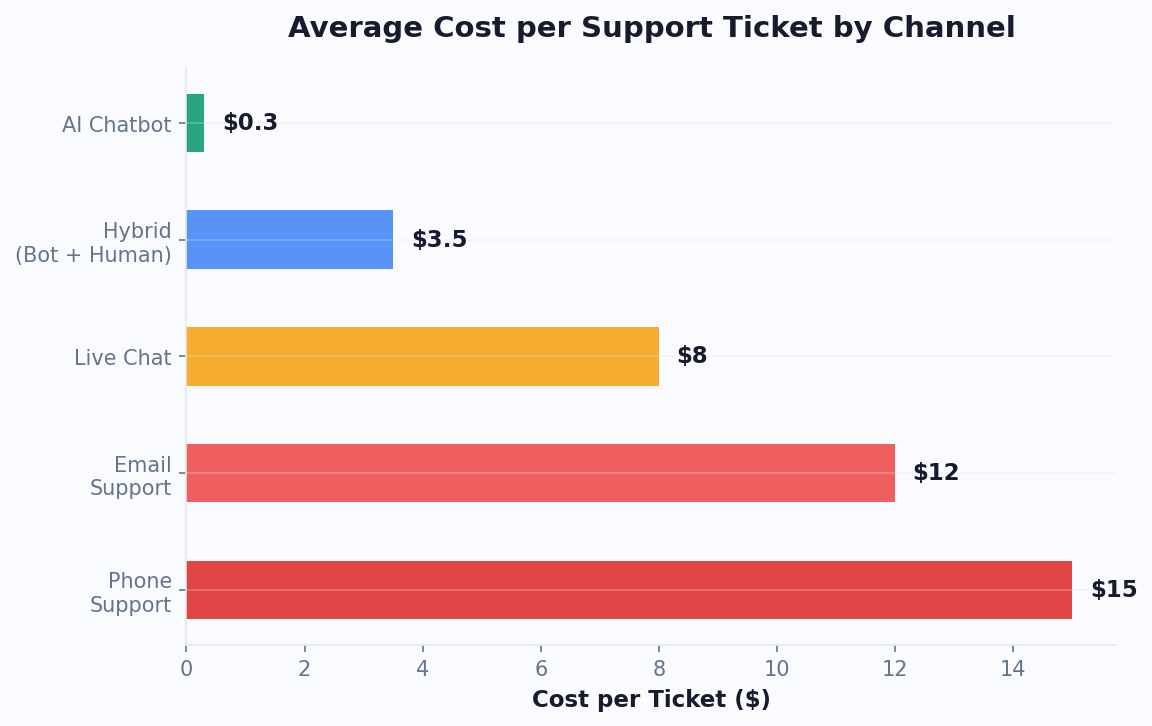
| HR query response time | 8-12 hours | Under 10 seconds |
| HR team ticket volume | 100% | 30-40% |
| Employee onboarding time | 2-3 weeks | 1 week |
| Policy compliance queries | Varies | 100% consistent |
| Employee satisfaction (HR) | 3.1/5 | 4.3/5 |
In 2026, the most effective HR departments aren't the ones with the largest teams — they're the ones with intelligent Teams chatbots that handle routine interactions instantly while human HR professionals focus on strategic initiatives like talent development, culture building, and organizational design. For organizations weighing the financial case, our chatbot ROI calculator guide provides a framework applicable to internal HR deployments.
Microsoft Teams Bot Platform Capabilities
The Teams bot platform offers enterprise-grade features that go far beyond simple text responses. Understanding these capabilities is essential for building an HR bot that employees will actually use.
Adaptive Cards
Adaptive Cards are the cornerstone of Teams bot UI. They create rich, interactive card-based experiences:
- Forms: Collect structured input (leave dates, expense amounts, feedback ratings) directly in the card
- Data Display: Show formatted tables, lists, and key-value pairs (PTO balances, benefit summaries)
- Actions: Buttons for approve/deny workflows, navigation, and external links
- Media: Images, icons, and branding elements for polished presentations
- Responsive: Cards adapt to desktop, mobile, and tablet layouts automatically
Messaging Extensions
Let employees invoke your HR bot from any conversation context:
- Search Commands: Search the HR knowledge base from any chat or channel
- Action Commands: Submit a leave request or expense report from a message compose area
- Link Unfurling: Automatically preview HR portal links with rich Adaptive Cards
Tab Integration
Embed web-based HR tools directly in Teams:
- HR dashboard showing personal PTO balance, upcoming holidays, and pending requests
- Benefits enrollment wizard that runs entirely inside Teams
- Employee directory with org chart and contact information
Proactive Messaging
Unlike some platforms, Teams bots can send proactive messages to employees:
- Onboarding reminders and checklist updates
- Benefits enrollment deadline notifications
- Compliance training due dates
- Performance review scheduling
- Company announcements and policy updates
Security and Compliance
| Feature | Description |
|---|---|
| Azure AD SSO | Seamless authentication with existing Microsoft credentials |
| Conditional Access | Apply organization's security policies to bot interactions |
| Data Loss Prevention | DLP policies apply to bot messages |
| Audit Logging | All bot interactions logged in Microsoft compliance center |
| Information Barriers | Respect organizational information barriers |
These enterprise-grade capabilities make Teams the ideal platform for HR chatbot deployments where security, compliance, and integration with the Microsoft 365 ecosystem are non-negotiable requirements.
HR Use Cases: From PTO to Performance Reviews
A Teams HR chatbot can automate the full spectrum of employee HR interactions. Here are the highest-impact use cases ranked by frequency and ROI.
1. Leave and Attendance Management
The most requested HR bot feature, handling 30-40% of all HR queries:
- Balance Inquiry: "How many vacation days do I have?" → Bot queries HRIS, returns balance with breakdown by leave type
- Leave Request: Employee fills an Adaptive Card form with dates and leave type → Bot routes to manager for approval → Manager approves/denies via button → Both parties notified
- Calendar View: Bot displays team leave calendar showing who's out this week/month
- Policy Lookup: "Can I carry over unused PTO?" → Bot returns relevant policy section
2. Benefits Administration
Critical during open enrollment, useful year-round:
| Employee Question | Bot Response |
|---|---|
| "What health plans are available?" | Comparison table of plans with costs and coverage |
| "Does my plan cover therapy?" | Mental health coverage details for their specific plan |
| "When is open enrollment?" | Dates + enrollment checklist + link to portal |
| "How do I add a dependent?" | Step-by-step guide + qualifying event requirements |
| "What's my 401k match?" | Company match formula + current contribution rate |
3. Employee Onboarding
Transform the onboarding experience from chaotic to structured:
- Day 1: Welcome message, IT setup checklist, buddy introduction, first-day schedule
- Week 1: Mandatory training links, team meeting schedule, benefits enrollment reminder
- Day 30: Check-in survey, goal-setting prompt, mentorship program introduction
- Day 60: Mid-probation review prep, feedback collection, resource recommendations
- Day 90: Probation review scheduling, career development discussion prompt
4. Payroll and Compensation
- "When is the next payday?" → Next pay date + pay period details
- "Where can I find my pay stub?" → Direct link to payroll portal
- "How do I update my bank details?" → Step-by-step guide with security reminders
- "What's the expense reimbursement process?" → Policy + submission guide
5. Performance Management
Streamline performance cycles with automated nudges and workflows:
- Remind managers and employees about upcoming review deadlines via calendar booking integrations
- Provide self-assessment templates via Adaptive Cards
- Collect 360-degree feedback through conversational surveys
- Share goal-setting frameworks and development resources
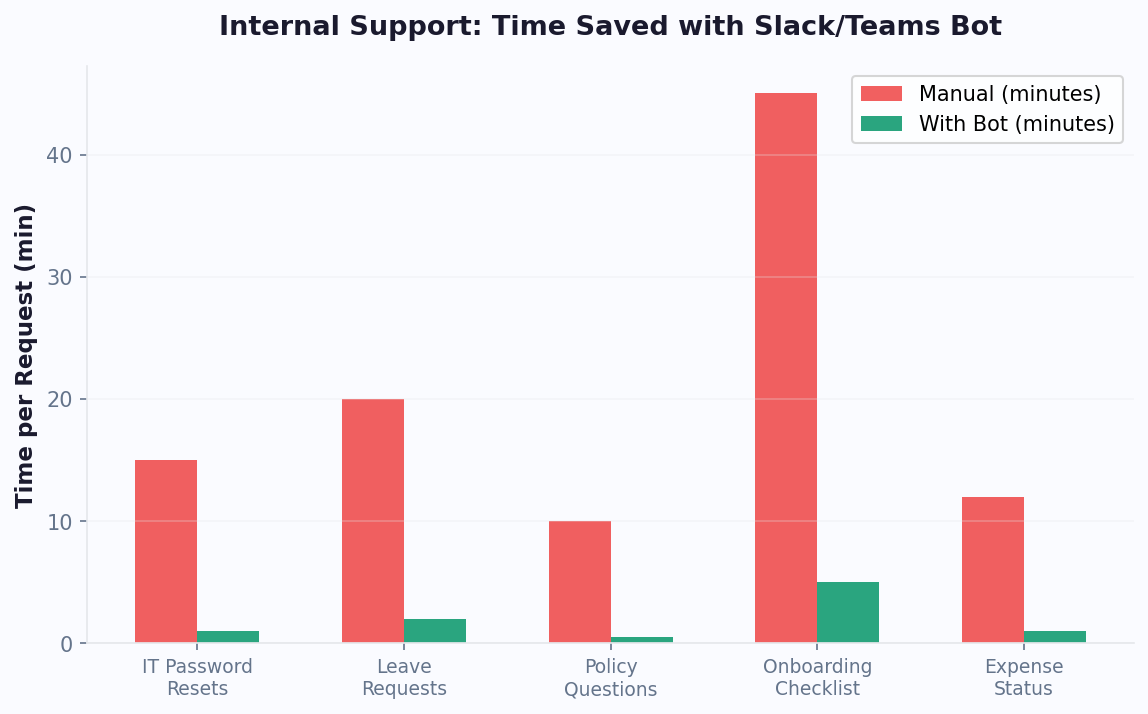
Each use case represents hours of HR team time saved per week. Combined, a comprehensive HR chatbot can reduce HR's administrative workload by 50-70%, freeing the team from repetitive question-answering and allowing them to focus on strategic people initiatives that drive business outcomes such as talent acquisition, leadership development, and organizational culture programs that cannot be automated.
Building Your Teams HR Chatbot With Conferbot
Deploying a Teams HR chatbot through Conferbot leverages the power of the Microsoft Bot Framework while providing a no-code building experience.
Prerequisites
- Microsoft 365 tenant with admin access
- Azure Active Directory for authentication
- Conferbot account (Business plan or higher for Teams integration)
- HR data source (HRIS, SharePoint, or custom database)
Step 1: Register a Bot in Azure
- Go to the Azure Portal and navigate to Bot Services
- Click "Create" and choose Azure Bot
- Configure the bot name, subscription, and resource group
- Copy the Microsoft App ID and generate a Client Secret
Step 2: Connect to Conferbot
- In your Conferbot dashboard, navigate to Channels > Microsoft Teams
- Enter your Azure Bot's App ID and Client Secret
- Conferbot configures the messaging endpoint automatically
- Click "Verify Connection" to confirm the integration
Step 3: Build HR Conversation Flows
Design your HR bot flows using the visual builder:
- Welcome Flow: Greet employees and present main HR categories (Leave, Benefits, Payroll, Policies, Support)
- Leave Management Flow: Balance check, request submission, approval workflow
- Benefits Flow: Plan comparison, coverage lookup, enrollment guidance
- Policy FAQ Flow: NLP-powered policy knowledge base
- Onboarding Flow: Staged onboarding program with automated reminders
- Escalation Flow: Handoff to HR specialist with conversation context
Step 4: Configure Adaptive Cards
Design rich Adaptive Card layouts for key interactions:
- Leave request form with date pickers and leave type dropdown
- Benefits comparison table with plan details side by side
- Onboarding checklist with progress indicators
- Approval cards with Approve/Deny buttons and comment fields
Step 5: Set Up HRIS Integration
Connect to your HR systems via Conferbot's API integrations:
- Workday / BambooHR: Pull PTO balances, employee records, org data
- SharePoint: Access HR policy documents and knowledge base articles
- Microsoft Graph API: Access calendar, org chart, and user profiles
Step 6: Deploy to Teams
- Package your bot as a Teams app using Conferbot's auto-packaging feature
- Upload to your organization's Teams app catalog (or publish for admin approval)
- Optionally pin the bot in the Teams sidebar for easy access across the organization
- Announce the deployment with a how-to guide in your HR Teams channel
Automating Employee Onboarding Through Teams
Employee onboarding is one of the highest-impact applications of a Teams HR chatbot. A well-automated onboarding program reduces ramp time, improves retention, and creates a positive first impression of the organization.
The Onboarding Journey Map
| Phase | Timing | Bot Actions |
|---|---|---|
| Pre-boarding | Offer acceptance to Day 1 | Welcome message, document collection, IT setup coordination |
| Day 1 | First day | Orientation schedule, team intro, workspace setup checklist |
| Week 1 | Days 1-5 | Training modules, manager 1:1 prep, benefits enrollment |
| Month 1 | Days 6-30 | Role-specific training, goal setting, buddy check-ins |
| Month 2-3 | Days 31-90 | Performance check-ins, feedback surveys, career discussion |
Pre-boarding Automation
Start the relationship before Day 1:
- Send a welcome message via Teams (after account creation) with a personal note from their manager
- Deliver a pre-boarding checklist: sign offer letter, complete I-9, set up direct deposit, choose benefits
- Share a "meet the team" document with photos, roles, and fun facts about their new colleagues
- Answer pre-boarding questions: "What should I wear?", "Where do I park?", "What time should I arrive?"
Day 1 Companion
The bot serves as a personal guide throughout the first day:
- 8:00 AM: Morning welcome with today's schedule and first meeting location
- 9:00 AM: Reminder to complete IT security training
- 10:30 AM: Prompt to set up 2FA and install required apps
- 12:00 PM: Lunch recommendation + reminder about afternoon orientation
- 3:00 PM: Benefits enrollment reminder with step-by-step guide
- 4:30 PM: End-of-day check-in: "How was your first day? Any questions?"
Structured Learning Path
Deliver role-specific training through the chatbot:
- Daily training modules sent as interactive Adaptive Cards
- Knowledge checks after each module (quiz format via quick replies)
- Progress tracking visible to both the new hire and their manager
- Automatic reminders for incomplete training
Feedback Collection
Continuous feedback throughout the onboarding journey:
- Day 1: "Rate your first day experience (1-5)" + open comment
- Week 1: "Do you have everything you need to be productive?"
- Day 30: Detailed onboarding satisfaction survey via Adaptive Card
- Day 90: Comprehensive new-hire survey covering manager, team, role clarity, and resources
Aggregate feedback data to continuously improve the onboarding program. Organizations using automated onboarding through Teams report 54% higher new-hire productivity at the 90-day mark and 30% lower first-year turnover compared to manual onboarding processes. Combine onboarding automation with Conferbot's HR chatbot solutions for a comprehensive employee experience platform. For organizations managing onboarding at scale across multiple locations and time zones, the combination of Teams chatbot automation with structured 30-60-90 day check-ins creates a repeatable system that works identically for every new hire regardless of geography or department, ensuring consistent quality while eliminating the variability inherent in manual onboarding programs that depend on individual manager attention and availability.
Enterprise Integration: Microsoft 365 and HRIS
The true power of a Teams HR chatbot emerges when it's deeply integrated with your enterprise systems. Seamless integration means employees get accurate, real-time information without the bot (or HR) doing manual lookups.
Microsoft 365 Integration
Leverage the Microsoft Graph API to connect with the entire M365 ecosystem:
- Azure AD: Authenticate users automatically, pull employee profiles, org chart data
- Outlook Calendar: Check availability for scheduling meetings, display team calendars
- SharePoint: Access HR document libraries, policy documents, training materials
- Power Automate: Trigger approval workflows for leave requests, expense reports
- Microsoft Forms: Collect survey responses and feedback
HRIS Integration
Connect to your core HR system for real-time data access:
| HRIS Platform | Data Accessible | Actions Available |
|---|---|---|
| Workday | PTO balances, compensation, org data | Submit leave, update profile |
| BambooHR | Employee records, time-off, benefits | Request PTO, view directory |
| SAP SuccessFactors | Performance, learning, compensation | Goal updates, training enrollment |
| ADP | Payroll, benefits, time tracking | View pay stubs, update W-4 |
| UKG | Time & attendance, scheduling | Clock in/out, shift swap |
Approval Workflow Integration
Build multi-step approval workflows that run entirely within Teams:
- Employee submits a request via the chatbot (leave, expense, equipment)
- Bot creates an approval request via the ticket system and sends it to the designated approver
- Approver reviews details in an Adaptive Card and clicks Approve or Deny
- If approved, bot triggers the action in the backend system (HRIS, procurement, IT)
- Both parties receive confirmation notifications
- If denied, the reason is communicated back to the employee with next steps
Data Security in Integrations
Enterprise integrations require strict security measures:
- OAuth 2.0: All API connections use OAuth 2.0 with token refresh for secure authentication
- Least Privilege: Bot only requests the minimum API permissions needed for each integration
- Data Masking: Sensitive data (SSN, salary details) is never stored in conversation logs
- Encryption: All data in transit uses TLS 1.3; data at rest uses AES-256 encryption
- Audit Trail: Every data access is logged for compliance review
Conferbot's API integration framework provides pre-built connectors via the integrations hub for popular HRIS platforms and the flexibility to connect with custom systems via REST APIs and webhooks. This means your Teams HR chatbot can surface information from any system your organization uses, creating a single conversational interface for all employee HR needs.
Employee Onboarding Bot: 30-60-90 Day Automated Check-ins
The first 90 days of employment determine whether a new hire becomes a long-term contributor or an early turnover statistic. Research from the Brandon Hall Group shows that organizations with a structured onboarding process achieve 82% higher new-hire retention and 70% greater productivity. Yet most HR teams lack the bandwidth to deliver consistent check-ins across every new hire. A Teams chatbot solves this by automating the entire 30-60-90 day journey with personalized, timely touchpoints that require zero manual effort from HR.
The 30-60-90 Day Check-in Framework
| Milestone | Day | Bot Action | Goal | Escalation Trigger |
|---|---|---|---|---|
| Week 1 pulse | 5 | Quick survey: "Do you have everything you need to do your job?" | Catch setup gaps early | Any "No" response |
| 2-week check | 14 | "How is your relationship with your manager? Rate 1-5" | Flag manager-report friction | Score below 3 |
| 30-day review prep | 25 | Send self-assessment template via Adaptive Card | Prepare for first formal review | Not completed by day 28 |
| 30-day review | 30 | Schedule 1:1 with manager via calendar booking | Formal checkpoint | Meeting not booked by day 32 |
| 30-day sentiment | 32 | "Overall, how would you rate your first month? (1-5)" + open comment | Capture candid feedback | Score below 3 or negative keywords |
| 45-day learning | 45 | "Have you completed all required training modules?" + progress check | Ensure compliance training complete | Incomplete modules |
| 60-day goal check | 55 | "Let us review the goals you set at day 30. How are you progressing?" | Keep goals on track | Self-reported "off track" |
| 60-day review prep | 56 | Send mid-probation review template + schedule manager meeting | Formal mid-point assessment | Not completed by day 60 |
| 60-day culture | 62 | "Do you feel like part of the team? What could improve?" | Assess cultural integration | Negative sentiment detected |
| 75-day career | 75 | "Where do you see yourself growing here? Any skills you want to develop?" | Start career development conversation | None (informational) |
| 90-day final review | 85 | Comprehensive survey (10 questions) + schedule probation review | End-of-probation decision support | Overall score below 3.5 |
| 90-day celebration | 90 | "Congratulations on completing your first 90 days! Here is what is next..." | Positive reinforcement + transition to regular employee flows | None |
Intelligent Escalation: What the Bot Cannot Handle
The check-in bot is not a replacement for human HR interaction — it is a screening layer that ensures no new hire falls through the cracks. When the bot detects warning signs, it escalates immediately and privately to the HR business partner:
- Low scores (below 3/5): The HRBP receives a notification with the employee's responses and a recommended action (schedule a private conversation within 48 hours).
- Negative keyword detection: If the employee's open-text responses contain terms like "looking for other jobs," "hostile," "uncomfortable," or "discrimination," the bot flags this as high-priority for immediate HRBP review.
- Non-response: If an employee does not respond to two consecutive check-ins, the bot alerts the HRBP and the employee's manager. Non-engagement during onboarding is a leading indicator of early turnover.
- Manager-related concerns: Any low scores on manager-relationship questions are routed to the HRBP (not the manager) to protect psychological safety.
Measurable Impact on Retention and Productivity
Organizations using automated 30-60-90 check-ins through Teams report measurable improvements across every onboarding metric:
- First-year turnover: Reduced by 25-35% compared to organizations without structured check-ins
- Time to full productivity: Decreased by 20-30 days on average (new hires ramp faster when blockers are caught early)
- Onboarding satisfaction: Scores of 4.2-4.6 out of 5, compared to 3.1-3.4 for manual onboarding processes
- HR team time saved: 3-5 hours per new hire over the 90-day period (multiplied by dozens or hundreds of annual hires, this is transformative)
- At-risk identification: 85% of at-risk new hires are flagged within 30 days, versus 50% detection rate with quarterly manual reviews
Implementation is straightforward. Use Conferbot's visual builder to create a time-triggered flow that sends Adaptive Card surveys at each milestone. Connect to your HRIS to auto-enroll new hires on their start date and to your analytics dashboard to aggregate onboarding data across cohorts. The entire setup takes 4-6 hours and runs indefinitely without maintenance beyond occasional question updates.
For HR teams managing more than 20 new hires per quarter, automated 30-60-90 check-ins are not optional — they are the difference between structured onboarding that retains talent and ad-hoc onboarding that loses it.
ROI Benchmarks and Implementation Cost Analysis for Teams HR Chatbots
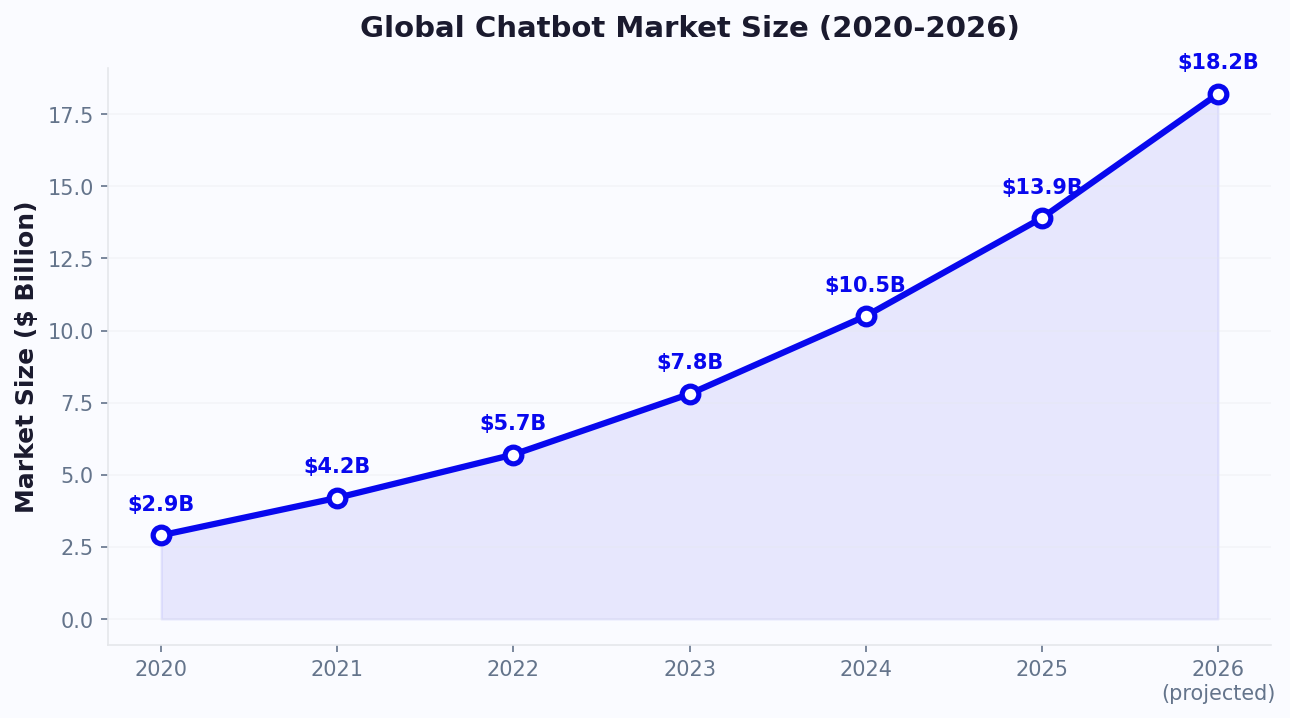
Before committing to a Teams HR chatbot deployment, decision-makers need concrete ROI data. According to Gartner's HR technology research, organizations that deploy conversational AI in HR functions see a median 40% reduction in cost-per-inquiry within the first 12 months. SHRM reports that the average HR department spends $1,500-$3,000 per employee annually on routine administrative interactions that chatbots can automate.
Implementation Cost Breakdown
| Cost Category | DIY (Power Virtual Agents) | No-Code Platform (Conferbot) | Custom Development |
|---|---|---|---|
| Platform licensing | $200-$1,000/month | $99-$499/month | $0 (self-hosted) |
| Initial setup labor | 80-160 hours internal | 8-24 hours internal | 400-800 hours dev team |
| HRIS integration | 40-80 hours | 4-8 hours (pre-built connectors) | 120-200 hours |
| Knowledge base creation | 20-40 hours | 10-20 hours | 20-40 hours |
| Testing and QA | 20-40 hours | 8-16 hours | 80-120 hours |
| Change management | 20-40 hours | 20-40 hours | 20-40 hours |
| Total first-year cost | $15,000-$45,000 | $3,000-$12,000 | $80,000-$200,000 |
ROI by Organization Size
The return varies significantly based on workforce size, HR team capacity, and query volume. Here are conservative estimates based on McKinsey's workforce productivity research:
| Org Size | Monthly HR Queries | Queries Deflected (70%) | Cost per Query Saved | Monthly Savings | Annual ROI |
|---|---|---|---|---|---|
| 500 employees | 1,200 | 840 | $12 | $10,080 | $120,960 |
| 2,000 employees | 4,800 | 3,360 | $12 | $40,320 | $483,840 |
| 10,000 employees | 24,000 | 16,800 | $12 | $201,600 | $2,419,200 |
Hidden ROI: Employee Experience and Retention
Beyond direct cost savings, Teams HR chatbots improve retention metrics that HR leaders increasingly track:
- Onboarding satisfaction: Organizations using chatbot-assisted onboarding report 23% higher new-hire satisfaction scores at the 30-day mark (Gallup, 2025)
- Time-to-answer for policy questions: Drops from 8-12 hours to under 10 seconds, reducing frustration-driven disengagement
- Benefits enrollment completion: Increases from 72% to 94% when guided by conversational AI, reducing compliance risk
- First-year turnover: Decreases 15-25% in organizations with comprehensive chatbot-supported onboarding programs
The organizations achieving the highest ROI share three characteristics: they deploy the chatbot on employee onboarding workflows first (highest impact per effort), they integrate deeply with their HRIS for real-time data access, and they measure adoption weekly during the first 90 days using analytics dashboards. For teams evaluating whether to build or buy, our chatbot implementation cost guide provides additional benchmarks across industries.
Common ROI Mistakes to Avoid
- Measuring only deflection: Track employee satisfaction alongside ticket reduction. A chatbot that deflects queries but frustrates employees is a net negative.
- Ignoring ramp time: Expect 60-70% deflection in month 1, improving to 80%+ by month 3 as the knowledge base expands. Do not judge ROI at week 2.
- Underinvesting in content: The chatbot is only as good as its knowledge base. Allocate 20% of first-year budget to ongoing content maintenance.
- Skipping change management: Even the best chatbot fails if employees do not know it exists. Budget for internal marketing, training sessions, communication campaigns, and executive sponsorship.
Best Practices for Teams HR Chatbot Deployments
Deploying an HR chatbot in an enterprise Teams environment requires attention to user experience, change management, and continuous improvement. Here are the best practices from successful enterprise deployments.
1. Start With High-Volume, Low-Complexity Queries
Don't try to automate everything at once. Prioritize by volume and complexity:
- Phase 1: PTO balances, company holiday calendar, office locations, general policy FAQs
- Phase 2: Leave requests with approval workflows, benefits FAQ, expense submission
- Phase 3: Full onboarding automation, performance management, advanced HRIS integration
This phased approach delivers quick wins that build stakeholder confidence and employee adoption while managing organizational change at a sustainable pace that does not overwhelm either the HR team configuring the bot or the employees adapting to the new self-service model.
2. Design Adaptive Cards for Clarity
Adaptive Cards are your primary UI. Design them thoughtfully:
- Use clear headers and visual hierarchy
- Keep forms short — never more than 5 fields per card
- Use dropdown menus and date pickers instead of free-text input where possible
- Add confirmations for important actions (leave submission, profile changes)
- Test cards on both desktop and mobile Teams clients
3. Maintain HR Knowledge Base Accuracy
An HR chatbot that gives wrong information is worse than no chatbot at all:
- Establish an owner for the knowledge base content (HR operations or HR business partner)
- Review and update content quarterly, or whenever policies change
- Version-control policy documents so the bot always references the latest version
- Add effective dates to policy responses so employees know when a policy applies
4. Handle Sensitive Topics Carefully
HR deals with sensitive issues. Your bot must handle them appropriately:
- Harassment/Discrimination Reports: Never automate these. Immediately connect the employee with a designated HR contact in a private, confidential channel.
- Termination/Layoff Questions: Route to HR specialist with empathy-oriented messaging.
- Salary/Compensation: Provide general pay scale info but route specific compensation discussions to HR.
- Medical/Disability: Provide general information but escalate specific accommodations requests to HR.
5. Measure and Report Continuously
Track these KPIs monthly and share with HR leadership:
| KPI | Target |
|---|---|
| Bot resolution rate | 70-85% |
| Employee adoption rate | 60%+ of workforce within 6 months |
| CSAT for bot interactions | 4.0+ out of 5 |
| HR team time saved (hours/week) | 20+ hours for a 1,000-person org |
| Cost per bot interaction | Under $0.50 |
6. Ensure Inclusivity
Your HR bot should be accessible to all employees:
- Support multiple languages based on your workforce demographics
- Design Adaptive Cards that meet WCAG accessibility standards
- Provide alternative interaction methods (text commands + menu navigation)
- Test with employees across different roles, locations, and tech comfort levels
A successful Teams HR chatbot deployment is a partnership between HR, IT, and the bot platform. By following these best practices and leveraging Conferbot's Teams integration, you can build an HR support experience that employees genuinely value and HR teams are proud to deliver.
7. Leverage Analytics for Continuous Improvement
The Conferbot analytics dashboard reveals patterns that manual monitoring cannot detect. Review these metrics weekly during the first 90 days and monthly thereafter:
- Unanswered question patterns: Group unresolved queries by topic to identify knowledge base gaps. Each gap is an opportunity to expand coverage and deflect more tickets.
- Peak usage hours: Understanding when employees ask HR questions helps you ensure live agent coverage during high-escalation periods and chatbot-only coverage during off-hours.
- Department-level adoption: Some departments may adopt faster than others. Low-adoption teams may need targeted outreach or department-specific content additions.
- Response accuracy trends: Track whether answer quality improves over time as the knowledge base expands. A declining accuracy rate signals content staleness or scope creep beyond the bot's capabilities.
- Escalation reasons: Categorize why conversations escalate to human agents. If the same reason appears repeatedly, it may be automatable with a new flow or knowledge base entry.
Organizations that review chatbot analytics weekly during the ramp period achieve 80%+ deflection rates 40% faster than those that deploy and forget. The analytics also provide the data needed to justify expansion requests to leadership. For a complete metrics framework, reference our chatbot analytics metrics guide alongside your Teams-specific KPIs.
Was this article helpful?
Microsoft Teams Chatbot for HR and Enterprise Support (2026) FAQ
Everything you need to know about chatbots for microsoft teams chatbot for hr and enterprise support (2026).
About the Author
Conferbot Team specializes in conversational AI, chatbot strategy, and customer engagement automation. With deep expertise in building AI-powered chatbots, they help businesses deliver exceptional customer experiences across every channel.
View all articles