What Is an Omnichannel Chatbot?
An omnichannel chatbot is a single AI-powered assistant that operates across multiple communication channels — your website, WhatsApp, Facebook Messenger, Instagram, Slack, and more — while maintaining a unified conversation history and consistent experience regardless of which channel a customer uses.
The key word is unified. An omnichannel chatbot is not simply the same bot copy-pasted to different platforms. It is a centralized system that:
- Recognizes the same customer across channels. If Sarah starts a conversation on your website and follows up on WhatsApp the next day, the bot knows who she is and what they discussed.
- Maintains conversation context. No more "Can you repeat your order number?" when a customer switches from one channel to another.
- Delivers consistent answers. The return policy is the same whether asked via Messenger, Instagram DM, or the website chatbot.
- Routes to the right agent with full history. When escalation is needed, the human agent sees every interaction across every channel in one unified view, powered by team management tools.
Think of it from the customer's perspective. They do not think in "channels" — they think in conversations. They might browse your website on their laptop, send a WhatsApp message from their phone while commuting, and follow up on Instagram after seeing your post. To them, it is one continuous relationship with your business. An omnichannel chatbot reflects this reality.
According to HubSpot's marketing research and Aberdeen Group data, companies with strong omnichannel strategies retain 89% of their customers, compared to just 33% for companies with weak omnichannel approaches. A Harvard Business Review study found that omnichannel customers spend 4% more in-store and 10% more online than single-channel customers. The business case is clear: meeting customers where they are, with context, drives loyalty and revenue.
Conferbot's omnichannel platform connects 13+ channels into a single dashboard with a powerful integrations hub, making it possible for businesses of any size to deliver this unified experience.
Multichannel vs. Omnichannel: The Critical Difference
These terms are often used interchangeably, but they describe fundamentally different approaches. Understanding the distinction is essential to choosing the right strategy.
Multichannel: Present on Multiple Channels (But Siloed)
A multichannel approach means you have a presence on multiple channels — a website chatbot, a WhatsApp number, a Facebook page with Messenger enabled. But each channel operates independently:
- Each channel has its own conversation history
- Customers must re-identify themselves when switching channels
- Agents see only the interactions from the channel they are monitoring
- Bot training and content must be duplicated for each channel
- Reporting is fragmented across separate dashboards
Omnichannel: Unified Across All Channels
An omnichannel approach connects all channels into a single, seamless experience:
- One conversation history that follows the customer across channels
- Customer identity is maintained through email, phone number, or account linking
- Agents see the complete interaction history in a unified inbox
- Bot training is centralized — update once, deploy everywhere
- Reporting aggregates data from all channels into one dashboard
| Aspect | Multichannel | Omnichannel |
|---|---|---|
| Customer experience | Fragmented — restarts on each channel | Seamless — continues across channels |
| Conversation history | Separate per channel | Unified across all channels |
| Agent experience | Toggle between channel-specific tools | Single unified inbox |
| Bot management | Duplicate setup per channel | Configure once, deploy everywhere |
| Analytics | Separate dashboards per channel | Combined cross-channel analytics |
| Customer recognition | Manual re-identification | Automatic cross-channel identity |
| Implementation complexity | Lower (independent channels) | Higher (integration required) |
| Customer satisfaction impact | Moderate improvement | Significant improvement |
The Real-World Impact
Imagine this multichannel scenario: A customer messages your Facebook page asking about a product. Your social media manager responds. Two days later, the same customer calls your support line with a follow-up question. The phone agent has no idea about the Facebook conversation and asks the customer to start from scratch. Frustrating.
Now the omnichannel version: The customer messages your Messenger chatbot about a product. Two days later, they visit your website and open the chat widget. The chatbot greets them by name and says, "Welcome back! Last time we discussed the Pro plan. Would you like to continue from where we left off?" That is the omnichannel difference — and it is what customers increasingly expect in 2026.
7 Benefits of an Omnichannel Chatbot Strategy
Implementing an omnichannel chatbot is an investment of time and resources. Here are seven concrete benefits that justify that investment, backed by data.
1. Higher Customer Satisfaction (CSAT)
Customers hate repeating themselves. A Zendesk study found that 72% of customers expect agents to know their purchase history and previous interactions. Omnichannel chatbots deliver this automatically. Businesses that implement omnichannel support see CSAT improvements of 15-30% compared to multichannel approaches.
2. Increased Customer Lifetime Value
Omnichannel customers are more valuable. Research from the Harvard Business Review shows they spend 10% more online and have 23% more repeat visits compared to single-channel customers. By making every interaction seamless, you deepen the relationship and increase spend over time.
3. Higher First-Contact Resolution Rates
When the chatbot has the full conversation history, it can resolve issues faster. There is no need to ask for order numbers the customer already provided on another channel. Businesses report 20-35% improvement in first-contact resolution after implementing omnichannel support.
4. Reduced Operational Costs
Managing one unified chatbot is cheaper than managing separate bots for each channel. Updates happen once and propagate everywhere. Agent training is simplified because there is only one tool to learn. Companies report 25-40% reduction in support operations costs after consolidating to an omnichannel platform.
5. Better Analytics and Insights
When all customer interactions flow through a single system, your analytics become dramatically more useful. You can track the complete customer journey — from first website visit to Messenger inquiry to purchase to post-sale support — in one dashboard. This reveals patterns invisible in siloed channel data.
6. Consistent Brand Experience
An omnichannel chatbot ensures your brand voice, response quality, and policies are consistent whether a customer contacts you on WhatsApp, Instagram, or your website. Inconsistency across channels erodes trust — consistency builds it.
7. Competitive Advantage
Despite the clear benefits, many businesses still operate in a multichannel (siloed) model. Implementing true omnichannel gives you a differentiation advantage that customers notice and reward with loyalty. As customer expectations continue rising, this advantage will only grow.
The cumulative impact of these benefits is substantial. A Forrester study estimated that companies with mature omnichannel strategies see 9.5% year-over-year revenue growth, compared to 3.4% for those without — nearly 3x the growth rate. McKinsey's customer journey research further confirms that omnichannel customers represent 30% higher lifetime value than single-channel customers. For businesses looking to start with the highest-impact channel, our WhatsApp chatbot guide covers the platform with the best engagement rates globally.
Channel-by-Channel Guide: Where to Deploy Your Chatbot
Not every channel is right for every business. Here is a breakdown of the major messaging channels, their strengths, audience demographics, and best use cases to help you prioritize.
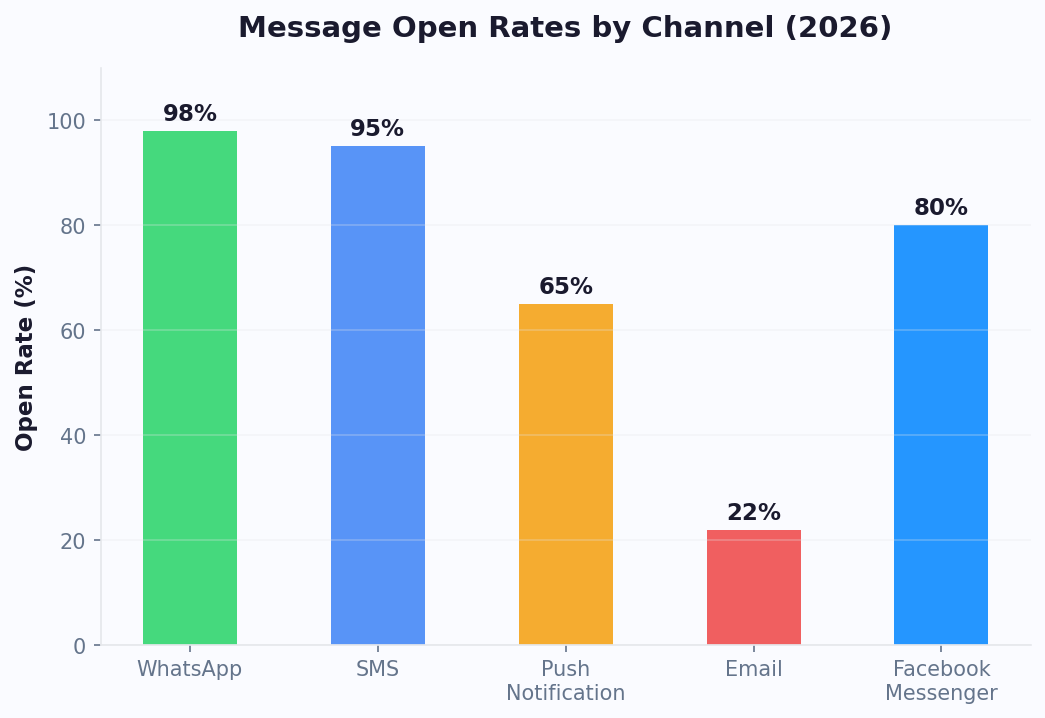
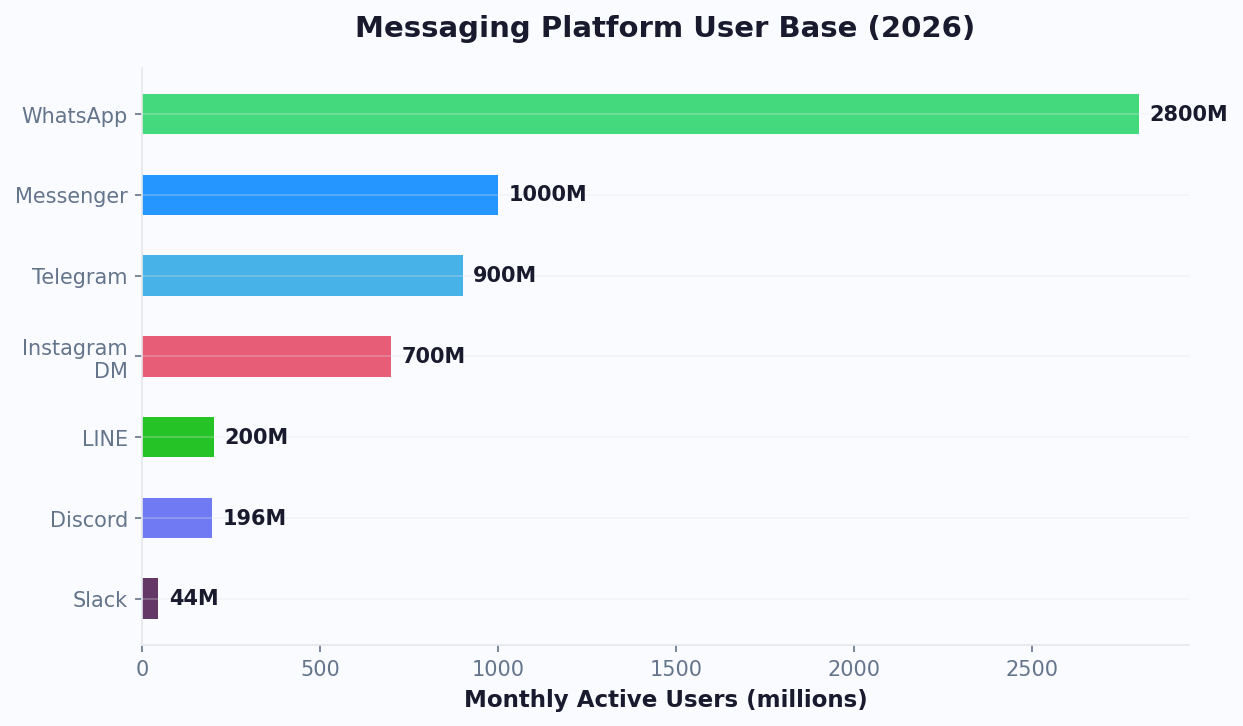
Users: 2.7+ billion monthly active users globally. Dominant in India, Brazil, Europe, Southeast Asia, and Africa.
Best for: International businesses, e-commerce (order updates, support), service businesses (appointment reminders), and any company with customers outside North America.
Key features: Rich media (images, documents, location), template messages for outbound, end-to-end encryption, business profiles, catalog integration.
Consideration: WhatsApp Business API has per-conversation charges from Meta. Factor this into your cost calculations.
Facebook Messenger
Users: 1 billion+ monthly active users. Strong in North America, Europe, and Australia.
Best for: Businesses with active Facebook pages, e-commerce, local businesses, and any company running Facebook ads (Messenger can be an ad click destination).
Key features: Rich messages (carousels, quick replies, buttons), persistent menus, payment integration, sponsored messages for re-engagement.
Instagram DMs
Users: 2 billion+ monthly active users, skewing younger (18-34 age group dominant).
Best for: D2C brands, fashion, beauty, food, lifestyle businesses, and any company with a visual product. Instagram chatbots can respond to DMs, story replies, and comment-triggered messages.
Key features: Story mention automation, comment-to-DM flows, product tagging, quick replies.
Telegram
Users: 900+ million monthly active users. Popular with tech-savvy audiences, crypto communities, and in Central/Eastern Europe and Middle East.
Best for: Tech companies, communities, crypto/fintech, education, and businesses with privacy-conscious customers.
Key features: Bot API (most developer-friendly of all platforms), groups and channels, inline mode, payments, no per-message charges.
Slack and Microsoft Teams
Users: Slack has 30+ million daily active users; Teams has 320+ million monthly active users. Both are workplace-focused.
Best for: B2B companies, internal support bots (IT helpdesk, HR FAQs), SaaS products used in the workplace, and partner/vendor communication.
Key features: Slash commands, interactive messages, workflow automation, channel integration.
Discord
Users: 200+ million monthly active users, primarily gaming and tech communities but increasingly used by brands and creator communities.
Best for: Gaming companies, creator economy, tech products with community-driven support, education platforms.
LINE
Users: 196 million monthly active users, dominant in Japan, Taiwan, Thailand, and Indonesia.
Best for: Any business operating in East/Southeast Asian markets. LINE is effectively the WhatsApp of Japan and Thailand.
Website Chat Widget
Users: Anyone visiting your website — the universal channel.
Best for: Every business. Your website chatbot is the foundation of your omnichannel strategy. It captures visitors at the highest-intent moment (they are already on your site) and serves as the hub for all other channels.
View the full list of supported channels on the Conferbot channels page.
Implementing Your Omnichannel Chatbot: A Phased Approach
Rolling out an omnichannel chatbot across all channels simultaneously is a recipe for disaster. Here is a proven phased approach that minimizes risk and maximizes learning at each stage.
Phase 1: Foundation (Weeks 1-2)
Start with your website chatbot. This is your highest-priority channel because:
- You have full control over the deployment
- Website visitors have the highest purchase intent
- It is the easiest channel to test and iterate on
- All other channels will eventually link back to your website
During this phase:
- Build your core chatbot flows (FAQs, lead capture, support routing)
- Train your AI on your knowledge base and product information
- Configure live chat handoff rules
- Set up analytics tracking
- Test thoroughly with your team
- Launch and monitor for 2 weeks, iterating daily based on conversation logs
Phase 2: Primary Messaging Channel (Weeks 3-4)
Add your most important messaging channel. For most businesses, this is WhatsApp or Messenger depending on your customer demographics.
During this phase:
- Connect the messaging channel to your chatbot platform
- Adapt your chatbot flows for the channel's unique UI (quick replies, buttons, carousels)
- Set up customer identity linking (match WhatsApp phone numbers or Messenger profiles to existing customer records)
- Configure channel-specific greetings and menus
- Test the cross-channel experience — start a conversation on the website, continue on WhatsApp
Phase 3: Expand (Weeks 5-8)
Add 2-3 additional channels based on where your customers are active. Common additions:
- Instagram for D2C and visual brands
- Telegram for tech and crypto communities
- Slack or Teams for B2B and internal support
At each step, verify that cross-channel context is working correctly. The unified inbox should show conversations from all channels in a single stream per customer.
Phase 4: Optimize (Ongoing)
With all channels live, shift focus to optimization:
- Channel-specific content: Adapt message length and format for each channel (WhatsApp messages should be shorter than website chat, Instagram supports image responses)
- Proactive outreach: Use WhatsApp template messages and Messenger sponsored messages for re-engagement
- Cross-channel journeys: Design intentional paths — for example, capture leads on Instagram, nurture via WhatsApp, convert on website
- Unified reporting: Analyze which channels drive the most value and allocate resources accordingly
Common Implementation Pitfalls
- Launching too many channels at once. Each channel has quirks. Master one before adding the next.
- Ignoring channel-specific norms. WhatsApp conversations feel different from website chat. Adapt your tone and message length.
- Neglecting identity linking. If you cannot match customers across channels, you do not have omnichannel — you have multichannel with extra steps.
- Not testing cross-channel handoffs. The experience of switching channels must be seamless. Test it from the customer's perspective. Always test by starting a conversation on one channel and continuing on another to verify context persistence, identity linking, and agent visibility.
For businesses deploying their first chatbot and not yet ready for full omnichannel, start with a single high-impact channel. Our guide to adding a chatbot to your website covers the foundational deployment that every omnichannel strategy builds upon.
Best Omnichannel Chatbot Platforms in 2026
Not every chatbot platform supports true omnichannel. Here is how the leading platforms compare on omnichannel capabilities specifically.
| Platform | Channels Supported | Unified Inbox | Cross-Channel Identity | Centralized Bot Management | Starting Price |
|---|---|---|---|---|---|
| Conferbot | 13+ (Website, WhatsApp, Messenger, Instagram, Telegram, Slack, Discord, Teams, LINE, Viber, SMS, Email, In-app) | Yes | Yes | Yes — build once, deploy everywhere | Free tier available |
| Zendesk | 8+ (Website, WhatsApp, Messenger, Instagram, Twitter, Email, Phone, SMS) | Yes | Yes | Partial — some channel-specific config needed | $55/agent/mo |
| Intercom | 6+ (Website, WhatsApp, Messenger, Instagram, Email, SMS) | Yes | Yes | Yes | $39/seat/mo + per-resolution AI |
| Crisp | 6+ (Website, WhatsApp, Messenger, Instagram, Email, Telegram) | Yes | Basic | Partial | Free tier available |
| Tidio | 5 (Website, Messenger, Instagram, WhatsApp, Email) | Yes | Basic | Partial | Free tier available |
| Freshdesk | 7+ (Website, WhatsApp, Messenger, Email, Phone, Twitter, Apple Business Chat) | Yes | Yes | Partial | Free tier available |
Why Conferbot Leads in Omnichannel
Conferbot supports the widest range of channels (13+) among all platforms in this comparison, with true centralized bot management. This means:
- Build once, deploy everywhere: Create your chatbot flows once and deploy to all 13+ channels from a single dashboard. No need to rebuild or reconfigure for each platform.
- Unified conversation view: Every interaction across every channel appears in a single customer timeline. Agents never lose context.
- Centralized analytics: Cross-channel analytics show you which channels drive the most engagement, highest satisfaction, and best conversion rates — all in one report.
- Consistent AI across channels: Your NLP training and AI configuration apply universally. The bot is equally smart on WhatsApp and your website.
Evaluation Checklist for Omnichannel Platforms
When evaluating platforms for omnichannel, verify these capabilities:
- Channel breadth: Does it support all the channels your customers use today — and might use tomorrow?
- True unification: Does it maintain one conversation thread per customer across channels, or just display multiple channels side-by-side?
- Identity resolution: Can it match the same customer across channels (email to WhatsApp number to website cookie)?
- Centralized configuration: Can you update the bot once and have changes propagate to all channels?
- Channel-specific customization: Despite centralization, can you adapt message formats for each channel's unique capabilities (carousels on Messenger, quick replies on WhatsApp)?
- Scalable pricing: Do channel additions significantly increase cost, or is omnichannel included in the base plan?
Measuring Omnichannel Chatbot Success
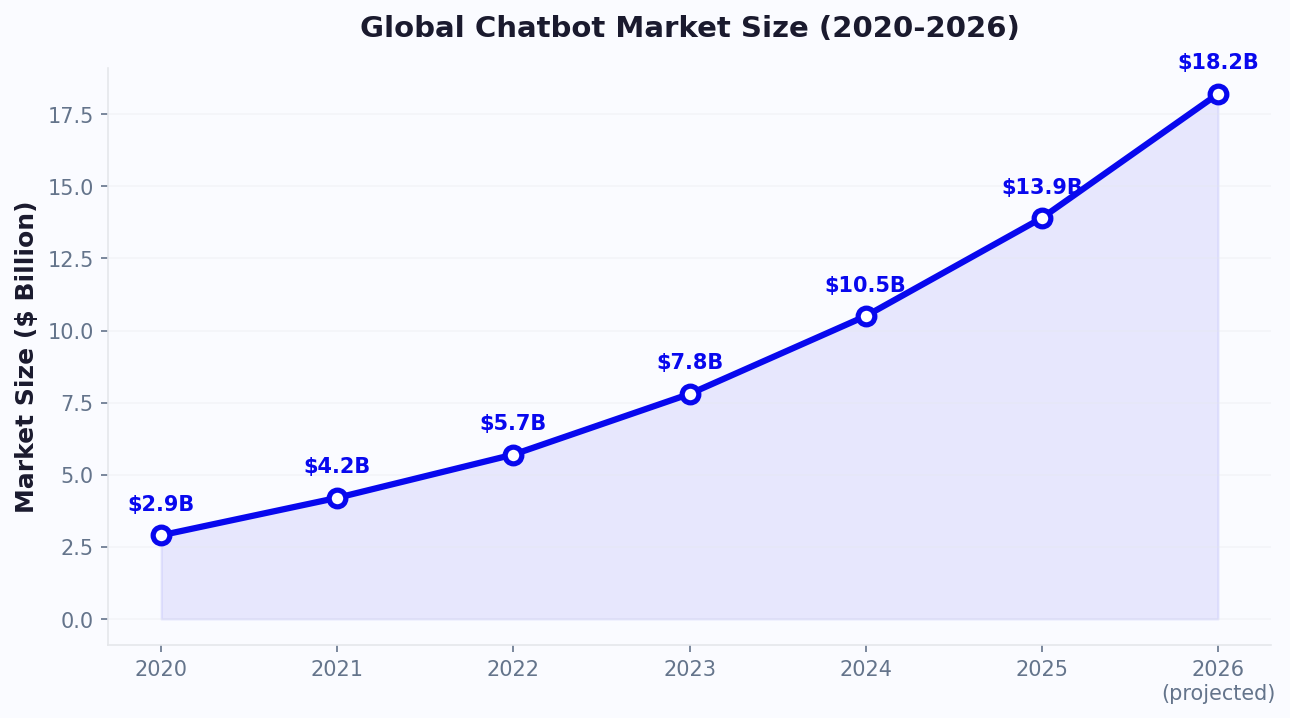
Omnichannel adds a layer of complexity to chatbot analytics. Beyond standard KPIs (deflection rate, CSAT, resolution time), you need to track cross-channel metrics that reveal whether your unified strategy is actually working.
Omnichannel-Specific KPIs
| KPI | What It Measures | Target |
|---|---|---|
| Cross-channel resolution rate | Percentage of conversations that start on one channel and resolve on another without friction | >85% seamless |
| Channel adoption spread | Distribution of conversations across channels (no single channel should dominate excessively unless intentional) | Website 40-50%, messaging channels 50-60% combined |
| Identity match rate | Percentage of cross-channel conversations where the customer was correctly identified | >80% |
| Channel switch satisfaction | CSAT for conversations that involved a channel switch vs. single-channel conversations | No significant drop |
| Time to channel connection | How long it takes a new channel to reach meaningful adoption after launch | 2-4 weeks to steady state |
Channel Performance Comparison
Track these metrics per channel to understand where to invest:
- Conversation volume per channel: Which channels are customers actually using?
- Resolution rate per channel: Does the bot perform better on some channels than others?
- CSAT per channel: Are customers happier on certain channels?
- Cost per conversation per channel: Factor in channel-specific fees (WhatsApp conversation charges, etc.)
- Conversion rate per channel: Which channels drive the most sales or lead captures?
The Omnichannel Analytics Dashboard
Your analytics dashboard should answer these questions at a glance:
- How are conversations distributed across channels? A pie chart showing volume by channel helps identify where customers prefer to engage.
- What are the most common cross-channel journeys? Sankey diagrams or flow charts showing how customers move between channels reveal optimization opportunities.
- Where do customers drop off? If customers start on Instagram but never complete the journey on your website, there is a friction point to investigate.
- Which channel combinations produce the best outcomes? Perhaps customers who engage on both WhatsApp and your website convert at 2x the rate of single-channel users.
Monthly Omnichannel Review
Add these items to your monthly analytics review:
- Are any channels underperforming? Consider whether the channel needs better bot optimization or whether your audience simply is not there.
- Are cross-channel handoffs working smoothly? Review conversations that involved channel switches and check for context loss.
- Are channel-specific costs justified? If a channel drives low volume at high cost, consider whether to continue supporting it.
- Are there new channels to add? Monitor where your customers are spending time. If a significant portion of your audience is on a channel you do not support, it is time to expand.
The goal is not to be on every channel — it is to be on the right channels with a seamless, unified experience. Measure accordingly.
5 Common Omnichannel Mistakes That Destroy Customer Experience
Even businesses that invest in omnichannel technology often fail to deliver a truly unified experience. These mistakes are costly because they create the illusion of omnichannel while delivering a fragmented reality that frustrates customers.
Mistake 1: Channel Parity Without Context Transfer
Having a chatbot on 6 channels means nothing if those channels do not share conversation history. A customer who explains their problem on the website chatbot and then messages on WhatsApp should never hear "How can I help you?" as if it is a fresh conversation. Verify that your platform truly unifies conversation threads, not just deploys separate bots that happen to look the same.
Mistake 2: Forcing Channel Switches
Some businesses route all chatbot conversations to phone or email for resolution, using the chatbot only for initial capture. This defeats the purpose. If a customer chose WhatsApp, resolve their issue on WhatsApp. Forcing them to another channel adds friction and signals that your chatbot is merely a lead form, not a service tool.
Mistake 3: Inconsistent Response Times Across Channels
Customers expect similar response times regardless of channel. If your website chatbot responds in 2 seconds but your WhatsApp responses take 4 hours (because a human manages that channel manually), the experience is jarring. Ensure AI-powered instant responses are active on every channel you support.
Mistake 4: Ignoring Channel-Native Features
Each messaging platform has unique capabilities: WhatsApp has catalog cards and list messages, Messenger has carousels and persistent menus, Instagram has story-reply triggers. Using plain text across all channels ignores these platform strengths. Adapt your bot's responses to leverage each platform's richest interaction patterns.
Mistake 5: No Unified Analytics View
If your analytics show channel performance in separate silos, you cannot identify cross-channel journey patterns. A unified analytics dashboard should show the complete customer journey from first touch through resolution, regardless of how many channel switches occurred. Without this view, you optimize individual channels instead of the overall customer experience. For guidance on chatbot best practices that apply across all channels, see our comprehensive guide.
The Future of Omnichannel: Trends Shaping 2026-2028
The omnichannel chatbot space is evolving rapidly. Here are the trends that will shape the next 2-3 years and how to prepare for them today.
1. Voice as a First-Class Channel
Voice assistants (Alexa, Google Assistant, Siri) are increasingly becoming customer service entry points. By 2027, expect omnichannel platforms to integrate voice as seamlessly as text channels. Customers will start a voice conversation with Alexa and continue via WhatsApp text — with full context maintained. To prepare: choose a platform that is actively adding voice capabilities to its roadmap.
2. AI Agents That Act, Not Just Answer
Current chatbots answer questions and route to humans. The next generation — available via mobile SDKs and web — will take actions autonomously — processing refunds, modifying orders, scheduling appointments, and resolving billing issues without human intervention. This dramatically increases the value of omnichannel because the AI agent needs cross-channel context to act correctly. LLM-powered chatbots are the foundation for this evolution.
3. Predictive Channel Routing
Rather than letting customers choose their channel, AI will proactively route conversations to the optimal channel based on:
- The nature of the inquiry (complex issues to channels supporting rich media)
- The customer's historical channel preference
- Agent availability on each channel
- The device the customer is currently using
This reduces friction by getting the customer to the right channel the first time.
4. Unified Commerce (Chat + Buy)
Messaging platforms are adding native commerce features. WhatsApp Catalog, Instagram Shopping, and Messenger Payments allow customers to browse, select, and purchase without leaving the chat. By 2027, the line between "customer service chatbot" and "sales channel" will blur completely. Omnichannel chatbots will manage the entire customer lifecycle — discovery, purchase, support, and retention — across every channel.
5. Hyper-Personalization Through Cross-Channel Data
When you have a unified view of every customer interaction across every channel, personalization becomes incredibly powerful. The chatbot can reference a product the customer browsed on your website when they message on WhatsApp, or proactively suggest a reorder based on purchase history when they open Instagram DMs. This level of personalization, powered by cross-channel data, will become the expectation rather than the exception.
6. Privacy-First Omnichannel
With increasing privacy regulations (GDPR, CCPA, and new laws in 2026-2027), managing customer data across multiple channels becomes more complex. Omnichannel platforms will need robust consent management — ensuring you have permission to link a customer's WhatsApp identity with their website behavior, for example. Choose platforms that build privacy compliance into their architecture, not as an afterthought.
7. Consolidation of Messaging Platforms
Meta is unifying messaging across Facebook Messenger, Instagram DMs, and WhatsApp. Apple is expanding Business Chat capabilities. Google continues evolving RCS messaging. This consolidation simplifies omnichannel deployment — fewer APIs to integrate, more standardized features — while making the unified platform approach even more valuable.
Preparing for the Future Today
You do not need to wait for these trends to materialize. The steps you take now — implementing an omnichannel chatbot platform, building a robust knowledge base, establishing cross-channel identity linking — are the foundation that future capabilities will build on. Start with the channels that matter today, and choose a platform that is actively innovating for tomorrow.
Industry Data Supporting Omnichannel Investment
The business case for omnichannel continues to strengthen. Statista's digital communication data shows that the average consumer now uses 4.2 messaging platforms daily, up from 2.8 in 2022. Gartner predicts that by 2027, 80% of customer service organizations will abandon native mobile apps in favor of messaging-first strategies that serve customers on platforms they already use. These trends make omnichannel not just a competitive advantage but a survival requirement. Companies that restrict customer access to a single channel will lose market share to those offering seamless multi-platform experiences. Our e-commerce chatbot guide demonstrates how omnichannel strategies specifically drive revenue in retail environments, while the WhatsApp chatbot guide covers the fastest-growing individual channel in detail.
Was this article helpful?
Build and deploy in 10 minutes. No coding needed.
What Is an Omnichannel Chatbot? The Complete Guide to Unified Customer Conversations (2026) FAQ
Everything you need to know about chatbots for what is an omnichannel chatbot? the complete guide to unified customer conversations (2026).
About the Author
Deepak is the founder of Conferbot and writes about building, deploying, and improving AI chatbots.
View all articles