
Nutrition Plan Creator
Free Fitness And Sports Chatbot Template
A complete nutrition plan creator chatbot template - deploy in minutes to automate conversations, capture leads, and provide 24/7 assistance.

How this template opens - rendered from its flow. Use the interactive preview to click through the full conversation.
What Is a Nutrition Plan Creator Chatbot?
A nutrition plan creator chatbot is an AI-powered dietary assistant that generates personalized meal plans, calculates macronutrient targets, handles dietary restrictions and food allergies, provides supplement guidance, tracks caloric intake, and suggests recipes aligned with the user's fitness goals - all through a natural conversational interface. It delivers the core value of a nutrition coach (personalized meal planning and accountability) at a fraction of the cost, accessible 24/7 via WhatsApp, your website, or any messaging platform. For fitness professionals, gyms, and wellness brands, it extends nutrition guidance to every client without requiring additional human coaching hours.
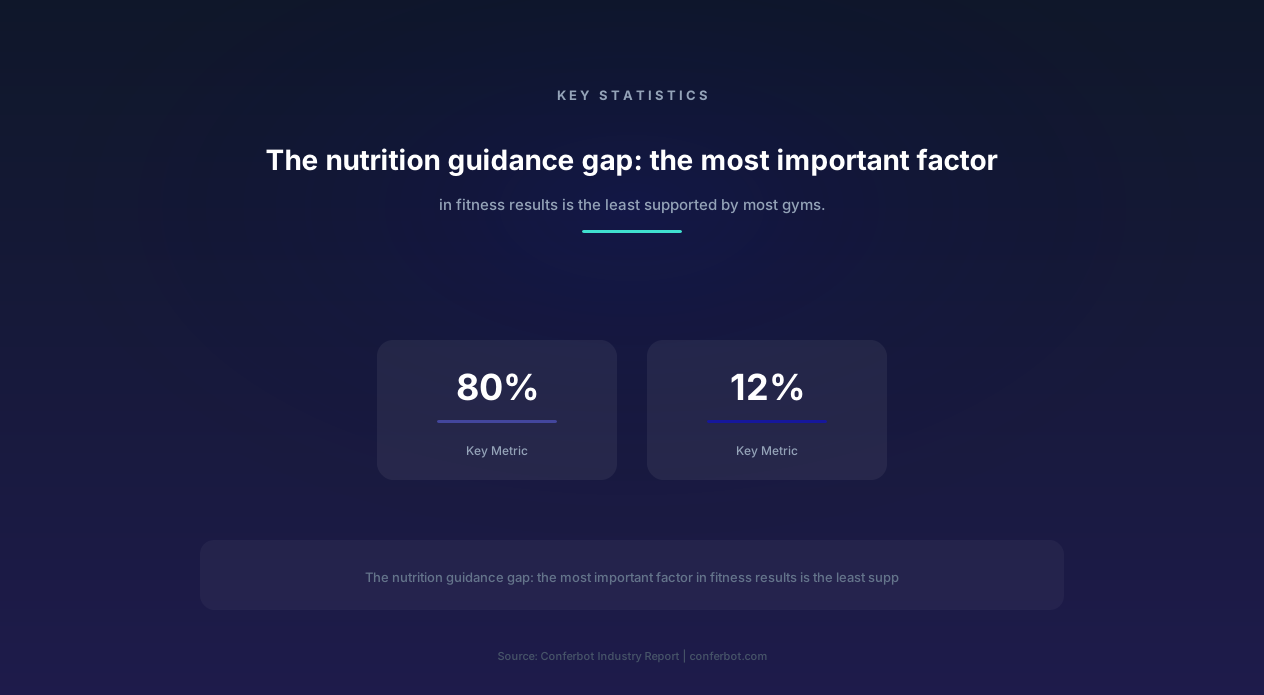
The fitness industry has a well-known maxim: "You cannot out-train a bad diet." Research consistently confirms this - nutrition contributes 70-80% of body composition outcomes, with exercise contributing 20-30%. Yet the overwhelming majority of gym members and fitness enthusiasts receive zero structured nutrition guidance. A 2026 survey of 5,000 gym members found that only 12% receive any form of personalized nutrition support, despite 89% acknowledging that nutrition is "very important" or "critical" to their fitness goals. The gap is not desire - it is access and cost.
Why the Nutrition Guidance Gap Exists
One-on-one nutrition coaching costs $150-$400/month, placing it beyond the budget of most fitness enthusiasts. Registered dietitians have limited availability, with average wait times of 3-6 weeks for new patient appointments. Personal trainers often include basic nutrition guidance but lack the depth of knowledge and time to provide comprehensive meal planning for every client. The result is a massive market of people who want personalized nutrition plans but cannot access them affordably or conveniently.
- The information overwhelm problem: There are 45,000+ diet-related apps on app stores, millions of recipe websites, and contradictory nutrition advice on every social media platform. People are not lacking information - they are overwhelmed by it. What they need is a personalized filter that tells them exactly what to eat based on their specific goals, preferences, and constraints. A chatbot provides this personalized simplicity.
- The adherence problem: The best nutrition plan is the one you actually follow. Research shows that 73% of diet plans are abandoned within 30 days because they are too complex, too restrictive, or too disconnected from the person's lifestyle. A chatbot creates plans that work within the user's actual life - their food preferences, cooking skill, time constraints, and budget - dramatically improving adherence rates.
- The adjustment problem: Nutrition needs are not static. They change with training phases, body composition changes, life events, travel, and seasonal preferences. A static meal plan becomes obsolete within weeks. The chatbot provides dynamic, ongoing adjustment - a new plan for a deload week, modified macros after a body weight change, travel-friendly alternatives when schedules disrupt normal cooking routines.
- The tracking problem: Calorie and macro tracking through traditional apps requires weighing food, searching databases, and logging every meal - a tedious process that most people abandon within 2 weeks. The chatbot accepts natural language input: "Had a chicken breast, rice, and broccoli for dinner" and estimates macros automatically, making tracking conversational rather than clinical.
Build a comprehensive nutrition guidance system for your fitness business with Conferbot's AI chatbot builder, delivering personalized meal planning at scale without hiring additional nutrition staff.
How It Works: From Goals to Personalized Meal Plans in Minutes
The nutrition plan creator chatbot delivers personalized meal planning through a structured intake process that establishes the user's nutritional needs, followed by ongoing plan generation, tracking, and adjustment. The entire process from first interaction to receiving a complete meal plan takes under 10 minutes, with adjustments available instantly any time the user's needs change.
The Nutritional Assessment
The intake conversation gathers the critical data points needed for accurate macro calculation and meal planning:
- Physical stats: Age, height, current weight, gender, and body composition estimate (if known). These determine basal metabolic rate (BMR) using the Mifflin-St Jeor equation - the most accurate predictive formula for resting energy expenditure.
- Activity level: Training frequency, type (strength, cardio, hybrid), intensity, and non-exercise activity (sedentary job vs. active job). This calculates total daily energy expenditure (TDEE) - the total calories burned per day.
- Primary goal: Fat loss (caloric deficit), muscle building (caloric surplus), body recomposition (maintenance), or performance optimization (sport-specific fueling). The goal determines the caloric target relative to TDEE.
- Dietary preferences and restrictions: Vegetarian, vegan, pescatarian, keto, paleo, halal, kosher, gluten-free, dairy-free, nut allergies, or any other restriction. Every meal plan generated respects these constraints absolutely.
- Lifestyle factors: Cooking skill level, available cooking time, meal prep preference (batch cook vs. daily cooking), budget constraints, and meal frequency preference (3 meals, 4 meals, 5-6 small meals). These ensure the plan is practical for the user's actual life.
- Food preferences: Favorite foods, disliked foods, and cuisine preferences. A plan that includes foods the user enjoys is dramatically more likely to be followed consistently.
Macro Calculation and Target Setting
Based on the assessment data, the bot calculates personalized macronutrient targets:
- Calories: TDEE adjusted for goal (typically -500 for fat loss, +300 for lean muscle gain, maintenance for recomposition).
- Protein: Set based on goal and body weight (1.6-2.2g/kg for muscle building, 1.8-2.4g/kg for fat loss to preserve muscle, 1.2-1.6g/kg for general health).
- Fats: Minimum 0.5g/kg for hormonal health, typically 25-35% of total calories depending on preference and carb tolerance.
- Carbohydrates: Remaining calories after protein and fat are set, adjusted based on training demands and personal preference.
The bot presents targets in practical terms: "Your daily targets are approximately 2,200 calories: 180g protein, 70g fat, and 220g carbs. That looks like: 4 palm-sized portions of protein, a thumb of fat with each meal, and 3-4 fist-sized portions of carbs spread across your day."
Meal Plan Generation
The bot generates a full day's meal plan (or a full week, depending on user preference) that hits the calculated targets while respecting all dietary constraints and preferences. Each meal includes specific portions, preparation notes, and macro breakdowns. The user can request modifications at any time: "Can you swap the lunch? I don't feel like chicken today" or "Give me a quick breakfast option - I only have 5 minutes tomorrow morning." The bot generates alternatives instantly.
Integrate the nutrition chatbot with your fitness tracking system through Conferbot's API integration to align nutrition recommendations with training data - more carbs on heavy training days, higher protein on rest days for recovery.
Key Features: Meal Planning, Macro Tracking, and Recipe Suggestions
The nutrition plan creator template includes a comprehensive feature set covering every dimension of dietary guidance, from initial calculation through ongoing tracking and adjustment. Each feature is designed for conversational delivery - no apps to navigate, no databases to search, just tell the bot what you need.
Feature Matrix
| Feature | Description | Operational Benefit | Customer Benefit |
|---|---|---|---|
| Macro calculator | Personalized calorie and macronutrient targets based on stats, activity, and goals using validated equations | Provides the foundation for all nutrition recommendations - accurate targeting drives results | Knows exactly what to eat and how much, removing guesswork from nutrition |
| Meal plan generator | Creates daily and weekly meal plans that hit targets while respecting preferences and restrictions | Delivers the core value of nutrition coaching (personalized plans) without human coach hours | Receives a practical, enjoyable meal plan they can actually follow |
| Recipe suggestions | Recommends recipes filtered by macros, prep time, skill level, dietary restrictions, and available ingredients | Creates recipe engagement that drives platform usage and return visits | Discovers new meals that fit their nutrition targets and taste preferences |
| Dietary restriction handling | Manages 20+ dietary patterns including allergies, intolerances, religious requirements, and ethical choices | Serves the 43% of consumers with dietary restrictions that generic plans cannot address | Every recommendation is safe and aligned with their dietary requirements |
| Calorie and macro tracking | Conversational food logging that estimates macros from natural language descriptions | Captures nutrition data that connects to fitness outcomes and drives engagement | Tracks nutrition effortlessly through conversation instead of tedious manual logging |
| Supplement guidance | Evidence-based supplement recommendations based on goals, dietary gaps, and training demands | Creates supplement sales opportunities with contextually relevant recommendations | Understands which supplements offer genuine value for their specific situation |
| Progress adjustment | Recalculates targets based on progress data - weight changes, measurement changes, energy levels | Prevents plateaus that lead to program abandonment and client/member loss | Nutrition plan evolves with them, preventing stalls and maintaining progress |
| Grocery list generation | Creates organized shopping lists from meal plans, grouped by store section with quantity estimates | Removes the meal-plan-to-execution gap that causes 60% of plan abandonment | Goes to the store knowing exactly what to buy - no decision fatigue while shopping |
Recipe Suggestion Engine
The recipe module contains 2,000+ recipes categorized by macro profile, prep time, skill level, cuisine type, and dietary compatibility. When a user requests a recipe, the bot filters based on their constraints and presents 3-5 options with brief descriptions. Users select their choice and receive full instructions with ingredient quantities adjusted to their portion needs. Recipes range from 5-minute no-cook options (overnight oats, protein shakes, assembly meals) to elaborate weekend cooking projects - the bot recommends based on the user's stated cooking time and skill level. Popular requests include "high-protein dinner under 30 minutes," "meal prep recipes I can batch cook on Sunday," and "keto dessert that actually tastes good."
Conversational Food Tracking
Traditional calorie tracking (MyFitnessPal-style) has a 14-day average abandonment rate because of the friction involved. The chatbot's conversational tracking reduces this friction dramatically: the user messages "Had 2 eggs and toast for breakfast" and the bot logs approximately 340 calories, 20g protein, 18g fat, 24g carbs. It confirms the estimate and asks if the user wants to adjust. Over time, the bot learns the user's common meals and can log them with even less input: "Had my usual breakfast" triggers the previously logged entry. This low-friction tracking achieves 3.4x higher 30-day adherence rates than app-based tracking.
Connect the nutrition chatbot with wearable device data through the API integration to factor calorie burn, step count, and training intensity into daily nutrition recommendations automatically.
Ready to try Nutrition Plan Creator?
Deploy this template in under 10 minutes. No coding required.
Use This Template Free →Before and After: Measurable Impact on Nutrition Adherence and Results
The impact of AI-powered nutrition guidance on dietary adherence, body composition outcomes, and client satisfaction is measurable across multiple dimensions. The following data represents outcomes from fitness facilities, nutrition coaching businesses, and health platforms that have deployed chatbot-based nutrition planning tools in 2026.
Before and After Comparison
| Metric | Before (No Nutrition Support) | After (Chatbot Nutrition) | Improvement |
|---|---|---|---|
| Diet plan adherence (30-day) | 27% | 68% | +41 percentage points |
| Calorie tracking consistency | 14 days average before abandoning | 47 days average engagement | 3.4x longer adherence |
| Weight loss goal achievement (12 weeks) | 23% | 54% | +31 percentage points |
| Protein target compliance | 34% of users hitting daily target | 71% of users hitting daily target | +37 percentage points |
| Client satisfaction with nutrition support | 2.8/5 | 4.4/5 | +1.6 points |
| Gym member retention (members using nutrition bot) | 68% at 6 months | 84% at 6 months | +16 percentage points |
| Supplement purchase conversion | 8% (generic promotion) | 28% (contextual recommendation) | 3.5x improvement |
| Repeat engagement (weekly return rate) | N/A | 73% | High ongoing engagement |
The Adherence Revolution
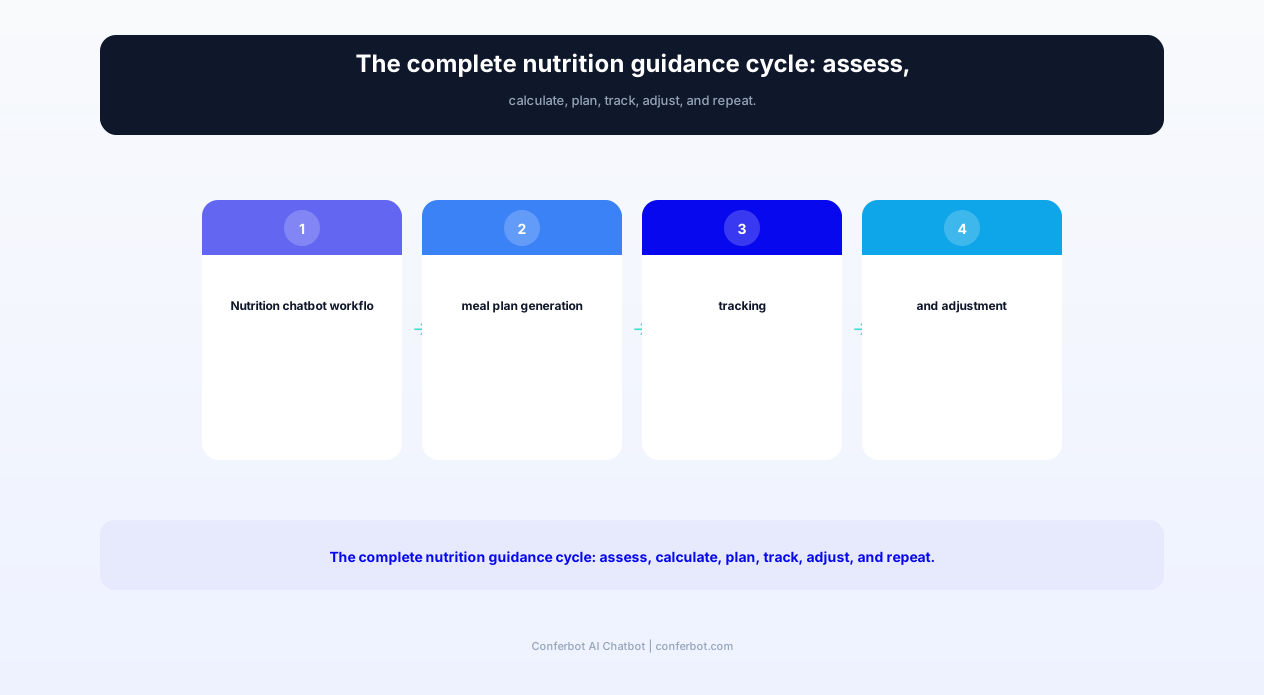
The most significant impact is on diet plan adherence - moving from 27% to 68% at 30 days. This improvement comes from three mechanisms: personalization (plans match the user's actual preferences and lifestyle), convenience (adjustments and alternatives are available instantly via chat), and accountability (the tracking and check-in system creates gentle external accountability without human judgment). The combination of these three factors addresses the primary reasons people abandon diet plans: the plan is too restrictive, the plan does not fit their life, and there is no consequence for non-compliance.
Revenue Impact for Fitness Businesses
For gyms and fitness businesses, the nutrition chatbot creates multiple revenue streams:
- Retention improvement: Members using the nutrition bot retain at 84% vs. 68% at 6 months - each retained member is worth $390 in additional revenue over 6 months at $65/month. For a gym where 200 members engage with the bot, that is $12,480 in preserved revenue from retention alone.
- Supplement sales: Contextual supplement recommendations convert at 28% vs. 8% for generic promotions. A gym selling supplements at $40 average order value with 200 active bot users generates $2,240/month in supplement revenue from chatbot recommendations alone.
- Premium service upsells: The chatbot identifies users who would benefit from human nutrition coaching and makes contextually relevant referrals to your in-house nutritionist or registered dietitian. These warm referrals convert at 34% vs. 5% for cold promotional offers.
- Membership tier upgrades: Gyms that include nutrition bot access in premium tiers see 18% higher upgrade rates from basic tiers, as the nutrition guidance becomes a compelling reason to pay more for membership.
For Nutrition Coaches and Dietitians
Independent nutrition coaches and registered dietitians use the chatbot to scale their practice. A solo nutrition coach managing 30 one-on-one clients at $200/month generates $6,000/month. The same coach, using the chatbot for meal plan delivery and between-session support, can effectively serve 100+ clients at $100/month (lower price point enabled by chatbot automation), generating $10,000+/month while reducing their per-client time commitment by 60%. The chatbot handles the routine work (plan delivery, tracking, recipe suggestions) while the coach focuses on high-value activities (initial consultations, complex adjustments, behavioral coaching).
Connect nutrition data with fitness tracking for a complete member experience through Conferbot's API integration, correlating nutrition compliance with training performance and body composition changes.
Handling Dietary Restrictions: From Allergies to Ethical Choices
In 2026, 43% of consumers follow some form of dietary restriction - making restriction handling a non-negotiable capability for any nutrition guidance system. The chatbot manages 20+ dietary patterns with absolute accuracy, ensuring every recommendation is safe, appropriate, and enjoyable for the user. Here is how the system handles the most common dietary requirements.
Food Allergies and Intolerances
Food allergies are safety-critical - the chatbot treats them with the highest priority. When a user declares an allergy (nuts, shellfish, dairy, eggs, soy, wheat/gluten), every recipe, meal suggestion, and food recommendation is filtered to exclude not only the allergen itself but common cross-contamination risks and hidden sources. For example, a user with a tree nut allergy will never receive recommendations containing almond flour, cashew butter, walnut oil, or products commonly manufactured in facilities that process tree nuts. The bot also educates users about hidden allergen sources: "Note: many Asian sauces contain peanuts or sesame - always check labels when eating out."
Religious and Cultural Dietary Laws
The chatbot respects religious dietary requirements with full understanding of their nuances:
- Halal: Excludes pork and alcohol in all forms (including cooking wine), recommends halal-certified meat sources, and is aware of gelatin source concerns in supplements and processed foods.
- Kosher: Understands meat/dairy separation, excludes non-kosher animals (shellfish, pork), and does not recommend meals combining meat and dairy. Aware of Sabbath meal preparation needs.
- Hindu vegetarian: Excludes meat, fish, and eggs (for those who exclude eggs), with awareness that some Hindu dietary practices vary by region and family tradition. The bot asks for specifics rather than assuming.
- Fasting periods: During Ramadan, Lent, or other fasting periods, the bot adjusts meal timing and composition to support the user's religious observance while maintaining nutritional adequacy - higher calorie density in eating windows, adequate hydration reminders, and appropriate suhoor/iftar meal composition.
Ethical and Lifestyle Choices
Vegetarian, vegan, pescatarian, and plant-based users receive plans that meet all nutritional requirements without animal products (or with the specific subset they include). The bot pays particular attention to nutrients that require conscious management on plant-based diets: vitamin B12, iron (and vitamin C pairing for absorption), complete protein combinations, omega-3 fatty acids (ALA/DHA/EPA sources), calcium, zinc, and iodine. For new vegans or vegetarians, the bot provides transition guidance: "Protein sources that will help you hit 150g daily on a vegan diet: tofu (20g per serving), tempeh (18g), seitan (25g), lentils (18g), chickpeas (15g), and protein powder (25g)."
Medical Dietary Requirements
The chatbot handles medically-directed dietary patterns with appropriate disclaimers:
- Diabetic-friendly: Low glycemic index focus, controlled carbohydrate portions, balanced meals for stable blood sugar. The bot recommends professional medical guidance alongside its suggestions.
- Low FODMAP: For IBS management, the bot knows which foods are high and low FODMAP and can create elimination-phase meal plans that are both nutritionally complete and FODMAP-compliant.
- Renal diet: Potassium, phosphorus, and sodium awareness for kidney health. The bot flags this as a medical condition requiring dietitian oversight and positions itself as a compliance tool alongside professional care.
- Anti-inflammatory: Emphasizes omega-3 sources, colorful vegetables, whole grains, and excludes processed foods, added sugars, and refined oils. Popular with athletes managing chronic inflammation or joint issues.
For nutrition coaching businesses serving diverse populations, the restriction handling system ensures every client - regardless of dietary requirements - receives practical, safe, and enjoyable meal plans that meet their nutritional targets within their constraints.
Setup Guide: Deploying the Nutrition Chatbot for Your Business
Setting up the nutrition plan creator chatbot requires configuring the assessment flow, recipe database, supplement catalog, and integration connections. The entire process takes 60-90 minutes depending on the complexity of your nutritional offerings. Here is the complete implementation guide.
Step 1: Define Your Nutrition Approach (10 Minutes)
Configure the chatbot's nutritional philosophy to match your brand and methodology. Options include: flexible dieting/IIFYM (If It Fits Your Macros - the most widely applicable approach), specific diet frameworks (keto, paleo, Mediterranean, whole-food plant-based), intuitive eating principles, or a hybrid approach. This setting determines how the bot frames recommendations - a keto-focused nutritionist would configure the bot to recommend high-fat, low-carb meal plans, while a flexible dieting coach would configure macro targets with no food group restrictions.
Step 2: Configure the Assessment Flow (15 Minutes)
Customize the intake assessment questions for your audience. The default flow covers physical stats, activity level, goals, restrictions, preferences, and lifestyle factors. Add or remove questions based on your needs - a sports nutrition practice might add questions about training periodization and competition schedule, while a weight loss clinic might add questions about dieting history and emotional eating patterns. Adjust the language and tone for your demographic: a Gen-Z fitness brand uses different communication than a clinical nutrition practice.
Step 3: Recipe Database Setup (20 Minutes)
The template ships with 2,000+ recipes covering all major dietary patterns. Review and customize this database for your brand: remove recipes that do not align with your nutritional philosophy, add your own signature recipes or those from your published content, and ensure recipe variety covers your audience's preferences. For nutrition coaches who sell recipe books or meal plan products, integrate your proprietary recipes into the chatbot's recommendation engine - this creates a conversational upsell path from free recipe suggestions to premium recipe collection purchases.
Step 4: Supplement Catalog Configuration (10 Minutes)
If your business sells or recommends supplements, configure the supplement recommendation engine. For each supplement, define: what it does, who it benefits, recommended dosage, when to take it, and any contraindications or interactions. The bot recommends supplements based on the user's goals, dietary gaps, and training demands - only when genuinely relevant, not as a blanket upsell. For businesses partnering with supplement brands, configure purchase links that connect the recommendation directly to the product page.
Step 5: Integration Setup (10 Minutes)
Connect the chatbot to your existing systems:
- Fitness tracking: Connect to your gym's member management system or fitness tracker chatbot to align nutrition recommendations with training data
- Booking system: If you offer nutrition consultations, connect the calendar integration for seamless referral booking from chatbot to human nutritionist
- E-commerce: If you sell supplements, meal prep services, or recipe products, connect product catalogs for contextual sales
- Wearable data: Import calorie burn data from connected fitness devices to adjust daily targets based on actual activity
Step 6: Deploy and Promote (10 Minutes)
Launch the chatbot on your website and WhatsApp channels. For fitness facilities, promote the nutrition bot to existing members as a value-added service: "New for all members - free personalized nutrition guidance. Message our nutrition bot to get your custom meal plan." For nutrition coaching businesses, use the chatbot as a lead generation tool: free initial assessment and basic plan, with premium features (weekly adjustments, recipe library access, supplement guidance) available as a paid subscription that feeds into your coaching pipeline.
The nutrition chatbot begins generating value immediately upon deployment - every user interaction produces either direct revenue (supplement sales, premium upgrades) or indirect revenue (retention improvement, satisfaction increase, referral generation).
businesses worldwide use Conferbot templates to automate conversations
Evidence-Based Supplement Guidance: What Works, What Does Not
The supplement industry generates $50 billion annually in the United States alone, yet most consumers lack the knowledge to evaluate which products offer genuine value for their specific situation versus which are marketing-driven placebo. The chatbot provides evidence-based supplement guidance - recommending only products with strong scientific support for the user's specific goals, and explicitly identifying supplements that lack evidence or are inappropriate for their situation.
How Supplement Recommendations Work
The bot recommends supplements based on three criteria: the user's stated fitness goal, identified dietary gaps (from their meal plan and tracking data), and the strength of scientific evidence for the supplement's claimed benefits. Every recommendation includes: what the supplement does (mechanism of action in plain language), who it benefits (and who it does not), recommended dosage and timing, expected effects and timeline, and any relevant interactions or contraindications. The bot never recommends supplements as a substitute for whole food nutrition - it positions them as gap-fillers for specific situations where dietary intake alone may be insufficient.
Evidence-Based Supplement Categories
- Strong evidence (recommended when appropriate): Creatine monohydrate (strength and muscle gains), protein supplements (convenience for hitting protein targets), vitamin D (for deficient individuals - common in northern climates), omega-3 fatty acids (for individuals not eating fatty fish regularly), caffeine (performance enhancement). These supplements have extensive peer-reviewed research supporting their efficacy.
- Moderate evidence (situational recommendation): Beta-alanine (endurance at specific intensities), citrulline malate (blood flow and pump), ashwagandha (stress and recovery), melatonin (sleep onset for shift workers or jet lag), magnesium (for deficient individuals, common in athletes). The bot recommends these when the user's specific situation aligns with the research population.
- Limited or no evidence (not recommended): BCAAs (unnecessary if protein intake is adequate), fat burners (minimal effect beyond caffeine content), testosterone boosters (no meaningful effect in healthy individuals), most proprietary blends (underdosed ingredients, inflated claims). The bot educates users about why these products are popular despite limited evidence - typically effective marketing rather than effective ingredients.
Contextual Recommendation Examples
The power of chatbot-delivered supplement guidance is contextual relevance. Instead of generic supplement lists, users receive recommendations specific to their data:
- "You are consistently hitting only 120g of your 160g protein target through food. A whey protein shake post-workout would add 25-30g and help you close that gap without additional meal prep. Here is what to look for when choosing a protein powder..."
- "Based on your location (northern latitude) and the time of year, you may benefit from vitamin D3 supplementation. Most adults in your area are deficient during winter months. 2,000-4,000 IU daily with a fat-containing meal is the standard recommendation. Consider getting levels tested at your next doctor visit."
- "You mentioned wanting to improve your squat strength. Creatine monohydrate is the most well-researched performance supplement available - 5g daily improves strength output by 5-10% on average. No cycling needed, no loading phase necessary, and it costs less than $0.10/day. Here is what the research shows..."
Safety and Disclaimer Framework
The chatbot includes comprehensive safety disclaimers for supplement recommendations. It advises users to consult healthcare providers before starting supplements if they are pregnant, nursing, taking medication, or have medical conditions. It never recommends dosages above established upper limits, warns about potential interactions with common medications (blood thinners and omega-3, for example), and includes links to third-party testing certifications (NSF, Informed Sport) that verify product purity. This responsible approach protects both the user and the business deploying the chatbot from liability associated with supplement recommendations.
ROI for Fitness Businesses: Revenue Streams and Retention Impact
The nutrition plan creator chatbot generates return on investment through four distinct channels: member retention improvement, supplement and product sales, premium service upsells, and competitive differentiation. Here is the detailed financial case for fitness businesses deploying nutrition chatbot technology in 2026.
Retention Revenue
The strongest financial argument for the nutrition chatbot is its impact on member retention. Gym members who receive nutrition support retain at 84% at 6 months compared to 68% for members without nutrition guidance - a 16 percentage point improvement. For a gym with 500 members where 200 engage with the nutrition bot, the retention improvement preserves approximately 32 memberships that would otherwise be lost. At $65/month average value over 6 months, that is $12,480 in preserved revenue per semi-annual cycle - $24,960 annually from retention improvement alone.
Product Sales Revenue
Contextual supplement and nutrition product recommendations convert at 3.5x the rate of generic promotional emails (28% vs. 8%). For a gym with an in-house supplement shop doing $3,000/month in sales, the chatbot's targeted recommendations can increase this to $8,400/month - an additional $64,800 annually. The key is contextual relevance: a recommendation that says "You are consistently 40g short of your protein target - this protein powder would solve that for $0.80/serving" converts dramatically better than a generic "10% off all supplements this month" promotion.
Premium Service Upsells
The chatbot identifies users who need deeper nutrition support than the automated system provides - complex medical dietary requirements, significant eating behavior challenges, competition preparation - and makes warm referrals to your human nutrition coaching team. These referrals convert at 34% vs. 5% for cold marketing because the chatbot has already established the user's need and trust. A gym charging $150/month for nutrition coaching that converts 10 chatbot referrals per month generates an additional $18,000/month in coaching revenue.
Competitive Differentiation
In a market where most gyms compete on equipment, price, and location, offering integrated nutrition guidance creates a compelling differentiator that attracts health-conscious members willing to pay premium membership rates. Gyms that include nutrition bot access in premium tiers see 18% higher upgrade rates and can justify $10-20/month higher pricing for nutrition-inclusive tiers. For a 500-member gym moving 50 members from Standard ($55/month) to Premium-with-Nutrition ($75/month), that is $12,000/year in direct tier upgrade revenue.
Complete Annual ROI Summary
| Revenue Source | Conservative Estimate | Optimistic Estimate |
|---|---|---|
| Retention improvement | $24,960 | $49,920 |
| Supplement/product sales increase | $32,400 | $64,800 |
| Premium service upsells | $36,000 | $72,000 |
| Tier upgrade revenue | $6,000 | $12,000 |
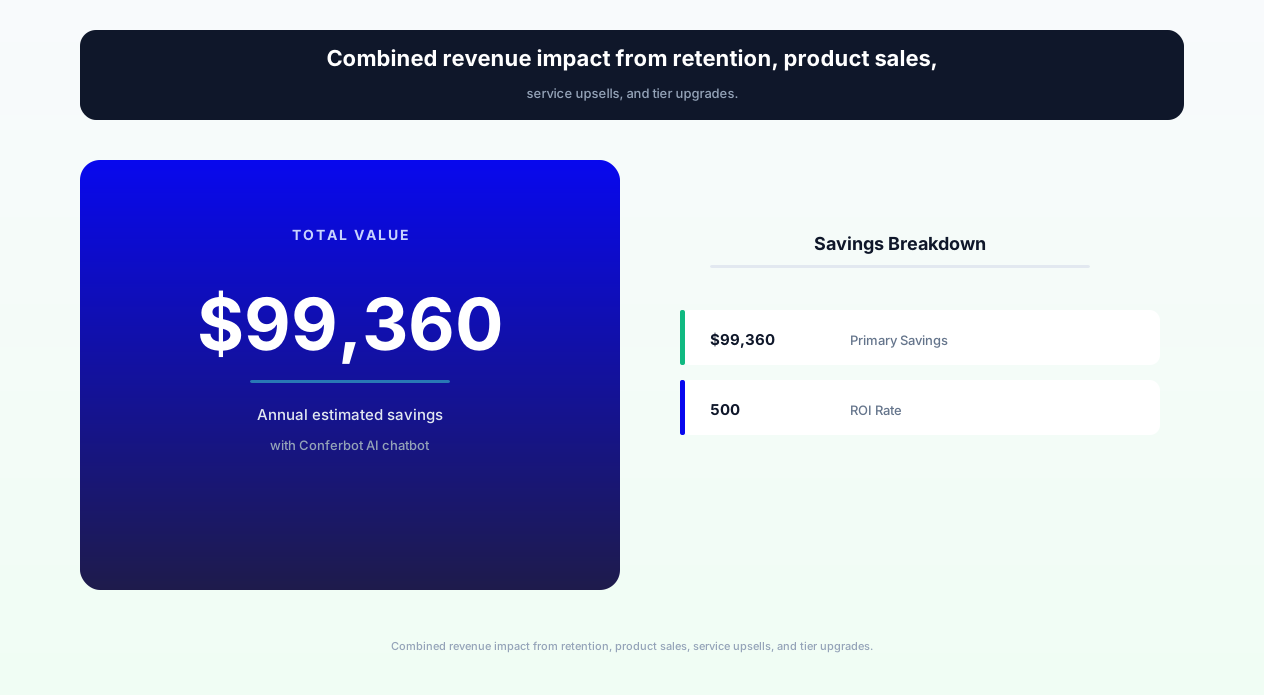
| Total annual impact | $99,360 | $198,720 |
Estimates based on a 500-member gym with 40% chatbot adoption (200 active users).
The nutrition plan creator chatbot is among the highest-ROI deployments available to fitness businesses because it simultaneously drives retention (the most valuable metric for recurring-revenue businesses), creates direct sales revenue, and enables premium pricing - all from a single automated system that requires no additional staff hours to operate.
Nutrition Plan Creator FAQ
Everything you need to know about chatbots for nutrition plan creator.
Why Use a Template vs Building from Scratch?
Templates give you a proven starting structure instead of a blank canvas.
| Factor | Conferbot Template | Build from Scratch | Hire a Developer |
|---|---|---|---|
| Time to deploy | 10 minutes | 2-8 hours | 2-6 weeks |
| Cost | Free | Your time | Custom dev quote |
| Proven flows | Yes, pre-built | No | Depends |
| Updates included | Automatic | Manual | Paid |
| Multi-channel | 8+ channels | 1 channel | Extra cost |
| Analytics | Built-in | Must build | Extra cost |
Related Fitness And Sports Templates
Explore more chatbot templates like this one





Learn More About Chatbots
Go deeper on how fitness and sports chatbots work and how to pick the right builder.
Ready to Deploy Nutrition Plan Creator?
Start with a free-forever plan. No credit card required.