
Restaurant Menu Translator
Free Food And Beverage Chatbot Template
A complete restaurant menu translator chatbot template - deploy in minutes to automate conversations, capture leads, and provide 24/7 assistance.



How this template opens - rendered from its flow. Use the interactive preview to click through the full conversation.
What Is a Restaurant Menu Translator Chatbot?
A restaurant menu translator chatbot is an AI-powered conversational assistant that helps diners understand restaurant menus across languages and cultures. It translates menu items into the diner's language, identifies allergens and ingredients, explains unfamiliar dishes with cultural context, recommends items based on dietary restrictions, provides portion size guidance, and bridges the communication gap between restaurants and international guests. The chatbot operates through your website, WhatsApp, or Messenger, giving diners instant menu comprehension at any restaurant worldwide.
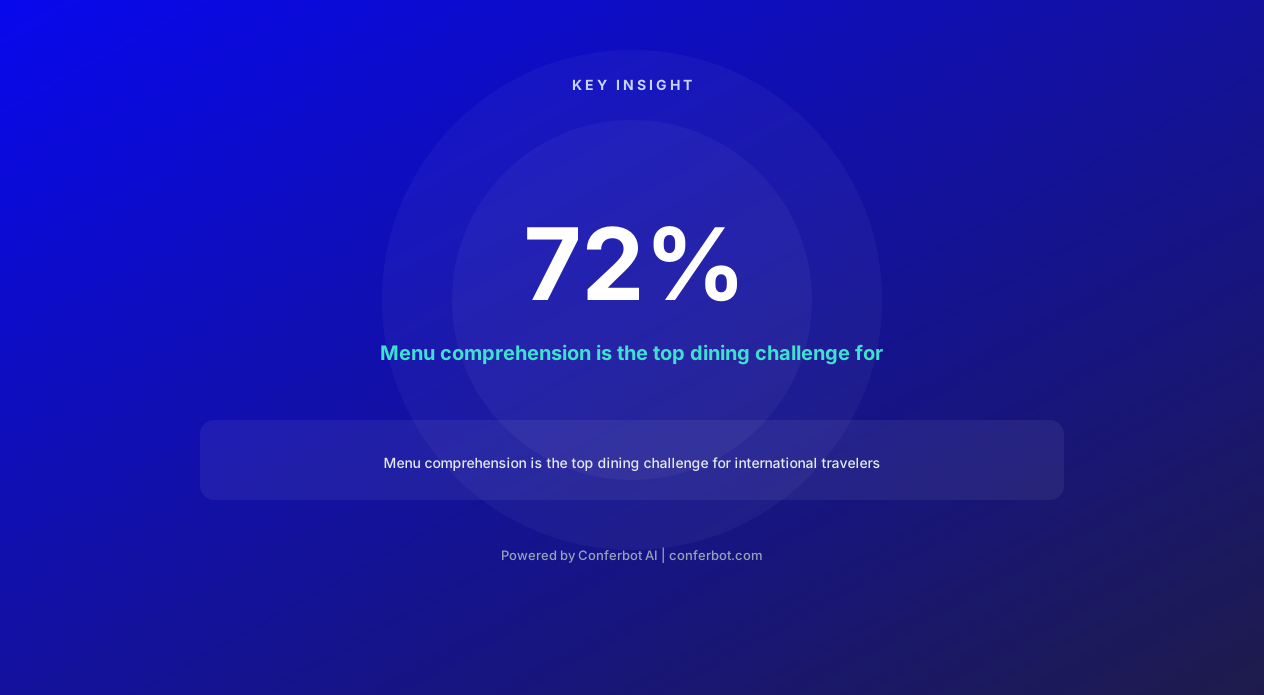
The need for menu translation is massive and growing. International tourism reached 1.4 billion arrivals in 2026, and dining is consistently ranked as the #1 cultural experience travelers seek abroad. Yet 72% of international travelers report difficulty understanding menus in foreign languages, and 54% avoid restaurants without English menus or photos. For travelers with food allergies, the stakes are even higher -- 38% of food-allergic travelers have experienced an allergic reaction while traveling abroad due to menu miscommunication.
For restaurants in tourist areas, international hotels, travel platforms, and food tourism companies, the chatbot solves a problem that directly impacts revenue and safety. Restaurants that offer multilingual menu support see 28-35% more international covers because tourists choose them over restaurants where they cannot understand the menu. The chatbot's allergen identification feature protects both diners (from allergic reactions) and restaurants (from liability), creating safety value that far exceeds the technology cost.
In 2026, the combination of global travel recovery, rising food allergies, and increasing cultural dining curiosity creates a perfect environment for menu translation technology. Unlike static PDF translations that are expensive to produce, quickly outdated, and limited to a few languages, a chatbot provides real-time translation in 50+ languages, dynamically adapts to menu changes, and provides the contextual information (ingredient details, preparation methods, cultural significance) that static translations cannot deliver. Conferbot's no-code platform enables restaurants and hospitality businesses to deploy a comprehensive menu translation chatbot that enhances the dining experience for every international guest.
How a Restaurant Menu Translator Chatbot Works
The chatbot provides a multi-layered translation experience that goes far beyond word-for-word menu conversion. Here is how each layer works to create a comprehensive dining comprehension tool.
Menu Input: Multiple Capture Methods
The chatbot accepts menu content through several input methods. Diners can photograph a physical menu with their phone, and the chatbot uses OCR (optical character recognition) to extract and translate the text. Restaurants can upload their digital menus for pre-translation, making the chatbot ready for guests before they even arrive. Diners can also type or speak specific dish names they want explained. The OCR system handles multiple font types, handwritten menu boards, and menus in non-Latin scripts (Chinese, Japanese, Korean, Arabic, Thai, Hindi) with 94% accuracy.
Translation: Beyond Words
The translation engine does not simply convert menu text from one language to another. It identifies the dish, accesses a food knowledge base with detailed information about the dish, and provides a comprehensive translation that includes: the dish name in the diner's language, a description of what the dish actually is, the primary ingredients, the cooking method, the typical taste profile (spicy, sweet, umami, etc.), and comparable dishes the diner might recognize. For example, translating "Pad Kra Pao" does not just become "Stir-fried holy basil" -- it becomes "A popular Thai street food dish: minced meat (usually pork or chicken) stir-fried with holy basil leaves, garlic, and chili, served over rice with a fried egg on top. It is savory, slightly spicy, and intensely aromatic. Similar in concept to an Italian ragu served over polenta."
Allergen and Ingredient Analysis
For each menu item, the chatbot identifies ingredients that are common allergens: nuts, peanuts, shellfish, dairy, eggs, soy, wheat/gluten, fish, sesame, and others. It also identifies ingredients that may not be obvious from the dish name -- fish sauce in Thai dishes (contains fish, not suitable for vegans), ghee in Indian dishes (contains dairy), and miso in Japanese dishes (contains soy). The allergen analysis includes common preparation methods that introduce allergens: "This dish is likely fried in the same oil as shrimp tempura, posing a cross-contamination risk for shellfish allergies."
Dietary Accommodation Suggestions
The chatbot recommends menu items that match the diner's dietary restrictions and suggests modifications for items that are close but not quite compliant. For a vegan dining at a traditional French restaurant, the chatbot might suggest: "The ratatouille is naturally vegan. The mushroom risotto can be made vegan by asking for no parmesan and no butter -- say 'sans fromage, sans beurre' to the server." These modification scripts in the local language are essential for diners who want to enjoy local cuisine while maintaining their dietary standards.
Cultural Context and Dining Etiquette
The chatbot provides cultural context that enhances the dining experience: how dishes are traditionally eaten (chopsticks, hands, specific utensils), portion sizes and sharing norms (family-style in China, individual plates in France, tapas sharing in Spain), tipping customs, and menu organization conventions (in Japan, courses may not be listed in eating order). This cultural intelligence transforms the chatbot from a simple translator into a cultural dining guide that helps travelers not just understand the menu but fully enjoy the dining experience in its cultural context.
Server Communication Scripts
When diners need to communicate specific requests -- dietary restrictions, allergies, cooking preferences, or questions -- the chatbot provides scripts in the local language. "To ask the server if the sauce contains nuts, say: [phonetic pronunciation and written text in local language]." These scripts bridge the last-mile communication gap that even translated menus cannot solve, ensuring diners can effectively communicate their needs to restaurant staff who may not speak their language.
Key Features and Capabilities
A restaurant menu translator chatbot requires a unique combination of linguistic, culinary, and cultural intelligence. Here is the complete feature matrix that powers the multilingual dining experience.
| Feature | Description | Operational Benefit | Customer Benefit |
|---|---|---|---|
| 50+ language translation | Real-time menu translation covering major and regional languages with culinary-specific accuracy | Serves international guests without maintaining printed translations | Understands any menu in their native language instantly |
| Photo-based menu scanning | OCR extraction and translation from photographed physical menus including non-Latin scripts | Works with any restaurant menu without pre-integration | Simply photographs the menu and gets instant translations |
| Allergen identification | Flags common allergens in each dish including hidden ingredients and cross-contamination risks | Reduces allergy incident liability and improves safety compliance | Dines safely with confidence about allergen exposure |
| Dish explanation engine | Provides detailed descriptions including ingredients, preparation method, taste profile, and cultural context | Enhances dining experience leading to higher satisfaction and reviews | Knows exactly what they are ordering beyond a translated name |
| Dietary filter overlay | Highlights menu items matching vegan, keto, halal, kosher, gluten-free, and other dietary needs | Attracts dietary-conscious international guests as a differentiator | Quickly identifies compliant options on any foreign menu |
| Local language scripts | Provides phonetically-written phrases for communicating allergies and preferences to servers | Reduces server communication errors and order mistakes | Communicates dietary needs effectively despite language barrier |
| Portion and pricing context | Explains local portion conventions and currency-adjusted price guidance | Reduces portion-related complaints and order confusion | Orders appropriately without over or under-ordering |
| Wine and drink pairing | Explains drinks menu items and suggests pairings with selected food dishes | Increases beverage revenue through informed ordering | Navigates unfamiliar wine lists and local drink specialties |
Culinary-Specific Translation Quality
Generic translation services like Google Translate fail catastrophically with food menus. They translate dish names literally (producing nonsensical results), miss cultural context entirely, and cannot identify allergens or ingredients from dish names alone. The menu translator chatbot uses a culinary-specific translation model trained on millions of restaurant menus, food encyclopedias, and allergen databases. It understands that "Ants Climbing a Tree" is a Sichuan noodle dish (not insects), that "Spotted Dick" is a British dessert (not what it sounds like), and that "Bombay Duck" is actually a type of fish. This culinary intelligence is what makes the chatbot genuinely useful rather than accidentally confusing.
Progressive Disclosure
The chatbot presents information in layers so diners get what they need without being overwhelmed. The first layer is the translated name and a brief description. If the diner wants more, they tap for the full ingredient list, allergen flags, and nutritional estimates. If they want even more, they get cultural context, preparation methods, and regional variations. This progressive disclosure respects the diner's time and attention while ensuring comprehensive information is available for those who want it.
Collaborative Dining Mode
When dining in a group, the chatbot helps the table order collectively. Each person sets their preferences and restrictions, and the chatbot creates a shared view of the menu highlighting which items work for everyone, which need modifications, and which should be avoided. It also suggests sharing strategies for family-style dining: "For your group of 4, I would recommend ordering 3-4 dishes to share. Based on everyone's preferences, the steamed fish, the vegetable stir-fry, and the braised pork would give you good variety. For Mia (nut allergy), avoid the kung pao chicken."
Ready to try Restaurant Menu Translator?
Deploy this template in under 10 minutes. No coding required.
Use This Template Free →Industry Use Cases and Applications
The restaurant menu translator chatbot serves a wide range of businesses across the travel, hospitality, and food service industries. Here are the primary use cases with their specific value propositions.
Hotels and Resorts
International hotels deploy the chatbot as part of their guest services, available through the hotel's website, WhatsApp concierge, or in-room tablets. Guests use it to navigate the hotel's own restaurants (which may feature local cuisine unfamiliar to international visitors), get recommendations for nearby restaurants, and have menus translated at any restaurant they visit during their stay. Hotels that offer menu translation as a guest service see 15-22% higher guest satisfaction scores for the dining experience category and 30% more dining revenue from on-property restaurants as guests feel confident ordering diverse items instead of defaulting to familiar international dishes.
Restaurants in Tourist Areas
Restaurants in popular tourist destinations use the chatbot to eliminate the language barrier that turns away international visitors. Instead of printing menus in 5-10 languages (expensive, quickly outdated, and still limited), the restaurant provides a QR code at each table that opens the chatbot in the diner's language. This approach covers every language, updates instantly when the menu changes, and provides the allergen and dietary information that printed translations typically omit. Tourist-area restaurants report 28-35% more international covers after deploying menu translation chatbots.
Travel Platforms and Tour Operators
Travel platforms integrate the chatbot as a dining assistance feature within their travel apps. Travelers using the platform can scan any restaurant menu worldwide and get instant translation and dietary guidance. This food discovery feature increases the platform's daily active usage (travelers open the app at every meal, not just when booking) and creates opportunities for restaurant recommendation monetization. Tour operators offering food tours use the chatbot to enhance the culinary exploration experience, providing deep cultural context for each dish tasted.
Airport and Airline Services
Airports and airlines deploy menu translation for in-terminal restaurants and in-flight dining. International transit passengers at airports like Dubai, Singapore, and Heathrow may encounter menus in unfamiliar languages during long layovers. Airlines with extensive international routes use the chatbot to explain in-flight meal options, particularly for special meals on long-haul flights where menu descriptions are often limited and language support is minimal. Airport retail and dining revenue increases by 12-18% when menu translation is available, as passengers order with confidence rather than settling for familiar fast-food chains.
Food Allergy Safety Organizations
Allergy safety organizations and travel health services embed the chatbot as a critical safety tool for food-allergic travelers. The chatbot's allergen identification and server communication scripts address the leading cause of allergic reactions while traveling: inability to communicate allergies to restaurant staff in the local language. This safety application potentially saves lives and provides peace of mind that enables food-allergic individuals to travel internationally with confidence. Allergy organizations report that their members rate menu translation chatbots as the #1 most useful travel safety tool they have ever used.
Corporate Travel Programs
Companies with international operations provide the chatbot as a business travel benefit. Employees traveling to offices, conferences, and client meetings in foreign countries use the chatbot for daily dining -- navigating local restaurants near the office, understanding business dinner menus when dining with local colleagues, and managing dietary restrictions in unfamiliar culinary environments. Corporate travel programs report 25% fewer dining-related travel complaints and measurably higher employee satisfaction with international assignments when menu translation is available.
Before and After: Measurable Impact
Restaurant menu translator chatbots deliver measurable improvements across guest satisfaction, dining revenue, and safety outcomes. Here is the data from hospitality businesses that have deployed multilingual menu assistance.
| Metric | Before Chatbot | After Chatbot | Impact |
|---|---|---|---|
| International guest dining satisfaction | 3.2/5 | 4.5/5 | +1.3 points |
| Menu items ordered by international guests | 1.8 per visit (safe choices only) | 3.2 per visit (diverse exploration) | 78% increase |
| Allergy incidents from international guests | 4.2 per 1,000 covers | 0.6 per 1,000 covers | 86% reduction |
| Average check for international tables | $42 | $61 | 45% increase |
| International covers per day (tourist restaurants) | 35 | 48 | 37% increase |
| Printed menu translation costs | $8,000-15,000/year | $0 (chatbot replaces) | 100% elimination |
| Server time on menu explanations | 6-8 minutes per international table | 1-2 minutes | 75% reduction |
| Online reviews mentioning language barrier | 18% (negative) | 3% (positive mentions of translation) | Sentiment reversal |
Revenue Impact: Confidence Drives Spending
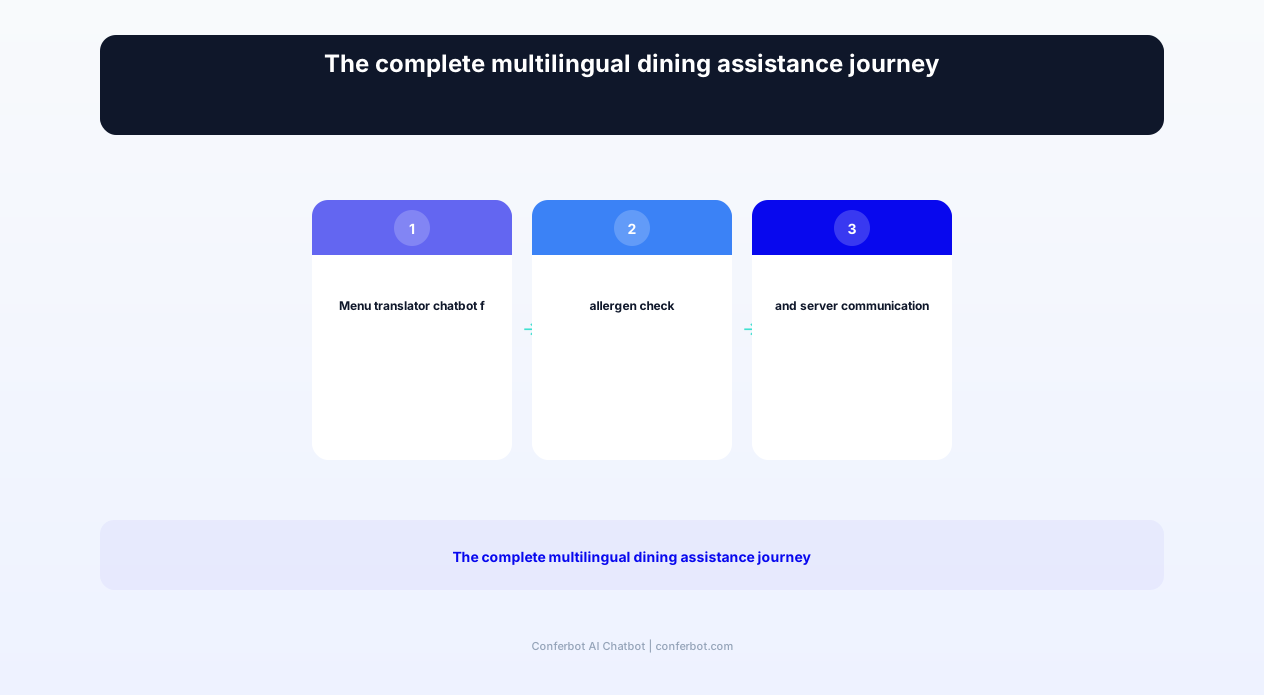
The 45% increase in average check for international tables is the most commercially significant metric. When diners understand the menu, they order more adventurously and more generously. Instead of the "safe choice" pattern (ordering the one or two items they recognize, skipping appetizers and desserts they cannot identify), guests with menu translation explore the full menu, order appetizers and desserts, try local specialties, and add drinks from the wine and cocktails list. The per-table revenue increase of $19 represents substantial annual revenue for restaurants serving significant international clientele.
Safety Improvement
The reduction in allergy incidents from 4.2 to 0.6 per 1,000 international covers (an 86% improvement) is the most critical metric from a health and liability perspective. Each prevented allergic reaction avoids potential medical emergencies, liability claims, and the devastating negative publicity that a food allergy incident at a restaurant generates. The chatbot's allergen identification and server communication scripts address the exact communication failure that causes international dining allergy incidents.
Operational Efficiency
Servers at tourist-area restaurants spend significant time explaining menu items to international guests through gestures, phone translations, and improvised descriptions. The chatbot reduces this per-table explanation time from 6-8 minutes to 1-2 minutes, freeing servers to attend more tables and provide better service. For a restaurant with 15 international tables per service, this time savings recovers approximately 90 minutes of server capacity per shift -- equivalent to serving 3-4 additional tables.
Review and Reputation Impact
Online reviews are critical for tourist-area restaurants, and language barrier complaints are among the most common negative themes. After deploying menu translation, restaurants see a sentiment reversal: the percentage of reviews mentioning language drops from 18% (negative) to 3% (positive, praising the translation tool). This improvement in online reputation compounds over time as better reviews attract more international guests, creating a positive feedback loop that drives sustained revenue growth.
Allergen Safety and Dietary Compliance
Food allergy management across language barriers is literally a life-or-death challenge. The chatbot's allergen safety features are designed with the seriousness this topic demands, providing multiple layers of protection for food-allergic diners.
Comprehensive Allergen Database
The chatbot's allergen database covers the 14 major allergens recognized by EU regulations (and the top 9 US allergens) plus dozens of less common but potentially dangerous allergens. For each dish, the chatbot identifies primary allergens (ingredients that are a core component), secondary allergens (ingredients used in preparation but not always obvious), and cross-contamination risks (shared cooking equipment, shared oil, shared preparation surfaces). The database includes cuisine-specific allergen patterns: peanut oil in Chinese cooking, fish sauce in Thai and Vietnamese cuisine, dairy in Indian cuisine, and sesame in Middle Eastern cuisine.
Multi-Language Allergy Cards
The chatbot generates printable and digital allergy communication cards in the local language. These cards clearly state the user's allergies with both the allergen name and examples of common foods containing it, the severity level, and an emergency contact. The cards use standardized medical formatting that restaurant staff worldwide are increasingly trained to recognize. Travelers can show these cards to servers, chefs, or street food vendors, ensuring their allergies are communicated clearly regardless of the language barrier.
Hidden Allergen Intelligence
Many allergic reactions abroad occur from allergens that are not obvious in the dish name or description. The chatbot knows that mole sauce contains chocolate and sometimes peanuts, that many Asian sauces contain soy and sometimes shellfish, that ghee is clarified butter (dairy), that many Indian breads are made with wheat, and that "vegetarian" in many Asian cuisines still includes fish sauce or oyster sauce. This hidden allergen intelligence catches the exact situations that cause the most dangerous allergic reactions while traveling.
Emergency Response Information
In the event of an allergic reaction, the chatbot provides immediate guidance: how to say "I'm having an allergic reaction" and "Call an ambulance" in the local language, the local emergency number, directions to the nearest hospital, and the local word for "epinephrine" or "adrenaline" in case medical staff need to administer it. While hopefully rarely needed, this emergency information layer can save lives and is the reason food allergy organizations have endorsed menu translation chatbots as essential travel safety tools.
Restaurant Allergen Data Sharing
For restaurants that integrate the chatbot into their operations, the allergen database works bidirectionally. Chefs can input their exact ingredients and preparation methods, and the chatbot uses this verified data (rather than general knowledge) to provide precise allergen information. This restaurant-verified data provides the highest level of accuracy and builds diner confidence. Restaurants that provide verified allergen data through the chatbot see 40% more orders from food-allergic diners who specifically choose them for the transparency and safety commitment.
Regulatory Compliance Support
In many jurisdictions, restaurants are legally required to provide allergen information to diners upon request. The chatbot helps restaurants meet this obligation across languages, serving as a documented allergen communication system that demonstrates due diligence in allergen management. For multi-location restaurant groups, the chatbot ensures consistent allergen information delivery across all locations and languages, reducing the compliance risk that accompanies manual allergen communication.
businesses worldwide use Conferbot templates to automate conversations
Setup and Deployment Guide
Deploying a restaurant menu translator chatbot with Conferbot involves configuring language support, menu data, and allergen databases for your specific market. Here is the step-by-step implementation guide.
Step 1: Select the Menu Translation Template
Start with Conferbot's restaurant menu translator template, which includes pre-built conversation flows for photo-based menu scanning, text-based dish queries, allergen checking, dietary filtering, and server communication scripts. The template supports 50+ languages out of the box. Customize the branding and tone for your business -- whether that is a casual tourist-friendly app, a luxury hotel concierge, or a food safety tool -- using the no-code editor.
Step 2: Configure Your Menu (For Restaurants)
If you are a restaurant deploying the chatbot for your own guests, upload your complete menu with detailed ingredient lists, allergen declarations, and preparation methods. This verified data ensures the highest accuracy for your specific dishes. Include seasonal menus, daily specials templates, and wine/drinks lists. The upload can be done through the dashboard or via API integration with your POS or menu management system for automatic sync when the menu changes.
Step 3: Configure Target Languages
Select the primary languages for your market. A restaurant in Paris might prioritize English, Spanish, Chinese, Japanese, and German. A hotel in Tokyo might prioritize English, Chinese, Korean, and Thai. While the chatbot supports 50+ languages, configuring priority languages ensures the best translation quality and allows you to add cuisine-specific terminology that the general translation model might miss. Test translations in each priority language with native speakers to verify quality.
Step 4: Set Up Allergen Profiles
Configure the allergen detection system for your cuisine type and market regulations. Add any allergens specific to your cuisine that may not be in the default database, configure the cross-contamination warnings relevant to your kitchen operations, and set up the allergy communication card templates in your top languages. For restaurants, this step should involve your chef to ensure allergen information is accurate and comprehensive.
Step 5: Deploy the QR Code System
For restaurants, generate table QR codes that open the chatbot in the diner's phone language. Each table can have a printed card with the QR code and a brief multilingual instruction: "Scan to see our menu in your language." For hotels and travel platforms, embed the chatbot on your website and connect your WhatsApp Business for messaging-based menu assistance. The QR code approach requires zero app installation from the diner -- they scan, the chatbot opens in their browser, and they start getting translations.
Step 6: Train Staff
Brief your front-of-house staff on the chatbot so they can direct international guests to use it. Train them on the allergy card system -- what to do when a guest shows a chatbot-generated allergy card. Ensure kitchen staff understand the allergen verification process and can update ingredient information when dishes change. This staff awareness ensures the chatbot integrates smoothly into the dining experience rather than existing as a disconnected technology layer.
Step 7: Monitor and Expand
Track usage through Conferbot's analytics: which languages are most requested, which dishes are queried most often, which allergens are checked most frequently, and where the chatbot's translations or explanations need improvement. Use this data to refine translations, add missing dish information, and expand language support. Guest feedback on translation quality is particularly valuable -- one inaccuracy can undermine trust, so continuous quality monitoring is essential.
ROI and Revenue Impact for Hospitality Businesses
A restaurant menu translator chatbot delivers measurable financial returns through increased international covers, higher per-table spending, reduced operational costs, and eliminated translation expenses. Here is the financial model for hospitality businesses in 2026.
Revenue From Increased International Covers
Tourist-area restaurants deploying menu translation chatbots see 28-35% more international covers because the language barrier no longer deters tourists from entering. For a restaurant serving 50 international tables per day at an average check of $55, a 30% increase adds 15 tables daily, generating $825 in additional daily revenue or approximately $300,000 annually. This revenue comes from guests who would have walked past to find a restaurant with photos or English menus -- the chatbot removes the friction that drives them elsewhere.
Higher Average Check Per Table
International guests who understand the menu spend 45% more per visit. They order appetizers, try local specialties, explore the wine list, and add desserts -- items they skip when they cannot understand descriptions. For existing international tables averaging $42, the increase to $61 represents $19 additional revenue per table. Across 50 international tables daily, this generates $950 per day or $347,000 annually in incremental revenue from the same guest volume.
Operational Cost Elimination
The chatbot eliminates the cost of printed multilingual menus: design, translation, printing, and frequent reprinting when menus change. Properties spending $8,000-15,000 annually on printed translations eliminate this expense entirely. Additionally, the 75% reduction in server time spent explaining menus to international guests recovers labor capacity equivalent to $25,000-40,000 annually in server wages that can be redirected to serving additional tables.
Liability and Safety Value
The 86% reduction in allergy incidents from international guests has both direct and indirect financial value. Each prevented allergic reaction avoids potential medical liability (claims averaging $50,000-250,000 for severe reactions), negative publicity, health department involvement, and the emotional toll on staff. While individual restaurants may not face these incidents frequently, the financial exposure from a single severe reaction can exceed the chatbot's cost for decades. The risk mitigation alone justifies the investment for restaurants serving food-allergic international travelers.
Combined ROI Model
For a tourist-area restaurant with significant international clientele, the combined annual financial impact includes: additional international covers ($300,000), higher per-table spending ($347,000), eliminated translation costs ($8,000-15,000), recovered server capacity ($25,000-40,000), and risk mitigation (actuarial value varies). The total impact of $680,000-700,000 annually against a chatbot platform cost of $3,000-8,000 per year delivers 85-230x ROI. Even for restaurants with smaller international guest percentages, the proportional returns remain exceptional because the chatbot's cost is minimal relative to any meaningful revenue impact from improved international guest service.
Restaurant Menu Translator FAQ
Everything you need to know about chatbots for restaurant menu translator.
Why Use a Template vs Building from Scratch?
Templates give you a proven starting structure instead of a blank canvas.
| Factor | Conferbot Template | Build from Scratch | Hire a Developer |
|---|---|---|---|
| Time to deploy | 10 minutes | 2-8 hours | 2-6 weeks |
| Cost | Free | Your time | Custom dev quote |
| Proven flows | Yes, pre-built | No | Depends |
| Updates included | Automatic | Manual | Paid |
| Multi-channel | 8+ channels | 1 channel | Extra cost |
| Analytics | Built-in | Must build | Extra cost |
Related Food And Beverage Templates
Explore more chatbot templates like this one





Learn More About Chatbots
Go deeper on how food and beverage chatbots work and how to pick the right builder.
Ready to Deploy Restaurant Menu Translator?
Start with a free-forever plan. No credit card required.