Managing a restaurant group or franchise introduces complexity that single-location operators never face: menu variations across locations, centralized versus local pricing, consistent brand voice, staff scheduling differences, and the challenge of routing customer inquiries to the correct location. A multi-location restaurant chatbot solves these challenges by providing a unified conversational experience that intelligently adapts to each location while maintaining brand consistency.
When a customer starts a conversation, the bot identifies their nearest location -- through geolocation, zip code input, or explicit selection -- and tailors every subsequent interaction to that specific restaurant. The menu, hours, delivery radius, special offers, and staffing all reflect the selected location. Yet the conversation itself maintains the same brand personality, quality standards, and functionality across every property in the portfolio.
💡 Key Insight
Multi-location restaurant groups using centralized chatbot management report 30-40% lower operational costs per location compared to managing separate digital channels for each property, while maintaining location-specific customization.
Centralized Management Features
- Location-specific menus -- each location can have its own menu items, prices, and availability while sharing a common base menu managed centrally
- Unified analytics -- track ordering volume, popular items, customer satisfaction, and revenue across all locations from a single analytics dashboard
- Consistent brand voice -- the chatbot maintains the same conversational tone and personality across all locations, reinforcing brand identity
- Local promotions -- run location-specific promotions (grand opening specials, local event tie-ins) without affecting other locations
- Cross-location customer recognition -- loyalty points and customer preferences carry across all locations, creating a seamless experience for customers who visit multiple properties
Catering Order Automation
Catering represents a significant revenue opportunity that most restaurants underserve because the ordering process is too manual. A customer wants to order lunch for 50 people for a meeting next Thursday, but calling the restaurant during service hours to discuss menu options, dietary accommodations, quantities, and logistics takes 20-30 minutes. Many potential catering customers simply give up and order from a competitor with a simpler process.
A catering chatbot makes this process effortless. The customer specifies the event type (corporate meeting, birthday party, wedding reception), guest count, budget, and dietary requirements. The bot generates a customized catering menu with pricing, handles modifications, processes payment or sends an invoice, and coordinates delivery logistics -- all within a single conversation that takes 5-10 minutes instead of multiple phone calls over several days.
⚡ Efficiency Insight
Catering chatbots reduce quote turnaround from 24-48 hours to under 10 minutes. Restaurants report 40-50% higher catering conversion rates when customers can self-serve the entire ordering process conversationally.
Review Collection and Reputation Management
Online reviews are the lifeblood of restaurant marketing -- 94% of diners check reviews before choosing a restaurant. Yet most restaurants struggle to generate consistent review volume, relying on the organic (and often negative) impulse of dissatisfied customers rather than proactively encouraging feedback from the silent majority of satisfied diners.
A post-dining chatbot follow-up transforms this dynamic. After a meal (detected through order completion or reservation check-out), the bot sends a brief satisfaction check. Happy customers receive a direct link to leave a Google or Yelp review, complete with a pre-written template they can customize. Unhappy customers are immediately routed to the manager for private resolution, preventing negative reviews from ever reaching public platforms.
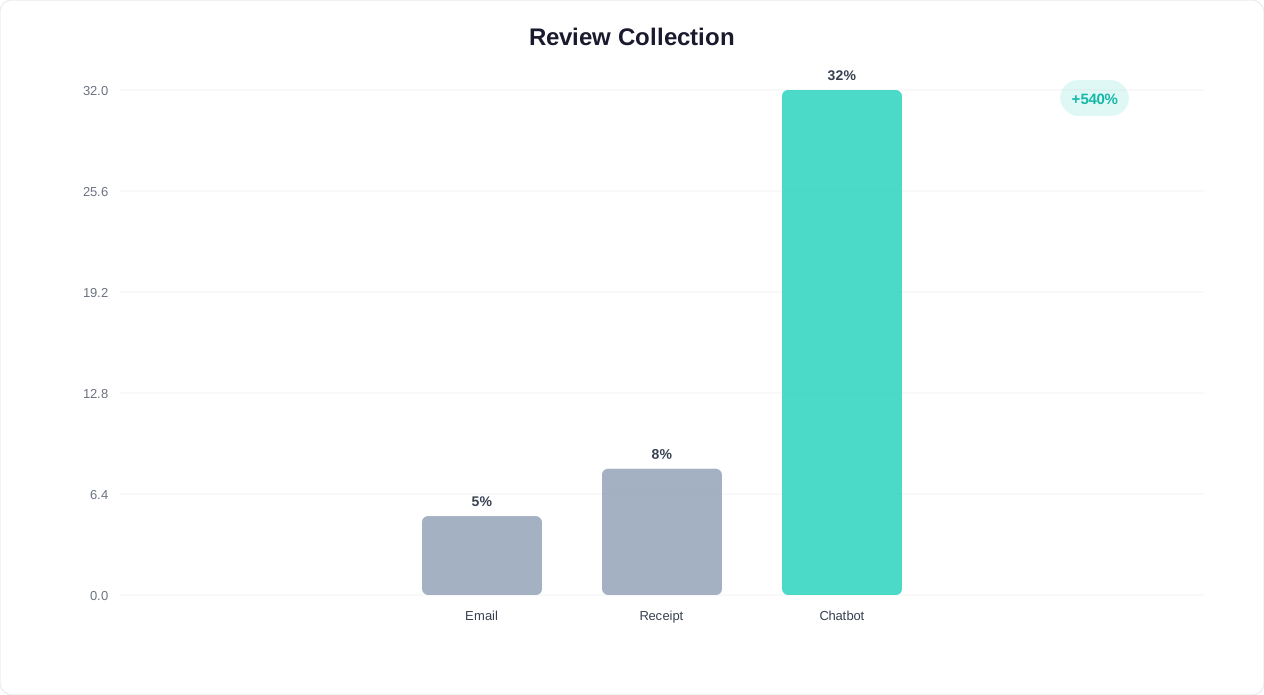
Restaurants using chatbot-driven review collection report 40-50% increases in review volume and a measurable improvement in average rating, because the system captures positive feedback that would otherwise go unrecorded while intercepting negative experiences before they become public complaints.
Conferbot's integrations hub connects your multi-location chatbot to POS systems, delivery platforms, and reservation management tools across all your properties. Each location's data flows into a centralized dashboard, giving operators visibility into performance, customer trends, and operational efficiency across their entire portfolio. Whether you operate two locations or two hundred, the chatbot scales with you.
Staff Training and Operational Intelligence
The data generated by a multi-location chatbot provides operational intelligence that manual reporting systems cannot match. Owners can see which menu items generate the most questions (indicating potential description improvements needed), which locations have the highest chatbot engagement (suggesting stronger digital marketing), and which times of day experience the most ordering activity (informing staffing decisions). This data-driven approach to restaurant management replaces gut-feel decisions with evidence-based optimization.
The chatbot also serves as a training tool for new staff. New employees can interact with the chatbot to learn the menu, understand common customer questions and answers, and practice order-taking scenarios in a safe environment. For franchise operations where menu knowledge and customer service standards must be consistent across independently owned locations, the chatbot becomes a living reference guide that always reflects the most current information -- unlike printed manuals that go out of date the moment they are distributed.
For franchise owners evaluating new locations, chatbot engagement data from existing properties provides valuable market intelligence. High chatbot ordering volume in a particular delivery radius suggests strong demand that could support an additional location. Low engagement rates on certain menu categories reveal opportunities for menu optimization before investing in a new property. This predictive capability transforms the chatbot from a customer service tool into a strategic business intelligence platform that informs expansion strategy and menu development.
WhatsApp Ordering and Social Commerce
In markets where WhatsApp is the dominant communication platform -- much of Latin America, South Asia, the Middle East, and parts of Europe and Africa -- WhatsApp food ordering is not just a convenience, it is an expectation. Customers in these markets are accustomed to texting businesses directly, and a restaurant without a WhatsApp ordering channel is leaving significant revenue on the table. Conferbot's WhatsApp integration allows restaurants to accept and process orders within the same app their customers already use for daily communication, eliminating the need to download a separate ordering app or navigate a website.
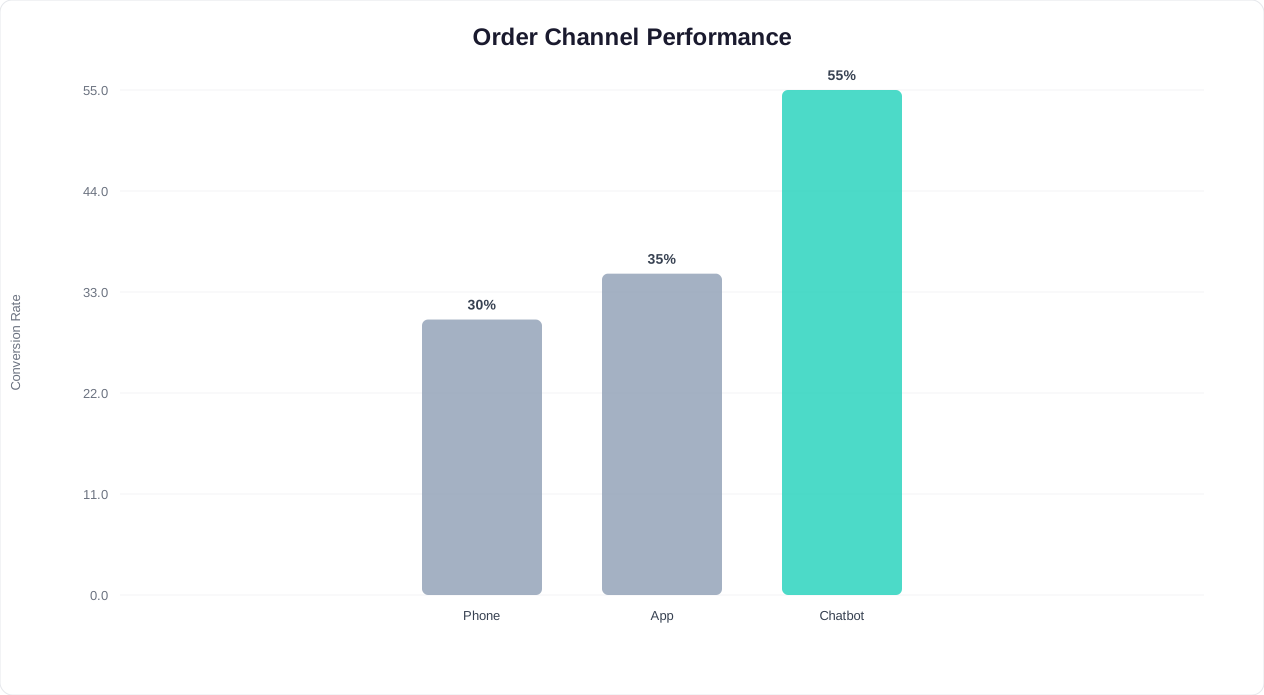
The WhatsApp ordering experience is deeply personal. Customers text the restaurant's WhatsApp number as naturally as messaging a friend: "Can I get two chicken tikka masalas, one naan, and two mango lassis for delivery?" The bot confirms the order, calculates the total, shares a payment link, and provides delivery tracking -- all within the same chat thread. Returning customers can reorder with a simple "same as last time" and the bot retrieves their previous order for one-tap confirmation. Restaurants using WhatsApp ordering report 35-50% higher repeat order frequency from WhatsApp customers compared to web-based or app-based orderers.
Social commerce extends beyond WhatsApp to Instagram and Facebook Messenger. When a restaurant posts a photo of a new seasonal dish on Instagram and a follower replies "That looks amazing, how do I order?", the chatbot can immediately engage in the DMs -- showing the menu, taking the order, and processing payment without the customer ever leaving the Instagram app. This seamless social-to-order conversion captures impulse purchases that would otherwise be lost when customers are asked to "visit our website to order." Social commerce chatbots drive an estimated 15-25% of new customer acquisition for restaurants that actively post food content on social media.
Food Safety and Allergen Management
Allergen management is one of the most critical yet underserved aspects of restaurant operations. A single allergen incident can result in hospitalization, lawsuits, and devastating online reviews. Traditional allergen communication relies on small-print menu disclaimers, staff knowledge (which varies widely), and the customer remembering to disclose their allergy. A food allergen chatbot takes a proactive, systematic approach: it asks every customer about allergies before they order, cross-references their allergens against every menu item's ingredient list, and flags or removes unsafe options automatically.
The bot can manage complex allergen scenarios that overwhelm human staff: "I'm allergic to tree nuts but not peanuts, and my daughter is celiac. What can we both eat?" The bot instantly filters the menu to show items safe for both diners, noting any items that are prepared in shared kitchen areas where cross-contamination is possible. This level of allergen intelligence builds extraordinary trust with allergy-affected families, who represent a growing market segment of 32+ million Americans with food allergies. These customers become fiercely loyal to restaurants that make them feel safe, and they spread the word aggressively through allergy community networks and social media groups.
From a liability perspective, the chatbot's allergen interaction log creates a documented record showing that the restaurant asked about allergies, the customer disclosed their restrictions, and the bot recommended safe menu items. This documentation significantly reduces legal exposure in the event of an allergen incident and demonstrates due diligence that insurance providers look for when evaluating restaurant risk profiles.
Happy Hour and Event Promotion
Restaurants with bar programs, happy hours, live music, or special events can use the chatbot as a personalized event promotion engine. Instead of blasting the same happy hour email to every customer, the bot sends targeted promotions based on customer behavior: regular Friday evening diners receive happy hour specials on Thursday afternoon to drive early visits. Customers who have ordered wine in the past receive notifications about wine tasting events. Sports fans who always order during game nights receive alerts about upcoming game-day specials and viewing parties.
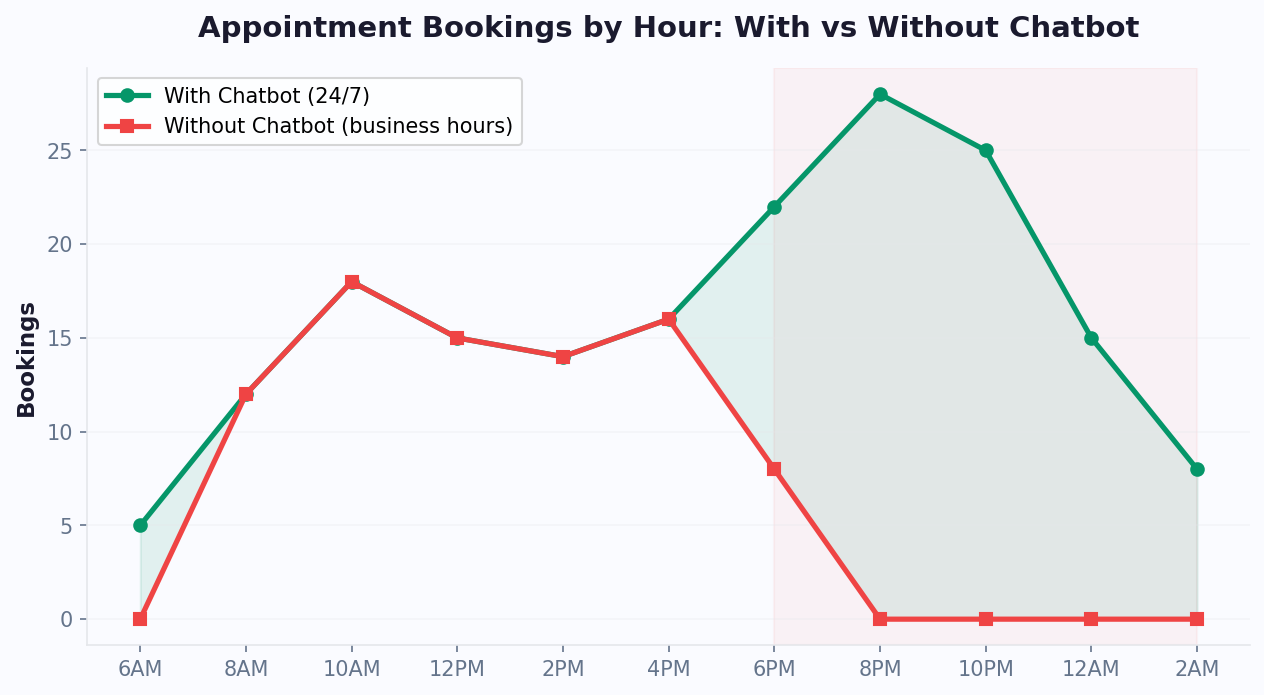
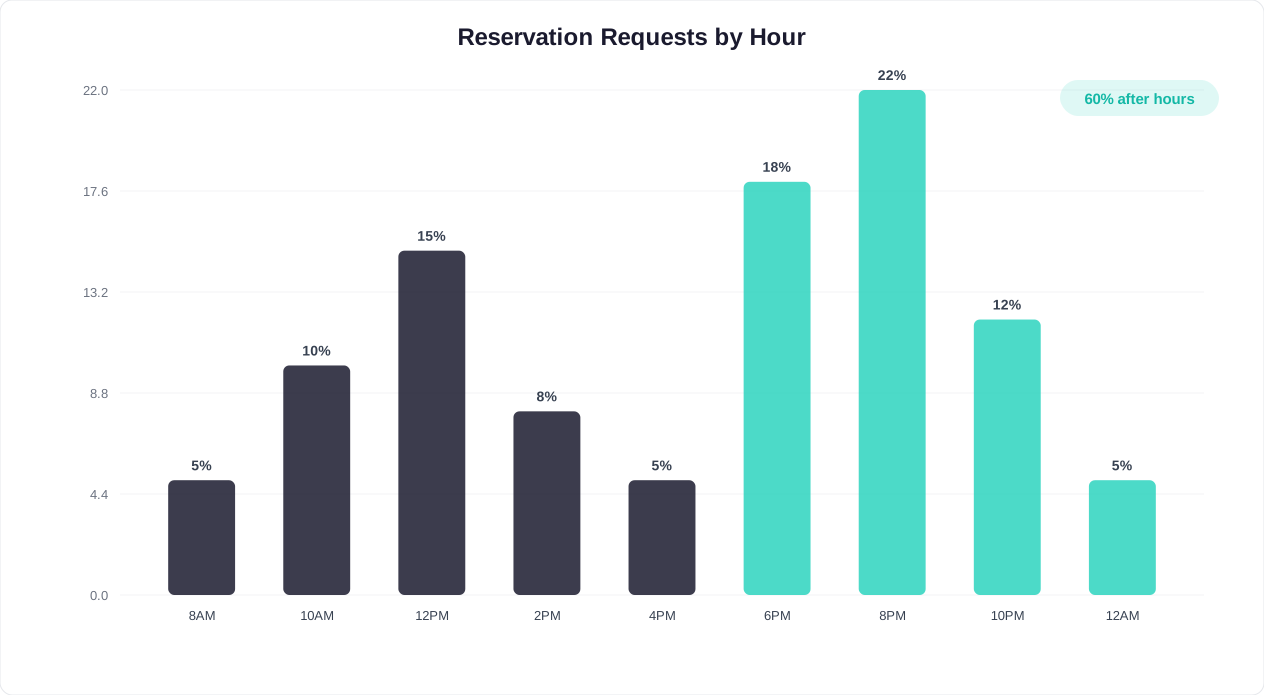
The chatbot also handles private event booking for birthday parties, corporate dinners, and holiday celebrations. The bot collects event details (date, guest count, budget, special requests), presents private dining or buyout options, and generates a customized event proposal. For restaurants where private events represent a significant revenue stream, the chatbot's ability to capture and qualify event inquiries 24/7 prevents the common scenario where a potential event planner calls during peak service, cannot get through, and books with a competitor instead. Restaurants using chatbot-driven event booking report 25-35% more private event bookings because every inquiry receives an immediate, detailed response regardless of when it arrives.
The event promotion chatbot integrates naturally with the loyalty program, offering loyalty members early access to special events, priority reservations during peak periods, and exclusive menu previews. This VIP treatment reinforces the value of the loyalty program and encourages ongoing engagement with the restaurant brand across all channels.
Explore our omnichannel deployment options to serve customers across your website, WhatsApp, Facebook Messenger, and Instagram -- all managed from a single Conferbot account.