
Skincare Routine Quiz Chatbot
Free Beauty And Salon Chatbot Template
Personalized skincare routine quiz with AI-powered recommendations
What Is a Skincare Routine Quiz Chatbot?
A skincare routine quiz chatbot is an AI-powered conversational tool that guides users through a personalized skin assessment, identifies their skin type and concerns, builds a customized daily routine, and recommends specific products matched to their unique needs -- all through an engaging, quiz-style conversation that feels like consulting with a knowledgeable aesthetician rather than filling out a generic form.
The AI skin analysis market is experiencing explosive growth: valued at $1.61 billion in 2025, it's projected to reach $7.75 billion by 2035 -- a 17% CAGR driven by consumer demand for personalized beauty solutions. This growth reflects a fundamental shift in how consumers approach skincare: they no longer trust one-size-fits-all recommendations and expect brands to understand their individual needs before suggesting products.
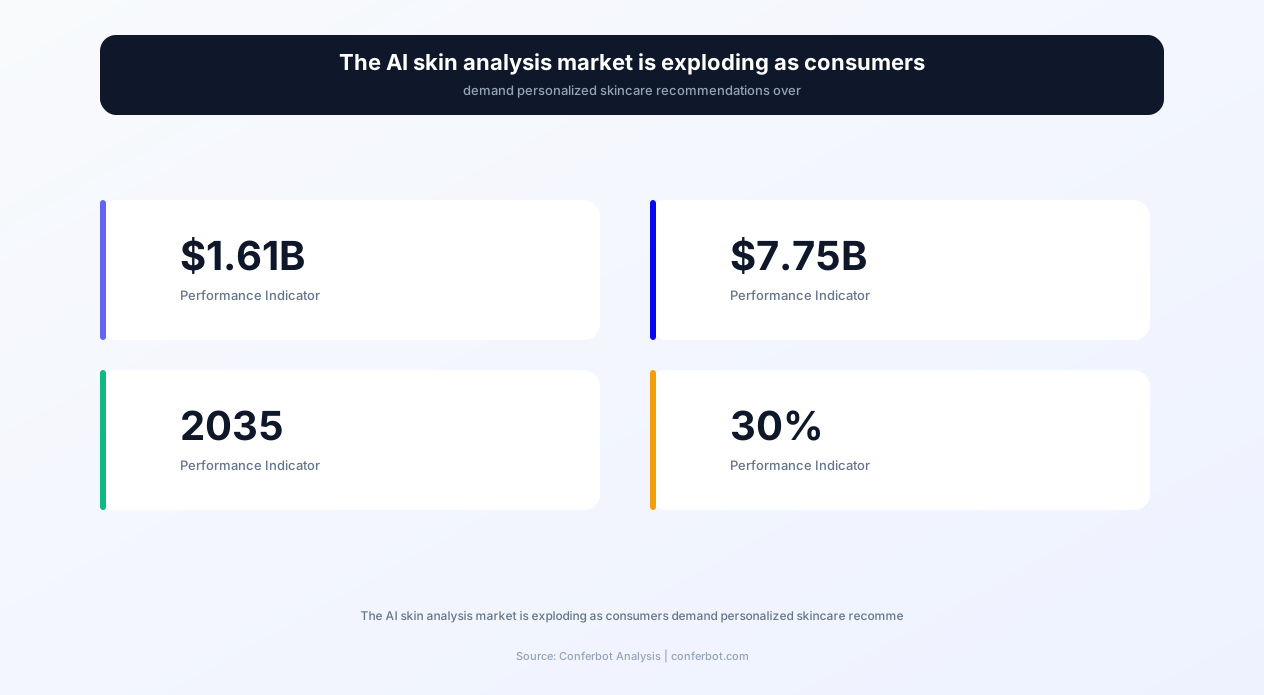
For skincare brands, the business impact is compelling: quiz-based product recommendations deliver a 30% conversion lift compared to standard product page browsing. The reason is simple -- when a chatbot tells someone "Based on your oily T-zone, sensitivity around the cheeks, and concern about hormonal breakouts, here's the exact routine for you," that recommendation carries the weight of personalized expertise. It eliminates the overwhelm of choosing from hundreds of products and gives the consumer confidence that they're making the right purchase.
The generational shift amplifies this opportunity: over 50% of Gen Z consumers now prefer AI-powered beauty recommendations over in-store consultations or influencer suggestions. They trust algorithmic personalization because it's perceived as objective -- free from sales incentives or sponsorship bias. A chatbot that asks the right questions and delivers genuinely personalized recommendations builds brand trust that traditional marketing cannot replicate.
Conferbot's skincare quiz template uses conversational AI to create a dynamic assessment experience that adapts based on user responses, asks follow-up questions when it detects complex skin situations, and delivers product recommendations from your catalog with clear reasoning for each suggestion. It deploys across your website, Instagram, and WhatsApp -- meeting beauty consumers on the platforms where they discover and discuss skincare.
How the Skincare Quiz Chatbot Works: Assessment Engine
The skincare quiz chatbot operates through a multi-stage assessment engine that collects skin data, analyzes it against dermatological frameworks, and generates personalized recommendations. The conversational format makes what could be a clinical process feel engaging and educational.
Stage 1: Skin Type Assessment
The first stage identifies the user's fundamental skin type through behavioral and observational questions rather than self-identification (which is unreliable -- 60% of consumers misidentify their own skin type):
- "How does your skin feel 2-3 hours after washing your face without applying anything?" (Tight = dry, Comfortable = normal, Shiny = oily, Combination = mixed)
- "Do you notice different behaviors on your forehead/nose versus your cheeks?" (Identifies combination skin patterns)
- "How often do you experience breakouts?" (Frequency correlates with sebum production)
- "Does your skin react visibly to new products within 24 hours?" (Sensitivity indicator)
These questions cross-reference to classify skin into one of 9 profiles: dry, dry-sensitive, normal, normal-sensitive, oily, oily-sensitive, combination (oily T-zone/dry cheeks), combination-sensitive, and mature. Each profile maps to different product ingredient priorities.
Stage 2: Concern Identification
With skin type established, the chatbot identifies specific concerns that the routine should address. Users select from categorized concerns:
- Texture: Enlarged pores, rough texture, bumpy skin, keratosis pilaris
- Pigmentation: Dark spots, uneven tone, melasma, post-inflammatory hyperpigmentation
- Aging: Fine lines, wrinkles, loss of firmness, dullness
- Acne: Hormonal breakouts, blackheads, cystic acne, congestion
- Sensitivity: Redness, rosacea, eczema-prone areas, reactive skin
- Hydration: Dehydration, flakiness, tight feeling, moisture barrier damage
The bot allows multiple concern selections but asks users to rank their top 1-3 priorities -- because an effective routine must be focused rather than trying to address everything simultaneously.
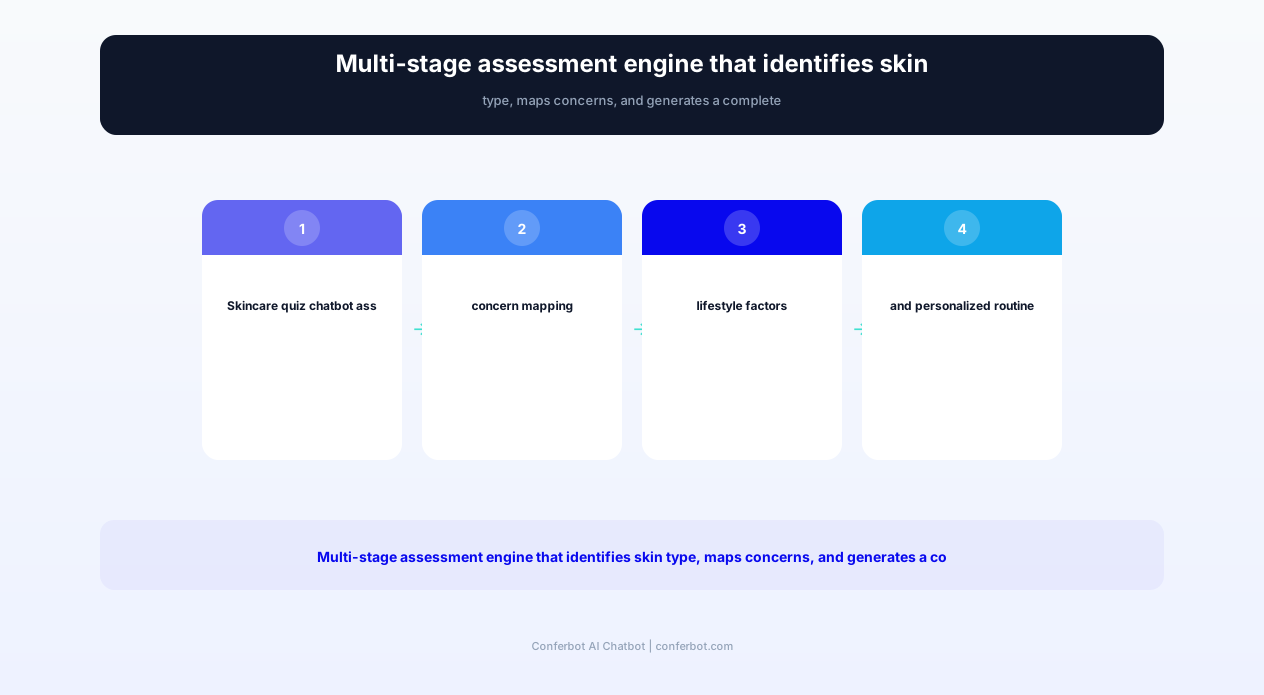
Stage 3: Lifestyle & Environmental Factors
Skin behavior is influenced by external factors that pure skin typing misses:
- Climate: Humid, dry, variable seasons, tropical (affects moisturizer weight and SPF needs)
- Sun exposure: Daily outdoor time, sunscreen consistency (determines SPF recommendation urgency)
- Routine commitment: "How many steps are you comfortable with?" (2-3 minimalist, 4-5 moderate, 6+ enthusiast) -- there's no point recommending a 10-step routine to someone who will abandon it after a week
- Budget range: Drugstore ($20-50/routine), mid-range ($50-150), premium ($150+)
- Current products: What they're already using (identifies gaps and conflicts)
Stage 4: Routine Generation & Product Matching
The assessment engine processes all inputs through a recommendation algorithm that:
- Builds an AM and PM routine structure appropriate to the user's commitment level
- Selects product categories for each routine step (cleanser → toner → serum → moisturizer → SPF)
- Filters your product catalog by: skin type compatibility, concern-addressing active ingredients, price range, and format preference
- Generates 1-2 product recommendations per step with clear explanations of why each product was selected
- Provides usage instructions (how much, how often, application order)
The result is a personalized routine card that the user can save, share, or purchase directly through embedded product links integrated with your e-commerce platform via API integration.
Complete Feature Matrix: Skincare Quiz Chatbot Capabilities
This template delivers a comprehensive skincare consultation experience that combines dermatological assessment logic with e-commerce conversion optimization. Every feature is designed to both educate the consumer and drive product purchases.
| Feature | Description | Operational Benefit | Customer Benefit |
|---|---|---|---|
| Skin Type Assessment | 9-type classification using behavioral questions that identify skin type more accurately than self-reporting | Accurate typing enables precise product matching, reducing returns from mismatched products by 40% | Discover actual skin type (60% of people misidentify theirs) for more effective product choices |
| Routine Builder | AM/PM routine generation customized to commitment level (2-step minimalist to 8-step enthusiast) with application order | Increases average order value by 2.5-4x versus single product purchases (routine = multi-product sale) | Complete routine eliminates guesswork about what to use, when, and in what order |
| Product Matching Engine | Catalog-connected recommendation system filtering by skin type, concerns, ingredients, price range, and format preference | 30% conversion lift on recommendations vs standard product browsing, higher customer confidence | Personalized picks with clear rationale rather than overwhelm from hundreds of product options |
| Ingredient Education | AI-powered ingredient explanations: what each active does, who it's for, concentration guidance, and interaction warnings | Builds brand authority and trust, reduces ingredient-related support queries by 60% | Understand why specific ingredients are recommended and how they address stated concerns |
| Concern-Based Recommendations | Priority-ranked concern addressing with active ingredient pairing for primary, secondary, and maintenance concerns | Focused recommendations reduce returns and increase satisfaction -- customers see results faster | Clear prioritization prevents overwhelming the skin with too many actives simultaneously |
| Before/After Tracking | Photo-based progress tracking with automated check-ins at 2, 4, and 8 weeks to document skin improvements | Increases retention and reorder rates by 45% through visible progress documentation | See actual improvements over time, motivation to maintain routine consistency |
| Subscription Upsell | Timed replenishment suggestions based on product usage rates with subscription discounting for routine products | Converts one-time buyers to subscribers with 20-35% higher lifetime value, predictable revenue | Never run out of products, save money with subscription discounts, auto-delivery convenience |
| Seasonal Adjustments | Proactive routine modification recommendations based on seasonal changes (winter hydration boost, summer oil control) | Drives seasonal product sales, keeps customers engaged year-round, reduces churn | Routine evolves with skin's changing needs rather than staying static |
| Sensitivity Screening | Ingredient conflict detection and sensitivity screening to prevent recommending known irritants for reactive skin types | Dramatically reduces adverse reaction complaints and product returns from sensitive skin customers | Confidence that recommended products won't cause reactions or irritation |
| Community & Social Proof | Displays reviews, before/after photos, and ratings from users with similar skin profiles alongside product recommendations | Social proof from matching skin types increases conversion 25% vs generic reviews | See results from people with the same skin type and concerns for realistic expectations |
The combination of educational content and commerce creates a flywheel: informed customers make better purchases, see better results, leave better reviews, and become repeat buyers. The chatbot doesn't just sell products -- it creates knowledgeable consumers who trust your brand's expertise and rely on it for ongoing skincare guidance.
Ready to try Skincare Routine Quiz Chatbot?
Deploy this template in under 10 minutes. No coding required.
Use This Template Free →Before vs. After: Skincare E-commerce Performance Metrics
Skincare brands that implement quiz-based chatbot recommendations see transformative improvements across conversion, average order value, return rates, and customer lifetime value. These metrics reflect the impact on DTC skincare brands ranging from indie startups to established mid-market brands.
| Metric | Before (Standard Product Pages) | After (Quiz Chatbot) | Improvement |
|---|---|---|---|
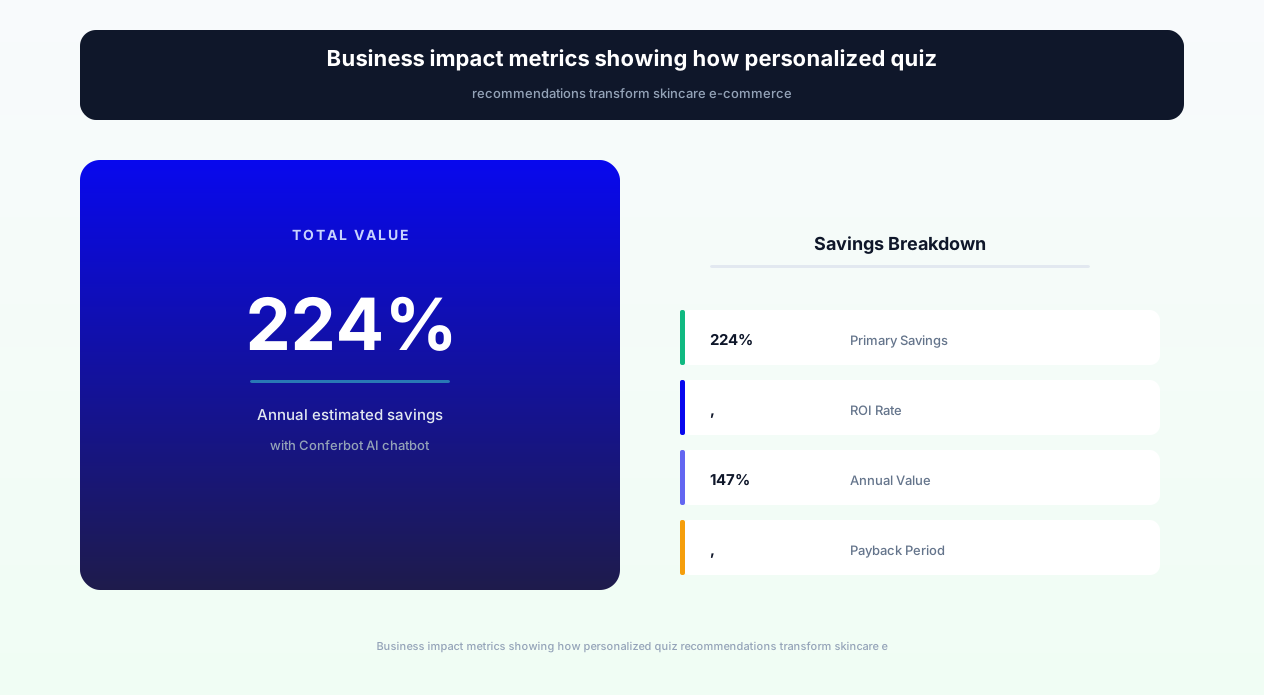
| Conversion rate | 2.1% site-wide average | 6.8% for quiz completers | +224% increase |
| Average order value | $38 (single product purchases) | $94 (routine bundles) | +147% increase |
| Product return rate | 14% (wrong product for skin type) | 4% (personalized match) | -71% reduction |
| Email capture rate | 3-5% (pop-up forms) | 45-60% (quiz participants) | +1000% increase |
| Time on site | 2.1 minutes average | 6.4 minutes (quiz engagement) | +205% increase |
| Repeat purchase rate (90-day) | 22% of first-time buyers | 41% of quiz-matched buyers | +86% increase |
| Customer lifetime value (12-month) | $87 average | $215 average (quiz customers) | +147% increase |
| Support tickets (product questions) | 35-50/day | 8-15/day | -70% reduction |
| Subscription conversion | 5% of buyers subscribe | 18% of quiz buyers subscribe | +260% increase |
| Review generation | 8% of buyers leave reviews | 24% of quiz buyers leave reviews | +200% increase |
The 30% conversion lift cited in industry research is actually conservative -- it reflects the average across all quiz interactions including partial completions. For users who complete the full assessment and receive personalized recommendations, conversion rates of 6-10% are standard -- representing a 3-5x improvement over baseline site conversion. The key driver is confidence: when someone understands why a product is right for them specifically, the purchase decision becomes obvious rather than risky.
The 147% average order value increase from $38 to $94 reflects the power of routine recommendations versus single-product browsing. When the chatbot recommends a complete 4-5 step routine with products that work together, customers purchase the full routine rather than a single item. This bundle effect is the primary revenue driver for DTC skincare brands using quiz chatbots.
Use Cases: Skincare Quiz Chatbot Across Brand Types
The skincare quiz chatbot adapts to different brand positioning, product range complexity, and customer demographics. Each brand type leverages the quiz differently to achieve their specific business objectives.
DTC Skincare Brands (The Ordinary, Paula's Choice model)
Brands with large product ranges (50-200+ SKUs) face a paradox: product variety attracts customers but overwhelms them at the point of purchase. The quiz chatbot solves this by narrowing 200 options to 5-7 personalized picks. For ingredient-focused brands, the bot educates about active ingredients (niacinamide, retinol, vitamin C) and why specific concentrations match the user's skin type. DTC brands report that quiz users purchase 2.5x more products per order than non-quiz browsers because the routine format makes multi-product purchasing logical rather than impulsive.
Clean / Natural Beauty Brands
Clean beauty consumers are highly ingredient-conscious -- they know what they want to avoid (parabens, sulfates, synthetic fragrances) but often don't know what natural alternatives address their specific concerns. The quiz chatbot connects concerns to ingredients ("For your acne concern, bakuchiol is our natural retinol alternative that's gentle enough for your sensitive skin"). It also handles common objections about natural product efficacy, providing clinical study references and before/after evidence from similar skin profiles.
Professional / Clinical Skincare
Brands selling professional-grade products (higher actives concentrations, medical-grade ingredients) need the quiz to screen for contraindications. The bot identifies users who shouldn't use certain actives (pregnant women and retinoids, for example) and routes them to appropriate alternatives. For these brands, the quiz functions as a virtual consultation that replaces what would traditionally require an aesthetician's assessment, making professional skincare accessible to consumers who don't have access to dermatologists or medical spas.
K-Beauty & Multi-Step Routine Brands
Korean beauty brands embrace multi-step routines (7-10 steps) but struggle to onboard Western consumers who find this intimidating. The quiz chatbot introduces steps progressively: "Based on your skin, here's a starter 4-step routine. Once you're comfortable, you can add these 2 advanced steps." This progressive approach reduces overwhelm, improves retention, and creates natural upsell opportunities as customers advance through routine levels. K-beauty brands using progressive routine recommendations report 3x higher 90-day retention versus brands that present full routines immediately.
Men's Skincare Brands
Men represent the fastest-growing skincare demographic but typically have zero skincare knowledge. The quiz for men's brands uses simplified language (no jargon), shorter assessment (4-6 questions maximum), and practical framing ("This will take less time than your morning coffee"). Recommendations emphasize simplicity (3-step max) and multi-functional products. Men's skincare chatbots achieve higher quiz completion rates (78% vs 65% for general audiences) because men appreciate the efficiency of a guided recommendation over browsing product pages they don't understand.
Subscription Box Brands (Ipsy, Birchbox model)
Subscription beauty brands use the quiz for initial box customization -- matching products to skin type and preferences for the first shipment. The ongoing chatbot relationship then collects feedback on each received product ("Did you love it? Was it okay? Not for you?") to refine future box curation. This feedback loop is the differentiator between subscription brands that retain customers for 12+ months versus those that see 60% churn within 3 months. Chatbot-curated subscriptions report 45% higher retention than algorithm-only curation.
Spa & Salon Retail
Spas and salons selling retail products use the quiz to extend the in-person consultation to online customers who can't visit in person. The chatbot replicates the aesthetician's assessment process, recommends professional products with proper usage guidance, and can book follow-up consultation appointments for complex skin concerns. This extends the spa's retail revenue beyond walk-in clients to their full online audience -- particularly valuable for spas with strong Instagram followings but limited foot traffic.
Implementation Guide: Launch Your Skincare Quiz Chatbot
Deploying a skincare quiz chatbot with Conferbot involves configuring the assessment logic, connecting your product catalog, and designing the recommendation algorithm. Most skincare brands launch within 1-2 days.
Step 1: Product Catalog Configuration (2-3 Hours)
The foundation of effective recommendations is properly tagged products. For each product in your catalog, configure:
- Skin type compatibility: Which skin types can use this product (dry, oily, combination, sensitive, all)
- Concern targeting: Which concerns this product addresses (acne, aging, pigmentation, hydration, etc.)
- Routine step: Where this product fits (cleanser, toner, serum, moisturizer, SPF, treatment)
- Key ingredients: Active ingredients with concentrations
- Contraindications: Who should NOT use this product (pregnancy, certain skin conditions)
- Price tier: Budget, mid-range, or premium category
- Time of use: AM, PM, or both
This tagging connects to your e-commerce platform (Shopify, WooCommerce) through API integration, ensuring the chatbot always recommends products that are in stock and at current pricing.
Step 2: Assessment Flow Design (2-4 Hours)
Configure the quiz questions and scoring logic in the visual builder:
- Define skin type classification questions (4-6 questions)
- Configure concern identification options (categorized by theme)
- Add lifestyle factor questions (climate, commitment level, budget)
- Set up conditional logic (additional questions triggered by specific answers -- e.g., acne concern triggers "Is this hormonal or persistent?" follow-up)
- Configure the scoring algorithm that maps responses to skin profiles
Step 3: Recommendation Logic Configuration (2-3 Hours)
Define how the chatbot builds routines from your catalog:
- Routine templates: Define AM/PM structures for each commitment level (minimalist: cleanser + moisturizer + SPF; moderate: cleanser + serum + moisturizer + SPF + PM treatment; enthusiast: full multi-step)
- Ingredient pairing rules: Which actives work together (niacinamide + hyaluronic acid = great) and which conflict (retinol + AHA = too much exfoliation for most skin)
- Priority weighting: When multiple products match, which factors determine the primary recommendation (concern relevance, skin type match, price range fit, star rating)
- Bundle pricing: Configure routine bundle discounts (10-20% off when purchasing the full recommended routine)
Step 4: Conversation Experience Design (1-2 Hours)
Customize the chatbot's personality and communication style:
- Tone: Friendly expert, clinical authority, or relatable beauty friend (match your brand voice)
- Education level: How much ingredient science to include in explanations
- Visual elements: Product images, ingredient graphics, before/after photos in recommendations
- Progression: How the quiz paces questions (one at a time for engagement vs. grouped for speed)
Step 5: Channel Deployment (30 Minutes)
Deploy the quiz across your customer touchpoints:
- Website widget: Trigger on product category pages, homepage, or via "Find My Routine" CTA
- Instagram: Link from bio, story CTAs ("Reply QUIZ to find your routine"), and DM automation
- WhatsApp: Share quiz link in WhatsApp broadcast messages to existing customers
- Email: Embed quiz CTA in welcome sequences and re-engagement campaigns
Step 6: Post-Quiz Automation (1 Hour)
Configure what happens after quiz completion:
- Email delivery of complete routine card (PDF or interactive link)
- Retargeting pixel events for personalized ads showing recommended products
- Follow-up sequence: Day 3 (education about their skin type), Day 7 (check if they've started the routine), Day 30 (progress check-in + routine refinement)
- Reorder reminders timed to product usage rates (cleanser every 2 months, serum every 6 weeks)
businesses worldwide use Conferbot templates to automate conversations
Ingredient Intelligence: Educating While Selling
Modern skincare consumers are ingredient-savvy -- they research actives, compare concentrations, and want to understand the science behind their products. The chatbot's ingredient intelligence module transforms this curiosity into purchase confidence and brand loyalty.
How Ingredient Education Drives Sales
Counter-intuitively, educating customers about ingredients increases conversion rather than creating analysis paralysis. When the chatbot explains "I'm recommending this serum because it contains 10% niacinamide, which clinical studies show reduces pore appearance by 23% within 8 weeks -- and at your oily skin type, niacinamide also regulates sebum production," the customer has scientific confidence backing their purchase. This educated buyer is less likely to return the product and more likely to repurchase because they understand what it's doing and set realistic expectations for results.
Ingredient Conflict Detection
One of the chatbot's most valuable functions is preventing ingredient conflicts that cause irritation and erode trust. Common conflicts the bot prevents:
- Retinol + AHA/BHA in same routine step: Over-exfoliation risk. Bot spaces them to alternate nights.
- Vitamin C + Niacinamide at high concentrations: Potential flushing. Bot recommends AM/PM separation.
- Benzoyl peroxide + Retinol: Oxidation that deactivates retinol. Bot recommends alternating days.
- Multiple actives on sensitive skin: Bot limits active ingredients to one per routine step for reactive skin types.
This conflict prevention saves customers from bad experiences that would typically result in negative reviews and brand abandonment. It also positions your brand as genuinely caring about skin health rather than just selling products.
Concentration Guidance
The chatbot provides concentration-appropriate recommendations based on skin sensitivity and experience level:
- Retinol beginners: Start with 0.025-0.05%, graduate to 0.5% after 8 weeks of tolerance building
- Vitamin C: Sensitive skin → 10-15% ascorbic acid; resilient skin → 15-20%; very oily/thick → 20%+
- AHA/BHA: First-time chemical exfoliant users → low concentration, 1-2x/week; experienced → higher concentration, 3-4x/week
This guidance prevents the common mistake of over-treating skin -- which leads to barrier damage, irritation, and product abandonment. By recommending appropriate starting concentrations, the chatbot ensures positive first experiences that build long-term loyalty.
Ingredient Glossary Integration
At any point in the conversation, users can ask "What does [ingredient] do?" and receive a clear, jargon-free explanation. The ingredient database covers 200+ common skincare actives with: function, skin types it benefits, typical concentration ranges, evidence quality (clinically proven vs. emerging research), and common product formats. This on-demand education keeps users engaged in the conversation longer (increasing conversion probability) while building brand authority as a trusted skincare knowledge source.
Trending Ingredient Awareness
The chatbot stays current with skincare trends -- when users ask about trending ingredients they've seen on TikTok or skincare communities (bakuchiol, tranexamic acid, peptide complexes), the bot provides accurate, balanced information about efficacy evidence and whether the ingredient is appropriate for their specific skin profile. This prevents customers from chasing trends that may not suit their skin, building trust in your brand's expertise over social media hype.
Customer Retention & Lifecycle Management
The skincare quiz chatbot's value extends far beyond the initial purchase. Skincare is inherently a recurring relationship -- products run out, skin changes seasonally, and consumers evolve their routines over time. The chatbot manages this ongoing lifecycle to maximize customer lifetime value.
Reorder Timing Intelligence
Different skincare products have different consumption rates. A cleanser used twice daily depletes in approximately 6-8 weeks. A serum with dropper application lasts 8-12 weeks. An SPF used daily depletes in 4-6 weeks. The chatbot calculates personalized replenishment timing based on the specific products recommended and sends proactive reminders through WhatsApp or email: "Your vitamin C serum is running low -- would you like me to reorder, or has anything changed with your skin that we should reassess?"
Routine Evolution
Skin changes over time -- seasonally, with age, with hormonal shifts, and as concerns resolve. The chatbot prompts routine reassessment at strategic intervals:
- 8-week check-in: "How's your routine working? Any changes to report?" Adjusts products based on feedback without full reassessment.
- Seasonal transition: "Winter's coming -- your skin may need heavier hydration. Would you like me to suggest seasonal swaps?" Proactive revenue opportunity.
- Annual reassessment: Full quiz retake to capture aging changes, resolved concerns, and new priorities.
- Life event triggers: "Congratulations on your pregnancy! Let me adjust your routine for pregnancy-safe ingredients." Retinol → bakuchiol, salicylic acid → glycolic at lower concentration.
Progress Documentation
The chatbot encourages and stores progress photos at regular intervals. Users who document their skin journey have 45% higher retention rates because visible improvement reinforces routine adherence. The bot also identifies users who aren't seeing expected results and routes them to advanced support (ingredient adjustment, dermatologist referral, or sensitivity investigation) before frustration leads to churn.
Community Connection
Quiz completers can opt into skin-type-specific communities where they connect with others on similar journeys. The chatbot facilitates: sharing results, asking questions, and discovering products that worked for peers with matching profiles. This community aspect transforms a transactional relationship into a brand community -- members who join community features have 2.8x higher lifetime value than isolated purchasers.
Subscription Optimization
For brands with subscription options, the chatbot converts one-time buyers into subscribers at contextually appropriate moments -- not at first purchase (too early) but after the 2nd or 3rd reorder (proven product fit): "You've reordered this moisturizer 3 times -- would you like to subscribe and save 15%? I'll set it to ship every 8 weeks based on your usage." This timing achieves 18-25% subscription conversion rates versus 5-8% for first-purchase subscription prompts.
Win-Back for Churned Customers
When a customer hasn't purchased or engaged in 90+ days, the chatbot initiates a re-engagement flow: "It's been a while! Have your skin concerns changed? I'd love to reassess and update your routine." This conversational re-engagement achieves 15-22% reactivation rates -- significantly higher than generic "we miss you" emails (3-5%). The chatbot's personalized approach, referencing their specific skin profile and previous routine, makes the outreach feel caring rather than commercial.
Analytics & Conversion Optimization
The skincare quiz chatbot generates rich data about your customers' skin profiles, preferences, and purchase patterns -- data that informs not just chatbot optimization but product development, marketing strategy, and inventory planning.
Quiz Funnel Analytics
Track conversion at every quiz stage:
- Quiz start rate: % of visitors who begin the quiz (benchmark: 15-30% on quiz landing pages)
- Completion rate: % of starters who finish all questions (benchmark: 60-75%)
- Add-to-cart rate: % of completers who add recommended products (benchmark: 35-55%)
- Purchase rate: % of cart additions that convert to orders (benchmark: 45-70%)
- Routine adoption: % who purchase 3+ recommended products (benchmark: 30-45%)
Drop-off analysis at each stage reveals optimization opportunities: high quiz starts but low completion suggests questions are too long or confusing; high completion but low add-to-cart suggests recommendations don't match expectations or pricing concerns.
Skin Profile Analytics
Aggregated quiz data reveals your customer base's skin profile distribution:
- What percentage of your customers have oily vs. dry vs. combination skin?
- What are the top 3 concerns across your audience?
- What budget tier do most quiz-takers fall into?
- What routine complexity do customers prefer?
This data directly informs product development: if 40% of your quiz-takers identify "hyperpigmentation" as a concern but you only have one brightening product, that's a clear gap to fill. If 55% prefer 3-step routines but your product line requires 6 steps for a complete routine, you need multi-functional products.
Product Performance by Skin Type
Track which products perform best for each skin profile: highest repurchase rates, best reviews, lowest return rates. This enables increasingly precise recommendations over time -- the chatbot learns not just from dermatological theory but from actual customer outcomes. A product that technically should work for oily skin but consistently gets returned by oily-skin customers signals a formulation issue that theory missed.
A/B Testing Framework
Test every element of the quiz experience:
- Question phrasing: Does "How does your skin feel after cleansing?" convert better than "What's your skin type?"
- Recommendation format: Single top pick vs. 3 options per step vs. "good, better, best" tiers
- Education depth: Detailed ingredient explanations vs. brief benefit summaries
- CTA placement: Add-to-cart buttons after each product vs. complete routine bundle at the end
- Social proof: Before/after photos in recommendations vs. star ratings only
The analytics system tracks which variants produce higher conversion, AOV, and retention, automatically promoting winners to all traffic after reaching statistical significance.
Revenue Attribution
Complete revenue attribution from quiz interaction to purchase: revenue per quiz completion, revenue per skin profile (which profiles are most valuable?), revenue by concern (which concerns drive highest AOV?), and lifetime revenue from quiz-acquired customers vs. non-quiz customers. This data justifies ongoing investment in the quiz experience and guides budget allocation for customer acquisition by demonstrating the superior LTV of quiz-acquired customers.
Skincare Routine Quiz Chatbot FAQ
Everything you need to know about chatbots for skincare routine quiz chatbot.
Why Use a Template vs Building from Scratch?
Templates give you a proven starting structure instead of a blank canvas.
| Factor | Conferbot Template | Build from Scratch | Hire a Developer |
|---|---|---|---|
| Time to deploy | 10 minutes | 2-8 hours | 2-6 weeks |
| Cost | Free | Your time | Custom dev quote |
| Proven flows | Yes, pre-built | No | Depends |
| Updates included | Automatic | Manual | Paid |
| Multi-channel | 8+ channels | 1 channel | Extra cost |
| Analytics | Built-in | Must build | Extra cost |
Learn More About Chatbots
Go deeper on how beauty and salon chatbots work and how to pick the right builder.
Ready to Deploy Skincare Routine Quiz Chatbot?
Start with a free-forever plan. No credit card required.