
Home Service Scheduling
Free Booking And Scheduling Chatbot Template
A complete home service scheduling chatbot template — deploy in minutes to automate conversations, capture leads, and provide 24/7 assistance.



What Is a Home Service Scheduling Chatbot?
A home service scheduling chatbot is a conversational AI tool that automates the complete customer acquisition and job scheduling workflow for home service companies -- HVAC, plumbing, electrical, landscaping, pest control, roofing, and general contracting businesses. It handles lead capture, service request qualification, emergency dispatch, technician routing, job detail collection, estimate generation, appointment confirmation, and follow-up scheduling -- replacing the missed calls, voicemail black holes, and after-hours lead loss that cost home service companies millions in aggregate revenue.
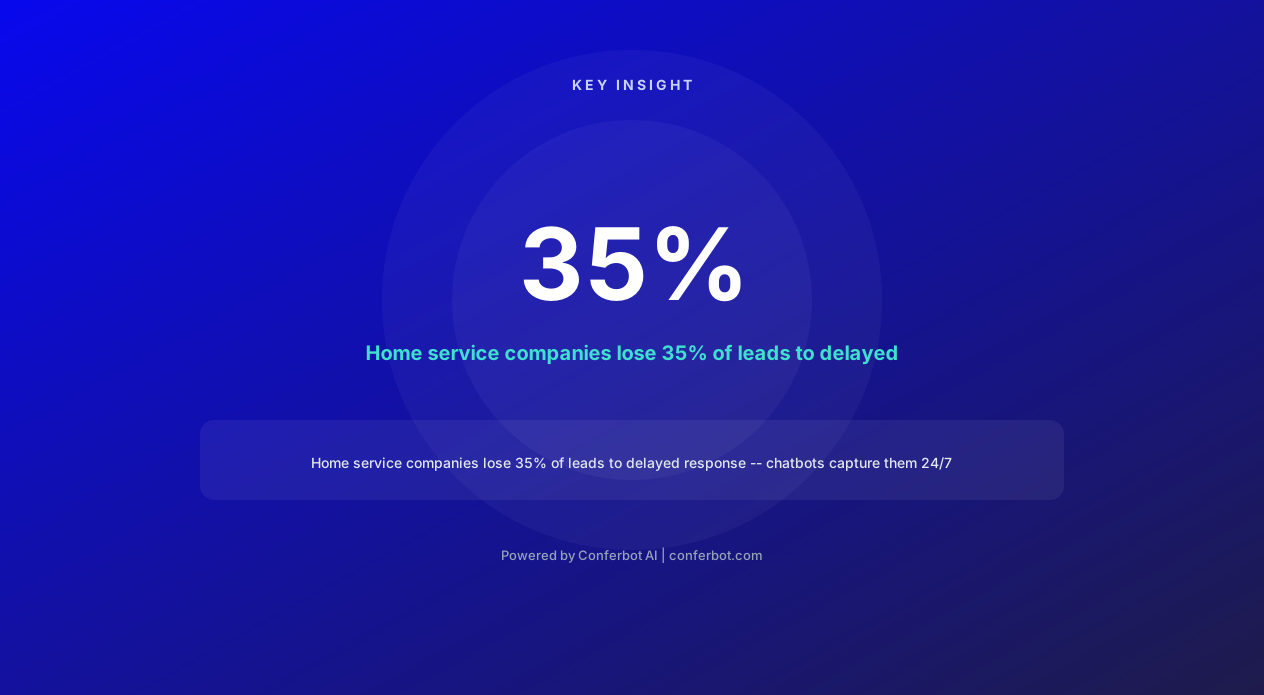
The economics of home service businesses make scheduling automation not just a convenience but a survival requirement. Home service companies lose 35% of inbound leads to delayed response -- when a homeowner's furnace fails at 9 p.m. or their basement floods on Sunday morning, they call the first available company. If your phone goes to voicemail, they call the next number. The lead is gone permanently within minutes, not hours. In an industry where the average customer acquisition cost is $150-300 and the average job value is $800-2,500, every lost lead represents significant revenue.
The compound problem: 62% of home service inquiries come outside business hours -- evenings, weekends, and holidays when homeowners are actually home to notice problems. A chatbot that captures, qualifies, and schedules these after-hours leads doesn't marginally improve your business; it recovers an entirely lost revenue stream that represents more than a third of your potential market.
This template is built on Conferbot's AI chatbot builder and integrates with leading field service management platforms including ServiceTitan, Housecall Pro, Jobber, and FieldEdge. It deploys across your website, WhatsApp, Google Business Profile messaging, and Facebook Messenger -- every channel where homeowners search for and contact service providers.
Whether you run a single-truck operation or a multi-trade, multi-location home service company, this chatbot template adapts to your service area, trade specialties, pricing structure, and dispatch workflows. It handles everything from routine maintenance scheduling to urgent emergency requests with appropriate priority routing and response protocols.
How It Works: Lead Capture, Qualification, and Dispatch
The home service scheduling chatbot follows a workflow optimized for the unique dynamics of service businesses: urgency assessment, job scoping, availability matching, and confirmation -- all within a conversation that feels like talking to your best dispatcher.
Step 1: Service Identification and Urgency Assessment
The conversation opens with identifying what the customer needs and how urgent it is. The chatbot's NLP engine understands natural language descriptions: "my AC isn't blowing cold," "there's water leaking from the ceiling," "I need my lawn mowed weekly." It categorizes the request by trade (HVAC, plumbing, electrical, landscaping, pest control) and immediately assesses urgency. Emergency indicators -- active water leaks, no heat in freezing temperatures, electrical hazards, gas smells -- trigger an emergency protocol that bypasses standard scheduling and initiates immediate dispatch notification to on-call technicians. Non-emergency requests proceed through the standard scheduling flow.
Step 2: Job Detail Collection
The chatbot collects the information your technicians need to arrive prepared. For HVAC: system type, age of unit, symptoms observed, thermostat readings. For plumbing: location of issue, type of fixture affected, severity of leak, water shutoff accessibility. For electrical: nature of problem, which circuits affected, age of home's electrical system. For landscaping: property size, current condition, services desired, access requirements. This structured data collection ensures technicians arrive with the right parts, tools, and time allocation -- reducing return visits and improving first-time fix rates.
Step 3: Service Area Verification and Technician Matching
The chatbot confirms the customer's address falls within your service area (configurable by zip code, city, or radius) and matches the request to available technicians based on trade specialty, certification level (critical for HVAC and electrical work requiring specific licenses), geographic proximity, and current schedule load. For companies with multiple technicians, the routing algorithm balances proximity (minimizing drive time), skill match (sending the right specialist), and workload (distributing jobs evenly across the team). The customer does not see this complexity -- they see available time slots that already reflect optimal routing.
Step 4: Appointment Scheduling with Window Selection
Home service appointments use time windows rather than exact times, reflecting the reality of field service where job duration varies and travel time between appointments fluctuates. The chatbot presents available windows (Morning 8-12, Afternoon 12-4, Evening 4-7 where offered) with specific date options. For priority customers (service agreement members, repeat customers), tighter windows and same-day availability may be offered. The chatbot explains what the window means: "Your technician will arrive between 8 AM and 12 PM. You'll receive a text with a 30-minute ETA when they're on their way." This transparency manages expectations and reduces "where's my technician" calls.
Step 5: Estimate Communication and Booking Confirmation
For services with standard pricing (drain cleaning, AC tune-up, sprinkler activation), the chatbot communicates pricing upfront: "AC tune-up is $89 plus any needed parts." For diagnostic or variable-price work, it communicates the service call fee and explains the estimate process: "There's a $75 diagnostic fee. Your technician will assess the issue and provide a detailed estimate before any work begins. The diagnostic fee applies toward the repair if you proceed." Booking confirmation includes: date, time window, service description, price or fee information, technician name (when assigned), preparation instructions (clear access to equipment, secure pets), and cancellation/reschedule instructions.
Key Features of the Home Service Scheduling Chatbot
The home service scheduling chatbot includes features calibrated to field service operations -- where scheduling involves vehicles, territories, skill matching, and variable job durations rather than simple calendar slots.
| Feature | Description | Operational Benefit | Customer Benefit |
|---|---|---|---|
| Emergency dispatch protocol | Identifies urgent requests and triggers immediate on-call technician notification | Captures high-value emergency jobs 24/7; reduces response time to minutes | Get help immediately for dangerous or damage-causing situations |
| Service area validation | Zip code and address verification against configurable service boundaries | Prevents scheduling outside service territory; no wasted dispatch | Immediate confirmation of service availability at your address |
| Technician skill matching | Routes jobs to technicians with correct trade license, certification, and experience | Improves first-time fix rate; ensures compliance with licensing requirements | The right specialist arrives, not a generalist who needs to escalate |
| Job scoping questionnaire | Trade-specific detail collection (system type, symptoms, property details) | Technicians arrive prepared with right parts and time allocation | Faster service; fewer return visits for parts |
| Photo/video upload | Customers can share images of the issue during the chat conversation | Pre-diagnosis enables accurate quoting and parts preparation | Show don't tell -- easier than describing technical problems |
| Instant estimate generation | Flat-rate pricing for standard services; estimate ranges for complex work | Increases conversion by providing pricing transparency at point of inquiry | Know what to expect before committing to an appointment |
| Service agreement upsell | Presents maintenance plan options during and after service booking | Increases recurring revenue; improves customer lifetime value by 3-5x | Save money on future service with priority scheduling and discounts |
| Multi-trade routing | Handles requests spanning multiple trades in one conversation | Cross-sells services across trade divisions | One conversation for all home service needs |
| Seasonal campaign support | Proactive outreach for seasonal services (AC tune-ups, winterization, gutter cleaning) | Fills schedule during predictable demand periods | Timely reminders for maintenance that prevents costly breakdowns |
| Review request automation | Post-service review request with direct links to Google, Yelp, and Facebook | Increases review volume by 200-300%; improves local SEO rankings | Quick and easy way to share feedback |
Emergency Dispatch Protocol
The emergency dispatch feature distinguishes this chatbot from generic scheduling tools. When the chatbot identifies an emergency -- active gas leak, flooding, no heat below freezing, electrical fire risk -- it immediately: (1) provides safety instructions to the homeowner, (2) notifies the on-call technician via SMS/push notification with job details and customer contact, (3) provides the customer with an estimated response time, and (4) confirms the emergency service call fee. This protocol operates 24/7/365, converting emergencies that would otherwise go to competitors into captured, dispatched jobs. Emergency calls carry premium pricing ($150-400 service fees) and often lead to high-value repair or replacement work.
Photo and Video Upload for Pre-Diagnosis
Homeowners often struggle to describe technical problems verbally. The chatbot accepts photo and video uploads during the conversation, allowing customers to show the leaking pipe, the error code on their furnace, the damaged roofing, or the pest evidence. These visual assets are forwarded to the assigned technician and/or a dispatcher for pre-diagnosis. This visual information enables: more accurate job scoping, better parts preparation (reducing return visits), more accurate estimate ranges, and faster on-site diagnosis. The upload capability is particularly valuable for the 40% of home service inquiries that come through mobile devices, where taking and sharing a photo is natural behavior.
Service Agreement and Maintenance Plan Upsell
Service agreements (annual maintenance plans) are the highest-margin revenue stream for home service companies and the key to customer retention. The chatbot presents maintenance plan options at two high-conversion moments: during initial booking (when the customer has just experienced the inconvenience of a breakdown and is motivated to prevent future issues) and after service completion (when satisfaction is highest and the value of preventive maintenance is freshly demonstrated). Plan benefits are communicated clearly: priority scheduling, discount on repairs, annual tune-ups included, and extended warranty coverage. Companies using chatbot-driven plan sales report 25-40% higher enrollment rates compared to technician-only sales.
Ready to try Home Service Scheduling?
Deploy this template in under 10 minutes. No coding required.
Use This Template Free →Before and After: Home Service Operations Transformation
The operational impact of deploying a home service scheduling chatbot is measurable across lead capture, scheduling efficiency, revenue per truck, and customer satisfaction. Below is a comprehensive comparison based on HVAC, plumbing, and electrical company deployments ranging from 3-truck to 50-truck operations.
Lead Capture and Conversion Metrics
| Metric | Before Chatbot | After Chatbot | Improvement |
|---|---|---|---|
| After-hours lead capture rate | 12% (voicemail callbacks next day) | 78% (instant chatbot engagement) | 550% improvement |
| Website visitor to lead conversion | 3-5% (form fills) | 12-18% (conversational engagement) | 260-300% improvement |
| Average speed to first response | 4.2 hours (industry average) | Instant (24/7 chatbot) | Near-infinite improvement |
| Lead-to-booked-appointment rate | 35% | 62% | 77% improvement |
| Emergency call capture (after hours) | 25% (on-call phone only) | 85% (chatbot + dispatch) | 240% improvement |
| Cost per booked appointment | $85-125 | $35-55 | 55-60% reduction |
Operational Efficiency Metrics
| Metric | Before Chatbot | After Chatbot | Improvement |
|---|---|---|---|
| Dispatcher phone time per booking | 8-12 minutes | 0 (self-service) | 100% reduction |
| First-time fix rate | 68% | 79% | 16% improvement (better prep) |
| No-show rate | 15% | 5% | 67% reduction |
| Schedule utilization (booked capacity) | 65% | 82% | 26% improvement |
| Calls-to-office volume | 100% (baseline) | 55% of previous volume | 45% reduction |
| Service agreement enrollment rate | 8% of customers | 22% of customers | 175% improvement |
Revenue Impact Analysis
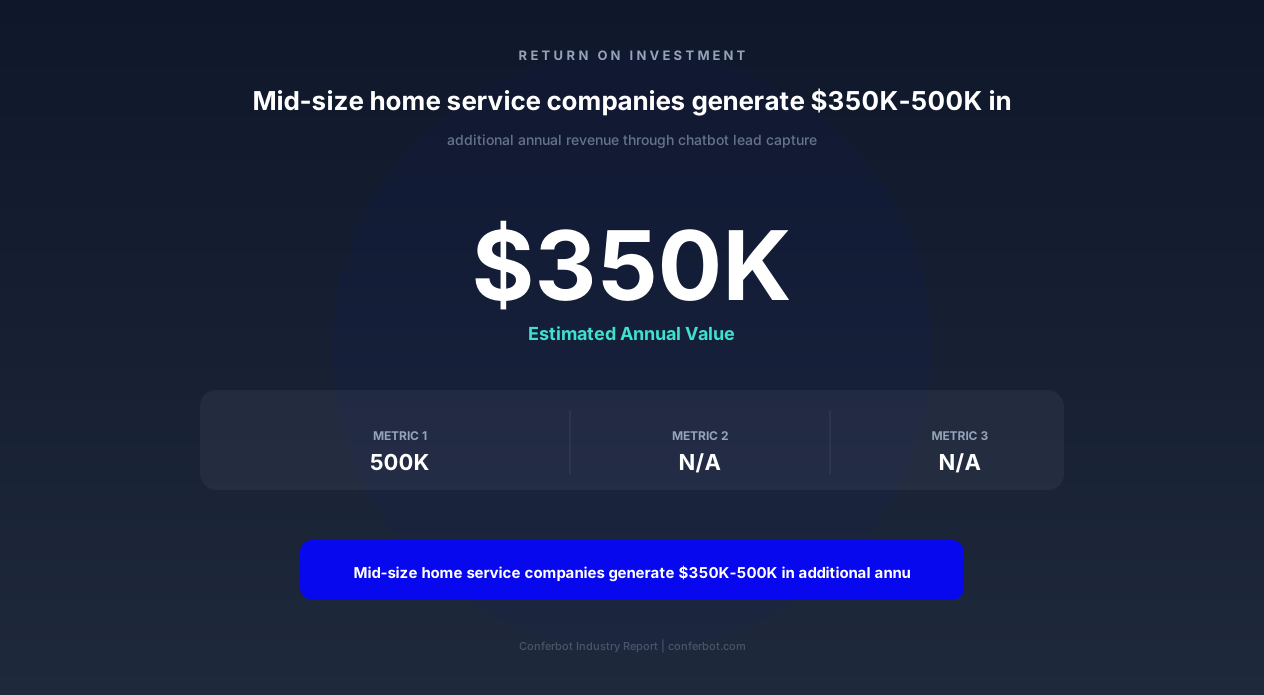
For a mid-size HVAC company running 8 trucks with average revenue of $1.8M annually, the chatbot's combined impact on lead capture, conversion, and schedule utilization typically generates $350,000-500,000 in additional annual revenue. The math: recovering 35% of previously lost after-hours leads (approximately 15-20 additional bookings per week at $800 average job value) contributes $600,000-800,000 in pipeline, with a 50-60% close rate generating $300,000-480,000 in realized revenue. The chatbot cost ($200-500/month) represents an ROI exceeding 5,000%.
Customer Experience Improvement
Beyond revenue metrics, customer satisfaction improves measurably. Homeowners dealing with a broken furnace at 10 p.m. get immediate acknowledgment and dispatch rather than an anxiety-inducing voicemail wait. Customers scheduling routine maintenance get instant confirmation rather than "we'll call you back." The on-my-way ETA notification (integrated with technician GPS) eliminates the "window anxiety" of not knowing when the technician will arrive. Post-service, the chatbot handles follow-up seamlessly -- confirming satisfaction, scheduling any needed follow-up work, and requesting reviews. Net Promoter Scores improve by 15-25 points after chatbot deployment, driven primarily by responsiveness and transparency improvements.
Trade-Specific Configurations: HVAC, Plumbing, Electrical, and Landscaping
While the core scheduling workflow is consistent across home service trades, each trade has specific qualification requirements, job scoping needs, pricing structures, and seasonal patterns that the chatbot addresses through trade-specific configurations.
HVAC Configuration
HVAC chatbot configuration includes: system type identification (central air, heat pump, mini-split, furnace type, package unit), symptom-based diagnostic questionnaire (not cooling, not heating, strange noises, short cycling, high bills), equipment age and brand collection (critical for parts preparation), and seasonal service differentiation (cooling season vs. heating season priorities). The chatbot handles the HVAC industry's complex pricing: flat-rate tune-ups ($89-149), diagnostic fees ($75-125 applied toward repair), and estimate-based repairs. Seasonal campaigns are particularly important for HVAC -- pre-season tune-up outreach in spring (AC) and fall (heating) fills the schedule during predictable demand windows. The chatbot manages these campaigns end-to-end: outreach to existing customers, scheduling, and confirmation.
Plumbing Configuration
Plumbing chatbot configuration addresses the trade's emergency-heavy nature (40-50% of plumbing calls are urgent). The chatbot distinguishes between: emergencies requiring immediate dispatch (active leaks, sewage backup, no water, burst pipes), same-day needs (clogged drains, running toilets, water heater failure), and schedulable work (fixture installation, repiping, water treatment). For each category, it collects relevant details: leak location and severity, affected fixtures, water shutoff valve accessibility, and property type (critical for estimating -- commercial plumbing differs from residential). The chatbot also handles drain cleaning pricing (flat rate by drain type and method) and sewer line diagnostics (camera inspection scheduling).
Electrical Configuration
Electrical work has the most complex licensing and safety requirements. The chatbot verifies that job requests match available technician certifications (journeyman vs. master electrician requirements vary by job type and jurisdiction). It collects: nature of electrical issue, which circuits or areas affected, panel type and age, home vintage (knob-and-tube, aluminum wiring risks in older homes), and whether the customer has a current electrical permit for renovation-related work. Safety assessment during intake is critical -- the chatbot provides immediate safety guidance for hazardous situations (sparking, burning smell, exposed wiring) while dispatching emergency response.
Landscaping and Lawn Care Configuration
Landscaping chatbot configuration handles the recurring-service model that dominates this trade. The chatbot manages: new customer onboarding (property assessment, service package selection, pricing based on lot size), recurring schedule setup (weekly mowing, bi-weekly, seasonal services), one-time project quoting (hardscaping, tree removal, irrigation installation), and seasonal service transitions (spring cleanup, fall leaf removal, winterization). Property size estimation -- either from customer-provided lot dimensions or integration with property data APIs -- enables instant pricing for standard services. The chatbot also handles the crew scheduling complexity unique to landscaping: weather-dependent scheduling with automatic reschedule communication when rain cancels a mowing day.
Multi-Trade Companies
Companies offering multiple trades (home service conglomerates, general contractors, property management maintenance teams) benefit from the chatbot's multi-trade routing capability. A single conversation can identify that a customer needs both a plumbing repair and an electrical panel upgrade, routing each to the appropriate trade team with proper scheduling coordination. Cross-trade upselling -- the plumbing chatbot mentioning that the company also offers HVAC services when a customer mentions their heating system is aging -- generates incremental revenue across divisions without aggressive sales tactics.
Integration with Field Service Management Platforms
The home service scheduling chatbot integrates with the field service management (FSM) platforms that home service companies use to manage their daily operations. This integration ensures chatbot-booked jobs flow seamlessly into existing dispatch workflows, technician schedules, and customer records.
ServiceTitan Integration
ServiceTitan is the dominant platform for residential HVAC, plumbing, and electrical companies in North America. The Conferbot integration connects through ServiceTitan's Open API to: create new customer records and job bookings, check technician availability against the dispatch board, attach job notes and uploaded photos to the service call, apply membership/service agreement status for priority scheduling, and trigger dispatch notifications. Jobs booked through the chatbot appear on the ServiceTitan dispatch board identically to phone-booked calls, maintaining the dispatcher's unified view. For companies using ServiceTitan's marketing module, lead source tracking attributes chatbot-originated jobs correctly for marketing ROI analysis.
Housecall Pro Integration
Housecall Pro serves a broad range of home service trades with a user-friendly platform popular among smaller operations (1-15 trucks). The integration provides: job creation with full detail capture, schedule checking against technician availability, automated dispatching to the assigned technician's mobile app, estimate and invoice generation triggered by chatbot interactions, and customer communication logging. Housecall Pro's built-in payment processing integrates with the chatbot's deposit collection capability for companies that require booking deposits for larger jobs or new customers.
Jobber Integration
Jobber is widely adopted by landscaping, cleaning, and general home service companies. The Conferbot integration supports Jobber's job-and-visit model, where recurring service clients have ongoing jobs with scheduled visits. The chatbot handles both one-time job creation and recurring service setup, creating the appropriate job structure in Jobber. For landscaping companies managing route-based scheduling, the chatbot considers route efficiency when presenting available dates -- offering dates when a crew is already scheduled in the customer's neighborhood minimizes drive time and maximizes daily productivity.
FieldEdge and Other Platforms
FieldEdge serves HVAC and plumbing companies with strong dispatching and flat-rate pricing capabilities. The integration connects the chatbot to FieldEdge's scheduling and customer management modules. For companies on other FSM platforms (ServiceM8, Kickserv, mHelpDesk, Service Fusion), Conferbot provides integration through their respective APIs or through Zapier/Make automation for platforms without native API support.
| Platform | Integration Method | Key Capabilities | Best For |
|---|---|---|---|
| ServiceTitan | Open API (bidirectional) | Full CRM, dispatch, scheduling, membership status | Mid-to-large HVAC, plumbing, electrical |
| Housecall Pro | API (bidirectional) | Job creation, scheduling, payments, dispatching | Small-to-mid home service companies |
| Jobber | API (bidirectional) | Jobs, visits, quotes, client management, routing | Landscaping, cleaning, general services |
| FieldEdge | API (bidirectional) | Scheduling, dispatch, flat-rate pricing, customer records | HVAC and plumbing focused companies |
| Service Fusion | API | Job scheduling, customer management, estimates | Multi-trade service companies |
| Zapier/Make | Automation connector | Basic job creation and notification for any platform | Companies on unsupported platforms |
For companies not currently using an FSM platform, the chatbot's built-in scheduling engine provides a functional dispatch calendar manageable from the Conferbot dashboard. This allows solo operators and small teams to benefit from chatbot scheduling without requiring a separate software subscription, with upgrade paths to FSM platforms as the business grows.
50,000+ businesses use Conferbot templates to automate conversations
Seasonal Campaigns and Proactive Outreach
Home service demand is heavily seasonal -- HVAC peaks in extreme weather months, landscaping peaks in spring and summer, plumbing emergencies spike in winter freeze events, and pest control peaks in spring and fall. Smart home service companies do not wait for reactive demand; they proactively fill their schedules with seasonal maintenance campaigns. The chatbot automates these campaigns end-to-end.
Campaign Workflow Automation
A seasonal campaign through the chatbot follows a structured sequence: (1) audience segmentation from your customer database (all customers with AC systems who haven't had a tune-up in 12+ months), (2) outreach messaging through preferred channels (WhatsApp, SMS, or email), (3) conversational booking for interested customers, and (4) scheduling optimization to fill available capacity efficiently. The chatbot handles the entire funnel -- from initial outreach through booked appointment -- without staff involvement in the routine cases. Staff are only engaged for non-standard requests or escalations.
HVAC Seasonal Campaigns
The two primary HVAC campaigns are spring AC tune-up (March-May) and fall heating tune-up (September-November). These campaigns serve multiple business objectives: generating predictable revenue during shoulder seasons, identifying equipment approaching end-of-life (creating replacement opportunities), reinforcing customer relationships with proactive service, and filling schedule capacity before peak emergency season begins. The chatbot message for these campaigns is straightforward: "Hi [Name], it's been [X months] since your last AC tune-up. Would you like to schedule your annual maintenance before summer heat arrives? $89 tune-up includes full system inspection, refrigerant check, and filter replacement." A response of "yes" or "schedule me" triggers the booking flow immediately.
Landscaping Season Transition Campaigns
Landscaping companies use the chatbot for spring activation (resume weekly service, spring cleanup, mulch/fertilization), mid-season upsell (irrigation checks, tree trimming, hardscape projects), and fall closure (final mowing, leaf removal, winterization, holiday lighting). The chatbot manages the annual service calendar for recurring customers, proactively confirming service resumption dates and communicating any price adjustments for the new season. New customer acquisition during peak interest periods (first warm weekends of spring) benefits enormously from instant chatbot response -- a homeowner browsing landscaping companies on a Saturday afternoon who gets immediate engagement and a quote is dramatically more likely to book than one who has to wait until Monday.
Emergency Preparedness Campaigns
Plumbing companies run freeze-preparedness campaigns before winter cold snaps, offering pipe insulation services, water heater inspections, and emergency shutoff valve checks. HVAC companies offer furnace inspections before heating season. These campaigns provide genuine value to homeowners (preventing expensive emergency situations) while generating scheduled work during pre-season periods and building the relationship that makes the customer call your company when an emergency does occur. The chatbot can trigger weather-based outreach -- when a freeze warning is issued for your service area, automated messages to customers without winterization on record offer last-chance service scheduling.
Review and Referral Campaigns
Post-service review campaigns are automated through the chatbot: 24 hours after service completion, the chatbot sends a satisfaction check. Satisfied customers receive a direct link to leave a Google review. The impact is substantial: home service companies using automated review requests see their Google review volume increase by 200-400%, which directly improves local search ranking -- the primary discovery channel for home service companies. Referral campaigns offer existing customers incentives (credit toward future service) for referring neighbors, with the chatbot managing the referral tracking and credit application automatically.
Deployment, Configuration, and Growth Optimization
Deploying a home service scheduling chatbot is designed to be fast -- most companies are booking jobs through their chatbot within 3-5 days of starting setup. The platform's no-code builder ensures that office managers and business owners can manage the chatbot without technical skills or IT departments.
Phase 1: Business Configuration (Day 1-2)
Initial setup defines your business parameters: service area (zip codes or radius from your office/warehouse), services offered (organized by trade and pricing type), business hours and after-hours protocols, emergency dispatch rules, and basic pricing for flat-rate services. The trade-specific templates pre-populate common configurations -- an HVAC company template includes standard service types (tune-up, diagnostic, repair, installation, duct cleaning), common system types for identification, and typical pricing structures. You customize these templates to match your specific offerings, pricing, and policies rather than building from scratch.
Phase 2: FSM Integration (Days 2-4)
Connecting to your field service management platform (ServiceTitan, Housecall Pro, Jobber, etc.) enables the chatbot to check technician availability, create job bookings, and access customer records. Integration setup involves: API key provisioning from your FSM platform, connection testing to verify data access, schedule sync confirmation, and test booking creation to verify end-to-end flow. For companies without an FSM platform, the chatbot's built-in scheduling calendar provides immediate functionality with the option to add FSM integration later as the business scales.
Phase 3: Channel Deployment (Days 3-5)
The chatbot deploys to your customer-facing channels. Website widget installation requires adding a single script tag to your site (works with any website platform). Google Business Profile messaging activation connects the chatbot to your GBP listing. WhatsApp Business setup enables the chatbot on WhatsApp where many service-area customers prefer to communicate. Each channel is configured from the same Conferbot dashboard with channel-specific adjustments (shorter messages for SMS/WhatsApp, richer formatting for web widget).
Phase 4: Testing and Staff Training (Days 4-5)
Before full launch, test the complete flow: submit a service request, verify it appears in your FSM system, confirm the on-call notification for emergency simulation, and validate the reminder sequence. Staff training covers: how to monitor chatbot conversations in real-time, when and how to take over a conversation manually, how chatbot bookings appear in their existing dispatch tools, and how to update chatbot settings (add a new service, change pricing, adjust scheduling rules). The goal is seamless integration with existing workflows -- the chatbot should feel like adding a very efficient 24/7 dispatcher, not like adopting a new system.
Ongoing Optimization
Post-launch analytics reveal optimization opportunities: which service requests have the highest conversion rate (prioritize those in your marketing), which questions cause chatbot confusion (add training for those patterns), what times generate the most bookings (align staffing), and which channels drive the most valuable leads. Monthly review of these analytics, combined with A/B testing of messaging and pricing presentation, typically improves chatbot booking rates by 5-10% month over month during the first six months. The Conferbot analytics dashboard provides all metrics needed for this optimization without requiring external analytics tools or complex reporting.
Home Service Scheduling FAQ
Everything you need to know about chatbots for home service scheduling.
Why Use a Template vs Building from Scratch?
Templates encode years of optimization data into the conversation flow before you start.
| Factor | Conferbot Template | Build from Scratch | Hire a Developer |
|---|---|---|---|
| Time to deploy | 10 minutes | 2-8 hours | 2-6 weeks |
| Cost | Free | Your time | $5,000-$25,000 |
| Day-1 conversion | 15-22% | 5-8% | 10-15% |
| Proven flows | Yes, data-tested | No | Depends |
| Updates included | Automatic | Manual | Paid |
| Multi-channel | 8+ channels | 1 channel | Extra cost |
| Analytics | Built-in | Must build | Extra cost |
Ready to Deploy Home Service Scheduling?
Join 50,000+ businesses. Free forever plan available. No credit card required.