
Driving School Chatbot
Free Education And Training Chatbot Template
A comprehensive driving school chatbot that helps prospective students explore programs, book lessons, check progress, view pricing, and get answers about driver education. Built for driving schools, driver ed programs, and CDL training centers to automate enrollment, scheduling, and student communication.


What Is a Driving School Chatbot?
A driving school chatbot is a conversational AI assistant that automates the entire student journey for driver education businesses - from initial inquiry and enrollment through lesson scheduling, progress tracking, road test preparation, and certificate issuance. In 2026, with over 39,000 driving schools operating across the United States and an estimated 4.1 million new drivers entering the licensing pipeline each year (FHWA Driver Licensing Statistics), the competition for students is fierce. Schools that respond to inquiries within 5 minutes are 21 times more likely to convert that prospect into an enrolled student compared to those that respond within 30 minutes (InsideSales.com). Yet the typical driving school - often a small business with 2-8 instructors - cannot staff a receptionist around the clock. The chatbot solves this by providing instant, intelligent responses to every inquiry regardless of time, day, or channel, while simultaneously managing the complex scheduling logistics that make driving school operations uniquely challenging.
Why Driving Schools Need Chatbot Automation
Driving schools face a unique operational challenge: their product is a one-to-one service (one instructor, one student, one car) delivered across highly variable schedules, with a student population that turns over completely every 3-6 months. Unlike a gym or tutoring center where students stay for years, driving schools must continuously generate new leads, convert them to enrollments, and manage them through a defined program before they graduate. This constant churn means the administrative burden of enrollment, scheduling, rescheduling, progress communication, and document processing never decreases - it runs at full intensity year-round. A chatbot addresses this by automating the repetitive 80% of student interactions while routing the complex 20% to human staff, effectively multiplying the school's administrative capacity without adding headcount.
The driving school industry also contends with extreme seasonality: summer months and the period when teens turn 15-16 create enrollment surges that can be 3-4 times higher than winter lows. During peak season, phone lines are jammed, emails go unanswered for days, and prospective students simply move to the competitor who responds first. The chatbot eliminates this capacity bottleneck by handling unlimited simultaneous conversations, ensuring that the 200th inquiry on a busy Saturday receives the same instant, thorough response as the first inquiry on a quiet Tuesday morning.
Who Deploys This Template
- Independent driving schools: Small to mid-size schools with 2-10 instructors that need to maximize enrollment without adding front desk staff, handling everything from teen programs to adult lessons and defensive driving courses.
- Multi-location driving school franchises: Chains that need consistent student experience across locations while centralizing inquiry handling and distributing bookings to the nearest available location and instructor.
- High school driver education programs: Schools offering driver ed as part of the curriculum that need to manage parent communication, consent forms, scheduling, and behind-the-wheel hour tracking at scale.
- Commercial driving schools (CDL): Schools offering Class A, B, or C commercial driver license training that manage longer programs with more complex scheduling, DOT compliance requirements, and employer-sponsored enrollments.
- Motorcycle and specialty schools: Programs offering motorcycle safety courses, advanced defensive driving, or senior driver refresher courses that benefit from automated enrollment and scheduling.
- Online driver education providers: Schools offering state-approved online classroom portions that need to convert website visitors into enrolled students and manage the hybrid online-plus-behind-the-wheel program delivery.
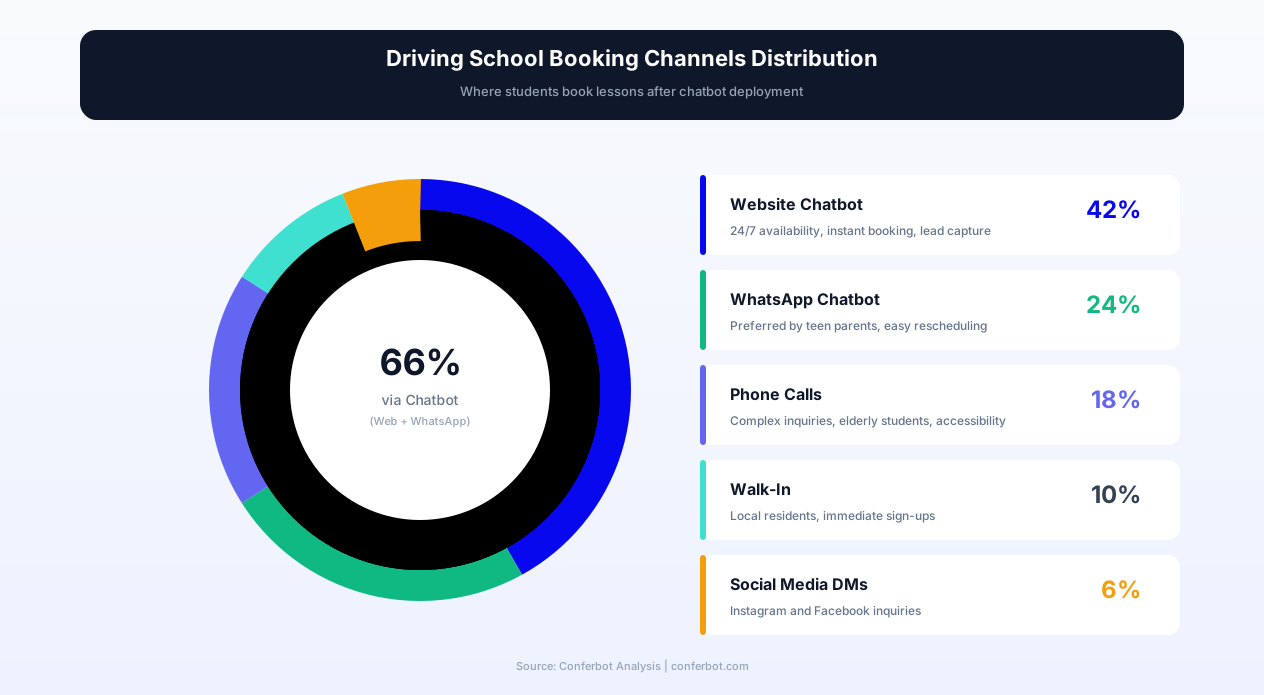
Deploy on your website for 24/7 enrollment and booking, on WhatsApp for lesson reminders and rescheduling, or on Facebook Messenger where parents often discover driving schools. Built with Conferbot's AI chatbot builder and connected to your scheduling system through the API integration framework.
How Enrollment and Lesson Booking Works
The driving school chatbot transforms the enrollment and lesson booking process from a phone-tag frustration into a seamless digital experience. Rather than playing voicemail roulette during busy hours or waiting for email replies, prospective students and parents interact with a guided conversation that captures all required information, presents available options, and confirms bookings instantly - all within a single session that typically takes 3-4 minutes versus the 15-20 minute phone call it replaces.
Stage 1: Initial Inquiry and Program Matching
When a visitor arrives on the driving school's website, the chatbot initiates a welcoming conversation that quickly identifies their needs. The chatbot determines: whether they are a teen or adult student (different programs, requirements, and pricing), what type of license they seek (standard, commercial CDL, motorcycle endorsement), whether they need the full program (classroom plus behind-the-wheel) or specific components (just behind-the-wheel if classroom was completed elsewhere), their current license status (learner's permit, out-of-state transfer, license renewal, first-time), and their location preference if the school has multiple branches. Based on these answers, the chatbot presents the appropriate program with pricing, schedule options, and what is included - eliminating the confusion that arises when students visit a generic pricing page with 12 different package options.
Stage 2: Availability Check and Scheduling
Once the program is identified, the chatbot accesses real-time scheduling data to present available lesson slots. For behind-the-wheel lessons, the chatbot considers: instructor availability (each instructor has their own schedule), vehicle availability (the school may have a limited fleet), student's preferred times (after school, weekends, specific days), pick-up location (many schools offer student pick-up, which affects scheduling based on drive time), and lesson duration preferences (1-hour or 2-hour sessions). The chatbot presents available options: "For your 6-hour behind-the-wheel package, I have the following openings this week: Tuesday 3:30 PM with Instructor Mike (pick-up from Lincoln High), Thursday 4:00 PM with Instructor Sarah (pick-up from your home address), or Saturday 9:00 AM with either instructor. Which works best for your schedule?" This real-time availability prevents double-bookings and eliminates the back-and-forth of traditional scheduling.
Stage 3: Information Collection and Compliance
Driving school enrollment requires specific documentation that varies by state and student age. For teen students, the chatbot collects: student's full legal name, date of birth, learner's permit number (or guidance on obtaining one), parent or guardian name and contact information (required for students under 18), school enrollment verification (some states require proof of school enrollment), and any medical conditions affecting driving (vision requirements, physical limitations). The chatbot validates information in real time: "I see your date of birth indicates you will turn 16 on March 15th. In your state, behind-the-wheel lessons can begin at 15 years and 6 months with a valid learner's permit. You are eligible to start! Do you have your learner's permit yet?" This compliance awareness prevents enrollment errors and helps parents understand requirements before arriving at the school.
Stage 4: Package Selection and Payment
The chatbot presents package options tailored to the student's needs with clear pricing and value comparison. Rather than a static pricing page, the chatbot provides contextual recommendations: "Based on your needs, I recommend our Complete Teen Package ($549): 30 hours of classroom instruction, 6 hours of behind-the-wheel training, 6 hours of observation, and road test preparation. This package includes pick-up and drop-off from your school or home. We also offer a Premium Package ($699) that adds 4 extra behind-the-wheel hours and a mock road test - students who take the Premium Package pass their road test on the first attempt 94% of the time versus 78% for the standard package." The chatbot can process payments through integrated payment gateways or send a secure payment link, converting the conversation directly into revenue without requiring the student to navigate to a separate checkout page.
Stage 5: Confirmation and Onboarding
After enrollment and first-lesson booking, the chatbot sends comprehensive confirmation: lesson date, time, instructor name, pick-up location, what to bring (permit, glasses if required, comfortable shoes), what to expect during the first lesson, and links to any required pre-lesson materials (online classroom modules, parent consent forms). For programs with classroom components, the chatbot provides the classroom schedule, location, and any required materials. This thorough onboarding reduces first-lesson anxiety (particularly for nervous teen drivers) and ensures students arrive prepared - preventing wasted lesson time and frustrated instructors dealing with unprepared students.
Student Communication and Automated Reminders
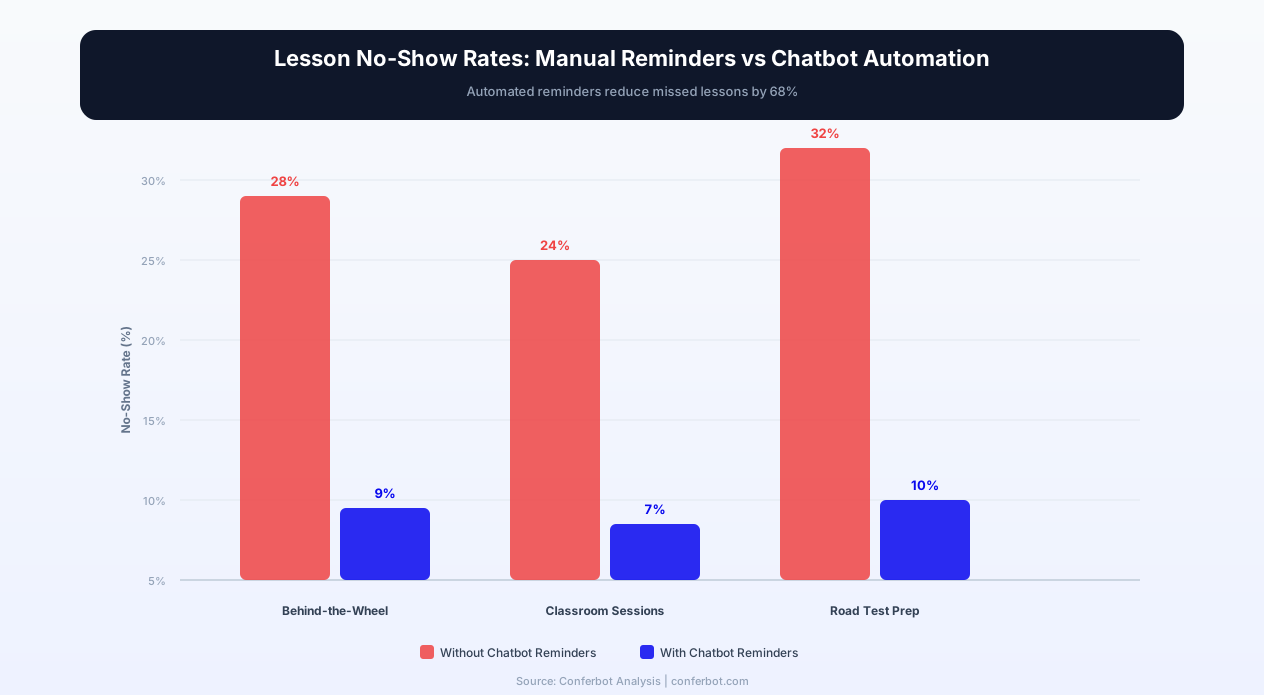
No-shows and late cancellations are the silent revenue killers of the driving school industry. When a student misses a behind-the-wheel lesson, the instructor's time and the vehicle are wasted - that slot cannot be resold on short notice. Industry data shows that driving schools without automated reminders experience no-show rates of 24-32% for behind-the-wheel lessons, compared to just 7-10% for schools using chatbot-based reminder systems. For a school conducting 40 lessons per day, reducing no-shows from 28% to 9% recovers approximately 7.6 additional lessons daily - at $50 per lesson, that is $380 per day or over $98,000 in annual recovered revenue.
Multi-Touch Reminder Sequences
The chatbot deploys a strategic reminder sequence designed to maximize attendance without annoying students. The sequence includes: a confirmation message immediately after booking (with lesson details and an easy reschedule option), a 48-hour advance reminder ("Your behind-the-wheel lesson is in 2 days - Thursday at 3:30 PM with Instructor Mike. Pick-up at Lincoln High School main entrance. Reply CHANGE to reschedule or CANCEL if needed"), a 2-hour advance reminder on the day of the lesson ("Your driving lesson starts in 2 hours! Instructor Mike will pick you up at Lincoln High School main entrance at 3:30 PM. Remember to bring your learner's permit. Excited for your lesson!"), and a post-lesson follow-up ("Great job today! Instructor Mike noted you did well with lane changes and highway merging. Your next lesson focuses on parallel parking - scheduled for Tuesday at 4:00 PM"). Each touchpoint reinforces the appointment while providing useful context that keeps students engaged.
Intelligent Rescheduling
When students need to reschedule, the chatbot handles it without involving front desk staff. The student simply replies to any reminder with a reschedule request, and the chatbot presents alternative available slots based on the same instructor (for continuity) or any instructor (for faster rebooking). The chatbot enforces the school's cancellation policy: "I can reschedule your Thursday lesson at no charge since you are giving us more than 24 hours notice. Here are available slots with Instructor Mike this week: Friday at 4:00 PM, Saturday at 10:00 AM, or next Tuesday at 3:30 PM. If none of these work, I can check other instructor schedules." This frictionless rescheduling converts would-be no-shows into rebooked lessons - schools using this feature report that 65% of cancellation-bound students rebook within the same week when rescheduling is this easy.
Weather-Related Communication
Weather significantly impacts driving lessons - particularly for new drivers who should not be learning in severe conditions, and for road test preparation where conditions affect test availability. The chatbot integrates with weather data to send proactive communications: "Heavy rain is forecast for your lesson time tomorrow. Behind-the-wheel lessons will proceed as scheduled (learning in various weather conditions is important!), but if you would prefer to reschedule, I can find an alternative slot. Your instructor will adjust the lesson plan to focus on wet-road driving techniques." For severe weather that forces cancellations (ice storms, extreme heat warnings), the chatbot notifies all affected students simultaneously and offers rebooking - a process that would take front desk staff hours of individual phone calls.
Parent Communication Channel
For teen students, parent communication is essential but creates double the messaging workload. The chatbot manages parallel communication streams: the student receives lesson reminders and progress updates, while the parent receives enrollment confirmations, payment receipts, progress summaries, and milestone notifications ("Sarah completed her 4th behind-the-wheel hour today. She is making excellent progress with highway driving. She has 2 hours remaining before she is eligible to schedule her road test"). This dual communication keeps parents informed and confident in their investment without requiring the school to manually update parents - which, for a school with 200 active teen students, would be an impossible task without automation. Connect parent communication through WhatsApp or Messenger channels where parents are most responsive.
Milestone and Achievement Notifications
The chatbot celebrates student milestones to maintain engagement and motivation throughout the program: "Congratulations! You have completed 15 hours of classroom instruction - halfway through your classroom requirement! Your next classroom session is Wednesday at 6:00 PM." For behind-the-wheel training: "You have now completed 4 of your 6 behind-the-wheel hours. Instructor Mike reports you are progressing well with parking maneuvers. Your final 2 hours will focus on road test preparation. When you are ready, I can help you schedule your DMV road test!" These positive touchpoints transform the driving school experience from a transactional service into an engaging learning journey, increasing completion rates and generating positive reviews.
Ready to try Driving School Chatbot?
Deploy this template in under 10 minutes. No coding required.
Use This Template Free →Course Progress Tracking and Road Test Preparation
Driving education programs involve multiple components - classroom hours, behind-the-wheel hours, observation hours, and in many states, specific skill demonstrations - that must all be completed before a student is eligible for their road test. Tracking these requirements manually is error-prone: students lose track of their hours, instructors forget to log sessions, and administrative staff spend hours each week reconciling records. The chatbot provides real-time progress visibility to all stakeholders: students know exactly where they stand, parents can check progress without calling the office, and instructors have access to each student's history before every lesson.
Real-Time Progress Dashboard via Chat
Students can check their progress at any time by messaging the chatbot: "How am I doing on my driving program?" The chatbot responds with a comprehensive status: "Here is your progress, Alex: Classroom Instruction: 24 of 30 hours completed (80%) - 6 hours remaining, your next class is Wednesday 6 PM. Behind-the-Wheel Training: 4 of 6 hours completed (67%) - 2 hours remaining, your next lesson is Saturday 10 AM with Instructor Mike. Observation Hours: 4 of 6 hours completed (67%) - 2 hours remaining, these will be scheduled alongside other students' lessons. Skills Checklist: 8 of 12 maneuvers signed off. Remaining: parallel parking, three-point turn, highway merging, night driving. Estimated Program Completion: March 15th if current pace continues." This instant visibility reduces the volume of "how many hours do I have left?" phone calls that consume front desk time - schools report 40-60% reduction in status-inquiry calls after deploying progress tracking.
Instructor Notes and Skill Assessment
After each lesson, instructors log brief notes through the chatbot or a connected system, and these notes are shared with the student in an encouraging, constructive format: "Lesson #4 Summary from Instructor Mike: Great improvement on lane changes today - you are checking mirrors consistently now. We worked on parallel parking and you are getting closer - practice visualizing the reference points we discussed. Next lesson we will continue parallel parking and add three-point turns. Keep up the great work!" These notes serve multiple purposes: they help students focus their practice between lessons, they provide parents with visibility into what is being taught, and they create a documented record of instruction that protects the school in any dispute about lesson content or student readiness.
Road Test Readiness Assessment
One of the most valuable chatbot features is the road test readiness assessment. Based on instructor skill ratings, completed hours, and performance patterns, the chatbot advises students on their readiness: "Based on your instructor's assessments, you are performing well on 10 of 12 required maneuvers. Parallel parking and three-point turns need additional practice. I recommend scheduling 1-2 additional practice hours focused on these skills before your road test. Students who score 'proficient' on all 12 maneuvers before testing have a 94% first-attempt pass rate." This data-driven guidance prevents students from scheduling road tests prematurely (and failing, which damages the school's pass-rate reputation) while ensuring ready students are not unnecessarily delayed. Track these insights with chatbot analytics to continuously improve your program outcomes.
DMV Road Test Scheduling Assistance
When students are ready for their road test, the chatbot guides them through the DMV scheduling process: which documents to bring, how to book an appointment (with links to the state DMV scheduling system), what to expect on test day, common mistakes to avoid, and tips for managing test anxiety. Some schools that offer road test vehicles and accompaniment can use the chatbot to coordinate: "I can schedule your road test prep lesson for the morning of your DMV appointment. Instructor Sarah will pick you up at 8 AM, run through a 30-minute practice session near the DMV test route, and then accompany you to your 9:30 AM road test appointment in our dual-control vehicle. Would you like me to book this?"
Certificate and Document Generation
Upon program completion, the chatbot automates the documentation process: generating completion certificates, notifying insurance companies of course completion (for the insurance discount that many states mandate), updating student records for state reporting requirements, and sending final congratulations with practical next-steps: "Congratulations on completing your driver education program! Your certificate of completion has been sent to your email and a copy sent to your parent. You can present this certificate at the DMV when you take your road test. We have also notified your insurance provider - you should see a discount on your next renewal. We would love a Google review if you enjoyed your experience with us!"
Key Features of the Driving School Chatbot Template
The driving school chatbot template includes features specifically designed for the unique operational challenges of driver education: complex multi-resource scheduling (instructors, vehicles, time slots), regulatory compliance tracking, multi-stakeholder communication (students, parents, instructors), and seasonal demand management. These features address the specific pain points that driving school owners identify as their biggest operational challenges.
Feature Matrix
| Feature | Description | Operational Benefit | Student Benefit |
|---|---|---|---|
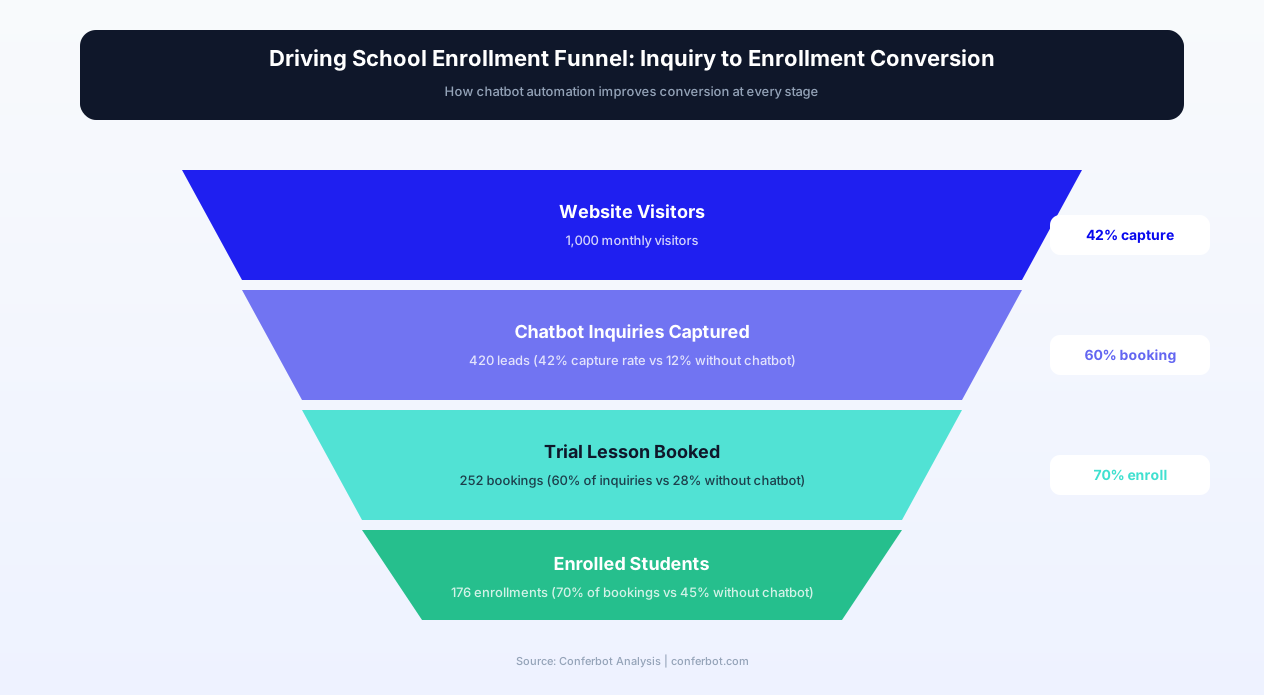
| Instant lead capture | Engages every website visitor with a guided enrollment conversation within 3 seconds | 42% lead capture rate vs 12% from static contact forms | Immediate answers to questions without waiting on hold |
| Multi-resource scheduling | Coordinates instructor availability, vehicle fleet, pick-up logistics, and student preferences simultaneously | Eliminates double-bookings and reduces scheduling time by 85% | See all available slots instantly and book in under 2 minutes |
| Automated reminder sequences | 48-hour, same-day, and 2-hour reminders with one-tap rescheduling | Reduces no-show rate from 28% to 9%, recovering $98K+ annually | Never forget a lesson with friendly, helpful reminders |
| Progress tracking | Real-time tracking of classroom hours, behind-the-wheel hours, observation hours, and skills checklist | Reduces status-inquiry calls by 55% and eliminates manual hour tracking | Always know exactly where you stand in your program |
| Parent communication portal | Parallel messaging to parents with progress updates, payment confirmations, and milestone alerts | Eliminates need to update parents individually, saving 8+ hours per week | Parents stay informed without calling the school |
| Road test readiness scoring | Data-driven assessment of student readiness based on instructor ratings and skill completion | Improves first-attempt pass rate from 78% to 94%, protecting school reputation | Confidence that you are truly ready before scheduling the road test |
| Weather-aware scheduling | Proactive weather alerts with automated rescheduling for severe conditions | Prevents unsafe lessons and reduces weather-related scheduling chaos | Safety-first approach with hassle-free rebooking |
| Package upsell engine | Contextual recommendations for additional lessons, premium packages, and add-on services | Increases average revenue per student by 18% through automated upsells | Personalized recommendations for additional practice where needed |
| Review generation | Post-completion review requests with direct links to Google and Yelp profiles | Increases review volume by 340% and improves average rating | Quick way to share your experience and help other students choose |
| Multi-language support | Conversations in English, Spanish, Chinese, and other languages common in your market | Serves immigrant communities without requiring multilingual staff | Comfortable enrollment experience in preferred language |
Multi-Resource Scheduling in Detail
The scheduling engine is the template's most operationally critical feature because driving school scheduling is fundamentally more complex than simple appointment booking. Each lesson requires the simultaneous availability of four resources: an instructor, a vehicle, the student, and potentially a pick-up time that accounts for travel distance. The chatbot evaluates all four constraints simultaneously when presenting available slots. If a school has 5 instructors, 4 vehicles, and serves a 20-mile radius for student pick-up, the scheduling permutations number in the thousands per day. The chatbot resolves these in milliseconds, presenting students with only validated, bookable slots - eliminating the scheduling conflicts that plague schools relying on paper calendars or basic scheduling software.
The scheduling engine also optimizes instructor routes for schools that offer pick-up service. If Instructor Mike has a 3:30 PM lesson at Lincoln High School and a 5:00 PM lesson in the neighboring suburb, the chatbot avoids booking a 4:00 PM lesson on the other side of town that would require an impractical cross-city drive. This route-aware scheduling maximizes instructor productivity by reducing dead time between lessons - schools report a 12-15% increase in daily lesson capacity simply from smarter scheduling that eliminates wasted travel time.
Intelligent Package Recommendations
Rather than presenting a confusing pricing page with 8-12 package options, the chatbot conducts a brief needs assessment and recommends the optimal package. For a nervous teen with no prior driving experience, the chatbot recommends the premium package with extra hours. For an adult with international driving experience needing US licensing, it recommends the abbreviated refresher package. For a student who completed classroom elsewhere and only needs behind-the-wheel, it presents just the driving-only options. This consultative selling approach increases conversion rates because students feel guided rather than overwhelmed, and it increases average transaction value because the chatbot naturally explains the value of premium options in context - "Students who add the road test prep session pass on their first attempt 94% of the time, saving the $75 retest fee and weeks of waiting for another DMV appointment."
ROI and Business Impact for Driving Schools
Driving schools operate on tight margins: the primary assets (instructors and vehicles) have fixed costs whether they are utilized or not. Every empty lesson slot, every no-show, every lost lead represents revenue that cannot be recovered. The chatbot's ROI comes from three primary sources: converting more inquiries into enrollments (revenue growth), reducing no-shows and late cancellations (revenue recovery), and automating administrative tasks (cost reduction). Together, these impacts typically deliver 200-400% annual ROI for driving schools of all sizes.

ROI Breakdown by School Size
| Metric | Small School (2-3 instructors) | Mid-Size School (4-8 instructors) | Large School / Franchise (9+ instructors) |
|---|---|---|---|
| Monthly website inquiries | 80-150 | 200-500 | 500-2,000+ |
| Lead capture improvement | 12% to 38% (+26%) | 12% to 42% (+30%) | 12% to 45% (+33%) |
| Additional monthly enrollments | 8-15 | 25-60 | 60-200+ |
| Revenue from new enrollments (annual) | $28,800 - $54,000 | $90,000 - $216,000 | $216,000 - $720,000+ |
| No-show rate reduction | 26% to 10% | 28% to 9% | 30% to 8% |
| Recovered lesson revenue (annual) | $18,200 | $62,400 | $156,000+ |
| Admin time saved (hours/week) | 6-8 | 12-18 | 25-40+ |
| Admin cost savings (annual) | $7,200 | $14,400 | $36,000+ |
| Upsell/upgrade revenue (annual) | $4,800 | $14,400 | $36,000+ |
| Total annual impact | $59,000 - $84,200 | $181,200 - $307,200 | $444,000 - $948,000+ |
| Chatbot annual cost | $3,600 - $6,000 | $6,000 - $12,000 | $12,000 - $24,000 |
| Annual ROI | 890% - 1,503% | 1,510% - 2,460% | 1,850% - 3,850%+ |
The Lead Response Speed Advantage
The single highest-ROI capability of the driving school chatbot is instant lead response. Research from Lead Connect shows that 78% of customers buy from the company that responds first to their inquiry. For driving schools, the typical response time is 4-8 hours (the owner checks emails between lessons), while the chatbot responds in under 3 seconds. During the hours when the school is closed (evenings, weekends - when parents are most likely to research driving schools), the chatbot captures leads that would otherwise visit a competitor's site. Schools report that 34% of their chatbot-captured leads come in between 8 PM and 8 AM - hours when no human staff is available. Without the chatbot, these leads leave a voicemail (that may never be returned) or fill out a contact form (that sits until Monday morning). With the chatbot, they receive immediate information, get their questions answered, and in many cases, enroll and pay on the spot.
Operational Efficiency Gains
Beyond direct revenue impact, the chatbot creates operational efficiencies that improve the school's overall capacity. Scheduling automation eliminates the 15-20 minutes per booking that staff spend on the phone confirming availability, collecting information, and processing enrollment. For a school processing 40 bookings per week, that is 10-13 hours of staff time redirected to higher-value activities. Automated reminders eliminate the 4-6 hours per week spent making reminder calls and chasing confirmations. Progress tracking automation eliminates the 3-5 hours per week spent updating student records and responding to "how many hours do I have left?" inquiries. Combined, these efficiencies free 17-24 hours of administrative time per week - equivalent to a half-time to full-time employee position, which for a small driving school represents significant payroll savings.
Competitive Differentiation
In a market where most driving schools still rely on phone calls and paper scheduling, offering a modern digital booking experience creates meaningful competitive differentiation. Students and parents - particularly tech-savvy teens and their millennial/Gen-X parents - prefer self-service digital interactions. Schools with chatbot booking report 23% higher enrollment from web traffic compared to competitors with phone-only enrollment processes. The chatbot also generates significantly more Google reviews through automated post-completion review requests, improving the school's local search visibility and creating a virtuous cycle of more visibility, more inquiries, and more enrollments. Monitor competitive performance through Conferbot analytics to optimize your conversion funnel continuously.
businesses worldwide use Conferbot templates to automate conversations
Managing Teen vs Adult Driver Education Programs
Driving schools serve two fundamentally different student populations - teens and adults - with different regulatory requirements, communication needs, scheduling patterns, and program structures. The chatbot manages both populations simultaneously while maintaining the distinct workflows, messaging, and compliance requirements that each demands.
Teen Driver Programs
Teen driver education is the bread and butter of most driving schools, but it comes with unique complexities. The chatbot manages these through specialized workflows for the teen student journey.
Age and permit verification: The chatbot verifies that the teen meets minimum age requirements for their state (typically 15 or 15.5 years for a learner's permit, 16 for behind-the-wheel training) and checks learner's permit status. State requirements vary significantly - the chatbot is configured with state-specific rules to ensure compliance.
Parent/guardian involvement: For students under 18, the chatbot manages dual communication: enrollment conversations with parents (who make the purchasing decision and sign consent forms), scheduling conversations with both students and parents, progress reports to parents, and financial communications (payment receipts, additional lesson packages) exclusively to parents. The chatbot routes each message type to the appropriate recipient without requiring the school to manage two contact lists manually.
Graduated licensing compliance: Most states have graduated driver licensing (GDL) programs with specific hour requirements that vary by jurisdiction. The chatbot tracks compliance with these requirements: "Your state requires 50 hours of supervised driving practice (10 at night) before you can apply for a full license. Our program covers 6 of those hours. After completing our program, you will need 44 additional hours of practice with a licensed adult. I can provide a practice log template for tracking those hours." This compliance guidance positions the school as a knowledgeable, trustworthy authority - increasing parent confidence and reducing liability.
School-year scheduling: Teen schedules revolve around the school calendar: lessons must be scheduled around class times, extracurricular activities, and exam periods. The chatbot accounts for school schedules: "I notice your preferred lesson time of 3:00 PM may conflict with after-school activities. Would 4:30 PM or 5:00 PM work better on school days? We also have Saturday morning slots that many students find convenient." During school breaks, the chatbot promotes intensive programs: "Spring break is coming up! We offer a 3-day intensive behind-the-wheel package - complete all 6 hours during break so you do not have to schedule around school. Would you like details?"
Adult Driver Programs
Adult students - including immigrants obtaining US licenses, adults who never learned to drive, individuals reinstating suspended licenses, and seniors needing refresher courses - have different needs that the chatbot addresses through separate conversation flows.
Sensitivity to adult learner anxiety: Many adult learners feel embarrassment about learning to drive at an older age. The chatbot's tone is adjusted for adult conversations: professional, respectful, and reassuring without being patronizing. "Many of our adult students are professionals who never needed to drive in their previous city, or new residents from countries with different driving standards. Our adult program is designed specifically for experienced adults learning to drive - you will never be in a class with teenagers."
Flexible scheduling for working adults: Adults need evening and weekend scheduling to fit around work obligations. The chatbot prioritizes these time slots for adult students and offers intensive weekend packages: "Our Adult Accelerated Package includes 4 hours of behind-the-wheel training condensed into two Saturday sessions. Many working professionals complete their behind-the-wheel requirements in just 2-3 weekends."
International license transfers: For immigrants and relocating residents, the chatbot guides them through the state-specific process for converting international or out-of-state licenses: which documents are needed, whether a road test is required (varies by originating country/state), and how the school's refresher lessons prepare them for local driving conditions and regulations that may differ from their previous driving environment.
Defensive Driving and Insurance Discount Courses
Many schools offer defensive driving courses that qualify students for insurance discounts or traffic ticket dismissal. The chatbot manages enrollment for these distinct programs: "Our 6-hour defensive driving course is approved by the state for insurance premium discounts (typically 5-10% reduction for 3 years) and traffic ticket point reduction. The course is available in-classroom ($75) or fully online ($55). Both options qualify for the same insurance discount. Would you like to enroll?" These courses are high-margin offerings that the chatbot can cross-sell to existing and past students - "It has been 3 years since you completed our teen driver program. Did you know you can take our online defensive driving course to receive an insurance discount? Most students save $200-400 per year on premiums."
Commercial Driver License (CDL) Programs
Schools offering CDL training face even more complex program management: multi-week programs with theory and practical components, DOT medical certification requirements, commercial vehicle scheduling, employer-sponsored enrollments with third-party billing, and regulatory compliance with FMCSA training requirements. The chatbot manages CDL-specific workflows: verifying candidate eligibility (age requirements, medical certification status, driving record), explaining program options (Class A, B, or C, with endorsements for hazmat, tanker, or passenger vehicles), coordinating employer sponsorship paperwork, and tracking the extensive hour requirements for CDL programs (typically 160+ hours of combined classroom and behind-the-wheel training).
Setup Guide: Deploying Your Driving School Chatbot
Deploying the driving school chatbot requires configuring your program offerings, scheduling rules, compliance requirements, and communication workflows. This guide covers the implementation process with specific attention to the operational realities of driving school businesses - from single-location independent schools to multi-branch franchises.
Phase 1: Program and Pricing Configuration (Days 1-3)
Define your program catalog within the chatbot: list each program you offer (teen complete, teen behind-the-wheel only, adult beginner, adult refresher, defensive driving, CDL, motorcycle), with pricing, included hours, schedule options, and eligibility requirements. Configure package tiers if applicable (standard, premium, intensive). Set up your pricing rules including discounts (sibling discounts, referral bonuses, seasonal promotions, early enrollment pricing) and payment options (full payment, installment plans, employer sponsorship). This configuration ensures the chatbot presents accurate, current pricing and can process enrollments without requiring human intervention for standard packages.
Phase 2: Scheduling System Setup (Days 2-5)
Configure the scheduling engine with your operational parameters: instructor profiles (names, availability schedules, specializations, vehicle assignments), vehicle fleet (how many cars, which instructor drives which car, maintenance schedules), operating hours by location (if multi-branch), pick-up zone definitions (geographic areas served for student pick-up, with drive-time buffers between appointments), and lesson duration options (1-hour and 2-hour slots with appropriate break times). Through Conferbot's API integration, connect to your existing scheduling software if applicable - or use the chatbot's built-in scheduling as your primary system. Configure cancellation and rescheduling policies: how much notice is required, whether fees apply for late cancellations, and how far in advance students can book.
Phase 3: Compliance and Documentation (Days 3-5)
Configure state-specific compliance requirements for your jurisdiction: minimum age requirements for permit and behind-the-wheel training, required program hours (classroom, behind-the-wheel, observation), parental consent requirements for minor students, graduated licensing program rules, and document requirements for enrollment (permit number, proof of enrollment, identification). Set up document collection workflows: the chatbot can request and store uploaded documents (permit photos, consent forms, medical clearance letters) during the enrollment conversation, eliminating the need for students to bring physical paperwork to their first visit. Configure certificate generation templates for program completion.
Phase 4: Communication Workflow Configuration (Days 4-7)
Set up the automated communication sequences: reminder schedules (timing and content for pre-lesson reminders), parent notification triggers (which events trigger parent messages: enrollment confirmation, lesson completion, progress milestones, payment receipts), instructor communication (lesson assignments, schedule changes, student notes prompts), and post-completion sequences (review requests, defensive driving cross-sells, referral program invitations). Configure multi-channel delivery: which messages go via website chat, which via WhatsApp, which via email, and which via SMS - based on student and parent preferences collected during enrollment.
Phase 5: Testing with Realistic Scenarios (Days 6-9)
Test the complete chatbot with scenarios that cover the full range of student interactions: a parent enrolling a 15-year-old who does not yet have a permit (should guide through permit process then enrollment), an adult immigrant needing license conversion (should identify country of origin and present appropriate program), a teen requesting a schedule change for their third behind-the-wheel lesson (should show availability with same instructor when possible), a parent asking about their child's progress (should authenticate and present current status), a student inquiring about pricing at 11 PM on a Saturday (should provide full information and offer instant enrollment), and a CDL candidate asking about employer sponsorship (should collect employer details and explain the process). Each scenario should reach a satisfactory resolution without human intervention.
Phase 6: Launch and Optimization (Days 9-14)
Deploy the chatbot on your website as the primary contact method, with phone number still available for complex inquiries. Monitor key metrics during the first two weeks: conversation completion rate (what percentage of visitors who start a chat complete enrollment or provide contact information?), booking accuracy (are chatbot-created bookings conflict-free and correctly assigned?), reminder effectiveness (are no-show rates declining?), and parent engagement (are parents opening and responding to progress updates?). Use Conferbot analytics to identify conversation drop-off points - if 40% of users abandon during the pricing section, your packages may need simplification or better explanation. Adjust conversation flows based on real user behavior to continuously improve conversion rates.
Ongoing Optimization
After launch, the chatbot continues to improve through data-driven refinement. Monitor which questions the chatbot cannot answer (to add new content), which packages are most popular (to feature them more prominently), which time slots fill fastest (to add instructor capacity where demand is highest), and which marketing channels produce the highest-converting leads (to allocate advertising budget more effectively). The chatbot's conversation data becomes a rich source of business intelligence that informs decisions beyond just chatbot optimization - it reveals what customers care about, what concerns prevent enrollment, and what competitors are offering (based on questions like "does your school offer the same package as XYZ Driving School?").
Frequently Asked Questions About Driving School Chatbots
How does the chatbot handle complex scheduling with multiple instructors and vehicles?
The chatbot evaluates all scheduling constraints simultaneously - instructor availability, vehicle assignment, student location (for pick-up service), lesson duration, and buffer time between appointments - to present only validated, bookable time slots. When a student requests a lesson, the chatbot checks every instructor-vehicle combination against the student's preferences and presents the best options. If the student has a preferred instructor, slots with that instructor are shown first. If no slots match the student's preferred times, the chatbot suggests alternatives: "Instructor Mike is not available on Thursday afternoons. I can offer Thursday at 10 AM with Mike, or Thursday at 3:30 PM with Instructor Sarah. Both instructors are equally qualified for highway driving practice." This eliminates double-bookings and removes the scheduling burden from front desk staff.
Can the chatbot process enrollment payments, or do students need to pay separately?
The chatbot can process payments directly within the conversation through integrated payment gateways (Stripe, Square, PayPal). When a student selects a package, the chatbot presents the total, applies any discounts (sibling, referral, seasonal), and presents payment options: full payment via credit card, installment plan (if offered), or a secure payment link sent via email or WhatsApp for later completion. For employer-sponsored CDL training, the chatbot collects employer billing details and generates an invoice. If you prefer to collect payment in person at the first lesson, the chatbot can create the enrollment record and note that payment is pending collection - giving you flexibility to match your school's existing payment workflow without requiring operational changes.
How does the chatbot communicate with parents of teen students without creating duplicate messages?
The chatbot maintains separate communication profiles for students and their parents, with role-based message routing. Lesson reminders go to the student (who needs to be ready for pick-up) with a copy to the parent (who needs to ensure the student is available). Progress updates go primarily to the parent with a student-friendly version to the teen. Financial communications (payment confirmations, additional package recommendations) go exclusively to the parent. The chatbot collects communication preferences during enrollment: "What is the best way to reach you for lesson reminders - text, WhatsApp, or email? And what is the best way to reach your parent or guardian for progress updates and scheduling confirmations?" This preference-based routing ensures each person receives relevant messages through their preferred channel without duplicating information.
What happens when a student needs to cancel or reschedule on short notice?
The chatbot handles cancellations and rescheduling according to your school's configured policies. If the cancellation meets your notice requirement (typically 24 hours), the chatbot immediately offers alternative slots: "Your Thursday lesson has been cancelled. Would you like to rebook? Here are available slots this week..." If the cancellation is within the late-cancellation window, the chatbot explains the policy: "Since this cancellation is within 12 hours of your lesson, a $25 late cancellation fee applies per our policy. This fee will be applied to your account. Would you like to reschedule your lesson?" The chatbot also sends the newly-available slot to students on the waitlist: "A Thursday 3:30 PM slot with Instructor Mike just opened up. Would you like to book it?" This waitlist feature helps fill cancelled slots quickly, recovering revenue that would otherwise be lost.
Can the chatbot handle different state requirements since driving laws vary significantly?
Yes, the chatbot is configured with your specific state's driver education requirements during setup. This includes minimum age for learner's permit and behind-the-wheel training, required classroom hours and behind-the-wheel hours, observation hour requirements, graduated licensing restrictions (nighttime driving limits, passenger limits for new drivers), parent-supervised practice hour requirements, and documentation needed for enrollment and completion. For multi-state operations, the chatbot can manage multiple state configurations and apply the correct requirements based on the student's state of residence. When state requirements change (which happens periodically through legislative updates), the chatbot's configuration is updated to maintain compliance.
How quickly can a driving school chatbot be deployed and start generating results?
Most driving schools can deploy a fully functional chatbot within 7-14 business days. The timeline breaks down as: program and pricing configuration (1-3 days), scheduling system setup and integration (2-5 days), compliance configuration and testing (2-3 days), and communication workflow setup (2-3 days). Schools with simple operations (single location, 2-3 instructors, standard programs) can often deploy in 7-8 days. Larger operations with multiple locations, complex scheduling rules, and CDL programs may take the full 14 days. Results are typically visible within the first week of operation: increased lead capture shows immediately, scheduling efficiency improves within days, and no-show reduction becomes measurable within 2-3 weeks as the reminder system reaches its full effect.
Does the chatbot work for schools that offer both online classroom and in-person behind-the-wheel training?
Absolutely - the hybrid model (online classroom plus in-person driving) is increasingly common and the chatbot manages both components seamlessly. For the online classroom portion, the chatbot provides enrollment, sends access credentials, tracks completion of online modules, sends progress reminders for students who fall behind ("You have completed 18 of 30 online classroom hours - you need to finish by March 1st to stay on track for your behind-the-wheel start date"), and certifies classroom completion. For the in-person behind-the-wheel component, the chatbot handles all the scheduling, reminders, and progress tracking described in this guide. The chatbot coordinates the transition between phases: "Congratulations on completing your online classroom! You are now eligible to begin behind-the-wheel training. Let me find available lesson slots for you." This integrated management ensures students do not fall through the cracks between program phases.
Can the chatbot help generate more Google reviews for my driving school?
Yes, automated review generation is one of the chatbot's highest-impact marketing features. When a student completes their program (or passes their road test), the chatbot sends a congratulatory message with a direct link to your Google Business Profile review page: "Congratulations on passing your road test! We are so proud of you. If you had a great experience with our school, we would love a Google review - it helps other students find us. [Leave a Review]." The timing is strategic - students are most enthusiastic immediately after achieving their license, making them most likely to write a positive review. Schools using this automated review request report 340% more reviews per month compared to relying on students to remember to review on their own. More reviews improve local search ranking, increasing organic visibility and reducing customer acquisition costs over time.
Driving School Chatbot FAQ
Everything you need to know about chatbots for driving school chatbot.
Why Use a Template vs Building from Scratch?
Templates give you a proven starting structure instead of a blank canvas.
| Factor | Conferbot Template | Build from Scratch | Hire a Developer |
|---|---|---|---|
| Time to deploy | 10 minutes | 2-8 hours | 2-6 weeks |
| Cost | Free | Your time | Custom dev quote |
| Proven flows | Yes, pre-built | No | Depends |
| Updates included | Automatic | Manual | Paid |
| Multi-channel | 8+ channels | 1 channel | Extra cost |
| Analytics | Built-in | Must build | Extra cost |
Learn More About Chatbots
Go deeper on how education and training chatbots work and how to pick the right builder.
Ready to Deploy Driving School Chatbot?
Start with a free-forever plan. No credit card required.