
Tutoring Service Chatbot
Free Education And Training Chatbot Template
An intelligent tutoring service chatbot that matches students with the right tutor based on their grade level, subject needs, preferred learning format, and academic goals. Streamlines the intake process and schedules trial sessions for a personalized learning experience.
What Is a Tutoring Service Chatbot?
A tutoring service chatbot is a conversational AI assistant that automates the end-to-end workflow of connecting students with the right tutor -- from the initial subject matching and learning style assessment through session booking, progress tracking, and parent communication. It replaces the manual intake process that most tutoring businesses rely on (phone calls, intake forms, email exchanges, spreadsheet scheduling) with an interactive conversation that handles every step in minutes rather than days, available 24/7 on your website, WhatsApp, and social media channels.
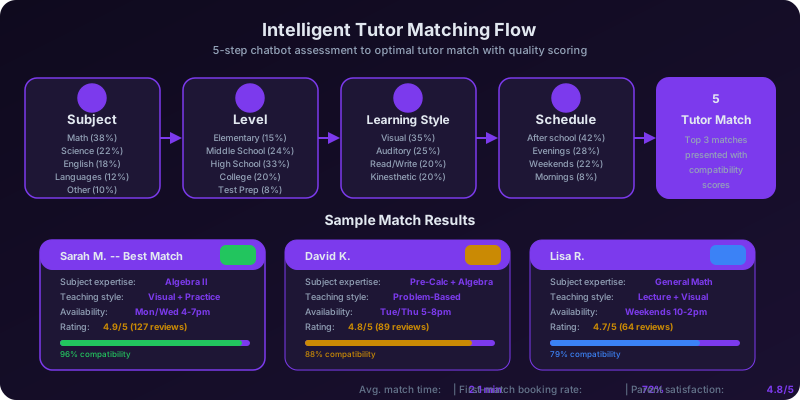
In 2026, the private tutoring industry -- valued at over $200 billion globally according to Grand View Research -- has expanded beyond traditional in-person after-school sessions into a diverse market of online one-on-one instruction, small group tutoring, test preparation, academic coaching, and subject-specific skill building. This expansion has created an operational challenge for tutoring businesses of every size: matching the right tutor to the right student is a complex, multi-variable problem that considers subject expertise, grade level, availability, learning style compatibility, location (for in-person sessions), and budget. When this matching is handled manually -- typically by an intake coordinator reviewing spreadsheets and making phone calls -- it introduces delays that cost enrollments, inconsistencies that frustrate families, and administrative overhead that limits scalability.
The tutoring service chatbot solves this by conducting a structured intake conversation that collects every variable needed for an optimal match, then executes the matching algorithm in real time. A parent looking for a geometry tutor for their high school sophomore at 4 PM on Tuesdays can discover, evaluate, and book the right tutor in a single conversation that takes under five minutes -- at 10 PM on a Sunday when no human staff member is available. The chatbot handles the entire workflow that previously required multiple touchpoints between the family and the tutoring business.
Built on Conferbot's no-code chatbot builder, the tutoring service chatbot requires no development resources to deploy. Tutoring business owners and administrators configure their tutor roster, subject offerings, availability, and pricing through a visual interface. The chatbot deploys across channels within hours, immediately beginning to convert website visitors and inquiry messages into booked tutoring sessions.
This guide covers the complete chatbot workflow -- subject matching, tutor availability, learning style assessment, session booking, progress tracking, and parent communication -- along with conversion data, integration options, and deployment strategies for tutoring businesses ranging from independent tutors to multi-location learning centers in 2026.
Subject Matching: Connecting Students with the Right Expertise
Subject matching is the first and most critical step in the tutoring intake process. A mismatch between student need and tutor expertise wastes the family's time, damages trust, and produces poor outcomes. The chatbot's subject matching module goes beyond simple subject selection to capture the specific topic, academic level, curriculum, and learning objectives that determine which tutor will be the best fit.
Subject and Topic Identification
"Math tutoring" is not a meaningful match criterion -- the difference between a student struggling with fourth-grade fractions and one preparing for AP Calculus BC requires completely different tutor expertise, teaching approaches, and session structures. The chatbot first identifies the broad subject area (mathematics, science, English language arts, social studies, foreign language, test preparation, and more), then narrows to the specific topic or course. For mathematics, this means identifying whether the student needs help with elementary arithmetic, pre-algebra, algebra I or II, geometry, trigonometry, pre-calculus, calculus, statistics, or a specialized topic. For science, the chatbot distinguishes between biology, chemistry, physics, environmental science, and their AP or honors variants. This specificity ensures the matched tutor has direct expertise in the exact content the student needs help with.
Grade Level and Academic Context
The chatbot collects the student's grade level and academic context: current grade, course name (as the school calls it), whether it is a standard, honors, or AP course, and the textbook or curriculum used. This context matters because tutoring effectiveness depends on alignment between the tutor's preparation and the student's actual classroom experience. A tutor who knows the specific textbook can reference the same examples, vocabulary, and problem formats the student sees in class -- dramatically improving comprehension and retention compared to generic instruction. The chatbot stores this curriculum context and uses it to prioritize tutors who have experience with the student's specific program.
Current Performance and Goals
Understanding where the student is currently and where they need to be determines the intensity and approach of the tutoring engagement. The chatbot asks about current grades or test scores, specific areas of difficulty (the student's own description or the parent's observation), and the goal: passing a course, improving a grade from B to A, preparing for a standardized test, getting ahead for next year, or building foundational skills that were missed in earlier grades. A student who needs to pass algebra to graduate has different urgency and tutoring needs than one who has a B+ and wants to reach an A for college applications. The chatbot captures this distinction and factors it into both tutor matching and session frequency recommendations.
Multi-Subject Needs
Many students -- particularly those who are generally struggling academically -- need help in more than one subject. The chatbot handles multi-subject intake gracefully: after completing the assessment for the primary subject, it asks whether the student needs help in additional areas. For each additional subject, the chatbot runs the same matching criteria, potentially assigning different tutors with different specializations. Some tutoring businesses prefer to assign a single tutor who covers multiple subjects for continuity; others match subject specialists for maximum expertise. The chatbot supports both models based on your business configuration.
All subject matching data feeds into your CRM or tutoring management platform, creating a detailed student profile before the first session begins. This pre-session context allows the tutor to prepare targeted materials and arrive at the first meeting ready to teach rather than spending the first session conducting their own intake assessment.
Tutor Availability and Schedule Coordination
Scheduling is the operational bottleneck that kills more tutoring enrollments than any other factor. A parent who contacts a tutoring service on Monday evening wants their child to start this week -- not next week after three rounds of email exchanges trying to find a mutually available time slot. The chatbot eliminates this bottleneck by presenting real-time tutor availability and booking sessions instantly within the conversation.
Real-Time Calendar Integration
The chatbot connects to your tutor scheduling system through Conferbot's calendar integration to display actual available time slots -- not a static list that may be outdated. When a parent selects Tuesday at 4 PM, the chatbot confirms that a qualified tutor is actually available at that time before booking. This real-time integration prevents the double-booking and scheduling conflicts that plague manual coordination processes. For tutoring businesses using Google Calendar, Calendly, Acuity, or custom scheduling platforms, the bidirectional sync ensures that sessions booked through the chatbot appear on the tutor's calendar and that tutor-initiated schedule changes are reflected in the chatbot's availability display.
Preference-Based Scheduling
The chatbot collects scheduling preferences before presenting available times: preferred days of the week, preferred time windows (after school, evenings, weekends, mornings), session frequency (once per week, twice per week, daily for intensive test preparation), and session duration (30 minutes, 45 minutes, 60 minutes, 90 minutes). These preferences filter the available tutor options to show only tutors who match both the subject requirements and the scheduling constraints. A parent who needs a Tuesday and Thursday at 5 PM algebra tutor sees only tutors who are available on those specific days and times -- not a full roster that requires the parent to cross-reference availability manually.
In-Person vs Online Session Selection
Modern tutoring businesses offer both in-person and online sessions, and the format affects which tutors are available. The chatbot asks whether the family prefers in-person, online, or either format. For in-person sessions, the chatbot collects the family's location (ZIP code or neighborhood) and matches tutors who are within a reasonable travel distance. For online sessions, geographic constraints are removed, opening access to a broader pool of specialized tutors. Many families discover through the chatbot that the expert they need for AP Physics or SAT preparation is available online even though no in-person tutor with that specialization operates in their area. This expanded access is a significant value proposition of the chatbot-driven matching process.
Recurring Session Setup
Most tutoring engagements involve recurring weekly sessions rather than one-time appointments. The chatbot sets up the recurring schedule during the initial booking conversation: same day, same time, same tutor each week for the duration of the engagement. It confirms the start date, communicates the cancellation and rescheduling policy, and sets expectations about session consistency. Recurring scheduling through the chatbot prevents the weekly scheduling negotiation that causes both tutor and student fatigue when sessions are booked one at a time.
Waitlist Management
Popular tutors often have full schedules, particularly during peak demand periods like exam season and standardized test windows. When no matching tutor has immediate availability, the chatbot offers a waitlist option: it records the student's requirements and preferred schedule, and automatically notifies the family when a slot opens. This waitlist function retains leads that would otherwise be lost to competitors -- the family stays engaged with your business rather than searching for another provider because their preferred time slot was not immediately available.
Ready to try Tutoring Service Chatbot?
Deploy this template in under 10 minutes. No coding required.
Use This Template Free →Learning Style Assessment: Personalizing the Tutoring Experience
Effective tutoring is not just about subject expertise -- it is about how the tutor teaches matching how the student learns. The chatbot's learning style assessment module collects information about the student's learning preferences, personality, and academic behavior patterns to inform tutor matching and session planning. This assessment transforms tutoring from a generic subject review into a personalized learning experience tailored to the individual student.
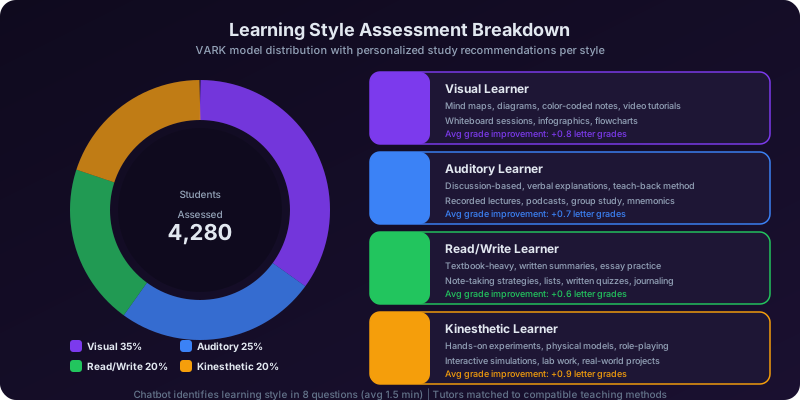
Learning Modality Identification
The chatbot identifies the student's dominant learning modality through a series of situational questions rather than abstract self-assessment. Instead of asking "Are you a visual learner?" (a question most students cannot answer accurately), the chatbot asks questions like "When studying for a test, which approach works best: reviewing diagrams and charts, listening to explanations, doing practice problems, or reading the textbook?" The responses map to the VARK framework of visual, auditory, kinesthetic, and reading/writing learning preferences. Tutors matched with visual learners emphasize diagrams, charts, and graphic organizers. Those matched with kinesthetic learners use hands-on activities and real-world applications. This alignment between teaching approach and learning preference accelerates comprehension and makes sessions more enjoyable for the student.
Academic Behavior Profile
Beyond learning modality, the chatbot assesses academic behavior patterns that affect tutoring effectiveness. Does the student complete homework independently or need supervision? Do they ask questions when confused or stay silent? Do they perform well on homework but poorly on tests (suggesting test anxiety) or the reverse (suggesting incomplete understanding)? Are they motivated but struggling with the material, or capable but disengaged? These behavioral patterns help the tutor calibrate their approach from the very first session -- addressing test anxiety with practice test simulations, building confidence for quiet students with structured encouragement, or incorporating engagement strategies for unmotivated learners.
Attention and Engagement Preferences
Session structure should match the student's attention capacity. The chatbot asks about the student's ability to focus for extended periods, their preference for frequent breaks versus sustained work, and whether they respond better to structured lesson plans or flexible, student-directed sessions. Younger students and those with attention challenges benefit from shorter activity segments with transitions and physical breaks. Older students preparing for extended standardized tests may need to build sustained focus endurance. The chatbot captures these preferences and communicates them to the assigned tutor as part of the pre-session briefing.
Special Considerations
The chatbot asks whether the student has any diagnosed learning differences (dyslexia, ADHD, processing disorders), an IEP or 504 plan, or any other accommodations that affect their learning. This information is collected with appropriate sensitivity -- the chatbot frames these questions as part of ensuring the best possible match rather than as screening criteria. Students with learning differences benefit enormously from tutors who have specific training and experience with those differences. The chatbot uses this information to prioritize tutors with special education backgrounds, specific certification in learning difference support, or documented experience working with students who have similar profiles. Conferbot's NLP capabilities allow the chatbot to understand and appropriately route free-text descriptions of learning needs that may not fit neatly into structured categories.
Parent vs Student Input
The learning style assessment acknowledges that the person completing the intake may be the parent, the student, or both. The chatbot asks who is responding and adjusts the question framing accordingly. Parent responses about learning preferences are valuable but may differ from the student's self-perception. When possible, the chatbot encourages both perspectives: "If your child is nearby, we would love to hear their input on how they prefer to learn -- it helps us find the best tutor match." This collaborative approach produces the most accurate learning profile and begins building the student's ownership of their educational experience before the first session.
Session Booking: From Inquiry to First Lesson in Minutes
The session booking module is where the chatbot's value becomes immediately tangible. After collecting subject requirements, checking tutor availability, and assessing learning style, the chatbot presents matched tutor options and books the first session -- completing in a single conversation what traditionally takes 3-5 days of back-and-forth communication between the family and the tutoring service.
Tutor Profile Presentation
Based on the matching criteria, the chatbot presents 1-3 tutor options with relevant profile information: name, photo (when available), qualifications (degree, certifications, teaching experience), specific subject expertise, years of tutoring experience, average rating from other families, and a brief teaching philosophy statement. This profile presentation gives the family confidence that the recommended tutor is genuinely qualified for their student's needs -- not just the next available body. For tutoring businesses that assign tutors directly (rather than offering choice), the chatbot presents the assigned tutor's profile with a summary of why they were selected: "Based on your daughter's AP Chemistry needs, learning style, and Tuesday availability, we've matched her with Dr. Sarah Chen, who has 8 years of AP Chemistry tutoring experience and a 4.9 rating from families."
Trial Session Option
The chatbot offers a trial or introductory session option to reduce commitment anxiety. Many families hesitate to commit to a recurring tutoring schedule without knowing whether the tutor-student fit is good. A trial session -- often at a reduced rate or with a satisfaction guarantee -- lowers the barrier to booking. The chatbot presents the trial option naturally within the booking flow: "Would you like to start with a trial session to make sure the fit is right before setting up a recurring schedule?" Tutoring businesses that offer trial sessions through the chatbot report 40-60% higher initial booking rates compared to those that require upfront multi-session commitments.
Payment and Pricing
The chatbot communicates pricing clearly and handles payment setup within the conversation. Pricing structure varies by tutoring business: per-session rates, monthly packages, semester commitments, or sliding scale based on session frequency. The chatbot presents the applicable pricing based on the session configuration (subject level, duration, format) and collects payment information or directs the family to a secure payment page. For businesses that offer package discounts ("10% off when you book 10 sessions") or promotional pricing, the chatbot presents these options at the point of purchase where they are most likely to influence the decision.
Confirmation and Preparation
After booking, the chatbot delivers a comprehensive confirmation that includes: session date and time, tutor name and brief profile, session format (online with meeting link or in-person with location), what the student should bring or have ready, the cancellation and rescheduling policy, and contact information for the tutoring service if questions arise before the session. For online sessions, the chatbot provides the video meeting link and instructions for the platform being used (Zoom, Google Meet, or the tutoring service's own platform). This detailed confirmation reduces no-shows and ensures both the student and tutor arrive prepared for a productive first session.
Automated Reminders
The chatbot triggers automated session reminders through Conferbot's integration capabilities: an email confirmation immediately after booking, a reminder 24 hours before the session, and a final reminder 1 hour before the session with the meeting link or location details. These reminders significantly reduce no-show rates -- a persistent problem in tutoring that wastes tutor time and disrupts scheduling. The 24-hour reminder also provides a convenient rescheduling option for families whose plans have changed, allowing them to move the session rather than simply not showing up.
Progress Tracking: Measuring Learning Outcomes Over Time
Progress tracking transforms tutoring from a transactional service ("pay per session") into a measurable investment in the student's academic growth. The chatbot facilitates ongoing progress tracking that keeps families informed, keeps tutors accountable, and provides the data needed to adjust the tutoring approach as the student's needs evolve.
Post-Session Tutor Reports
After each session, the chatbot prompts the tutor to submit a brief session report covering: topics covered, student engagement level, areas of strength observed, areas needing continued work, and recommended focus for the next session. These reports are structured through the chatbot's interface with quick-select options for efficiency (tutors should spend their time teaching, not writing essays about what they taught). The report data accumulates over time to create a longitudinal picture of the student's progress -- visible to both the tutoring service and the family.
Parent Progress Updates
The chatbot delivers periodic progress updates to parents through their preferred communication channel. These updates summarize the tutoring engagement: number of sessions completed, topics covered, tutor observations about progress, areas of improvement, and areas still needing attention. The frequency is configurable -- weekly, biweekly, or monthly -- and the updates are generated automatically from the tutor's session reports. Parents appreciate this proactive communication because it eliminates the need to ask "How's tutoring going?" and provides concrete evidence of the return on their investment.
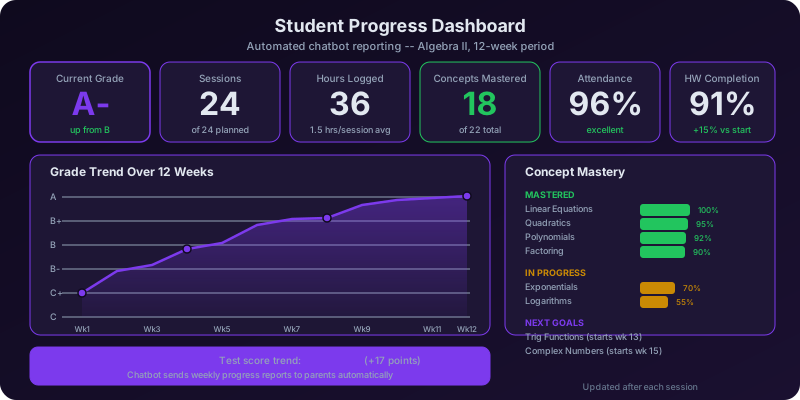
Grade and Test Score Tracking
The chatbot periodically asks the student or parent to report recent test scores, quiz grades, and overall course grades. This data -- plotted over time alongside session attendance -- provides the most compelling evidence of tutoring effectiveness. A chart showing a student's geometry test scores improving from 62% to 84% over eight weeks of tutoring is more persuasive than any marketing copy. For the tutoring business, this data also serves as a quality assurance metric: tutors whose students consistently improve are doing their job well, while those whose students plateau may need additional training or support.
Goal Milestone Tracking
The initial intake set specific goals for the tutoring engagement: pass the course, improve from a C to a B, score 1300+ on the SAT, master fractions before the end of the semester. The chatbot tracks progress toward these goals and celebrates milestones when they are reached. Goal achievement notifications go to both the family and the tutor, creating shared positive moments that strengthen the tutoring relationship and encourage continued engagement. For the tutoring business, goal achievement rates are a powerful metric for marketing and tutor evaluation: "87% of our students achieve their stated academic goal within the first semester of tutoring" is a data-driven claim that the chatbot's tracking system makes possible.
Engagement Analytics
The chatbot tracks engagement metrics that serve as early warning indicators: session attendance rate, cancellation frequency, homework completion between sessions (when tracked), and parent responsiveness to progress updates. A student who begins canceling sessions frequently or a parent who stops opening progress reports may be showing signs of disengagement that precede formal withdrawal from the program. The chatbot flags these patterns through the analytics dashboard, enabling the tutoring business to intervene proactively -- reaching out to understand concerns and adjust the program before the family quietly stops attending.
businesses worldwide use Conferbot templates to automate conversations
Parent Communication: Building Trust and Retention
In the tutoring business, the buyer (parent) and the user (student) are different people. The parent makes the purchasing decision, evaluates the value, and decides whether to continue the engagement. Yet most tutoring businesses focus their communication on the student and leave the parent feeling disconnected from the process. The chatbot bridges this gap by maintaining a structured communication channel with parents that keeps them informed, engaged, and confident in their investment.
Intake Confirmation and Expectations Setting
The chatbot's first parent-facing communication is the intake confirmation: a summary of the student's assessment results, the matched tutor's qualifications, the session schedule, the pricing structure, and what the parent should expect in terms of communication frequency and progress updates. This initial communication sets clear expectations for the engagement and gives the parent confidence that the tutoring service understands their child's needs. It also establishes the chatbot as a reliable communication channel -- the parent knows they can return to the chatbot at any time with questions rather than trying to reach the office by phone.
Real-Time Session Notifications
Parents receive notifications when sessions start and end, providing peace of mind that the tutoring is actually happening as scheduled. For online sessions, this is particularly valuable -- parents may not be present during the session and appreciate knowing that their child connected with the tutor at the scheduled time. If a student does not join an online session within 5 minutes of the start time, the chatbot can alert the parent, enabling them to intervene and ensure the session happens. These real-time notifications demonstrate accountability and build trust in the tutoring service's reliability.
Feedback Collection
The chatbot collects parent feedback at regular intervals: after the first session (to assess initial fit), after the first month (to evaluate early progress), and periodically throughout the engagement. Feedback collection through the chatbot is less intimidating than a formal survey and produces higher response rates -- parents can share their thoughts in a quick conversational exchange rather than filling out a form. The feedback data identifies satisfied families (who can be asked for referrals and testimonials) and dissatisfied families (who need immediate attention to prevent churn). Early intervention based on chatbot-collected feedback is one of the highest-impact retention strategies a tutoring business can implement.
Schedule Management
Parents can use the chatbot to manage the tutoring schedule without calling the office. Rescheduling a session, canceling with appropriate notice, requesting additional sessions during exam periods, or pausing the engagement for school breaks -- all handled through the chatbot at any hour. This self-service scheduling capability reduces administrative calls to your staff while giving parents the flexibility they need to manage their family's busy schedule. The chatbot enforces your cancellation policy automatically: sessions canceled with less than 24 hours notice are flagged according to your business rules, and the parent receives a clear explanation of the policy.
Referral and Re-enrollment Prompts
Satisfied parents are the most valuable marketing channel for tutoring businesses. The chatbot identifies high-satisfaction families (based on feedback scores, engagement longevity, and goal achievement) and presents referral opportunities at natural moments: after a positive progress update, after goal achievement, or at the start of a new semester. The chatbot makes the referral process effortless: it provides a shareable link or code that the parent can forward to friends, and it tracks referral conversions through the analytics dashboard. For semester-based engagements, the chatbot handles re-enrollment conversations proactively, reaching out before the current term ends to discuss continuation, subject changes, or schedule adjustments for the next term.
Benefits for Tutoring Businesses of Every Size
The operational and financial impact of automating tutoring intake and management through a chatbot scales across the full spectrum of tutoring businesses -- from independent tutors managing a caseload of 15-20 students to multi-location learning centers with hundreds of tutors and thousands of students. The benefits differ in magnitude but the underlying value proposition is consistent: the chatbot handles the administrative work so humans can focus on teaching.
For Independent Tutors and Small Teams
Independent tutors typically spend 30-40% of their working hours on non-teaching tasks: responding to inquiries, scheduling sessions, sending reminders, communicating with parents, and managing their calendar. The chatbot automates nearly all of these tasks, effectively giving the tutor back 10-15 hours per week that can be redirected to teaching -- which is both the revenue-generating activity and the work they actually want to be doing. Research from the National Tutoring Association confirms that structured, personalized tutoring produces measurable academic improvement for students at every level. At typical tutoring rates of $40-$80 per hour, reclaiming 10 hours per week represents $400-$800 in additional weekly revenue capacity. The chatbot also professionalizes the independent tutor's online presence: a website with an interactive chatbot that handles intake, booking, and scheduling looks and functions like a much larger operation, competing effectively against established learning centers.
For Multi-Tutor Businesses
Tutoring businesses with multiple tutors face a coordination challenge that grows exponentially with team size. Matching the right tutor to the right student across dozens of subjects, hundreds of time slots, and multiple locations becomes a full-time administrative job -- or a series of suboptimal matches made under time pressure. The chatbot automates the matching algorithm based on configurable criteria, ensuring consistent quality regardless of volume. It also solves the equity problem: without automation, popular tutors become overbooked while equally qualified but less visible tutors have empty slots. The chatbot distributes students based on fit criteria rather than name recognition, optimizing utilization across the team.
For Learning Centers and Franchises
Multi-location learning centers need consistent intake quality across locations while adapting to local tutor rosters, pricing, and subject offerings. The chatbot provides a unified brand experience -- every family encounters the same professional intake process regardless of which location or channel they interact with -- while routing leads to the appropriate location based on geography. For franchise operations, the chatbot ensures franchisees adhere to brand-standard intake procedures while allowing location-specific customization of tutor rosters, schedules, and pricing. The centralized analytics dashboard gives franchise operators visibility into performance metrics across all locations.
Enrollment and Retention Metrics
| Metric | Manual Intake Process | Chatbot-Driven Intake | Improvement |
|---|---|---|---|
| Inquiry to first session | 5-10 days | 1-2 days | 70-80% faster |
| Inquiry to enrollment conversion | 25-35% | 50-65% | Nearly doubled |
| After-hours inquiry capture | Form submission only | Full intake + booking | Complete after-hours capability |
| Session no-show rate | 12-18% | 4-8% | 55-65% reduction |
| Average retention (months) | 3.5 months | 5.5 months | 57% longer retention |
| Parent satisfaction score | 3.8/5.0 | 4.5/5.0 | 18% higher satisfaction |
| Admin time per enrollment | 45-90 minutes | 5-10 minutes | 85-90% reduction |
| Referral rate | 15-20% of families | 30-40% of families | Doubled referral generation |
Integrations with Tutoring Platforms and Business Tools
A tutoring service chatbot delivers maximum value when it connects seamlessly with the tools your business already uses. Conferbot's integration framework supports connections with tutoring management platforms, scheduling tools, payment processors, and communication systems -- creating an automated workflow from first inquiry through ongoing session management.
Tutoring Management Platforms
For businesses using tutoring-specific management platforms like TutorCruncher, Teachworks, Clark, or TutorBird, the chatbot pushes student intake data directly into the platform. A new student profile is created with subject requirements, learning style assessment results, scheduling preferences, and parent contact information -- eliminating manual data entry and ensuring the tutor has complete context before the first session. For businesses using general-purpose CRMs (HubSpot, Salesforce), custom field mapping ensures tutoring-specific data points are captured correctly.
Video Conferencing Integration
Online tutoring sessions require video meeting links. The chatbot integrates with Zoom, Google Meet, and Microsoft Teams to automatically generate unique meeting links for each booked session. The meeting link is included in the booking confirmation, session reminders, and the student's recurring session schedule. For tutoring businesses that use their own branded video platform, the chatbot includes the platform access instructions and login details in the session confirmation.
Payment Processing
The chatbot connects with Stripe, PayPal, and Square for session payment processing. Depending on your business model, payment can be collected at booking (prepaid sessions), charged automatically after each session (post-session billing), or processed monthly (subscription model). The chatbot presents the payment options configured for your business and either processes the payment inline or directs the family to a secure payment page. Package purchases (blocks of 5, 10, or 20 sessions at a discount) are presented at the point of booking where they are most likely to convert.
Communication Tools
Session reminders, progress updates, and parent communications can route through your preferred channels. The chatbot integrates with email platforms (Gmail, Outlook, SendGrid) for formal communications, SMS services (Twilio) for time-sensitive reminders, and messaging platforms (WhatsApp) for conversational follow-up. Parents choose their preferred communication channel during intake, and all subsequent chatbot-initiated communications use that channel -- respecting the family's preference rather than defaulting to whatever is most convenient for the business.
Learning Management Systems
For tutoring businesses that provide supplementary learning materials, practice worksheets, or homework assignments between sessions, LMS integration (Google Classroom, Canvas, Moodle) allows the chatbot to direct students to their assigned materials and track completion. The tutor assigns materials through the LMS after each session, and the chatbot sends the student a notification with a direct link to the assignment. Completion data feeds back into the progress tracking system, giving both the tutor and parent visibility into between-session engagement.
Zapier and Webhooks
For tools without native Conferbot integration, Zapier and webhook connections provide flexible automation. Common Zapier workflows for tutoring businesses include: creating a Google Sheets row for each new enrollment, adding booking confirmations to a shared team calendar, triggering a Slack notification when a high-priority inquiry comes in, and adding new families to a Mailchimp audience for newsletter distribution. These no-code automations extend the chatbot's reach into your complete business technology stack without requiring developer resources.
Deploying and Customizing Your Tutoring Service Chatbot
Getting the tutoring service chatbot live on your website and marketing channels is a straightforward process that takes less than a day from initial configuration to accepting real inquiries. Conferbot's no-code platform handles the technical deployment, leaving you to focus on configuring the tutoring-specific parameters that make the chatbot accurate and effective for your business.
Initial Configuration
Setup involves four categories of business-specific data. First, your tutor roster: names, qualifications, subject expertise, availability, and any special certifications. Second, your subject and service offerings: which subjects and grade levels you support, session formats (online/in-person), and session durations available. Third, your pricing structure: per-session rates by subject level, package options, trial session pricing, and any promotional offers. Fourth, your scheduling parameters: booking lead time, cancellation policy, buffer time between sessions, and maximum sessions per day per tutor. All configuration happens through Conferbot's visual builder with no coding required.
Conversation Tone and Brand Voice
The chatbot's personality should match your brand and target audience. A tutoring service targeting young elementary students may use a warm, encouraging, slightly playful tone. A test preparation company targeting high school juniors and their college-focused parents may use a confident, results-oriented, professional tone. A special education tutoring service may use a patient, understanding, empathetic tone. Conferbot's builder lets you customize the chatbot's language, greeting, conversation style, and sign-off to align with your brand identity. The chatbot should feel like a natural extension of your team -- not a generic bot that could belong to any business.
Multi-Channel Deployment
Parents discover tutoring services through multiple channels: your website (from organic search and paid ads), Google Business Profile (local search), Facebook and Instagram (social media marketing), and WhatsApp (word-of-mouth referrals with a link). The chatbot deploys across all these channels through Conferbot's omnichannel platform, maintaining the same intake flow and data collection regardless of where the conversation starts. A parent who clicks a Facebook ad and completes intake through Messenger receives the same quality assessment and tutor matching as one who visits your website directly. Cross-channel data is unified, so if a parent starts on your website and later returns through WhatsApp, their previous information is preserved.
Testing Before Launch
Before going live, use Conferbot's preview mode to test every conversation path. Walk through the intake as a parent of a struggling 8th-grade math student. Then test as a high school senior looking for SAT prep. Then as a parent of a student with dyslexia who needs reading support. Verify that each path collects the right information, matches appropriate tutors, presents correct pricing, and books sessions successfully. After launch, the analytics dashboard reveals conversation completion rates, drop-off points, popular subjects, peak inquiry times, and conversion metrics -- giving you the data to continuously refine the chatbot for better enrollment performance.
Frequently Asked Questions
Below are the most common questions tutoring businesses and families ask about the tutoring service chatbot.
Tutoring Service Chatbot FAQ
Everything you need to know about chatbots for tutoring service chatbot.
Why Use a Template vs Building from Scratch?
Templates give you a proven starting structure instead of a blank canvas.
| Factor | Conferbot Template | Build from Scratch | Hire a Developer |
|---|---|---|---|
| Time to deploy | 10 minutes | 2-8 hours | 2-6 weeks |
| Cost | Free | Your time | Custom dev quote |
| Proven flows | Yes, pre-built | No | Depends |
| Updates included | Automatic | Manual | Paid |
| Multi-channel | 8+ channels | 1 channel | Extra cost |
| Analytics | Built-in | Must build | Extra cost |
Learn More About Chatbots
Go deeper on how education and training chatbots work and how to pick the right builder.
Ready to Deploy Tutoring Service Chatbot?
Start with a free-forever plan. No credit card required.