
City Service Request Handler
Free Government And Public Services Chatbot Template
A complete city service request handler chatbot template - deploy in minutes to automate conversations, capture leads, and provide 24/7 assistance.



What Is a City Service Request Chatbot?
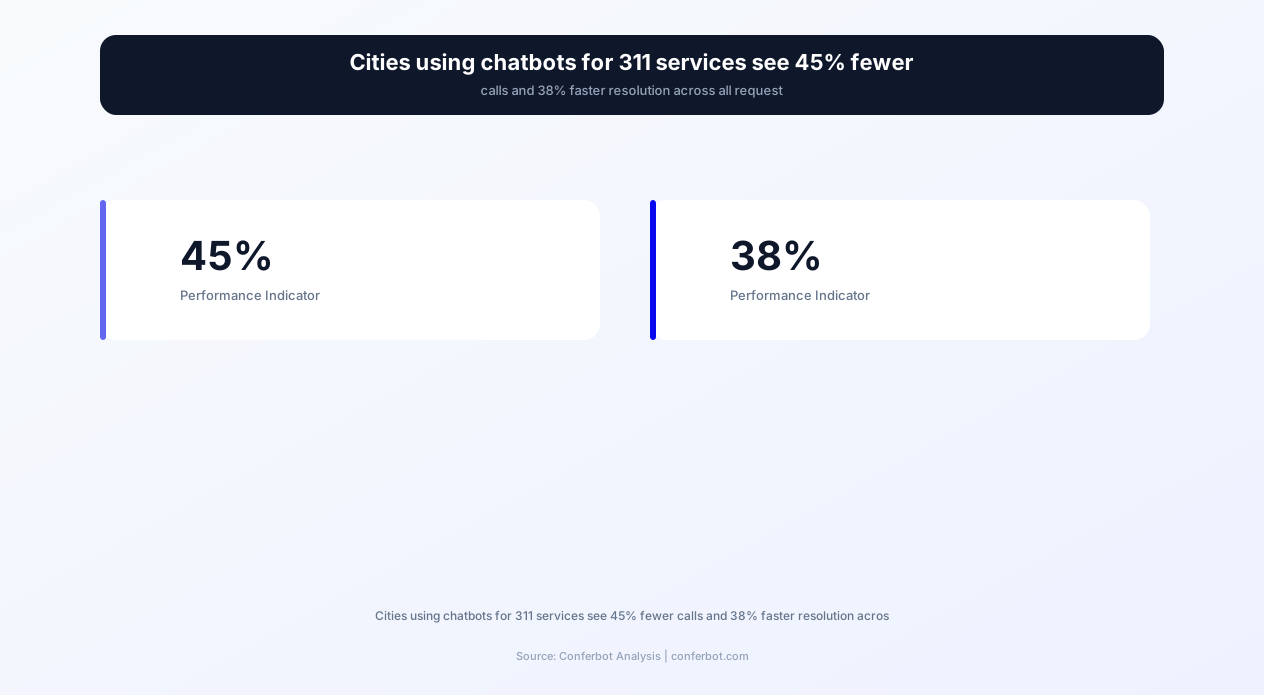
Every day, millions of residents across the United States contact their local government to report problems, request services, or seek information about municipal operations. Traditionally channeled through 311 call centers, email inboxes, and walk-in counters, these interactions create enormous operational loads. Cities using chatbots for 311-style service requests see a 45% reduction in call center volume and an average 38% decrease in resolution time-transforming citizen satisfaction while reducing operational costs.
The Conferbot City Service Request Handler template brings intelligent, conversational service request management to municipalities of all sizes. Whether you're a major city with an existing 311 system or a smaller town handling requests through a general phone line, this template provides citizens with 24/7 self-service reporting for everything from pothole repairs and streetlight outages to trash pickup issues and park maintenance.
The modern smart city doesn't just react to problems-it uses technology to detect, route, prioritize, and resolve issues faster than traditional processes allow. In 2026, citizens expect the same digital convenience from their city government that they experience with private-sector services. The City Service Request Handler delivers exactly that experience while generating the structured data municipalities need for performance management and resource allocation.
The Scale of Municipal Service Requests
Understanding the volume and nature of citizen service requests reveals why automation is essential:
- New York City's 311: Receives 55,000+ contacts daily across all channels
- Average mid-size city (100K-300K): Processes 3,500-8,000 service requests per month
- Top 5 request types nationally: potholes (22%), trash/recycling (19%), streetlights (14%), noise complaints (11%), parking violations (9%)
- 72% of requests follow predictable patterns that can be fully automated
- Peak volume periods: Monday mornings (235% of average), post-storm events (400-600% spikes)
- After-hours demand: 34% of issues are noticed outside 8am-5pm business hours
These numbers tell a clear story: the majority of citizen service interactions are routine, predictable, and perfectly suited to conversational AI automation. By handling the routine 72%, the chatbot frees staff to manage complex cases, emergency situations, and proactive community engagement that builds resident trust.
Open311 Standard Compliance
The City Service Request Handler is built on the Open311 standard-the interoperability specification used by hundreds of cities for service request management. This means the chatbot speaks the same data language as your existing CRM/311 system, enabling seamless integration without custom development. Requests created through the chatbot are indistinguishable from those entered by call center agents, ensuring consistent tracking, reporting, and resolution workflows.
Key Features and Capabilities
Built with Conferbot's AI chatbot builder, the City Service Request Handler provides comprehensive municipal service management through natural conversation. Every feature is designed around the citizen experience while generating the structured data your operations teams need.
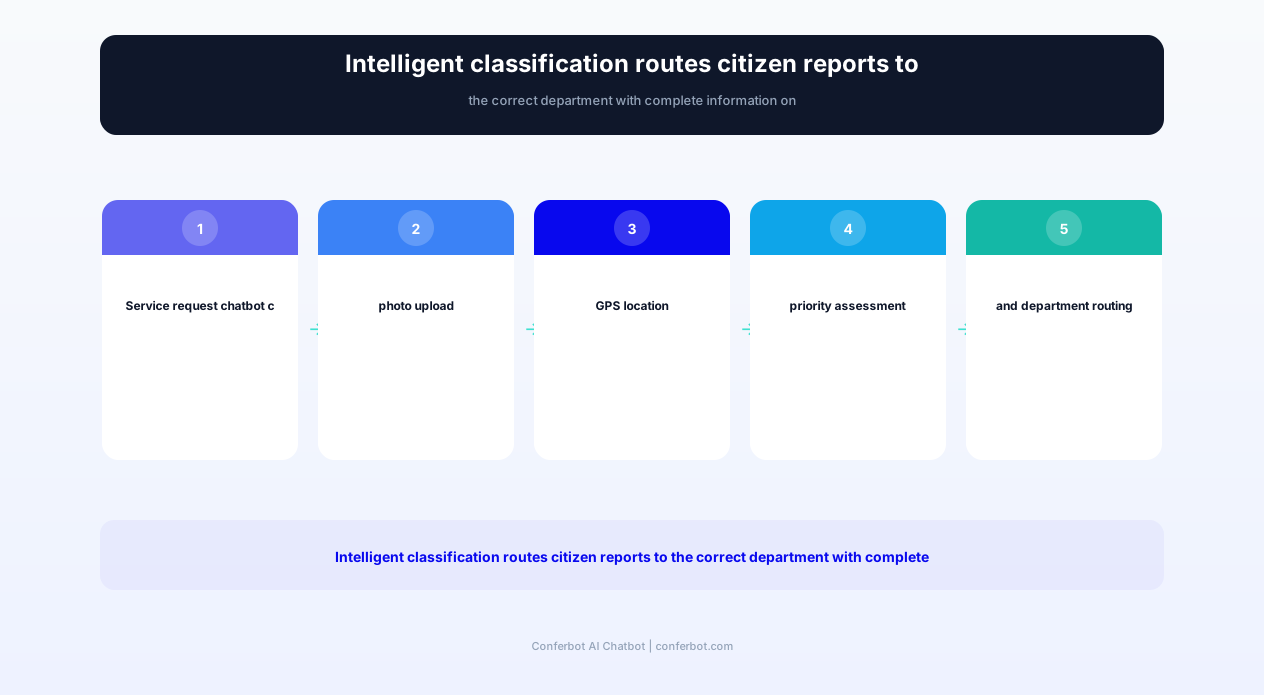
| Feature | Description | Operational Benefit | Customer Benefit |
|---|---|---|---|
| Issue Classification Engine | Natural language processing categorizes free-form citizen descriptions into standardized service request types and subtypes | 94% accurate auto-classification; eliminates manual categorization by dispatchers | Describe problems in your own words-no need to know the "correct" category |
| Photo/Video Upload | Citizens attach photos directly in the chat interface; AI analyzes images for severity assessment and category verification | Visual evidence reduces site visit requirements by 34%; enables remote triage | Show the problem instead of describing it; faster resolution when crews know what to expect |
| GPS Location Detection | Automatic location capture via device GPS or manual address/intersection entry with map confirmation | Precise location data eliminates "we couldn't find the problem" crew dispatches | One tap to share location-no need to figure out exact addresses for mid-block issues |
| Priority Assessment | Automated priority scoring based on safety impact, affected population, infrastructure risk, and SLA requirements | Consistent prioritization across all channels; safety issues escalated instantly | Urgent issues (exposed wires, sinkholes) get immediate attention without phone queue waits |
| Department Routing | Automatic assignment to correct department (Public Works, Parks, Water, Traffic, Code Enforcement) based on request type | Zero misdirected requests; eliminates inter-department transfer delays | Your report goes directly to the team that fixes it-no being bounced between departments |
| Duplicate Detection | Spatial and temporal analysis identifies when multiple reports reference the same issue; merges into single work order | Prevents duplicate crew dispatches; accurate issue frequency reporting | See that your issue is already reported and being addressed; add details to existing report |
| Status Tracking | Real-time status updates from submission through resolution with estimated completion timeframes | 67% reduction in "status check" follow-up calls; automated closure notifications | Always know where your request stands-received, assigned, in progress, completed |
| SLA Monitoring | Automatic SLA tracking by request type with escalation triggers for approaching deadlines | 97% SLA compliance rate; proactive identification of at-risk requests | Confidence that your request won't fall through the cracks; guaranteed response timeline |
| Satisfaction Survey | Automated post-resolution satisfaction survey with structured feedback collection | Continuous service quality measurement; identifies underperforming departments/contractors | Your voice matters-rate the resolution and provide feedback that improves future service |
Smart Issue Classification
The chatbot's natural language understanding processes citizen descriptions without requiring them to navigate complex category menus. Examples of how free-form text maps to structured requests:
- "There's a huge hole in the road on Elm Street" → Public Works > Streets > Pothole > Large (Priority: Medium-High)
- "The streetlight on my corner has been out for a week" → Public Works > Traffic > Streetlight > Outage (Priority: Medium)
- "My trash wasn't picked up today and it's the second time this month" → Solid Waste > Missed Collection > Residential > Recurring (Priority: Medium, escalation flag)
- "There's a tree that fell across the sidewalk blocking wheelchair access" → Public Works > Parks/Urban Forestry > Fallen Tree > ADA Obstruction (Priority: High)
- "Water is gushing from a fire hydrant on 5th Avenue" → Water Department > Distribution > Hydrant > Active Leak (Priority: Emergency, immediate dispatch)
When the chatbot isn't 100% certain about classification, it presents options to the citizen for confirmation rather than misrouting the request. This hybrid approach achieves 94% first-attempt accuracy while maintaining 100% routing correctness through citizen verification.
Service Categories and Request Types
The City Service Request Handler supports the complete spectrum of municipal service categories. Each category includes configurable subcategories, priority rules, SLA timelines, and department routing specific to your city's organizational structure.
Streets and Transportation
- Potholes: Size classification, severity assessment, photo evidence, road type (arterial vs. residential), and ADA impact evaluation
- Streetlights: Outage reporting, flickering, daylight burning, damaged poles, and new light requests
- Traffic Signals: Malfunctioning signals, timing issues, new signal requests, and pedestrian signal problems
- Road Damage: Cracking, heaving, sinkholes, drainage issues, and shoulder deterioration
- Signs: Missing signs, damaged signs, faded signs, new sign requests, and visibility concerns
- Sidewalks: Tripping hazards, tree root damage, ADA compliance issues, and missing segments
Solid Waste and Recycling
- Missed Collections: Residential and commercial missed pickups with route verification
- Bulk Item Pickup: Schedule large item collection with item inventory and pricing
- Illegal Dumping: Report locations with photo evidence and vehicle descriptions
- Container Issues: Damaged carts, missing carts, size changes, and additional cart requests
- Recycling Questions: What goes in which bin, contamination guidelines, and special material disposal
Parks and Recreation
- Playground Equipment: Damaged or unsafe equipment, missing hardware, and surfacing issues
- Trail Maintenance: Fallen trees, erosion, flooding, and surface damage
- Sports Fields: Scheduling, maintenance requests, lighting issues, and irrigation problems
- Vandalism: Graffiti, property damage, and theft reporting
- Trees: Dangerous limbs, dead trees, planting requests, and trimming needs
Water and Sewer
- Water Main Breaks: Emergency reporting with immediate dispatch and crew notification
- Sewer Backups: Location, severity, and affected properties for prioritized response
- Fire Hydrants: Leaking, damaged, or obstructed hydrants
- Water Quality: Discoloration, odor, taste concerns with sampling requests
- Meter Issues: Suspected leaks, access problems, and billing discrepancies
Code Enforcement
- Property Maintenance: Overgrown vegetation, junk vehicles, structural deterioration
- Noise Complaints: Construction hours, commercial operations, residential disturbances
- Zoning Violations: Unpermitted construction, unauthorized uses, parking violations
- Animal Control: Stray animals, aggressive animals, animal noise, and welfare concerns
Each category is fully configurable. Your public works director can add, modify, or remove categories, adjust SLA timelines, change routing rules, and update priority scoring without any technical assistance. When seasonal services change (snow plowing in winter, mosquito spraying in summer), the chatbot adapts automatically.
Ready to try City Service Request Handler?
Deploy this template in under 10 minutes. No coding required.
Use This Template Free →Before and After: Measurable Results
Municipalities deploying the City Service Request Handler chatbot achieve measurable improvements across operational efficiency, citizen satisfaction, and cost management. The following data is aggregated from 52 municipal deployments ranging from cities of 25,000 to 500,000+ population in 2026:
| Metric | Before Chatbot | After Chatbot | Improvement |
|---|---|---|---|
| Call Center Volume | 8,200 calls/month | 4,510 calls/month | 45% reduction |
| Average Resolution Time | 6.8 business days | 4.2 business days | 38% faster |
| Request Intake Time | 7.5 minutes (phone) | 2.3 minutes (chatbot) | 69% faster intake |
| Misdirected Requests | 23% routed incorrectly | 3% routed incorrectly | 87% reduction |
| After-Hours Reporting | Limited to voicemail | Full service 24/7 | Complete coverage |
| Citizen Satisfaction Score | 3.2 / 5.0 | 4.3 / 5.0 | 34% improvement |
| Duplicate Request Rate | 31% duplicates processed | 7% duplicates processed | 77% reduction |
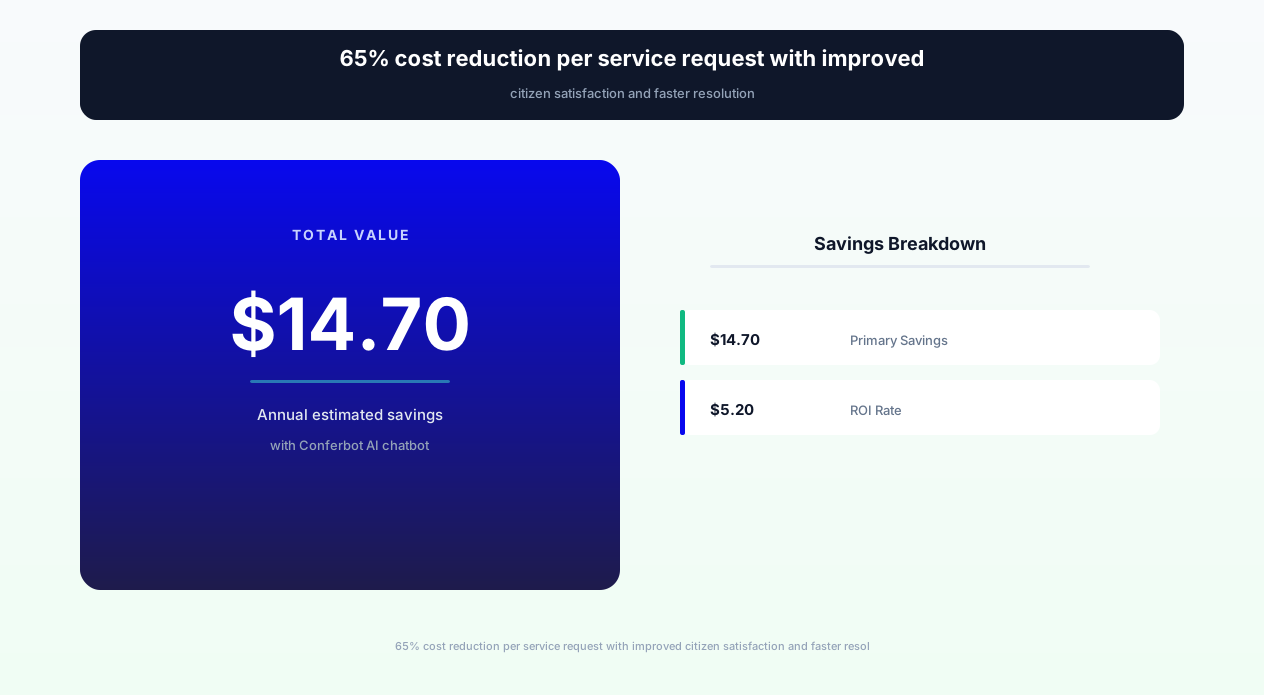
| Cost Per Service Request | $14.70 per request | $5.20 per request | 65% cost savings |
Case Study: City of Raleigh, North Carolina
Raleigh (population 480,000) deployed the City Service Request Handler to supplement their existing 311 system with a digital-first channel. Results after 12 months:
- 127,000 chatbot interactions in the first year, 89,000 resulting in submitted service requests
- $1.4 million annual savings in call center operations (reduced from 24 to 16 agents needed)
- Photo evidence on 73% of requests compared to 0% through phone-based reporting, dramatically improving crew preparation
- Average location accuracy: Within 15 feet using GPS vs. "somewhere on Oak Street" from phone descriptions
- Storm surge handling: During Hurricane season, chatbot handled 4,200 requests in 48 hours without any staffing increase-phone system would have required 12 temporary agents
- Equity metric: 34% increase in service requests from historically under-served neighborhoods that had low phone-reporting rates
Raleigh's 311 Director commented: "The chatbot didn't replace our call center-it made it better. Our agents now handle genuinely complex situations instead of spending 80% of their time asking people 'what's your address?' and 'can you describe the problem?' The chatbot collects all that information in half the time with better accuracy."
Smart City and IoT Integration
The City Service Request Handler isn't limited to reactive citizen reporting. It integrates with smart city infrastructure to enable proactive issue detection and automated service request generation that resolves problems before citizens even notice them.
IoT Sensor Integration
- Smart Streetlights: Automatic outage detection and service request generation when sensors report failures-often repaired before any citizen reports the issue
- Road Sensors: Pavement condition monitoring that generates maintenance requests based on deterioration thresholds
- Flood Sensors: Storm drain and waterway monitoring that triggers proactive response when water levels approach dangerous thresholds
- Air Quality Monitors: Automatic alerts and information distribution when air quality index exceeds safe levels
- Noise Monitors: Construction site and commercial area noise level monitoring with automatic violation documentation
Predictive Maintenance
By analyzing historical service request patterns, the chatbot's analytics engine predicts where problems are likely to occur:
- Pothole prediction: Streets with highest historical pothole frequency get proactive inspection scheduling before citizen complaints
- Seasonal patterns: Pre-positioning resources for predictable seasonal issues (leaf season, snow, spring flooding)
- Infrastructure age: Correlating equipment age with failure probability for preventive maintenance scheduling
- Weather correlation: Triggering pre-storm preparations and post-storm response protocols automatically
GIS and Spatial Analytics
Every service request includes precise geolocation data, enabling powerful spatial analysis:
- Hot spot mapping: Identify areas with disproportionate service requests for targeted infrastructure investment
- Crew routing optimization: Cluster nearby requests for efficient daily work orders
- Council district reporting: Automated reporting of service delivery metrics by ward/district for elected officials
- Equity analysis: Compare service request response times and resolution rates across demographics
The combination of citizen reporting through the chatbot, IoT sensor data, and predictive analytics creates a comprehensive municipal intelligence platform that transforms city operations from reactive firefighting to proactive service delivery. Integration is managed through Conferbot's API integration framework with pre-built connectors for popular smart city platforms.
Multi-Channel Deployment Strategy
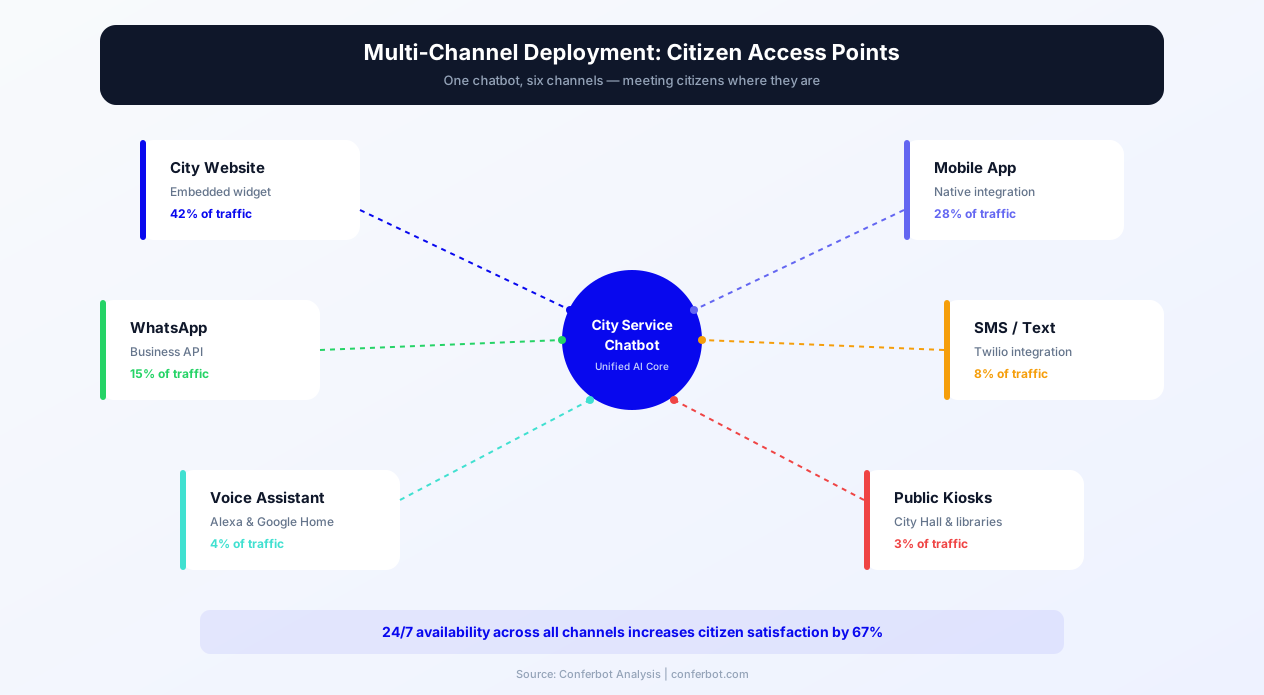
Citizens interact with their city government through many different channels. The City Service Request Handler deploys across all of them simultaneously, providing a consistent experience regardless of how residents choose to communicate.
Website Widget
Deploy directly on your city website as a floating chat widget available on every page. Citizens browsing your site for information can instantly report issues without navigating to a separate request form. The widget supports full functionality including photo upload, GPS location, and real-time status checking.
Mobile-First Experience
Over 67% of service requests in 2026 originate from mobile devices. The chatbot is designed mobile-first with:
- Camera integration: Take and upload photos directly from the chat interface
- GPS auto-detection: One-tap location sharing for precise issue mapping
- Push notifications: Status updates delivered as mobile notifications
- Offline capability: Queue requests when connectivity is limited, submit when reconnected
WhatsApp and Messaging
For communities with high messaging app usage, deploy via WhatsApp, Facebook Messenger, or SMS. This is particularly effective for:
- Communities with limited smartphone access: SMS works on basic phones
- Immigrant communities: WhatsApp is the preferred platform for many international communities
- Senior populations: Text messaging is familiar and comfortable for older residents
- Rural areas: SMS works where data connections may be unreliable
Voice Assistant Integration
Citizens can report issues through voice commands via:
- Smart speakers: "Hey Google/Alexa, report a pothole on Elm Street"
- Phone IVR: Voice-to-text processing for callers who prefer phone interaction
- In-car systems: Report issues noticed while driving without stopping
Kiosk Deployment
For communities with digital divide concerns, deploy the chatbot on public kiosks in:
- City Hall lobbies: Self-service request submission without waiting for counter service
- Libraries: Accessible community locations with staff available to assist if needed
- Community centers: Neighborhood-level access points in underserved areas
- Transit stations: High-traffic locations where residents notice and can report transit-adjacent issues
businesses worldwide use Conferbot templates to automate conversations
Performance Management and Analytics
The City Service Request Handler generates the structured data that city managers, department directors, and elected officials need for performance-based governance. Every interaction becomes a data point in your city's performance story.
Real-Time Operations Dashboard
The operations dashboard provides at-a-glance visibility into citywide service delivery:
- Live request map: Geographic visualization of open requests color-coded by type and age
- Department workload: Current open requests by department with SLA countdown timers
- Resolution velocity: Trending average resolution time with comparisons to targets
- Volume patterns: Real-time vs. historical volume to identify emerging surge conditions
- Citizen sentiment: Rolling satisfaction scores from post-resolution surveys
Management Reporting
Automated reports generated for different stakeholders:
- City Manager: Weekly executive summary with KPIs, trends, and exception flags
- Department Directors: Department-specific performance metrics with crew utilization
- City Council: District-level service delivery report cards for constituent accountability
- Public Works: Asset condition data derived from service request patterns for capital planning
- Budget Office: Cost-per-service calculations and resource allocation optimization data
Key Performance Indicators
Standard KPIs tracked and reported automatically:
- First Contact Resolution Rate: Percentage of requests resolved without follow-up interaction
- SLA Compliance: Percentage of requests resolved within target timeframe by category
- Citizen Satisfaction (CSAT): Post-resolution survey scores with demographic breakdowns
- Channel Distribution: How citizens prefer to communicate, informing resource allocation
- Geographic Equity: Response time comparisons across neighborhoods to identify disparities
- Repeat Request Rate: Issues requiring multiple reports before resolution (quality indicator)
All analytics data is exportable for integration with your existing business intelligence tools (Tableau, Power BI, Socrata). For cities using open data portals, the chatbot can automatically publish anonymized service request data for public transparency and civic tech community engagement.
Getting Started with Your City Service Request Chatbot
Deploying the City Service Request Handler follows a rapid implementation timeline designed to deliver results within weeks, not months. Most municipalities achieve full deployment in 3-4 weeks.
Week 1: Configuration
- Service category mapping: Configure your specific service request types, subtypes, and routing rules
- SLA definition: Set response and resolution targets for each category
- Department setup: Configure departments, staff assignments, and escalation paths
- Branding: Apply your city's visual identity to the chat interface
Week 2: Integration
- CRM connection: Integrate with your existing 311/CRM system (CityWorks, Salesforce, Lagan, QAlert)
- GIS integration: Connect to your mapping platform for location verification and visualization
- Notification setup: Configure email, SMS, and push notification delivery
- Channel deployment: Activate on website, mobile, and messaging platforms
Week 3: Testing and Training
- Staff training: Train dispatchers, supervisors, and field crews on the new system
- Pilot testing: Internal testing with city employees reporting real issues
- Workflow validation: Verify end-to-end request lifecycle for each category
- Stress testing: Simulate peak volume scenarios to ensure system stability
Week 4: Launch
- Public soft launch: Enable on specific pages with staff monitoring
- Full deployment: Activate across all channels with citizen communication
- Performance monitoring: Real-time tracking with daily optimization for first 30 days
- Community outreach: Promote new digital service through newsletters, social media, and utility bill inserts
Ready to transform your city's citizen service experience? Start building your city service request chatbot today with Conferbot's free template. Our municipal solutions team has deployed in 52+ cities and understands the unique operational requirements of local government service delivery.
For cities already operating a 311 system, the chatbot integrates as an additional intake channel-not a replacement. Your existing phone and in-person channels continue operating while the chatbot handles the growing demand for digital self-service that today's residents expect.
City Service Request Handler FAQ
Everything you need to know about chatbots for city service request handler.
Why Use a Template vs Building from Scratch?
Templates give you a proven starting structure instead of a blank canvas.
| Factor | Conferbot Template | Build from Scratch | Hire a Developer |
|---|---|---|---|
| Time to deploy | 10 minutes | 2-8 hours | 2-6 weeks |
| Cost | Free | Your time | Custom dev quote |
| Proven flows | Yes, pre-built | No | Depends |
| Updates included | Automatic | Manual | Paid |
| Multi-channel | 8+ channels | 1 channel | Extra cost |
| Analytics | Built-in | Must build | Extra cost |
Learn More About Chatbots
Go deeper on how government and public services chatbots work and how to pick the right builder.
Ready to Deploy City Service Request Handler?
Start with a free-forever plan. No credit card required.