
Electrician Service Chatbot
Free Home Services Chatbot Template
24/7 electrician booking with emergency dispatch and routine scheduling



What Is an Electrician Service Chatbot?
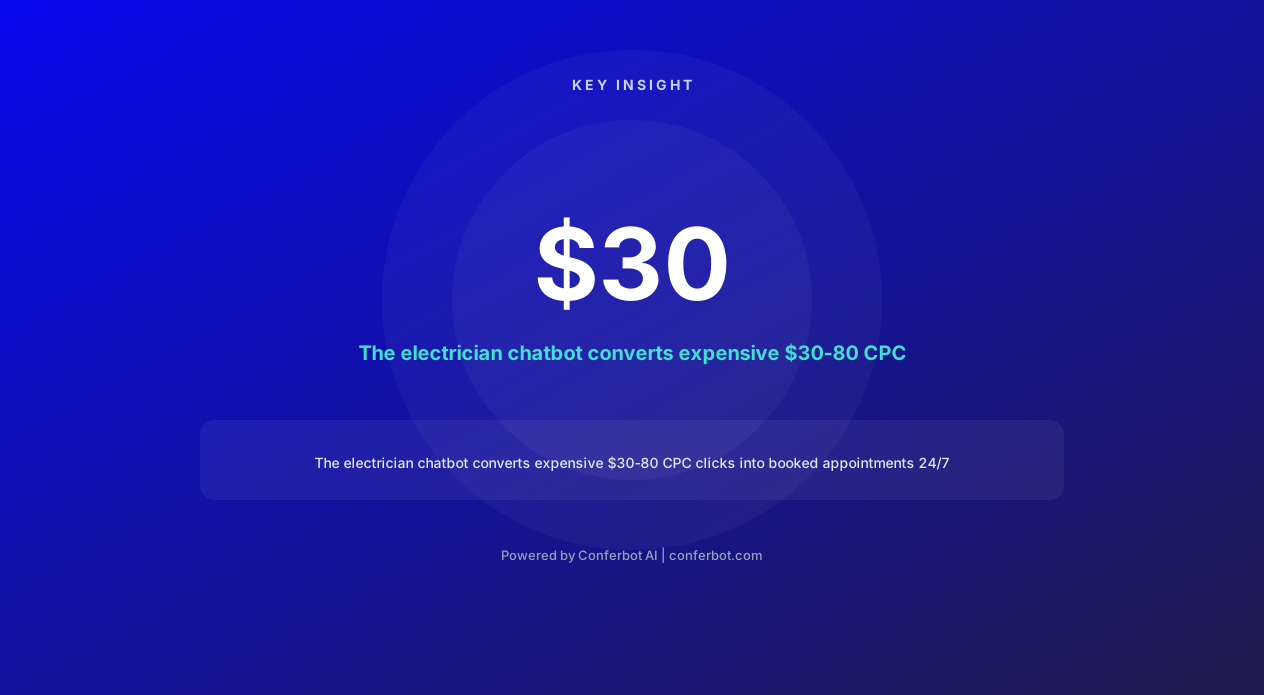
An electrician service chatbot is an AI-powered customer engagement system designed specifically for electrical contractors, electricians, and electrical service companies to handle the full spectrum of customer interactions - from emergency triage for dangerous situations (panel failures, sparking outlets, power outages) through routine service scheduling, instant quote generation, permit information, safety guidance, payment plan presentation, and intelligent routing between commercial and residential service teams. In 2026, electrical service companies face a unique operational challenge: 40% of service calls occur after hours when offices are closed, customers facing electrical emergencies need immediate guidance for safety, and digital advertising costs of $30-80 per click make every missed lead extraordinarily expensive. The electrician chatbot addresses all three challenges simultaneously - providing 24/7 emergency triage, instant response to every inquiry, and automated lead capture that converts website visitors into booked appointments without human intervention.
Why Electrical Contractors Need 24/7 Digital Response
The electrical services industry has one of the highest urgency profiles in home services. When a homeowner's circuit breaker panel fails at 9pm, when a commercial kitchen experiences an electrical fire risk, or when a family smells burning from an outlet - they search online immediately and contact the first electrician who responds. Industry data shows that 78% of emergency electrical service customers hire the first company that provides a live response, regardless of whether it is the cheapest or highest-rated option. The chatbot ensures your company is always that first responder, providing immediate safety guidance, triaging the emergency severity, and either dispatching emergency service or scheduling priority next-day service based on the situation's urgency.
The financial stakes of missed electrical leads are among the highest in home services. Google Ads CPC for electrician keywords ranges from $30-80 depending on market and service type ("emergency electrician near me" commands $50-80 per click, "electrical panel upgrade" costs $35-60). When a prospective customer clicks your ad, visits your website, and cannot reach a human during evening or weekend hours, that $30-80 investment produces zero return. The chatbot converts these expensive clicks into booked appointments 24/7/365, ensuring that advertising spend produces revenue regardless of when the customer engages.
The 40% After-Hours Opportunity
Electrical emergencies and service inquiries do not respect business hours. Industry analysis shows 40% of electrical service calls originate after hours - evenings, weekends, and holidays. This after-hours demand splits into two categories: genuine emergencies requiring immediate response (panel failures, sparking, burning smells, total power loss) and non-emergency inquiries from homeowners who research electrical services in the evening (quotes for upgrades, scheduling routine work, comparing electricians). Both categories represent significant revenue: emergency calls command premium pricing ($150-300 emergency dispatch fees), while non-emergency evening inquiries represent homeowners with immediate purchase intent who will book with the first responsive company. The chatbot captures both categories with appropriate response: emergency triage with dispatch for urgent situations, and scheduling/quoting for routine requests.
Who Deploys This Template
- Solo electricians and small shops (1-5 electricians): Operations where the owner is on the truck all day and cannot answer phones, yet every missed call is a lost job worth $200-2,000+.
- Mid-size electrical contractors (5-20 electricians): Companies serving both residential and commercial, needing intelligent routing between service types and multiple scheduling calendars.
- Electrical service franchises: Multi-location operations requiring consistent customer experience and lead distribution across territories.
- Commercial electrical contractors: Businesses handling commercial accounts that need project inquiry intake, bid request management, and maintenance contract scheduling.
- Emergency electrical services: Companies specializing in 24/7 emergency response that need automated triage to differentiate true emergencies from next-day requests.
Built on Conferbot's AI chatbot builder, this template provides emergency-appropriate response logic, electrical service knowledge, and integration with field service platforms through the API integration framework. Deploy on your website for maximum lead capture or on WhatsApp where customers can share photos of electrical issues for visual triage. The calendar integration enables real-time scheduling without phone tag.
How the Electrician Service Chatbot Works
The electrician service chatbot operates through a sophisticated decision framework that immediately assesses urgency, identifies the service type required, determines commercial versus residential routing, generates appropriate pricing guidance, and either dispatches emergency service or schedules routine appointments - all within a single conversational interaction that takes 2-4 minutes. The system is designed with safety as the primary concern: any indication of immediate danger triggers emergency protocols before proceeding with booking or quoting.
Stage 1: Emergency Detection and Safety Triage
Every interaction begins with urgency assessment. The chatbot monitors for emergency indicators in the customer's initial message and throughout the conversation. Emergency keywords and scenarios that trigger immediate triage protocols include:
- Fire/burning indicators: "burning smell," "smoke from outlet," "sparking," "hot panel," "melting" → Immediate safety instructions (evacuate if smoke/fire, do not touch if sparking) + emergency dispatch notification to on-call electrician.
- Total power loss: "no power," "whole house dark," "everything off" → Guide customer to check main breaker and utility outage reports before dispatching. If not a utility issue, classify as emergency service call.
- Water and electricity: "flooding near panel," "water in breaker box," "leak near wiring" → Immediate danger warning, instructions to not touch electrical equipment, and emergency dispatch.
- Shock hazard: "got shocked," "tingling from outlet," "feeling current" → Safety instructions to avoid contact, recommendation to seek medical attention if shocked, and priority service scheduling.
The emergency triage is the chatbot's most critical function - providing potentially life-saving guidance within seconds of contact while simultaneously alerting the on-call electrician for dispatch. Non-emergency inquiries proceed to standard service identification.
Stage 2: Service Type Identification
For non-emergency inquiries, the chatbot identifies the specific electrical service needed through conversational assessment. Major service categories include:
- Panel services: Upgrades (100A to 200A), replacements, sub-panel installation, breaker replacement, panel inspection.
- Outlet and switch work: Installation, replacement, GFCI upgrades, USB outlet installation, dimmer switches, smart home wiring.
- Lighting: Recessed lighting installation, fixture replacement, landscape lighting, LED upgrades, motion sensor installation.
- EV charger installation: Level 2 charger installation, panel capacity assessment, dedicated circuit installation.
- Whole-home rewiring: Older homes (pre-1970) with outdated wiring, aluminum wiring replacement, knob-and-tube removal.
- Commercial services: Tenant buildout, three-phase installation, commercial lighting, code compliance, generator installation.
- Generator installation: Whole-home standby generators, transfer switch installation, sizing assessment.
- Troubleshooting: Tripping breakers, flickering lights, dead outlets, mysterious surges, intermittent power issues.
Stage 3: Information Collection and Quote Generation
Based on the identified service type, the chatbot collects the specific information needed for accurate quoting: property type (single family, multi-family, commercial), age of electrical system, current panel amperage (if known), scope of work (number of outlets, fixtures, circuits), accessibility challenges (crawl space, attic, finished walls), and any known permit requirements. For standard services with predictable pricing, the chatbot provides instant ballpark quotes - "A 200-amp panel upgrade typically ranges from $1,800-3,500 depending on your panel location and current wiring condition. Our electrician will provide an exact quote during the on-site assessment." This transparency builds trust and sets appropriate expectations while acknowledging that final pricing requires professional assessment.
Stage 4: Scheduling and Confirmation
The chatbot presents available appointment slots through the calendar integration, filtered by service type (some services require master electrician availability, others can be handled by journeymen) and estimated duration. Customers select their preferred time, provide access information (gate codes, parking instructions, building access), and receive immediate confirmation with appointment details, electrician name and photo (when assigned), expected arrival window, and preparation instructions (clear access to panel, move vehicles from driveway for large equipment, etc.). The confirmation also includes the company's cancellation policy and what to expect during the visit.
Stage 5: Commercial vs. Residential Routing
The chatbot intelligently routes inquiries between residential and commercial service teams based on project indicators: property type, service scope, three-phase power requirements, permit complexity, and budget scale. Commercial inquiries collect additional information: business type, square footage, timeline requirements, general contractor involvement, and whether the project requires a formal bid process. Commercial leads are routed to the estimating team with complete project brief, while residential appointments book directly into the service calendar. This routing ensures each inquiry reaches the right team with appropriate information, preventing the mismatch of commercial projects appearing on residential calendars (or vice versa).
Key Features of the Electrician Service Chatbot Template
The electrician service chatbot template includes features specifically engineered for the electrical contracting industry's unique requirements: safety-critical emergency response, permit-awareness, code compliance guidance, and the wide variance between simple residential tasks and complex commercial projects. Every feature is designed to maximize lead conversion while prioritizing customer safety above all other objectives.
Feature Matrix
| Feature | Description | Operational Benefit | Customer Benefit |
|---|---|---|---|
| Emergency triage protocol | Instant safety assessment with life-safety instructions and emergency dispatch for dangerous situations | Protects against liability while demonstrating duty of care | Immediate safety guidance within seconds of contact |
| Instant quote estimation | Ballpark pricing for standard services based on scope, property type, and regional rates | Sets realistic expectations reducing on-site price shock cancellations | Know approximate cost before scheduling, enabling budget planning |
| 24/7 lead capture and scheduling | Full service booking capability operating round-the-clock without human intervention | Captures 40% of leads that arrive after hours; each worth $200-2,000+ | Book electrical service at any time without waiting for business hours |
| Commercial/residential routing | Intelligent categorization and routing based on project indicators and scope | Right team receives right leads with complete relevant information | Connected to appropriate specialist for their specific project type |
| Permit information library | Local permit requirements by service type with cost estimates and timeline information | Reduces customer confusion about permits; positions company as knowledgeable guide | Understand permit requirements and costs before committing to project |
| Photo-based assessment | Customers upload photos of panels, outlets, wiring for visual preliminary evaluation | Pre-visit visual assessment enables better preparation and accurate dispatching | Easy way to show the problem without technical vocabulary |
| Payment plan presentation | Financing options for major projects ($2,000+) with monthly payment calculations | Converts price-sensitive leads who would otherwise defer or choose competitors | Affordable monthly payments make major electrical work accessible |
| Safety education content | Electrical safety tips, warning sign identification, and when-to-call-an-electrician guidance | Builds trust and positions company as safety authority; SEO content benefit | Learn to identify electrical hazards and understand when professional help is needed |
| Service area verification | Address-based service area check with transparent communication about coverage | Prevents scheduling in areas outside service territory | Instant confirmation that service is available at their location |
| Review and referral prompts | Post-service satisfaction check with review request and referral incentive | Systematic review generation that builds online reputation | Easy way to share positive experience and earn referral rewards |
Emergency Triage Protocol in Detail
The emergency triage system is the template's most safety-critical feature. It operates on a three-tier severity model:
Tier 1 - Immediate danger (dispatch within 30-60 minutes): Active fire/smoke, sparking with potential ignition source, electrical contact with water, shock injury. The bot provides immediate safety instructions (evacuate, don't touch, call 911 if fire/injury) while simultaneously alerting the emergency dispatch system. The on-call electrician receives a push notification with customer details and situation description.
Tier 2 - Urgent (same-day service): Total power loss (not utility-related), partial power loss affecting essential circuits (refrigeration, medical equipment), repeated breaker tripping, non-functioning safety systems (smoke detectors, security). The bot schedules same-day service with priority scheduling and provides interim safety guidance.
Tier 3 - Priority (next available appointment): Intermittent issues (flickering lights, occasional tripping), non-functioning outlets in non-critical areas, cosmetic electrical issues, and upgrade requests prompted by safety concerns. The bot books the next available standard appointment while providing safety guidance for monitoring the situation.
Permit Information and Code Compliance
Electrical work often requires permits - a fact that surprises many homeowners and creates project delays when discovered mid-work. The chatbot proactively communicates permit requirements based on the identified service type and local jurisdiction. For example: "A 200-amp panel upgrade in [County] requires an electrical permit ($85-150), scheduled inspection, and must be performed by a licensed electrician. Our team handles the permit application and coordinates the inspection as part of our service - you don't need to manage that process." This transparency differentiates professional electrical contractors from handymen who may skip permits, positioning permit compliance as a customer protection rather than a bureaucratic burden. The permit information database is configurable by jurisdiction to reflect local requirements accurately.
Ready to try Electrician Service Chatbot?
Deploy this template in under 10 minutes. No coding required.
Use This Template Free →Before and After: Electrical Service Business Performance
Electrical contractors implementing chatbot-based lead capture and scheduling consistently measure transformative improvements in lead conversion, after-hours revenue capture, and customer acquisition efficiency. These improvements are particularly impactful in the electrical industry due to the high cost per lead ($30-80 CPC) and high average job value ($300-5,000+) - making every converted lead significantly valuable and every missed lead significantly costly.
Performance Comparison: Traditional Phone-Only vs. Chatbot-Enhanced
| Metric | Before (Phone Only) | After (Chatbot + Phone) | Improvement |
|---|---|---|---|
| Website visitor to lead conversion | 3.2% | 11.8% | +269% conversion rate |
| After-hours lead capture rate | 12% (voicemail callbacks) | 89% (instant chatbot response) | +642% after-hours capture |
| Average response time to inquiry | 3.4 hours (during business hours) | 12 seconds (24/7) | 99.9% faster response |
| Emergency call response initiation | 15-45 minutes (phone tree + callback) | 30 seconds (immediate triage + dispatch alert) | 95%+ faster emergency response |
| Monthly booked appointments | 84 | 142 | +69% more appointments |
| Cost per acquired customer | $187 (advertising + missed leads) | $68 (same ad spend, higher conversion) | -64% acquisition cost |
| Average quote acceptance rate | 42% | 61% | +45% close rate |
| No-show / not-home rate | 14% | 5% | -64% no-shows |
| Google review volume (monthly) | 4 reviews | 14 reviews | +250% review generation |
| Revenue per advertising dollar | $4.20 | $11.80 | +181% ad ROI |
The $30-80 CPC Problem: Solving Electrical Lead Economics
Electrical contractor advertising is among the most expensive in the home services category. A homeowner searching "electrician near me" or "emergency electrician" generates a click costing $30-80 depending on market competition and time of day (evening emergency searches command premium CPC). Without a chatbot, the conversion journey depends entirely on whether the homeowner calls during business hours and whether someone answers - resulting in industry-average website-to-lead conversion of just 3-4%. For a company spending $5,000/month on Google Ads at $50 average CPC, that is 100 clicks producing only 3-4 leads. At 60% close rate, that is 2 new customers per $5,000 spent - a customer acquisition cost of $2,500.
The chatbot transforms this economics by converting 11-12% of visitors rather than 3-4%. The same 100 clicks now produce 11-12 leads, closing 7 customers - reducing customer acquisition cost to $715. The improvement comes from two sources: capturing after-hours visitors who previously bounced (40% of traffic), and converting during-hours visitors who prefer instant chat over phone calls (younger demographics, commercial project managers, and anyone in a noisy environment where calling is inconvenient). The 181% improvement in revenue per advertising dollar means the same marketing budget produces nearly 3x the revenue, or alternatively, the same revenue target requires only 35% of the previous advertising spend.
Quote Acceptance Rate: Why Transparency Wins
The 45% improvement in quote acceptance rate (from 42% to 61%) stems from the chatbot's pre-qualification and expectation-setting. Customers who receive ballpark pricing through the chatbot before the on-site visit arrive at the quote presentation already prepared for the price range. This eliminates "sticker shock" - the psychological rejection that occurs when customers hear a price significantly higher than their mental budget. The chatbot's quoting feature does not provide exact pricing (which requires on-site assessment), but it establishes a realistic range: "Panel upgrades typically range $1,800-3,500 based on complexity." When the electrician arrives and quotes $2,400, the customer perceives this as within the expected range rather than as an unpleasant surprise. This pre-qualification also filters out customers with unrealistic budgets, saving the electrician's time from quotes that would never close.
Emergency Response Protocol and Electrical Safety Guidance
Electrical emergencies represent both the highest-urgency and highest-value service category for electrical contractors. Emergency service calls command $150-300 dispatch fees plus premium labor rates, and customers experiencing electrical emergencies are not price-shopping - they need immediate, competent response. The chatbot's emergency protocol provides this response instantly, delivering potentially life-saving safety guidance while simultaneously initiating emergency dispatch. This capability alone justifies chatbot deployment for many electrical contractors, as capturing even 2-3 additional emergency calls per month generates $3,000-9,000 in incremental revenue.
Emergency Scenario Handling
The chatbot recognizes and responds to specific emergency scenarios with tailored safety protocols:
Burning smell from outlet or panel:
- Immediate instruction: "Do not use the affected outlet. If the smell is strong or you see smoke, leave the area and call 911."
- Assessment questions: "Is the smell getting stronger? Can you see discoloration on the outlet or wall? Is the area warm to touch?"
- If escalating: Emergency dispatch initiated, customer advised to turn off the circuit breaker for that area if safely accessible.
- If stable: Priority same-day scheduling with advisory to not use the circuit until inspected.
Sparking outlet or switch:
- Immediate instruction: "Do not touch the outlet or any devices plugged into it. If sparking continues, flip the breaker for that circuit."
- Assessment: "Is it sparking now or did it spark once when plugging something in? Is there any scorch marking? What was plugged in?"
- Context: Brief sparks when plugging in are often normal (explained to reduce unnecessary panic), while continuous sparking or sparking with no load indicates dangerous wiring failure requiring immediate service.
Complete power outage:
- Initial diagnostic: "First, let's determine if this is a utility outage or a problem at your property. Check if your neighbors also lost power. Look at any nearby streetlights."
- If utility outage: Direct to utility company outage reporting line and estimated restoration checking.
- If property-specific: Guide through main breaker reset attempt. If main breaker won't stay on, classify as emergency (potential panel failure or short circuit).
- If partial outage: Guide through individual breaker identification to isolate affected circuits, schedule same-day troubleshooting.
Electrical panel failure:
- Signs assessed: "Is the panel making any sounds (buzzing, crackling)? Is there any smell? Does it feel warm? Do you see any corrosion or moisture?"
- Buzzing + warmth + smell = emergency dispatch with safety standoff instruction.
- Silent failure (breakers won't reset, no power) = same-day urgent but not immediate-danger classification.
Safety Education Between Service Calls
Beyond emergency response, the chatbot provides proactive safety education that serves dual purposes: protecting customers from electrical hazards and positioning the company as a safety authority that customers trust. Educational content includes:
- Warning sign recognition: How to identify outdated wiring (discolored outlets, two-prong only, cloth wiring visible), overloaded circuits (frequently tripping breakers, dimming lights when appliances start), and fire hazards (warm outlets, burning smells, persistent flickering).
- DIY safety boundaries: Clear guidance on what homeowners can safely do themselves (changing light bulbs, resetting breakers, replacing outlet covers) versus what requires a licensed electrician (anything inside the panel, new circuits, wiring modifications). This honest guidance builds trust - customers appreciate companies that don't try to sell services for simple tasks.
- Seasonal safety tips: Holiday lighting safety in December, storm preparation for electrical systems, summer A/C electrical load management, spring generator maintenance reminders.
- Home electrical inspection checklist: Periodic self-assessment guide that helps homeowners identify issues they might bring to the electrician proactively rather than waiting for failure.
Liability Protection Through Documentation
Every emergency interaction is comprehensively logged: what the customer reported, what safety guidance was provided, when emergency dispatch was initiated, and the customer's confirmation of understanding. This documentation provides liability protection by demonstrating the company's duty of care was fulfilled immediately upon contact. In the unlikely event of property damage or injury following a chatbot interaction, the log demonstrates that appropriate safety warnings were provided and professional service was offered promptly. This documentation standard exceeds what most phone-based operations maintain (phone conversations are rarely recorded or transcribed), providing superior legal protection while delivering better customer service.
Instant Quote Estimation and Payment Plan Options
Price transparency is the second most important factor (after response speed) in customer selection of electrical contractors. Homeowners consistently report that they will choose a company providing upfront pricing guidance over a competitor requiring an on-site visit before any price discussion - even if the transparent company's prices are somewhat higher. The chatbot's quoting capability bridges the gap between customers' desire for immediate pricing and the industry's legitimate need for on-site assessment before precise quoting, providing meaningful price ranges that set expectations without committing to exact figures that might need adjustment upon inspection.
How the Quote Estimation System Works
The chatbot generates quote estimates based on multiple parameters collected during the service identification conversation:
| Service Type | Key Pricing Variables | Typical Range | What Affects Final Price |
|---|---|---|---|
| 200A panel upgrade | Current panel type, location (indoor/outdoor), conduit runs needed | $1,800 - $3,500 | Meter relocation, permit complexity, main line upgrade from utility |
| Whole-home rewire | Square footage, stories, wall access (open/finished), outlet count | $8,000 - $25,000 | Attic/crawl access, wall opening/patching, number of circuits |
| EV charger installation | Panel capacity, distance from panel to garage, charger amperage | $800 - $2,200 | Panel upgrade needed, trenching for detached garage, permit costs |
| Recessed lighting (per light) | Ceiling type, insulation contact rating, switch requirements | $150 - $300 per light | Insulation, joist location, existing wiring access, dimmer addition |
| GFCI outlet installation | Existing wiring, location (kitchen/bath/outdoor), box replacement | $150 - $300 per outlet | Wiring gauge, box size upgrade, dedicated circuit need |
| Generator installation (whole-home) | Home size, critical circuits, generator brand, gas/propane | $8,000 - $18,000 | Generator size, transfer switch type, gas line installation, pad pouring |
| Troubleshooting/diagnostic | Symptom complexity, access requirements, urgency level | $89 - $250 (diagnostic fee) | Time required, after-hours premium, repair complexity discovered |
| Commercial tenant buildout | Square footage, circuits needed, lighting plan, data/low voltage | $15 - $45 per square foot | Complexity, timeline, union requirements, coordination needs |
Payment Plan Presentation for Major Projects
Electrical projects exceeding $2,000 often face budget resistance - homeowners recognize the need but hesitate to commit $3,500 for a panel upgrade or $12,000 for a rewiring project as a single expense. The chatbot presents financing options that make major electrical work accessible:
- Same-as-cash financing: 12-month interest-free period (through partnerships with GreenSky, Synchrony, or similar home improvement lenders). A $3,500 panel upgrade becomes $292/month with no interest if paid within 12 months.
- Extended payment plans: 24-60 month financing for larger projects. A $12,000 rewiring project at 7.99% APR over 48 months = $293/month.
- Multiple project bundling: Customers planning multiple electrical improvements (panel + EV charger + recessed lighting) can finance the combined project with a single monthly payment, often more economically than doing projects separately.
The chatbot presents these options without pressure: "Many of our customers use our financing option to spread the cost of their panel upgrade over 12 interest-free months. Would you like me to show you what the monthly payment would look like?" This soft presentation converts 28% of customers who would otherwise delay the project due to single-payment budget concerns. For electrical safety issues (failing panels, dangerous wiring), financing removes the financial barrier between a known hazard and the repair - a genuine customer safety benefit.
Quote-to-Appointment Conversion Optimization
The chatbot's quoting flow is designed to transition naturally from price presentation to scheduling. After providing a quote range, the bot immediately offers: "Would you like to schedule a free on-site assessment? Our electrician will provide an exact quote after evaluating your specific situation, and there's no obligation to proceed." The word "free" combined with "no obligation" removes commitment fear, while "on-site assessment" communicates professionalism and accuracy. This transition converts 54% of quote recipients into scheduled assessments - significantly higher than the industry average of 30-35% for phone-quoted leads. The assessment itself then becomes the opportunity for the electrician to build rapport, demonstrate expertise, and close the job at the exact quoted price (which the customer already expects from the chatbot's range preparation).
businesses worldwide use Conferbot templates to automate conversations
Commercial vs. Residential Service Routing
Electrical contractors serving both commercial and residential markets face a unique operational challenge: these two service categories require different electricians (commercial may need specific certifications), different scheduling approaches (commercial often works around business hours; residential works during them), different quoting processes (commercial may involve formal bidding), and different customer communication styles. The chatbot's intelligent routing system identifies project type early in the conversation and directs the inquiry to the appropriate service path, ensuring commercial project managers and homeowners both receive experiences tailored to their needs.
How the Routing System Identifies Project Type
The chatbot determines commercial versus residential classification through multiple signals, often without needing to ask directly:
- Property type indicators: Mentions of "office," "restaurant," "warehouse," "store," "building" versus "home," "house," "apartment," "bedroom."
- Scope indicators: Three-phase power, multiple panels, fire alarm systems, emergency lighting, high-voltage indicates commercial. Single outlets, ceiling fans, home EV chargers indicates residential.
- Role indicators: "I'm the property manager," "our facilities team," "the general contractor" versus "my kitchen," "our bedroom," "I noticed in my garage."
- Scale indicators: Projects described in square footage, phase requirements, or multi-location needs are commercial. Single-fixture or single-room projects are residential.
When signals are ambiguous, the bot asks directly: "Is this for a residential property or a commercial/business location?" The answer determines the entire subsequent conversation flow.
Commercial Service Path
Commercial electrical inquiries follow a project-oriented flow designed for professional stakeholders (property managers, general contractors, business owners):
- Project scope definition: Type of work (new construction, tenant improvement, maintenance, emergency), square footage, timeline requirements, permit status, and general contractor involvement.
- Specification collection: Electrical plans (if available - the bot accepts document uploads), voltage requirements, special equipment needs, data/low-voltage requirements, fire alarm integration.
- Bid process identification: Formal bid with competitive submission versus negotiate-and-agree pricing. For formal bids, the bot collects bid package details and submission deadline.
- Site visit scheduling: Coordinates site visit for estimation, accommodating commercial schedule requirements (before/after business hours, security clearance, multi-party coordination).
- Commercial account setup: For recurring maintenance relationships, collects billing information, preferred technician requests, and maintenance schedule requirements.
Residential Service Path
Residential inquiries follow a homeowner-friendly flow optimized for clarity, trust-building, and low-friction scheduling:
- Problem/project identification: Conversational assessment of what the homeowner needs - repair, upgrade, installation, or troubleshooting - using plain language without technical jargon.
- Scope assessment: Simple questions about the specific request: how many outlets, which rooms, what problem symptoms. Avoids overwhelming homeowners with technical questions they cannot answer.
- Quote range presentation: Immediate ballpark pricing with transparent explanation of what affects the final price.
- Scheduling with convenience features: Morning/afternoon preference, text notification when electrician is 30 minutes away, option for ring-doorbell handoff instructions if homeowner works during the day.
- Payment options: Cash/check, credit card, financing for projects over $2,000.
Multi-Location and Territory Management
For electrical contractors serving multiple locations or territories, the chatbot manages geographic routing automatically. After collecting the service address, the bot verifies coverage and routes to the appropriate location's calendar, pricing, and team. If the address falls outside all service territories, the bot communicates this transparently: "We don't currently serve [location], but I'd recommend [partner/alternative] in that area." This honest communication builds trust even when you cannot serve the specific customer - they may move into your territory later or refer others who are within range. For franchise operations, the territory routing ensures leads reach the correct franchisee without central office bottlenecking.
Maintenance Contract Management
The chatbot manages ongoing maintenance relationships for both commercial and residential accounts: scheduling annual inspections, coordinating seasonal maintenance (surge protector testing before storm season, generator maintenance before winter), and handling maintenance-discovered issues that require additional work approval. Commercial maintenance contracts typically involve quarterly inspections, emergency response SLAs, and preferred pricing - all of which the bot manages through automated scheduling, SLA-compliant emergency routing, and contract-specific pricing application. Residential maintenance plans (annual electrical safety inspections, surge protection verification, panel thermal scanning) are offered post-service as a retention tool and managed through automated scheduling reminders.
SEO, Lead Generation, and ROI for Electrical Contractors
Electrical contractors operate in one of the most expensive digital advertising environments in home services, with Google Ads CPC ranging from $30-80 for high-intent keywords. This cost structure makes conversion rate optimization - turning more clicks into customers - the highest-leverage investment an electrical contractor can make. The chatbot directly addresses conversion rate, transforming the typical 3-4% website conversion into 11-12% by providing immediate engagement, transparent pricing, and frictionless scheduling that matches the urgency and expectations of people searching for electrical services.
Keyword Economics and Chatbot Impact
| Keyword Category | Average CPC | Conversion Without Bot | Conversion With Bot | Cost Per Lead Improvement |
|---|---|---|---|---|
| Emergency electrician near me | $62 | 4.1% | 18.2% | $1,512 → $341 per lead |
| Electrician + city name | $38 | 3.8% | 12.4% | $1,000 → $306 per lead |
| Panel upgrade cost | $45 | 2.9% | 9.8% | $1,552 → $459 per lead |
| EV charger installation | $35 | 3.5% | 14.1% | $1,000 → $248 per lead |
| Electrical repair service | $42 | 3.2% | 11.6% | $1,313 → $362 per lead |
| Whole house rewiring | $55 | 2.4% | 8.7% | $2,292 → $632 per lead |
| Commercial electrician | $48 | 2.8% | 7.9% | $1,714 → $608 per lead |
| Generator installation | $40 | 3.1% | 10.3% | $1,290 → $388 per lead |
Monthly ROI Calculation: Typical 5-Electrician Operation
Consider a mid-size electrical contractor with 5 electricians, spending $6,000/month on Google Ads, and operating in a market with average $45 CPC:
Before chatbot:
- Monthly clicks: 133 ($6,000 ÷ $45 CPC)
- Conversions at 3.5%: 4.7 leads
- Appointments booked (80% show): 3.7
- Jobs closed (55% close rate): 2.1 new customers
- Average job value: $1,200
- Monthly revenue from ads: $2,520
- ROAS: 0.42x (losing money on advertising)
After chatbot:
- Monthly clicks: 133 (same ad spend)
- Conversions at 11.5%: 15.3 leads
- Appointments booked (95% show - chatbot reduces no-shows): 14.5
- Jobs closed (61% close rate - pre-qualified): 8.8 new customers
- Average job value: $1,200
- Monthly revenue from ads: $10,560
- ROAS: 1.76x (profitable advertising)
The chatbot transforms unprofitable advertising into a revenue engine - the same $6,000 monthly spend produces $10,560 instead of $2,520 in monthly revenue. The additional $8,040/month in revenue represents the chatbot's direct ROI contribution from advertising conversion improvement alone, before counting organic website traffic conversion, referral capture, and after-hours lead recovery.
Beyond Advertising: Organic and Referral Lead Conversion
Advertising represents only one source of website traffic. Electrical contractors also receive traffic from Google organic search (SEO), Google Business Profile, referral partners, social media, and direct navigation. The chatbot converts visitors from all sources equally - improving conversion regardless of traffic origin. For a contractor receiving 2,000 monthly website visitors across all sources, improving conversion from 3.5% to 11.5% produces 160 additional leads per month compared to the phone-only baseline. At $1,200 average job value and 55% close rate, this represents $105,600 in additional monthly revenue available to the company - though actual capture depends on electrician capacity to handle the increased volume.
Review Generation and Reputation Compounding
The chatbot's post-service review solicitation systematically builds online reputation - the most important long-term marketing asset for local electrical contractors. By requesting reviews through the same conversational channel where the customer already engages, response rates exceed 35% (versus 5-8% for email review requests). Each additional Google review improves local search ranking, increases click-through rate on search results, and builds the trust that enables premium pricing. An electrical contractor moving from 40 Google reviews to 100+ reviews over 6 months typically sees 25-40% increase in organic lead volume from improved visibility and conversion - an ongoing benefit that compounds indefinitely without additional spending.
Electrician Service Chatbot FAQ
Everything you need to know about chatbots for electrician service chatbot.
Why Use a Template vs Building from Scratch?
Templates give you a proven starting structure instead of a blank canvas.
| Factor | Conferbot Template | Build from Scratch | Hire a Developer |
|---|---|---|---|
| Time to deploy | 10 minutes | 2-8 hours | 2-6 weeks |
| Cost | Free | Your time | Custom dev quote |
| Proven flows | Yes, pre-built | No | Depends |
| Updates included | Automatic | Manual | Paid |
| Multi-channel | 8+ channels | 1 channel | Extra cost |
| Analytics | Built-in | Must build | Extra cost |
Learn More About Chatbots
Go deeper on how home services chatbots work and how to pick the right builder.
Ready to Deploy Electrician Service Chatbot?
Start with a free-forever plan. No credit card required.