
Pool Service & Maintenance Chatbot
Free Home Services Chatbot Template
A pool service and maintenance chatbot that helps homeowners schedule cleaning, report issues, and get quotes for pool repairs or installations. Captures service details and provides instant scheduling.


What Is a Pool Service & Maintenance Chatbot?
A pool service and maintenance chatbot is a conversational AI assistant designed specifically for swimming pool service companies that handles the entire customer-facing operation: service scheduling, water chemistry questions, equipment troubleshooting guidance, seasonal maintenance plan enrollment, and instant quote generation. It runs 24/7 on your website, WhatsApp, Messenger, and other messaging platforms, ensuring every pool owner who needs help gets an immediate, knowledgeable response regardless of whether your technicians are in the field or your office is closed for the day.
The pool service industry generates over $7 billion annually in the United States alone, serving approximately 10.7 million residential swimming pools and 5.4 million hot tubs. In 2026, pool owners expect the same digital convenience from their pool company that they get from every other service provider: instant answers, online scheduling, and transparent pricing. Yet the vast majority of pool service companies still rely on phone calls and voicemail for customer communication. A pool owner who notices green water on a Saturday afternoon does not want to leave a voicemail and hope someone calls back Monday morning. They want to know what is wrong, whether they need emergency service, and how quickly a technician can arrive.
The pool service chatbot fills this gap completely. When a homeowner reaches out, the chatbot identifies whether they need routine maintenance, emergency service, equipment repair, water chemistry help, or a quote for new work. For routine service, it books the appointment directly into available time slots. For emergencies like algae blooms, pump failures, or suspected leaks, it escalates immediately with the right level of urgency. For water chemistry questions, it provides expert guidance that a homeowner can act on immediately -- no waiting for a callback. And for quote requests on renovations, equipment upgrades, or new service plans, it captures complete project details and generates estimates automatically.
Built on Conferbot's no-code chatbot builder, the pool service chatbot requires zero programming to set up or customize. Pool company owners and office managers configure service types, scheduling rules, service areas, and pricing through a visual interface. The chatbot deploys across your website, social media, and messaging apps, meeting pool owners wherever they reach out. This guide covers every aspect of the pool service chatbot: how it handles service scheduling, the water chemistry advisory engine, equipment troubleshooting flows, seasonal maintenance automation, quote generation, and the revenue impact data from pool companies already using chatbot technology.
How the Pool Service Scheduling Chatbot Works
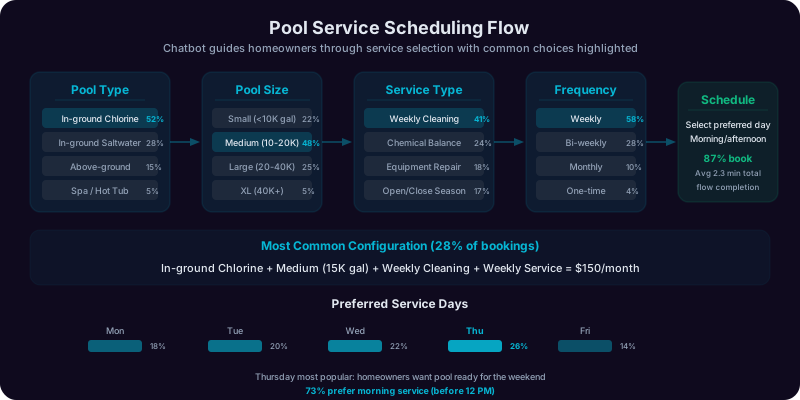
The pool service chatbot follows a structured conversation architecture modeled on the questions an experienced pool service coordinator asks on every customer call: What type of service do you need? What kind of pool do you have? What is the problem? When do you need service? Where are you located? The flow collects maximum useful information while routing different needs -- routine maintenance, urgent repairs, and consultative inquiries -- through appropriate paths.
Stage 1: Service Type Identification
Every conversation begins by identifying the customer's need. The chatbot presents clear options: routine cleaning and maintenance, emergency or urgent service, equipment repair or replacement, water chemistry help, opening or closing service, renovation or upgrade quote, or enrolling in a maintenance plan. This initial routing is critical because a customer calling about green water needs a fundamentally different conversation than someone who wants to schedule their weekly cleaning. Each path triggers a tailored set of follow-up questions optimized for that specific service type, ensuring the right information is collected without asking irrelevant questions.
Stage 2: Pool Profile Collection
The chatbot collects essential information about the customer's pool that affects service requirements and pricing: pool type (in-ground vs. above-ground), surface material (plaster, pebble, vinyl, fiberglass), approximate size (in gallons or dimensions), sanitization system (chlorine, salt, bromine, ozone, UV), and any additional features (spa/hot tub, water features, automatic cover, pool heater). For returning customers recognized through omnichannel integration, this profile is retrieved automatically, skipping directly to the current service need. This pool profile data ensures that technicians arrive prepared with the correct chemicals, equipment, and parts for the specific pool configuration.
Stage 3: Problem Assessment and Documentation
For repair and troubleshooting requests, the chatbot performs a detailed problem assessment. It asks what the customer is observing (cloudy water, green algae, equipment noise, visible leak, low water level, staining), when the issue started, and whether anything changed recently (new chemicals added, power outage, recent storm). The chatbot supports photo uploads so customers can share images of the problem -- a picture of green water, a stained pool surface, or a leaking pump tells the technician more than a verbal description ever could. All collected information is structured into a service ticket that gives the technician everything they need before arriving on site.
Stage 4: Urgency Classification
Not all pool problems are created equal. A pump that stopped working in July requires same-day attention to prevent water stagnation and algae growth. A minor cosmetic stain can wait a week. The chatbot classifies urgency based on the reported symptoms and seasonal context: complete pump or filter failure, active leaks, and severe algae in warm weather are flagged as urgent. Equipment noise, minor clouding, cosmetic issues, and off-season problems are classified as standard priority. This classification drives scheduling priority, ensuring genuinely urgent situations get expedited response while routine issues are handled efficiently in the normal scheduling queue.
Stage 5: Scheduling and Contact Collection
With the service need fully documented, the chatbot presents available appointment windows based on the service type, urgency level, and the customer's location zone. Customers select their preferred date and time window (morning, afternoon, or a specific time where available), then provide their service address, contact information, gate code or access instructions, and any notes for the technician. The chatbot validates the address against your configured service area and confirms availability in real time. The appointment is created in your scheduling system with all collected details attached, ready for technician dispatch.
Stage 6: Confirmation and Pre-Service Communication
The customer receives an immediate confirmation summarizing their service request: service type, pool details, problem description, scheduled date and time window, and what to expect next. The confirmation includes a reminder that the technician will provide an arrival notification and the company's direct line for same-day changes. Automated reminders go out 24 hours and 1 hour before the appointment, reducing no-shows and ensuring gate codes are correct and pets are secured. The complete service request flows to your dispatch system, CRM, and the assigned technician's mobile device for seamless field execution.
Water Chemistry Advisory Engine
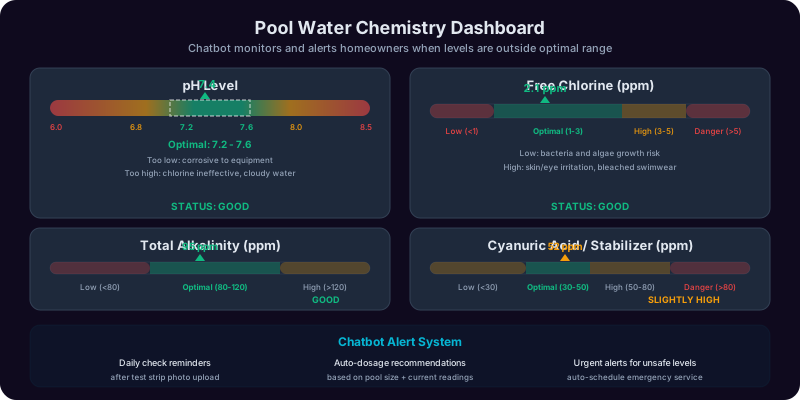
Water chemistry is the most common topic pool owners ask about, and it is also the area where incorrect advice leads to the most expensive problems. The chatbot's water chemistry advisory engine provides expert-level guidance based on the customer's specific test results, pool configuration, and current conditions -- turning every chemistry question into either a solved problem or a qualified service call.
Test Result Interpretation
Pool owners who test their water often do not know what the numbers mean or what to do about them. The chatbot walks them through entering their test strip or digital tester readings: free chlorine, pH, total alkalinity, cyanuric acid (stabilizer), calcium hardness, and any additional readings like salt level for salt chlorine generators. For each parameter, the chatbot compares the reading to the ideal range for the customer's pool type and sanitization system, then provides a plain-language interpretation: "Your pH is 8.0, which is above the ideal range of 7.2-7.6. This means your chlorine is only working at about 50% effectiveness, which is likely why you are seeing cloudiness. Here is how to bring it down."
Chemical Dosage Calculations
The most valuable feature of the chemistry engine is precise dosage calculation. Based on the customer's pool volume and current readings, the chatbot calculates exactly how much of each chemical is needed: "To lower your pH from 8.0 to 7.4, add 32 ounces of muriatic acid or 1.5 pounds of dry acid (sodium bisulfate). Add it slowly to the deep end with the pump running, and retest in 6 hours." These calculations account for pool volume, current levels, target levels, and the specific chemical products commonly available at pool supply stores. This precision prevents the two most common homeowner mistakes: under-dosing (problem persists) and over-dosing (creates new and often more expensive problems).
Seasonal Chemistry Guidance
Pool chemistry requirements change dramatically with seasons and usage patterns. In spring, pools coming out of winter often have phosphate accumulation, metal staining risks, and equipment that needs recommissioning. In peak summer, high temperatures and heavy swimmer load demand more aggressive sanitization. Fall brings leaf tannin staining and decreasing chemical demand. Winter requires proper closing chemistry to prevent surface damage. The chatbot's seasonal guidance engine automatically adjusts its recommendations based on the current date and the customer's geographic location, providing seasonally appropriate advice without the customer needing to ask the right questions.
Problem-Specific Protocols
Beyond routine chemistry adjustments, the chatbot provides step-by-step treatment protocols for common pool problems. Green algae receives a complete shock treatment protocol with specific product amounts, brushing instructions, filter run time recommendations, and a recovery timeline. Cloudy water triggers a diagnostic flowchart: Is the chemistry balanced? Is the filter pressure normal? When was the filter last cleaned? Has the pool been heavily used recently? Each diagnostic path leads to a specific, actionable solution. Staining is addressed with stain identification guidance (organic vs. metal) and appropriate treatment protocols. These problem-specific protocols give homeowners confidence to handle minor issues themselves while clearly identifying when professional service is necessary -- at which point the chatbot seamlessly transitions to the service scheduling flow.
When to Escalate to Professional Service
The water chemistry engine is designed to help pool owners with manageable situations while clearly flagging conditions that require professional intervention. Persistent algae that does not respond to shock treatment, black algae, suspected leaks, heater or pump malfunctions, and severely imbalanced water that has been out of range for extended periods all trigger a recommendation for professional service. The chatbot does not simply say "call us" -- it explains why professional service is needed and what the technician will do, then offers to schedule the appointment immediately. This approach builds trust by demonstrating expertise while naturally converting advisory interactions into service bookings when the situation warrants professional attention.
Ready to try Pool Service & Maintenance Chatbot?
Deploy this template in under 10 minutes. No coding required.
Use This Template Free →Equipment Troubleshooting and Repair Scheduling
Pool equipment problems range from minor annoyances to system-threatening failures, and homeowners rarely know which category their issue falls into. The chatbot's equipment troubleshooting module guides customers through a diagnostic process that identifies the likely problem, determines whether it is a DIY fix or a professional repair, and schedules a technician when needed -- all while collecting the diagnostic information that allows the tech to arrive prepared with the right parts.
Pump Troubleshooting
The pool pump is the heart of the circulation system, and pump problems are the most common equipment concern. The chatbot walks customers through a structured diagnostic based on their symptoms. Pump not turning on: Is the breaker tripped? Is the timer set correctly? Is there a GFI reset button? Pump making noise: What type of noise -- grinding, screaming, or humming? Is it cavitating (air bubbles in the strainer basket)? Pump losing prime: Is the water level adequate? Are there visible air bubbles in the pump basket? When was the lid O-ring last replaced? Each diagnostic path leads to either a simple fix the homeowner can try ("Check your breaker panel -- the pump circuit may have tripped during last night's storm. If it trips again after resetting, do not reset it a second time -- call us for a technician") or a service appointment recommendation with the probable issue pre-identified for the technician.
Filter System Diagnostics
Filter problems manifest as poor water clarity, high filter pressure, low flow rate, or visible debris returning to the pool. The chatbot identifies the customer's filter type -- cartridge, sand, or DE (diatomaceous earth) -- and asks targeted questions. For cartridge filters: When were the cartridges last cleaned? How old are they? What is the current pressure reading? For sand filters: When was the sand last replaced? Are you seeing sand in the pool? What is the backwash frequency? For DE filters: When was DE last added? Is DE powder visible in the pool? The diagnostics distinguish between maintenance issues (cartridge needs cleaning or replacement, sand needs changing) and mechanical failures (cracked manifold, broken laterals) that require a technician. Maintenance guidance is provided in full detail; mechanical issues trigger service scheduling with the diagnosis pre-loaded.
Heater and Heat Pump Issues
Pool heater calls are among the highest-value service requests because heater repairs require specialized knowledge and the equipment itself is expensive. The chatbot's heater diagnostic covers gas heaters, electric heat pumps, and solar heating systems with separate question flows for each. Common issues like heater not igniting, insufficient heating, error codes on the display, unusual smells, or noise are addressed with guided troubleshooting. The chatbot asks for the heater make and model (often accessible through a photo of the data plate), current error codes if displayed, and specific symptoms. This information enables the technician to research the likely issue and bring appropriate replacement parts, reducing the probability of a costly second visit.
Salt Chlorine Generator Troubleshooting
Salt chlorine generators are increasingly common but frequently confuse homeowners who do not understand the salt-to-chlorine conversion process. The chatbot handles the common salt system complaints: low chlorine despite running the system, "low salt" or "check salt" error messages, cell cleaning requirements, and generator not producing. The diagnostic process checks salt level (is it actually low or is the sensor giving a false reading?), cell condition (when was it last inspected or cleaned?), flow rate (is the cell getting adequate water flow?), and system runtime (is the generator running long enough for the pool's demand?). Many salt system issues are resolved with simple adjustments that the homeowner can make immediately; cell replacement and board failures are routed to service scheduling.
Automatic Cleaner and Accessory Support
Robotic cleaners, suction-side cleaners, pressure-side cleaners, automatic covers, and other pool accessories generate their own stream of support questions. The chatbot provides troubleshooting for common issues with each accessory type: robotic cleaner not climbing walls, suction cleaner not moving, pressure cleaner bags filling too quickly, automatic cover getting stuck. Where the issue involves the accessory itself (a common wear part replacement), the chatbot can recommend replacement parts and link to the manufacturer. Where the issue involves the pool's plumbing or electrical system, it routes to a service call. This accessory support channel reduces the volume of "quick question" calls that interrupt your dispatch team while still capturing service opportunities when real repairs are needed.
Seasonal Maintenance Plans and Service Enrollment
Seasonal maintenance is the predictable, recurring revenue backbone of every successful pool service company. The chatbot transforms seasonal service from a manual outreach process into an automated enrollment and scheduling system that captures customers at the exact moment they are thinking about their pool -- and converts them into long-term recurring revenue.
Spring Opening Service
When temperatures rise and pool season approaches, homeowners start searching for pool opening services. The chatbot captures these inquiries with a specialized spring opening flow that collects the information needed for a complete opening: How was the pool winterized (professional closing vs. homeowner-done)? What is the current condition of the cover? Has any water accumulated on top? Were there any known issues at closing? Is there any visible damage to the pool or equipment? Based on the responses, the chatbot presents the appropriate opening package -- standard opening for properly winterized pools, extended opening for pools that may have complications, or an inspection-first approach for pools with unknown winter conditions. The customer books the opening and receives a preparation checklist of what they can do before the technician arrives (remove cover debris, ensure access to equipment pad, locate any removed drain plugs).
Weekly and Bi-Weekly Service Plans
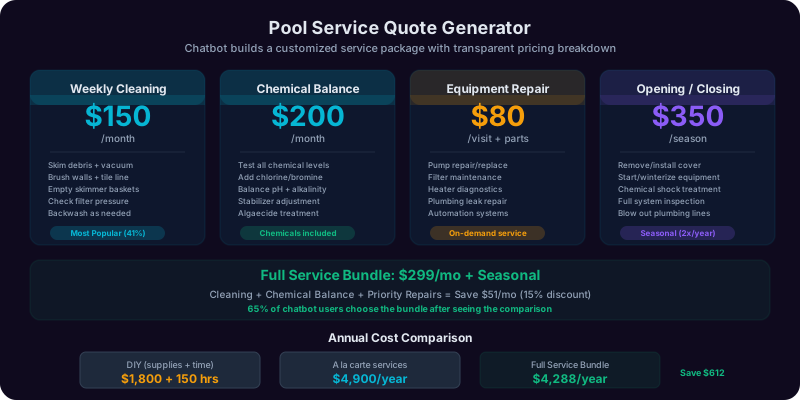
The chatbot's most valuable conversion capability is enrolling new customers in recurring maintenance plans. When a customer reaches out for a one-time cleaning or water chemistry help, the chatbot naturally introduces the maintenance plan option: "We can absolutely schedule a one-time cleaning for you. Many of our customers find that a weekly maintenance plan actually saves money compared to individual service calls -- and it keeps your pool perfect all season. Would you like to see plan options?" The chatbot then presents plan tiers with clear pricing and included services. A typical structure might include a basic plan (weekly chemical testing and adjustment, skimming, and filter check) and a comprehensive plan (basic services plus brushing, vacuuming, equipment inspection, and monthly chemical supply). Each plan is priced by pool size and complexity, calculated automatically from the pool profile collected earlier.
Fall Closing and Winterization
Pool closing is a critical service that prevents thousands of dollars in freeze damage, and the chatbot ensures no customer's pool goes unwinterized. Starting in early fall, the chatbot proactively mentions closing services during any customer interaction: "Fall is approaching -- have you scheduled your pool closing yet? Proper winterization prevents freeze damage to your plumbing and equipment." The closing flow collects pool details, any end-of-season issues that need addressing, the customer's preferred closing date, and any special requirements (winter cover purchase, equipment storage, antifreeze for specific plumbing configurations). Customers are booked in a logical geographic sequence that optimizes technician routing across the closing season.
Maintenance Plan Upselling Through Service Interactions
Every service interaction is an opportunity to convert a one-time customer into a recurring plan subscriber. The chatbot tracks which customers are on a plan and which are not. Non-plan customers who request service for preventable issues -- algae blooms from inconsistent chlorination, equipment damage from neglected maintenance, staining from unbalanced chemistry -- receive a tactful plan recommendation after their immediate problem is addressed: "This algae bloom happened because the chlorine level dropped over two weeks without service. Our weekly maintenance plan keeps your chemistry balanced so this does not happen again, and it costs less per month than the algae treatment you just needed." This contextual upselling converts at 3-4 times the rate of generic plan marketing because the customer has just experienced the cost of not having regular maintenance.
Annual Service Calendar Automation
For customers on maintenance plans, the chatbot manages the annual service calendar automatically. Spring opening is scheduled based on the customer's geographic zone and historical opening dates. Weekly or bi-weekly service visits run on the established schedule with automated reminders. Mid-season equipment inspections are scheduled at optimal intervals. Fall closing is booked before the rush based on the customer's location and typical first-freeze dates. Chemical supply deliveries are timed to coincide with seasonal demand changes. The customer receives their complete annual service calendar at the beginning of each season, with the ability to adjust dates through the chatbot at any time. This calendar automation reduces the administrative burden of managing hundreds of recurring service schedules while giving customers full visibility and control over their service timeline.
Instant Quote Generation for Repairs, Upgrades, and Renovations
Quote generation is where pool service companies leave the most money on the table. A homeowner asking about a salt system upgrade, a new pool heater, or a complete resurface is a high-value prospect -- but if they do not receive a timely response, they move on to the next company. The chatbot's instant quote system captures these high-value opportunities with immediate pricing estimates that keep the customer engaged while your sales team prepares a formal proposal.
Equipment Upgrade Quotes
The chatbot handles quote requests for common equipment upgrades with pre-configured pricing ranges. A customer asking about converting from chlorine to salt receives a conversational assessment: current pool size, existing equipment compatibility, electrical access near the equipment pad, and budget range. Based on these inputs, the chatbot generates an instant estimate: "Based on your 18,000-gallon pool, a salt chlorine generator conversion typically runs $1,400-$2,200 installed, depending on the unit selected and any electrical work needed. This includes the generator, salt cell, installation labor, and initial salt supply. Want to schedule a free on-site assessment for a firm quote?" This instant pricing converts browsers into leads at significantly higher rates than "contact us for a quote" -- because the customer knows the ballpark immediately and can decide whether to proceed.
Repair Cost Estimates
When the troubleshooting flow identifies a problem requiring professional repair, the chatbot provides a cost estimate alongside the service scheduling. A pump motor replacement, a filter cartridge set, a heater ignitor, or a leaking valve each has an expected cost range that the chatbot can communicate: "Based on your description, this sounds like a pool pump motor replacement. Typical cost for your pump model is $350-$550 for the motor and labor. If the entire pump needs replacement, the range is $800-$1,400 depending on the model we install. Our technician will confirm the diagnosis on-site and provide the exact cost before any work begins." This transparency builds trust and reduces the anxiety that prevents many homeowners from scheduling repairs.
Renovation and Resurfacing Projects
Pool renovation is the highest-value service category, with projects ranging from $5,000 for a basic resurface to $50,000+ for complete remodels. The chatbot captures renovation inquiries with a project scope conversation that collects pool age, current surface condition, desired improvements (new surface, tile, coping, decking, water features, lighting, automation), budget range, and timeline. Photos of the current pool are requested to help the estimator assess the scope. The chatbot provides a general budget range based on the described scope: "A pebble surface renovation for a pool your size typically starts around $8,000-$12,000. Adding new waterline tile and LED lighting would bring the range to $14,000-$20,000. Our renovation specialist will visit your pool to provide a detailed proposal with material options and exact pricing." The lead is captured with complete project details, giving your sales team a warm, qualified prospect with full context.
New Service Area Expansion Quotes
Pool companies expanding into new service areas or adding new service types use the chatbot to gauge demand and capture early customers. The chatbot can present introductory pricing for new services -- pool automation installation, energy-efficient pump upgrades, or Department of Energy-recommended pool cover installations -- and collect interested customer information before the service is officially launched. This pre-launch lead capture ensures that new service offerings have a pipeline of customers from day one, reducing the risk of expansion into unfamiliar territory.
businesses worldwide use Conferbot templates to automate conversations
Key Features: Service Scheduling, Chemistry Advice, and Customer Management
The pool service chatbot includes a comprehensive feature set engineered for the unique operational demands of pool companies: seasonal revenue cycles, chemical complexity, geographic route optimization, and the need to convert one-time service calls into recurring maintenance contracts. Here is the complete capability matrix.
| Feature | How It Works | Company Benefit | Customer Benefit |
|---|---|---|---|
| Smart service scheduling | Service type routing with urgency classification and geographic slot optimization | Optimized technician routes, fewer empty drive-times, priority emergencies handled first | Instant booking with accurate time windows |
| Water chemistry advisor | Test result interpretation with dosage calculations based on pool volume and chemistry | Reduces low-value phone calls, converts chemistry problems into service bookings | Instant expert guidance with exact chemical amounts |
| Equipment troubleshooter | Guided diagnostics for pumps, filters, heaters, salt systems, and cleaners | Technicians arrive with correct parts; simple fixes resolved without truck roll | Quick answers to equipment questions without waiting for a callback |
| Seasonal plan enrollment | Automated spring/fall service booking with maintenance plan upselling at every touchpoint | Maximizes recurring revenue; automates seasonal scheduling logistics | Seamless seasonal transitions with no missed openings or closings |
| Instant quote engine | Pre-configured pricing for repairs, upgrades, and renovations based on pool profile | Captures high-value leads with immediate pricing before they call competitors | Gets ballpark pricing instantly without scheduling an estimate visit |
| Photo-based diagnosis | In-conversation image upload for water color, staining, equipment damage, and leaks | Better pre-visit preparation; occasional remote diagnosis saves truck roll | Show the problem visually instead of describing it |
| Service area validation | ZIP code matching against configured service zones with route-day assignment | Prevents unprofitable out-of-area service; optimizes route density | Immediate clarity on whether their area is served |
| After-hours capture | Full service intake 24/7 with emergency routing to on-call technician | Captures 35%+ of inquiries that arrive outside business hours | Submit requests any time without waiting until morning |
| Multi-channel deployment | Deploys on website, WhatsApp, Messenger, and SMS | Meets customers on their preferred platform without managing multiple inboxes | Contacts the pool company through their favorite app |
| CRM and dispatch integration | Syncs with HubSpot, Jobber, Housecall Pro, and other field service platforms | Zero manual data entry; leads and appointments flow directly into existing systems | Faster service response from coordinated dispatch |
Natural Language Understanding for Pool Issues
Pool owners describe problems in everyday language, not technical terminology. They say "my pool is green" not "I have an algae bloom requiring superchlorination." The chatbot's NLP engine understands these natural descriptions and maps them to the correct diagnostic and service paths. "Water is cloudy," "pool looks murky," and "can't see the bottom" all route to the water clarity diagnostic. "Pump sounds weird," "something is grinding," and "loud noise from the equipment" all route to the pump troubleshooting flow. This natural language capability means customers never feel like they are filling out a form or navigating a phone tree -- they simply describe their problem and the chatbot understands.
Service History and Pool Profile Tracking
The chatbot maintains a complete service history for each customer's pool, accessible through Conferbot's analytics. When a returning customer reaches out, the chatbot can reference their history: "I see we replaced your filter cartridges 11 months ago -- if you are seeing reduced flow, they may be due for replacement. Your pool is a 15,000-gallon pebble surface with a salt system, correct?" This contextual awareness provides a personalized experience that builds loyalty and helps technicians understand the pool's complete maintenance history when diagnosing new problems.
Benefits for Pool Service Companies
Pool service companies face a unique combination of operational challenges: extreme seasonal demand variation, chemical and equipment expertise requirements, geographic routing complexity, and the critical importance of converting one-time service calls into recurring monthly revenue. The chatbot addresses each of these challenges with measurable business impact.
Capture Every Inquiry During Peak Season
Pool service companies experience dramatic seasonal demand spikes. When the first warm week hits, call volume can triple overnight. Without a chatbot, this surge overwhelms the office: calls go to voicemail, emails sit unanswered for days, and customers hire the first company that responds. The chatbot handles unlimited simultaneous conversations, ensuring that every pool owner who reaches out during the spring rush gets an immediate response and a booked appointment. Companies report capturing 40-60% more spring opening appointments in their first year with a chatbot simply by responding to inquiries that previously went unanswered during the volume surge.
Convert One-Time Customers to Recurring Revenue
The most profitable pool service companies derive 60-70% of their revenue from recurring maintenance plans. The chatbot systematically converts one-time service customers into plan subscribers by presenting maintenance options at every appropriate touchpoint -- after a service call, during a chemistry advisory conversation, and when scheduling seasonal services. This consistent, non-pushy presentation of the recurring option converts at 18-25% of one-time customers, compared to the 5-8% conversion rate typical of relying on technicians to make the pitch in the field. Each new recurring customer adds $150-$400 in monthly revenue for the lifetime of the relationship.
Reduce Low-Value Phone Calls by 50%
A significant portion of pool company phone calls are informational: "What chemicals do I need for green water?" "How do I backwash my filter?" "When should I close my pool?" These calls consume office staff time without generating direct revenue. The chatbot handles these informational inquiries automatically, providing expert answers that either resolve the issue or naturally transition into a service booking. Pool companies deploying chatbots consistently report a 45-55% reduction in inbound phone volume, freeing office staff to focus on dispatching, customer follow-up, and sales activities that directly drive revenue.
Improve Technician Efficiency
When the chatbot collects pool profile information, photos, troubleshooting results, and service history before the technician arrives, the on-site visit becomes dramatically more efficient. Technicians spend less time diagnosing and more time fixing. They arrive with the right parts and chemicals for the specific pool configuration. The first-visit fix rate improves by 25-35%, reducing expensive return trips. For a company running 15-20 service calls per day, eliminating even two return visits daily saves 2-3 hours of technician time and the associated fuel and vehicle costs.
Build a Year-Round Customer Relationship
The chatbot maintains customer engagement throughout the year, not just during active pool season. Off-season interactions -- winterization reminders, spring opening scheduling, equipment upgrade recommendations, and loyalty program communications -- keep your company top-of-mind so customers do not shop for a new pool company each spring. This year-round relationship reduces annual customer churn from the industry average of 25-30% to 10-15%, compounding the value of every customer acquisition over multiple years of retained revenue.
Lead Capture and Revenue Impact Data
The financial impact of a pool service chatbot is measurable within the first season of deployment. The combination of increased lead capture, higher recurring plan enrollment, reduced operational costs, and improved customer retention creates a compelling return on investment that accelerates as the customer base grows.
Before vs. After: Pool Service Company Performance Metrics
| Metric | Without Chatbot | With Pool Chatbot | Impact |
|---|---|---|---|
| Inbound inquiry capture rate | 55-65% | 95-99% | +35-40 percentage points |
| Spring opening bookings captured | 60-70% of inquiries | 90-95% of inquiries | +40-60% more bookings |
| One-time to recurring plan conversion | 5-8% | 18-25% | 3x improvement |
| After-hours lead capture | 10-15% | 90-98% | 6-8x improvement |
| Phone call volume (office staff) | Baseline | 45-55% reduction | Half the inbound phone load |
| First-visit fix rate | 65-72% | 88-95% | 25-35% improvement |
| Annual customer churn rate | 25-30% | 10-15% | 50% reduction |
| Cost per lead acquired | $55-$90 | $15-$30 | 60-70% reduction |
Revenue Impact: Recurring Plan Growth
Consider a pool service company with 200 recurring maintenance customers at an average of $225/month. That is $45,000 in monthly recurring revenue. With the chatbot converting one-time service customers to plans at 20% (vs. 6% previously), and the company handling 40 one-time service calls per month, the chatbot adds 8 new recurring customers per month (vs. 2.4 without). Over a 7-month pool season, that is 56 new recurring customers -- adding $12,600 in monthly recurring revenue by season's end. At an average customer lifetime of 3.5 years, those 56 new customers represent approximately $529,000 in lifetime revenue attributable to the chatbot's plan conversion capability.
Revenue Impact: Captured After-Hours and Peak-Season Leads
Pool companies report that 30-40% of their chatbot leads arrive outside business hours or during peak-volume periods when calls would have gone to voicemail. With an average service call value of $185 and an average of 15 previously-missed leads captured per week during peak season, the chatbot adds approximately $2,775 in weekly service revenue during the 20-week peak period -- totaling $55,500 in seasonal revenue from leads that would have been lost to voicemail or competitors. Emergency after-hours calls, which carry premium pricing, push this figure even higher.
Cost Reduction: Office Efficiency
A pool company with two full-time office staff handling phones and scheduling can redirect one staff member to sales, customer retention, and business development activities when the chatbot handles 50% of inbound communication. Rather than eliminating the position, the chatbot frees up $35,000-$50,000 worth of labor annually for higher-value activities that directly drive revenue growth. The net effect is not just cost savings but revenue acceleration: the staff member who was answering phones is now following up on renovation quotes, managing the referral program, and nurturing commercial account relationships.
Industry Use Cases and Real-World Applications
Pool service chatbots serve a diverse range of businesses within the aquatics industry, each with unique operational requirements. Here are the primary use cases with specific implementation details for each business type.
Residential Pool Service Companies
The core use case: residential pool service companies serving homeowners with weekly maintenance, seasonal services, repairs, and renovations. The chatbot handles the full customer lifecycle from initial inquiry through multi-year recurring service. For companies managing 200-500 residential accounts, the chatbot becomes the primary customer communication channel, handling routine scheduling, chemistry questions, and service modifications while office staff focus on dispatching and exception management. These companies typically see the highest ROI from the recurring plan conversion feature, as each new monthly account represents significant lifetime value.
Commercial Pool Management
Hotels, apartment complexes, community pools, and fitness centers require a different service model: compliance-driven maintenance with strict health code requirements, multiple contact points within each account, and service level agreements with defined response times. The chatbot adapts to commercial accounts by maintaining property-specific profiles with multiple authorized contacts, equipment inventories, compliance schedules, and SLA parameters. When a property manager at a 200-unit apartment complex reports a pool equipment issue, the chatbot identifies the specific pool (many properties have multiple), checks the equipment profile, and schedules service within the contractual response time -- all while automatically notifying the property management company and logging the interaction for compliance documentation.
Pool Builder and Renovation Companies
Pool construction and renovation companies use the chatbot primarily for lead capture and project scoping. A homeowner who wants to build a new pool or renovate an existing one has dozens of questions and a complex set of preferences. The chatbot captures this information through a consultative conversation: desired pool type, size range, features (spa, water features, lighting, automation), materials preferences, budget range, property details, and timeline. By the time the sales team receives the lead, they have a complete prospect profile and can prepare a tailored presentation for the in-person consultation. Pool builders report that chatbot-qualified leads close at 35-45% higher rates than form submissions because the prospect has already invested time in detailing their vision, creating psychological commitment to the project.
Pool Supply Retail and E-Commerce
Pool supply stores -- both physical retail and online -- use the chatbot as a product recommendation and water chemistry advisory engine. When a customer describes their pool problem, the chatbot not only explains the solution but recommends specific products from the store's inventory: "To treat your algae bloom, you'll need a calcium hypochlorite shock treatment. We carry the BioGuard Burn Out Extreme ($18.99 for a 1-lb bag) and the HTH Super Shock ($12.99 per bag). For your 15,000-gallon pool, you will need 3-4 bags." This advisory-to-product pipeline converts chemistry questions into product sales, increasing the store's average transaction value and building customer loyalty through expert guidance. Online pool supply stores see 25-30% higher conversion rates when the chatbot guides product selection compared to browse-and-buy behavior.
Hot Tub and Spa Service Companies
Hot tub and spa service requires its own set of conversations: water chemistry is more concentrated and sensitive in small-volume vessels, equipment is compact and brand-specific, and the seasonal pattern is often inverse to pools (hot tubs peak in colder months). The chatbot's hot tub mode adjusts chemistry calculations for small volumes, references PHTA (Pool and Hot Tub Alliance) guidelines for safe operating parameters, and includes troubleshooting flows for common spa-specific issues like jet failure, ozone system problems, and cover waterlogging. Hot tub companies deploying the chatbot capture significantly more winter-season service requests, which are otherwise lost to the perception that pool companies are "closed for the season."
Integrations with Pool Service Software and Business Tools
The pool service chatbot's value multiplies when it connects directly to the software your business already uses. Conferbot's integration ecosystem ensures that every lead, appointment, and customer interaction flows seamlessly into your existing operational workflow without manual data entry or duplicate systems.
Field Service Management Platforms
Pool service companies running Jobber, Housecall Pro, ServiceTitan, or PoolBrain connect the chatbot to automatically create work orders, schedule appointments within existing technician calendars, and sync customer records. When a customer books a service through the chatbot, the appointment appears immediately in the field service platform with all collected details -- pool profile, problem description, photos, urgency level, access instructions, and customer contact information. Technicians see the complete picture on their mobile device without the office needing to transfer any information manually. Completed work orders update the chatbot's customer profile, keeping the service history current for future interactions.
CRM and Marketing Integration
Every chatbot interaction generates customer data that feeds your CRM and marketing systems. New leads flow into HubSpot, Salesforce, or your preferred CRM with complete contact information, pool details, and interaction history. Marketing automation platforms receive segmentation data: Is this customer on a recurring plan? Have they inquired about an equipment upgrade? Did they use the chemistry advisor? This segmentation enables targeted email campaigns -- sending equipment upgrade promotions to customers with aging equipment, renovation offers to homeowners who mentioned interest, and seasonal reminders to customers who have not yet scheduled their opening or closing service.
Communication and Notification Tools
The chatbot integrates with Slack, Microsoft Teams, email, and SMS to notify your team of new leads, emergency service requests, and high-value quote inquiries in real time. Emergency notifications can be routed to the on-call technician's phone via SMS or push notification. New recurring plan sign-ups can trigger a Slack celebration message in your team channel. High-value renovation leads can be emailed directly to your sales manager with complete prospect details. These notification integrations ensure that no chatbot interaction gets stuck in a queue -- the right person on your team is alerted at the right time through their preferred communication channel.
Payment and Invoicing
For pool companies that want to collect deposits or pre-payment through the chatbot, Stripe and Square integrations enable in-conversation payment processing. Seasonal service packages, recurring maintenance plan enrollment, and equipment upgrade deposits can all be paid through the chatbot during the booking conversation. Payment confirmation triggers the service scheduling workflow automatically. For companies using QuickBooks or Xero for accounting, chatbot-processed payments sync automatically, keeping financial records current without manual reconciliation.
Google Business and Review Management
After service completion, the chatbot can send a satisfaction check-in and review request: "Hi! Your pool service with Mike was completed yesterday. How did everything go? If you are happy with the work, we would love a quick review on Google -- it really helps our small business." This automated review request, timed 24 hours after service completion, generates significantly more Google reviews than passive "please review us" stickers on invoices. Pool companies using automated review requests through the chatbot report a 4-6x increase in monthly Google reviews, which directly improves local search ranking and drives new customer acquisition through Google Business Profile visibility.
Setup Guide: Deploy Your Pool Service Chatbot Today
Getting your pool service chatbot live with Conferbot takes less than a day, and most pool companies begin capturing leads and scheduling service within the first 24 hours. Here is the complete deployment process from start to finish.
Step 1: Start with the Pool Service Template
Select Conferbot's pool service and maintenance chatbot template, which includes pre-built conversation flows for service scheduling, emergency triage, water chemistry advisory, equipment troubleshooting, seasonal service booking, and quote generation. The template covers the 25+ most common pool service customer interactions out of the box. Customize the branding -- your company name, logo, colors, and communication style -- using the no-code visual editor. Whether your brand is professional and technical or friendly and approachable, the tone is fully configurable within the editor.
Step 2: Configure Your Service Offerings
Enter your service types with descriptions and pricing: weekly maintenance plans, one-time cleaning, opening and closing services, equipment repair, salt system maintenance, and any specialty services you offer. For each service type, configure the information the chatbot should collect and the scheduling parameters (duration, required equipment, technician skill level). Set up your service area by ZIP code or radius, define your scheduling hours and emergency after-hours routing, and configure appointment time windows. This configuration typically takes 30-45 minutes.
Step 3: Build the Chemistry and Troubleshooting Knowledge Base
The template includes standard water chemistry ranges and equipment troubleshooting flows, but you can customize these to match your company's specific recommendations and the equipment brands prevalent in your service area. Adjust pH ranges, chlorine targets, and chemical product recommendations to match what you stock and trust. Add your most common equipment models to the troubleshooting database for more specific diagnostics. This customization ensures the chatbot gives advice consistent with what your technicians recommend in the field.
Step 4: Connect Your Integrations
Link the chatbot to your field service management platform (Jobber, Housecall Pro, ServiceTitan, or others) so that appointments and leads flow automatically. Connect your CRM for customer data sync. Set up notification channels (Slack, email, SMS) for new leads and emergency alerts. Configure payment processing if you want to collect deposits or plan payments through the chatbot. Each integration connects through Conferbot's integration dashboard with guided setup -- no API coding required.
Step 5: Deploy Across Your Channels
Add the chatbot to your website with a simple embed code, connect it to your WhatsApp Business account, and activate it on Facebook Messenger and any other channels where your customers reach you. Generate a QR code for your service vehicles, business cards, and yard signs so that customers can start a conversation by scanning with their phone. Multi-channel deployment ensures you capture leads regardless of how customers prefer to communicate.
Step 6: Test, Launch, and Optimize
Run through each conversation flow -- booking a cleaning, reporting an emergency, asking a chemistry question, requesting a quote -- to verify the experience matches your expectations. Have your office staff and a few trusted customers test the chatbot and provide feedback. Adjust wording, add service types, and refine scheduling parameters based on real conversations. Monitor the analytics dashboard during the first week to identify any conversation drop-off points or frequently asked questions not yet covered, and iterate. Most pool companies achieve full operational integration within 1-2 weeks, at which point the chatbot handles 60-70% of customer interactions autonomously.
Pool Service & Maintenance Chatbot FAQ
Everything you need to know about chatbots for pool service & maintenance chatbot.
Why Use a Template vs Building from Scratch?
Templates give you a proven starting structure instead of a blank canvas.
| Factor | Conferbot Template | Build from Scratch | Hire a Developer |
|---|---|---|---|
| Time to deploy | 10 minutes | 2-8 hours | 2-6 weeks |
| Cost | Free | Your time | Custom dev quote |
| Proven flows | Yes, pre-built | No | Depends |
| Updates included | Automatic | Manual | Paid |
| Multi-channel | 8+ channels | 1 channel | Extra cost |
| Analytics | Built-in | Must build | Extra cost |
Learn More About Chatbots
Go deeper on how home services chatbots work and how to pick the right builder.
Ready to Deploy Pool Service & Maintenance Chatbot?
Start with a free-forever plan. No credit card required.