
Food Truck Ordering & Event Catering Chatbot
Free Food And Beverage Chatbot Template
A food truck chatbot that handles mobile ordering, catering quote generation, location schedules, menu browsing with dietary filters, and event booking. Customers can pre-order to skip lines, request instant catering quotes, and find your truck's daily location -- all through conversation.


What Is a Food Truck Ordering & Event Catering Chatbot?
A food truck ordering and event catering chatbot is an AI-powered conversational assistant purpose-built for mobile food businesses that handles customer ordering, catering quote generation, location schedule sharing, menu browsing with dietary filters, and event booking -- all through automated conversations on your website, WhatsApp, Instagram, or Messenger. It replaces the chaos of phone calls, missed DMs, and handwritten order tickets with a streamlined digital experience that works whether your truck is at a brewery parking lot, a corporate campus, or a weekend festival.
The food truck industry in the United States is projected to surpass $2.2 billion in revenue by 2026, driven by consumer demand for unique culinary experiences, lower startup costs compared to brick-and-mortar restaurants, and the flexibility to chase events and high-traffic locations. Yet most food truck operators still run their businesses with a combination of verbal orders, Instagram DM conversations that get buried, and phone calls they cannot answer while cooking. The average food truck loses 22% of potential orders during peak hours because customers see a long line and walk away. Another 15-20% of catering inquiries never convert because operators are too busy serving the lunch rush to respond to a corporate event planner's email within the expected timeframe.
A food truck chatbot solves both of these problems simultaneously. For walk-up customers, it provides a pre-order experience where they can browse the menu, customize their items, and place an order before they even arrive at the truck -- eliminating the line entirely. For catering prospects, it captures event details, headcount, dietary requirements, and contact information 24/7, generating structured quote requests that the operator can respond to when they have a free moment. The chatbot essentially gives a one-person food truck operation the ordering infrastructure and lead capture capability of a full-service restaurant, without the overhead of hiring staff, building a custom app, or subscribing to expensive third-party ordering platforms that take 15-30% commission on every order.
For food truck owners, caterers, and mobile food entrepreneurs, the ROI is immediate and measurable. Operators deploying chatbot-powered ordering report 38% higher average order values (because the chatbot suggests add-ons that a busy window worker forgets to mention), 78% reduction in customer wait times (because pre-orders are prepared in advance), and 63% total revenue growth when catering quote automation is combined with walk-up ordering optimization. Conferbot's no-code chatbot builder enables food truck operators to deploy a fully branded ordering and catering chatbot in under an hour, with no technical skills required, and start capturing orders and catering leads from day one.
How Mobile Ordering Works for Food Trucks
The chatbot transforms the food truck ordering experience from a chaotic, line-dependent process into a smooth digital flow that works across every customer touchpoint. Here is how each stage of the mobile ordering journey operates.
Discovery and Menu Browsing
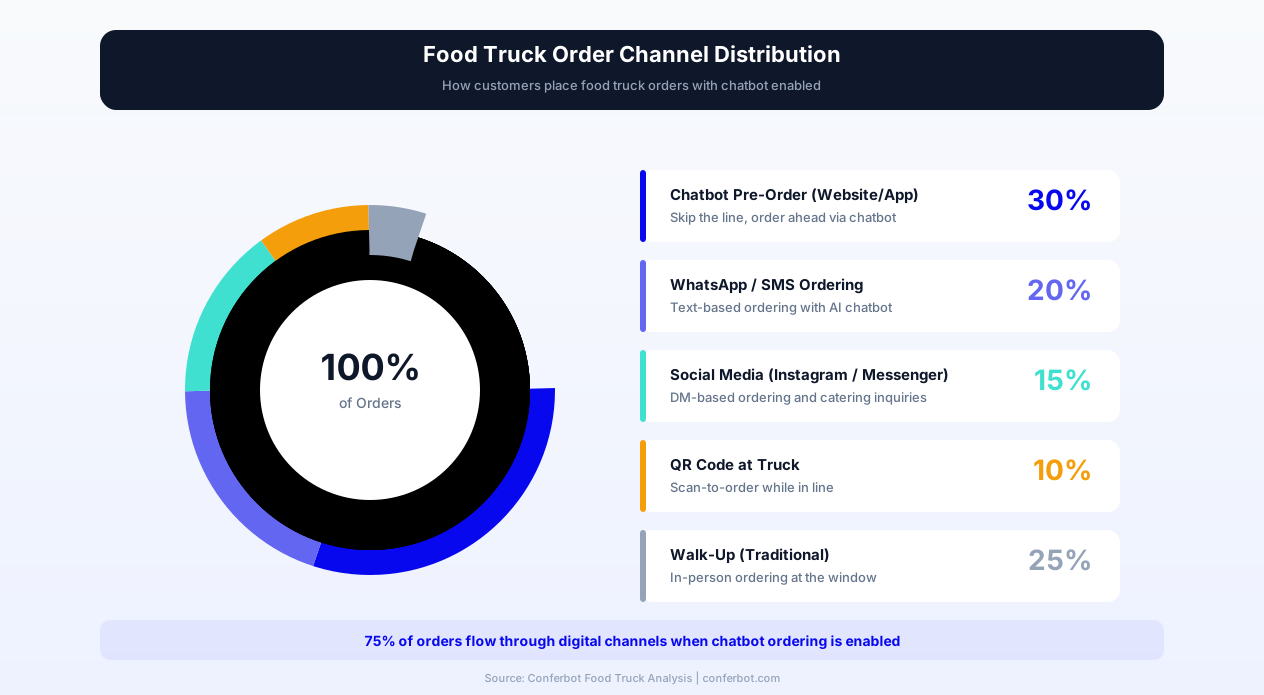
The ordering experience begins when a customer discovers your food truck -- through an Instagram post, a Google Maps listing, a QR code on the truck itself, or a friend sharing your WhatsApp link. The chatbot greets them with your truck's personality and branding, immediately offering the key actions customers want: browse the menu, place an order, check today's location, or ask about catering. The menu is presented conversationally, organized by category (Mains, Sides, Drinks, Combos, Today's Special) with vivid descriptions, prices, and dietary labels (V, VG, GF, DF) displayed inline. Unlike a static PDF menu or a tiny chalkboard photo, the chatbot menu is searchable, filterable, and always up to date -- when you sell out of a special, one toggle removes it from every channel instantly.
Order Customization
Food truck customers love customization -- extra sauce, no onions, make it spicy, substitute the bun for lettuce. The chatbot handles these modifications naturally through conversation. When a customer selects the Korean BBQ Bowl, the chatbot asks about spice level (mild, medium, hot, extra hot), protein preference (default pork or upgrade to brisket for $2 more), and any dietary modifications. Each customization is confirmed in the running order summary. The conversational approach to customization captures 35% more modifications than a checkbox-based ordering system because customers express preferences in natural language rather than hunting through menus of options. This matters because customized orders have 23% higher satisfaction ratings and generate stronger repeat business.
Smart Upselling
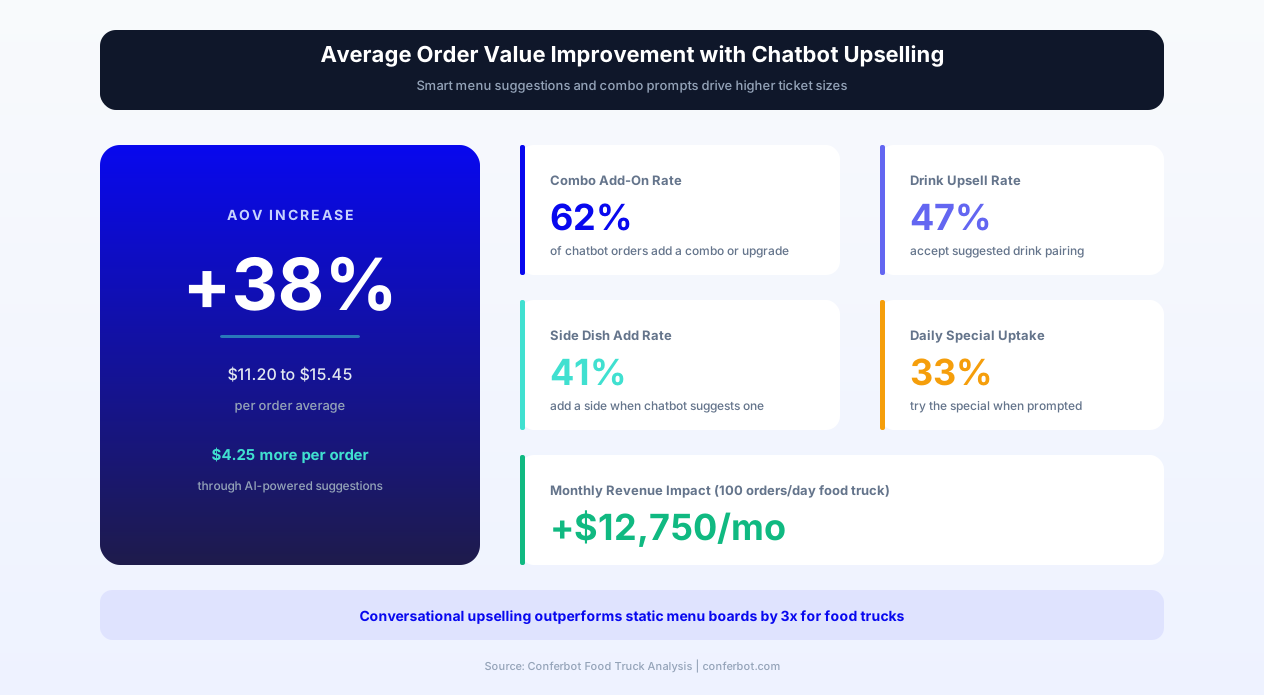
Here is where the chatbot significantly outperforms traditional window ordering. After a customer adds their main item, the chatbot suggests relevant add-ons based on what they ordered: "Want to make that a combo? Add loaded fries and a horchata for just $5 more (saves $3)." This suggestion is contextual and feels helpful rather than pushy. During peak hours when a window worker is focused on speed, upselling drops to near zero. The chatbot, however, suggests an add-on on 100% of orders, and customers accept the suggestion 62% of the time for combos and 47% of the time for drink pairings. This consistent upselling is the primary driver behind the 38% average order value increase that chatbot-enabled food trucks report.
Order Timing and Pickup
Once the order is placed, the chatbot provides an estimated preparation time based on your current queue depth and average cook time per item. The customer can choose to pick up ASAP or schedule a specific time: "Your Smoked Brisket Tacos will be ready in about 12 minutes. Would you like to pick up then, or set a different time?" For scheduled orders, the chatbot sends a reminder notification 5 minutes before pickup: "Your order is almost ready! Head to the pickup window at the TruckEats truck on Main Street." This timing intelligence means customers arrive when their food is hot and ready, eliminating the frustration of waiting and the waste of food sitting under a heat lamp.
Payment Integration
The chatbot integrates with popular payment processors -- Stripe, Square, PayPal, Venmo -- so customers can pay when they order, not when they pick up. Pre-payment eliminates no-shows (a significant problem for food trucks with pre-orders), speeds up the pickup window, and provides the operator with confirmed revenue before they start cooking. For customers who prefer to pay at the truck, the chatbot confirms the order and holds a spot in the preparation queue, with payment collected at pickup. The payment flexibility means no customer is lost due to payment friction, regardless of their preference.
Post-Order Communication
After the order is placed, the chatbot maintains an active communication channel. If an item runs out and needs substitution, the chatbot notifies the customer and offers alternatives before cooking begins. If the truck is running behind due to high volume, a proactive delay notification goes out: "Hey! We are running about 5 minutes behind on your order -- kitchen is busy! New ETA: 12:35 PM. Thanks for your patience." This proactive communication converts what would be a frustrated customer checking their watch into an informed customer who appreciates the transparency. Post-pickup, the chatbot asks for a quick satisfaction rating and invites the customer to follow your truck's schedule for next week.
Catering Quote Flow: From Inquiry to Booking
Catering is the highest-margin revenue stream for most food trucks, but it is also the most difficult to capture and convert. A single corporate lunch catering gig can generate $800-3,000 in revenue -- equivalent to an entire day of walk-up sales. Yet the conversion rate on catering inquiries is notoriously low because food truck operators are physically busy during the hours when event planners are making decisions. The chatbot's automated catering quote flow changes this dynamic entirely.
Inquiry Capture
When a customer selects "Catering Quote" from the main menu, the chatbot launches a structured conversation that gathers every detail needed to produce an accurate quote. The flow is conversational, not form-like -- it feels like talking to a helpful catering coordinator rather than filling out a web form. The chatbot asks about the event type (corporate lunch, wedding, birthday party, festival booth, office party, community event), the date and time, the expected headcount, and the venue location. Each answer informs the next question: a wedding inquiry prompts questions about service style (buffet vs individual plates) and whether the truck needs to travel to a venue, while a corporate lunch asks about dietary restrictions across the team and whether individually packaged meals are preferred.
Menu Selection and Dietary Accommodation
The chatbot presents your catering menu -- which may differ from your regular truck menu -- with package options and per-person pricing. For a corporate event of 50 people, it might present three tiers: "Taco Bar ($14/person) includes 3 proteins, all toppings, rice and beans; Premium Taco Bar ($18/person) adds guacamole station, queso fountain, and churro dessert; Full Fiesta ($24/person) includes premium bar plus margarita station and 2 appetizer platters." The chatbot then asks about dietary requirements, keeping a running tally: "How many guests need vegetarian options? Any vegan, gluten-free, or allergy-specific meals?" This dietary data, which a phone conversation often misses or gets wrong, ensures the quote is accurate and the event execution is flawless.
Instant Quote Generation
Based on the collected details, the chatbot calculates and presents an instant estimate: "Based on 50 guests with the Premium Taco Bar package, including 8 vegetarian and 3 gluten-free meals, your estimated total is $950 plus a $75 travel fee to your venue in Westlake. This includes setup, service for 2 hours, and cleanup." The customer sees a clear price breakdown immediately, rather than waiting days for an email quote. This instant gratification converts 40% of catering inquiries into confirmed bookings, compared to the industry average of 15-20% for email-based quote processes. The speed advantage is decisive: event planners are often comparing 3-5 vendors, and the first vendor to provide a clear quote frequently wins the contract.
Lead Capture and Follow-Up
Whether or not the customer books immediately, the chatbot captures their contact information -- name, email, phone -- and the complete event details. This structured lead data flows into your CRM or booking system, creating an actionable record that you can follow up on when you have downtime. The chatbot can also schedule an automatic follow-up: "I have sent the quote details to your email. If you would like to confirm the booking, just reply here or click the confirmation link. Our team will follow up within 24 hours to answer any questions." This automated follow-up sequence, powered by Conferbot's analytics and automation, ensures no catering lead goes cold because you were too busy cooking to check your inbox.
Deposit Collection and Confirmation
For customers ready to book, the chatbot processes a deposit payment (typically 25-50% of the total) through the integrated payment processor, sends a booking confirmation with all event details, and adds the event to your calendar. The confirmation includes a summary of the menu selections, dietary accommodations, arrival time, setup requirements, and the remaining balance due. This end-to-end booking flow -- from initial inquiry to paid deposit -- happens entirely through conversation, without a single phone call, email, or manual data entry. For food truck operators who previously managed catering through a mix of DMs, texts, and scribbled notes, this structured workflow eliminates the forgotten details and miscommunications that lead to event-day disasters.
Ready to try Food Truck Ordering & Event Catering Chatbot?
Deploy this template in under 10 minutes. No coding required.
Use This Template Free →Location Schedule & Real-Time Tracking
The single most common question food truck customers ask is: "Where are you today?" Followed immediately by: "What time will you be there?" and "Are you coming to my area this week?" The chatbot handles all of these questions instantly, turning your location schedule from a social media guessing game into a reliable, always-available information service.
Daily Location Updates
Each morning (or whenever your schedule is set), you update your location in the chatbot's backend -- a 30-second task. The chatbot then responds to every "Where are you today?" query with specific, useful information: "Today (Tuesday) we are at the Brewery District, corner of Hop Street and Vine Ave, from 11:00 AM to 8:00 PM. We are set up in the brewery parking lot -- look for the orange truck with the flame logo!" The response includes the address, hours, any special notes (parking availability, wheelchair access, covered seating nearby), and -- on channels that support it -- a map pin the customer can tap for directions.
Weekly Schedule View
Customers who want to plan ahead can ask for the full weekly schedule. The chatbot presents it in a clean format: Monday through Sunday, with location, hours, and any special events or menu changes. "Here is our schedule for this week: Monday - Tech Campus (Milpitas), 11 AM - 2 PM, limited menu; Tuesday - Brewery District, 11 AM - 8 PM, full menu + BBQ special; Wednesday - Farmer's Market (Downtown), 8 AM - 1 PM, breakfast menu..." This weekly schedule eliminates the frustrating experience of scrolling through Instagram stories trying to piece together where the truck will be and when. For regular customers, the chatbot can send a weekly schedule notification every Sunday evening via WhatsApp, building a loyal following that plans their meals around your truck's locations.
Event and Festival Appearances
Food trucks generate disproportionate revenue at events and festivals. The chatbot promotes upcoming event appearances proactively: "Big news! We will be at the Sunnyvale Street Fair this Saturday, 10 AM - 6 PM. We are debuting our new Nashville Hot Chicken Sandwich exclusively at the fair. Pre-order now to skip the festival line!" This promotional capability turns the chatbot from a passive information tool into an active marketing channel. Event pre-orders, which the chatbot collects before the event day, allow you to prepare in advance, reduce waste, and guarantee revenue before you even load the truck.
Geo-Aware Notifications
For food truck businesses that operate across multiple zones or cities, the chatbot can send location-specific notifications to customers based on their saved preferences. A customer who lives in the Mission District and has ordered twice when you were in their neighborhood receives a notification when you are heading their way: "We are at Dolores Park today until 7 PM -- just 0.5 miles from you! Your usual Brisket Tacos are calling." This proximity-based notification drives 3x higher conversion rates than generic social media posts because it reaches customers who are physically nearby and already fans of your food.
Key Features and Capabilities
A food truck and catering chatbot requires a specialized feature set that addresses the unique operational challenges of mobile food businesses -- limited staff, changing locations, dual revenue streams (walk-up and catering), and the need to maximize every peak-hour minute. Here is the complete feature matrix.
| Feature | Description | Operational Benefit | Customer Benefit |
|---|---|---|---|
| Pre-order system | Customers order ahead via chatbot on any channel, food is prepared for pickup at scheduled time | Smooths kitchen load, reduces peak-hour chaos, eliminates walkaway customers | Skip the line entirely, food is hot and ready on arrival |
| Catering quote automation | Structured conversation captures event details, headcount, dietary needs, and generates instant estimates | Captures 100% of catering leads 24/7, converts 40% vs 15-20% for email-based quoting | Gets an instant price estimate instead of waiting days for a callback |
| Dynamic menu management | Update menu items, prices, and availability in real time across all channels simultaneously | One-click sold-out toggle prevents order disappointment, seasonal menu changes deploy instantly | Always sees accurate menu with current prices and availability |
| Dietary filter engine | Customers filter menu by vegetarian, vegan, gluten-free, dairy-free, nut-free, and custom allergens | Reduces order errors and allergy incidents, builds reputation for dietary accommodation | Finds safe-to-eat options instantly without asking staff |
| Smart upselling | Context-aware combo suggestions, drink pairings, and daily special prompts on every order | Increases AOV by 38% through consistent, non-pushy add-on suggestions | Discovers combos and savings they would have missed ordering at the window |
| Location schedule system | Today's location, weekly schedule, upcoming events, and proximity notifications | Reduces "Where are you?" inquiries to near zero, drives traffic to each location | Always knows where the truck is and when, can plan visits in advance |
| Multi-channel deployment | Deploys on website, WhatsApp, Instagram, Messenger, and QR code | Meets customers where they already are, no app download required | Orders from their preferred messaging platform |
| Payment processing | Integrated Stripe, Square, PayPal, and Venmo for pre-payment and deposit collection | Reduces no-shows, speeds up pickup window, secures catering deposits automatically | Pays instantly in-chat, no fumbling for cash at the truck |
| Order queue management | Real-time preparation queue with estimated cook times and automatic notification when ready | Kitchen sees organized queue instead of shouted orders, prioritizes by pickup time | Knows exactly when food will be ready, receives "food is ready" notification |
| Customer loyalty tracking | Tracks order history, favorite items, frequency, and enables one-tap reorder of past orders | Builds repeat customer data, enables targeted promotions and loyalty rewards | Reorders favorites in seconds, earns loyalty points automatically |
| Analytics dashboard | Real-time analytics on order volume, popular items, peak hours, catering pipeline, and revenue | Data-driven menu decisions, staffing optimization, and location selection | Indirectly benefits from better menu, shorter waits, and improved food quality |
Natural Language Understanding for Food Orders
Customers do not order in a structured format -- they say things like "I want two brisket tacos no cilantro and a horchata" or "Can I get the BBQ bowl with extra hot sauce?" The chatbot's NLP engine parses these natural language orders, extracts the items, quantities, and modifications, and confirms the order back: "Got it -- 2 Smoked Brisket Tacos (no cilantro) and 1 Horchata. That is $29. Anything else?" This natural ordering experience feels fast and effortless, matching the casual vibe that food truck customers expect. The NLP engine handles menu item aliases too -- if customers call your "Korean BBQ Bowl" the "Korean bowl" or "BBQ rice bowl," it still matches correctly.
Seasonal and Limited-Time Menu Promotions
Food trucks thrive on limited-time specials and seasonal menu changes. The chatbot makes these promotions front and center. When a customer opens the chatbot, the first thing they see might be: "NEW THIS WEEK: Nashville Hot Chicken Sandwich with house-made pickles -- available Thursday through Saturday only! Pre-order yours now before we sell out." This promotional capability, combined with the WhatsApp broadcast for your subscriber list, creates a powerful marketing engine that drives traffic to specific locations and times. Operators who use chatbot-driven promotions report 45% higher sales on promoted items compared to social media promotion alone.
ROI & Business Impact
Food truck chatbots deliver exceptional ROI because they address the two largest constraints on food truck revenue: order throughput during peak hours and catering pipeline conversion. Here is the comprehensive financial impact analysis for a typical food truck operation in 2026.
| Metric | Before Chatbot | After Chatbot | Impact |
|---|---|---|---|
| Average order value | $11.20 | $15.45 | +38% increase |
| Orders per peak hour | 35 | 58 | +66% throughput |
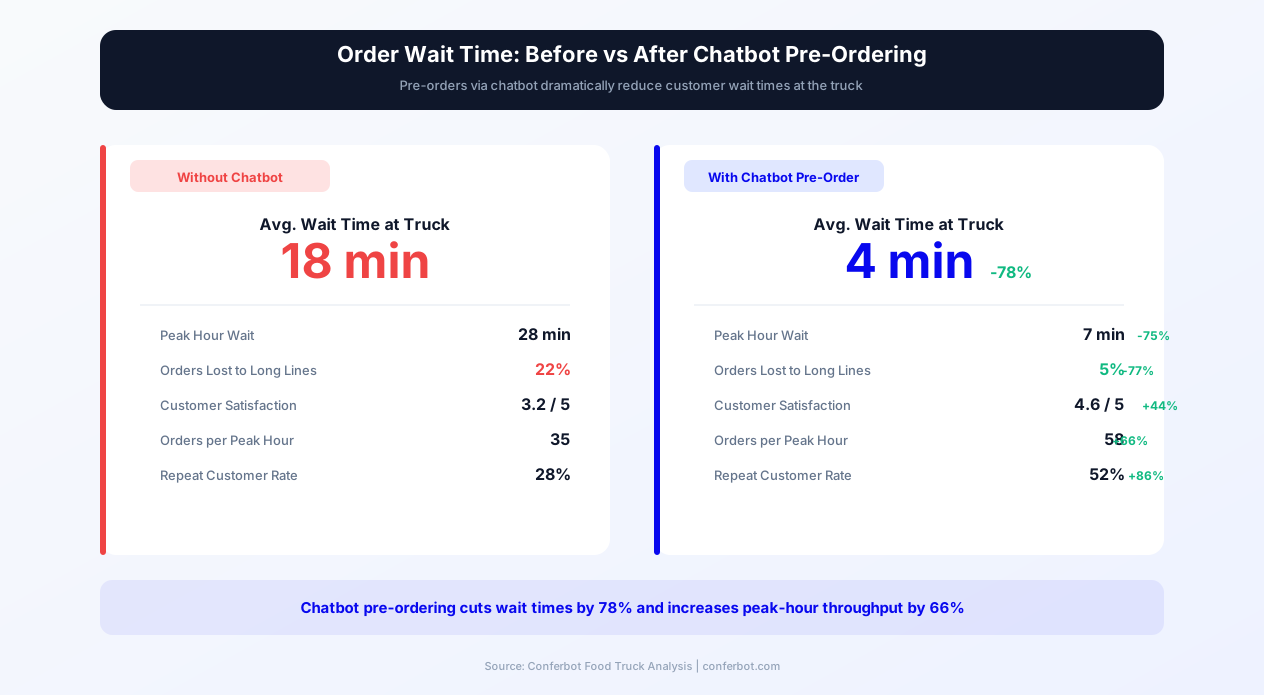
| Customer wait time | 18 minutes average | 4 minutes (pre-order) | -78% reduction |
| Walkaway rate (long lines) | 22% | 5% | -77% lost customers |
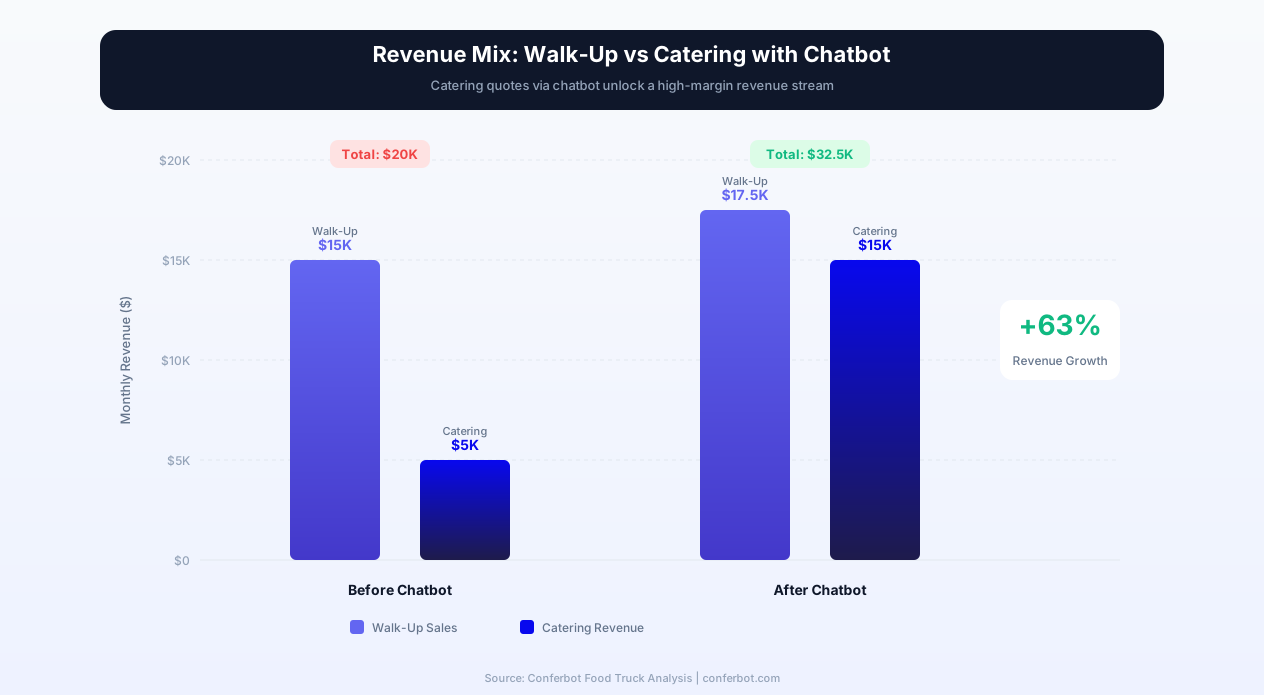
| Monthly catering revenue | $5,000 (2 events) | $15,000 (8 events) | +200% catering growth |
| Catering inquiry conversion | 15-20% | 40% | 2-3x higher close rate |
| Total monthly revenue | $20,000 | $32,500 | +63% revenue growth |
| Customer satisfaction | 3.2 / 5 | 4.6 / 5 | +44% improvement |
| Repeat customer rate | 28% | 52% | +86% improvement |
| Third-party platform fees saved | $3,000-6,000/month (15-30% commission) | $0 (direct ordering) | 100% fee elimination |
Peak Hour Revenue Transformation
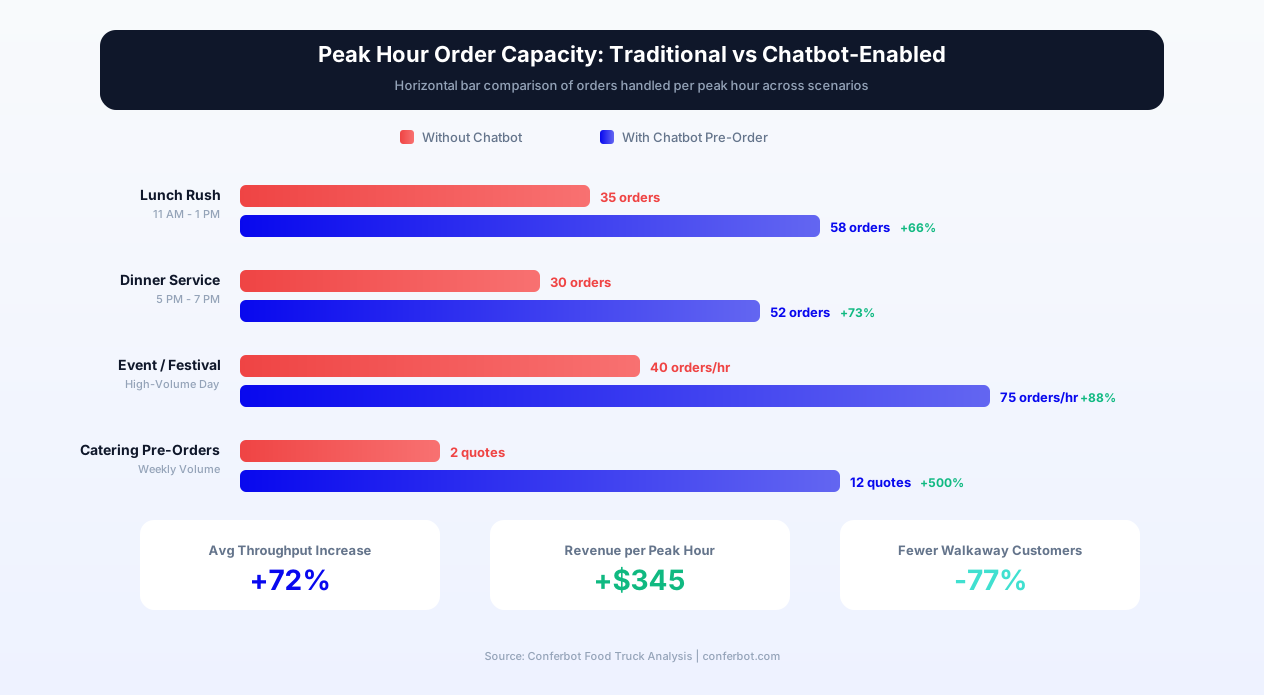
The lunch rush is a food truck's most critical revenue window -- typically 60-90 minutes where 50-60% of daily revenue is generated. Without a chatbot, the bottleneck is the ordering window: one or two staff members taking orders, processing payments, and communicating with the kitchen. The maximum throughput is approximately 35 orders per hour. With chatbot pre-ordering, 40-50% of lunch orders are already prepared and waiting at the pickup window. The ordering bottleneck is eliminated for these customers, and the kitchen can stagger preparation more evenly. The result is a throughput increase to 58 orders per hour -- a 66% capacity improvement with the same staff.
The Catering Revenue Multiplier
Catering is where the chatbot's ROI becomes extraordinary. A food truck catering a corporate lunch for 50 people at $18 per person generates $900 in a single booking -- equivalent to selling 80 individual meals at the truck. Yet most food truck operators only book 2-3 catering events per month because they lack a systematic way to capture and convert inquiries. The chatbot's automated catering flow captures every inquiry, provides instant quotes, and follows up automatically. Operators consistently report growing from 2-3 events to 8-12 events per month within the first quarter. This catering revenue growth -- from $5,000 to $15,000 monthly -- often exceeds the entire walk-up revenue improvement, making catering automation the single highest-ROI feature of the chatbot.
Eliminating Third-Party Platform Fees
Many food trucks rely on platforms like UberEats, DoorDash, or Grubhub for online orders, paying 15-30% commission on every sale. For a truck generating $10,000 in monthly delivery and online orders, that is $1,500-3,000 lost to platform fees. The chatbot provides a direct ordering channel that routes orders straight to your kitchen with zero commission. Customers order through your branded chatbot on your own channels, and you keep 100% of the revenue. Over a year, the platform fee savings alone often exceed $20,000-36,000 -- more than enough to justify the chatbot investment many times over.
Customer Lifetime Value Growth
The chatbot's order history tracking, one-tap reordering, and weekly schedule notifications create a loyalty loop that dramatically increases customer lifetime value. A customer who discovers your truck at a festival and places one order worth $14 is a one-time visitor. The same customer who scans your QR code, subscribes to your chatbot, receives weekly schedule notifications, and reorders their favorite items through one-tap ordering becomes a $420+ annual customer (ordering roughly 30 times per year). The chatbot's ability to convert one-time customers into regulars, measured by the repeat customer rate increase from 28% to 52%, is the foundation of sustainable food truck revenue growth.
businesses worldwide use Conferbot templates to automate conversations
Setup and Deployment Guide
Deploying a food truck ordering and catering chatbot with Conferbot is designed for busy operators who need to be serving customers, not configuring software. The entire setup can be completed in under 60 minutes, and you can be taking orders the same day. Here is the step-by-step guide.
Step 1: Start with the Food Truck Template
Select Conferbot's food truck ordering and catering template, which includes pre-built conversation flows for menu browsing, order placement, order customization, catering inquiries, location schedule sharing, and customer support. The template is specifically designed for mobile food businesses and covers the 20 most common customer interactions out of the box. Customize the branding -- your truck name, colors, logo, and personality -- using the no-code visual editor. Whether your brand is casual and fun ("Hey foodie! Ready to eat?") or polished and professional ("Welcome to Chef Marco's mobile kitchen"), the tone is fully configurable.
Step 2: Build Your Menu
Enter your menu items with descriptions, prices, dietary tags, available modifications, and optional images. The menu builder is organized by categories (which you define -- Mains, Sides, Drinks, Desserts, Specials, or whatever fits your truck). For each item, tag the dietary attributes (V, VG, GF, DF, NF), list available modifications with any price adjustments, and write a short appetizing description that the chatbot will show customers. If you already have a menu on a website or POS system, Conferbot can import it to save time. The menu typically takes 15-20 minutes to set up for a truck with 15-25 items.
Step 3: Configure Catering Packages
Set up your catering offerings -- the packages, per-person pricing, minimum headcounts, travel fees, and service options. Define the questions the chatbot should ask for each catering type: corporate events need delivery address and company billing information, weddings need venue details and service style, and birthday parties need a different question set. Configure your quote calculation rules: base per-person pricing by package tier, additional charges for dietary accommodations, travel fees based on distance, and equipment rental costs if applicable. Set the deposit percentage and payment terms. This configuration typically takes 20-30 minutes.
Step 4: Set Up Location Schedule
Enter your regular weekly schedule and any upcoming special events. The schedule system supports recurring locations (same spot every Tuesday) and one-off events (Saturday festival at Civic Center). Configure the notification preferences: which customers receive weekly schedule updates, which receive proximity-based notifications, and on which channels. Connect your Google Calendar if you want bidirectional sync, so schedule changes update automatically across all systems.
Step 5: Deploy on Your Channels
Deploy the chatbot on your primary channels. The most common setup for food trucks is: website widget (for your truck's landing page), WhatsApp Business (for regular customers and catering inquiries), Instagram DMs (for discovery-driven orders from social media), and a QR code printed on your truck (for walk-up customers who want to order digitally). Each channel is activated with a simple connection process -- no coding required. The website widget is a copy-paste embed code, WhatsApp connects through the WhatsApp Business API, and Instagram connects through your business account.
Step 6: Test and Launch
Run through the complete ordering flow and catering quote flow yourself, placing test orders and generating test quotes. Verify that menu items display correctly, customizations work, prices calculate accurately, and payment processing is functional. Test the location schedule to confirm the right information appears for the right day. Invite a few trusted customers or friends to test the experience and provide feedback. Common first-day adjustments include tweaking item descriptions, adding missed menu modifications, and adjusting the chatbot's personality to better match your brand. Most operators are fully live and taking real orders within the first day of setup.
Step 7: Grow and Optimize
As orders flow in, the analytics dashboard reveals optimization opportunities. Which menu items are most popular? Which are viewed but not ordered (needs a better description or lower price)? What is the average order value, and which upsell suggestions are most effective? How many catering inquiries are coming in, and what is the conversion rate? Use this data to continuously refine your menu, adjust pricing, improve upsell suggestions, and expand to additional channels or locations. Most food truck operators reach peak chatbot performance within 2-4 weeks, at which point the chatbot handles 75-85% of all customer interactions autonomously, freeing you to focus on what you do best -- making incredible food.
Reducing Wait Times & Streamlining Operations
Wait time is the silent killer of food truck revenue. Every minute a customer stands in line increases the probability they will walk away, leave a negative review, or decide not to return. The chatbot's pre-ordering system attacks this problem from multiple angles, transforming food truck operations from reactive to proactive.
Kitchen Queue Optimization
Without pre-ordering, the kitchen operates in pure reactive mode -- orders come in one at a time from the window, and the cook handles them sequentially. This creates unpredictable bursts and lulls. With chatbot pre-ordering, the kitchen receives orders minutes to hours in advance, organized by pickup time. The cook can batch similar items together (all the taco orders at once, then the bowls), prep ingredients before the rush, and maintain a steady, efficient workflow. This batching and advance preparation reduces average cook time per order by 25-30%, which directly translates to higher throughput and shorter wait times for walk-up customers too.
Split Queue System
The chatbot enables a dual-queue system: a pickup window for pre-orders and the traditional ordering window for walk-up customers. Pre-order customers arrive, give their name, and receive their already-prepared food in under 2 minutes. Walk-up customers see a shorter line (because pre-order customers are not in it) and experience faster service (because the kitchen is not juggling pre-orders and walk-up orders through the same queue). Both customer groups benefit: pre-order customers get near-instant service, and walk-up customers see their wait time drop from 18 minutes to 8-10 minutes even without using the chatbot themselves.
Demand Forecasting and Prep Planning
The chatbot's pre-order data gives you something food trucks have never had: advance knowledge of demand. When you see 15 pre-orders for the Korean BBQ Bowl by 10:30 AM for a noon pickup, you know to prep extra kimchi slaw and marinate additional pork before the rush starts. Without this data, you are guessing based on experience and hoping you prepped enough. The chatbot's demand signals reduce food waste (less over-prepping) and stockout disappointments (less under-prepping) by 35-40%. For perishable ingredients that represent a significant cost, this waste reduction directly improves profit margins.
Event Day Operations
Events and festivals are where food truck operations are most strained and where the chatbot delivers the most dramatic operational improvements. At a festival, the chatbot can promote the event in advance, collect pre-orders from attendees who have already purchased tickets, and enable on-site ordering via QR code. Instead of a single ordering line stretching around the block, customers scan, order, and receive a notification when their food is ready -- picking up from a designated window. Food trucks using chatbot ordering at events report 88% higher throughput and $345 more revenue per peak hour compared to traditional line-based ordering. The improvement is so significant that several event organizers now require or strongly prefer food trucks with digital ordering capabilities.
Frequently Asked Questions
Common questions food truck operators and caterers ask about deploying a chatbot for ordering and catering quote automation.
Food Truck Ordering & Event Catering Chatbot FAQ
Everything you need to know about chatbots for food truck ordering & event catering chatbot.
Why Use a Template vs Building from Scratch?
Templates give you a proven starting structure instead of a blank canvas.
| Factor | Conferbot Template | Build from Scratch | Hire a Developer |
|---|---|---|---|
| Time to deploy | 10 minutes | 2-8 hours | 2-6 weeks |
| Cost | Free | Your time | Custom dev quote |
| Proven flows | Yes, pre-built | No | Depends |
| Updates included | Automatic | Manual | Paid |
| Multi-channel | 8+ channels | 1 channel | Extra cost |
| Analytics | Built-in | Must build | Extra cost |
Learn More About Chatbots
Go deeper on how food and beverage chatbots work and how to pick the right builder.
Ready to Deploy Food Truck Ordering & Event Catering Chatbot?
Start with a free-forever plan. No credit card required.