
Optometry Clinic Chatbot
Free Healthcare Chatbot Template
Eye care clinic assistant for exams, contacts, and vision concerns
What Is an Optometry Clinic Chatbot?
An optometry clinic chatbot is an AI-powered patient engagement system designed specifically for eye care practices — automating appointment scheduling, insurance verification, contact lens reorder reminders, pre-exam questionnaires, frame style recommendations, vision symptom assessment, prescription status inquiries, and telehealth screening — reducing front-desk workload while capturing every patient inquiry that arrives at your practice website, whether during office hours or at 10 PM when a patient notices their contact lens supply is running low.
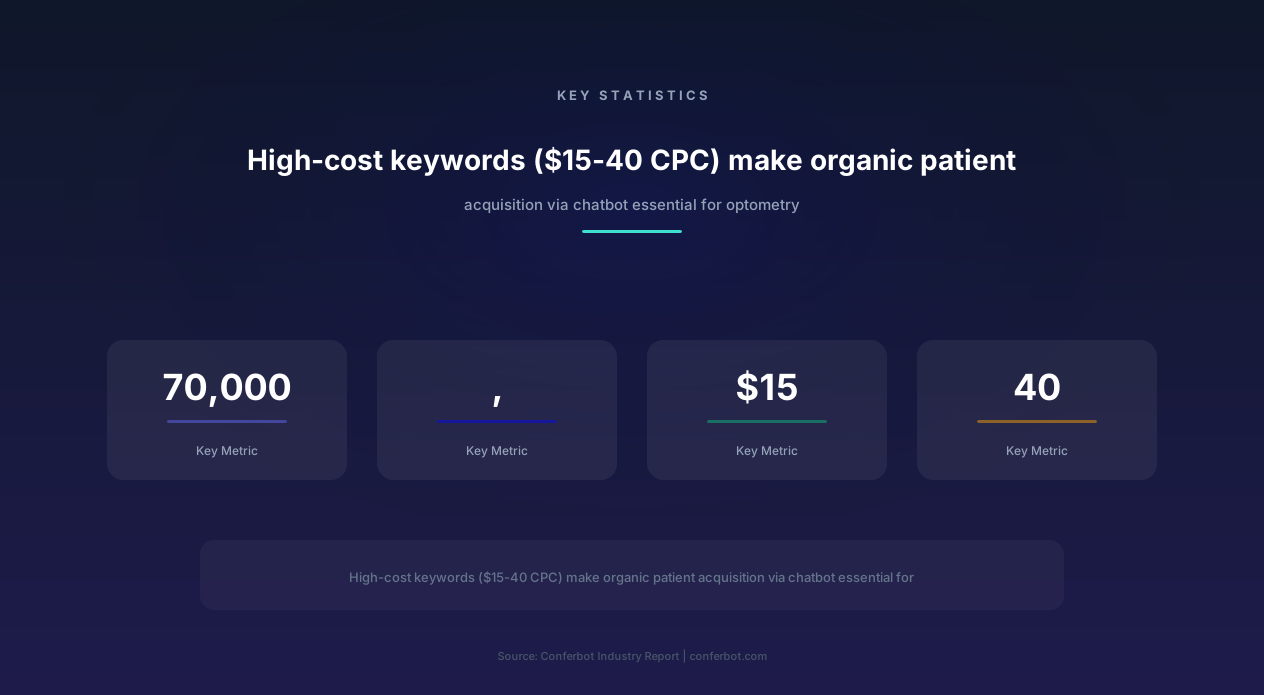
The optometry industry in 2026 faces a unique combination of challenges: over 70,000 optometrists in the United States compete for local patients, digital advertising costs for eye care keywords range from $15 to $40+ per click, and patients increasingly expect the same digital convenience from their eye doctor that they get from Amazon for contact lens reorders and telehealth platforms for medical consultations. Practices that rely solely on phone-based scheduling and manual reminder systems are losing patients to competitors who offer seamless digital experiences — and losing contact lens revenue to online retailers who make reordering frictionless.
Contact lens reorders represent the perfect automation opportunity: they are recurring, predictable, and high-margin. A patient who wears daily disposables needs approximately 720 lenses per year at $400-$800 retail value. When reordering requires calling during office hours, navigating a phone tree, and providing prescription information that the practice already has on file, many patients defect to 1-800 Contacts or online retailers for convenience. A chatbot that proactively reminds patients when their supply is running low and completes the reorder in 30 seconds — without a phone call — retains this revenue stream within your practice.
Built on Conferbot's AI chatbot builder, the optometry clinic chatbot deploys on your practice website, integrates with your EHR/practice management system via API, and engages patients through WhatsApp for appointment reminders and reorder notifications. The template covers every patient touchpoint from first contact to ongoing care management — transforming your digital presence from a static brochure into an active patient acquisition and retention engine.
Eye Exam Scheduling: From Website Visitor to Booked Patient in 90 Seconds
Scheduling an eye exam should be simple — but for most optometry practices, it requires a phone call during business hours to a front desk that may be helping in-office patients, on another call, or at lunch. The result: prospective patients who search "eye exam near me" at 8 PM, visit your website, find no convenient way to book, and call the next practice on Google that offers online scheduling. Each lost booking represents $200-$500 in exam and eyewear revenue — and the lifetime value of a retained patient ($3,000-$10,000 over a decade of annual exams and lens purchases).
Exam Type Selection
The chatbot begins the scheduling flow by identifying the appropriate exam type — because different exams require different time blocks, equipment, and preparation:
- Comprehensive eye exam: Standard annual exam (45-60 minutes). The foundation of every patient relationship.
- Contact lens fitting/evaluation: Requires additional testing beyond the comprehensive exam (60-90 minutes). New wearers or prescription changes.
- Pediatric eye exam: Child-friendly approach with different testing protocols (30-45 minutes). Often involves behavioral testing for younger children.
- Medical eye exam: Specific symptom evaluation — dry eye, flashes/floaters, eye pain, infection (30-45 minutes). May be billed to medical insurance rather than vision plan.
- LASIK/refractive consultation: Candidacy evaluation for surgery referral (45 minutes). Requires specific pre-appointment instructions.
Insurance Pre-Verification
Before scheduling, the chatbot collects insurance information — one of the most common reasons patients call the office. The chatbot asks for insurance carrier, plan type (vision vs. medical), member ID, and group number, then verifies whether the practice is in-network for that plan. For patients without insurance or with out-of-network plans, the chatbot presents self-pay pricing and any available promotions. This pre-verification eliminates the frustrating experience of arriving for an appointment only to discover coverage issues.
Provider Selection and Availability
For multi-provider practices, the chatbot allows patients to select their preferred optometrist or choose "first available." It presents available time slots based on the selected exam type duration, provider availability, and equipment scheduling constraints. Patients see real-time availability without phone hold times or back-and-forth negotiation. The chatbot integrates with your scheduling system via calendar integration to ensure slots displayed are actually available.
Pre-Appointment Preparation
After booking, the chatbot delivers exam-specific preparation instructions: "Please bring your current glasses and a list of medications. If wearing contact lenses, please remove them 24 hours before your contact lens fitting appointment." For new patients, it sends a link to online intake forms — pre-populating any information already collected during the booking conversation. Patients who complete intake forms before arrival reduce their check-in time by 10-15 minutes, improving the practice's throughput and the patient's experience.
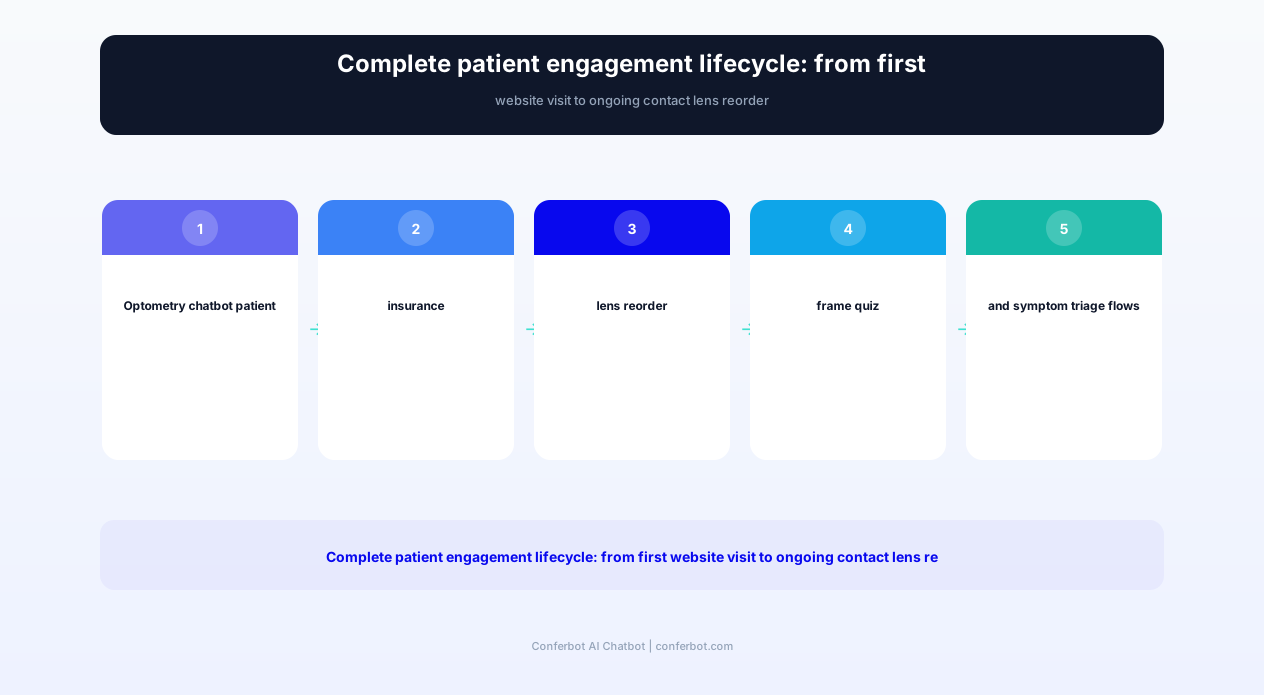
Contact Lens Reorder Automation: Retaining Your Highest-Margin Revenue Stream
Contact lenses represent one of the most significant revenue streams for optometry practices — and one of the most vulnerable to online competition. The global contact lens market exceeds $12.6 billion, with online retailers capturing an increasingly large share because they make reordering effortless: log in, click reorder, done. For practices to retain this revenue, they must match or exceed the convenience of online alternatives. The optometry chatbot makes reordering through your practice easier than ordering from any competitor.
Proactive Reorder Reminders
The chatbot calculates when each patient's contact lens supply will run out based on their prescription (daily, biweekly, or monthly), their last order quantity, and their order date. Two weeks before the estimated depletion date, the chatbot sends a proactive reminder via the patient's preferred channel: "Hi Sarah! Based on your last order of 90-day supply Acuvue Oasys daily lenses, you're probably running low. Would you like to reorder the same? I can have them ready for pickup or shipped to your home."
One-Message Reorder Completion
For patients reordering the same product, the entire transaction completes in a single exchange. The chatbot already knows their prescription, preferred brand, quantity, and delivery preference from the last order. The patient simply confirms: "Yes, same as last time." The chatbot processes the order, confirms delivery timeline, and handles payment — a 30-second interaction that previously required a 5-minute phone call during business hours. This frictionless experience is the competitive moat against online retailers: your chatbot knows the patient, knows their prescription, and requires zero data entry.
Prescription Expiration Alerts
Contact lens prescriptions expire (typically after 1-2 years depending on state regulations), and patients often do not realize their prescription has expired until they try to reorder. The chatbot tracks expiration dates and sends alerts 60 and 30 days before expiration: "Your contact lens prescription expires on [date]. You'll need a current exam to continue ordering. Would you like to schedule your annual eye exam?" This alert serves dual purposes: it prevents the frustration of a blocked reorder, and it drives exam revenue by triggering the annual visit that might otherwise be skipped or delayed.
Revenue Retention Impact
| Metric | Without Chatbot Reorder System | With Chatbot Reorder System | Revenue Impact |
|---|---|---|---|
| Patient reorder retention rate | 45-55% (rest go online) | 75-85% | +50-80% lens revenue retained |
| Average time to reorder | 5-8 minutes (phone call) | 30 seconds (chat confirmation) | Higher patient satisfaction |
| Reorders triggered by reminder | 0 (no proactive system) | 40-60% of eligible patients | Revenue that would otherwise be lost |
| Prescription renewal compliance | 60-70% | 80-90% | Additional exam revenue |
| Annual lens revenue per CL patient | $250-$400 (partial retention) | $450-$700 (full retention) | +$200-$300/patient/year |
For a practice with 500 contact lens patients, improving retention from 50% to 80% at $500 average annual lens spend represents $75,000 in additional annual revenue — revenue that was already yours but was leaking to online competitors due to inconvenience. The chatbot plugs this leak by making your practice the path of least resistance for reordering.
Ready to try Optometry Clinic Chatbot?
Deploy this template in under 10 minutes. No coding required.
Use This Template Free →Insurance Verification: Eliminating the #1 Patient Frustration
Insurance confusion is the number-one source of patient frustration in eye care. Vision insurance is separate from medical insurance. In-network and out-of-network status varies by plan. Coverage for exams, frames, lenses, and contacts may all be different. Patients frequently arrive for appointments without understanding their coverage, leading to billing surprises that damage the patient relationship and create administrative headaches. The optometry chatbot handles insurance verification conversationally — answering the questions patients actually ask in the language they actually use.
Insurance Carrier and Plan Identification
The chatbot guides patients through insurance identification: "What insurance do you have for eye care? Common vision plans include VSP, EyeMed, Davis Vision, Spectera, and Superior Vision. If you're unsure, the name is on your insurance card." For patients confused about vision vs. medical insurance, the chatbot explains the distinction: "Vision insurance covers routine eye exams and eyewear. Medical insurance (like Blue Cross, Aetna, United) covers medical eye conditions like infections, dry eye, or injuries. Which type of appointment are you scheduling?"
In-Network Verification
Once the carrier is identified, the chatbot immediately confirms whether your practice is in-network: "Great news — we are an in-network provider for VSP Choice plans! Your routine eye exam is covered with a $10 copay, and you have a $150 frame allowance." For out-of-network plans, the chatbot presents out-of-network benefits (if any) and self-pay pricing: "We are not in-network for EyeMed, but many EyeMed plans offer out-of-network reimbursement. Our self-pay exam rate is $199, and I can help you submit for reimbursement afterward."
Coverage Explanation by Service
The chatbot explains coverage in patient-friendly language, breaking down what each plan typically covers:
- Exam coverage: Copay amount, frequency limitation (usually once per 12 months)
- Frame allowance: Dollar amount toward frames, any collection restrictions
- Lens coverage: Single vision, bifocal, progressive tiers and upgrades
- Contact lens allowance: Annual allowance amount, fitting fee coverage
- Medical vs. routine: When medical insurance applies instead of vision plan
Benefits Maximization Guidance
The chatbot proactively helps patients maximize their benefits: "Your VSP plan resets on January 1. You have $180 remaining in frame allowance for this year. Would you like to schedule an appointment before year-end to use your benefits? Many patients use their remaining allowance for prescription sunglasses or a backup pair." This benefits-maximization messaging serves the patient (they use benefits they have already paid for) and the practice (additional eyewear revenue from proactive outreach). Deliver these reminders through WhatsApp or your practice's preferred patient communication channel for maximum engagement.
Frame Style Quiz: Personalized Eyewear Recommendations That Drive Revenue
Choosing eyeglass frames is one of the most personal and anxiety-inducing decisions patients make in your practice. With hundreds of options varying by shape, material, color, and price point, patients often feel overwhelmed and either defer the decision (leaving without purchasing) or make a choice they later regret (reducing satisfaction and referrals). The frame style quiz in the optometry chatbot helps patients discover their preferences before they arrive — so they walk into the optical with confidence and direction rather than decision paralysis.
Face Shape and Feature Analysis
The quiz begins with face shape identification — the foundation of frame recommendation. Rather than asking patients to self-identify their face shape (which most cannot do accurately), the chatbot asks measurable questions: "Is your face longer than it is wide, wider than it is long, or approximately equal?" "Is your jawline rounded, angular, or pointed?" "Is your forehead wider than your jaw, narrower, or about the same width?" From these answers, the chatbot determines face shape (oval, round, square, heart, oblong, diamond) and maps it to complementary frame shapes using established optical styling principles.
Lifestyle and Use-Case Questions
Beyond face shape, the quiz captures lifestyle factors that influence frame selection:
- Primary use: Computer/office, driving, sports, fashion, all-purpose
- Style preference: Classic/conservative, trendy/bold, minimalist, professional
- Material preference: Lightweight (titanium), durable (acetate), flexible (memory metal), eco-friendly (recycled)
- Budget range: Value ($100-$200), mid-range ($200-$400), premium ($400+), luxury ($600+)
- Color preference: Neutral/tortoise, bold colors, metallics, transparent
Personalized Recommendations
Based on quiz answers, the chatbot generates a personalized frame profile: "Based on your oval face shape, professional style preference, and lightweight material requirement, we recommend trying: 1) Ray-Ban Clubmaster in tortoise (classic, versatile), 2) Oakley Wingfold in gunmetal (lightweight titanium, professional), 3) Warby Parker Durand in whiskey tortoise (modern classic). We have all three in stock — would you like to try them at your next appointment?" This pre-selection means the patient arrives with 3-5 frames to try rather than facing 300 undifferentiated options.
Revenue Impact of Pre-Qualified Frame Preferences
Patients who complete the frame style quiz before their appointment purchase frames at a 25-35% higher rate than walk-in browsers because they arrive with confidence and direction. Average frame sale value also increases by 15-20% because the quiz normalizes higher price points by matching them to stated preferences rather than presenting them cold. For a practice doing 50 eyewear sales per month, a 30% conversion improvement represents 15 additional sales at $300+ average — $4,500+ in monthly additional revenue attributable to the quiz alone.
| Feature | Description | Operational Benefit | Customer Benefit |
|---|---|---|---|
| Face shape analysis | Guided questions to determine face shape type | Pre-qualified frame preferences before visit | Confidence in frame selection |
| Lifestyle matching | Activity-based lens and frame recommendations | Higher AOV through appropriate upsells | Frames suited to actual daily use |
| Budget normalization | Price range selection before viewing options | Reduces sticker shock at optical counter | No awkward price conversations |
| Style preference capture | Visual style quiz with example images | Optician knows preferences before fitting | Personalized selection pre-prepared |
| Brand recommendations | Specific frame suggestions from inventory | Directs attention to in-stock options | Curated selection vs overwhelming wall |
| Appointment connection | Quiz completion flows into booking | Converts quiz engagement into booked exams | Seamless transition from research to action |
| Second pair suggestions | Recommends complementary pairs (sun, computer) | Increases multi-pair sales rate | Discovers needs they hadn't considered |
| Virtual try-on integration | Links to AR try-on for recommended frames | Reduces in-store decision time | See frames on their face before visiting |
Vision Symptom Assessment and Telehealth Screening
Patients experiencing vision changes or eye problems often delay seeking care because they are unsure whether their symptoms warrant an appointment — or they attempt to self-diagnose online, finding alarming information that either causes unnecessary panic or dangerous false reassurance. The optometry chatbot provides structured symptom assessment that helps patients understand the urgency of their situation, provides appropriate guidance, and connects them to care through the right pathway — whether that is an emergency referral, a same-day medical appointment, or a routine scheduling.
Symptom Triage Categories
The chatbot assesses reported symptoms against established clinical urgency categories:
- Emergency (immediate referral): Sudden vision loss, chemical exposure, penetrating eye injury, acute angle closure symptoms (severe pain + nausea + halos). Chatbot instructs: "This requires immediate emergency care. Please go to the nearest emergency room or call 911."
- Urgent (same-day/next-day): Sudden floaters/flashes, red eye with pain, contact lens complications, foreign body sensation post-exposure. Chatbot offers: "This should be seen within 24 hours. I can check same-day availability."
- Semi-urgent (within 1 week): Gradual vision changes, persistent dry eye, recurring headaches with visual component, eyelid problems. Chatbot schedules within 3-5 days.
- Routine (regular scheduling): Annual exam due, gradual prescription change suspicion, cosmetic concerns, frame adjustment. Chatbot enters standard scheduling flow.
Pre-Visit Symptom Documentation
For non-emergency symptoms, the chatbot gathers structured clinical information that prepares the doctor for the visit: symptom onset (sudden vs. gradual), duration, affected eye(s), associated symptoms (pain, discharge, light sensitivity), recent activities (new contacts, screen time changes, travel), current medications, and previous similar episodes. This information is transmitted to the clinical team before the appointment, allowing the doctor to prepare equipment, allocate appropriate time, and begin the examination with full context rather than starting from zero.
Telehealth Screening Integration
For appropriate presentations (dry eye evaluation, medication follow-up, post-surgical check, lifestyle/ergonomic consultation), the chatbot offers telehealth as an option: "Based on your symptoms, this may be addressable through a video consultation without an in-office visit. Would you prefer a telehealth appointment or an in-person exam?" This expansion of access points increases patient engagement with the practice — patients who might skip an in-person visit for a minor concern will often accept a convenient video consultation, maintaining the care relationship and catching issues before they worsen.
Liability-Appropriate Disclaimers
All symptom assessment interactions include appropriate clinical disclaimers: the chatbot is not providing medical diagnosis, cannot replace professional examination, and patients with severe or worsening symptoms should seek immediate care regardless of chatbot interaction. These disclaimers are embedded naturally in the conversation flow rather than presented as intimidating legal walls — maintaining a helpful, supportive tone while protecting the practice legally.
50,000+ businesses use Conferbot templates to automate conversations
Digital Pre-Exam Questionnaires: Faster Check-In, Better Clinical Data
The pre-appointment intake process is a friction point that costs practices 10-15 minutes per patient in check-in time, produces incomplete information when patients rush through paper forms in the waiting room, and creates data entry burden for staff who must transfer handwritten responses into the EHR. The optometry chatbot delivers pre-exam questionnaires digitally — completing intake before the patient arrives and feeding structured data directly into clinical workflows.
Comprehensive Ocular History
The chatbot conducts a thorough ocular history through conversational questions that feel less clinical than a paper form:
- Current correction: Glasses, contacts, or both? How long since last update? Any issues with current correction?
- Vision complaints: Distance, near, intermediate, or combination? Night driving difficulty? Screen strain?
- Eye health history: Previous conditions, surgeries, injuries, or infections
- Family eye history: Glaucoma, macular degeneration, retinal detachment, color blindness in family
- Contact lens history: Brand, wearing schedule, comfort level, replacement frequency, solution used
- Digital device usage: Hours per day on screens, screen types, current blue light protection
Medical History Integration
Beyond ocular-specific questions, the chatbot captures medical history relevant to eye health: diabetes (diabetic retinopathy screening), hypertension (retinal vessel assessment), autoimmune conditions (dry eye and uveitis risk), medications with ocular side effects (steroids, hydroxychloroquine, tamoxifen), and allergies (relevant for contact lens solutions and dilating drops). This medical context ensures the optometrist can provide comprehensive care that considers systemic health — not just refractive correction.
Lifestyle Assessment for Lens Recommendations
The chatbot captures lifestyle information that directly informs lens technology recommendations: occupation (computer distance, outdoor work, variable focus needs), hobbies (sports requiring impact resistance, fine detail work, water activities), driving frequency (night driving, long commutes), and cosmetic preferences (desire for no-line progressives, photochromic lenses, fashion frames). This information equips the optometrist to make personalized recommendations during the exam rather than generic suggestions — increasing patient satisfaction with their final optical purchase.
Completion Rates: Digital vs. Paper
| Metric | Paper Forms (In-Office) | Digital Pre-Visit (Chatbot) | Improvement |
|---|---|---|---|
| Completion rate (all fields) | 55-65% | 88-95% | +40-50% |
| Legibility/accuracy | 70-80% (handwriting issues) | 100% (typed/selected) | Eliminates transcription errors |
| Check-in time at office | 12-18 minutes | 2-3 minutes (verification only) | -80% |
| Staff data entry time | 5-8 minutes per patient | 0 minutes (auto-synced) | Eliminated |
| Clinical information quality | Variable (rushed responses) | Comprehensive (guided flow) | Better clinical decisions |
For a practice seeing 25 patients per day, eliminating paper intake saves approximately 2.5 hours of staff time daily in data entry alone, reduces check-in bottlenecks that cause schedule delays, and provides clinicians with more complete information for better patient care. Integrate pre-exam questionnaires with your EHR system through Conferbot's API integration for seamless data flow from chatbot to clinical record.
Complete Feature Matrix: Optometry Clinic Chatbot Capabilities
The optometry clinic chatbot template addresses every digital touchpoint in the patient journey — from initial website visit through ongoing care management. Below is the comprehensive feature matrix showing how each capability benefits both practice operations and patient experience.
| Feature | Description | Operational Benefit | Customer Benefit |
|---|---|---|---|
| Exam scheduling | Multi-type appointment booking with provider selection | 24/7 booking without phone calls | Book anytime, instant confirmation |
| Insurance verification | Carrier identification and coverage explanation | Fewer billing surprises and disputes | Know coverage before arriving |
| Contact lens reorder | Proactive reminders and one-message reordering | Retains lens revenue from online competitors | Effortless reordering, never run out |
| Prescription expiration alerts | Tracks Rx dates and sends renewal reminders | Drives annual exam compliance | No surprise blocked reorders |
| Frame style quiz | Face shape + lifestyle preference matching | Higher frame conversion and AOV | Confident frame selection, curated options |
| Symptom assessment | Clinical triage with urgency classification | Appropriate scheduling of urgent cases | Know if/when to seek care |
| Pre-exam questionnaire | Digital intake completion before visit | 80% faster check-in, no data entry | No clipboard in waiting room |
| Telehealth screening | Video consultation option for appropriate cases | Increased patient touchpoints | Care without office visit when possible |
| Recall reminders | Annual exam reminders at appropriate intervals | Higher recall compliance rate | Never forget annual eye health check |
| Benefits maximization | Year-end benefit usage reminders | Additional eyewear sales | Use benefits already paying for |
| Post-op follow-up | Automated check-in after procedures | Identifies complications early | Reassurance and guidance after surgery |
| Referral generation | Happy patient referral request + incentive | Organic new patient acquisition | Easy way to recommend to friends |
Before/After Implementation: Practice Performance
| Metric | Before Chatbot | After 90 Days | Improvement |
|---|---|---|---|
| New patient bookings from website | 8-12/month | 25-40/month | +200-300% |
| Contact lens reorder retention | 48% | 79% | +65% |
| Annual exam recall compliance | 55% | 78% | +42% |
| Front desk phone volume | 80-120 calls/day | 45-70 calls/day | -40-45% |
| Frame purchase conversion | 62% | 81% | +31% |
| Patient check-in time | 14 minutes average | 3 minutes average | -79% |
| After-hours lead capture | 0 (voicemail) | 15-25 bookings/month | New revenue source |
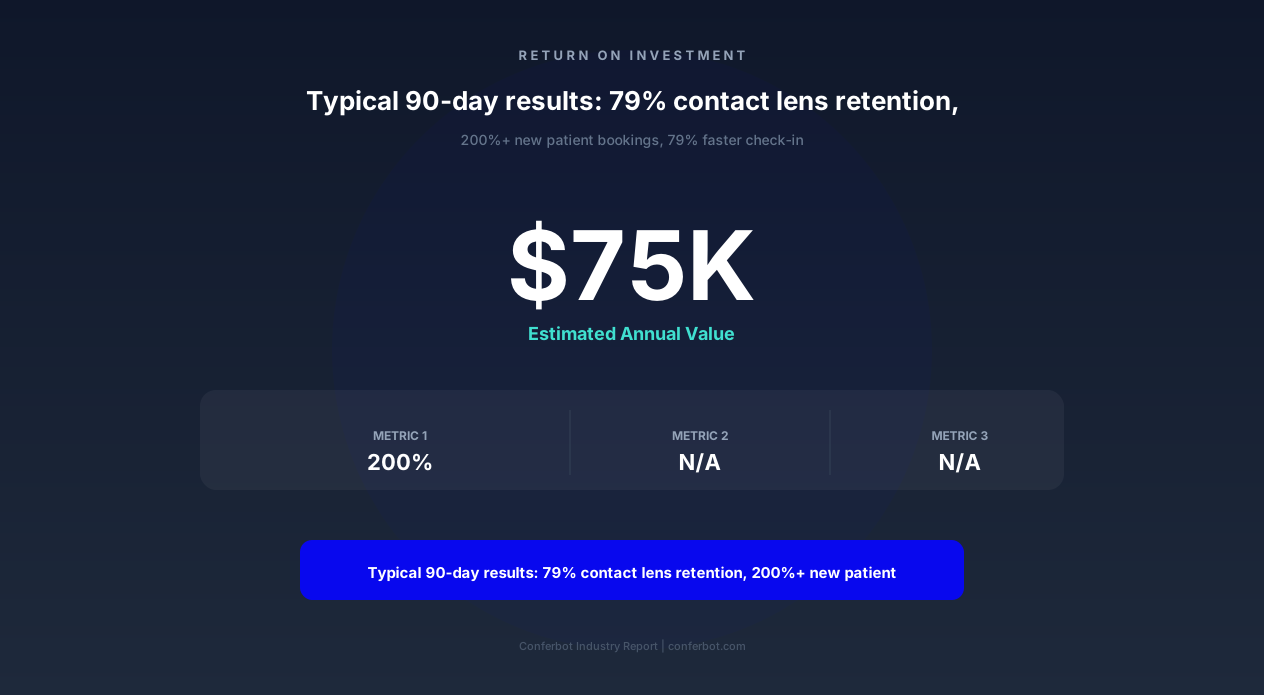
The compound revenue impact across all features — new patient acquisition, contact lens retention, frame sales conversion, annual recall compliance, and operational efficiency — typically delivers $80,000-$150,000 in additional annual revenue for a mid-size optometry practice, with implementation costs recouped within the first 30-60 days of operation.
Setup Guide: Deploying the Optometry Clinic Chatbot for Your Practice
The optometry clinic chatbot deploys without requiring IT staff, developer resources, or disruption to your current practice management workflow. Configuration maps directly to information your office manager already knows: your providers, services, insurance panels, contact lens inventory, and scheduling rules. From template to live deployment takes 30-45 minutes.
Step 1: Clone Template and Configure Practice Information (10 minutes)
Start in Conferbot's AI chatbot builder by cloning the optometry clinic template. Update with your practice name, logo, brand colors, providers (with photos and specialties), office locations and hours, and contact information. Configure the welcome message to reflect your practice personality — whether that is clinical and professional, warm and family-oriented, or modern and tech-forward.
Step 2: Set Up Scheduling Integration (5 minutes)
Connect your practice management/scheduling system via API integration. Supported systems include: EyeCloud Pro, Crystal PM, RevolutionEHR, Compulink, MaximEyes, OfficeMate, and any system supporting FHIR or REST APIs. Configure exam types with appropriate duration blocks, provider assignments, and any scheduling rules (e.g., pediatric exams only with Dr. Smith, contact lens fittings require 90-minute blocks).
Step 3: Configure Insurance Panels (5 minutes)
Enter your in-network insurance plans with basic coverage summaries. The chatbot uses this information to confirm in-network status and set coverage expectations. You do not need detailed benefit structures — just carrier/plan names and whether you are in-network, plus your self-pay pricing for out-of-network patients. Update this list whenever you add or drop insurance panels.
Step 4: Set Up Contact Lens Reorder System (10 minutes)
Configure your contact lens product catalog (or connect to your inventory system via API). Set reorder reminder timing (default: 2 weeks before estimated depletion), delivery options (pickup, ship to home), and payment processing. For practices without inventory API integration, the chatbot can capture reorder requests that staff fulfills manually — still dramatically more convenient for patients than phone ordering.
Step 5: Populate FAQ and Deploy (10 minutes)
Add your practice-specific FAQ answers: accepted insurance plans, location and parking details, appointment preparation instructions, contact lens care guidelines, frame warranty information, and commonly asked clinical questions. Deploy to your website with a single embed code. Optionally extend to WhatsApp for patient communication and reorder reminders via patients' preferred messaging channel.
Step 6: Monitor and Optimize (ongoing)
Review chatbot analytics weekly: which questions are unhandled (expand FAQ), where patients abandon the booking flow (simplify), which contact lens patients are not responding to reorder reminders (try different channel), and which frame quiz completions convert to purchases (refine recommendations). The analytics dashboard provides all metrics needed for continuous optimization of your practice's digital patient engagement.
Optometry Clinic Chatbot FAQ
Everything you need to know about chatbots for optometry clinic chatbot.
Why Use a Template vs Building from Scratch?
Templates encode years of optimization data into the conversation flow before you start.
| Factor | Conferbot Template | Build from Scratch | Hire a Developer |
|---|---|---|---|
| Time to deploy | 10 minutes | 2-8 hours | 2-6 weeks |
| Cost | Free | Your time | $5,000-$25,000 |
| Day-1 conversion | 15-22% | 5-8% | 10-15% |
| Proven flows | Yes, data-tested | No | Depends |
| Updates included | Automatic | Manual | Paid |
| Multi-channel | 8+ channels | 1 channel | Extra cost |
| Analytics | Built-in | Must build | Extra cost |
Ready to Deploy Optometry Clinic Chatbot?
Join 50,000+ businesses. Free forever plan available. No credit card required.