
Chiropractor Appointment Chatbot
Smart scheduling for chiropractic clinics with pain assessment
0uses
0likes

Get free, ready-to-use healthcare chatbot templates that help boost conversions and automate customer interactions. Start building in 2 minutes with no coding required.
Browse templates, learn about the category, or find answers to common questions
Choose from our collection of proven healthcare chatbot templates
Smart scheduling for chiropractic clinics with pain assessment

AI-powered patient recruitment for clinical trials with pre-screening, eligibility matching, consent pre-education, and multi-site enrollment

A complete dental practice chatbot that handles appointment booking, dental emergencies, insurance verification, services & pricing, and new patient registration - 24/7. Built specifically for dental offices, orthodontic practices, and oral health clinics.

A personalized diet and nutrition chatbot that helps users identify their health goals, dietary restrictions, activity levels, and meal preferences. Provides sample meal plans and connects users with professional nutritionists for in-depth consultations.

A no-code appointment scheduling chatbot for clinics and hospitals — routes patients by department, captures reason for visit, offers in-person or telehealth, and books with contact and insurance details.

Collect comprehensive fertility medical history, guide patients through IVF, IUI, egg freezing, and other treatment pathways, verify insurance coverage, explain financing options, and book consultations with warmth and empathy. HIPAA-compliant with 24/7 lead capture.

A helpful medication reminder chatbot that assists patients in setting up personalized medication schedules, dosage tracking, and refill alerts. Ensures patients never miss a dose with automated reminders via text message.

A no-code meditation & mindfulness chatbot that guides visitors through a conversation and captures what you need.
A compassionate mental health support chatbot that provides immediate crisis resources, mood assessment, coping strategies, and professional referrals. Designed to offer empathetic guidance while connecting users with appropriate mental health services and emergency hotlines.
Eye care clinic assistant for exams, contacts, and vision concerns

Orthodontic practice assistant with treatment education and free consultation booking
Pharmacy assistant for refills, transfers, delivery, and medication questions
A physical therapy appointment chatbot that helps patients book evaluations, describe their condition, and prepare for their first visit. Collects injury details and insurance information to streamline the intake process.

Automate patient intake, appointment scheduling, insurance verification, home exercise program delivery, and between-visit follow-up for physical therapy clinics and rehabilitation centers.

Pre-qualify prospective patients, match them to procedures, showcase before & after galleries, explain financing options, and book consultations for plastic surgery and cosmetic clinics. HIPAA-compliant with 24/7 lead capture.
An AI-powered symptom checker chatbot that guides users through a structured triage process. Collects primary symptoms, duration, severity, and additional context to provide urgency assessments and personalized recommendations - from self-care tips to emergency referrals.

A comprehensive telehealth triage chatbot that collects patient symptoms, medical history, insurance details, and scheduling preferences to streamline virtual healthcare visits. Supports both video and phone consultations with automated appointment booking.

A streamlined telemedicine scheduling chatbot that helps patients book virtual appointments with healthcare providers. Handles new and returning patients, specialty selection, provider preferences, insurance verification, and pre-visit preparation.

Automate client intake, therapist matching by specialty, appointment scheduling, and pre-session screening for therapy practices and counseling centers. HIPAA-compliant with crisis resource routing.

A complete veterinary clinic chatbot that handles appointment booking, symptom triage, vaccination reminders, and pet care FAQs - 24/7. Built specifically for vet clinics, animal hospitals, and pet care practices.
Enhance patient care with Conferbot’s Telehealth Triage System. Deliver quick assessments, prioritize care, and improve patient outcomes with AI-driven medical triage solutions.
Simplify the complexity of medical billing with Conferbot’s AI-powered Medical Bill Explainer. Decode charges, verify insurance claims, and get instant answers—enhancing patient trust and reducing billing confusion.

Achieve your fitness goals with Conferbot’s Personalized Workout Planner. Get tailored exercise routines, real-time coaching tips, and progress tracking—all at your fingertips.
Provide compassionate, immediate help with Conferbot's Mental Health Crisis Support Assistant. Accessible 24/7, it offers confidential support, resource recommendations, and coping tools to guide individuals through their toughest moments.
Empower patients with Conferbot's Chronic Disease Management Assistant. Deliver personalized care plans, medication reminders, and real-time health tracking to improve outcomes and enhance patient satisfaction.

Improve mental well-being with Conferbot’s Stress Management Guide. Offering personalized coping strategies, mindfulness exercises, and 24/7 support, it helps users manage stress effectively and enhance their quality of life.

Optimize your sleep patterns with Conferbot’s Sleep Habit Analyzer. Discover personalized sleep insights, track daily habits, and receive actionable recommendations to improve your rest and well-being.
Streamline vaccine appointments with Conferbot’s Vaccination Scheduler. Offering real-time appointment booking, reminders, and vaccination center locators, it improves patient experience and vaccination rates.

Simplify health insurance with Conferbot’s Health Insurance Explainer. Offering 24/7 assistance, personalized policy recommendations, and clear explanations, it enhances customer understanding and boosts enrollment.

Optimize patient care with Conferbot's Telemedicine Appointment Scheduler. Experience seamless scheduling, personalized reminders, and 24/7 access to medical consultations to enhance patient satisfaction and streamline healthcare services.
Achieve your fitness goals with Conferbot’s Fitness Goal Tracker Assistant. Offering personalized fitness plans, real-time progress tracking, and 24/7 support, it boosts motivation and success on your fitness journey.
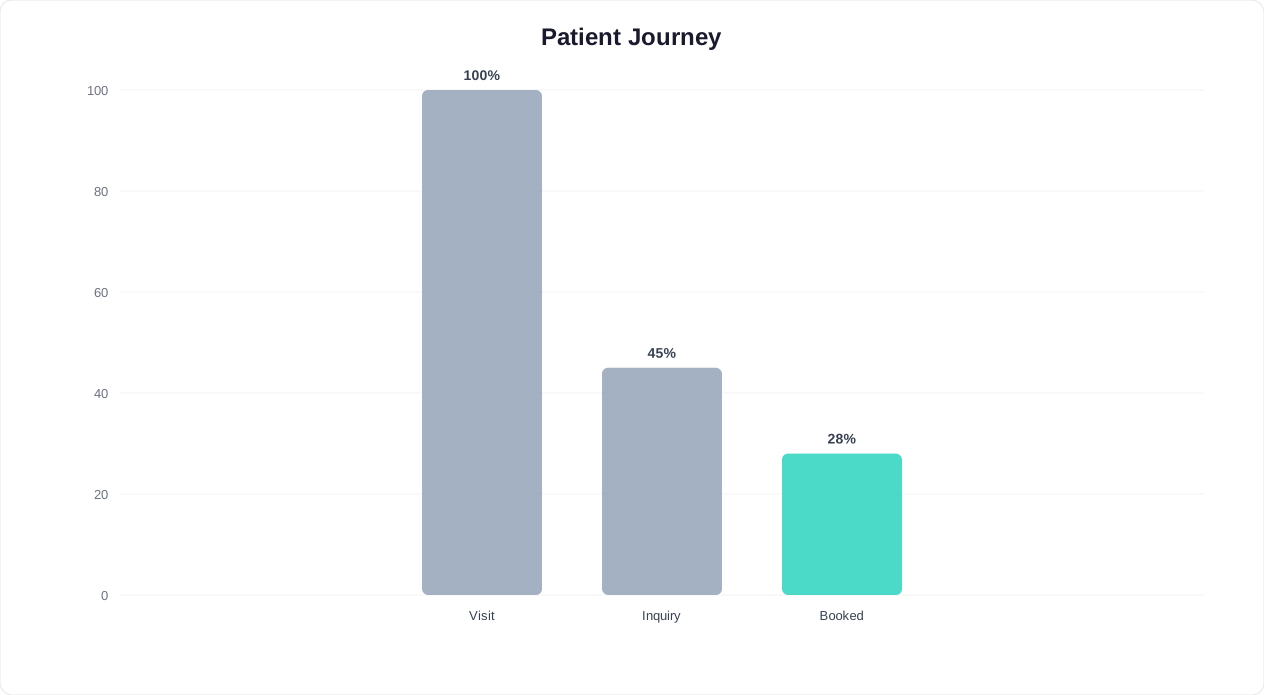
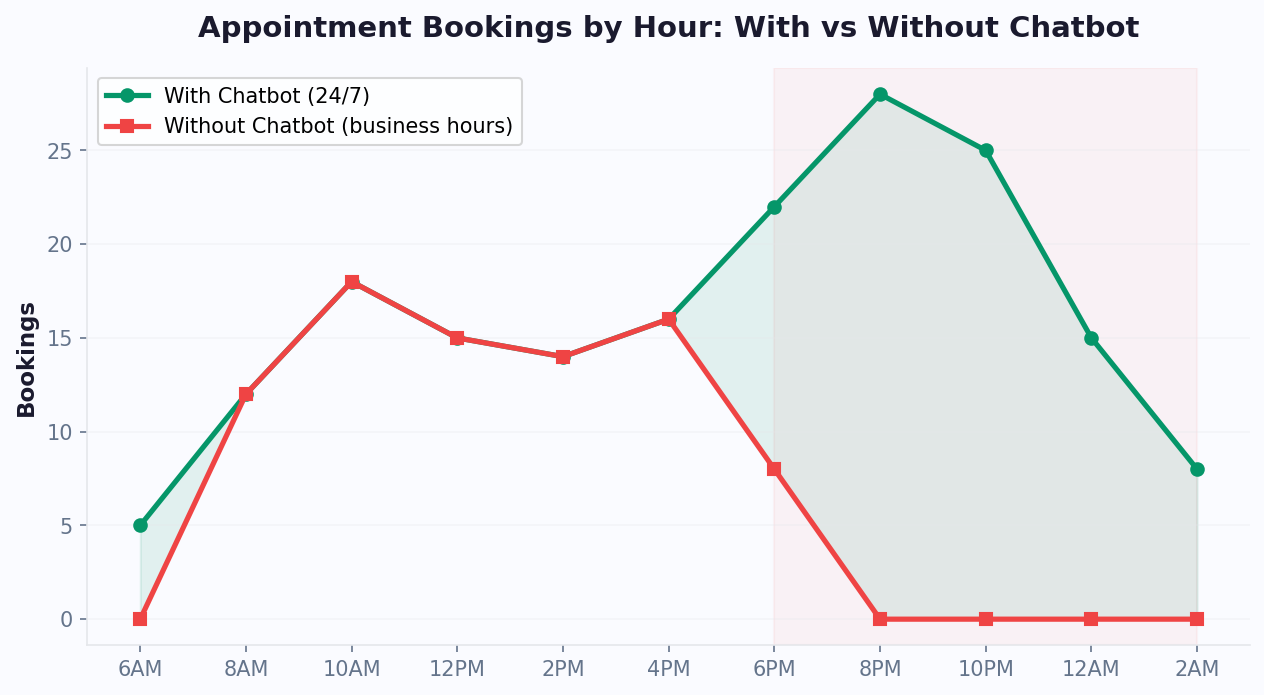
The modern patient journey begins long before the waiting room -- it starts with a Google search, a scroll through reviews, or a recommendation from a friend. At every stage, patients have questions, anxieties, and decisions to make. A healthcare chatbot serves as a trusted guide throughout this journey, providing instant answers, streamlining administrative tasks, and maintaining engagement between visits. Organizations that deploy patient journey chatbots see 40% higher patient acquisition rates and 35% better retention -- metrics that translate directly to practice revenue and patient outcomes.
The economics of patient acquisition make chatbot deployment compelling: the average cost to acquire a new patient ranges from $150 to $500 depending on specialty and market. A medical chatbot that converts 15-25% more website visitors into booked appointments pays for itself many times over. When 45% of healthcare searches occur after hours -- evenings, weekends, and holidays when front desks are closed -- the chatbot captures patients that competitors lose to voicemail.
| Stage | Patient Need | Chatbot Role | Key Metrics | Conversion Impact |
|---|---|---|---|---|
| 1. Awareness | Find the right provider | Answer "Do you treat X?" questions; share credentials | Website engagement, time on site | +3x visitor engagement |
| 2. Consideration | Compare options, check insurance | Insurance verification, cost estimates, reviews | Lead capture rate, insurance match | +40% lead capture |
| 3. Booking | Schedule an appointment | Real-time scheduling, intake form collection | Booking completion rate | +55% booking rate |
| 4. Visit preparation | Know what to expect | Pre-visit instructions, directions, reminders | No-show rate, form completion | -38% no-show rate |
| 5. Post-visit | Follow-up care, questions | Post-visit check-ins, medication reminders | Follow-up compliance, rebooking | +35% retention |
💡 Key Insight
Healthcare organizations deploying patient journey chatbots see 40% higher patient acquisition and 35% better retention -- with 38% of all appointment bookings occurring after hours when traditional front desks are closed.
For the complete technical implementation guide, visit our conditional logic documentation which covers the branching flows needed for healthcare journeys, and explore the appointment booking chatbot for scheduling integration.
Patient triage is one of the most impactful applications of a healthcare chatbot. When a patient contacts a healthcare organization with symptoms, the urgency of their situation determines the appropriate response -- from self-care advice to an emergency room visit. A chatbot triage flow conducts structured symptom assessment, classifies urgency levels, and routes patients to the appropriate care pathway, ensuring that critical cases receive immediate attention while routine inquiries are handled efficiently.
The benefits extend beyond patient experience. Triage chatbots reduce inappropriate ER visits by 15-25% by directing patients with non-emergency symptoms to urgent care or telehealth alternatives. This saves healthcare systems significant resources -- the average ER visit costs $1,200-$3,000, while a telehealth visit costs $50-$100. For every patient the chatbot redirects from the ER to an appropriate lower-acuity setting, the system saves $1,000-$2,800.
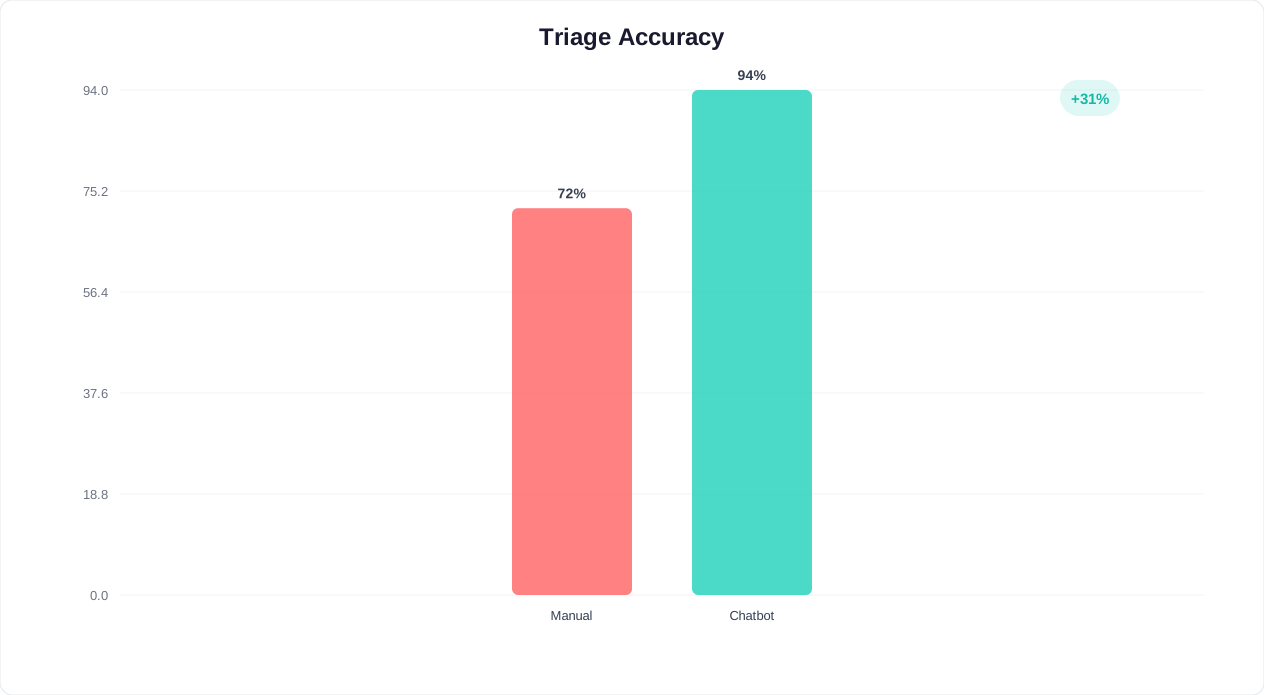
📊 Performance Insight
AI triage chatbots reduce inappropriate ER visits by 15-25%, saving $1,000-$2,800 per redirected patient. Triage accuracy rates reach 85-92% when validated against clinical assessment -- approaching the accuracy of nurse triage hotlines.
| Urgency Level | Response Time | Chatbot Action | Example Symptoms | Care Pathway |
|---|---|---|---|---|
| Emergency (Red) | Immediate | Direct to call 911; display nearest ER | Chest pain, stroke symptoms, severe bleeding | Emergency room |
| Urgent (Orange) | Within 2 hours | Connect to on-call provider; urgent care | High fever, severe pain, allergic reactions | Urgent care / on-call |
| Soon (Yellow) | Same day | Schedule same-day appointment or telehealth | Persistent symptoms, medication concerns | Same-day appointment |
| Routine (Green) | Within days | Schedule standard appointment | Checkups, mild symptoms, follow-ups | Scheduled appointment |
| Self-care (Blue) | Self-managed | Provide self-care guidance; monitor | Common cold, minor aches, wellness questions | Self-care with follow-up |
Patient triage chatbots must include robust safety guardrails to prevent harmful misclassification:
Build triage flows with our healthcare templates that include clinically-validated symptom assessment paths and appropriate safety guardrails.
Appointment automation is the operational backbone of healthcare and wellness businesses. From multi-location medical practices to solo wellness practitioners, the ability to fill schedules efficiently while minimizing no-shows directly impacts revenue and patient access. Healthcare-specific scheduling chatbots handle complexities that generic booking tools cannot -- insurance verification, provider matching, pre-visit requirements, and compliance-aware communication. A patient intake bot that handles scheduling reduces phone call volume by 40-60% while enabling 24/7 booking access.
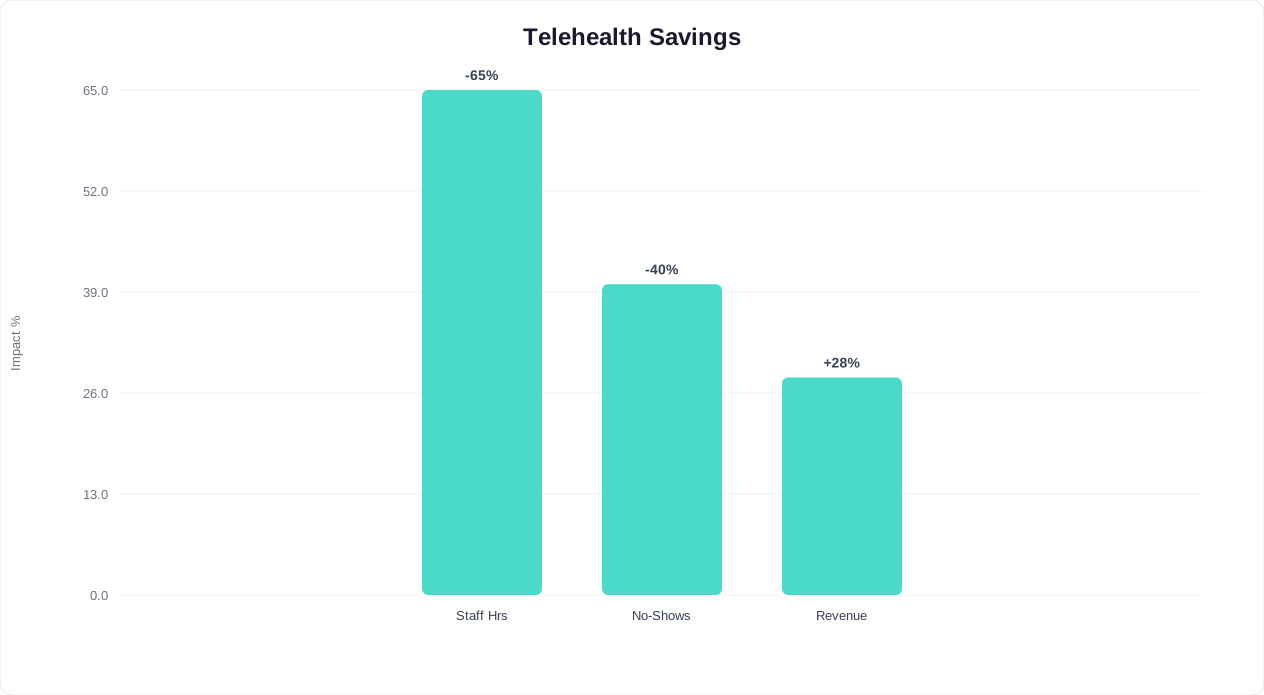
The financial impact of no-shows is severe: each missed appointment costs a healthcare practice an average of $200 in lost revenue. For a practice with 1,000 monthly appointments and a 20% no-show rate, that is $40,000 per month -- $480,000 annually -- in lost revenue. A chatbot with automated reminders reduces no-shows by 25-40%, recovering $120,000-$192,000 per year for a practice of this size.
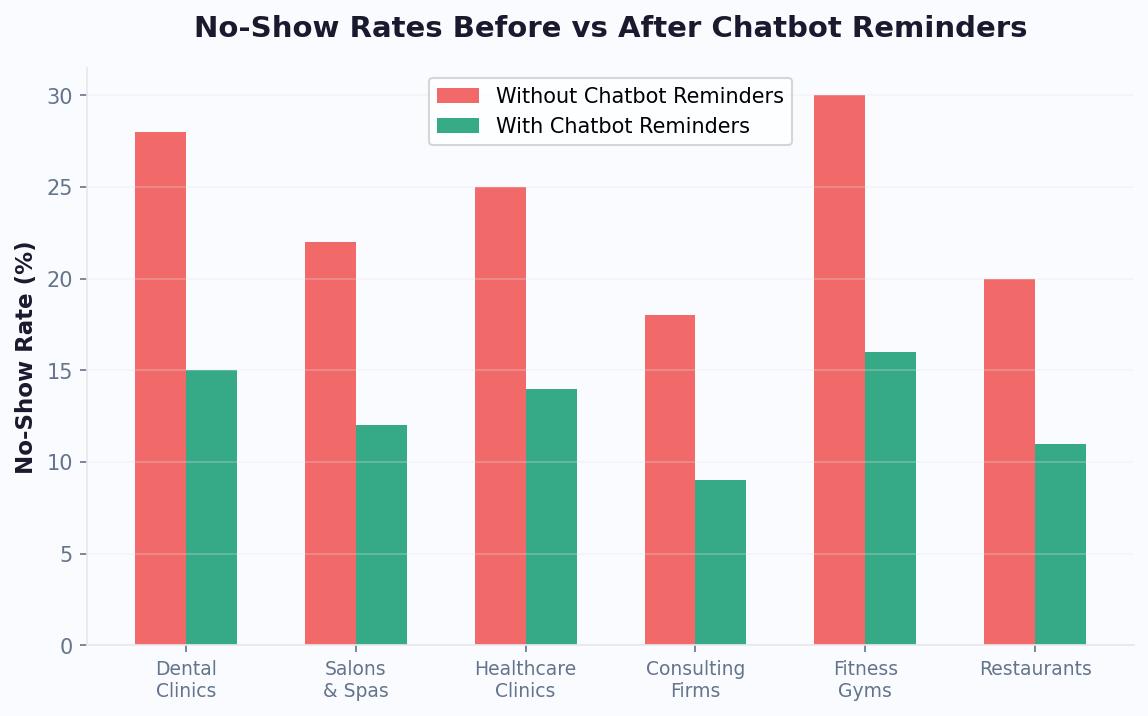
📊 Performance Stat
Healthcare chatbots reduce patient no-shows by 25-40% through automated multi-channel reminders at 48, 24, and 2 hours before appointments -- recovering an average of $15,000-$30,000 annually per provider.
| Complexity Factor | Generic Booking Tool | Healthcare Chatbot | Patient Impact |
|---|---|---|---|
| Insurance verification | Not supported | Real-time eligibility check via API | No surprise billing |
| Provider-service matching | Basic category filter | Specialty, credentials, procedure | Right provider first time |
| New vs returning patient flows | Single flow for all | Separate intake for new; streamlined for returning | Faster for returning patients |
| Pre-visit requirements | Post-booking email | Conversational intake with compliance tracking | Prepared appointments |
| Multi-location support | Separate booking pages | Unified bot finds nearest/preferred location | Convenient location matching |
| Referral management | Not supported | Referral code capture, specialist routing | Streamlined referrals |
| HIPAA compliance | Not guaranteed | Encrypted data handling, BAA included | Protected health info |
| Specialty | Baseline No-Show Rate | With Chatbot Reminders | Reduction | Annual Revenue Recovered |
|---|---|---|---|---|
| Primary care | 18-22% | 8-12% | -50% | $18,000-$35,000 |
| Dental | 15-20% | 6-10% | -55% | $22,000-$40,000 |
| Mental health / therapy | 20-30% | 10-15% | -45% | $25,000-$50,000 |
| Specialty (ortho, derm, etc.) | 12-18% | 5-9% | -52% | $30,000-$60,000 |
| Wellness / coaching | 25-35% | 12-18% | -45% | $15,000-$30,000 |
⚡ Efficiency Gain
Healthcare chatbots save 77% of staff time previously spent on scheduling calls, intake coordination, and appointment management -- freeing clinical teams to focus on patient care instead of administrative tasks.
Wellness providers -- therapists, coaches, personal trainers, nutritionists -- have unique scheduling needs that a chatbot handles elegantly:
Set up healthcare scheduling with our calendar integration and explore appointment booking templates purpose-built for medical and wellness practices.
Medication non-adherence is one of the most costly problems in healthcare, responsible for an estimated $300 billion in avoidable healthcare costs annually in the United States alone. Approximately 50% of patients do not take their medications as prescribed, leading to worsened health outcomes, preventable hospitalizations, and increased healthcare utilization. A medical chatbot addresses medication adherence through automated refill reminders, prescription renewal requests, and medication management support -- turning a passive process into an active, engaging one.
The prescription refill process is particularly ripe for automation. Patients typically must call their pharmacy or provider during business hours, navigate phone trees, wait on hold, and verbally provide prescription details. Each refill request consumes 3-5 minutes of staff time. For a practice handling 200 refill requests per week, that is 15-20 hours of staff time dedicated solely to processing routine prescription renewals -- time that could be spent on clinical care.
| Metric | Manual Process | Chatbot Automated | Improvement |
|---|---|---|---|
| Time per refill request | 3-5 minutes (staff) | 45 seconds (patient self-service) | -85% |
| Refill completion rate | 65-75% | 88-95% | +30% |
| Medication adherence rate | 50-60% | 72-82% | +35% |
| Phone call volume for refills | 200-400/week | 40-80/week | -80% |
| After-hours refill requests | 0 (voicemail only) | 24/7 processing | Complete coverage |
💡 Key Insight
Medication non-adherence costs the US healthcare system $300 billion annually. Chatbot-driven medication reminders and refill automation improve adherence rates from 50-60% to 72-82% -- reducing preventable hospitalizations and improving patient outcomes.
Beyond refills, the chatbot supports daily medication adherence through smart reminders sent via WhatsApp or SMS:
Configure medication management flows through Conferbot's conditional logic builder with HIPAA-ready data handling built in (signed BAA available on request).
The traditional patient intake process is a relic of a paper-based era: arrive 15 minutes early, fill out a clipboard of forms, hand-write the same information you have provided at every previous medical visit, and wait while staff manually enters your data into the EHR system. This process is slow (averaging 12-20 minutes per patient), error-prone (30-40% of hand-written forms contain errors), and frustrating for patients and staff alike. A patient intake bot replaces this entire workflow with a conversational experience that patients complete on their phone before they ever arrive at the office.
The operational impact is substantial. A practice seeing 40 patients per day spends 8-13 hours of staff time daily on intake processing -- data entry, insurance verification, and form corrections. Automating intake through a chatbot recovers 70-85% of this time, equivalent to 1-2 full-time staff members. More importantly, chatbot-collected intake data is 95%+ complete and accurately formatted, eliminating the errors that cause claim denials and billing delays.
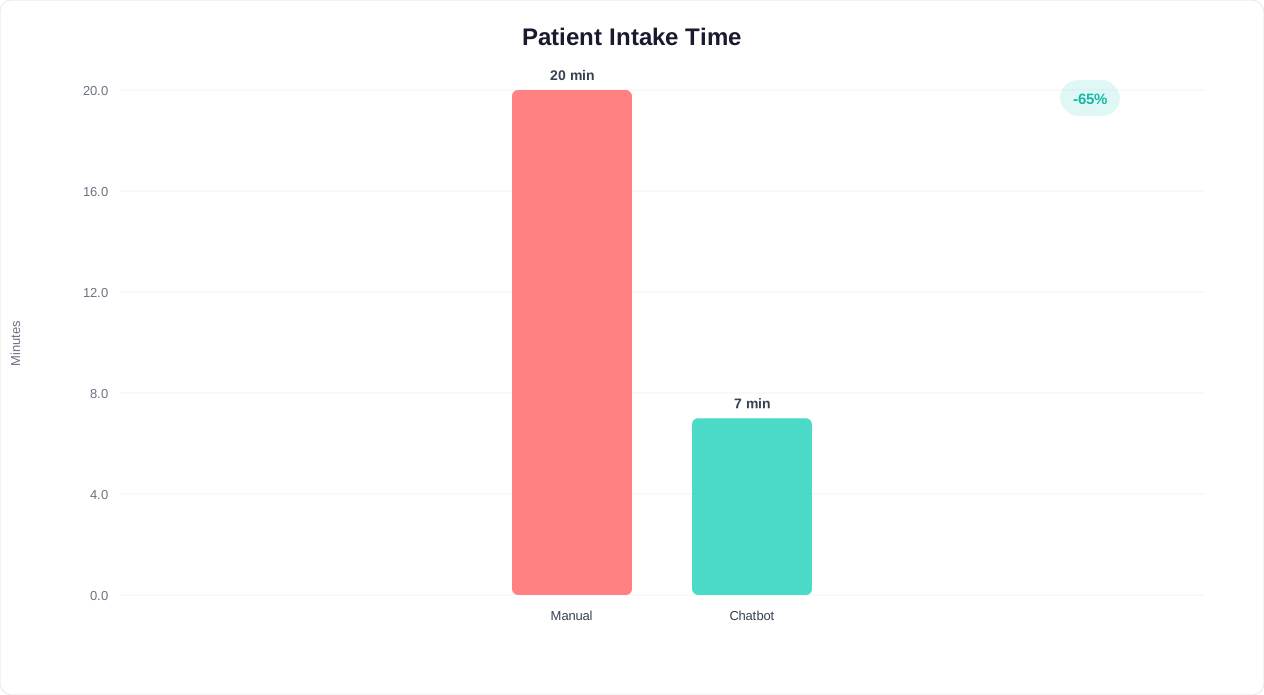
| Intake Method | Patient Time | Staff Processing Time | Data Accuracy | Completion Rate | Patient Satisfaction |
|---|---|---|---|---|---|
| Paper clipboard | 12-20 min | 8-12 min | 60-70% | 75-85% | Low (waiting room) |
| Digital portal form | 8-15 min | 3-5 min | 80-85% | 60-70% | Medium (portal friction) |
| Conversational chatbot | 4-8 min | 0-2 min | 95-98% | 88-95% | High (on their phone) |
⚡ Efficiency Gain
Conversational intake completes in 4-8 minutes (versus 12-20 for paper) with 95-98% data accuracy (versus 60-70% for handwritten forms). For a 40-patient-per-day practice, this recovers the equivalent of 1-2 full-time staff positions in processing time.
The chatbot sends intake forms 24-48 hours before the appointment via WhatsApp or SMS, allowing patients to complete them at their convenience. The conversational format guides patients through each section with clear explanations and smart defaults:
Build intake forms with Conferbot's no-code builder using our healthcare templates that include pre-built intake workflows for primary care, dental, mental health, and specialty practices.
Healthcare and wellness chatbots operate in one of the most regulated environments in technology. Understanding the compliance landscape -- and ensuring your HIPAA chatbot meets every requirement -- is not just a legal obligation but a competitive advantage. Patients and clients trust providers who take data protection seriously, and compliance violations can result in fines up to $1.5 million per violation category per year, lawsuits, and reputational damage that no amount of marketing can repair.
The regulatory landscape for healthcare chatbots is complex but navigable. The key distinction is between chatbots that handle Protected Health Information (PHI) -- which must be HIPAA-compliant -- and those that provide general health information without collecting PHI. A chatbot that tells a visitor "We accept Blue Cross insurance" does not handle PHI. One that asks "What is your insurance ID number?" does. Understanding this boundary determines your compliance requirements.
| Regulation | Scope | Key Requirements for Chatbots | Penalty Range |
|---|---|---|---|
| HIPAA (US) | Protected Health Information | Encryption, access controls, BAA, audit trails | $100 - $1.5M per violation category/year |
| GDPR (EU) | Personal data of EU residents | Consent, data minimization, right to erasure, DPO | Up to 4% of global revenue or EUR 20M |
| PIPEDA (Canada) | Personal health information | Consent, purpose limitation, safeguards | Up to CAD 100,000 per violation |
| CCPA/CPRA (California) | Consumer personal information | Disclosure, opt-out, data access rights | $2,500 - $7,500 per violation |
| HITECH Act (US) | Health IT systems | Breach notification, enhanced penalties | $100 - $1.5M; criminal penalties possible |
| State telehealth laws | Virtual care delivery | Licensure, informed consent, prescribing rules | Varies by state |
⚡ Compliance Note
HIPAA violations carry penalties of $100 to $1.5M per violation category per year. Conferbot's healthcare templates include AES-256 encryption, TLS 1.3, Business Associate Agreements, and full audit trails -- making HIPAA-ready chatbot deployment turnkey rather than a multi-month IT project.
| Compliance Feature | Generic Chatbot Platforms | Conferbot Healthcare |
|---|---|---|
| HIPAA-eligible infrastructure | Rarely available | Standard on all healthcare plans |
| BAA provided | Enterprise only (if available) | Included with healthcare plans |
| PHI data segregation | Shared infrastructure | Isolated data environments |
| Audit trail logging | Basic event logs | Comprehensive HIPAA-ready audit trails |
| Data retention controls | Limited | Configurable retention policies |
Review Conferbot's compliance documentation on our security page and download our BAA template directly from your account dashboard. For regulatory guidance specific to your region, consult our HIPAA compliance guide.
Healthcare organizations with multiple locations face a unique challenge: each site has different providers, schedules, services, and availability, but patients expect a single, seamless experience. A patient searching for "dermatologist near me" does not care which of your five locations they visit -- they care about getting an appointment quickly with the right specialist who accepts their insurance. A healthcare chatbot with multi-location intelligence handles this complexity elegantly, routing patients to the optimal location based on proximity, availability, provider specialty, and insurance acceptance.
The alternative -- separate booking systems or phone numbers for each location -- creates friction, confusion, and lost patients. When a patient calls Location A and cannot get a convenient appointment, they rarely call Location B. They call a competitor. A unified chatbot presents all location availability simultaneously, ensuring no appointment slot goes unfilled while another location has a two-week wait.
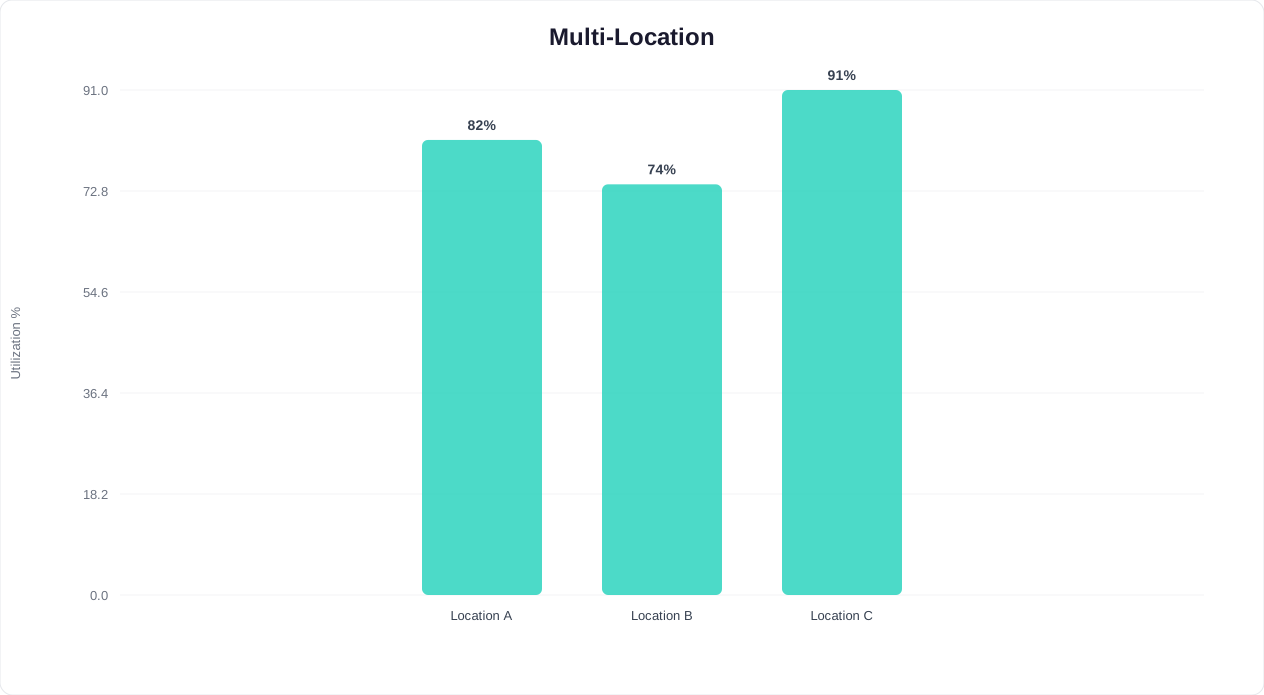
📊 Performance Insight
Multi-location practices using a unified chatbot see 15-25% improvement in schedule utilization across all sites, as the bot automatically fills underutilized locations while preventing overbooking at popular ones.
| Capability | Single-Location Bot | Multi-Location Unified Bot | Patient Benefit |
|---|---|---|---|
| Provider search | One location only | Search all providers across all sites | More options, faster booking |
| Availability display | Single calendar | Aggregated across locations | Shortest wait time |
| Location recommendation | N/A | Based on proximity, wait time, services | Convenient care access |
| Insurance matching | Location-specific panels | Cross-location insurance verification | No surprise billing |
| Record continuity | Location-specific records | Unified patient profile | Seamless care across sites |
Deploy a multi-location chatbot with Conferbot's no-code builder -- configure location-specific schedules, provider assignments, and services in a single dashboard. Connect all locations through the integration hub to unify scheduling across your practice management system.
Telehealth usage has stabilized at 15-20% of all healthcare visits -- a permanent shift from the pre-pandemic 1-2%. For virtual care to scale efficiently, the patient intake, triage, scheduling, and follow-up processes must be automated. A healthcare chatbot serves as the front door to telehealth, handling everything before and after the video visit so that clinicians spend their time on clinical care rather than logistics. The time savings are substantial: 27 to 42 minutes of administrative work per visit can be automated, giving clinicians back 4-7 hours per day.
| Stage | Chatbot Action | Time Saved Per Visit | Quality Impact |
|---|---|---|---|
| Pre-visit triage | Symptom assessment, urgency classification | 5-8 min | Clinician sees relevant symptoms first |
| Scheduling | Match to available provider, book slot | 3-5 min | Right provider for the condition |
| Insurance verification | Real-time eligibility and copay check | 4-6 min | No billing surprises |
| Intake forms | Conversational collection of history, meds | 8-12 min | Complete records before visit |
| Technical setup | Test camera/mic, send video link | 2-4 min | Fewer tech failures |
| Post-visit follow-up | Care plan review, prescription reminders | 5-7 min | Better treatment adherence |
| Total | 27-42 min per visit |
💡 Key Insight
Clinician burnout is a crisis -- 63% of physicians report burnout symptoms, with administrative workload as the primary driver. By automating 27-42 minutes of per-visit administrative tasks, a chatbot gives clinicians back 4-7 hours per day for clinical care.
An estimated 12% of telehealth appointments start late or fail due to technical issues. A pre-visit chatbot message sent 15 minutes before the appointment guides the patient through a quick tech check, reducing technical failures by 75%:
After the telehealth visit, the chatbot maintains the care relationship through proactive follow-up:
Configure telehealth workflows using Conferbot's integration hub -- we connect with major telehealth platforms including Zoom Healthcare, Doxy.me, and custom video solutions. Explore our appointment booking templates with built-in telehealth scheduling.
The wellness industry -- spanning mental health, fitness, nutrition, meditation, and preventive care -- is experiencing explosive chatbot adoption. Unlike clinical healthcare, wellness chatbots operate in a space where ongoing engagement matters more than acute intervention. They serve as daily companions that encourage healthy habits, track progress, and provide on-demand support between professional sessions. The market for wellness chatbots is projected to reach $2.4 billion by 2028, driven by increasing demand for accessible, affordable mental health and wellness support.
| Category | Primary Function | Engagement Model | Typical Outcomes |
|---|---|---|---|
| Mental health support | CBT exercises, mood tracking, crisis resources | Daily check-ins, on-demand support | 30% reduction in anxiety scores |
| Fitness coaching | Workout plans, form guidance, motivation | Pre/post workout engagement | 45% improvement in consistency |
| Nutrition guidance | Meal logging, recipe suggestions, macro tracking | Meal-time check-ins | 22% improvement in diet adherence |
| Sleep improvement | Sleep hygiene tips, wind-down routines | Evening reminders, morning reviews | 35% improvement in sleep quality |
| Chronic condition management | Symptom tracking, medication reminders | Scheduled check-ins, trigger-based | 40% better treatment adherence |
Mental health is the fastest-growing segment. With therapist waitlists averaging 6-8 weeks in many areas and costs of $150-$300 per session, many people lack access to professional support. A medical chatbot for mental health does not replace therapy -- but it provides evidence-based coping tools (cognitive behavioral therapy techniques, guided breathing, journaling prompts) that bridge the gap between sessions or serve those who cannot access professional care.
📊 Performance Insight
Mental health chatbots increase therapy attendance by 20% and improve between-session treatment adherence by 35%. Users who engage with wellness chatbots daily report 30% lower anxiety scores compared to non-users.
Build wellness engagement flows with Conferbot's healthcare and wellness templates, which include pre-built mental health, fitness, and nutrition conversation paths with appropriate safety guardrails. Use the conditional logic builder to customize flows for your specific wellness practice.
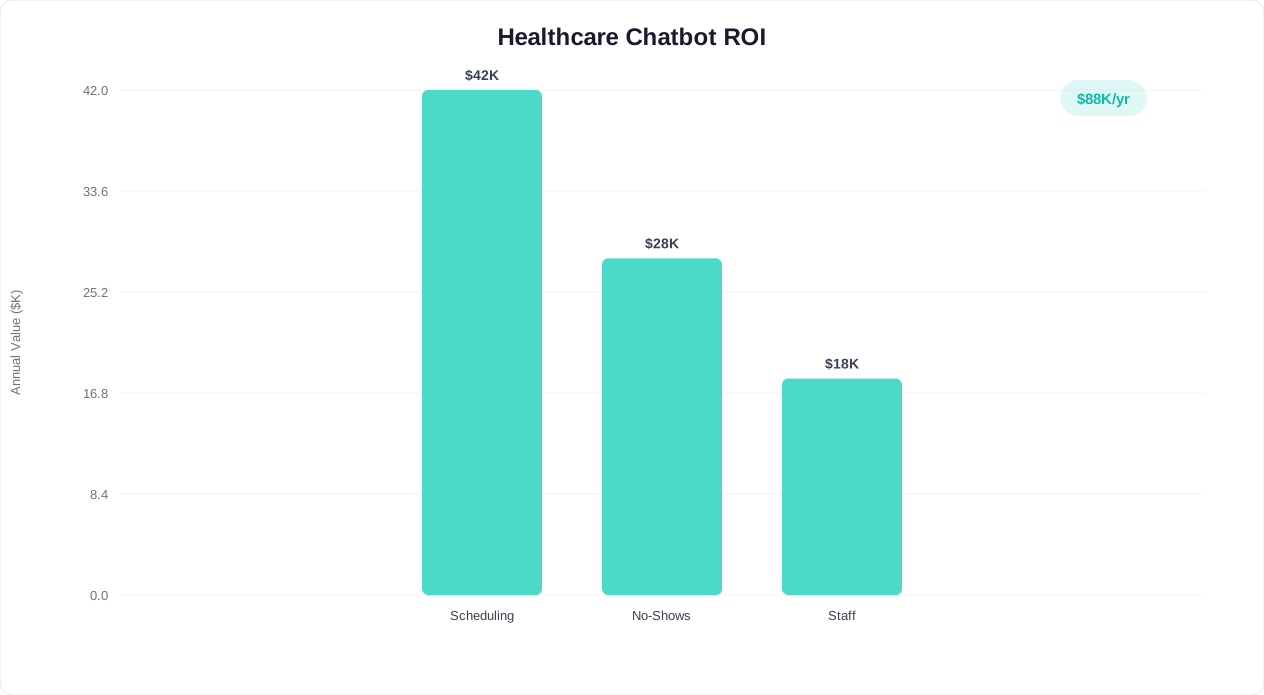
Healthcare organizations evaluating chatbot technology need concrete financial projections to justify the investment. The ROI of a healthcare chatbot comes from multiple sources: reduced no-shows, lower administrative labor costs, increased patient acquisition, improved collection rates, and higher patient retention. When these sources are quantified together, the financial case for chatbot deployment is overwhelming -- most practices achieve positive ROI within the first 30-60 days.
The key to accurate ROI projection is understanding which cost centers the chatbot addresses for your specific practice type. A primary care practice with high no-show rates will see the biggest impact from automated reminders. A multi-specialty group will benefit most from intelligent provider matching and cross-referral automation. A wellness practice will see the greatest ROI from session package management and re-engagement campaigns. The table below provides benchmarks for each practice type.
| Practice Type | No-Show Savings | Admin Labor Savings | New Patient Revenue | Total Annual Impact | First-Year ROI |
|---|---|---|---|---|---|
| Solo practitioner | $12,000-$20,000 | $8,000-$15,000 | $15,000-$30,000 | $35,000-$65,000 | 400-700% |
| Group practice (3-5 providers) | $40,000-$80,000 | $25,000-$50,000 | $50,000-$120,000 | $115,000-$250,000 | 500-900% |
| Multi-location (5+ sites) | $100,000-$250,000 | $75,000-$150,000 | $150,000-$400,000 | $325,000-$800,000 | 600-1,200% |
| Dental practice | $22,000-$45,000 | $15,000-$30,000 | $30,000-$75,000 | $67,000-$150,000 | 450-800% |
| Wellness / therapy practice | $18,000-$40,000 | $10,000-$20,000 | $20,000-$50,000 | $48,000-$110,000 | 350-650% |
💡 Key Insight
A group practice with 3-5 providers typically sees $115,000-$250,000 in total annual impact from chatbot deployment, with ROI of 500-900% in the first year. Most practices achieve break-even within 30-60 days of launch.
Use this framework to estimate your practice's chatbot ROI:
For a personalized projection, use our healthcare ROI calculator or explore deployment guides in our healthcare template library. Compare Conferbot's healthcare capabilities against other platforms on our comparison page.
Everything you need to know about chatbots for healthcare templates.
Our proven templates help businesses like yours achieve better results with automation
Automatically qualify prospects while you sleep
Increase conversions with smart, always-on chatbots
Engage visitors within seconds of landing on your site
Lower acquisition costs through automation
Join the businesses already using Conferbot templates to automate conversations and boost conversions. Start free in 2 minutes.
Follow these simple steps to get your healthcare chatbot up and running in minutes
Select from high-converting lead generation templates designed for your industry and use case.
Modify questions to match your ideal customer profile and lead scoring criteria.
Configure automatic lead distribution to your sales team based on qualification scores.
Connect to HubSpot, Salesforce, or your preferred CRM for seamless lead management.
Launch your chatbot and track conversion rates, lead quality, and ROI through our analytics dashboard.
Compare the benefits of using professional templates vs. building from scratch
Join thousands of businesses using our healthcare templates to automate conversations and boost results
Browse every free healthcare chatbot template below. Each one is fully customizable and deploys in minutes with no code.
New to chatbots? These in-depth guides explain how healthcare chatbots work and how to choose the right builder.