
Real Estate Agency
Free B2B Services Chatbot Template
A complete real estate agency chatbot template - deploy in minutes to automate conversations, capture leads, and provide 24/7 assistance.



How this template opens - rendered from its flow. Use the interactive preview to click through the full conversation.
What Is a Real Estate Agency Chatbot?
A real estate agency chatbot is an AI-powered conversational assistant that qualifies buyers and sellers, matches prospects to relevant properties, schedules viewings, provides market intelligence, calculates mortgage affordability, and routes qualified leads to the appropriate agent -- all through a natural conversation that operates 24/7 across your agency's digital channels. For real estate agencies in 2026, the chatbot addresses the critical speed-to-lead problem: research shows that leads contacted within 5 minutes are 9x more likely to convert than those contacted after 30 minutes, yet the average agency response time to a new web inquiry is 47 minutes -- by which time the prospect has already contacted competing agencies.
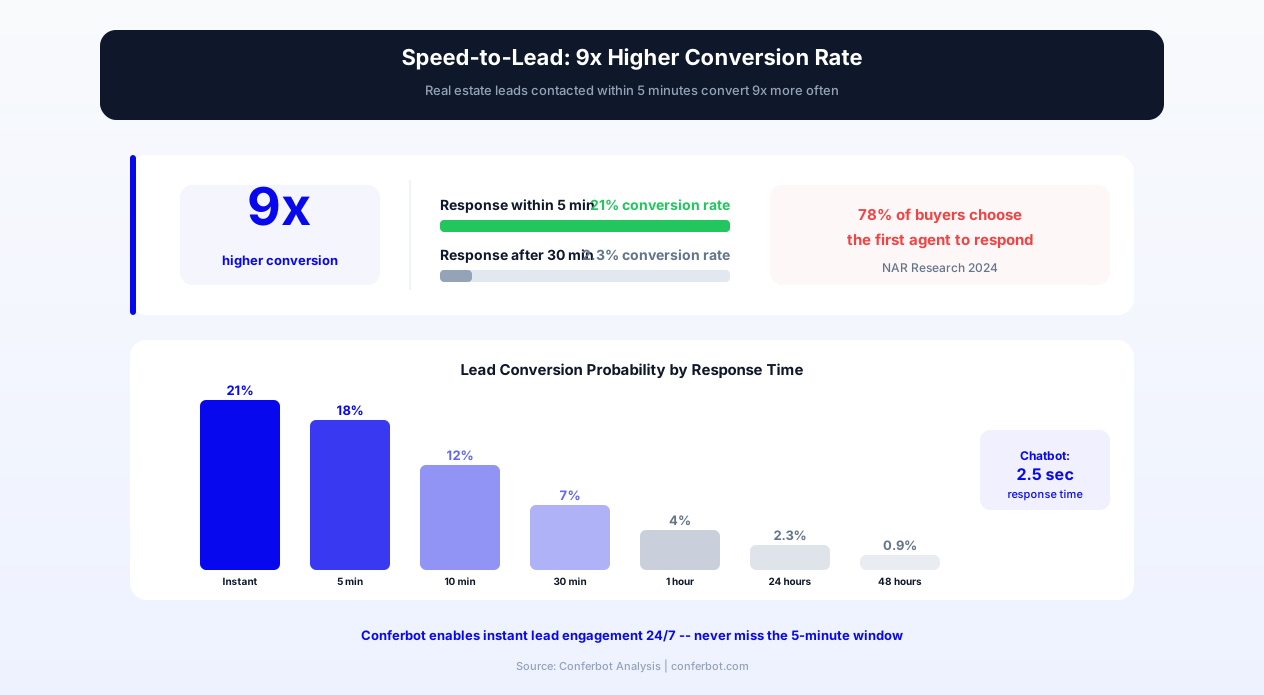
The real estate market in 2026 is defined by two competing dynamics: 44% of all homebuyers begin their search online (with 97% using the internet at some point during their search), yet the purchase decision remains deeply personal, emotionally complex, and reliant on expert guidance. This creates an opportunity gap that the chatbot fills precisely: prospects want instant answers to their initial questions (What can I afford? Are there properties matching my criteria? When can I view?) without waiting for an agent callback, but they also want the human relationship and expertise that an agent provides during the decision-making and negotiation phases. The chatbot handles the high-volume, repetitive first-contact qualification that agents find time-consuming, while routing genuinely qualified, ready-to-act prospects to agents who can provide the personalized guidance that closes deals.
Built on Conferbot's AI chatbot builder with natural language understanding, the real estate chatbot deploys on your agency website, individual agent pages, property listing portals, WhatsApp, Facebook Messenger, and Instagram. It integrates with your MLS feed, CRM system, and scheduling platform through Conferbot's API integration to provide real-time property data and agent availability. This page covers how the qualification and matching process works, the viewing scheduling automation, mortgage calculator integration, multi-agent routing logic, market intelligence delivery, and implementation best practices for agencies of all sizes.
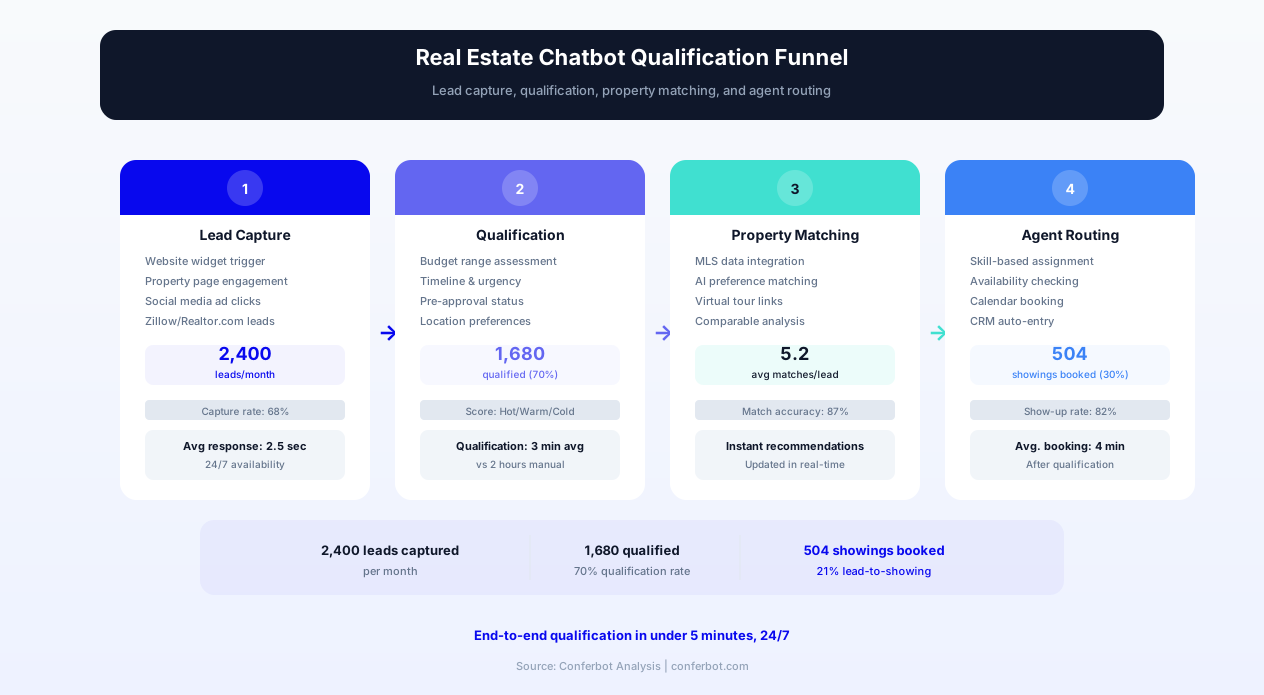
How the Real Estate Chatbot Works: Qualification to Viewing
The real estate chatbot manages the prospect journey through five phases: initial engagement and intent identification, buyer or seller qualification, property matching and recommendations, viewing scheduling, and agent handoff with full context. Each phase captures data that accelerates the subsequent human interaction.
Phase 1: Initial Engagement and Intent Identification
The chatbot opens by identifying the prospect's primary intent: buying, selling, renting, or investing. This initial classification routes the conversation to the appropriate qualification flow and ensures the prospect receives relevant questions from the first interaction. For property listing pages, the chatbot opens with context-aware messaging: "I see you are looking at the 3-bedroom home on Oak Street. Would you like to schedule a viewing, get information about the neighborhood, or discuss financing options?" This contextual opening -- drawing from the property page the visitor is viewing -- produces 3x higher engagement rates than generic greetings because it immediately demonstrates relevance and value.
Phase 2: Buyer Qualification
For buyers, the chatbot captures qualification data through a conversational sequence that feels helpful rather than interrogative: timeline (actively searching, 3-6 months out, or just exploring), budget range and financing status (pre-approved, working with a lender, or not yet started), must-have requirements (bedrooms, bathrooms, location areas, property type), lifestyle preferences (school district quality, commute distance, neighborhood character), and deal-breaker exclusions (properties to filter out entirely). Each response is captured as structured data in the CRM lead record, enabling both immediate property matching and long-term nurture segmentation. The qualification conversation takes 2-3 minutes and produces a lead record equivalent to what a 15-minute phone qualification call would capture -- delivered instantly at any hour.
Phase 3: Property Matching and Recommendations
Based on the qualification data, the chatbot queries the MLS integration to present matching properties in real time. Matches are presented with key details -- price, bedrooms, square footage, and location -- plus a brief explanation of why each property matches the prospect's stated criteria: "This 3-bedroom in Riverside matches your requirement for a sub-20-minute commute and top-rated school district, and it is $15,000 under your budget ceiling." This explained matching builds trust and demonstrates that the chatbot understood the prospect's needs. The chatbot can present 3-5 top matches immediately and offer to email a complete search results list for the prospect to review at their convenience.
Phase 4: Viewing Scheduling
When a prospect expresses interest in a property, the chatbot transitions to viewing scheduling through calendar integration. It presents available viewing slots from the listing agent's calendar, accommodates the prospect's schedule preferences, and confirms the appointment with details sent via email or SMS. For high-demand properties with limited viewing windows, the chatbot manages waitlist registration and notifies the prospect immediately when a slot becomes available. The scheduling automation eliminates the back-and-forth phone tag that typically delays viewings by 2-3 days -- a critical improvement in competitive markets where properties receive multiple offers within the first week of listing.
Phase 5: Agent Routing and Context Handoff
When the chatbot identifies a qualified, ready-to-act prospect, it routes them to the appropriate agent based on configurable rules: geographic specialization, property type expertise, language capability, current lead load, or round-robin distribution. Critically, the handoff includes the full qualification context: the prospect's requirements, budget, timeline, properties of interest, and any specific questions they asked. The receiving agent begins the relationship with complete context rather than asking the prospect to repeat information -- a seemingly minor detail that research shows significantly affects prospect satisfaction and conversion rates. For urgent prospects (pre-approved buyers actively viewing in competitive markets), the chatbot can escalate to immediate agent notification via phone call or SMS alert.
Key Features of the Real Estate Agency Chatbot
The real estate chatbot's feature set addresses the specific operational challenges of property agencies: high lead volume with variable quality, time-sensitive follow-up requirements, multi-agent coordination, and the need for both broad market knowledge and hyperlocal expertise.
| Feature | Description | Operational Benefit | Customer Benefit |
|---|---|---|---|
| Instant lead response | Engages every new inquiry within seconds, 24/7/365 | Captures the 9x conversion advantage of sub-5-minute response | Gets immediate attention instead of waiting for a callback |
| Buyer/seller qualification | Captures timeline, budget, requirements, and motivation level through conversation | Agents receive fully qualified leads with context, not raw contact data | Receives relevant service immediately without lengthy phone screening |
| MLS property matching | Queries live listing data to present matching properties in real time | Prospects self-match to properties without agent manual search effort | Sees relevant properties instantly based on stated preferences |
| Mortgage affordability calculator | Estimates monthly payments based on price, down payment, rate, and term | Pre-qualifies prospects by budget feasibility before agent time investment | Understands true affordability before falling in love with a property |
| Automated viewing scheduling | Books property viewings directly into agent calendars with confirmation | Eliminates 2-3 days of phone tag; viewings booked same-day | Schedules viewings instantly at a convenient time without waiting |
| Neighborhood intelligence | Provides school ratings, commute times, amenities, and market trends by area | Answers the 80% of neighborhood questions that do not require agent expertise | Gets comprehensive area information to inform location decisions |
| Seller valuation inquiry | Captures property details for comparative market analysis requests | Generates listing lead pipeline from valuation-curious homeowners | Receives initial value indication before committing to a listing appointment |
| Multi-agent routing | Distributes leads based on specialization, geography, load, and availability | Ensures equitable lead distribution and specialist matching | Connected with the agent best suited to their specific needs |
| Lead scoring | Assigns engagement scores based on qualification responses and behavior | Prioritizes high-intent leads for immediate agent attention | Hot leads receive faster, more attentive service from senior agents |
| Follow-up nurture | Maintains engagement with long-timeline prospects through periodic check-ins | Converts 3-6 month prospects into clients without manual agent follow-up | Receives relevant updates without feeling pressured or forgotten |
Mortgage Calculator Integration
The built-in mortgage calculator answers the question every buyer has first: "What can I actually afford?" The chatbot asks for the prospect's target purchase price (or budget range), estimated down payment, and preferred loan term, then calculates approximate monthly payments including principal, interest, taxes, and insurance estimates based on the property's location. This calculation serves dual purposes: it helps prospects understand their purchasing power realistically, and it enables the chatbot to filter property matches to genuinely affordable options. For prospects who have not yet spoken with a lender, the chatbot can introduce the agency's preferred mortgage partners through a warm referral that captures commission for the agency.
Seller Lead Capture: Home Valuation Inquiry
For homeowners considering selling, the chatbot captures the essential information for a comparative market analysis: property address, type, bedrooms, bathrooms, square footage, lot size, condition, renovations completed, and the owner's motivation and timeline for selling. This data enables the listing agent to prepare a preliminary valuation before the first phone call, demonstrating expertise and preparedness that impresses potential sellers. The chatbot can also deliver an instant automated valuation estimate (pulling from available data sources) as a lead magnet -- giving the homeowner immediate value while generating a listing lead for the agency.
Ready to try Real Estate Agency?
Deploy this template in under 10 minutes. No coding required.
Use This Template Free →Before and After: Traditional Real Estate Lead Handling vs. Chatbot-Powered
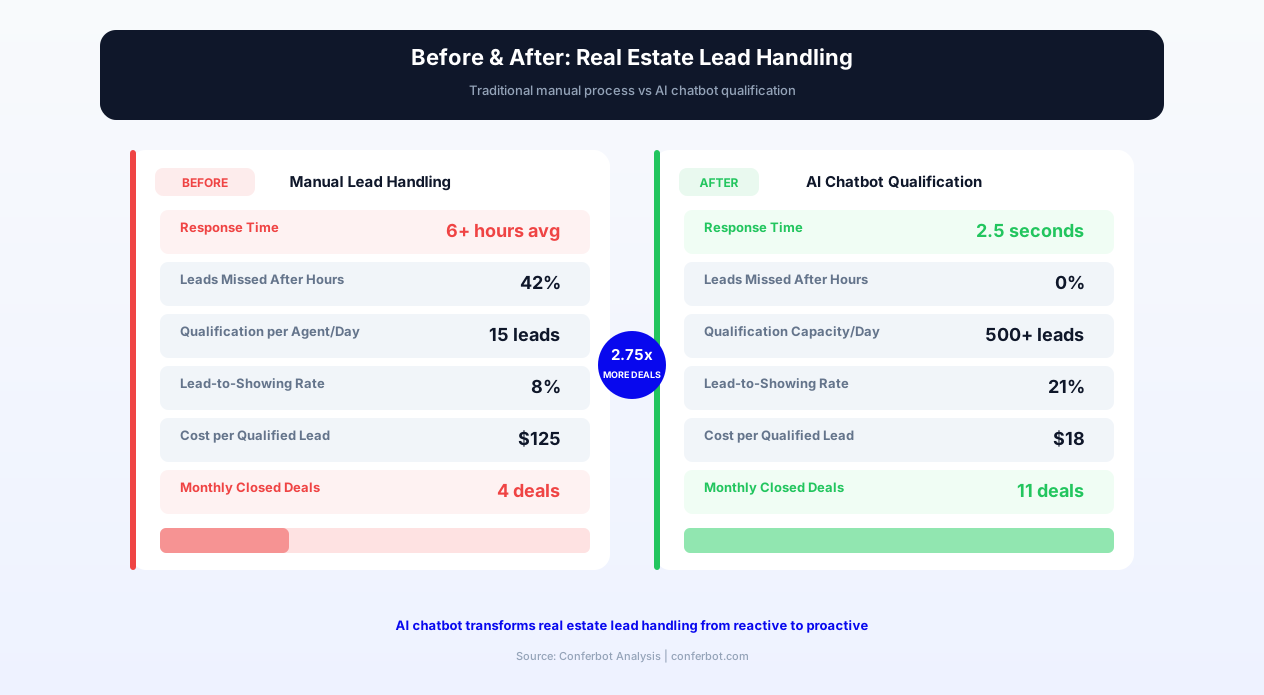
The transformation from traditional lead handling to chatbot-powered lead management addresses the fundamental problems in real estate lead conversion: slow response times, incomplete qualification, and agent time spent on unqualified inquiries. The following comparison details the measurable changes across the agency's lead management workflow.
Lead Response: Before
- Average response time: 47 minutes during business hours; 12+ hours for evening and weekend inquiries when agents are unavailable
- Lost lead window: 78% of buyers choose the first agent who responds; by 47 minutes, 2-3 competitors have already made contact
- After-hours inquiries: 63% of online real estate searches occur outside business hours; these leads receive no response until the next business day
- Weekend and holiday coverage: Reduced staffing means slower response precisely when buyer activity peaks
Lead Response: After
- Average response time: Under 3 seconds, 24/7/365, including holidays and weekends
- First-responder advantage: The chatbot captures the 9x conversion advantage by engaging every lead instantly regardless of time or day
- After-hours qualification: Evening and weekend leads are fully qualified, with viewings scheduled for the next available slot, before the agent begins their next business day
- Consistent experience: Every prospect receives the same high-quality qualification conversation regardless of when they inquire
Lead Qualification: Before
- Qualification depth: Web forms capture name, email, phone, and a free-text message -- insufficient data for meaningful qualification or property matching
- Agent qualification time: Each lead requires a 10-15 minute phone call for basic qualification; agents spend 60-70% of their time qualifying leads that will not convert
- Unqualified lead volume: 70-80% of web inquiries are casual browsers, unqualified by budget, or have unrealistic timelines -- but this is not discoverable without agent time investment
- Lead prioritization: Without qualification data, agents cannot distinguish between a pre-approved buyer ready to make an offer this week and a casual browser exploring neighborhoods for a move in two years
Lead Qualification: After
- Qualification depth: Every lead includes timeline, budget, financing status, property requirements, lifestyle preferences, and motivation level -- equivalent to a completed intake call
- Agent time allocation: Agents spend their time exclusively with qualified, ready-to-act prospects; qualification is completed before the agent is involved
- Qualified lead routing: Only prospects meeting the agency's qualification threshold (pre-approved, active timeline, realistic budget) are routed to agents; long-timeline prospects enter automated nurture
- Intelligent prioritization: Lead scores enable agents to prioritize the hottest prospects first, with full context on exactly what they want and when
| Metric | Before (Traditional) | After (Chatbot) | Improvement |
|---|---|---|---|
| Lead response time | 47 minutes (business hours) | < 3 seconds (24/7) | 99.9% faster response |
| Lead-to-viewing conversion | 12% | 34% | 2.8x more viewings scheduled |
| Agent time per qualified lead | 45 min (including unqualified attempts) | 15 min (pre-qualified handoff) | 67% less agent time per conversion |
| After-hours lead capture rate | 23% (form only, no qualification) | 71% (full qualification + scheduling) | 3x more after-hours conversions |
| Monthly viewings per agent | 18 | 31 | 72% more productive agent activity |
| Lead-to-close conversion rate | 2.1% | 5.8% | 2.8x higher close rate |
Market Intelligence and Neighborhood Information Delivery
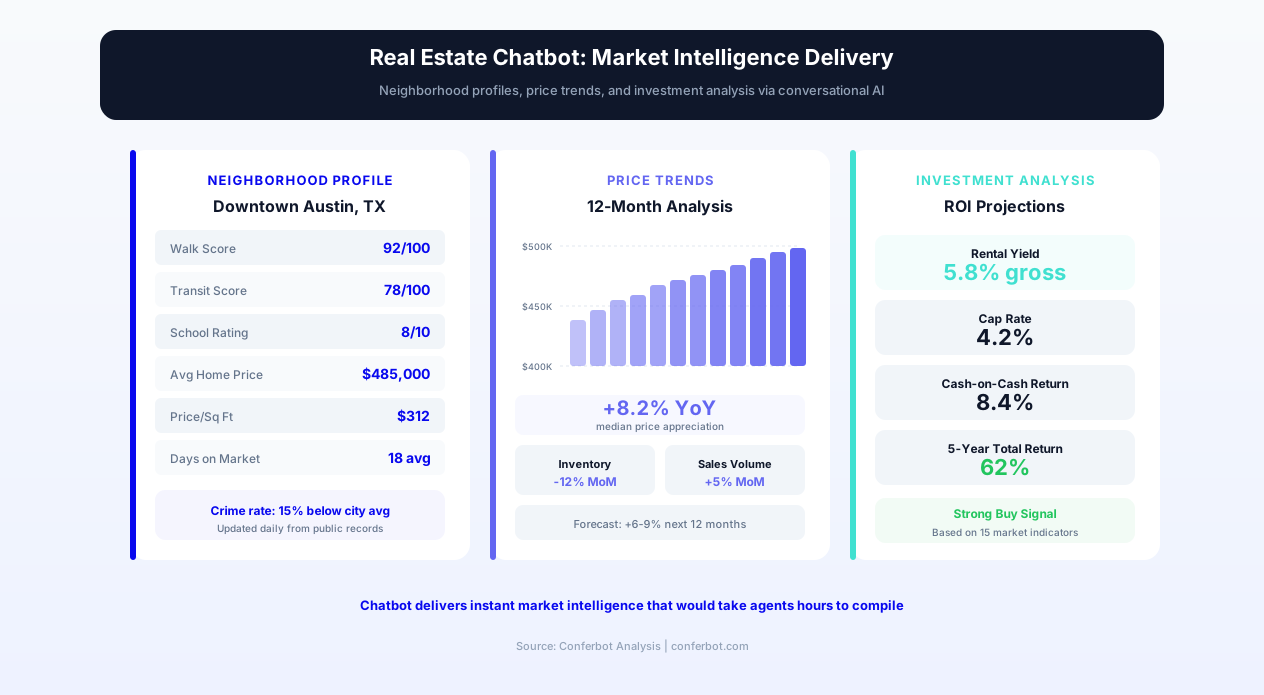
Beyond lead qualification, the real estate chatbot serves as a market intelligence resource that answers the research questions prospects explore during their property search. This information delivery builds trust, demonstrates expertise, and keeps prospects engaged with the agency's brand throughout their extended research phase.
Neighborhood Profiles and Lifestyle Data
The chatbot provides comprehensive neighborhood information on demand: school district ratings and enrollment data, average commute times to specified workplaces, crime statistics and safety ratings, walkability scores and nearby amenities, demographic profiles and community character, planned developments and zoning changes, and property tax rates. This information is drawn from integrated data sources and presented conversationally when prospects ask about specific areas. The ability to answer "What are the schools like in Riverside?" or "How long is the commute from Oakdale to downtown?" instantly positions the agency as a knowledgeable local authority and keeps the prospect engaged within the agency's ecosystem rather than navigating to third-party research tools.
Market Trend Reports
For prospects evaluating timing -- "Is this a good time to buy?" or "Should I list now or wait until spring?" -- the chatbot provides market trend data for their specific area of interest: median sale prices (current and 12-month trend), days on market averages, inventory levels (buyer's market vs. seller's market indicators), price-per-square-foot trends, and seasonal patterns. This data-driven intelligence helps prospects make informed decisions about timing while positioning the agency as an analytical, market-savvy partner rather than a transactional service provider. For sellers, the chatbot can present a preliminary automated valuation with neighborhood comparison data that motivates listing conversations.
Investment Analysis for Investor Prospects
For investor prospects -- identified during the qualification phase by their stated investment intent -- the chatbot provides investment-specific data: rental yield estimates based on comparable rents, historical appreciation rates for the target area, vacancy rate data, property management cost estimates, and cap rate calculations. This investment-focused conversation demonstrates that the agency understands and serves the investor segment, differentiating from agencies that only serve owner-occupier buyers. The chatbot can present investment scenarios: "Based on the asking price of $350,000 and comparable rents of $2,400/month in this area, the estimated gross rental yield is 8.2% before expenses." This analytical approach resonates with the data-driven decision-making style common among property investors.
Comparative Market Analysis for Sellers
Homeowners considering selling are motivated by one primary question: "What is my home worth?" The chatbot captures property details and delivers a preliminary valuation range based on comparable recent sales, current listings, and market conditions. This instant valuation serves as a lead magnet -- providing immediate value to the homeowner while generating a seller lead for the agency. The preliminary valuation is positioned as an estimate ("Based on comparable sales in your area, properties similar to yours have sold for $425,000-$460,000 in the past 90 days") with a recommendation for a detailed agent valuation that accounts for property-specific factors the automated estimate cannot assess. This approach generates listing appointments at rates significantly higher than generic "request a valuation" forms.
Multi-Agent Routing: Matching Prospects to the Right Agent
For agencies with multiple agents, intelligent lead routing ensures that prospects are connected with the agent best positioned to serve their specific needs. The chatbot's routing engine considers multiple factors to optimize both prospect experience and agent productivity.
Routing by Geographic Specialization
Most real estate agents specialize in specific geographic areas -- neighborhoods, zip codes, or suburbs where they have deep local knowledge and active listings. The chatbot routes buyers to the agent who specializes in their target area, ensuring the prospect receives hyperlocal expertise from the first conversation. For sellers, routing targets the agent most active in the property's neighborhood, as listing agents with recent comparable sales in the area can provide the most accurate valuations and the strongest market positioning.
Routing by Property Type and Price Tier
Agents often specialize by property type (residential, commercial, luxury, investment) or price tier. A first-time buyer with a $300,000 budget has different needs than a luxury buyer seeking a $3 million estate, and the agents who serve these segments effectively have different skill sets and communication styles. The chatbot's qualification data -- budget, property type, and investment intent -- enables routing to the appropriate specialist. For agencies with dedicated luxury divisions, leads exceeding a configured price threshold route automatically to the luxury team with appropriate priority handling.
Routing by Language and Cultural Fit
In diverse markets, language capability and cultural understanding are significant factors in client satisfaction. The chatbot detects the prospect's preferred language during the conversation (or from their browser settings) and routes to agents who are fluent in that language. For agencies serving international buyers -- common in major metros and resort markets -- this language-based routing ensures that prospects receive service in their native language from the first agent interaction, building comfort and trust from the outset.
Load Balancing and Availability Routing
Beyond specialization matching, the routing engine ensures equitable lead distribution across the team. Configurable rules include: round-robin distribution within a specialty group, load-based routing that directs leads to agents with fewer active clients, availability-based routing that prioritizes agents currently online or in-office, and performance-based routing that rewards higher-converting agents with additional lead flow. These rules operate simultaneously -- the system first identifies qualified agents (by specialization match) and then selects among them based on load and availability factors.
Escalation and Override Protocols
For high-priority leads -- pre-approved buyers with immediate timelines in competitive markets -- the routing engine supports escalation protocols: simultaneous notification to multiple agents (first-to-claim gets the lead), direct phone notification for urgent response, and manager alerts when high-value leads have not been claimed within a configured time window. This escalation ensures that the agency's hottest leads never sit unattended during peak buying moments. Configure routing rules and monitor agent response times through Conferbot's analytics dashboard.
businesses worldwide use Conferbot templates to automate conversations
ROI Analysis: Revenue Impact for Real Estate Agencies
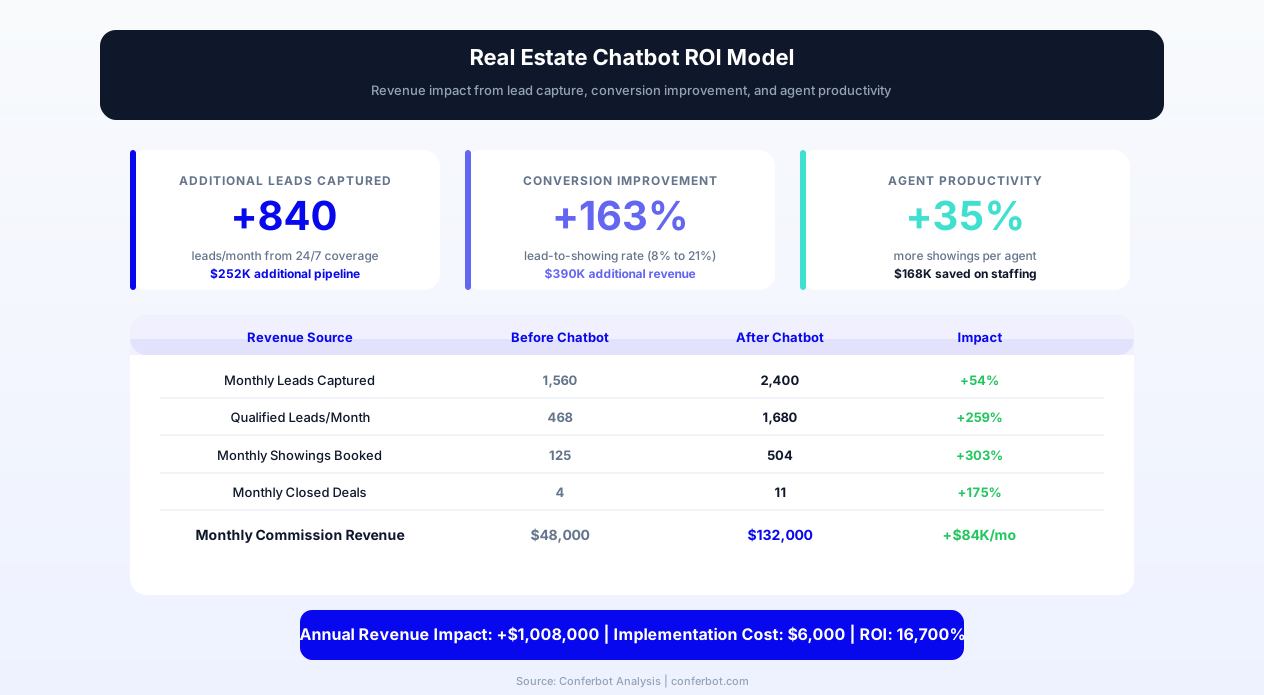
The real estate chatbot's ROI is driven by three primary mechanisms: increased lead volume from improved capture rates, higher conversion rates from faster response and better qualification, and agent productivity gains that enable each agent to close more transactions. The following analysis models the financial impact for a mid-size agency with 10 agents.
Lead Volume Improvement
The chatbot captures leads from three sources that traditional contact forms underserve: after-hours inquiries (63% of online search activity), mobile visitors who will not complete lengthy forms, and passive browsers who are not motivated to submit a contact request but will engage with a proactive chatbot. For an agency website receiving 5,000 monthly visitors, improving lead capture from 3% (form-based) to 8% (chatbot-driven) produces an increase from 150 to 400 leads per month -- 250 additional prospects entering the pipeline. At the agency's average commission of $12,000 per closed transaction and a 5.8% lead-to-close conversion rate, those 250 additional leads produce approximately 14.5 additional transactions per month, representing $174,000 in additional monthly commission revenue for the agency.
Conversion Rate Improvement
The 5.8% lead-to-close rate (compared to 2.1% with traditional handling) reflects three chatbot-driven improvements: faster response captures the first-mover advantage, better qualification ensures agents spend time with genuine prospects, and viewing scheduling automation reduces the days-to-viewing that allows prospect interest to cool. Each percentage point of conversion rate improvement translates directly to closed transactions: on 400 monthly leads, each additional percentage point produces 4 additional closings at $12,000 average commission -- $48,000 in monthly revenue per percentage point of conversion improvement.
Agent Productivity and Transaction Volume
By eliminating qualification phone calls for unqualified leads (previously consuming 60-70% of agent phone time), the chatbot frees each agent to focus on showings, negotiations, and client relationship management -- the activities that directly produce closings. The productivity data shows agents handling 72% more viewings per month after chatbot implementation. For a 10-agent team previously averaging 3 closings per agent per month, a 40% improvement in transactions per agent (conservative estimate from the productivity gains) produces 12 additional closings per month across the team -- $144,000 in additional monthly commission revenue at average commission rates.
Cost Analysis and Payback Period
The chatbot implementation cost -- including setup, integration with CRM and MLS systems, and monthly subscription -- is typically recovered within the first 2-3 weeks of operation based on the additional transaction volume it generates. For agencies currently spending on lead generation through portals (Zillow, Realtor.com, or similar), the chatbot's improved conversion rate on existing traffic reduces the effective cost per closing from portal-acquired leads, improving the ROI of existing marketing spend independent of the additional organic leads the chatbot captures.
Long-Term Nurture Revenue
Beyond immediate conversions, the chatbot's long-term nurture capability produces revenue from the 3-6 month prospect pipeline that traditional agencies lose to attrition. Automated periodic check-ins -- market updates, new listing alerts matching their criteria, and mortgage rate notifications -- maintain agency brand presence throughout the prospect's extended timeline. Agencies implementing chatbot nurture report 15-25% conversion rates from the nurture pipeline over 12 months, compared to 3-5% from manual follow-up that agents inconsistently maintain. For 250 monthly leads entering long-term nurture, a 20% eventual conversion rate over 12 months produces 50 additional annual transactions from leads that previously would have been lost -- $600,000 in additional annual revenue.
Setup Guide: Implementing the Real Estate Chatbot for Your Agency
Implementing the real estate chatbot involves configuring the qualification flows, connecting data sources, establishing routing rules, and deploying across your digital channels. The following guide covers each step for a complete implementation within 1-2 weeks.
Step 1: Qualification Flow Configuration
Design the buyer qualification conversation: property type preference, location areas of interest, bedroom and bathroom requirements, budget range, financing status (pre-approved, in-process, or not started), timeline (immediate, 1-3 months, 3-6 months, or exploring), and any deal-breaker requirements. Design the seller qualification conversation: property address and type, ownership duration, improvements made, motivation for selling, timeline preference, and whether they are also buying. Use Conferbot's visual flow builder to construct the conversation paths with conditional branching based on responses -- investors receive different follow-up questions than first-time buyers.
Step 2: Data Source Integration
Connect the chatbot to your MLS feed (through IDX integration or direct MLS API) to enable real-time property matching. Connect to your CRM system (Follow Up Boss, kvCORE, BoomTown, LionDesk, or similar) through API integration to push qualified leads with full qualification context directly into agent pipelines. Connect to your scheduling system to enable real-time viewing appointment booking against agent availability. If using an automated valuation model for seller leads, connect the AVM data source to enable instant preliminary valuations.
Step 3: Agent Routing Rules
Define the routing logic for your team: which agents cover which geographic areas, which agents handle which property types or price tiers, language capabilities for each agent, maximum lead load per agent per day or week, and escalation protocols for high-priority leads. Configure the routing hierarchy: primary assignment by specialization match, secondary selection by load and availability, and fallback rules for when the ideal agent is unavailable. Test routing with sample leads across all qualification outcomes to verify correct distribution.
Step 4: Market Intelligence Configuration
Configure the neighborhood data sources that power the chatbot's local market intelligence: school rating databases, commute time APIs, crime statistics sources, walkability score providers, and market trend data feeds. Configure the automated valuation model parameters for seller lead engagement. Set up market report templates that the chatbot can deliver for specific geographic areas when prospects inquire about market conditions. This intelligence layer differentiates your chatbot from a simple contact form -- it provides genuine value that builds trust before the agent relationship begins.
Step 5: Multi-Channel Deployment and Testing
Deploy the chatbot across all agency digital touchpoints: the main agency website, individual property listing pages, agent profile pages, WhatsApp Business for text-based leads, Facebook Messenger for social media leads, and Instagram DM for social engagement leads. For each channel, test the complete flow: engagement through qualification, property matching, viewing scheduling, and agent handoff. Verify that CRM records are created correctly, calendar appointments sync properly, and agent notifications arrive promptly. Train agents on the handoff process -- how to access qualification context, how to follow up on chatbot-scheduled viewings, and how to provide feedback on lead quality that improves routing over time.
Step 6: Optimization and Team Alignment
In the first month after deployment, monitor key metrics through Conferbot's analytics dashboard: engagement rate by channel, qualification completion rate, viewing scheduling rate, and agent response time after handoff. Gather agent feedback on lead quality and context completeness. Refine qualification questions based on which data points agents find most valuable for their preparation. Adjust routing rules based on conversion rate by agent to ensure leads flow to the team members converting at the highest rates. The chatbot improves continuously as these optimization cycles produce data-driven refinements to the qualification and routing logic.
Real Estate Agency FAQ
Everything you need to know about chatbots for real estate agency.
Why Use a Template vs Building from Scratch?
Templates give you a proven starting structure instead of a blank canvas.
| Factor | Conferbot Template | Build from Scratch | Hire a Developer |
|---|---|---|---|
| Time to deploy | 10 minutes | 2-8 hours | 2-6 weeks |
| Cost | Free | Your time | Custom dev quote |
| Proven flows | Yes, pre-built | No | Depends |
| Updates included | Automatic | Manual | Paid |
| Multi-channel | 8+ channels | 1 channel | Extra cost |
| Analytics | Built-in | Must build | Extra cost |
Related B2B Services Templates
Explore more chatbot templates like this one






Learn More About Chatbots
Go deeper on how b2b services chatbots work and how to pick the right builder.
Ready to Deploy Real Estate Agency?
Start with a free-forever plan. No credit card required.