Why Travel Agencies Are Losing Bookings Without AI Chatbots
The travel industry operates in one of the most competitive and time-sensitive markets in the world. When a potential traveler searches for flights to Bali or a honeymoon package in the Maldives, they expect instant answers. Yet the reality for most travel agencies -- an industry that UNWTO's global tourism data shows has fully recovered to pre-pandemic booking volumes tells a different story: phone lines go unanswered after business hours, email responses take 24 to 48 hours, and website visitors abandon their search after clicking through dozens of pages without finding what they need.
The numbers paint a sobering picture. According to industry research from Phocuswright, 67% of travel bookings now begin online, but a small share of visitors to traditional travel agency websites complete a booking. The gap between intent and conversion represents billions in lost revenue every year. Travelers who cannot find immediate answers simply open another tab and book with a competitor who responds faster. For a broader look at how chatbots are transforming the travel agency experience, our dedicated guide covers the full landscape.
AI chatbots are closing this gap at remarkable speed. Travel agencies that deploy conversational AI on their websites and messaging channels report booking conversion rates of 35% or higher - a substantial improvement over traditional web-only experiences. These chatbots do not just answer questions; they guide travelers through the entire booking journey, from initial destination inspiration to final payment confirmation, all within a single conversation thread.
This transformation is not limited to large online travel agencies (OTAs) with massive technology budgets. Small and mid-size travel agencies are now deploying AI chatbots in days rather than months, thanks to no-code platforms like Conferbot that provide pre-built travel industry templates, GDS (Global Distribution System) integrations, and multilingual capabilities out of the box.
In this guide, we will explore exactly how AI chatbots are reshaping the travel industry - from automating flight and hotel bookings to building personalized itineraries, handling cancellations and changes, upselling tours and insurance, and providing round-the-clock multilingual support. We will back every claim with real metrics and case studies from travel agencies that have already made the switch.
As the chart above demonstrates, AI-assisted booking flows consistently outperform traditional website experiences across every travel product category, with the most dramatic improvements seen in insurance upsells (from 7% to 25%) and hotel bookings (from 18% to 40%).
The 7 Biggest Pain Points for Travel Agencies in 2026
Before examining how chatbots solve problems, it is essential to understand the specific challenges travel agencies face today. These pain points have intensified as traveler expectations have risen -- Phocuswright's travel technology research shows the shift toward instant, digital-first booking -- while agency margins have shrunk.
1. After-Hours Inquiry Loss
Travel is a global business. A traveler in Tokyo might be browsing vacation packages at 2 AM New York time. Traditional agencies with 9-to-5 customer service lose approximately 40% of potential leads that arrive outside business hours. These are not casual browsers - they are high-intent travelers actively researching trips, often with credit cards ready. Every inquiry that goes unanswered for more than 10 minutes sees a drop in conversion probability.
2. Complex Multi-Leg Booking Processes
A typical vacation package involves flights, hotels, ground transportation, activities, insurance, and visa requirements. Coordinating these elements requires back-and-forth communication that can stretch over days or weeks. Each touchpoint is an opportunity for the traveler to lose interest or find a simpler alternative. The average travel booking requires 6.8 interactions between agent and customer before completion, and each additional interaction reduces the close rate.
3. Repetitive FAQ Overload
Travel agents spend a disproportionate amount of time answering the same questions: What documents do I need for Thailand? Can I change my dates? What is your cancellation policy? Is travel insurance included? This pulls skilled agents away from high-value activities like designing custom itineraries and closing complex group bookings.
4. Seasonal Demand Spikes
Travel is inherently seasonal. Agencies experience massive demand surges during holiday booking seasons, summer planning periods, and post-pandemic revenge travel waves. Staffing for peak demand means paying for idle capacity during slow periods. Most agencies report that peak season inquiry volumes are 3x to 5x their baseline, creating impossible staffing equations.
5. Multilingual Market Limitations
Travel agencies serving international markets need to communicate in multiple languages. Hiring multilingual agents is expensive and difficult. A European travel agency might need to handle inquiries in English, German, French, Spanish, Italian, and Dutch - requiring a minimum of six language-capable agents just to provide basic coverage. Most small agencies default to one or two languages, effectively shutting out large market segments.
6. Low Upsell and Cross-Sell Rates
Travel is an industry where upselling and cross-selling directly impact profitability. Adding travel insurance, airport transfers, local tours, room upgrades, and meal plans to a base booking can increase revenue per transaction to 60%. However, traditional web interfaces rely on static recommendation widgets that travelers routinely ignore, and human agents often forget to mention add-ons during busy periods. The industry average upsell conversion rate through traditional channels is a disappointing 7% to 12%.
7. Post-Booking Support Burden
The work does not end when a booking is confirmed. Travelers constantly need assistance with itinerary changes, flight status updates, visa document guidance, local recommendations, and emergency support during their trips. Post-booking support consumes 35% of agent time but generates zero incremental revenue, creating a significant cost center that erodes margins on already-thin commissions.
Automating the Complete Booking Flow: Flights, Hotels, and Packages
The most impactful application of AI chatbots in travel is automating the end-to-end booking flow. Modern conversational AI can guide a traveler from initial interest to confirmed reservation in a single seamless conversation, dramatically reducing drop-off at every stage of the funnel.
Flight Booking Automation
A well-designed travel chatbot handles flight booking through a natural conversational flow that feels like talking to a knowledgeable travel advisor. The process typically unfolds in five stages:
Stage 1: Intent Discovery. The chatbot identifies that the user wants to book a flight through natural language understanding. A traveler might say "I need to fly from Chicago to Rome sometime in mid-September" or "What is the cheapest way to get to Bangkok from LA?" The chatbot extracts origin, destination, approximate dates, and any stated preferences (price, airline, direct flights) from this natural language input.
Stage 2: Parameter Refinement. The chatbot asks clarifying questions to narrow down the search: exact travel dates (or flexible date range), number of passengers, class preference, and any airline loyalty programs. Each question is asked only if the information was not already provided, creating an efficient conversation that respects the traveler's time.
Stage 3: Search and Presentation. The chatbot queries GDS systems (Amadeus, Sabre, or Travelport) or OTA APIs in real time to retrieve available flights. Results are presented in a structured, easy-to-compare format within the chat interface - typically showing the top 3 to 5 options with price, duration, stops, and airline details. The chatbot can also highlight the best value option or the fastest route based on the traveler's stated priorities.
Stage 4: Selection and Add-ons. Once the traveler selects a flight, the chatbot immediately transitions to relevant add-on offers: seat selection, baggage upgrades, lounge access, and travel insurance. These contextual offers convert at significantly higher rates than static website banners because they are presented at the exact moment of purchase intent. This conversational approach to surfacing relevant offers mirrors the same lead generation chatbot techniques used across industries to capture intent and guide users toward conversion.
Stage 5: Booking Confirmation. The chatbot collects passenger details (or retrieves them from a returning customer profile), processes payment through integrated payment gateways, and delivers the confirmation with itinerary details, e-ticket references, and next-step reminders - all within the chat interface.
Hotel Booking Automation
Hotel booking chatbots provide a particularly strong advantage over traditional search interfaces because they can understand nuanced preferences that filter-based search cannot capture. When a traveler says "I need a family-friendly hotel in Barcelona near the beach, nothing too expensive but not a hostel," the chatbot interprets multiple soft preferences simultaneously - something that would require clicking through numerous filter options on a traditional booking site.
Advanced travel chatbots use recommendation engines that combine collaborative filtering (what similar travelers booked) with content-based matching (property amenities, reviews, location scores) to surface the most relevant options. This approach delivers a 40% conversion rate on hotel bookings compared to the industry average of 18% for filter-and-search web interfaces.
Package Tour Automation
Package bookings represent the highest-value transactions for travel agencies, and chatbots excel at guiding travelers through the multi-component selection process. A chatbot can build a complete package by sequentially helping the traveler choose flights, accommodation, transfers, activities, and insurance - presenting each component with pricing that reflects package discounts. The conversational format makes the complex process feel manageable, which is why chatbot-assisted package bookings show a 30% conversion rate versus 10% for self-service web bookings.
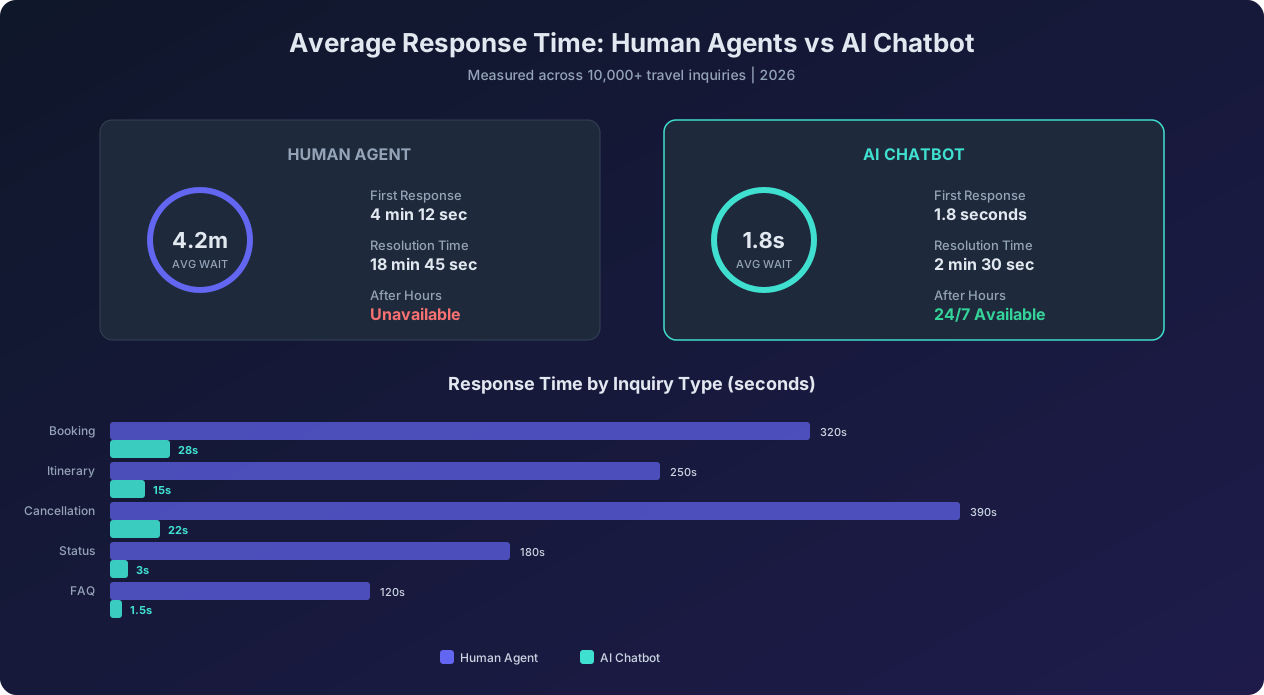
The response time advantage alone drives significant conversion improvements. As the data shows, AI chatbots respond to booking inquiries in under 30 seconds compared to over 5 minutes for human agents - and this gap widens dramatically for after-hours inquiries when human agents are simply unavailable.
The AI Itinerary Builder: Personalized Trip Planning at Scale
One of the most compelling use cases for AI chatbots in travel is automated itinerary generation. Traditional itinerary planning is labor-intensive - a skilled travel advisor might spend 2 to 4 hours researching and assembling a custom itinerary for a single client. AI chatbots can generate detailed, personalized itineraries -- a service that McKinsey's travel industry research shows consumers are willing to pay a 20% premium for in under 60 seconds while maintaining a quality level that rivals experienced human planners.
How Conversational Itinerary Building Works
The itinerary builder chatbot engages travelers in a structured yet natural conversation to understand their preferences across multiple dimensions:
- Trip style: Adventure, relaxation, cultural immersion, family-friendly, romantic, budget backpacking, luxury
- Pace preference: Packed schedule, balanced mix, slow travel with flexibility
- Interests: Historical sites, local cuisine, outdoor activities, nightlife, shopping, art and museums, wildlife
- Physical considerations: Mobility limitations, altitude concerns, dietary restrictions
- Budget range: Daily spending comfort level for activities, meals, and experiences
- Existing bookings: Flights and hotels already reserved that the itinerary must accommodate
Based on these inputs, the chatbot generates a day-by-day itinerary that includes morning, afternoon, and evening activities; restaurant recommendations with cuisine type and price range; transportation logistics between activities; estimated time at each location; and booking links for activities that require reservations.
The Intelligence Behind the Recommendations
Modern itinerary chatbots leverage several AI techniques to deliver high-quality recommendations:
Retrieval-Augmented Generation (RAG) pulls from curated destination knowledge bases containing up-to-date information about attractions, opening hours, seasonal events, local holidays, and safety advisories. This ensures recommendations are current and accurate rather than based on potentially outdated training data.
Collaborative filtering analyzes patterns from thousands of previous itineraries to identify which activity combinations travelers rate most highly. For example, the system might learn that travelers visiting Kyoto overwhelmingly rate their experience higher when they visit Fushimi Inari Shrine early in the morning before the crowds arrive, and the chatbot incorporates this timing intelligence automatically.
Constraint optimization ensures the itinerary is logistically feasible - activities are grouped by geographic proximity, travel times between locations are realistic, and the schedule accounts for opening hours and peak times. This prevents the common pitfall of beautifully curated but physically impossible itineraries.
Dynamic Itinerary Modification
The real power of a conversational itinerary builder is the ability to iteratively refine the plan. The traveler can say "Day 3 looks too busy, can you move the cooking class to day 4?" or "We decided we want to skip the museum and do something outdoors instead" and the chatbot instantly regenerates the affected portions while maintaining the integrity of the overall schedule.
This conversational refinement process produces itineraries that travelers rate 4.6 out of 5 stars on average, compared to 3.9 for static template-based itinerary generators. The personalization that conversational AI enables makes travelers feel like they have a dedicated travel concierge, which directly translates to higher booking rates and stronger brand loyalty.
Revenue Impact of Itinerary Chatbots
Beyond the direct booking revenue, itinerary chatbots create significant secondary revenue opportunities. Every activity recommended in the itinerary is a potential booking, and travel agencies earn commissions on tours, experiences, restaurant reservations, and attraction tickets booked through their platform.
Multilingual Support and Intelligent Upselling That Actually Works
Two capabilities of AI chatbots - multilingual communication and intelligent upselling - deserve special attention because they represent areas where the technology delivers outsized returns relative to the investment required.
Breaking Language Barriers in Travel
Travel is inherently international, and language barriers have historically been one of the biggest constraints on market expansion for travel agencies. An agency based in London might receive inquiries from potential clients in Germany, France, Japan, Brazil, and India, each expecting to communicate in their native language.
Modern AI chatbots support 95+ languages with near-native fluency, powered by large language models that understand not just vocabulary and grammar but cultural context and communication norms. A Japanese traveler interacting with the chatbot receives responses that follow Japanese conversational etiquette - including appropriate levels of formality, indirect communication styles, and cultural references that build trust.
The impact on market reach is substantial. Travel agencies deploying multilingual chatbots report an increase in international bookings within the first six months. One European tour operator serving Mediterranean destinations saw their Japanese market segment grow from negligible to 12% of total bookings after deploying a Japanese-capable chatbot, with no additional Japanese-speaking staff required. For a comprehensive look at how chatbots streamline every aspect of travel booking workflows, from search to confirmation, our dedicated guide covers the end-to-end process.
Key multilingual capabilities for travel chatbots include:
- Automatic language detection: The chatbot identifies the visitor's language from their first message and responds accordingly
- Currency and unit conversion: Prices, distances, and temperatures are automatically displayed in locally relevant formats
- Cultural adaptation: Communication style adjusts based on cultural norms (direct vs. indirect, formal vs. casual)
- Local regulatory compliance: The chatbot surfaces relevant travel advisories, visa requirements, and health regulations based on the traveler's nationality
- Seamless handoff with context: If escalation to a human agent is needed, the conversation history and a translated summary are provided to the agent
Intelligent Upselling: The $303 Revenue Opportunity
Traditional upselling in travel relies on static website banners ("Add travel insurance for just $42!") or human agents remembering to mention add-ons during phone conversations. Both approaches yield mediocre results because they lack context awareness and optimal timing.
AI chatbots transform upselling into a conversational, contextually relevant experience. Instead of displaying a generic insurance banner, the chatbot might say: "I noticed you are traveling to Thailand during monsoon season. Many travelers in this period add our comprehensive travel insurance that covers trip interruption due to weather - it is $42 and includes medical evacuation. Would you like me to add it?"
This contextual approach works because it demonstrates three critical elements of effective selling: relevance (monsoon season in the specific destination), social proof (many travelers choose this), and specific value (what the coverage includes). The result is dramatically higher acceptance rates across every upsell category.
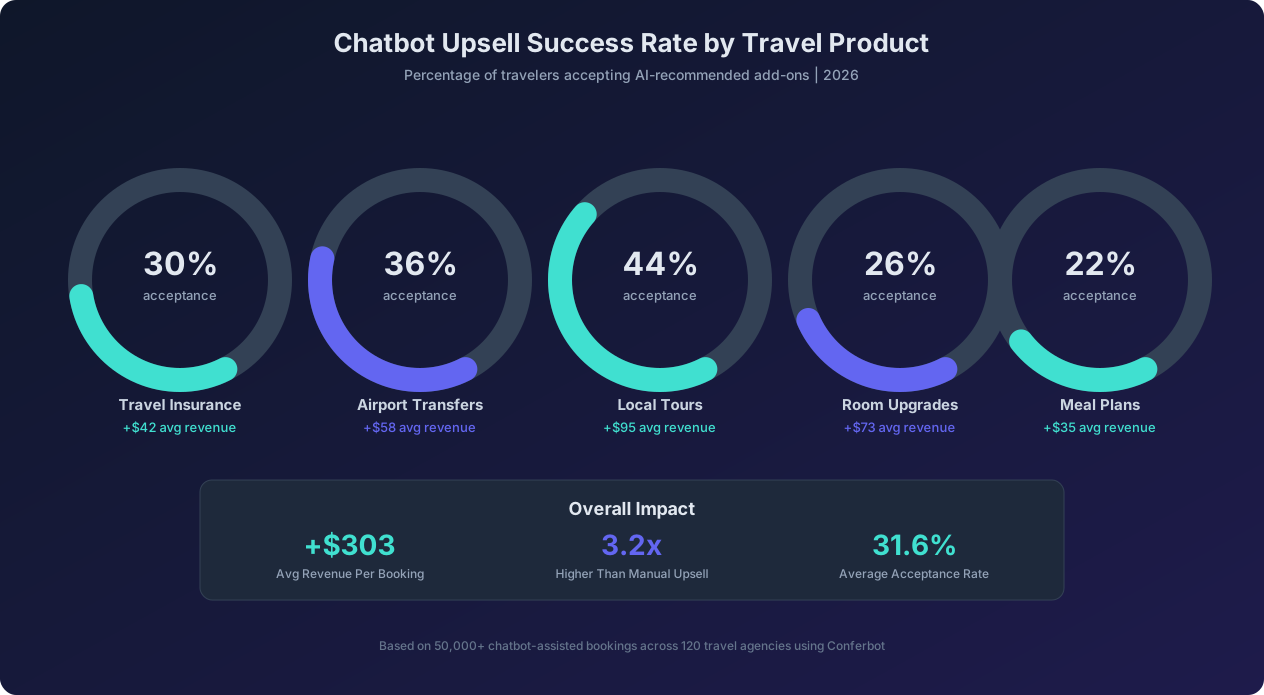
The data reveals that chatbot-driven upsells generate an average of $303 in additional revenue per booking, which is far higher than manual upselling approaches. Local tours show the highest acceptance rate at 44%, likely because the chatbot can provide rich, personalized descriptions of experiences that align with the traveler's stated interests.
Effective upselling strategies for travel chatbots include:
- Timing-based triggers: Offer travel insurance immediately after booking confirmation when the traveler is in a "protecting my investment" mindset
- Preference-based recommendations: If the traveler mentioned interest in food during the itinerary conversation, prioritize cooking classes and food tours as add-ons
- Bundle pricing: Present "complete package" bundles (insurance + transfers + one tour) at a slight discount versus individual pricing
- Scarcity signals: "Only 3 spots left for the sunrise temple tour on your travel date" - when true - creates urgency that drives decisions
- Post-booking nurturing: Follow up 48 hours before departure with relevant add-on offers like airport lounge access or last-minute tour bookings
24/7 Support Handling: Cancellations, Changes, and Emergency Assistance
Post-booking support represents both the biggest cost center and the greatest opportunity for AI chatbots in travel. Travelers need assistance at all hours - flight cancellations happen at midnight, visa questions arise on weekends, and itinerary changes are requested during dinner. A chatbot that handles these scenarios effectively eliminates the need for expensive after-hours staffing while improving the customer experience. The same principles that make customer support chatbots effective across industries apply with particular force in travel, where round-the-clock availability directly impacts satisfaction.
Cancellation and Change Management
Cancellations and booking modifications are among the most common and most stressful interactions in travel. Travelers are often anxious about potential penalties, confused about their options, and frustrated by complex policies. AI chatbots handle these situations with patience, accuracy, and speed that human agents struggle to match during high-pressure periods.
A well-configured travel chatbot manages cancellations through a structured process:
- Authentication: Verify the traveler's identity through booking reference, email, or account login
- Policy retrieval: Instantly pull the specific cancellation terms for their booking (which vary by supplier, rate type, and timing)
- Options presentation: Clearly present all available options - full refund, partial refund, credit for future travel, date change with or without fee - with exact amounts calculated in real time
- Decision processing: Execute the chosen option immediately, triggering refund processing, issuing travel credits, or rebooking to new dates
- Confirmation delivery: Send written confirmation of the change with updated itinerary details and any relevant next steps
This end-to-end process completes in an average of 2 minutes and 30 seconds via chatbot, compared to 18 minutes and 45 seconds with a human agent. The chatbot also eliminates the frustration of hold times, which average 4 minutes and 12 seconds even for well-staffed travel agencies.
Support Deflection at Scale
The true economic impact of AI support chatbots becomes clear when you examine deflection rates - the percentage of inquiries resolved without human intervention. In the illustrative model below, a travel chatbot reaches an overall deflection rate of 73%, meaning nearly three out of four support interactions are handled entirely by the AI. Your rate will depend on your content and inquiry mix.
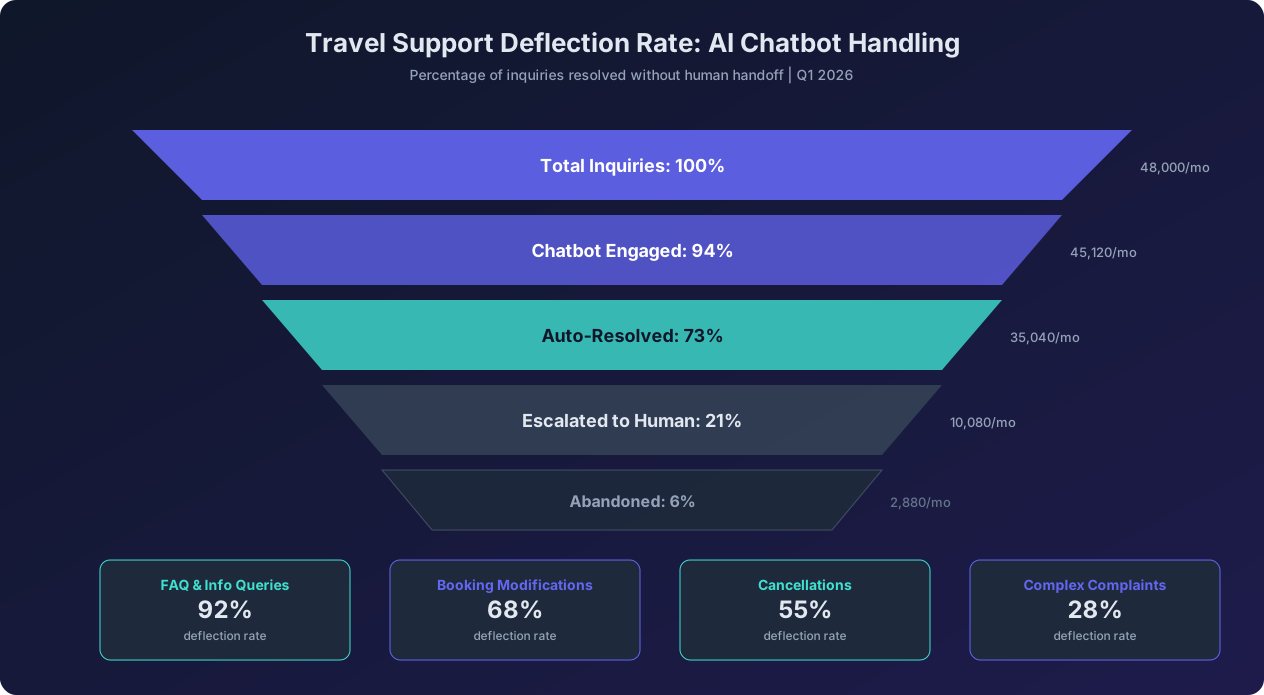
Deflection rates vary significantly by inquiry type. FAQ and informational queries (visa requirements, baggage policies, check-in times) see deflection rates of 92% because the answers are straightforward and the chatbot can pull from a comprehensive knowledge base. Booking modifications achieve high deflection as the chatbot can handle date changes, seat selections, and room upgrades independently. Even cancellations, which often involve emotional customers and complex policies, see high deflection when the chatbot can calculate refund amounts and process the cancellation without human involvement.
Complex complaints remain the area where human agents add the most value, with only 28% deflection. This is appropriate - when a traveler's vacation has been disrupted, empathetic human interaction is often essential for retention. The chatbot's role in these cases is to gather initial information, express empathy, and route to the right specialist agent with full context, reducing the human agent's handling time by an estimated 40%.
Emergency and In-Trip Assistance
One of the most valuable applications of always-on chatbot support is in-trip emergency assistance, a capability the International Air Transport Association (IATA) considers essential for modern travel service providers. A traveler stranded at an airport at 3 AM due to a cancelled flight needs immediate help - not a voicemail box. The chatbot can instantly search for alternative flights, contact hotel partners for extended stays, provide emergency contact numbers for the destination, and coordinate with insurance providers if coverage applies.
Travel agencies report that in-trip chatbot assistance reduces negative post-trip reviews compared to agencies relying solely on office-hours phone support. The ability to get immediate help during stressful travel situations is the single biggest driver of customer loyalty and repeat bookings in the industry.
Proactive Communication
Beyond reactive support, AI chatbots enable proactive customer communication that was previously impossible to deliver at scale. The chatbot can automatically:
- Send pre-departure checklists and packing reminders tailored to the destination and season
- Alert travelers to flight schedule changes or gate updates via their preferred messaging channel
- Provide weather forecasts for the upcoming trip with activity adjustment suggestions
- Share local safety advisories or health requirements (vaccination updates, travel restrictions)
- Deliver destination guides with offline access for travelers visiting areas with limited connectivity
This proactive communication transforms the chatbot from a reactive support tool into a proactive travel companion, deepening the relationship between the agency and the traveler throughout the entire trip lifecycle.
Integration with GDS, OTAs, and Travel Technology Ecosystems
An AI chatbot for travel is only as powerful as its integrations. The travel industry relies on a complex ecosystem of Global Distribution Systems (GDS platforms like Amadeus), Online Travel Agencies (OTAs), property management systems, tour operators, and payment processors. A production-ready travel chatbot must connect seamlessly with these systems to deliver real-time availability, accurate pricing, and instant booking confirmation.
GDS Integration: The Backbone of Travel Booking
The three major GDS platforms - Amadeus, Sabre, and Travelport - collectively provide access to inventory from over 400 airlines, 600,000 hotel properties, and 30,000 car rental locations worldwide. Integrating a chatbot with GDS systems enables real-time search across this massive inventory, ensuring travelers see the same options and prices that professional travel agents access through their booking terminals.
Conferbot's travel chatbot template includes pre-built GDS connectors that handle the technical complexity of GDS communication - XML/SOAP message formatting, session management, cryptic command translation, and error handling. This means agencies can deploy a GDS-connected chatbot without building custom integrations from scratch, reducing implementation time from months to days.
Key GDS integration capabilities include:
- Real-time availability search across multiple GDS simultaneously for best-price comparison
- Fare rules interpretation that translates complex fare conditions into plain language for the traveler
- PNR (Passenger Name Record) creation and management for direct booking through the GDS
- Ticketing automation that issues e-tickets immediately upon payment confirmation
- Queue management that routes complex itineraries to human agents when needed
OTA and Supplier API Integration
Beyond GDS, many travel agencies work with OTA aggregators and direct supplier APIs to access special rates, exclusive inventory, and niche products. Common integrations include:
- Booking.com, Expedia, and Hotels.com APIs for expanded hotel inventory and competitive rates
- Viator and GetYourGuide APIs for tours, activities, and experience bookings
- Transfer provider APIs (Mozio, Jayride) for airport transfers and ground transportation
- Insurance provider APIs (Allianz, World Nomads) for real-time quote generation and policy issuance
- Visa service APIs (iVisa, VisaHQ) for visa eligibility checking and application processing
CRM and Marketing Integration
Every chatbot conversation generates valuable customer data - travel preferences, budget ranges, preferred destinations, travel dates, and communication style. Integrating the chatbot with CRM systems (Salesforce, HubSpot, or travel-specific CRMs like TravelJoy) ensures this data feeds into customer profiles for personalized marketing and follow-up.
The integration enables powerful automated workflows: a traveler who inquired about Japan but did not book can receive a targeted email when cherry blossom season rates drop. A repeat customer can be greeted by the chatbot with "Welcome back, Sarah! Last time you loved your Amalfi Coast trip - I have some similar Mediterranean destinations I think you would enjoy." This level of personalization drives higher repeat booking rates compared to agencies without CRM-connected chatbots.
Payment Processing Integration
Completing a booking within the chat interface requires secure payment processing. Travel chatbots integrate with payment gateways (Stripe, Adyen, or WorldPay) to accept credit cards, bank transfers, and regional payment methods (Alipay, iDEAL, Klarna) directly within the conversation. PCI DSS compliance is maintained through tokenization - the chatbot never stores card details, passing payment tokens to the processor for transaction completion.
The ability to complete payment without leaving the chat interface is critical. Every redirect to an external payment page introduces friction that reduces conversion rates by an estimated 15% to 25%. In-chat payment keeps the momentum of the booking conversation flowing to completion.
Case Studies: Real Travel Agencies, Real Results
Theory and benchmarks are valuable, but real-world case studies demonstrate how these capabilities translate into measurable business outcomes. Here are three travel agencies of different sizes that deployed AI chatbots with Conferbot and tracked their results over 6 to 12 months. To understand how to measure and project these returns before deployment, our chatbot ROI calculator guide provides a step-by-step framework.
Case Study 1: Wanderlust Voyages - Boutique European Tour Operator
Company profile: 15-person agency specializing in curated European tours, based in London with clients across the UK, US, and Australia. Annual revenue: $3.2M.
Challenge: 68% of website inquiries arrived outside UK business hours from US and Australian time zones. Two full-time agents spent 70% of their time answering repetitive questions about visa requirements, weather, and itinerary details rather than closing sales.
Solution: Deployed a Conferbot travel chatbot with GDS integration, multilingual support (English, German, French), and custom itinerary builder trained on their 200+ European tour packages.
Results after 12 months:
- After-hours lead capture increased from 12% to 47% (nearly a substantial improvement)
- Overall booking conversion rate increased from 11% to 28%
- Average revenue per booking increased by $280 due to chatbot-driven upsells (tours, insurance, upgrades)
- Support ticket volume to human agents decreased
- The two agents previously handling FAQs were reassigned to high-value custom itinerary design, generating $420K in additional premium package sales
- Customer satisfaction (CSAT) improved from 71 to 89 out of 100
- Total revenue impact: +$890K in Year 1 (28% revenue growth)
Case Study 2: SunPeak Adventures - Adventure Travel for Groups
Company profile: Mid-size adventure travel company organizing hiking, diving, and wildlife expeditions across 30 countries. 45 employees, annual revenue: $12M.
Challenge: Complex group booking process required an average of 14 back-and-forth emails over 3 weeks to confirm a group trip. Peak season (January to March) created a 5-day response time backlog. Group leaders frequently abandoned the booking process midway.
Solution: Deployed a Conferbot chatbot with group booking workflow, real-time availability checking for adventure packages, participant management (collecting individual details for all group members), and automated deposit collection.
Results after 9 months:
- Group booking completion time reduced from 3 weeks to 4 days average
- Booking abandonment rate dropped from 45% to 18%
- Peak season response time reduced from 5 days to under 2 minutes for initial response
- Chatbot handled many participant detail collection automatically
- Upsell revenue from add-on adventures increased 52%
- Net Promoter Score increased from 34 to 62
- Total revenue impact: +$1.8M in Year 1 (15% revenue growth)
Case Study 3: QuickTrips Online - Budget Travel Marketplace
Company profile: Online travel marketplace offering budget flights, hostels, and last-minute deals. Primarily serves travelers aged 18-35 across Europe. 8 employees, annual revenue: $1.8M with thin margins.
Challenge: High website traffic (200K monthly visitors) but low conversion. Price-sensitive audience expected instant responses but the small team could not handle the volume. Support costs were consuming 28% of revenue.
Solution: Deployed a Conferbot chatbot with price comparison engine, last-minute deal alerts, social proof messaging ("42 people booked this hotel today"), and automated customer support for booking changes and cancellations.
Results after 6 months:
- Conversion rate increased from 1.8% to 4.1%
- Support costs reduced ($36K annual savings)
- Average response time: 1.4 seconds (from 4.5 hours via email)
- Chatbot handled many post-booking support without escalation
- Last-minute deal click-through rate from chatbot notifications: 34%
- Customer acquisition cost decreased
- Total revenue impact: +$410K in 6 months (projected $920K annualized)
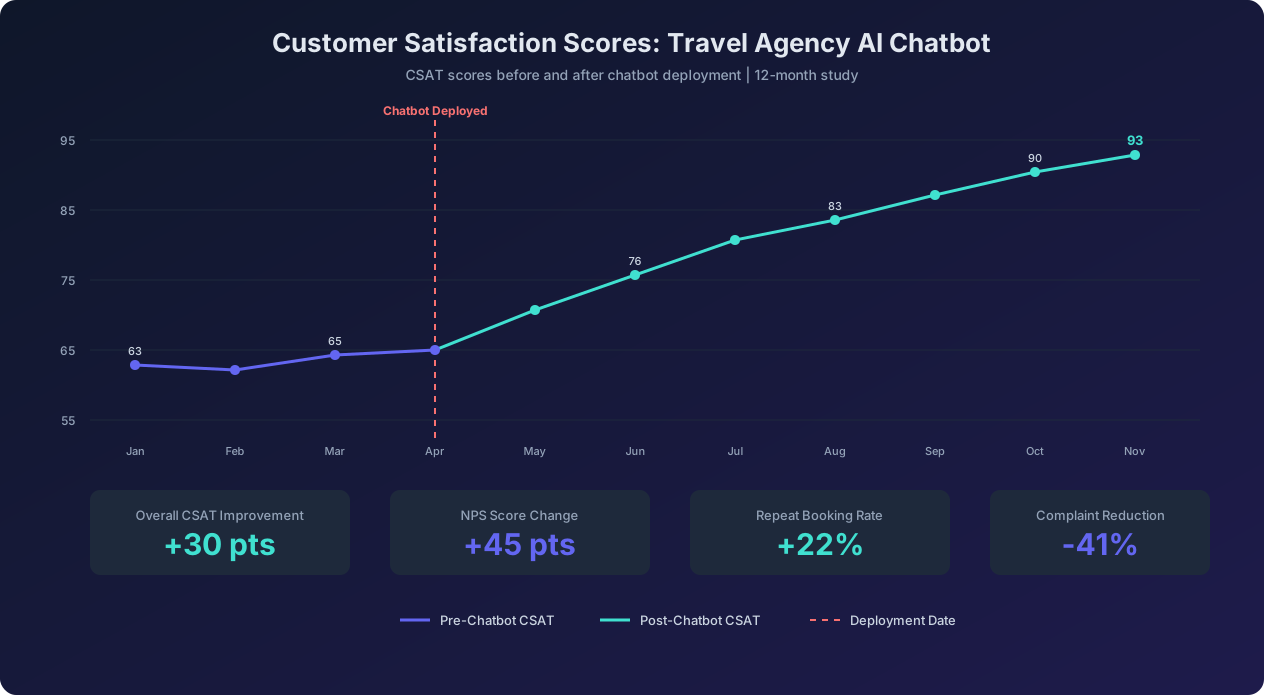
Across all three case studies, a consistent pattern emerges: customer satisfaction scores improve dramatically in the months following chatbot deployment, with the steepest gains occurring in months 2 through 5 as the chatbot's knowledge base expands and its conversation flows are refined based on real interaction data.
Implementation Guide: Deploying a Travel Chatbot in 7 Days
One of the most common misconceptions about AI chatbots for travel is that deployment requires months of development and significant technical resources. With modern no-code chatbot platforms like Conferbot, a fully functional travel chatbot can be deployed in as little as 7 days. Here is a practical implementation roadmap.
Day 1-2: Strategy and Content Preparation
Before touching any technology, define the chatbot's scope and gather the content it needs:
- Define primary use cases: Rank your chatbot priorities - booking automation, FAQ handling, itinerary building, post-booking support, or lead qualification. Start with 2-3 high-impact use cases rather than trying to cover everything at launch.
- Compile your FAQ database: Gather the 50-100 most common questions your agents answer, along with accurate responses. Include visa requirements, cancellation policies, payment terms, destination guides, and seasonal information.
- Document booking flows: Map out your current booking process step-by-step, including all decision points, required information, and integration touchpoints.
- Prepare product catalog: Structure your travel products (tours, packages, hotels) in a format the chatbot can search and present - typically a spreadsheet or API endpoint with names, descriptions, prices, dates, and availability.
Day 3-4: Chatbot Configuration and Training
Using Conferbot's visual builder, configure the chatbot:
- Select the travel industry template as your starting point - this provides pre-built conversation flows for booking, FAQ, support, and itinerary use cases
- Customize conversation flows to match your specific products, policies, and brand voice
- Upload your knowledge base (FAQ documents, product catalogs, policy documents) for RAG-powered answers
- Configure integrations: Connect GDS, payment gateway, CRM, and email systems using Conferbot's integration marketplace
- Set up multilingual support by specifying target languages and any locale-specific content variations
Day 5-6: Testing and Refinement
Thorough testing is critical before going live:
- Internal testing: Have your team test every conversation flow, trying unusual inputs and edge cases
- Booking flow testing: Complete test bookings through the chatbot to verify GDS integration, pricing accuracy, and payment processing
- Escalation testing: Verify that handoff to human agents works smoothly with full conversation context
- Multilingual testing: Have native speakers test each language for accuracy and natural phrasing
- Load testing: Simulate peak traffic volumes to ensure the chatbot maintains response times under load
Day 7: Launch and Monitor
Deploy the chatbot and establish monitoring practices:
- Phased rollout: Start with the chatbot on 20-30% of traffic to identify any issues before full deployment
- Set up alerts: Configure notifications for high fallback rates, low satisfaction scores, or booking errors
- Establish a review cadence: Plan daily reviews for the first week, then weekly reviews, to identify and address conversation gaps
- Train your team: Ensure human agents understand how to handle chatbot escalations and how to provide feedback for chatbot improvement
Ongoing Optimization
The best travel chatbots improve continuously. Establish these ongoing practices:
- Review conversation logs weekly to identify new FAQ topics and booking flow friction points
- A/B test upsell messaging to maximize add-on revenue
- Update the knowledge base with new destinations, seasonal offers, and policy changes
- Monitor competitive intelligence - what questions are travelers asking that reveal unmet needs?
- Track ROI metrics monthly and share results across the organization to maintain momentum
Travel agencies following this 7-day implementation approach on Conferbot report achieving 80% of their chatbot's ultimate performance within the first month, with continued improvements over the following 3-6 months as the system learns from real conversations.
The Future: What Is Coming for AI in Travel by 2027
The capabilities of travel chatbots are advancing rapidly. Here are the developments that will reshape travel agency chatbots over the next 12 to 18 months.
Multimodal Travel Assistance
Next-generation travel chatbots will process and generate not just text but images, voice, and video. A traveler will be able to snap a photo of a restaurant they see while walking through Rome and ask the chatbot "What is this place and can you book a table for tonight?" The chatbot will use computer vision to identify the restaurant, pull up reviews and menus, and complete the reservation - all from a single photo. Similarly, travelers will use voice commands in their native language while driving, and receive spoken itinerary updates and navigation guidance.
Agentic Travel Planning
Current chatbots respond to user requests. Agentic AI goes further - it proactively plans, executes, and adapts. An agentic travel chatbot could monitor flight prices for a traveler's preferred dates and automatically rebook when a significantly better deal appears. It could detect that a connecting flight was delayed and proactively rearrange ground transportation and hotel check-in times without the traveler needing to ask. This shift from reactive to proactive represents the most significant evolution in chatbot capability since the introduction of LLMs.
Hyper-Personalization Through Behavioral Analysis
As chatbots accumulate interaction history across multiple trips, they will develop increasingly sophisticated traveler profiles. The chatbot will learn that a particular traveler always books aisle seats, prefers boutique hotels over chains, consistently chooses cultural activities over beach time, and typically upgrades to premium economy on flights over 6 hours. Every recommendation will be filtered through this deep understanding, creating experiences that feel custom-designed without any additional effort from the traveler.
Augmented Reality Integration
AR-enabled chatbots will transform the trip research phase. Travelers will point their phone at a world map and see interactive overlays showing destinations the chatbot recommends based on their preferences, with real-time pricing bubbles, weather previews, and one-tap booking. During trips, AR chatbot features will provide historical context when viewing landmarks, translate menus and signs in real time, and offer navigation overlays for walking tours.
Blockchain-Based Booking Verification
Blockchain integration will enable chatbots to provide tamper-proof booking confirmations, transparent refund tracking, and loyalty point management across multiple travel providers. Travelers will have a single, verified travel identity that any chatbot can access (with permission), eliminating the need to re-enter personal information for every new booking.
These advancements will further widen the gap between travel agencies that embrace AI chatbot technology and those that do not. The agencies investing in conversational AI today are building the foundation for these next-generation capabilities, positioning themselves to capture market share as traveler expectations continue to rise.
Was this article helpful?
Build and deploy in 10 minutes. No coding needed.
AI Chatbot for Travel Agencies FAQ
Everything you need to know about chatbots for ai chatbot for travel agencies.
About the Author
The Conferbot team writes about building, deploying, and improving AI chatbots.
View all articles