
Why Restaurants Need AI Chatbots in 2026
According to the National Restaurant Association, the restaurant industry operates on razor-thin margins - typically 3-9% net profit - which means every operational inefficiency, missed order, and lost customer hits the bottom line hard. At the same time, consumer behavior has shifted dramatically: over 60% of restaurant orders now originate through digital channels (online ordering, apps, social media), and customers expect instant responses to inquiries about hours, menus, reservations, and dietary accommodations.
This combination of thin margins and high digital expectations makes AI chatbots one of the most impactful technologies a restaurant can adopt. A well-designed chatbot handles the flood of repetitive inquiries that consume staff time, processes orders without errors or wait times, manages reservations around the clock, and engages customers through their preferred messaging channels.
The numbers support the case. Restaurants using chatbots for ordering report 15-30% increases in average order value through intelligent upselling, 50% reductions in phone call volume, and 20-40% decreases in order errors compared to phone-based ordering. For a restaurant processing 100 orders per day, even modest improvements in these metrics translate to significant monthly revenue gains.
The opportunity extends beyond ordering. Restaurant chatbots handle reservation management, menu inquiries (including allergen and dietary information), catering requests, loyalty program engagement, feedback collection, and promotional campaigns. They operate across multiple channels - your website, WhatsApp, Instagram, and Facebook Messenger - meeting customers wherever they prefer to communicate.
Whether you run a single-location independent restaurant, a multi-unit chain, or a cloud kitchen operation, this guide will show you how to implement a chatbot that reduces costs, increases revenue, and creates a better experience for both your customers and your staff. You can build one in minutes using a no-code chatbot builder with restaurant-ready templates.
Conversational Online Ordering: Beyond Traditional Apps
Traditional online ordering through apps and websites works, but conversational ordering through chatbots takes the experience to another level. Instead of scrolling through a long menu, selecting items, and navigating a checkout flow, customers simply tell the chatbot what they want - in natural language, just like they would tell a server at the restaurant.
How Conversational Ordering Works
A typical ordering conversation flows naturally:
Customer: "I'd like a large pepperoni pizza and a Caesar salad"
Bot: "Great choices! For the pepperoni pizza, would you like our classic crust or thin crust?"
Customer: "Thin crust"
Bot: "Perfect. Would you like to add a drink? Our combo deal saves you $3 when you add any beverage."
Customer: "Sure, a Coke"
Bot: "Your order: Large thin crust pepperoni pizza, Caesar salad, and a Coca-Cola. Total: $24.99. Delivery or pickup?"
This conversational approach achieves several things that static ordering cannot:
- Natural upselling: The chatbot suggests add-ons, upgrades, and combos at contextually appropriate moments - just like a well-trained server. This increases average order value by 15-30% without feeling pushy.
- Dietary accommodation: Customers can say "I'm gluten-free" or "no dairy" and the chatbot filters the menu accordingly, suggesting appropriate alternatives.
- Customization handling: "Extra cheese, light sauce, well-done" - the chatbot captures customizations through conversation rather than requiring customers to navigate nested modification menus.
- Error reduction: By confirming the complete order before processing, and by understanding natural language rather than relying on button clicks, conversational ordering reduces order errors by 20-40%.
Multi-Channel Ordering
Deploy ordering across every channel your customers use. WhatsApp ordering is particularly powerful for restaurants - customers can place orders through the same app they use to message friends, with 95%+ open rates on order confirmations and delivery updates. Instagram chatbot ordering captures impulse orders from customers who see your food photos in their feed. Your website chatbot handles direct ordering from customers who find you through search or your own marketing.
Through the integrations hub, connecting with your POS system (Toast, Square, Clover, etc.) ensures orders placed through the chatbot flow directly into your kitchen's workflow, eliminating the need for staff to manually enter chatbot orders. The chatbot's NLP capabilities understand varied customer phrasing - whether someone says "pepperoni pizza" or "a large pep" - ensuring accurate order capture regardless of how customers express their choices.
Restaurant Chatbot Impact: Key Metrics Comparison
Restaurant operators evaluating chatbot technology need clear data on expected returns across different use cases. This comparison shows the measurable impact of chatbot automation on key restaurant metrics, helping owners prioritize which features to deploy first.
| Use Case | Without Chatbot | With Chatbot | Improvement |
|---|---|---|---|
| Average Order Value | $22-28 | $28-36 | +15-30% |
| Phone Calls per Day | 40-80 calls | 20-40 calls | -50% |
| Order Error Rate | 8-12% | 3-5% | -60% |
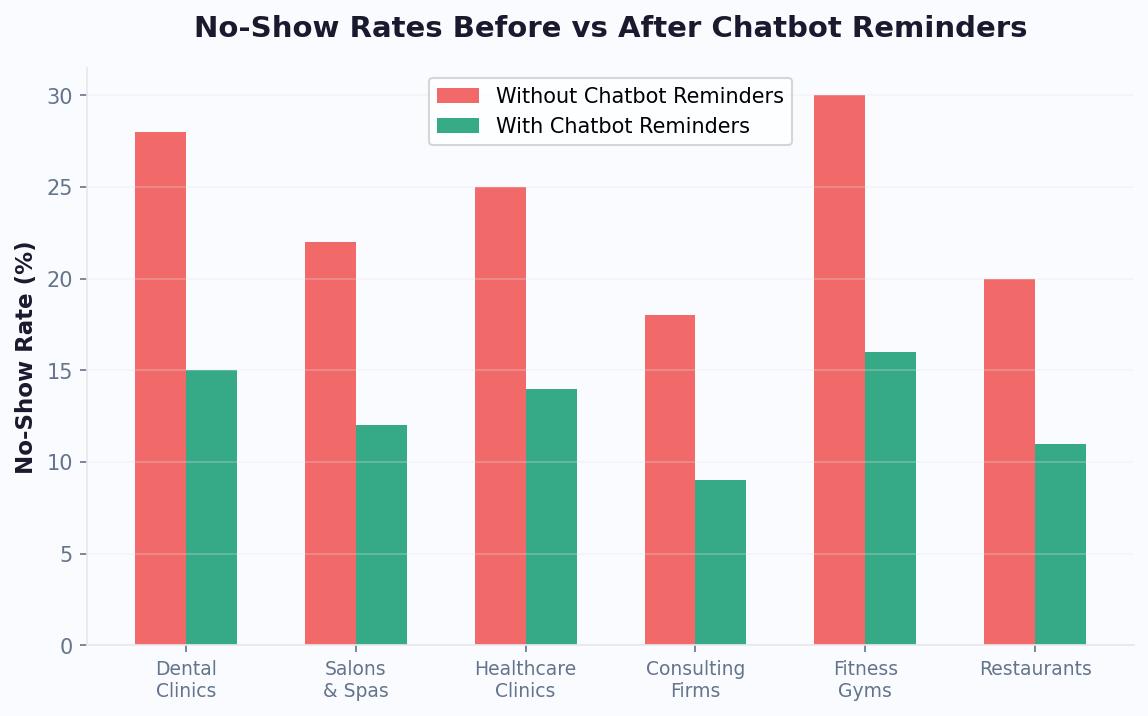
| Reservation No-Show Rate | 15-20% | 5-10% | -50-67% |
| Feedback Response Rate | 5-10% | 35-50% | +5-10x |
| Catering Quote-to-Booking | 20-30% | 45-60% | +25-40% |
For restaurants with high phone order volume, conversational ordering delivers the fastest ROI through increased average order value and reduced staff time. For restaurants with significant reservation traffic, the no-show reduction alone often covers the chatbot's monthly cost within the first week. Start with a pre-built restaurant template from the template gallery and customize for your menu and operations.
Reservation Management and Table Optimization
Phone-based reservation management is one of the most disruptive tasks in restaurant operations. The phone rings during peak service, staff are pulled away from guests to handle booking calls, and the reservation book becomes a chaotic mix of phone reservations, walk-ins, and online bookings. A chatbot-based reservation system eliminates this chaos while actually improving table utilization.
Automated Reservation Flow
The chatbot handles the complete reservation lifecycle:
- Availability check: The customer specifies their date, time, and party size. The chatbot checks real-time availability against your table management system and presents available slots.
- Preference capture: Indoor or outdoor? Booth or table? Near the window? High chair needed? Celebrating a special occasion? The chatbot captures preferences that help your host team deliver a personalized experience.
- Confirmation: The reservation is confirmed with all details, and the customer receives a confirmation message via their preferred channel.
- Reminders: Automated reminders sent 24 hours and 2 hours before the reservation, with easy options to confirm, modify, or cancel.
- Post-dining follow-up: After the reservation time, the chatbot sends a thank-you message, requests feedback, and offers incentives for a return visit.
Reducing No-Shows
Restaurant no-shows cost the industry an estimated $75 billion annually in the US alone, according to Statista restaurant industry data. The average no-show rate is 15-20%, but restaurants using chatbot-based reservation management with interactive confirmations reduce this to 5-10%. The key features that drive this improvement:
- Interactive confirmations: Instead of a passive reminder, the chatbot asks the customer to actively confirm: "Your table for 4 at 7:30 PM tomorrow is reserved. Reply CONFIRM to keep your reservation or CHANGE to modify."
- Easy modification: When plans change, the chatbot lets customers modify or cancel without the friction of calling the restaurant. Customers who would otherwise simply not show up are more likely to cancel when it is easy to do so.
- Waitlist management: When the restaurant is fully booked, the chatbot offers waitlist placement and notifies customers immediately when a table becomes available, filling cancellation gaps that would otherwise result in empty tables.
Table Optimization
Advanced reservation chatbots analyze booking patterns to optimize table assignments. By understanding party sizes, dining durations by day of week and meal period, and no-show probability by customer segment, the system can overbook strategically (similar to airlines) to maximize table utilization without creating long waits. Restaurants using AI-optimized reservation management report 10-20% increases in covers per service - a significant revenue lift with zero additional food cost or labor. Integrations with platforms like OpenTable for Restaurants enable seamless reservation syncing. Use Conferbot's calendar booking to connect your chatbot to your reservation system, and start capturing bookings through your WhatsApp and website channels to see immediate reductions in phone volume and no-show rates.
Interactive Menu Browsing and Dietary Information
Your menu is the foundation of your restaurant business, but static PDF menus and even web-based menu pages fail to address the increasingly complex dietary needs and preferences of modern diners. A menu chatbot transforms passive menu viewing into an interactive, personalized experience that helps every customer find exactly what they want.
Conversational Menu Navigation
Instead of scrolling through a long menu, customers can ask natural questions:
- "What vegetarian options do you have?"
- "What's your most popular dish?"
- "I'm allergic to shellfish - what can I order?"
- "What's good for someone who doesn't eat spicy food?"
- "What are your specials today?"
The chatbot responds with relevant menu items, complete with descriptions, prices, and photos. This guided discovery helps customers explore your menu more thoroughly and often leads them to try items they would have overlooked on a static menu.
Allergen and Dietary Management
Food allergies and dietary restrictions are a serious concern for both customers and restaurants. A chatbot with a comprehensive allergen database for your menu items provides instant, accurate allergen information that reduces risk and builds trust:
- Allergen filtering: Customers specify their allergies (nuts, gluten, dairy, shellfish, soy, eggs) and the chatbot shows only safe menu items, clearly marking any cross-contamination risks.
- Dietary preference filtering: Vegan, vegetarian, keto, paleo, halal, kosher - the chatbot filters the menu based on the customer's dietary framework.
- Ingredient transparency: For any menu item, the chatbot can list all ingredients, preparation methods, and potential allergen exposure.
- Modification suggestions: If a desired item contains an allergen, the chatbot suggests modifications: "Our pasta primavera normally contains Parmesan cheese, but we can prepare it without for a dairy-free option. Shall I add that note to your order?"
Visual Menu Experience
The chatbot presents menu items with high-quality food photography, preparation videos, and even chef's descriptions. Customers who see a beautiful photo of a dish are 2-3x more likely to order it than those who only read a text description. For daily specials, the chef can record a quick video describing the dish, which the chatbot shares with customers who ask about specials - creating a personal, engaging experience that differentiates your restaurant from competitors who rely on text-only menus.
Keep your chatbot's menu data synchronized with your actual menu to avoid the frustration of ordering an item that is no longer available. Most restaurant POS systems can push menu updates to the chatbot automatically through API integrations, ensuring customers always see current offerings, prices, and availability.
Customer Marketing and Loyalty Program Engagement
Acquiring a new restaurant customer costs 5-7x more than retaining an existing one, yet most restaurants spend the majority of their marketing budget on acquisition rather than retention. Chatbots flip this equation by creating a direct, high-engagement communication channel with existing customers that drives repeat visits and builds lasting loyalty.
Loyalty Program Automation
A chatbot-managed loyalty program eliminates the friction that causes most restaurant loyalty programs to fail - physical cards that get lost, apps that customers do not want to download, and points systems that are too complicated to track. Through the chatbot, loyalty is effortless:
- Automatic enrollment: Customers who order through the chatbot are automatically enrolled in the loyalty program after their first purchase.
- Point tracking: "You have 85 points! Just 15 more and you'll earn a free appetizer." The chatbot proactively notifies customers of their balance and proximity to rewards.
- Reward redemption: Customers redeem rewards directly through the chatbot during their next order, with no codes, cards, or separate apps required.
- Tier progression: For multi-tier programs, the chatbot notifies customers when they advance to a new tier and explains the new benefits they have unlocked.
Promotional Campaigns
Chatbot-based promotions outperform email marketing by a wide margin. While restaurant marketing emails see 15-20% open rates, chatbot messages through WhatsApp and Instagram achieve 80-95% open rates and 30-50% engagement rates. Use this channel for:
- Happy hour promotions: "It's almost 5! Our happy hour starts in 30 minutes - half-price appetizers and $5 craft cocktails. Want to grab a table?"
- Slow period offers: Use historical sales data to identify slow days and times, then send targeted promotions to drive traffic during these periods.
- Birthday and anniversary rewards: Collect birthdate during enrollment and surprise customers with a complimentary dessert or special offer on their birthday.
- Seasonal and limited-time offers: Create urgency with time-limited menu items or promotions that drive immediate action.
Feedback Collection
Post-dining feedback through a chatbot achieves 5-10x higher response rates than email surveys or comment cards. The chatbot sends a quick follow-up after the meal: "Thanks for dining with us! How would you rate your experience tonight?" followed by targeted questions about food quality, service, and atmosphere. Negative feedback triggers an immediate alert to the manager, allowing for real-time service recovery - often turning a dissatisfied customer into a loyal advocate. Positive responses can be channeled into public review requests on Google, Yelp, or TripAdvisor, boosting your online reputation where it matters most. Track all engagement through chatbot analytics to measure campaign effectiveness and optimize your messaging strategy.
Catering Orders and Event Management
Catering and events represent a high-margin revenue stream for restaurants, but managing catering inquiries is time-intensive - each request involves custom menus, dietary accommodations, logistical details, and extensive back-and-forth communication. A chatbot streamlines the entire process from initial inquiry to post-event follow-up.
Catering Inquiry Qualification
When a potential catering client reaches out, the chatbot gathers essential information upfront:
- Event type: Corporate meeting, wedding reception, birthday party, holiday gathering, or other
- Date and time: When is the event? The chatbot checks against your catering capacity calendar.
- Guest count: How many people? This determines pricing tier and staffing requirements.
- Dietary requirements: Any vegetarian, vegan, gluten-free, or allergy considerations for the group?
- Budget range: Per-person or total budget to guide menu recommendations.
- Service level: Drop-off, buffet setup, or full-service catering?
With this information, the chatbot can immediately provide a preliminary quote and suggest appropriate menu packages. The catering manager then follows up with a personalized proposal, already armed with all the details needed to close the sale.
Menu Customization
For catering orders, the chatbot presents your catering menu packages with per-person pricing and customization options. Clients can:
- Browse packages by price tier or cuisine type
- Swap individual items within a package
- Add special items or custom dishes
- Specify quantities for mixed dietary requirements (e.g., 30 regular, 10 vegetarian, 5 gluten-free)
- Preview the total cost in real time as they make changes
Event Day Communication
On the day of the event, the chatbot handles logistical communication:
- Confirm delivery time and location details
- Provide driver contact information and tracking
- Handle last-minute changes (additional guests, dietary updates)
- Send setup completion confirmation when the catering team is on-site
Post-event, the chatbot collects feedback, sends invoices, and follows up with a special offer for future catering bookings. Restaurants using chatbot-managed catering workflows report 25-40% faster quote-to-booking conversion and 30% higher repeat catering rates, as the streamlined experience makes clients more likely to rebook.
Implementing Your Restaurant Chatbot: A Practical Guide
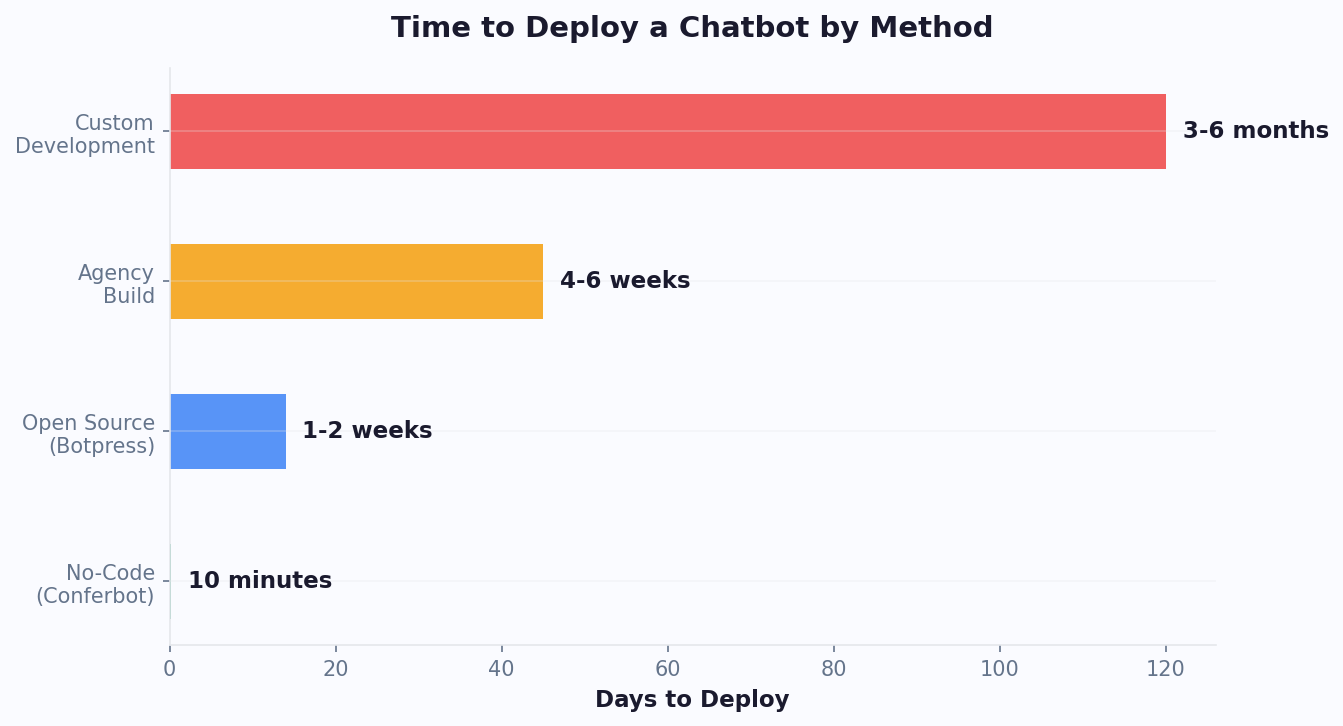
Getting a restaurant chatbot up and running does not require technical expertise or a large budget. Here is a practical implementation plan that any restaurant owner or manager can follow.
Phase 1: Setup and Integration (Week 1)
- Choose your channels. Start with your website and WhatsApp - these two channels capture the highest volume of restaurant inquiries. Add Instagram once your core flows are working smoothly.
- Digitize your menu. If you do not already have a structured digital menu (with items, descriptions, prices, allergens, and categories), create one. This becomes the chatbot's knowledge base for menu browsing and ordering.
- Connect your systems. Integrate with your POS (Toast, Square, Clover) for order processing, your reservation system (OpenTable, Resy, or built-in) for table management, and your payment processor for checkout.
Phase 2: Build Core Flows (Week 2)
Build these flows in order of priority:
- FAQ automation: Hours, location, parking, dietary accommodations, private dining - the questions you answer dozens of times per day.
- Reservation management: Booking, modification, cancellation, and confirmation flows.
- Online ordering: Menu browsing, item selection, customization, upselling, and checkout.
- Feedback collection: Post-visit satisfaction surveys with escalation for negative feedback.
Phase 3: Launch and Optimize (Weeks 3-4)
- Soft launch. Enable the chatbot and monitor conversations closely for the first 48 hours. Common issues include menu items the chatbot does not recognize, customization options that are not configured, and edge cases in the reservation flow.
- Train your staff. Ensure front-of-house and kitchen staff understand how chatbot orders appear in the POS, how to handle escalations from the chatbot, and how to encourage customers to use the bot for future orders.
- Promote the chatbot. Add QR codes to table tents, receipts, and takeout bags that link to the chatbot. Include the WhatsApp number on your menu, website, and social media profiles. A simple message like "Order, book, or ask us anything - chat with us on WhatsApp!" drives adoption.
Measuring Success
Track these KPIs weekly:
- Phone call reduction: Target 30-50% decrease in phone volume within the first month
- Average order value: Compare chatbot orders vs. phone/counter orders to measure upselling effectiveness
- Reservation no-show rate: Target reduction from 15-20% to 5-10%
- Order accuracy: Track complaints about incorrect orders; chatbot orders should have lower error rates
- Customer satisfaction: Post-dining survey scores for chatbot users vs. non-users
Most restaurants see meaningful results within the first two weeks and significant ROI within the first month. The key is starting simple, monitoring results, and expanding functionality based on what your customers actually need and use. Review your chatbot analytics regularly and update your menu data and conversation flows as your offerings evolve. For related strategies, see our hospitality chatbot guide, learn how to automate appointment reminders to reduce no-shows, explore our small business chatbot guide for broader SMB strategies, and calculate your expected return with our chatbot ROI guide.
Multi-Location Restaurant Chatbot Strategy
For restaurant chains and multi-unit operators, chatbot deployment requires a strategy that balances brand consistency with location-specific customization. Here is how to manage chatbots across multiple locations without multiplying your workload.
Centralized vs. Location-Specific Flows
The most effective multi-location approach uses a hub-and-spoke model:
- Centralized (brand-level): Brand voice, loyalty program, catering inquiry qualification, general FAQ answers, and marketing campaign flows. These are managed once and deployed across all locations.
- Location-specific: Menu items and prices (which vary by location), hours of operation, reservation availability, delivery zones, and location-specific promotions. These are customized per location.
Location Routing Logic
When a customer initiates a conversation, the chatbot must determine which location to serve them from. Routing options include:
- GPS-based: Detect the customer's location and route to the nearest restaurant automatically
- Explicit selection: "Which location are you ordering from?" with a list of nearby options
- Channel-based: Each location has its own WhatsApp number or website widget, pre-routing all conversations to that location
- Context-based: If the customer arrived from a location-specific Google listing or landing page, auto-select that location
Menu Management at Scale
The biggest operational challenge for multi-location chatbots is menu synchronization. When a location runs out of an item, changes a price, or adds a seasonal special, the chatbot must reflect that change immediately. Solutions include:
- POS integration: Pull menu data directly from each location's POS system in real-time
- Centralized menu management: Use a single menu database that location managers can update, with changes pushing to the chatbot automatically
- 86'd item handling: When a location marks an item as unavailable, the chatbot immediately removes it from that location's menu and suggests alternatives
Reporting and Performance Comparison
Multi-location analytics reveal which locations are optimizing their chatbot effectively and which need attention. Track key metrics (order volume, average order value, reservation bookings, customer satisfaction) by location and compare performance. Identify top-performing locations and replicate their chatbot configurations across underperformers. This cross-location benchmarking typically improves chain-wide performance by 15-25% within the first quarter.
Staff Training: Getting Your Restaurant Team Aligned With the Chatbot
A chatbot is only as effective as the team working alongside it. Kitchen staff, servers, hosts, and managers all interact with chatbot-generated orders and information differently. Proper training ensures smooth operations and prevents the chatbot from creating more problems than it solves.
Kitchen Staff Training
Kitchen staff need to understand how chatbot orders appear in their workflow:
- Order display: Show the team exactly how chatbot orders appear on the kitchen display system (KDS) or ticket printer. Highlight any visual differences from phone or in-house orders.
- Customization formatting: Demonstrate how customer modifications are formatted. A chatbot might write "NO onions, EXTRA cheese, sauce on SIDE" - ensure the kitchen reads these consistently.
- Timing expectations: Chatbot orders often include a promised pickup or delivery time. Train the kitchen to prioritize orders based on these commitments.
- Allergen flags: Show how allergen warnings appear on chatbot orders and reinforce the critical importance of following them precisely.
Front-of-House Training
Hosts and servers interact with reservation data from the chatbot:
- Reservation access: Show staff how to view chatbot-made reservations in the system, including any special requests or occasion notes the customer provided.
- Handoff scenarios: When the chatbot escalates a customer to live chat, train staff on how to pick up the conversation with full context.
- Encouraging chatbot use: Train staff to mention the chatbot to customers: "Next time you can order ahead through our WhatsApp - just message us and skip the wait!"
Manager Training
Managers need skills to maintain and optimize the chatbot:
- Menu updates: How to add, remove, or modify menu items in the chatbot system when specials change or items sell out
- Review monitoring: How to monitor chatbot-collected feedback and respond to negative reviews before they become public
- Performance review: How to read the analytics dashboard and identify improvement opportunities
- Escalation handling: How to manage live chat escalations for complex customer issues the bot cannot resolve
The Transition Period
Expect a 2-3 week adjustment period where staff need extra support. Common growing pains include: kitchen staff initially ignoring chatbot orders (treat them the same as phone orders), hosts double-booking tables (ensure the reservation system is the single source of truth), and managers not updating the menu when items run out (build this into the daily closing checklist). After the adjustment period, most restaurant teams report that the chatbot actually reduces their stress by eliminating constant phone interruptions during service.
Was this article helpful?
Build and deploy in 10 minutes. No coding needed.
AI Chatbots for Restaurants FAQ
Everything you need to know about chatbots for ai chatbots for restaurants.
About the Author
The Conferbot team writes about building, deploying, and improving AI chatbots.
View all articlesRelated Articles
From the reference shelf
Fact-checked reference pages and free tools for the platform this article covers.