
Pet Grooming Appointment Setter
Free Booking And Scheduling Chatbot Template
A complete pet grooming appointment setter chatbot template - deploy in minutes to automate conversations, capture leads, and provide 24/7 assistance.

Want to start from a blank canvas instead? Build this flow yourself with our free chatbot builder.
How this template opens - rendered from its flow. Use the interactive preview to click through the full conversation.
What Is a Pet Grooming Appointment Setter Chatbot?
A pet grooming appointment setter chatbot is a conversational AI tool that automates the complete booking workflow for pet grooming businesses -- from breed identification and service recommendation through appointment scheduling, recurring visit management, vaccination record collection, and follow-up rebooking. It replaces the constant phone calls, missed messages, and manual scheduling that consume grooming business owners' time and limit their revenue capacity.
The pet grooming industry represents a large and steadily growing market in the United States alone, as pet humanization trends drive increased spending on grooming services. Yet the operational model of most grooming businesses remains stubbornly manual: phone-based booking, paper appointment books or basic scheduling software, and heavy reliance on the groomer or receptionist to manage client communication. This creates a structural revenue problem -- when groomers are grooming (their revenue-generating activity), they cannot answer phones, and missed calls represent lost bookings.
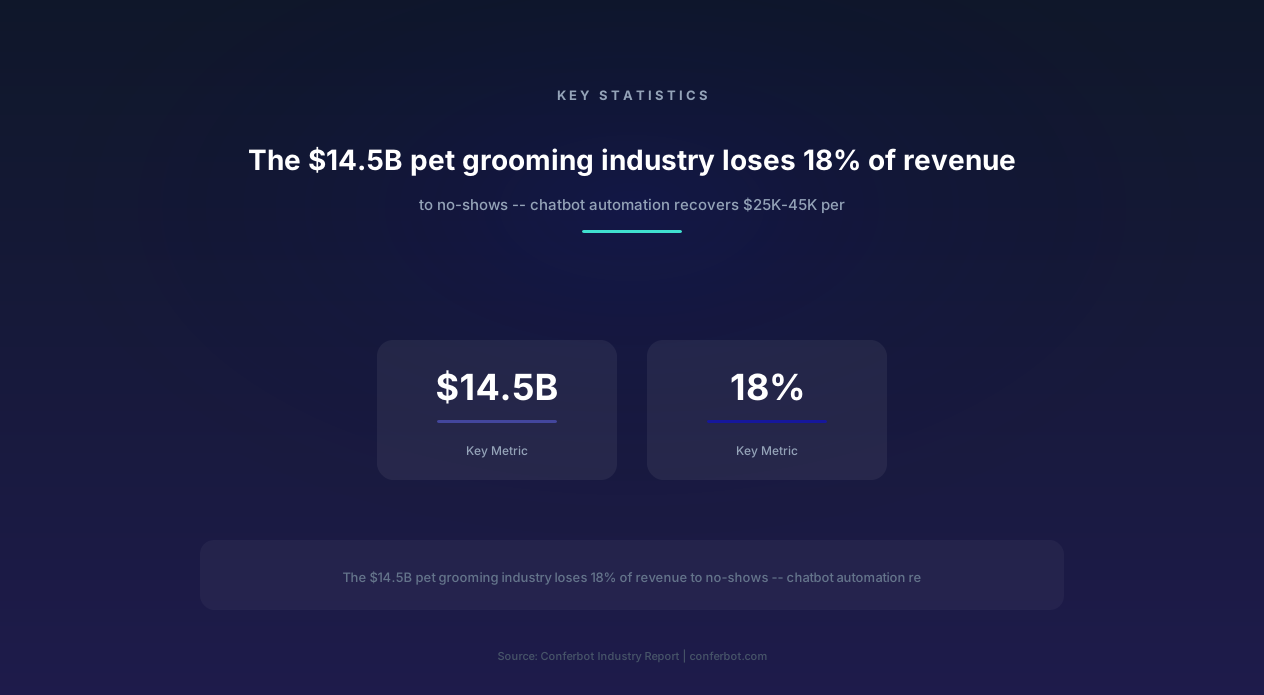
Pet grooming businesses routinely lose a meaningful share of potential revenue to no-shows and last-minute cancellations -- a devastating margin impact in a business where time is the primary revenue unit and empty time slots cannot be recovered. The math is easy to run for your own business: multiply your average ticket by your daily no-show count, and the annual loss is usually larger than owners expect.
This template is built on Conferbot's AI chatbot builder and integrates with pet grooming management software including Gingr, PetExec, DaySmart Pet (123Pet), and MoeGo. It deploys across your website, WhatsApp, Instagram DMs, and Facebook Messenger -- the channels where pet owners discover and engage with grooming businesses.
Whether you operate a single-groomer home-based business, a multi-groomer salon, a mobile grooming service, or a franchise with multiple locations, this chatbot template adapts to your service menu, groomer specialties, pricing structure, and scheduling model. It handles everything from a simple bath-and-brush for a Labrador to a complex breed-specific show cut for a Bichon Frise -- matching clients to the right groomer with the right skills and appropriate time allocation.
How It Works: Pet Profiling, Service Matching, and Scheduling
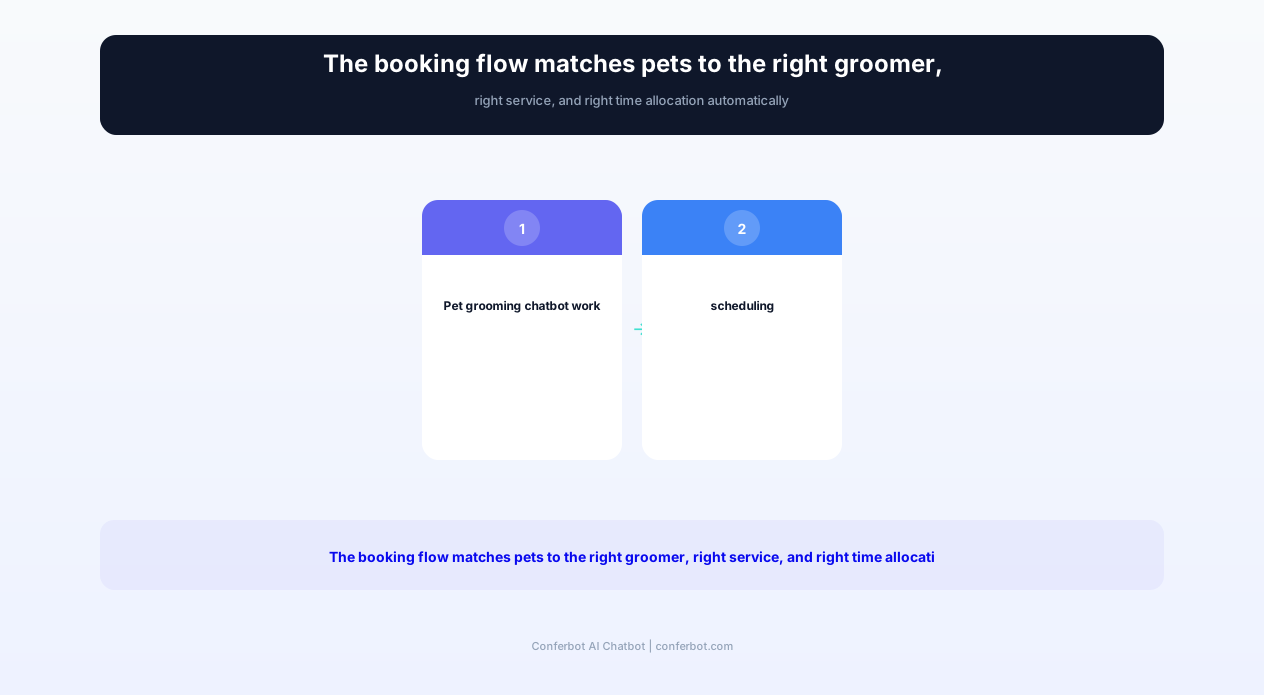
The pet grooming appointment setter follows a workflow designed specifically for grooming operations -- where the "patient" cannot describe their own needs, service requirements vary enormously by breed and condition, and accurate time allocation is essential for daily schedule management.
Step 1: Pet Profile Creation or Retrieval
The conversation opens by identifying the pet. For returning clients, the chatbot recognizes them by phone number or email and retrieves their pet profiles -- including breed, size, coat condition notes from previous visits, groomer preferences, and behavioral notes. For new clients, the chatbot builds a comprehensive pet profile: pet name, breed (with mixed-breed identification support), weight, age, coat type and current condition, any skin sensitivities or medical conditions, behavioral notes (anxious with dryers, reactive to other dogs, requires muzzle), and vaccination status. This profile is stored permanently and informs all future interactions, creating the personalized experience that builds client loyalty.
Step 2: Breed-Based Service Recommendations
Once the pet is identified, the chatbot recommends appropriate services based on breed-specific grooming requirements. A Golden Retriever owner is presented with options appropriate for their double coat: bath and blow-dry, deshedding treatment, sanitary trim, full body trim. A Poodle owner sees breed-appropriate options: puppy cut, lamb cut, teddy bear cut, show clip. The chatbot explains each service option with description, typical duration, and pricing -- eliminating the guesswork that leads to client dissatisfaction when expectations do not match results. For mixed breeds or unusual coat types, the chatbot asks clarifying questions about coat texture and length to recommend appropriate services.
Step 3: Add-On Service Suggestions
After the primary service selection, the chatbot suggests contextually relevant add-ons. A dog coming in for a full groom might be offered: nail grinding (vs. standard clip), teeth brushing, ear cleaning, anal gland expression, flea/tick treatment, coat conditioning treatment, or cologne/bandana finish. These suggestions are configured based on the primary service, breed, and seasonal relevance (deshedding treatments promoted in spring, moisturizing treatments in winter). Add-on recommendations presented conversationally at the booking moment convert at a meaningfully higher rate -- significantly higher than a checklist on a booking form or a verbal suggestion at drop-off when the owner is rushing to work.
Step 4: Groomer Matching and Scheduling
The chatbot matches the appointment to an appropriate groomer based on: breed expertise (some groomers specialize in specific breed groups), certification level (hand-stripping, Asian fusion styling, creative grooming), pet behavioral needs (experienced handlers for anxious or reactive dogs), and schedule availability. Time allocation is automatically calculated based on the selected services, pet size, and coat condition -- a full groom on a matted 90-pound Newfoundland requires 3-4 hours, while a bath on a short-haired Beagle requires 45 minutes. This accurate time blocking prevents the schedule overruns that cascade through a groomer's entire day.
Step 5: Confirmation, Preparation, and Reminders
Booking confirmation includes: appointment date and time, groomer name, services booked with total price, drop-off and pickup time estimates, preparation instructions (brush at home if possible for matted dogs, bring vaccination records for new clients), and facility information. The reminder sequence -- shown to meaningfully cut no-show rates -- sends notifications at 48 hours and 2 hours before the appointment via the client's preferred channel. Reminders include a one-tap confirm, reschedule, or cancel option. Cancellations trigger immediate waitlist notification to fill the slot.
Key Features of the Pet Grooming Appointment Setter
The pet grooming appointment setter includes features designed specifically for the pet care industry -- addressing the unique operational challenges of grooming businesses where service requirements are determined by the animal rather than the client, and where trust and consistency are paramount to retention.
| Feature | Description | Operational Benefit | Customer Benefit |
|---|---|---|---|
| Pet profile database | Persistent profiles with breed, size, coat notes, behavioral flags, and visit history | Consistent service delivery; accurate time blocking; safety awareness | Groomer knows your pet's needs without re-explaining every visit |
| Breed-specific recommendations | Service suggestions based on breed grooming requirements and coat type | Reduces miscommunication; appropriate service matching | Clear options designed for your specific dog or cat breed |
| Smart time allocation | Automatic appointment duration based on service + breed + size + coat condition | Prevents schedule overruns; accurate daily capacity planning | Realistic pickup time estimates; no extended waits |
| Vaccination verification | Collects and tracks required vaccination records (rabies, bordetella, DHPP) | Compliance with facility requirements; liability protection | Upload records once; automatic reminders when boosters are due |
| Recurring schedule management | Automated rebooking at breed-appropriate intervals (4, 6, or 8 weeks) | Predictable revenue; consistent schedule fill; client retention | Never have to remember to rebook; consistent grooming schedule |
| Add-on upsell engine | Contextual add-on suggestions based on primary service, breed, and season | Meaningfully increases average ticket without aggressive sales | Discover helpful services you might not have known to ask for |
| Groomer matching | Routes to groomers based on breed expertise, certifications, and pet temperament | Quality outcomes; safety for difficult dogs; specialization leverage | Your pet gets a groomer experienced with their specific breed |
| Waitlist management | Standby list with instant notification when cancellations create openings | Fills a large majority of cancelled slots; revenue recovery | Get an earlier appointment without constantly calling |
| Photo sharing (before/after) | Groom completion notification with photos of the finished pet | Client satisfaction evidence; social media content generation | See your pet's fresh groom before pickup; share on social media |
| Multi-pet family booking | Schedule multiple pets in one conversation with coordinated timing | Efficient schedule blocking; reduced communication overhead | Book all your pets in one conversation; coordinated drop-off/pickup |
Vaccination Record Management
Most grooming facilities require proof of current vaccinations -- typically rabies, bordetella (kennel cough), and DHPP (distemper, hepatitis, parvo, parainfluenza). The chatbot collects vaccination records during new client onboarding by accepting uploaded images of vet records. It extracts expiration dates, stores them against the pet profile, and automatically flags when vaccinations are approaching expiration. Clients receive advance notice: "Bella's bordetella vaccine expires on March 15. Please update her records before her March 22 grooming appointment." This proactive notification prevents the frustrating scenario of turning away a client at drop-off for expired vaccinations -- a situation that wastes both the client's time and the groomer's empty slot.
Recurring Schedule Automation
Grooming is inherently recurring -- most breeds need professional grooming every 4-8 weeks depending on coat type and style maintenance requirements. The chatbot manages recurring schedules automatically: after each appointment, it pre-books the next appointment at the breed-appropriate interval with the same groomer. Clients receive booking confirmation for their next visit immediately after pickup. This automated rebooking transforms the client relationship from transactional (calling to book each time) to relationship-based (an ongoing grooming schedule that maintains itself). The revenue impact is significant: recurring clients retain at a noticeably higher rate than transactional bookers, and predictable recurring revenue enables confident business planning and staffing decisions.
Before/After Photo Delivery
The chatbot sends groom completion notifications with before/after photos when groomers capture them. This feature serves multiple purposes: it delights clients who love seeing their pet's transformation, it provides a natural pickup time notification ("Bella is all done and looking beautiful! Ready for pickup anytime before 5 PM"), and it generates social media content when clients share the photos on Instagram and Facebook -- the primary discovery channels for new grooming clients. Groomers report that photo notifications increase client engagement, drive social shares (free marketing), and make the premium service feel worth the investment.
Ready to try Pet Grooming Appointment Setter?
Deploy this template in under 10 minutes. No coding required.
Use This Template Free →No-Show Reduction: Protecting Revenue in a Time-Based Business
No-shows are existentially threatening to pet grooming businesses in a way they are not for many other service industries. A groomer's revenue capacity is strictly time-limited -- a typical groomer can handle 6-10 appointments per day depending on service complexity. Each no-show eliminates 45 minutes to 3 hours of revenue-generating capacity that cannot be recovered. Unlike a restaurant that might fill a no-show table with a walk-in, grooming requires advance scheduling and preparation that makes spontaneous fill nearly impossible without a managed waitlist.
The Financial Impact of Grooming No-Shows
The math is straightforward to run for your own business: multiply your average ticket by your daily no-show count, and the weekly and annual totals are usually larger than owners expect. For a multi-groomer salon, those losses compound across every chair. These are not theoretical losses -- they represent the gap between a profitable grooming business and one that struggles to cover rent, utilities, and groomer wages. The chatbot's reminder and confirmation system addresses this gap directly.
Reminder Strategies Specific to Pet Grooming
| Strategy | No-Show Outcome |
|---|---|
| No reminders (baseline) | Highest no-show risk |
| Email reminder (48h) | Modest improvement |
| SMS reminder (48h + day-of) | Meaningful improvement |
| WhatsApp with pet name personalization | Strong improvement |
| WhatsApp + confirmation required | Very strong improvement |
| Confirmation + deposit + waitlist backfill | Lowest no-show risk |
Pet Name Personalization Effect
An interesting finding specific to pet grooming: reminders that include the pet's name ("Reminder: Max's grooming appointment is tomorrow at 10 AM") show noticeably better response rates than generic appointment reminders. Pet owners respond to their pet's name with higher engagement because the appointment feels personal rather than administrative. The chatbot leverages the pet profile to personalize every reminder, confirmation, and follow-up communication with the pet's name -- a small detail that meaningfully impacts no-show rates.
Deposit Collection for High-Value Appointments
For high-value or high-demand appointments (weekend slots, breed-specific show grooming, first-time clients with large breed dogs requiring 3+ hours), the chatbot collects a deposit at booking. Configurable deposit structures: flat fee ($20-50), percentage of service cost (25-50%), or full prepayment for specific service types. Deposits are refundable with 24-hour cancellation notice, providing flexibility for legitimate schedule changes while creating financial commitment that virtually eliminates casual no-shows. The chatbot handles deposit processing through integrated payment providers (Stripe, Square), making the transaction seamless within the booking conversation.
Waitlist-Driven Slot Recovery
When a cancellation occurs (with or without adequate notice), the chatbot immediately notifies waitlisted clients who can fill the slot. The notification includes the specific date, time, and available services: "A grooming slot just opened for Tuesday at 2 PM. Would you like to book Max's bath and trim? First to confirm gets the slot." This time-sensitive notification creates urgency that drives rapid response, typically filling a large majority of cancelled slots. Combined with confirmation requirements that identify no-shows before they happen (unconfirmed appointments trigger waitlist notification proactively), effective vacancy rates drop sharply -- transforming a previously unrecoverable revenue loss into a manageable operational metric.
Before and After: Pet Grooming Business Transformation
The operational transformation from deploying a pet grooming chatbot impacts every aspect of business operations -- from lead capture and booking efficiency through revenue per groomer and client retention. Below is a comprehensive comparison based on grooming business deployments ranging from solo mobile groomers to multi-location salons.
Booking and Operations Metrics
| Metric | Before Chatbot | After Chatbot |
|---|---|---|
| Average booking time per appointment | Several minutes, by phone | Faster, self-service |
| After-hours booking capability | None, voicemail only | A meaningful share of bookings occur outside business hours |
| No-show rate | Elevated baseline | Substantially lower |
| Average ticket value | Baseline | Meaningfully higher, with add-on upsells |
| Client rebooking rate | Lower, manual reminder/request | Noticeably higher, automated recurring |
| New client conversion (inquiry to booking) | Lower baseline | Meaningfully higher |
| Phone call volume | Baseline | Meaningfully reduced |
| Schedule utilization | Baseline | Noticeably higher |
Revenue Impact for a Typical Grooming Business
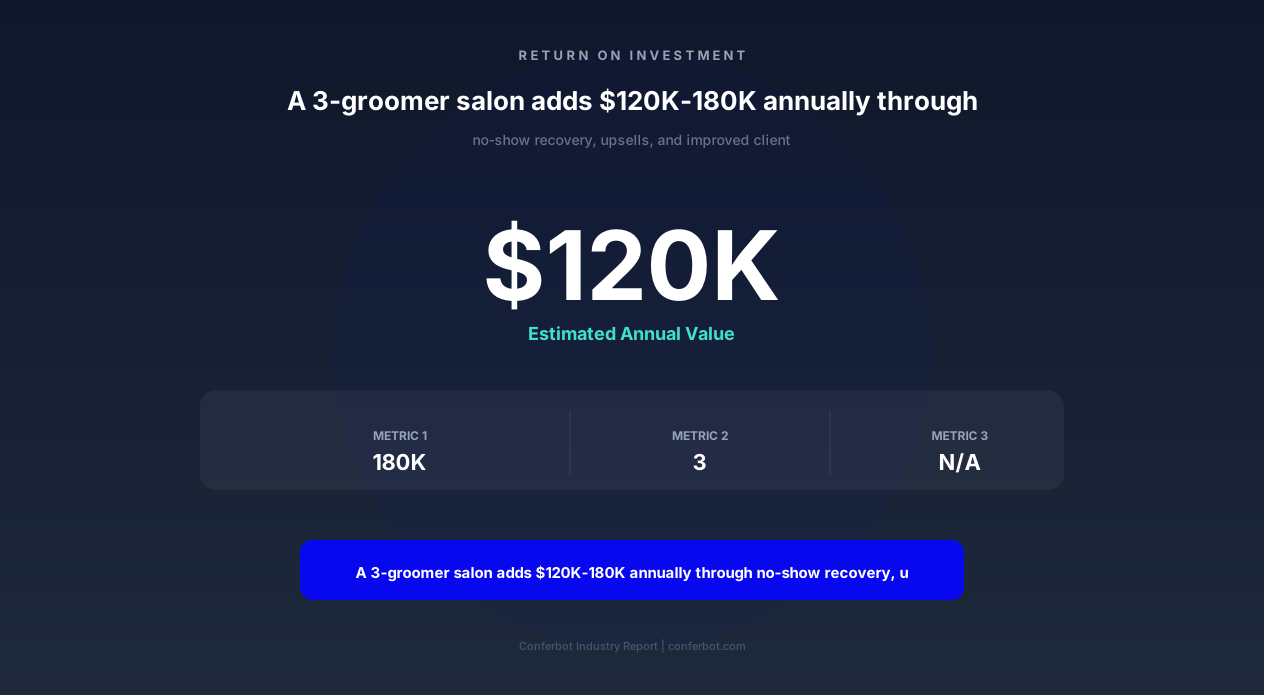
For a multi-groomer salon, the combined impact of no-show recovery, add-on upsell revenue, and new client capture from after-hours booking typically adds substantial additional annual revenue -- consistently a large multiple of the chatbot's monthly cost. Even for a solo groomer, the revenue recovery from no-show reduction alone often makes the chatbot one of the highest-ROI investments available. The exact dollar figures scale with your own ticket size, schedule, and current no-show rate.
Owner/Groomer Time Recovery
For owner-operator groomers (the majority of the industry), the chatbot's most valuable benefit may not be revenue but time. The average grooming business owner spends significant weekly hours on scheduling-related tasks: answering booking calls between grooms, sending reminders, managing cancellations, confirming appointments, and handling new client intake. The chatbot absorbs the large majority of this work, recovering meaningful weekly hours that the owner can redirect to grooming, business development, rest, or family time. For an industry with high burnout rates, this time recovery has quality-of-life impact beyond financial measurement.
Client Experience and Retention
Client satisfaction in pet grooming is driven by consistency (same groomer, same quality), convenience (easy booking), and communication (knowing when their pet is ready). The chatbot improves all three: automated groomer matching ensures consistency, 24/7 self-service booking provides convenience, and completion notifications with photos deliver communication excellence. Client retention rates improve noticeably with recurring schedule automation -- a shift that stabilizes revenue and reduces the costly new-client-acquisition cycle that dominates businesses with high churn.
Use Cases: Salons, Mobile Grooming, and Multi-Location Operations
The pet grooming appointment setter adapts to the distinct operational models, scheduling constraints, and client communication needs of different grooming business types.
Traditional Grooming Salons
Brick-and-mortar grooming salons -- whether standalone businesses or within pet retail stores -- operate multiple groomers on overlapping schedules with shared facilities (tubs, drying areas, table space). The chatbot for salon operations manages: multi-groomer scheduling with capacity awareness (only 2 tubs available means only 2 baths can start simultaneously), kennel capacity for pets awaiting service or pickup, drop-off and pickup time coordination, and the complex flow where multiple pets may be in different stages of the grooming process simultaneously. For salons with a front desk receptionist, the chatbot handles the overflow that the receptionist cannot manage during peak periods -- and provides complete coverage during breaks, lunch hours, and sick days.
Mobile Grooming Operations
Mobile groomers face unique scheduling challenges: travel time between appointments, geographic routing efficiency, vehicle capacity limitations (typically one pet at a time), and variable service duration in the confined mobile unit. The chatbot for mobile grooming considers: customer address (for route planning), travel time between appointments (automatically adding buffer based on distance), mobile unit availability (typically one appointment at a time per van), and geographic clustering (prioritizing bookings in the same neighborhood on the same day). Customers receive more specific arrival windows than salon clients because mobile grooming timing is more predictable -- the groomer comes to them at a specific time rather than the pet waiting in a salon queue.
Multi-Location Grooming Franchises
Multi-location operations (PetSmart Grooming, Petco Grooming, independent multi-location salons) require the chatbot to route clients to their preferred location while balancing capacity across locations. The chatbot handles: location preference with alternative suggestions when preferred location is full, groomer continuity (matching returning clients to their preferred groomer even if they are considering a different location), pricing consistency or location-specific pricing (for franchises with variable local pricing), and centralized reporting across all locations. For franchise operations, the chatbot also supports location-specific promotions, new location awareness, and cross-location rebooking when clients relocate.
Specialty Grooming Services
Some grooming businesses specialize in specific niches: hand-stripping for terrier breeds, Asian fusion styling, creative grooming (color, extensions), cat grooming (which requires significantly different handling expertise), or breed-specific show grooming for conformation competitions. The chatbot for specialty groomers emphasizes expertise matching -- ensuring clients understand the specialized skills available and are matched to groomers certified in their requested technique. It also manages the premium pricing associated with specialty services and the longer appointment durations that specialized work requires.
Grooming Schools and Training Salons
Grooming schools operating training salons offer discounted grooming by students under supervision. The chatbot manages the unique dynamics: explaining the training salon model to clients (supervised by certified instructors, longer appointment times, significant discounts), appropriate matching of dog difficulty to student skill level (simple breeds for beginning students, complex breeds for advanced students), and the different scheduling model where appointments are grouped around class schedules rather than individual groomer availability.
businesses worldwide use Conferbot templates to automate conversations
Integration with Pet Grooming Management Software
The pet grooming appointment setter integrates with the management platforms that grooming businesses use to run their daily operations. This integration ensures chatbot bookings flow seamlessly into existing scheduling systems, client records, and business reporting.
Gingr Integration
Gingr is widely used by pet care facilities offering grooming alongside daycare and boarding services. The Conferbot integration connects through Gingr's API to: check groomer availability, create grooming appointments, access pet profiles and vaccination records, manage recurring bookings, and process payments. For facilities that combine grooming with daycare or boarding, the integration allows bundled scheduling -- a dog dropped off for daycare can have a grooming appointment during their stay, managed as a single client interaction through the chatbot.
PetExec Integration
PetExec serves pet care facilities with comprehensive management features for grooming, daycare, boarding, and training. The integration provides: schedule access and booking creation, pet record management including health and vaccination data, client communication logging, and reporting data sync. PetExec's multi-service model aligns well with the chatbot's ability to handle cross-service booking -- a client scheduling grooming through the chatbot can also add daycare days or training classes in the same conversation.
DaySmart Pet (123Pet) Integration
DaySmart Pet (formerly 123Pet) is one of the most widely adopted grooming-specific management platforms. The integration connects to: appointment scheduling with groomer-specific calendar access, client and pet record management, service menu and pricing, and appointment notes. The chatbot leverages DaySmart Pet's service duration data to accurately calculate appointment time blocks, preventing overbooking and schedule compression that leads to rushed grooms or extended client wait times.
MoeGo Integration
MoeGo is a newer platform gaining rapid adoption among mobile groomers and modern salon operations. The Conferbot integration leverages MoeGo's API for: route-aware scheduling (critical for mobile grooming), appointment management, client communication, and payment processing. MoeGo's mobile-first design and strong route optimization capabilities complement the chatbot's geographic awareness for mobile grooming scheduling.
| Platform | Integration Method | Key Capabilities | Best For |
|---|---|---|---|
| Gingr | API (bidirectional) | Scheduling, pet profiles, vaccination tracking, payments | Multi-service facilities (groom + daycare + boarding) |
| PetExec | API (bidirectional) | Scheduling, records, multi-service booking, reporting | Full-service pet care facilities |
| DaySmart Pet (123Pet) | API (bidirectional) | Scheduling, client records, service menu, duration management | Grooming-focused salons and spas |
| MoeGo | API (bidirectional) | Route scheduling, appointments, client management, payments | Mobile groomers and modern salons |
| PawFinance | API | Scheduling, retail integration, loyalty programs | Grooming within pet retail stores |
| Native (no integration) | Built-in scheduler | Visual calendar, groomer management, basic pet records | New businesses without existing software |
For grooming businesses not currently using management software (common among solo operators and home-based groomers), the chatbot's built-in scheduling calendar provides immediate functionality. It manages groomer schedules, pet records, and booking confirmations without requiring a separate software subscription -- with upgrade paths to dedicated management platforms as the business grows. The API integration framework also supports custom connections to proprietary systems used by larger grooming chains.
Deployment, Configuration, and Revenue Optimization
Deploying a pet grooming chatbot is designed for grooming business owners -- not IT professionals. The no-code builder ensures that anyone who can manage a grooming schedule can configure and optimize their chatbot.
Phase 1: Service and Pricing Configuration (Day 1)
Initial setup defines your service menu within the chatbot. This includes: listing all services by category (bath, full groom, specialty services, add-ons), defining pricing by pet size (small/medium/large/giant), configuring service durations by breed group and size, setting up add-on services with their prices and time requirements, and defining any breed-specific service restrictions or requirements. The grooming template pre-populates common configurations -- standard service menus, typical pricing structures, and breed-based duration estimates -- that you customize to match your specific business rather than building from scratch.
Phase 2: Groomer Profiles and Scheduling Rules (Day 1-2)
Configure each groomer's profile: working days and hours, breed specialties and certifications, maximum daily appointments by service type, break schedules, and any booking restrictions. Set business-wide scheduling rules: minimum advance booking time, maximum future booking window, cancellation policy, deposit requirements, and buffer time between appointments. For mobile groomers, configure service area boundaries and travel time calculations between typical appointment locations.
Phase 3: Channel Deployment (Day 2-3)
Deploy the chatbot to your client-facing channels. The website widget installs with a single code snippet. WhatsApp Business connection enables booking through the messaging app where many pet owners communicate. Instagram DM integration captures inquiries from the visual platform that drives grooming business discovery. Facebook Messenger connects to your business page. Each channel is managed from a unified dashboard -- all conversations, regardless of origin, flow into the same system with the same scheduling backend.
Phase 4: Testing and Launch (Day 3)
Test the complete booking flow: new client intake with pet profiling, returning client recognition, service recommendation accuracy, groomer matching logic, time allocation correctness, reminder delivery, and cancellation/reschedule handling. Verify that bookings appear correctly in your grooming management software (if integrated). Train staff on: monitoring chatbot conversations, handling escalations, updating service information, and interpreting booking analytics.
Ongoing Revenue Optimization
Post-launch analytics drive continuous improvement. Key optimization areas: add-on conversion rates (which suggestions work best and which should be retired), no-show patterns (which client segments need deposits, which time slots have highest no-show risk), rebooking rates (which groomers have highest client return rates), and new client acquisition sources (which channels deliver the most valuable new clients). The chatbot's A/B testing capability allows experimenting with different service descriptions, pricing presentations, and upsell messaging to maximize revenue per appointment. Monthly optimization typically delivers a steady lift in average ticket value and booking conversion, compounding into significant revenue growth over time.
Pet Grooming Appointment Setter FAQ
Everything you need to know about chatbots for pet grooming appointment setter.
Why Use a Template vs Building from Scratch?
Templates give you a proven starting structure instead of a blank canvas.
| Factor | Conferbot Template | Build from Scratch | Hire a Developer |
|---|---|---|---|
| Time to deploy | 10 minutes | 2-8 hours | 2-6 weeks |
| Cost | Free | Your time | Custom dev quote |
| Proven flows | Yes, pre-built | No | Depends |
| Updates included | Automatic | Manual | Paid |
| Multi-channel | 8+ channels | 1 channel | Extra cost |
| Analytics | Built-in | Must build | Extra cost |
Related Booking And Scheduling Templates
Explore more chatbot templates like this one





Learn More About Chatbots
Go deeper on how booking and scheduling chatbots work and how to pick the right builder.
Ready to Deploy Pet Grooming Appointment Setter?
Start with a free-forever plan. No credit card required.