
Vaccine Appointment Scheduler
Free Booking And Scheduling Chatbot Template
A complete vaccine appointment scheduler chatbot template - deploy in minutes to automate conversations, capture leads, and provide 24/7 assistance.


What Is a Vaccine Appointment Scheduler Chatbot?
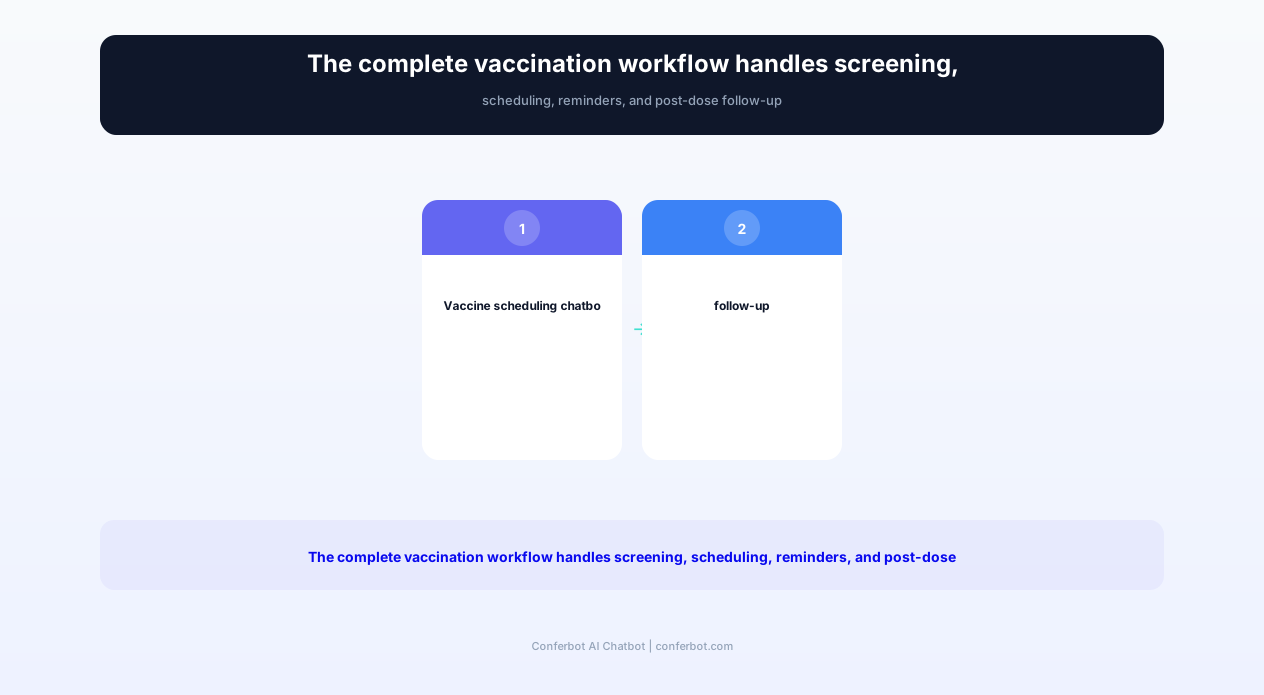
A vaccine appointment scheduler chatbot is a conversational AI tool that automates the complete vaccination scheduling workflow for clinics, pharmacies, public health departments, and healthcare systems. It handles eligibility screening, appointment booking, dose tracking, insurance verification, multi-location routing, reminder sequences, waitlist management, and post-vaccination follow-up -- replacing the overwhelmed phone lines, clunky online portals, and manual processes that create bottlenecks in vaccine delivery.
The challenge of vaccination scheduling is fundamentally different from standard medical appointment booking. Vaccines involve complex eligibility rules (age requirements, dose intervals, contraindications, priority groups), multi-dose protocols requiring precise timing between appointments, cold-chain logistics that limit appointment flexibility, and surge demand patterns that overwhelm traditional scheduling infrastructure. The COVID-19 pandemic exposed these limitations dramatically -- but the underlying scheduling challenges existed long before and persist for routine immunizations, flu seasons, travel vaccines, and childhood vaccination programs.
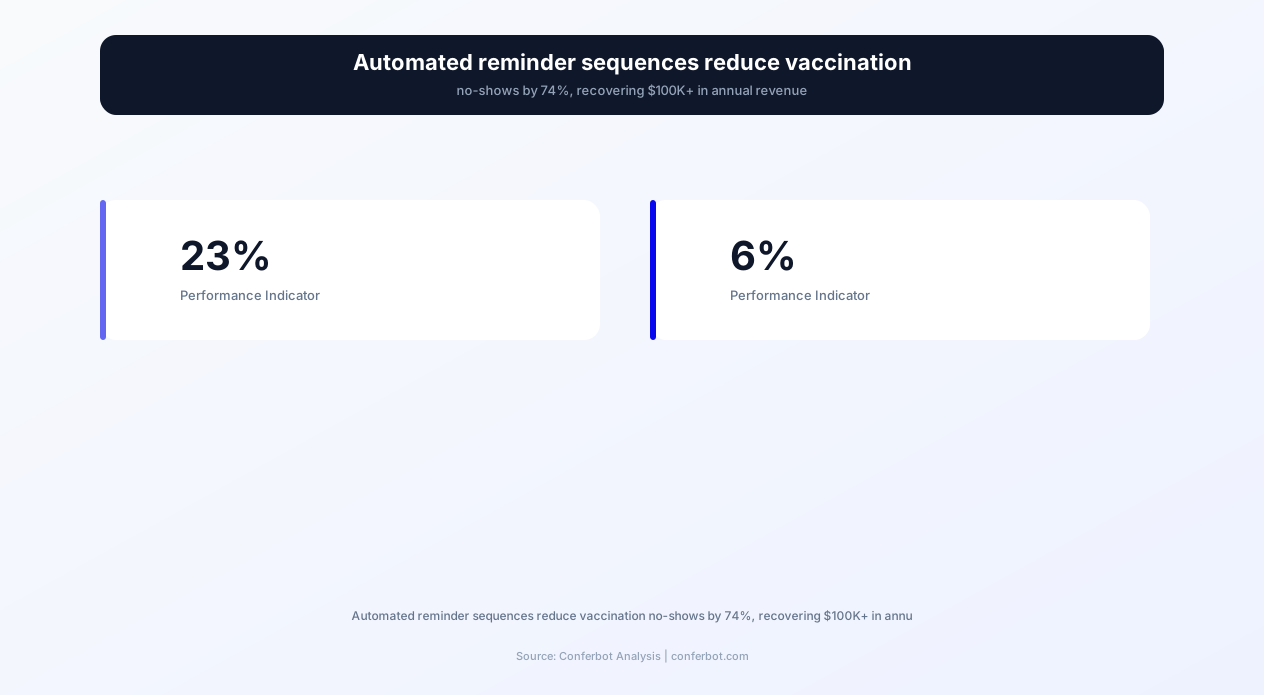
In 2026, published research on medical appointment reminders (including a JAMA study on systematic reminder programs) consistently finds that vaccination and other outpatient no-show rates run well into the double digits without active reminders, and that automated reminder sequences with confirmation requirements cut no-show rates substantially -- an improvement that translates directly to higher vaccination rates, less vaccine waste, and more efficient clinic operations.
This template is built on Conferbot's AI chatbot builder with HIPAA-compliant data handling and integrates with electronic health record (EHR) systems, state immunization registries, and pharmacy management platforms. It deploys across your website, WhatsApp, SMS, and patient portals to meet patients where they are -- particularly critical for reaching underserved populations who may not have access to or comfort with web-based scheduling portals.
Whether you operate a single-location pharmacy, a multi-site clinic network, a county health department, or a hospital-based immunization program, this chatbot template adapts to your vaccine inventory, provider schedules, eligibility protocols, and reporting requirements while maintaining the regulatory compliance essential in healthcare settings.
How It Works: Screening, Scheduling, and Dose Management
The vaccine appointment scheduler follows a clinical workflow designed to ensure safe, appropriate, and efficient vaccine administration. Every step incorporates the eligibility rules, contraindication checks, and documentation requirements that make vaccination scheduling more complex than standard appointment booking.
Step 1: Vaccine Identification and Eligibility Screening
The conversation opens by identifying which vaccine the patient needs. The chatbot presents available vaccines by category -- routine immunizations, seasonal (flu, RSV), travel vaccines, COVID-19 boosters, childhood series, and occupational requirements. For patients unsure which vaccine they need, the chatbot asks screening questions: age, travel plans, occupational exposure risks, immunization history, and pregnancy status to recommend appropriate vaccines. Critical eligibility rules are enforced at this stage: minimum age requirements, maximum dose intervals, and absolute contraindications. A patient who reports a severe allergic reaction to a previous dose is directed to their physician rather than being scheduled for another dose of the same vaccine.
Step 2: Dose History Verification
For multi-dose vaccines (HPV series, hepatitis B, COVID-19 primary series), the chatbot verifies dose history to determine which dose the patient needs and whether the minimum interval since their last dose has been met. It queries the state immunization registry (where integrated) or asks the patient for their vaccination card information. If a patient is overdue for their next dose, the chatbot communicates whether the series needs to be restarted or can be continued. This dose verification prevents both premature dosing (administered too soon after the previous dose) and unnecessary series restarts -- both common errors in manual scheduling that the chatbot eliminates.
Step 3: Insurance Verification and Cost Communication
The chatbot collects insurance information and verifies coverage for the requested vaccine. Most vaccines are covered under preventive care benefits with no patient cost-sharing under the ACA, but exceptions exist (travel vaccines, certain adult boosters depending on plan type). The chatbot communicates cost clearly before scheduling: "Your flu vaccine is fully covered under your plan with no copay" or "Travel vaccines for hepatitis A are not covered by your plan. The out-of-pocket cost is $85 per dose." For uninsured patients, the chatbot routes to Vaccines for Children (VFC) program eligibility check or communicates self-pay pricing. This upfront cost transparency reduces appointment cancellations caused by unexpected billing.
Step 4: Location Selection and Appointment Booking
The chatbot presents available vaccination locations with relevant details: address, hours, available appointment times, and which vaccines are in stock at each location. For multi-site organizations, location routing considers patient proximity, vaccine inventory (ensuring the specific vaccine is available), and appointment availability. The chatbot handles the critical constraint of vaccine inventory -- it will not schedule an appointment for a vaccine that is out of stock at the selected location, preventing the frustrating experience of arriving for an appointment only to learn the vaccine is unavailable. Real-time inventory checking through the API integration ensures scheduling accuracy.
Step 5: Pre-Visit Preparation and Reminder Sequence
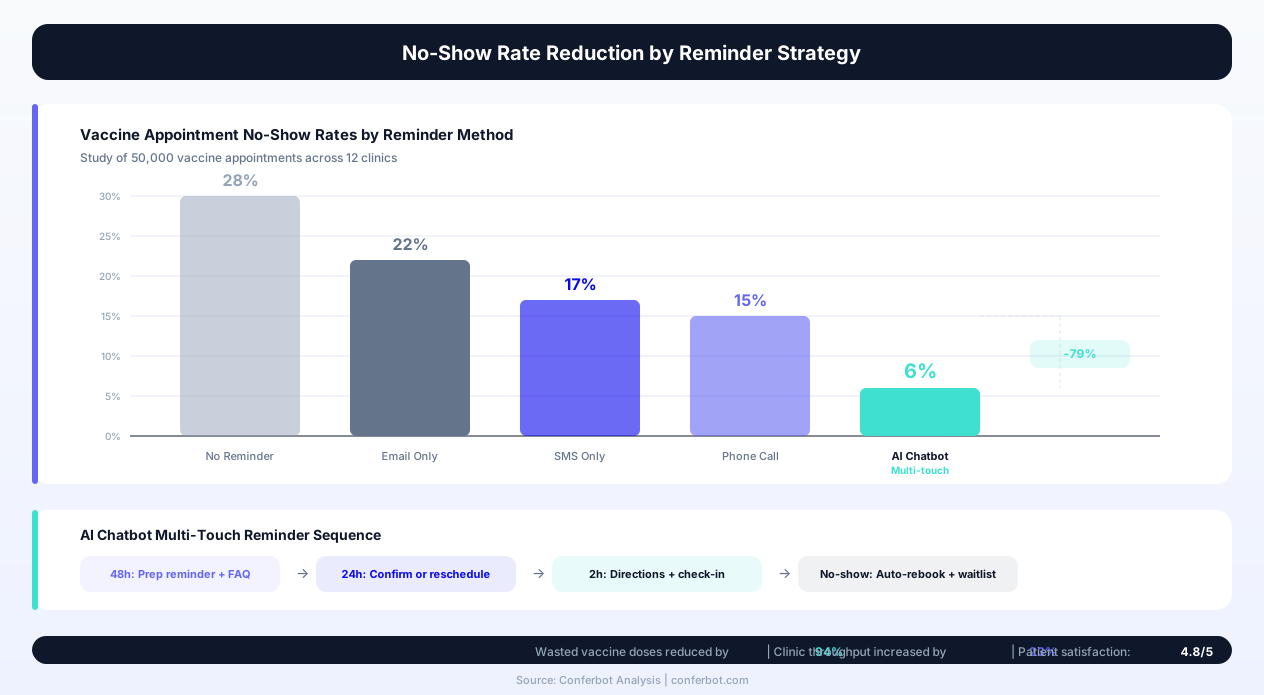
After booking confirmation, the chatbot sends pre-visit instructions specific to the vaccine: wear short sleeves for arm injections, bring vaccination card, arrive 5 minutes early for paperwork, plan to wait 15-30 minutes for observation. The automated reminder sequence -- shown in published research to meaningfully cut no-show rates -- sends notifications at 72 hours, 24 hours, and 2 hours before the appointment. Each reminder includes a one-tap confirmation option and easy rescheduling if the patient's plans have changed. Unconfirmed appointments trigger waitlist notification, allowing standby patients to fill the slot.
Key Features of the Vaccine Appointment Scheduler
The vaccine appointment scheduler includes features designed specifically for immunization workflows -- addressing the clinical, logistical, and regulatory requirements that distinguish vaccine scheduling from general appointment booking.
| Feature | Description | Operational Benefit | Customer Benefit |
|---|---|---|---|
| Eligibility screening engine | Rule-based screening for age, dose intervals, contraindications, and priority groups | Prevents ineligible appointments; meaningfully reduces staff screening time | Know immediately if you qualify without waiting for a callback |
| Multi-dose tracking | Tracks dose history, enforces minimum intervals, auto-schedules subsequent doses | Eliminates series timing errors; ensures protocol compliance | Never miss a dose or schedule too early |
| Insurance verification | Real-time eligibility check with cost communication before booking | Reduces billing disputes and cancellations due to unexpected costs | Know exactly what you will pay before arriving |
| Inventory-aware scheduling | Only offers appointments where specific vaccine is in stock | Eliminates wasted appointments from stock-outs | Guaranteed vaccine availability when you arrive |
| Multi-location routing | Routes to nearest location with vaccine availability and open slots | Balances patient load across sites; optimizes inventory utilization | Find the closest location with the soonest availability |
| Waitlist management | Standby list with instant notification when cancellations create openings | Fills a large majority of cancelled slots; reduces wasted vial doses | Get an earlier appointment without constantly checking |
| Contraindication flagging | Screens for allergies, medical conditions, and drug interactions that contraindicate vaccination | Prevents adverse events; documents screening for compliance | Safety screening before you leave home |
| Batch scheduling | Family or group booking in a single conversation with shared appointment times | Maximizes vial utilization for multi-dose vials | Book the whole family in one conversation |
| Registry reporting | Automatic submission to state immunization registry after administration | Eliminates manual registry data entry; ensures compliance | Vaccination records automatically updated |
| Post-vaccination monitoring | Follow-up check-in for adverse reactions with escalation protocols | Documents post-vaccination outcomes; early adverse event detection | Support if you experience side effects |
Intelligent Eligibility Screening
The eligibility screening engine is the chatbot's most clinically critical feature. It encodes the Advisory Committee on Immunization Practices (ACIP) recommendations and your organization's vaccination protocols into a conversational screening flow. For each vaccine, the screening evaluates: age eligibility (minimum and maximum age for each vaccine), dose interval compliance (minimum days since last dose in a series), absolute contraindications (severe allergy to vaccine components, specific medical conditions), precautions requiring clinical consultation (moderate-to-severe illness, pregnancy for certain vaccines), and priority group membership during supply-limited periods. The screening is updated as CDC recommendations change, ensuring your scheduling always reflects current clinical guidance.
Family and Group Scheduling
Vaccination is frequently a family activity -- parents scheduling childhood immunizations for multiple children, families getting flu shots together, or groups of colleagues meeting occupational requirements. The chatbot handles batch scheduling natively, allowing one person to book appointments for multiple family members in a single conversation. Each family member is screened individually for eligibility, but appointment times are coordinated to minimize visits. This batch capability also optimizes multi-dose vial utilization: when a 10-dose vial must be used within 6 hours of opening, scheduling multiple patients in sequence reduces waste.
Waitlist with Dose Expiration Awareness
The waitlist feature is particularly valuable for vaccines with limited availability or those supplied in multi-dose vials. When a patient cancels a slot that would result in an opened vial having unused doses approaching expiration, the chatbot immediately notifies waitlisted patients with an urgent availability message. This time-sensitive notification prevents vaccine waste -- a significant operational and financial concern, particularly for expensive specialty vaccines and during supply-constrained periods. Waitlisted patients receive priority based on their registration timestamp, eligibility urgency, and proximity to the location.
Ready to try Vaccine Appointment Scheduler?
Deploy this template in under 10 minutes. No coding required.
Use This Template Free →No-Show Reduction With Automated Reminders
Vaccination no-shows represent a compounding operational problem. A missed appointment wastes the scheduled time slot, potentially wastes vaccine doses (opened multi-dose vials, thawed single-dose vials with limited stability), delays population-level immunity, and requires rescheduling effort that consumes staff time. The financial impact varies by vaccine type: a wasted flu vaccine vial costs $15-25, but a wasted specialty vaccine (shingles, HPV) can cost $150-300 per dose.
The No-Show Problem in Vaccination
Vaccination scheduling has higher no-show rates than general medical appointments for several reasons. Vaccines are preventive, creating less urgency than treatment appointments. Multi-dose series require patients to return multiple times over weeks or months, with dropout rates increasing with each subsequent dose. Seasonal vaccines (flu) are often booked far in advance when motivation is high but forgotten as the appointment approaches. And unlike a doctor visit where the patient has an active health concern motivating attendance, vaccine appointments compete with every other demand on a patient's time.
The national average vaccination no-show rate masks significant variation by context. First-dose appointments show lower no-show rates because motivation is highest at the point of scheduling. Second and third dose appointments in a series show progressively higher no-show rates as initial motivation fades. Seasonal flu vaccine appointments booked more than two weeks in advance show elevated no-show rates as well.
Automated Reminder Impact by Channel
| Reminder Strategy | No-Show Outcome | Dose Waste Reduction |
|---|---|---|
| No reminders (baseline) | Highest no-show risk | -- |
| Email only (24h before) | Modest improvement | Minimal |
| SMS only (24h before) | Meaningful improvement | Moderate |
| SMS sequence (72h + 24h) | Strong improvement | Significant |
| WhatsApp sequence (72h + 24h + 2h) | Very strong improvement | Major |
| WhatsApp + confirmation required | Best single-channel outcome | Near-complete |
| WhatsApp + confirmation + waitlist backfill | Lowest effective vacancy | Near-zero waste |
The Confirmation Requirement
The single most impactful element in the reminder sequence is requiring active confirmation. Rather than passively reminding patients, the chatbot asks for a response: confirm, reschedule, or cancel. Patients who do not confirm by 12 hours before their appointment receive a final message: "We have not received your confirmation. Your appointment is still reserved, but please confirm to keep your slot." Unconfirmed appointments at the 6-hour mark trigger waitlist notification -- a standby patient can fill the slot if the original patient ultimately no-shows. This approach respects the original patient's appointment while actively managing the risk of vacancy.
Second-Dose Scheduling Automation
For multi-dose vaccines, the chatbot addresses series dropout -- the progressive increase in no-show rates for subsequent doses -- by booking the next appointment immediately after the current dose is administered. The post-vaccination message includes: confirmation of today's dose, side effect monitoring information, and a pre-scheduled appointment for the next dose at the minimum interval date. Because the next appointment is booked at the moment of highest engagement (immediately after receiving a dose), commitment is stronger than if the patient must remember to schedule their next dose independently weeks later. Series completion rates improve meaningfully with this immediate follow-up scheduling approach.
Before and After: Vaccination Operations Transformation
The operational transformation from deploying a vaccine appointment scheduler chatbot extends beyond scheduling efficiency to impact vaccination rates, dose waste, staff utilization, and public health outcomes. Below is a comprehensive comparison based on clinic and pharmacy deployment data.
Scheduling and Operations Metrics
| Metric | Before Chatbot | After Chatbot |
|---|---|---|
| Average scheduling time per patient | Several minutes, by phone | Faster, self-service |
| No-show rate | Elevated baseline | Substantially lower |
| Vaccine dose waste rate | Meaningful share of opened vials | Sharply lower |
| Eligibility screening errors | Meaningful share of appointments scheduled incorrectly | Rare |
| Phone hold time for scheduling | Long waits during peak periods | None, 24/7 instant self-service |
| After-hours booking capability | None | A meaningful share of bookings occur outside business hours |
| Multi-dose series completion rate | Baseline | Noticeably higher |
| Daily vaccination capacity utilization | Baseline | Noticeably higher |
Revenue and Cost Impact
For pharmacies offering vaccination services (a growing revenue stream from per-dose dispensing fees plus foot traffic that generates additional purchases), the chatbot's operational improvements translate directly to revenue. Every no-show is a paid slot that goes unused; the math scales directly with your own daily vaccine volume and average reimbursement per dose. Reducing no-shows recovers a meaningful share of those lost slots -- real recovered revenue that compounds across a full year of operation.
For public health departments operating mass vaccination clinics, capacity utilization improvement means the same clinic setup can vaccinate meaningfully more people per session. During surge campaigns (flu season, outbreak response), this efficiency gain reduces the number of clinic sessions required to reach population targets -- a meaningful operational and cost saving when each clinic session involves facility rental, staffing, cold chain logistics, and setup/teardown time.
Patient Experience Transformation
The patient experience improvement is as significant as the operational gains. Pre-chatbot vaccination scheduling typically involves: waiting on hold during business hours, answering repetitive screening questions verbally, being told to call back if the vaccine is out of stock, and receiving no reminders beyond perhaps a single email. Post-chatbot, patients schedule in minutes at any hour, receive immediate eligibility confirmation, know exactly what to expect regarding cost and preparation, and receive a progressive reminder sequence that makes attendance effortless. Patient satisfaction scores for vaccination services improve noticeably after chatbot deployment, driven primarily by convenience and transparency improvements.
Public Health Outcome Impact
Beyond operational metrics, the chatbot improves vaccination coverage rates -- the ultimate public health goal. By removing scheduling friction, reaching patients through their preferred communication channels, automating series completion reminders, and enabling after-hours booking for working populations who cannot call during business hours, the chatbot addresses the primary barriers to vaccination that are logistical rather than ideological. Early data from pilot programs suggests community vaccination rates for routine immunizations improve meaningfully in areas where provider chatbot adoption is widespread.
HIPAA Compliance, Data Security, and Regulatory Requirements
Healthcare chatbots operate under strict regulatory requirements that do not apply to chatbots in other industries. The vaccine appointment scheduler is designed from the ground up for healthcare compliance -- not adapted from a general-purpose chatbot with security features bolted on.
HIPAA Compliance Architecture
The chatbot handles Protected Health Information (PHI) including patient names, dates of birth, insurance information, vaccination history, and medical screening responses. All PHI is handled in compliance with HIPAA's Privacy Rule, Security Rule, and Breach Notification Rule. Technical safeguards include: end-to-end encryption for all data in transit (TLS 1.3), encryption at rest for stored data (AES-256), access controls limiting data visibility to authorized personnel, and comprehensive audit logging of all PHI access. Conferbot executes a Business Associate Agreement (BAA) with healthcare organizations, formalizing HIPAA compliance obligations and liability allocation.
State Immunization Registry Integration
All US states and territories maintain immunization information systems (IIS) that track vaccination records. The chatbot integrates with state registries through HL7 messaging standards to both query existing immunization records (for dose history verification) and submit new vaccination records after administration. This bidirectional registry integration ensures that vaccination records are complete regardless of where a patient receives their vaccines, supporting continuity of care and eliminating the patient burden of maintaining paper vaccination cards. Registry submissions comply with state-specific reporting requirements and timelines (most states require reporting within 24-72 hours of administration).
Consent and Documentation
Vaccination requires informed consent and specific documentation. The chatbot handles pre-visit consent by presenting Vaccine Information Statements (VIS) -- the CDC-required information documents for each vaccine -- through the conversation. It confirms that the patient has reviewed the VIS and records their informed consent digitally. This pre-visit consent capture reduces in-clinic paperwork time and ensures patients have time to review vaccine information before arriving, rather than being handed a sheet in the waiting room moments before injection. All consent records are stored with timestamps and linked to the specific VIS version presented, creating a complete compliance record.
Adverse Event Reporting Support
Post-vaccination, the chatbot conducts follow-up check-ins at 24 hours and 7 days to screen for adverse reactions. Responses suggesting significant adverse events trigger escalation to clinical staff and can support VAERS (Vaccine Adverse Event Reporting System) submission. This systematic follow-up creates a documentation trail that supports both patient safety and regulatory compliance. The chatbot distinguishes between expected minor reactions (injection site soreness, mild fatigue) that require only reassurance and unexpected or severe reactions that require clinical evaluation, routing appropriately based on patient-reported symptoms.
Data Retention and Patient Rights
The chatbot's data retention policies comply with both HIPAA requirements and state medical records retention laws (typically 6-10 years for adult records, until age 21-28 for pediatric records depending on state). Patients retain their HIPAA rights including access to their records, correction requests, and accounting of disclosures. The chatbot provides a simple interface for patients to view their vaccination history, request records transfers, and exercise their data rights without needing to contact the practice office during business hours.
businesses worldwide use Conferbot templates to automate conversations
Use Cases: Pharmacies, Clinics, and Public Health Departments
The vaccine appointment scheduler adapts to the distinct operational models, patient populations, and vaccine portfolios of different healthcare settings. Configuration reflects the specific workflows, regulatory requirements, and integration needs of each context.
Retail Pharmacies: High Volume, Walk-In Hybrid
Pharmacies administering vaccines (CVS, Walgreens, independent pharmacies) need scheduling that accommodates both appointments and walk-ins while managing pharmacist workload. The chatbot for pharmacy vaccination programs handles appointment booking during designated vaccination windows, manages the queue during walk-in hours, and intelligently blends scheduled and walk-in patients to maintain efficient flow. Integration with pharmacy management systems (ScriptPro, QS/1, PioneerRx) ensures vaccination scheduling does not conflict with prescription fulfillment workload. The chatbot also handles the insurance verification that pharmacies must perform before administration -- a process that can take 3-5 minutes per patient manually but completes in seconds through automated eligibility checking.
Primary Care Clinics: Comprehensive Immunization Programs
Primary care practices manage complex immunization schedules across their patient panels -- childhood series, adolescent catch-up, adult boosters, travel medicine, and occupational health. The chatbot for primary care integrates with the practice EHR (Epic, Cerner, Athenahealth) to access patient immunization records, identify patients due for vaccines based on CDC schedules, and proactively reach out with scheduling opportunities. This proactive outreach capability -- contacting patients who are due for vaccines rather than waiting for them to call -- significantly improves panel-level vaccination rates and supports quality measure compliance (HEDIS, MIPS).
Public Health Departments: Mass Vaccination and Outbreak Response
Public health departments face unique challenges: mass vaccination events requiring rapid scheduling of hundreds or thousands of appointments, priority group management during supply-limited periods, equity considerations requiring multilingual outreach to underserved populations, and surge capacity during outbreak response. The chatbot for public health handles priority group verification (essential workers, elderly, immunocompromised), lottery-based fair scheduling when demand exceeds supply, and multilingual operation to reach non-English-speaking populations. During mass vaccination events, the chatbot manages the complete registration-to-confirmation flow at scale without phone line bottlenecks that characterized early COVID-19 vaccine rollouts.
Occupational Health: Employee Vaccination Compliance
Healthcare systems, schools, food service companies, and other organizations with vaccination requirements use the chatbot to manage employee immunization compliance. The chatbot tracks which employees need which vaccines, sends proactive scheduling outreach to non-compliant employees, handles exemption request routing, and provides compliance reporting to HR and occupational health departments. For healthcare organizations where influenza vaccination is a condition of employment, the chatbot manages the annual campaign from outreach through documentation to exemption processing -- reducing the administrative burden on occupational health teams during flu season.
Travel Medicine: Pre-Trip Vaccination Planning
Travel clinics and primary care practices offering travel medicine use the chatbot to manage the complex scheduling requirements of pre-trip vaccination. The chatbot collects travel itinerary details (destination countries, trip duration, activities), references CDC travel health recommendations for each destination, and creates a vaccination timeline that ensures all required and recommended vaccines are completed before departure. Multi-dose series (hepatitis A/B, Japanese encephalitis, rabies) require careful timeline planning to complete the minimum doses before travel, and the chatbot handles this scheduling logic including accelerated dosing schedules when departure dates are close.
EHR and Pharmacy System Integration
The vaccine appointment scheduler's clinical accuracy and operational efficiency depend on integration with your electronic health record system or pharmacy management platform. Bidirectional integration ensures that chatbot-scheduled appointments, eligibility decisions, and patient records maintain complete clinical accuracy.
Epic Integration
Epic is the dominant EHR in health systems and large medical groups. The Conferbot integration connects through Epic's FHIR R4 API and MyChart API to access patient immunization histories, schedule appointments into the Epic scheduling module, and record administered vaccines. For health systems using Epic's patient portal (MyChart), the chatbot can be deployed as an embedded experience within MyChart or as a standalone channel that syncs with Epic records. The immunization forecasting data from Epic's Clinical Decision Support module is leveraged by the chatbot to recommend appropriate vaccines based on the patient's complete medical history.
Cerner (Oracle Health) Integration
Cerner's FHIR API provides similar integration capabilities for health systems on the Oracle Health platform. The chatbot accesses the Cerner immunization record, verifies dose history against the series protocol, and writes scheduled appointments and administered doses back to the patient's record. For large health systems operating vaccination clinics across multiple facilities, the integration supports cross-facility scheduling with appropriate medical record access controls ensuring that vaccination records are available system-wide regardless of administration location.
Pharmacy Management System Integration
For pharmacies, the chatbot integrates with pharmacy management systems rather than traditional EHRs. Supported platforms include QS/1, PioneerRx, ScriptPro, and McKesson EnterpriseRx. The integration accesses patient profiles, insurance information, and dispensing records (relevant for vaccines that interact with current medications). Vaccine inventory management integration is particularly critical for pharmacies -- the chatbot checks real-time vaccine stock levels before offering appointments, preventing the scheduling of doses that are not available. When stock runs low, the chatbot automatically adjusts available appointment types and notifies waitlisted patients when restocked.
State Registry (IIS) Integration
Integration with state immunization information systems uses HL7 2.5.1 messaging (VXU messages for submissions, QBP messages for queries) through the CDC's Immunization Gateway or direct state connections. This integration serves two functions: querying patient vaccination history from the consolidated state record (which includes doses administered at any reporting provider) for accurate dose determination, and submitting newly administered doses for state tracking. The bidirectional registry connection ensures the chatbot's eligibility screening uses the most complete available vaccination history, not just records from your organization.
| System | Integration Method | Key Capabilities | Best For |
|---|---|---|---|
| Epic | FHIR R4 / MyChart API | Full immunization record, scheduling, CDS forecasting | Health systems, hospital-based clinics |
| Cerner (Oracle Health) | FHIR R4 API | Immunization record, scheduling, cross-facility access | Multi-facility health systems |
| Athenahealth | athenaNet API | Patient records, scheduling, immunization tracking | Primary care practices, ambulatory groups |
| QS/1 / PioneerRx | Pharmacy API | Patient profiles, inventory, insurance verification | Independent pharmacies |
| State IIS | HL7 2.5.1 (VXU/QBP) | Record query, dose submission, forecast | All providers (required in most states) |
For organizations using systems not listed above, the chatbot supports FHIR R4 connections to any FHIR-compliant EHR and SureScripts integration for pharmacy-specific workflows. Custom integration development is available through the API integration framework for proprietary systems or specialized immunization management platforms.
Deployment, Configuration, and Clinical Workflow Setup
Deploying a vaccine appointment scheduler involves clinical configuration, system integration, and compliance validation that goes beyond standard chatbot deployment. The process is designed to be thorough while remaining efficient -- most organizations are operational within 2-3 weeks.
Phase 1: Clinical Protocol Configuration (Days 1-5)
The first phase defines your vaccination protocols within the chatbot's screening engine. This includes: configuring which vaccines you administer, defining eligibility rules for each vaccine (age ranges, contraindications, interval requirements), setting up dose series protocols with minimum and maximum intervals, configuring location-specific vaccine availability, and defining patient categories with their respective access levels. For organizations following standard CDC/ACIP schedules, pre-built protocol templates accelerate this configuration -- you customize rather than build from scratch. Organizations with modified protocols (different age cutoffs, additional screening requirements, organizational policies beyond CDC recommendations) can adjust any rule.
Phase 2: System Integration (Days 3-10)
EHR or pharmacy system integration follows your IT team's standard API access provisioning process. The Conferbot team provides integration specifications, test credentials, and validation scripts for each supported platform. Integration testing verifies: patient record queries return accurate data, appointment scheduling writes correctly to the destination system, immunization history queries from state registries return expected results, and inventory checking reflects actual vaccine stock levels. A HIPAA security assessment is conducted during this phase, verifying that all data flows meet compliance requirements and documenting the integration architecture for your compliance records.
Phase 3: Compliance Validation (Days 8-12)
Before go-live, a compliance validation ensures that: HIPAA safeguards are properly configured, patient consent workflows meet legal requirements, state registry reporting functions correctly, Vaccine Information Statements are current versions, and adverse event escalation routing reaches appropriate clinical staff. This validation is documented and can be provided to compliance auditors or accreditation bodies (Joint Commission, URAC, NCQA) upon request. Organizations with existing compliance frameworks integrate the chatbot documentation into their standard compliance monitoring processes.
Phase 4: Soft Launch and Optimization (Weeks 2-3)
Initial deployment typically begins with a single location or a subset of vaccine types, allowing staff to familiarize themselves with the chatbot's operation and identify any workflow adjustments needed. Monitoring during soft launch focuses on: screening accuracy (are eligible patients being correctly identified?), scheduling correctness (do appointments appear properly in the EHR/PMS?), patient experience (are patients completing the flow successfully?), and staff workflow impact (is the chatbot reducing or creating work?). After optimization based on soft launch data, full deployment across all locations and vaccine types proceeds. The analytics dashboard built into Conferbot's platform provides ongoing monitoring of key operational metrics to support continuous improvement.
Ongoing Clinical Updates
Vaccination protocols change regularly -- new vaccines are approved, recommendations are updated, seasonal vaccines become available, and supply conditions shift. The chatbot's protocol configuration is designed for rapid updates by clinical staff without IT involvement. When the CDC updates a recommendation (new age range for a vaccine, updated booster interval, new contraindication identified), your team updates the chatbot's screening rules through the no-code interface immediately, ensuring patients are always screened against current clinical guidance.
Vaccine Appointment Scheduler FAQ
Everything you need to know about chatbots for vaccine appointment scheduler.
Why Use a Template vs Building from Scratch?
Templates give you a proven starting structure instead of a blank canvas.
| Factor | Conferbot Template | Build from Scratch | Hire a Developer |
|---|---|---|---|
| Time to deploy | 10 minutes | 2-8 hours | 2-6 weeks |
| Cost | Free | Your time | Custom dev quote |
| Proven flows | Yes, pre-built | No | Depends |
| Updates included | Automatic | Manual | Paid |
| Multi-channel | 8+ channels | 1 channel | Extra cost |
| Analytics | Built-in | Must build | Extra cost |
Learn More About Chatbots
Go deeper on how booking and scheduling chatbots work and how to pick the right builder.
Ready to Deploy Vaccine Appointment Scheduler?
Start with a free-forever plan. No credit card required.