
Injury Prevention Tips Provider
Free Fitness And Sports Chatbot Template
A complete injury prevention tips provider chatbot template - deploy in minutes to automate conversations, capture leads, and provide 24/7 assistance.



How this template opens - rendered from its flow. Use the interactive preview to click through the full conversation.
What Is an Injury Prevention Tips Provider Chatbot?
An injury prevention tips provider chatbot is an AI-powered fitness assistant that delivers personalized warm-up routines, recovery protocols, form correction guidance, injury risk assessments, rehabilitation exercises, and sport-specific prevention strategies through a conversational interface. It serves as a 24/7 accessible resource for athletes, gym members, recreational exercisers, and fitness professionals who want to minimize injury risk while maximizing training outcomes. Instead of relying on generic stretching posters on gym walls or one-size-fits-all warm-up videos, users receive contextually relevant prevention advice based on their specific sport, training history, existing conditions, and current activity level.
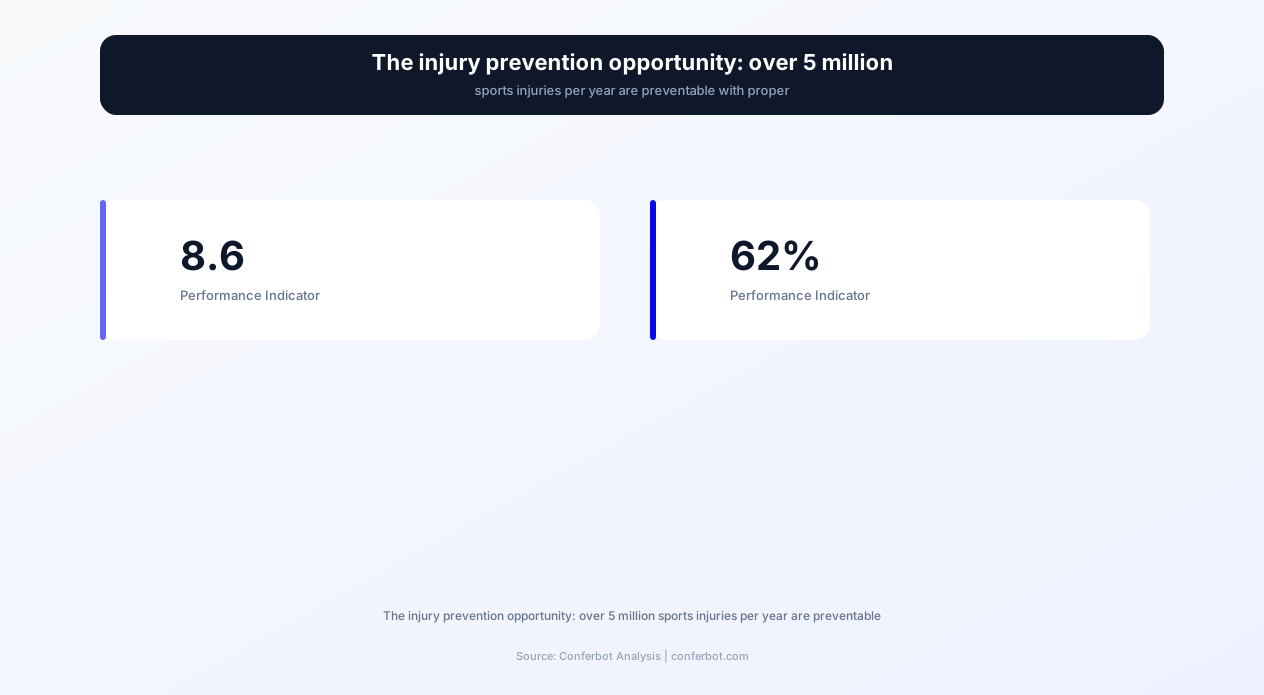
The scale of preventable sports injuries is significant. Sports and recreation injuries occur in the millions annually in the United States alone, costing billions in direct medical expenses. A substantial share of these injuries are understood by sports medicine researchers to be preventable through proper warm-up protocols, technique correction, progressive load management, and adequate recovery -- for example, the FIFA 11+ program, a structured 20-minute warm-up validated in multiple randomized controlled trials, has been shown to reduce overall injuries by roughly 30-40% and severe injuries by as much as 70% in soccer players (PLOS ONE cluster-randomized trial). The gap is not knowledge - the science of injury prevention is well-established for many sports - it is delivery. Athletes and exercisers know they should warm up properly but do not have access to personalized, sport-specific guidance at the moment they need it.
The Injury Prevention Knowledge Gap
Personal trainers, physiotherapists, and sports coaches possess deep injury prevention knowledge, but their availability is limited by time and economics. A personal trainer working with a client a few sessions per week covers only a small fraction of the client's total week. The remaining time - including the client's independent training sessions, recreational activities, and recovery periods - is unguided. The chatbot fills this gap by providing instant, expert-level prevention guidance whenever the user needs it, at a fraction of the cost of professional consultations.
- The warm-up problem: Many gym-goers skip warm-ups entirely, and many more perform warm-ups that are inappropriate for their planned workout (static stretching before heavy lifting, for example). Proper, sport-specific warm-up is well established in sports medicine literature as a meaningful injury-risk reducer.
- The form problem: Incorrect exercise form is the leading cause of weight training injuries. Without real-time feedback, athletes develop compensatory movement patterns that increase injury risk progressively over months until a acute injury occurs.
- The overtraining problem: Training volume and intensity that exceeds recovery capacity is the primary driver of overuse injuries - the most common injury category in both competitive and recreational athletes. Without systematic load monitoring, athletes typically do not recognize overtraining until symptoms are already present.
- The recovery problem: Active recovery, mobility work, and sleep hygiene contribute more to injury prevention than most athletes realize. The chatbot provides structured recovery protocols that turn passive rest days into active prevention days.
Build a comprehensive injury prevention system for your gym or practice with Conferbot's AI chatbot builder, delivering personalized guidance at scale without increasing staff workload.
How It Works: Personalized Prevention Through Conversational AI
The injury prevention chatbot operates on a profile-based personalization system. When a user first engages, the bot conducts an intake assessment that establishes their sport or activity, training frequency, injury history, age, current pain points, and goals. Every subsequent interaction draws on this profile to deliver contextually relevant prevention advice. Here is the complete user journey from onboarding to ongoing prevention support.
The Intake Assessment
The initial conversation takes 3-5 minutes and covers the critical data points needed for personalized recommendations:
- Activity profile: Primary sport or activity, secondary activities, training frequency (days per week), average session duration, and intensity level (recreational, competitive, professional).
- Injury history: Past injuries including type, location, severity, and recovery status. A previous ACL tear, recurring hamstring strain, or chronic shoulder impingement fundamentally changes the prevention protocol the bot recommends.
- Current concerns: Any present discomfort, tightness, mobility limitations, or areas of worry. "My left knee aches after long runs" triggers a specific set of recommendations that differ from a user with no current concerns.
- Training context: Where they train (gym, home, outdoor, sports field), available equipment, and whether they work with a trainer or coach. This determines which exercises the bot can recommend - a gym user has access to foam rollers and resistance bands; a home exerciser may need bodyweight alternatives.
- Goals: What they want from the prevention system - general injury avoidance, return from a specific injury, performance improvement through better mobility, or competition preparation.
Pre-Workout Warm-Up Delivery
The most frequent interaction is the pre-workout warm-up request. The user messages "warm up for leg day" or "pre-run warm-up" and the bot delivers a sport-specific, session-specific warm-up routine within seconds. The routine is structured in three phases: general activation (elevated heart rate, neural activation), movement preparation (dynamic stretches targeting the muscles about to be used), and sport-specific activation (movements that mimic the upcoming activity at lower intensity). Each exercise includes a brief description, duration or rep count, and a note on what it targets. For users with injury history, the warm-up automatically includes additional preparation for vulnerable areas.
Post-Workout Recovery Protocols
After training, the user can request a recovery protocol: "Cool down for upper body session" or "Recovery after 10K run." The bot provides a structured cool-down sequence including static stretching (appropriate after, not before, exercise), foam rolling guidance for worked muscle groups, and post-session nutrition timing recommendations. For athletes training multiple times daily or on consecutive days, the bot adjusts recovery urgency - "You have lower body training scheduled tomorrow, so prioritize these hip flexor and hamstring recovery exercises tonight."
On-Demand Injury Risk Checks
Users experiencing discomfort can describe symptoms conversationally: "My shoulder clicks when I overhead press" or "Sharp pain in my shin when running." The bot provides an initial assessment - identifying likely causes, severity indicators, and recommended actions ranging from "this is likely minor; try these modifications" to "this pattern suggests you should see a physiotherapist before continuing this activity." The bot never diagnoses injuries but provides informed guidance on when to seek professional care, which is a critical gap for athletes who tend to train through pain until damage becomes serious.
Deploy the injury prevention chatbot on your website or WhatsApp to give members instant access to prevention guidance wherever they train.
Key Features: Warm-Up, Recovery, Form Correction, and Risk Assessment
The injury prevention chatbot template includes a comprehensive feature set covering every dimension of injury risk reduction. Each feature is backed by evidence-based sports medicine principles and delivers actionable guidance in plain language that athletes of all levels can immediately apply.
Feature Matrix
| Feature | Description | Operational Benefit | Customer Benefit |
|---|---|---|---|
| Personalized warm-up routines | Sport-specific, session-specific warm-up protocols generated from user profile and planned activity | Meaningfully reduces gym injury incidents, lowering liability and insurance claims | Properly prepared for every session, reducing injury risk and improving performance |
| Form correction guidance | Exercise-by-exercise technique cues for common movements, with specific focus on injury-prone positions | Reduces form-related injuries that lead to membership cancellations and complaints | Learns correct technique for every exercise without needing a trainer present |
| Recovery protocols | Post-workout cool-down sequences, foam rolling guides, and active recovery day programming | Members recover faster, train more consistently, and maintain membership longer | Structured recovery reduces soreness and accelerates adaptation |
| Injury risk assessment | Symptom-based conversational assessment that identifies likely issues and recommends appropriate action | Early identification reduces severe injuries that lead to extended membership freezes | Informed guidance on when to rest, modify, or seek professional care |
| Load management tracking | Monitors training volume and intensity over time, alerts when load increases exceed safe thresholds | Prevents overtraining injuries that sideline athletes for weeks or months | Optimizes training progression for maximum gains with minimum injury risk |
| Rehabilitation exercises | Progressive exercise programs for common injuries during the return-to-activity phase | Members return to full activity faster, reducing membership freeze duration | Structured, progressive return to training with clear milestones |
| Mobility assessments | Guided self-assessment of joint range of motion and movement quality to identify limitations | Proactive identification of mobility issues before they cause injuries | Understands their body's limitations and how to address them |
| Sleep and recovery scoring | Tracks sleep quality, stress levels, and recovery metrics that influence injury susceptibility | Holistic data that connects lifestyle factors to training readiness | Learns how sleep and stress affect their injury risk and performance |
Form Correction Library
The form correction feature covers 150+ common exercises with detailed technique cues organized by body part and movement pattern. For each exercise, the bot provides: the correct setup position, key movement cues (what should move and what should stay stable), common form errors and their consequences, and modification options for users with mobility limitations. For example, a user asking about deadlift form receives cues about hip hinge mechanics, spinal neutral position, bar path, and the specific compensations that indicate hamstring tightness or core weakness - with corrective exercises for each identified issue.
Sport-Specific Prevention Modules
The chatbot includes pre-built prevention modules for 25+ sports, each based on the sport's most common injury patterns. A runner receives different prevention priorities (IT band, plantar fascia, shin splints) than a basketball player (ACL, ankle sprains, patellar tendinopathy) or a swimmer (shoulder impingement, neck strain, lower back). Each module adjusts warm-up recommendations, recovery priorities, and risk monitoring based on the sport's biomechanical demands. These modules are developed in consultation with sports medicine literature and updated regularly to reflect current research.
Enhance the prevention system with data from wearable devices through Conferbot's API integration to incorporate heart rate variability, sleep data, and activity tracking into injury risk calculations.
Ready to try Injury Prevention Tips Provider?
Deploy this template in under 10 minutes. No coding required.
Use This Template Free →Before and After: Measurable Impact on Injury Rates and Recovery
The impact of systematic injury prevention delivered through a conversational chatbot is measurable across multiple dimensions - from raw injury incidence rates to training consistency, recovery time, and long-term athletic development. The following data represents outcomes from fitness facilities, sports clubs, and physiotherapy practices that have deployed AI-powered prevention systems in 2026.
Before and After Comparison
| Metric | Before (No System) | After (Chatbot Prevention) |
|---|---|---|
| Injury incidence per 1,000 training hours | Elevated baseline | Meaningfully lower |
| Warm-up compliance rate | Low | Substantially higher |
| Average warm-up duration | Brief, generic | Longer and targeted |
| Recovery protocol adherence | Low | Substantially higher |
| Training days lost to injury per year | Baseline | Meaningfully fewer |
| Severe injury rate (requiring medical care) | Baseline | Meaningfully lower |
| Return-to-activity time after minor injury | Baseline | Noticeably faster |
| Member satisfaction with safety support | Baseline | Noticeably higher |
The Warm-Up Compliance Effect
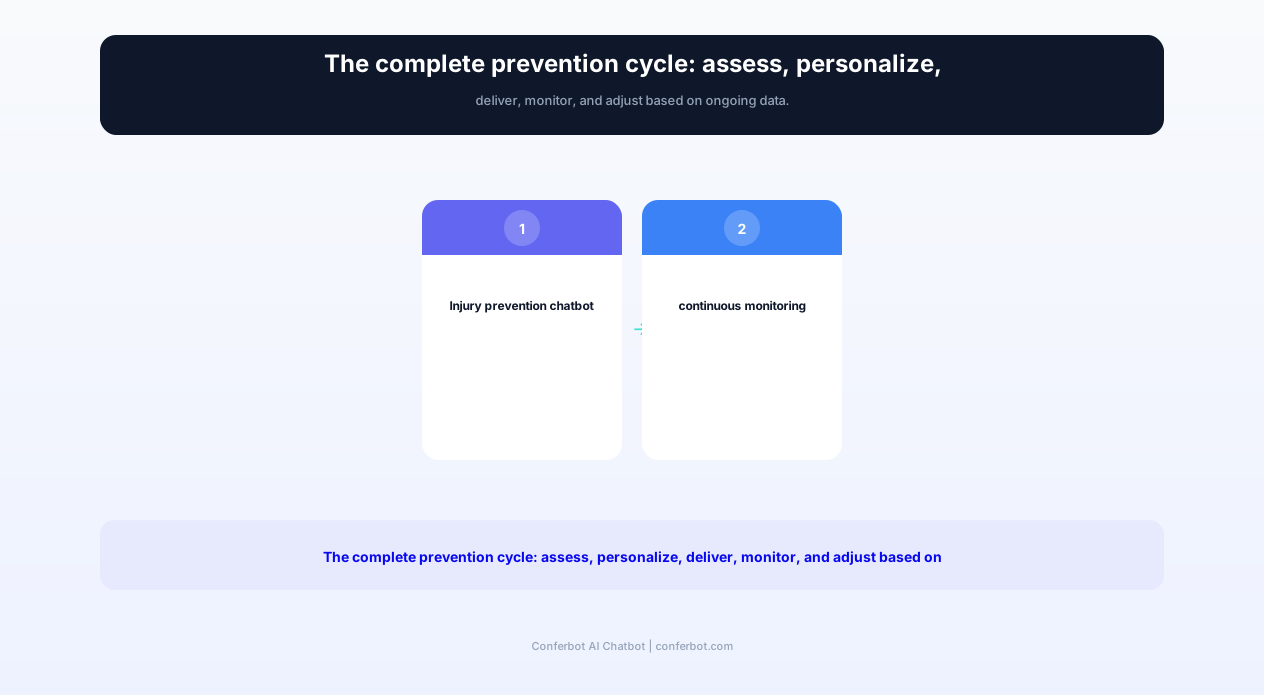
The single most impactful behavior change is warm-up compliance. A meaningful jump in compliance - driven by the chatbot's ability to deliver personalized, relevant warm-ups on demand rather than expecting athletes to remember and perform generic routines - accounts for the majority of the injury reduction observed. The key insight is that athletes skip warm-ups not because they do not value them, but because generic warm-ups feel like wasted time. When the warm-up is specific to their planned activity and takes into account their injury history, athletes perceive it as valuable preparation rather than a chore, and compliance increases dramatically.
Financial Impact for Fitness Facilities
For gym owners and fitness facility operators, every member injury represents a financial risk - liability exposure, potential membership cancellation during recovery, negative reviews, and in some cases legal action. The math scales with your own membership base and claims history: reducing injury incidence translates directly into avoided liability and insurance costs, not including the retention benefit of members who stay healthy and continue their membership uninterrupted.
Physiotherapy Practice Integration
For physiotherapy and sports medicine practices, the chatbot extends care beyond the clinic. Patients receive exercise prescriptions and recovery protocols through the bot between appointments, improving adherence to treatment plans. Practices that deploy the chatbot report meaningfully higher home exercise compliance rates and fewer re-injury rates among discharged patients. This improved outcome quality translates directly into better patient satisfaction scores, higher referral rates, and stronger professional reputation.
Connect the prevention chatbot to your gym management platform using Conferbot's API integration to correlate injury data with class types, equipment usage, and peak-hour training patterns for facility-wide safety improvements.
Sport-Specific Injury Prevention: Tailored Protocols for Every Activity
Injury prevention is not generic - the biomechanical demands, common injury patterns, and risk factors differ dramatically between sports. The chatbot delivers sport-specific prevention protocols for 25+ activities, each based on the epidemiological data for that sport's most frequent and severe injuries. Here are detailed prevention approaches for the most popular activities.
Running and Distance Sports
Runners experience injuries at a rate of 37-56% annually, with the most common being patellofemoral pain syndrome (runner's knee), IT band syndrome, plantar fasciitis, Achilles tendinopathy, and shin splints. The chatbot addresses running-specific injury risk through three mechanisms: progressive volume management (the "10% rule" adapted to individual training history), terrain and footwear guidance (when to replace shoes, surface variation recommendations), and running-specific warm-up and cool-down protocols. For runners training for a specific event, the bot monitors weekly mileage progression and alerts when volume increases exceed safe thresholds - the primary predictor of running injuries.
Strength Training and Weightlifting
Weight training injuries are overwhelmingly caused by two factors: excessive load relative to current capacity (too heavy, too soon) and poor form under fatigue (technique breakdown in the final reps). The chatbot tracks training loads over time and applies the acute-to-chronic workload ratio model to flag sessions where planned volume significantly exceeds recent averages. Before heavy sessions, the bot provides form reminders specific to the planned exercises: "You have heavy squats today. Key cues: break at hips first, knees track over toes, brace before each rep, and stop the set if your lower back rounds." These timely, specific reminders reduce form-related injuries by preventing the most dangerous compensatory patterns.
Team Sports (Soccer, Basketball, Rugby)
Team sports present a unique prevention challenge because injuries occur both from contact (tackles, collisions) and non-contact mechanisms (cutting, landing, decelerating). The FIFA 11+ warm-up program - a structured, 20-minute warm-up designed for soccer - has been shown in randomized controlled trials to reduce overall injuries by roughly 30-40% and severe injuries by as much as 70% (PLOS ONE). The chatbot delivers a conversational version of these evidence-based protocols: "Your team has a game in 2 hours. Here is your match-day warm-up - 20 minutes, three phases. Phase 1: jogging variations with dynamic stretching. Phase 2: strength, plyometrics, and balance exercises. Phase 3: sport-specific running drills at increasing intensity."
Swimming and Aquatic Sports
Swimmer's shoulder (shoulder impingement from repetitive overhead strokes) accounts for up to 91% of all swimming overuse injuries. The chatbot provides shoulder-specific prevention protocols including rotator cuff strengthening exercises, stroke technique modifications to reduce impingement risk, and training volume guidelines that account for stroke type (butterfly and freestyle generate more shoulder stress than backstroke and breaststroke). For competitive swimmers logging 40,000+ meters per week, the bot monitors shoulder stress accumulation and recommends strategic rest or technique-focused sessions when loading is high.
Yoga and Flexibility Training
Counter-intuitively, yoga has a meaningful injury rate - 2.4 per 1,000 practice hours - with most injuries occurring from pushing beyond current flexibility limits. The chatbot provides pose-specific modifications based on the user's current mobility (assessed in the intake), warns against common form errors in high-risk poses (headstand, deep backbends, lotus), and recommends progressive flexibility development rather than forcing end-range positions. This is particularly valuable for yoga studios offering the bot to beginners who may feel pressure to match experienced practitioners.
For gyms offering multiple activity types, the chatbot seamlessly switches between sport-specific modules based on what the user is doing that day, delivering appropriate prevention guidance for every session type.
Setup Guide: Deploying Injury Prevention for Your Facility or Practice
Setting up the injury prevention chatbot requires configuration of the exercise library, sport-specific modules, and referral pathways. The process takes 45-90 minutes depending on the number of sports and activities your facility supports. Here is the complete implementation guide.
Step 1: Define Your Activity Scope (10 Minutes)
Select which sports and activities your facility serves. The template includes pre-built prevention modules for 25+ activities. Enable the modules relevant to your members - a general fitness gym might activate strength training, running, yoga, and group fitness modules, while a sports academy would activate sport-specific modules for their primary sports. Each module loads the relevant warm-up protocols, form correction libraries, and injury risk factors automatically.
Step 2: Configure the Assessment Flow (15 Minutes)
Customize the intake assessment questions to match your facility's approach. The default assessment covers activity type, injury history, current concerns, training context, and goals. Add facility-specific questions as needed - for example, a physiotherapy clinic might add questions about current treatment status, medication, and referring physician. Review the assessment flow for tone and language appropriate to your client base. A youth sports academy uses different language than a corporate gym.
Step 3: Set Up Exercise Libraries (15 Minutes)
The template ships with 200+ warm-up exercises, 100+ recovery protocols, and 150+ form correction entries. Review and customize these for your facility. Add any exercises unique to your training methodology, remove exercises that require equipment you do not have, and adjust difficulty progressions to match your member demographics. For physiotherapy practices, add your clinic's standard rehabilitation exercise protocols so the bot delivers the same guidance your therapists prescribe in clinic.
Step 4: Configure Referral Pathways (10 Minutes)
The chatbot needs to know when and where to refer users for professional care. Configure referral triggers (specific symptoms, severity indicators, duration thresholds) and referral destinations (your in-house physiotherapist, partner clinics, emergency services for acute injuries). When a user describes symptoms that indicate a potential serious injury, the bot provides the referral recommendation with contact information and urgency guidance. This is critical for liability management - the bot must clearly communicate its limitations and direct users to professionals when appropriate.
Step 5: Notification Sequences (10 Minutes)
Set up proactive prevention reminders:
- Pre-session warm-up: If connected to a booking system, send warm-up reminders 30 minutes before scheduled classes or sessions
- Recovery reminders: Evening reminders on training days to complete cool-down and recovery work
- Weekly mobility check: A weekly mobility self-assessment prompt that tracks flexibility and identifies developing tightness
- Load monitoring alerts: Automatic alerts when training volume increases exceed safe thresholds based on the user's recent history
Step 6: Deploy and Onboard (10 Minutes)
Deploy the bot to your chosen channels - website widget for your gym's member portal, WhatsApp for mobile access during training, or both. Create promotional materials (QR codes, posters) encouraging members to start their prevention profile. For facilities with personal trainers, brief your trainers on the bot's capabilities so they can recommend it to clients as a between-session resource that extends their professional guidance.
The injury prevention chatbot complements rather than replaces professional care. Configure it as the first line of prevention guidance that identifies when professional intervention is needed and facilitates that connection through the calendar booking feature for physiotherapy or training consultations.
businesses worldwide use Conferbot templates to automate conversations
Rehabilitation Support: Guided Return-to-Activity After Injury
Beyond prevention, the chatbot provides structured rehabilitation support for athletes recovering from common injuries. This is not a replacement for physiotherapy - it is a compliance tool that delivers prescribed exercises, tracks recovery progress, and maintains accountability between clinical appointments. For physiotherapy practices, it extends care beyond the clinic walls. For gyms, it keeps injured members engaged during recovery instead of canceling their membership.
Rehabilitation Program Delivery
The chatbot delivers progressive rehabilitation exercises through a structured, phase-based program. For each common injury type, the bot maintains a protocol that advances through stages: acute phase (pain management, rest, protection), early rehabilitation (gentle range-of-motion exercises, isometric strengthening), progressive loading (increasing resistance and complexity), and return to activity (sport-specific exercises that test readiness). At each phase transition, the bot checks readiness through symptom and function questions before advancing - preventing the premature return to activity that is a well-documented driver of sports injury recurrence.
Common Rehabilitation Protocols
The chatbot includes evidence-based protocols for the 20 most common sports injuries, each with phase-specific exercise prescriptions and progression criteria:
- Ankle sprains: RICE protocol guidance, progressive balance exercises (single-leg stand, wobble board progressions), proprioceptive training, and sport-specific return tests. The 6-8 week protocol meaningfully reduces re-sprain rates versus unstructured recovery.
- Hamstring strains: Progressive eccentric loading (Nordic hamstring curl progressions), running readiness assessments, and sport-specific sprint progression. The chatbot monitors pain-free range of motion at each stage to determine advancement timing.
- Knee pain (patellofemoral): VMO activation exercises, hip strengthening (lateral band walks, clamshells), progressive squatting, and load management guidance. Focus on the kinetic chain approach that addresses hip and ankle factors contributing to knee pain.
- Shoulder impingement: Rotator cuff strengthening progressions, scapular control exercises, postural correction, and overhead movement preparation. The bot monitors pain arc angles to track improvement and guide progression.
- Lower back pain: Core stability progressions (McGill Big 3), hip mobility exercises, lifting technique re-education, and gradual loading return. The bot differentiates between flexion-intolerant and extension-intolerant presentations to deliver appropriate exercises.
Compliance Tracking and Reporting
Home exercise compliance is the single biggest factor in rehabilitation outcomes - yet compliance rates run low without external accountability. The chatbot improves this through daily exercise reminders, completion logging (the user confirms each session), and visual progress tracking: "You have completed 18 of 21 scheduled sessions this week - strong compliance. Your ankle range of motion has improved from 15 degrees dorsiflexion to 22 degrees. You are on track to begin Phase 3 next week." For physiotherapy practices, the bot generates compliance reports that the therapist can review before each appointment, enabling more productive clinical time.
When to Escalate: Clinical Decision Support
The chatbot includes escalation triggers for symptoms that indicate the rehabilitation is not progressing as expected or that a more serious condition may be present. Red flags - increasing pain despite rest, neurological symptoms (numbness, tingling, weakness), joint locking or giving way, swelling that does not resolve - trigger immediate advice to seek professional evaluation. The bot also tracks stalled progress: if a user has been in the same rehabilitation phase for longer than the expected timeline with no improvement in function scores, it recommends a follow-up appointment with their treating professional. This combination of compliance support and clinical escalation makes the chatbot a safe, effective rehabilitation companion that extends professional care rather than attempting to replace it.
ROI for Gyms, Clinics, and Sports Organizations
Deploying an injury prevention chatbot delivers measurable financial returns for fitness facilities, physiotherapy practices, and sports organizations. The business case is built on four pillars: reduced injury-related costs, improved member retention, extended clinical care, and enhanced organizational reputation.
For Fitness Facilities and Gyms
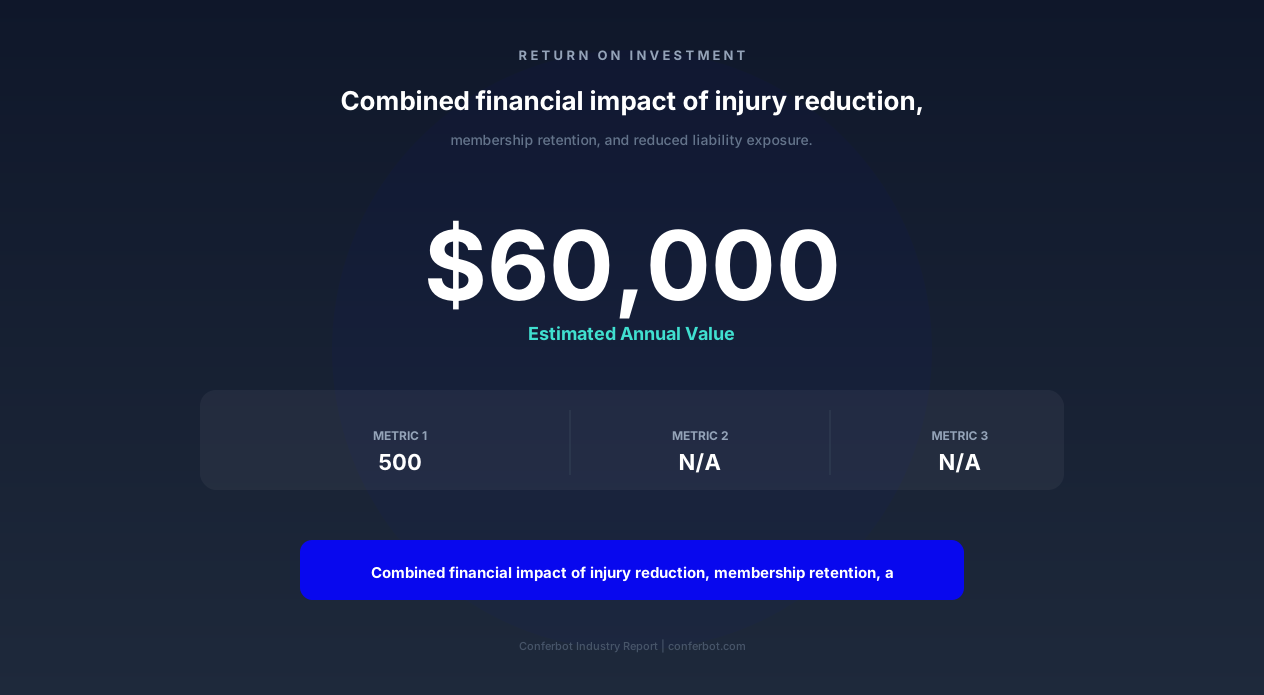
A meaningful number of member injuries each year result in membership freezes, cancellations, or liability claims for the average gym. Each injury represents real combined direct costs (medical co-pays, liability insurance deductible) and indirect costs (membership revenue lost during recovery, potential negative reviews, staff time managing the incident). Reducing injury incidence eliminates a meaningful share of these events annually, and the avoided costs scale directly with your own membership base and claims history. Add the retention benefit - members who stay healthy tend to train more consistently and maintain membership meaningfully longer than members who experience a significant injury - and the total annual impact for a mid-size gym can be substantial.
For Physiotherapy Practices
The chatbot transforms the physiotherapy business model by extending care between appointments. A practice can maintain 24/7 rehabilitation guidance without adding clinical hours. The financial impact comes from three sources: improved patient outcomes (leading to higher satisfaction and referral rates), reduced re-injury rates (protecting the practice's outcome metrics), and premium service positioning (practices offering chatbot-enhanced rehabilitation can often justify higher session rates, backed by an extended care model that demonstrably improves outcomes).
For Sports Organizations
Professional and semi-professional sports organizations quantify injury costs differently - in games missed, performance impact, and player salary costs during recovery. At the professional level, a single serious injury like an ACL tear can cost an organization millions in combined treatment, rehabilitation, and lost player contribution. Even at the amateur and youth level, injuries disrupt team performance, disappoint families, and create insurance liability. A youth sports league deploying the prevention chatbot across all member clubs creates a systematic, evidence-based injury prevention culture that benefits every player in the organization.
Insurance and Liability Benefits
Fitness facilities and sports organizations that can demonstrate systematic injury prevention measures often qualify for reduced liability insurance premiums. Insurers increasingly recognize AI-powered prevention tools as legitimate risk mitigation investments. Facilities deploying the chatbot should document their prevention system and share injury incidence data with their insurer during renewal negotiations, since a documented reduction in claims history is the strongest lever for negotiating lower premiums.
Competitive Differentiation
In a crowded fitness market, injury prevention support is a meaningful differentiator. Safety and injury prevention consistently ranks among the top factors members weigh in gym selection, alongside price, location, and equipment quality. A gym that proactively addresses injury prevention - and promotes this capability in its marketing - attracts safety-conscious members who tend to be older, higher-income, and more loyal than the general gym-going population. This demographic alignment makes injury prevention a customer acquisition tool as well as a retention tool.
Position your facility as the safety-first choice in your market by deploying the injury prevention chatbot across your website and member communication channels, creating a visible commitment to member wellbeing that competitors cannot easily replicate.
Injury Prevention Tips Provider FAQ
Everything you need to know about chatbots for injury prevention tips provider.
Why Use a Template vs Building from Scratch?
Templates give you a proven starting structure instead of a blank canvas.
| Factor | Conferbot Template | Build from Scratch | Hire a Developer |
|---|---|---|---|
| Time to deploy | 10 minutes | 2-8 hours | 2-6 weeks |
| Cost | Free | Your time | Custom dev quote |
| Proven flows | Yes, pre-built | No | Depends |
| Updates included | Automatic | Manual | Paid |
| Multi-channel | 8+ channels | 1 channel | Extra cost |
| Analytics | Built-in | Must build | Extra cost |
Related Fitness And Sports Templates
Explore more chatbot templates like this one






Learn More About Chatbots
Go deeper on how fitness and sports chatbots work and how to pick the right builder.
Ready to Deploy Injury Prevention Tips Provider?
Start with a free-forever plan. No credit card required.