
Diversity and Inclusion Training
Free HR And Recruiting Chatbot Template
A complete diversity and inclusion training chatbot template - deploy in minutes to automate conversations, capture leads, and provide 24/7 assistance.

What Is a Diversity and Inclusion Training Chatbot?
A diversity and inclusion training chatbot is an AI-powered conversational agent that delivers continuous DEI education through interactive micro-learning modules, scenario-based exercises, inclusive language guidance, cultural awareness content, accommodation request facilitation, and confidential reporting mechanisms. Unlike traditional one-time DEI workshops that deliver information but rarely change behavior, the chatbot provides sustained, daily reinforcement that builds inclusive habits over time through spaced repetition and contextual application.
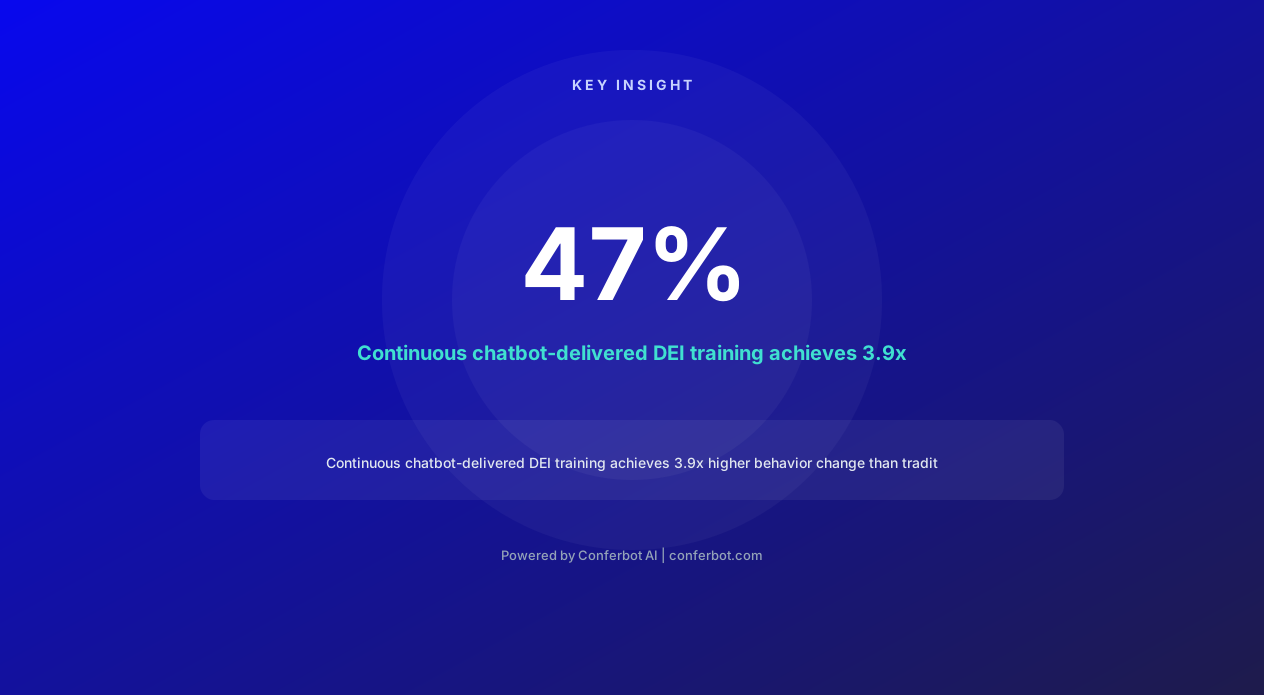
The limitations of traditional DEI training are well-documented. Harvard research shows that mandatory one-time diversity training has no measurable positive effect on workplace diversity metrics and, in some cases, actually increases bias by triggering psychological reactance. The problem is not the content -- it is the delivery model. A 2-hour annual workshop cannot overcome decades of socialized bias through information transfer alone. Behavior change requires repeated practice, real-time application, feedback loops, and sustained accountability -- exactly what a conversational chatbot provides.
In 2026, organizations are shifting from compliance-driven DEI training ("we need to check the training box") to behavior-driven inclusion programs ("we need to change how people interact daily"). This shift requires a delivery mechanism that integrates into daily workflow, provides guidance at the moment of need, and creates a judgment-free space for learning. A chatbot achieves all three: it lives where employees already work (Slack, Teams), it provides instant guidance when a real inclusion question arises ("Is this language inclusive in my job posting?"), and it creates a private space where employees can ask "dumb questions" without fear of judgment.
Conferbot's DEI training template is built with the AI chatbot builder and deploys on Slack, Microsoft Teams, your company intranet, and website. It integrates with your LMS, HRIS, and reporting systems through API integration. This page covers the learning module architecture, inclusive language tools, reporting mechanisms, cultural awareness content, accommodation support, and measurable outcomes for building a genuinely inclusive workplace in 2026.
Unconscious Bias Education: From Awareness to Action
Unconscious bias training is the foundation of most DEI programs, yet its effectiveness varies dramatically based on delivery method. The chatbot transforms bias education from a one-time awareness event into an ongoing practice that builds recognition and interruption skills over time.
Types of Unconscious Bias Covered
The chatbot delivers micro-learning modules covering the major forms of unconscious bias relevant to workplace interactions:
- Affinity bias: Preferring people who are similar to us in background, interests, or appearance. The chatbot provides hiring and networking examples specific to your industry.
- Confirmation bias: Seeking information that confirms pre-existing beliefs about groups. Applied to performance evaluations and promotion decisions.
- Halo/horn effect: Letting one positive or negative trait color overall perception. Applied to interview assessments and team dynamics.
- Attribution bias: Attributing success and failure differently based on group membership. Applied to credit assignment and failure response.
- Proximity bias: Favoring people who are physically nearby, disadvantaging remote workers. Particularly relevant in hybrid work environments of 2026.
- Name bias: Making assumptions based on names that signal gender, ethnicity, or nationality. Applied to resume screening and communication.
Scenario-Based Learning
Rather than lecturing about bias abstractly, the chatbot presents real-world scenarios and asks employees to identify the bias at play: "A manager consistently assigns the most visible projects to team members they golf with on weekends. All of these team members happen to be from the same demographic group. What type of bias might be operating here, and what structural solution would you recommend?" The employee responds, and the chatbot provides feedback that validates correct identification while gently correcting misconceptions.
Bias Interruption Techniques
Awareness without action is insufficient. The chatbot teaches specific bias interruption techniques that employees can apply in the moment:
- The pause technique: Before making a decision that involves people (hiring, assignments, promotions), pause and ask: "Would I make the same decision if this person were from a different demographic group?"
- Structured evaluation: Use consistent criteria evaluated in the same order for every candidate, rather than holistic "gut feeling" assessments that are susceptible to bias.
- Active reframing: When you notice a biased thought, actively reframe it: "I just assumed they got this role through a diversity initiative. Let me correct that -- they were selected because they demonstrated the required competencies."
- Environmental design: Create structures (blind resume reviews, diverse interview panels, standardized rubrics) that reduce the opportunity for bias to influence outcomes.
Spaced Repetition for Lasting Change
The chatbot delivers bias education using spaced repetition -- presenting concepts at increasing intervals to build long-term retention. A bias type introduced on Monday is reviewed on Wednesday, then the following Monday, then two weeks later. Research shows that spaced repetition achieves 200-400% better retention than massed learning (cramming all content into a single session). Over 90 days, the chatbot covers all major bias types 4-6 times each, building deep recognition patterns that activate automatically in real workplace situations.
Complete Feature Matrix: DEI Training Chatbot
The Conferbot DEI training template provides a comprehensive toolkit for delivering, measuring, and continuously improving your organization's diversity and inclusion learning program. Below is the full feature matrix for 2026.
| Feature | Description | Operational Benefit | Customer Benefit |
|---|---|---|---|
| Micro-Learning Module Delivery | Daily 3-5 minute interactive lessons covering bias, inclusion, cultural awareness, and allyship | Continuous learning without taking employees away from work for extended training sessions | Employees build inclusion skills gradually in manageable doses |
| Inclusive Language Checker | Real-time guidance on inclusive language for job postings, communications, and documentation | Reduces exclusionary language in company content without manual review of every document | Employees receive immediate feedback when drafting important communications |
| Scenario-Based Assessments | Interactive workplace scenarios that test bias recognition and inclusive decision-making | Measures actual skill development, not just content consumption | Employees practice applying DEI concepts to realistic situations |
| Cultural Awareness Calendar | Proactive education about cultural observances, heritage months, and significant dates | Ensures organizational recognition of diverse traditions without relying on individual employees to educate | Employees from all backgrounds feel their identity is acknowledged and respected |
| Accommodation Request Support | Guides employees and managers through accommodation request processes for disability, religion, and caregiving | Standardizes accommodation responses and ensures legal compliance | Employees can request accommodations without stigma or confusion about the process |
| Confidential Reporting Channel | Private mechanism for reporting bias, discrimination, microaggressions, or exclusionary behavior | Early detection of DEI issues before they escalate to formal complaints | Employees have a safe, accessible way to raise concerns about exclusion |
| Allyship Skill Building | Practical techniques for being an effective ally: speaking up, amplifying voices, using privilege constructively | Distributes inclusion responsibility across the organization, not just underrepresented groups | Employees from majority groups learn concrete actions they can take |
| Manager Inclusive Leadership Coaching | Targeted guidance for managers on running inclusive meetings, equitable assignments, and bias-free evaluations | Builds inclusive management capability without expensive external coaching | Employees experience consistent, fair treatment from their leaders |
| Progress Tracking and Certification | Tracks module completion, assessment scores, and skill development over time with optional certification | Demonstrates compliance and measures program effectiveness with individual-level data | Employees see their learning progress and earn recognition for growth |
| Anonymous DEI Pulse Surveys | Regular micro-surveys measuring inclusion experience, belonging, and equity perceptions | Real-time organizational inclusion metrics with demographic and department drill-down | Employees have a regular voice in shaping the inclusion environment |
All features are configurable through the Conferbot AI chatbot builder. The chatbot integrates with Learning Management Systems (LMS), HRIS platforms, and case management tools through API integration for training completion tracking, organizational demographics, and formal report routing.
Ready to try Diversity and Inclusion Training?
Deploy this template in under 10 minutes. No coding required.
Use This Template Free →Before and After: Measurable Impact on Inclusion Metrics
Organizations that shift from traditional workshop-based DEI training to continuous chatbot-delivered inclusion programs see measurable improvements in both learning outcomes and organizational inclusion metrics. The following comparison reflects industry research and Conferbot customer data in 2026.
| Metric | Before DEI Chatbot | After DEI Chatbot |
|---|---|---|
| Training Engagement Rate | Mandatory attendance, low genuine engagement | Meaningfully higher voluntary daily engagement |
| Knowledge Retention at 90 Days | A small share of workshop content retained | Substantially more chatbot content retained |
| Self-Reported Inclusive Behavior Change | A minority report behavior change after workshop | A clear majority report behavior change after 90 days |
| Employee Belonging Score | Lower | Meaningfully higher |
| Bias Incident Reports | Higher | Meaningfully lower |
| Diverse Candidate Pipeline | Lower share in final rounds | Meaningfully higher share |
| Underrepresented Group Retention | Lower | Meaningfully higher |
| Inclusion Net Promoter Score (iNPS) | Lower | Meaningfully higher |
The most strategically significant metric is the underrepresented group retention improvement. Losing diverse talent is expensive both financially (replacement costs) and strategically (diversity losses compound as underrepresented employees see fewer people like themselves and become less likely to stay). A meaningful retention improvement across underrepresented groups represents significant talent preservation, reduced recruiting costs, and stronger organizational diversity over time.
ROI Calculation for DEI Programs
DEI program ROI is calculated through: Annual Value = (Improved Retention x Replacement Cost Savings) + (Reduced Legal Risk x Average Claim Cost) + (Innovation Premium from Diverse Teams x Revenue Impact) + (Employer Brand Value x Recruiting Cost Reduction). McKinsey research confirms that companies in the top quartile for ethnic diversity outperform bottom-quartile companies in profitability, and gender-diverse companies also outperform. For a 1,000-person company, retention improvements alone save substantial money annually, reduced legal risk saves a meaningful additional amount, and the diversity-driven innovation premium delivers unmeasured but substantial revenue impact.
Inclusive Language Guidance: Real-Time Writing Support
Language shapes workplace culture more powerfully than any policy document. The words we use in job postings, emails, meetings, and documentation either signal inclusion or inadvertently exclude. The DEI chatbot includes a real-time inclusive language checker that helps employees communicate more inclusively in their daily work.
How the Language Checker Works
Employees can submit text to the chatbot for inclusive language review: "Can you check this job posting for inclusive language?" or "Is this email to the team inclusive?" The chatbot analyzes the text for potentially exclusionary language and provides specific suggestions with explanations. It does not just flag problems -- it explains why certain language may exclude and offers concrete alternatives.
Common Language Categories Addressed
| Category | Exclusionary Example | Inclusive Alternative | Why It Matters |
|---|---|---|---|
| Gendered Language | "Manpower," "Chairman," "guys" | "Workforce," "Chair," "team" or "everyone" | Gendered defaults signal that the default employee is male |
| Ableist Language | "Crazy deadline," "blind spot," "lame excuse" | "Unrealistic deadline," "oversight," "weak excuse" | Casual disability metaphors trivialize disability experiences |
| Age-Coded Language | "Digital native," "young and energetic team" | "Technically proficient," "dynamic team" | Age-coded language discourages older candidates and signals bias |
| Culturally Coded Language | "Culture fit," "native English speaker" | "Values alignment," "fluent in English" | "Culture fit" is often code for demographic similarity |
| Exclusionary Assumptions | "Husband/wife," "Christmas party" | "Partner/spouse," "holiday celebration" | Heteronormative and Christian-centric defaults exclude LGBTQ+ and non-Christian employees |
Job Posting Optimization
The chatbot includes a specialized job posting analyzer that goes beyond individual word choice to assess the overall tone and structure of job descriptions. Research shows that job postings with masculine-coded language (competitive, aggressive, dominate) receive 42% fewer female applicants, while postings with feminine-coded language (collaborative, nurturing, support) receive fewer male applicants. The chatbot identifies coded language and suggests neutral alternatives that attract diverse candidate pools without biasing toward any gender.
Meeting Language Coaching
The chatbot provides pre-meeting inclusion prompts for meeting organizers: "Before your team meeting, remember to: create space for all voices (not just the loudest), credit ideas to their originators, avoid interrupting, and use gender-neutral language when addressing the group." Post-meeting, employees can reflect: "Did everyone have an opportunity to contribute?" This reflection practice builds self-awareness about inclusion behaviors in meetings -- the most common venue for microexclusions in the workplace.
Continuous Language Evolution
Language norms evolve, and the chatbot's language guidance updates accordingly. The inclusive language database is updated quarterly to reflect evolving community preferences, new research on language impact, and feedback from employee resource groups within your organization. Your DEI team can also add organization-specific language guidance: industry terminology that may be exclusionary, internal acronyms to avoid, or preferred terms that reflect your company's specific inclusion commitments.
Reporting Mechanisms: Safe Channels for Bias and Discrimination
An effective DEI program requires not just education but also safe, accessible mechanisms for reporting bias, discrimination, microaggressions, and exclusionary behavior. The chatbot provides a confidential reporting channel that reduces barriers to speaking up and ensures reports reach the appropriate response team.
Why Traditional Reporting Falls Short
Most organizations offer formal reporting through HR, an ethics hotline, or a manager escalation path. Yet research consistently shows that 60-75% of employees who experience bias or discrimination never report it (EEOC Select Task Force on Harassment). The barriers are formidable: fear of retaliation, belief that nothing will change, uncertainty about whether the behavior "qualifies" as reportable, and discomfort with the formal investigation process. The chatbot addresses each barrier specifically.
The Chatbot Reporting Experience
When an employee wants to report a concern, they initiate a private conversation with the chatbot. The flow is designed to be as low-friction as possible:
- Threshold clarification: The chatbot helps employees understand that all exclusionary behavior is reportable -- from overt discrimination to subtle microaggressions. "You do not need to be sure it qualifies as discrimination. If something made you feel excluded or uncomfortable based on your identity, it is worth reporting."
- Structured documentation: The chatbot guides the employee through documenting the incident: what happened, when, where, who was involved, who witnessed it, and how it made them feel. This structure ensures the report contains the information needed for investigation while reducing the cognitive burden on the reporting employee.
- Anonymity options: Employees can choose fully anonymous reporting (no identifying information included), partially anonymous (HR knows who reported but does not disclose to the subject), or identified reporting (for employees who want direct follow-up and resolution).
- Outcome preferences: The chatbot asks what outcome the employee hopes for: formal investigation, informal conversation with the individual, manager awareness, policy change, or simply documentation for pattern tracking. This ensures the response matches the reporter's needs.
Pattern Detection Across Reports
Individual reports that seem minor in isolation may reveal significant patterns when aggregated. Three separate anonymous reports about exclusionary behavior from the same manager over six months represent a pattern that requires intervention, even if no single report would trigger formal action. The chatbot's analytics engine identifies these patterns and alerts the DEI team when thresholds are crossed. Pattern-based intervention catches systemic issues that individual-report handling misses.
Anti-Retaliation Protections
The chatbot follows up with reporting employees at 7, 30, and 90 days post-report to check for retaliation: "Have you experienced any negative changes in your work environment since your report?" If retaliation indicators are detected, a separate, high-priority alert is triggered to the compliance team. This systematic follow-up both deters retaliation and detects it early when it occurs. Organizations with active anti-retaliation monitoring see markedly higher reporting rates because employees trust that the system protects them.
businesses worldwide use Conferbot templates to automate conversations
Cultural Awareness and Religious Accommodation
A genuinely inclusive workplace requires cultural literacy -- understanding and respecting the diverse cultural backgrounds, traditions, religious practices, and communication styles that employees bring to work. The DEI chatbot builds cultural awareness through ongoing education and practical guidance for accommodation requests.
Cultural Awareness Calendar
The chatbot proactively educates the organization about significant cultural dates, heritage months, and religious observances. Rather than waiting for employees from specific backgrounds to explain their traditions, the chatbot normalizes cultural awareness as an organizational responsibility: "This week begins Diwali, the Hindu festival of lights. Here is what it means and how colleagues who celebrate might appreciate recognition." The calendar covers 150+ cultural observances across religions, ethnicities, and identity groups, configured to highlight those most relevant to your workforce demographics.
Communication Style Awareness
Cultural backgrounds shape communication styles -- directness versus indirectness, hierarchy deference versus egalitarianism, individual versus collective decision-making. The chatbot educates employees about these differences without stereotyping: "In many East Asian cultural contexts, silence after a question may indicate thoughtful consideration rather than disagreement or disengagement. Creating space for different processing styles in meetings ensures all voices are heard." This education helps prevent cross-cultural miscommunications from escalating into interpersonal conflicts.
Religious Accommodation Guidance
The chatbot guides both employees requesting accommodations and managers receiving requests through the accommodation process:
- For employees: "You have the right to request reasonable accommodation for religious practices, including prayer breaks, dietary needs, dress code modifications, and schedule flexibility for observances. Here is how to submit a request: [process]."
- For managers: "You have received an accommodation request for [type]. Here are the legal requirements for engaging in an interactive process, examples of reasonable accommodations for this type, and the documentation needed. Would you like to discuss options before responding?"
Intersectionality Education
The chatbot teaches the concept of intersectionality -- how multiple identity dimensions (race, gender, disability, sexuality, class) interact to create unique experiences of privilege and disadvantage. This advanced content helps employees understand why DEI cannot be addressed through single-axis analysis alone: "A Black woman's workplace experience is not the sum of 'being Black' plus 'being a woman' -- it is a distinct experience shaped by the intersection of both identities." Intersectionality modules are delivered after foundational bias content, building on established understanding.
Global Team Considerations
For multinational organizations, the chatbot addresses global DEI complexity: different legal frameworks for protected classes, culturally variable concepts of diversity, and the challenge of applying a unified DEI philosophy across contexts where norms differ dramatically. The content acknowledges this complexity honestly rather than imposing a single cultural framework globally, while maintaining universal commitments to dignity, respect, and equity.
Step-by-Step Implementation Guide
Deploying the Conferbot DEI training chatbot takes 2-3 hours for a basic setup and 6-8 hours for a fully customized deployment with custom content, LMS integration, and reporting system configuration. Follow this guide for a production-ready deployment in 2026.
Step 1: Template Activation and Organizational Context (20 minutes)
Navigate to Templates > HR & Recruiting > Diversity & Inclusion Training in your Conferbot dashboard. Click "Use This Template" and configure your organizational context: industry (determines relevant bias scenarios), workforce demographics (determines content priorities), geographic regions (determines cultural awareness calendar and legal frameworks), and your organization's DEI values statement (incorporated into chatbot messaging).
Step 2: Content Customization and Prioritization (30 minutes)
The template includes a comprehensive default curriculum, but customization ensures relevance to your specific organizational challenges. Review and prioritize content modules based on your current DEI assessment: if your last engagement survey revealed low belonging scores for specific groups, prioritize modules addressing those experiences. Add organization-specific scenarios drawn from real (anonymized) incidents in your workplace. Replace generic examples with industry-specific ones that employees will recognize.
Step 3: Reporting Channel Configuration (20 minutes)
Configure the confidential reporting mechanism: define anonymity options available to reporters, set up routing for different report types (bias reports to DEI team, discrimination allegations to legal/compliance, safety concerns to security), configure anti-retaliation follow-up schedules, and establish SLAs for report acknowledgment and response. Integrate with your existing case management system (HR Acuity, Ethics Point, ServiceNow) via API integration.
Step 4: Inclusive Language Database Configuration (15 minutes)
Review the default inclusive language database and add organization-specific entries: industry jargon that may be exclusionary, internal terminology to evolve, and preferred language that reflects your company's specific commitments. Connect the inclusive language checker to your communications channels if you want proactive suggestions (optional -- many organizations prefer on-demand checking to avoid notification fatigue).
Step 5: LMS and HRIS Integration (20 minutes)
Connect the chatbot to your Learning Management System for training completion tracking, certification management, and compliance reporting. Integrate with your HRIS for organizational demographics (ensuring aggregate pulse data can be sliced by department and demographic group without individual identification). Set up calendar integration for scheduling accommodation discussions and manager coaching sessions.
Step 6: ERG Collaboration (15 minutes)
Configure Employee Resource Group (ERG) integration: the chatbot can recommend relevant ERGs to new employees, amplify ERG events and content, and channel feedback to ERG leadership. Invite ERG leaders to review chatbot content relevant to their communities -- their input ensures content is authentic and community-validated rather than corporate-interpreted.
Step 7: Pilot and Launch (ongoing)
Pilot with your DEI council, ERG leaders, and a cross-section of employees representing different demographics, departments, and levels. Collect feedback on content tone (educational without being preachy), accuracy (especially cultural content), and accessibility (ensuring all employees can engage regardless of literacy level or technology access). Address feedback and launch organization-wide with executive endorsement and clear communication about the chatbot's purpose: learning and growth, not surveillance or compliance theater.
Allyship Training and Bystander Intervention
Effective DEI programs do not place the burden of inclusion solely on underrepresented groups. The chatbot includes comprehensive allyship training that equips employees from majority groups with concrete skills for supporting inclusion through their daily actions.
What Effective Allyship Looks Like
The chatbot defines allyship through specific, observable behaviors rather than abstract identity claims. Being an ally is not a label you claim -- it is a pattern of actions others recognize. The chatbot teaches five categories of ally actions:
- Amplification: Repeat and credit ideas from underrepresented colleagues when others overlook them. "As [Name] just said, this approach would..."
- Sponsorship: Recommend underrepresented colleagues for visible opportunities, stretch assignments, and promotions when they are not in the room to advocate for themselves.
- Interruption: Address biased comments, jokes, or behaviors in the moment rather than staying silent. The chatbot provides specific scripts: "I do not think that joke lands the way you intended -- can we move on?"
- Education: Take responsibility for your own education rather than expecting underrepresented colleagues to explain their experiences. Use the chatbot's resources instead of asking a colleague to be your diversity educator.
- Structural advocacy: Push for policy changes, process improvements, and resource allocation that create systemic equity, not just individual kindness.
Bystander Intervention Training
When an employee witnesses bias or exclusion directed at a colleague, they face a decision: intervene or stay silent. The chatbot trains bystander intervention skills using the 5D framework:
- Direct: Address the behavior directly: "That comment was not appropriate. Let us move on."
- Distract: Interrupt the situation without confrontation: change the topic, ask an unrelated question, or physically redirect attention.
- Delegate: Enlist help from someone with more authority or closer relationship: alert a manager, involve HR, or ask another colleague to help.
- Delay: If intervention in the moment is not safe, follow up afterward: check on the affected colleague, offer to support a report, or address the behavior privately with the perpetrator.
- Document: Record what happened (time, place, behavior, witnesses) to support a future report if needed.
The chatbot presents scenario-based exercises where employees practice selecting and applying the appropriate D for different situations. This practice builds the muscle memory needed to act in real-time rather than freezing when witnessing bias. Bystander intervention consistently reduces repeated bias incidents because perpetrators learn that their behavior will not go unnoticed.
Privilege Awareness Without Shame
The chatbot addresses privilege constructively -- acknowledging that systemic advantages exist without inducing guilt or defensiveness. The framing is action-oriented: "Privilege is not something to feel guilty about -- it is something to leverage for equity. If you have credibility in a room, use it to amplify voices that may not be heard. If you have influence over processes, use it to create structures that are fair regardless of identity." This constructive framing markedly increases engagement with privilege content compared to guilt-based approaches (which trigger defensiveness and disengagement).
Best Practices and Critical Pitfalls
DEI training technology must be deployed with exceptional sensitivity, authenticity, and awareness of the harm that poorly executed programs can cause. These best practices and pitfall warnings are essential for any organization deploying DEI training technology in 2026.
Best Practices
- Center lived experience: Content should be informed by the lived experiences of people from underrepresented groups, not written exclusively by majority-group content creators. Engage ERG leaders, external DEI consultants from diverse backgrounds, and community voices in content development and review. Authentic content resonates; corporate content alienates.
- Make it voluntary, make it valuable: Mandatory DEI training triggers psychological reactance (people resist being told what to think). The chatbot should be positioned as a learning resource, not a compliance obligation. Voluntary participation with genuinely valuable content achieves higher behavior change than forced attendance at mediocre workshops. Track engagement, not completion; value demonstrated behavior change, not seat time.
- Focus on behavior, not beliefs: The chatbot cannot (and should not attempt to) change what people believe about diversity. It can teach inclusive behaviors: specific communication practices, structural decisions, and interaction patterns that create equitable outcomes regardless of underlying attitudes. Behavior focus is both more effective and less likely to trigger resistance.
- Acknowledge complexity and imperfection: DEI is complex, evolving, and genuinely difficult. The chatbot should model intellectual humility: acknowledging when questions do not have simple answers, admitting that recommendations may evolve as understanding grows, and normalizing making mistakes as part of the learning process. Employees are more likely to engage with content that meets them where they are rather than demanding perfection.
- Connect DEI to business outcomes: For employees who are motivated by business results rather than social justice arguments, the chatbot provides data on how inclusion drives innovation, market reach, talent acquisition, and financial performance. Diverse teams produce 87% better decisions (People Management), and companies with above-average diversity produce 19% higher innovation revenue (BCG). Both ethical and business arguments should be available.
Critical Pitfalls
- Performative DEI without structural change: A chatbot that teaches inclusive language while the organization maintains inequitable promotion processes, pay gaps, and homogeneous leadership is performative. The chatbot is a tool within a comprehensive DEI strategy, not a substitute for structural equity work. If the chatbot is your entire DEI program, it will be perceived (correctly) as tokenism.
- Content that stereotypes while teaching about stereotyping: Avoid content that inadvertently reinforces stereotypes by overgeneralizing about cultural groups: "Asian employees tend to be less assertive" is itself a harmful stereotype, even in a module about cultural communication differences. Frame all cultural content as tendencies observed in research, not characteristics of individuals.
- Ignoring power dynamics in reporting: A reporting mechanism that asks an individual contributor to report their VP requires extraordinary courage and trust. Ensure that anonymous reporting is genuinely anonymous (technically verified, not just promised), that reports about senior leaders are routed to appropriate oversight (board, external investigators), and that power dynamics are explicitly acknowledged.
- Deploying during active DEI crises: If your organization is currently experiencing public DEI criticism, discrimination lawsuits, or employee walkouts, a chatbot launch will be perceived as a damage-control response rather than genuine commitment. Address the crisis first through authentic leadership action, then deploy learning tools once credibility is established.
- One-language-fits-all globally: DEI concepts, terminology, and even the framework of diversity itself vary dramatically across cultures. What constitutes a "diverse team" in Japan differs from India differs from Brazil. Do not deploy English-centric, US-centric DEI content globally without adaptation. Localize content to reflect regional diversity contexts, legal frameworks, and cultural norms.
Diversity and Inclusion Training FAQ
Everything you need to know about chatbots for diversity and inclusion training.
Why Use a Template vs Building from Scratch?
Templates give you a proven starting structure instead of a blank canvas.
| Factor | Conferbot Template | Build from Scratch | Hire a Developer |
|---|---|---|---|
| Time to deploy | 10 minutes | 2-8 hours | 2-6 weeks |
| Cost | Free | Your time | Custom dev quote |
| Proven flows | Yes, pre-built | No | Depends |
| Updates included | Automatic | Manual | Paid |
| Multi-channel | 8+ channels | 1 channel | Extra cost |
| Analytics | Built-in | Must build | Extra cost |
Learn More About Chatbots
Go deeper on how hr and recruiting chatbots work and how to pick the right builder.
Ready to Deploy Diversity and Inclusion Training?
Start with a free-forever plan. No credit card required.