
Lucky Draw
Free B2B Services Chatbot Template
A complete lucky draw chatbot template - deploy in minutes to automate conversations, capture leads, and provide 24/7 assistance.


How this template opens - rendered from its flow. Use the interactive preview to click through the full conversation.
What Is a Lucky Draw Chatbot?
A lucky draw chatbot is an AI-powered conversational tool that manages the complete lifecycle of gamified promotional campaigns -- from entry capture and eligibility verification through winner selection, prize distribution, and viral sharing mechanics -- all within an engaging chat interface that transforms passive lead collection into an interactive experience. For marketing teams running promotional campaigns in 2026, the lucky draw chatbot replaces the static "enter your email" form with a gamified conversation that generates meaningfully more entries, a strong organic share rate, and qualified lead data far beyond a name and email address.
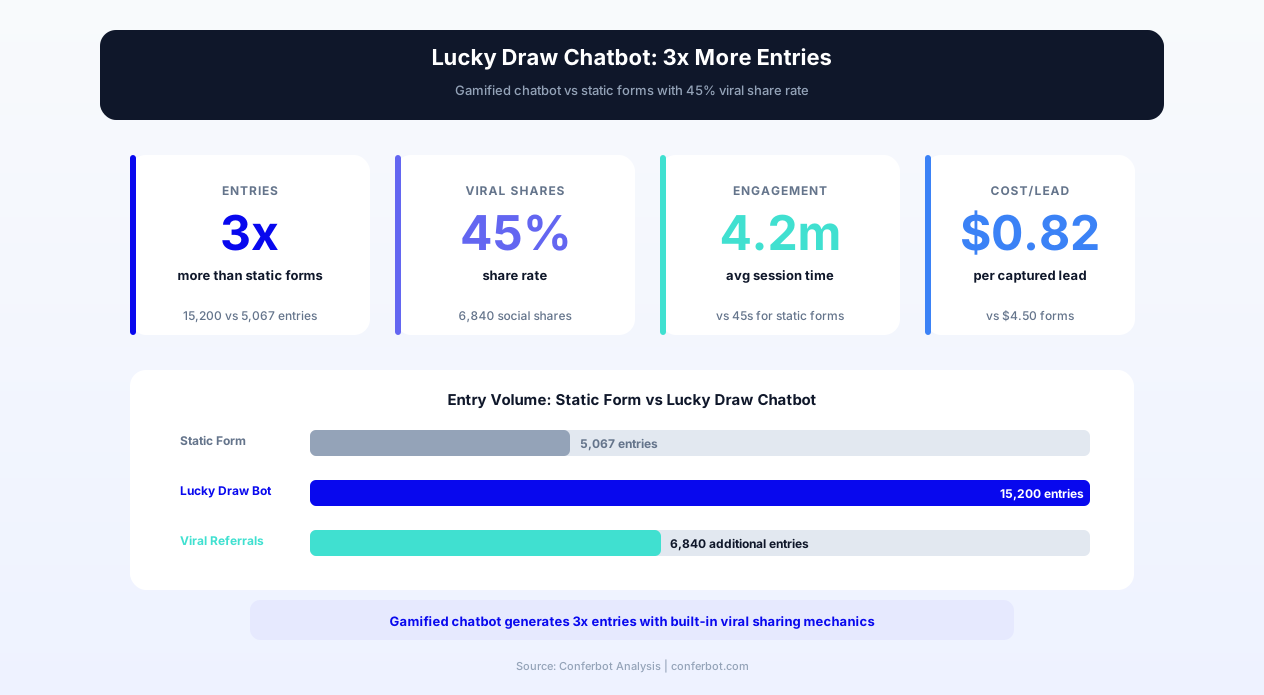
Gamification in lead generation is not a novelty tactic -- it is a psychological lever backed by decades of behavioral research. The anticipation of a potential reward activates dopamine pathways that drive engagement, completion, and sharing behavior at rates that rational value propositions cannot match. A visitor who would scroll past a newsletter signup form will spend two minutes engaging with a lucky draw that offers the same incentive, because the game mechanic transforms the exchange from a transaction ("give me your email, I give you a discount") into an experience ("play to discover your reward"). This engagement difference is measurable: gamified lead capture consistently produces much higher entry completion rates than equivalent static forms, and the emotional activation from the game experience produces meaningfully higher sharing rates than non-gamified campaigns.
The lucky draw chatbot deploys this psychological advantage within a conversational framework that also captures qualification data, enforces legal compliance requirements, manages multi-prize tier distribution, and automates post-draw follow-up sequences. Built on Conferbot's AI chatbot builder with natural language processing, it deploys across your website, WhatsApp, Instagram, and Messenger to maximize campaign reach without engineering resources. This page covers the gamification mechanics, entry and eligibility workflows, winner selection and prize distribution processes, viral sharing optimization, legal compliance management, and campaign setup best practices for marketing teams in 2026.
How the Lucky Draw Chatbot Works: Gamification Mechanics and Flow
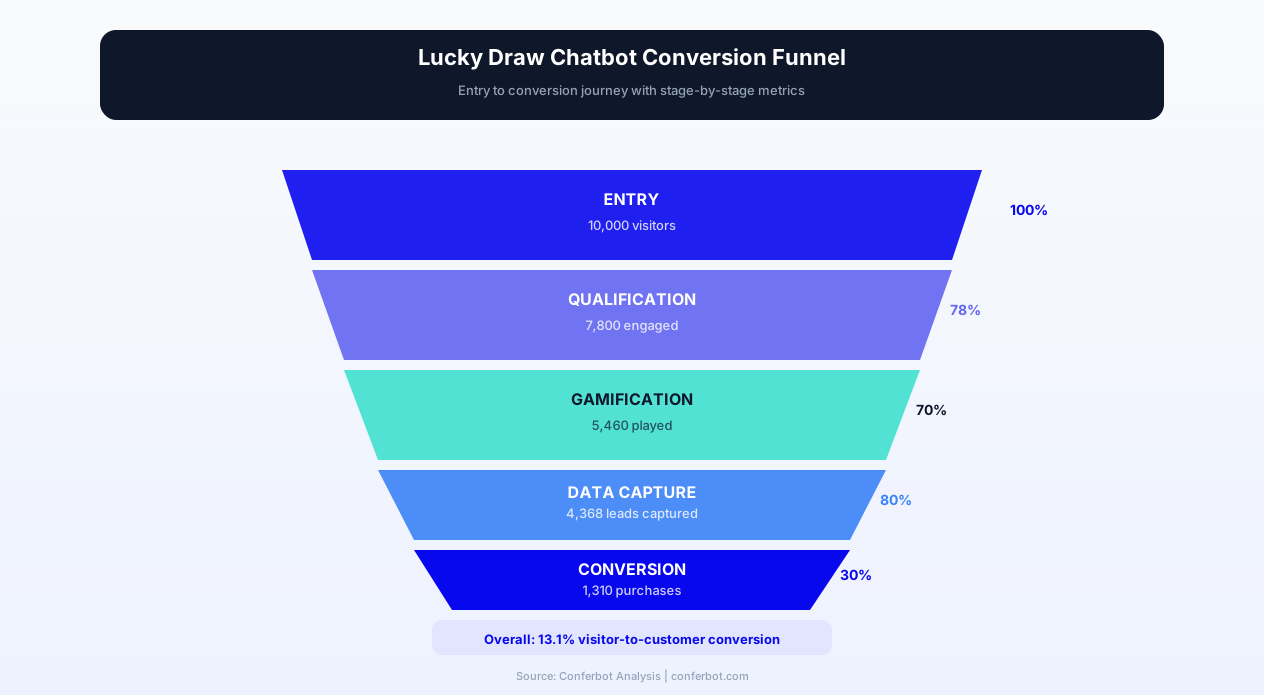
The lucky draw chatbot manages the campaign through five phases: entry and qualification, gamification interaction, result revelation, prize distribution, and viral amplification. Each phase is designed to maximize both engagement and data capture while maintaining legal compliance across jurisdictions.
Phase 1: Entry and Qualification
The chatbot opens with an energy-building introduction that communicates the prize value, the odds of winning, and the simplicity of participation. Rather than immediately requesting personal information, it builds anticipation by describing what the participant could win and how the game works. This desire-building sequence increases completion rates by establishing emotional investment before requesting data. After generating interest, the chatbot collects entry information: name, email, phone number (if required for prize delivery), and qualification questions specific to the sponsoring brand. These qualification questions are positioned as "quick questions to personalize your experience" rather than a data collection exercise, maintaining the gamified tone throughout. For brands targeting specific demographics or market segments, eligibility verification occurs at this stage -- confirming age, geographic location, or customer status before allowing entry to the game.
Phase 2: The Gamification Interaction
This is the core engagement differentiator. Rather than simply entering the participant into a random draw, the chatbot presents an interactive game mechanic that gives the participant a sense of agency and anticipation. Common mechanics include: spin-the-wheel (the chatbot simulates a wheel spin with building suspense), scratch-card reveal (progressive unveiling of the result), pick-a-door (choice between options that creates a sense of control), trivia challenge (correct answers unlock better prizes), and treasure hunt (a sequence of clues leading to a reward tier). The specific mechanic is configured based on brand personality and campaign objectives. The key psychological principle is that the participant feels they are influencing their outcome -- even when the result is predetermined by probability rules -- which creates emotional engagement that static entry cannot replicate.
Phase 3: Result Revelation and Emotional Peak
The result revelation is crafted for maximum emotional impact. For winners, the chatbot delivers the news with celebration, describing the prize in vivid terms and creating a moment of excitement that primes sharing behavior. For non-winners of the grand prize, the chatbot reframes the outcome positively by revealing a consolation reward -- a discount code, a free trial, exclusive content, or entry into a secondary draw. The critical design principle is that every participant receives something of value, ensuring the experience ends positively regardless of the draw outcome. This universal reward approach maintains positive brand association and creates a consolation conversion pathway that typically converts a meaningful share of non-winners into customers.
Phase 4: Prize Distribution and Fulfillment
Prize distribution is automated based on prize type. Digital prizes (discount codes, free subscriptions, downloadable content) are delivered instantly within the chat conversation. Physical prizes trigger a fulfillment workflow: shipping address collection, delivery confirmation, and tracking number communication. For high-value prizes, the chatbot initiates a verification process -- identity confirmation, terms acceptance, and tax documentation where required by law -- before releasing the prize. The fulfillment workflow integrates with shipping providers and inventory systems through Conferbot's API integration to automate the complete distribution process.
Phase 5: Viral Amplification and Sharing
Immediately after result revelation -- when emotional engagement is at peak -- the chatbot presents sharing opportunities. For winners, the prompt is "Share your win with friends and give them a chance to play too." For consolation reward recipients, it is "Share with a friend so they can play too -- plus get a bonus entry into next week's draw." The chatbot generates personalized sharing links for social platforms, email, and messaging apps, tracking which shares produce new entries to credit the referrer. This viral loop is the mechanism that transforms a lucky draw from a one-time campaign into an exponentially growing acquisition engine. Meaningfully higher share rates are achievable when the sharing prompt is delivered at the emotional peak moment immediately following result revelation.
Key Features of the Lucky Draw Chatbot
The lucky draw chatbot's feature set covers gamification mechanics, campaign management, legal compliance, and marketing automation integration. Each feature is designed to maximize lead capture volume, data quality, and campaign viral coefficient while minimizing operational overhead and legal risk.
| Feature | Description | Operational Benefit | Customer Benefit |
|---|---|---|---|
| Multiple game mechanics | Spin-wheel, scratch-card, pick-a-door, trivia, treasure hunt options | Matches game type to brand personality and campaign goals | Fun, interactive experience that feels like playing rather than form-filling |
| Configurable prize tiers | Multiple prize levels with independent probability settings | Controls prize budget while ensuring every participant wins something | Multiple chances to win different rewards creates sustained engagement |
| Eligibility verification | Age, location, purchase history, and custom rule checking | Ensures legal compliance across jurisdictions automatically | Clear confirmation of eligibility before investing time in entry |
| Real-time winner selection | Probability-based instant determination with configurable odds | No manual winner selection process required; fully automated | Instant result -- no waiting days or weeks for a draw announcement |
| Viral sharing engine | Personalized share links with referral tracking across platforms | Organic reach amplification at zero media cost | Easy sharing with friends through preferred social channels |
| Fraud prevention | Device fingerprinting, email validation, entry velocity monitoring | Protects prize budget from repeat entries and bot attacks | Fair competition with legitimate odds for genuine participants |
| Legal compliance engine | Terms display, age gates, void-where-prohibited rules, winner disclosure | Automates compliance across US state laws, GDPR, and international regulations | Clear terms and transparent rules build trust in the promotion |
| Consolation conversion | Delivers discount codes or trial access to non-grand-prize winners | Converts a meaningful share of non-winners into paying customers immediately | Receives tangible value even without winning the main prize |
| Lead qualification | Captures segmentation data alongside entry through conversational questions | Every entry includes qualification data for segmented follow-up | Personalized post-campaign communication based on stated interests |
| Multi-channel deployment | Runs identically on website, WhatsApp, Instagram, Messenger, and SMS | Maximizes campaign reach without rebuilding for each platform | Participates on preferred platform without downloading anything |
Spin-to-Win Mechanic Deep Dive
The spin-to-win wheel is the most popular lucky draw mechanic, deployed in a large share of gamified campaigns. The chatbot simulates the wheel spin through a narrative sequence that builds suspense: "Spinning the wheel..." followed by a brief pause, then "The wheel is slowing down..." with another pause, and finally the result announcement. This narrative tension creates an emotional experience that text alone achieves surprisingly effectively -- research on anticipation psychology shows that the dopamine release from uncertain rewards is triggered by the anticipation period regardless of whether the uncertainty is visual (a spinning wheel graphic) or narrative (a text-based suspense sequence). The chatbot format enables this mechanic on every messaging platform without requiring rich media support, making it universally deployable.
Multi-Tier Prize Architecture
The most effective lucky draw campaigns use a multi-tier prize structure rather than a single grand prize. A typical configuration includes: one grand prize (high value, low probability -- 0.1-1%), a mid-tier prize (moderate value, moderate probability -- 5-10%), and a universal consolation prize (low value, 100% probability for all remaining participants). This structure ensures every participant wins something, eliminating the negative experience of losing entirely. The consolation prize -- typically a discount code or free trial -- creates an immediate conversion pathway for all participants while the mid-tier and grand prizes provide the aspirational motivation that drives entry and sharing behavior.
Ready to try Lucky Draw?
Deploy this template in under 10 minutes. No coding required.
Use This Template Free →Before and After: Static Lead Capture vs. Gamified Lucky Draw
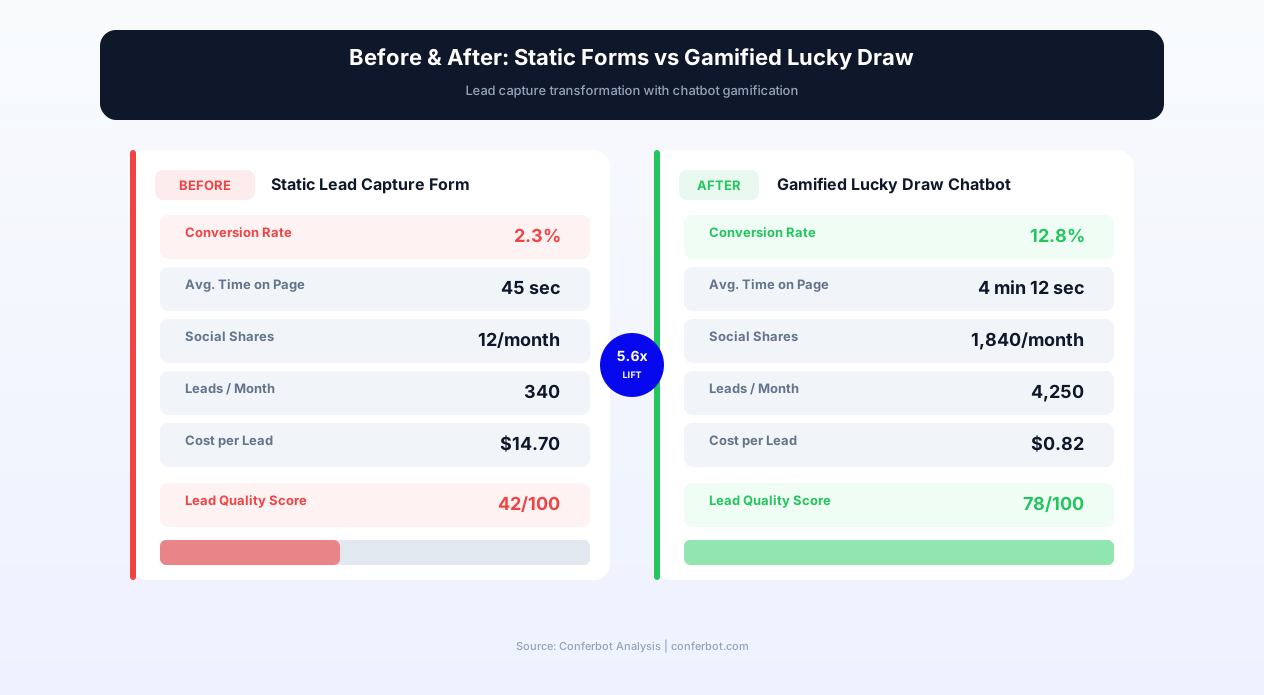
The transition from traditional lead capture methods to gamified lucky draw campaigns produces dramatic improvements in entry volume, lead quality, sharing behavior, and post-campaign conversion. The following comparison illustrates the measurable differences across the complete campaign lifecycle.
Campaign Performance: Before (Static Form)
- Entry completion rate: Low share of visitors who see the form complete it; the remainder scroll past or abandon mid-entry due to lack of motivation
- Data quality: Name and email only; no qualification data because each additional field reduces completion rate
- Viral coefficient: Very low (virtually no organic sharing)
- Time on page: Seconds on average; visitors either submit the form quickly or leave without engaging
- Post-campaign conversion: A small share of captured leads convert to customers through email nurture sequences over the following 30 days
- Cost per lead: Higher, when factoring in the traffic acquisition cost required to achieve the low conversion rate
- Brand sentiment: Neutral; the form is a transaction that creates no positive emotional association with the brand
Campaign Performance: After (Lucky Draw Chatbot)
- Entry completion rate: A large majority of visitors who engage with the chatbot complete the full entry and game sequence due to gamification motivation
- Data quality: Name, email, phone, plus several qualification data points captured conversationally without friction because participants are motivated by the game
- Viral coefficient: Meaningfully higher (organic sharing produces a real share of additional entries)
- Time on page: Minutes on average; participants engage deeply with the game mechanic, building brand exposure and recall
- Post-campaign conversion: A meaningful share of participants convert through consolation offers delivered at the emotional peak, plus additional conversion from segmented nurture sequences
- Cost per lead: Much lower when viral amplification is factored in, since organic sharing produces entries at zero marginal acquisition cost
- Brand sentiment: Strongly positive; the game creates a fun experience associated with the brand, producing meaningfully higher brand recall in post-campaign surveys
| Metric | Static Form | Lucky Draw Chatbot | Direction |
|---|---|---|---|
| Entry completion rate | Low | Much higher | Higher completion |
| Qualification data captured | 2 fields (name, email) | Several fields including preferences | More data per lead |
| Viral sharing rate | Very low | Much higher | Far more sharing |
| Cost per qualified lead | Higher | Much lower | Sharp cost reduction |
| Post-campaign conversion | Low | Meaningfully higher | Higher conversion |
| Brand recall (7-day) | Low | Much higher | Higher memorability |
Legal Compliance: Managing Lucky Draw Regulations Across Jurisdictions
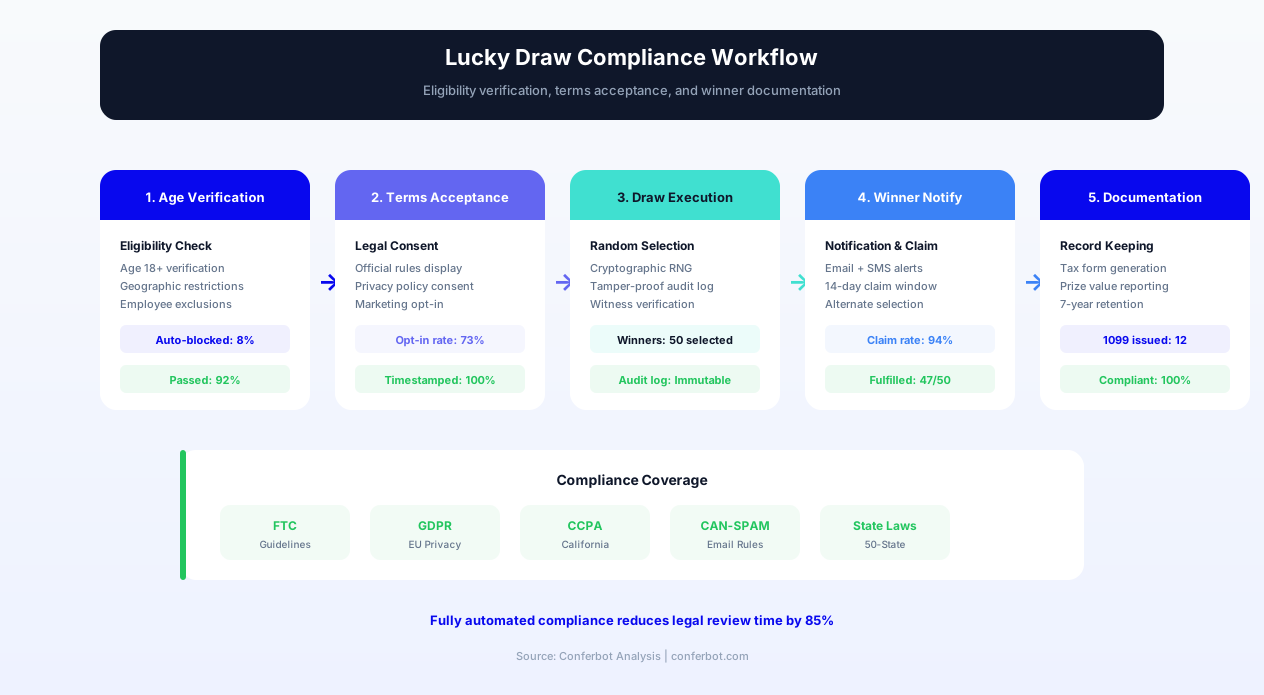
Lucky draws, sweepstakes, and promotional contests are subject to extensive regulation that varies by jurisdiction, prize value, entry method, and participant eligibility. The chatbot's compliance engine automates the legal requirements that would otherwise require manual review and legal counsel for each campaign.
United States State-Level Regulations
In the United States, promotional lucky draws (sweepstakes) are legal in all 50 states when structured correctly, but specific requirements vary by state. Key variations include: mandatory registration and bonding requirements in New York, Florida, and Rhode Island for prizes exceeding certain thresholds; mandatory disclosure of odds and prize values; no-purchase-necessary alternative entry methods (AMOE); winner disclosure requirements; and record retention requirements. The chatbot manages these variations by presenting state-appropriate terms, enforcing AMOE availability, collecting winner consent for disclosure, and generating the documentation required for state registration where applicable.
GDPR and International Data Protection
For campaigns reaching European participants, GDPR compliance requires explicit consent for data processing, clear disclosure of data use purposes, the right to withdraw and have data deleted, and data minimization (collecting only what is necessary). The chatbot implements these requirements through configurable consent flows: presenting a clear privacy notice before data collection, capturing explicit opt-in for marketing communications separate from contest entry, and providing a mechanism for participants to request data deletion after the campaign concludes. For campaigns in multiple jurisdictions, the chatbot detects participant location and presents the appropriate consent flow for their jurisdiction.
Prize Structure and Tax Implications
Prizes above certain thresholds trigger tax reporting requirements. In the United States, prizes valued at $600 or more require 1099-MISC reporting, and prizes valued at $5,000 or more require tax withholding. The chatbot manages these requirements by collecting the tax identification information (SSN or EIN) from winners of prizes above reporting thresholds, generating the required tax documentation, and communicating tax obligations clearly to winners before they accept the prize. This automated tax compliance prevents the legal exposure that marketing teams often overlook when designing promotional campaigns.
No-Purchase-Necessary and Alternative Entry
Nearly all US jurisdictions require that promotional lucky draws offer a free alternative method of entry (AMOE) to avoid classification as an illegal lottery. The chatbot implements AMOE by presenting a clear "no purchase necessary" disclosure, offering a free entry method (typically a mail-in entry or a free online entry path), and ensuring that free entries receive equal treatment in the winner selection process. The chatbot's AMOE implementation ensures that the free entry path is genuinely accessible -- not buried in fine print -- while maintaining the primary gamified entry experience for the majority of participants who engage through the promotional channel.
Record Retention and Winner Verification
Regulations require that promotional operators retain records of entries, winner selection processes, and prize distribution for periods ranging from one to seven years depending on jurisdiction and prize value. The chatbot automatically retains all entry records, winner selection logs, and fulfillment confirmations in compliance with the longest applicable retention period. For high-value prizes, the chatbot implements winner verification: identity confirmation, eligibility re-verification, and affidavit of eligibility before prize release. This documentation protects the sponsoring brand from disputes and regulatory inquiry.
businesses worldwide use Conferbot templates to automate conversations
Campaign Strategy: Maximizing ROI from Lucky Draw Lead Generation
Lucky draw campaigns achieve maximum return on investment when they are designed as integrated marketing operations rather than standalone promotional events. The strategic framework below covers campaign timing, prize economics, audience targeting, and post-draw conversion optimization for 2026.
Prize Budget Economics
The prize budget for a lucky draw campaign should be evaluated against the cost-per-lead it produces and the lifetime value of acquired leads. Model your prize budget (grand prize, mid-tier prizes, and consolation discount codes) against your expected qualified entry volume to estimate cost-per-lead -- gamified campaigns consistently land well below the cost-per-lead of paid advertising for equivalent quality leads. When the viral coefficient is factored in (each dollar of prize budget produces entries that generate additional free entries through sharing), the effective cost-per-lead drops further. The consolation prize layer (discount codes redeemed by a meaningful share of recipients) also produces direct revenue that offsets prize costs, in many cases making the campaign revenue-neutral or profitable before any follow-up nurture conversion.
Campaign Duration and Urgency Optimization
Campaign duration directly affects both entry volume and viral dynamics. Short campaigns (24-72 hours) create urgency that drives immediate action and concentrated sharing bursts, but limit total reach. Longer campaigns (7-30 days) allow viral mechanics to compound over time but risk urgency fatigue. The optimal structure for most brands is a 7-day primary campaign window with a "last 24 hours" urgency push -- short enough to maintain urgency but long enough for referral chains to propagate through social networks. For recurring campaigns, a weekly or monthly cadence with consistent timing trains the audience to anticipate and plan for participation.
Audience Targeting and Campaign Seeding
The initial audience that sees the campaign determines both total reach and lead quality. Seed the lucky draw to your highest-engagement audience segments first: email subscribers who open regularly, social media followers who engage with posts, and website visitors who have viewed product pages. These high-engagement seeds are most likely to share, initiating the viral loops that expand reach organically. Paid amplification should target lookalike audiences of your existing customers rather than broad demographic targeting -- the viral mechanics will handle broad reach expansion, and the paid budget is better allocated to reaching high-share-probability audiences who will trigger organic amplification.
Post-Draw Nurture Sequence Design
The post-draw nurture sequence is where the majority of campaign revenue is generated. Design separate sequences for each outcome tier: grand prize winners receive brand ambassador activation and social proof requests; mid-tier winners receive product education and upsell opportunities; consolation prize recipients receive urgency-driven discount activation ("Your 20% discount expires in 48 hours"); and non-redeemers receive reminder sequences with social proof from other winners. The segmentation data captured during entry enables further personalization within each tier: participants who indicated interest in specific product categories receive nurture content focused on those categories. Connect post-draw sequences to your email marketing platform through Conferbot's API integration for automated multi-touch nurture.
Recurring Campaign Framework
The highest-performing lucky draw programs run recurring campaigns that build audience anticipation and compound viral reach over time. A monthly lucky draw with escalating prizes creates a content calendar rhythm that trains audiences to engage regularly. Each iteration benefits from learnings and viral infrastructure built by previous campaigns: participants from prior draws are pre-qualified seeds for future draws, referral networks established in prior campaigns reactivate for new ones, and the brand association with fun, rewarding interactions strengthens with each positive experience. Deploy recurring campaigns with automated scheduling through Conferbot's campaign management tools, adjusting prize structures and game mechanics based on performance data from prior iterations.
Multi-Channel Deployment: Running Lucky Draws Across Platforms
The lucky draw chatbot achieves maximum reach and entry volume when deployed simultaneously across multiple platforms, with each deployment optimized for the native behaviors and conventions of that channel.
Website and Landing Page Deployment
On your website, the lucky draw chatbot deploys in three formats: as a dedicated campaign landing page where the chatbot is the primary page element, as a pop-up overlay triggered by time-on-site or exit intent, and as a widget in the corner of product pages that invites visitors to play. The landing page format is optimal for traffic driven specifically to the campaign through ads or social posts. The pop-up format captures existing website traffic that would otherwise leave without converting. The widget format is a persistent passive entry point that captures traffic over the campaign duration without disrupting the shopping experience.
WhatsApp Campaign Deployment
For brands with existing WhatsApp audiences, the lucky draw chatbot on WhatsApp delivers the highest entry completion rates of any channel because participants are already in a messaging environment optimized for conversational interaction. The campaign is promoted through a WhatsApp broadcast to opted-in contacts, and the game interaction occurs entirely within the WhatsApp chat thread. Sharing is particularly effective on WhatsApp because the shared referral link opens directly in WhatsApp for the recipient, keeping the entire viral chain within the messaging app. This in-app containment produces meaningfully higher referral conversion rates than cross-platform sharing (e.g., sharing from website to WhatsApp).
Instagram and Social Media Deployment
On Instagram, the lucky draw chatbot activates through DM automation: a post promotes the campaign with "DM us 'PLAY' to enter," and anyone who sends the trigger keyword receives the game experience in their Instagram Direct Messages. This comment-to-DM mechanic leverages Instagram's algorithm (comments boost post visibility) while capturing entries in the private DM channel where qualification data can be collected without public visibility. The in-DM experience produces meaningfully higher entry completion rates than sending Instagram users to an external landing page, because the user never leaves the Instagram app.
SMS and Rich Messaging Deployment
For brands with SMS subscriber lists, the lucky draw chatbot can run through SMS with a conversational flow adapted for the SMS format: shorter messages, numbered option selection, and streamlined question sequences. SMS campaigns achieve very high open rates and strong entry initiation rates from the subscriber base. The limitation of SMS -- no rich media -- is managed through the chatbot's text-based suspense narratives for the game mechanic, which perform surprisingly well in the SMS channel where users are accustomed to text-only communication.
Cross-Channel Campaign Coordination
When running simultaneously across multiple channels, the chatbot enforces single-entry-per-person rules across all platforms. A participant who enters via WhatsApp cannot enter again via the website -- the system recognizes them through email address matching and device fingerprinting. However, their referral link works across all platforms: a WhatsApp participant can share to Instagram contacts, who enter through Instagram DM, with the referral credit properly attributed to the WhatsApp participant. This cross-platform referral tracking is critical for accurate viral coefficient measurement and equitable bonus entry crediting. Monitor per-channel entry volumes and sharing rates through Conferbot's analytics dashboard to optimize channel allocation for future campaigns.
Setup Guide: Launching Your Lucky Draw Campaign in Under One Hour
The lucky draw chatbot is designed for rapid deployment -- marketing teams with prepared creative assets can launch a fully functional gamified campaign in under one hour. The following guide covers each setup step from campaign configuration through launch.
Step 1: Campaign Configuration (10 minutes)
Define the campaign parameters: campaign name, start and end dates, entry limits (if any), and geographic restrictions. Select the game mechanic that matches your brand personality -- spin-to-win for playful brands, trivia for educational brands, treasure hunt for adventure-oriented brands. Configure the prize tiers: grand prize (description, value, quantity, probability), mid-tier prizes (descriptions, values, quantities, probabilities), and consolation prizes (discount code values, trial durations, or content access). Set the total prize budget cap to ensure probabilities are calibrated against available prize inventory.
Step 2: Entry Flow Design (15 minutes)
Design the entry conversation using Conferbot's visual flow builder. Configure the opening message that builds excitement about the prizes, the qualification questions that capture lead data (keep to 3-5 questions maximum to maintain completion rates), the eligibility verification steps required for your jurisdiction, and the transition from qualification to the game mechanic. Include a terms-and-conditions acceptance step with a link to your official rules document. For each qualification question, write the copy in a conversational, enthusiastic tone that maintains the game's energy rather than defaulting to dry form-field language.
Step 3: Prize and Probability Configuration (10 minutes)
Set the probability weights for each prize tier. Best practice configurations: grand prize at 0.1-0.5% probability (creates genuine winner excitement without depleting prize budget), mid-tier prizes at 5-10% probability (frequent enough that participants see others winning, creating social proof), and consolation prizes at 100% for remaining participants (ensures everyone wins something). For discount code consolation prizes, generate unique codes through your e-commerce platform integration or configure the chatbot's built-in code generator to produce unique, single-use codes that prevent sharing and re-use.
Step 4: Sharing Mechanics Configuration (10 minutes)
Configure the sharing prompts, referral incentives, and platform-specific share content. Write the sharing message for each platform (WhatsApp, Instagram, Twitter, email, SMS), configure the referral bonus structure (bonus entries, prize upgrades, or exclusive access tiers), and set up the referral tracking parameters. Test the referral link generation to ensure links resolve correctly and attribution tracks properly across platforms.
Step 5: Integration and Launch (15 minutes)
Connect the chatbot to your marketing automation platform through API integration to push captured leads into your CRM and trigger post-draw email sequences automatically. Configure webhook notifications for real-time alerts when high-value prizes are won (enabling immediate social media celebration posts). Deploy the chatbot to your chosen channels: embed on website, connect to WhatsApp Business API, link to Instagram automation, and generate direct entry URLs for email and SMS promotion. Test the complete flow once from entry through sharing, verify integration data delivery, and launch the campaign.
Post-Launch Optimization
Monitor campaign performance in real time during the first 24 hours: entry completion rate (target: 75%+), share rate (target: 40%+), referral conversion rate (target: 20%+), and consolation code redemption rate (target: 10%+). If any metric falls below target, adjust the corresponding element: low completion rates suggest the entry conversation is too long; low share rates suggest the sharing prompt timing or incentive is weak; low referral conversion suggests the landing experience for referred visitors needs improvement. Make adjustments mid-campaign based on first-day data to optimize performance for the remaining campaign duration.
Lucky Draw FAQ
Everything you need to know about chatbots for lucky draw.
Why Use a Template vs Building from Scratch?
Templates give you a proven starting structure instead of a blank canvas.
| Factor | Conferbot Template | Build from Scratch | Hire a Developer |
|---|---|---|---|
| Time to deploy | 10 minutes | 2-8 hours | 2-6 weeks |
| Cost | Free | Your time | Custom dev quote |
| Proven flows | Yes, pre-built | No | Depends |
| Updates included | Automatic | Manual | Paid |
| Multi-channel | 8+ channels | 1 channel | Extra cost |
| Analytics | Built-in | Must build | Extra cost |
Related B2B Services Templates
Explore more chatbot templates like this one





Learn More About Chatbots
Go deeper on how b2b services chatbots work and how to pick the right builder.
Ready to Deploy Lucky Draw?
Start with a free-forever plan. No credit card required.