
Specialty Diet Guide
Free Food And Beverage Chatbot Template
A complete specialty diet guide chatbot template - deploy in minutes to automate conversations, capture leads, and provide 24/7 assistance.



How this template opens - rendered from its flow. Use the interactive preview to click through the full conversation.
What Is a Specialty Diet Guide Chatbot?
A specialty diet guide chatbot is an AI-powered conversational assistant that helps users navigate specific dietary lifestyles -- including keto, vegan, paleo, gluten-free, Whole30, Mediterranean, FODMAP, and more -- by providing personalized meal suggestions, restaurant recommendations, grocery lists, nutritional education, and ongoing transition support. Rather than forcing users to research their dietary choices through scattered blog posts and conflicting information, the chatbot delivers structured, reliable guidance through a single conversational interface on your website, WhatsApp, or Messenger.
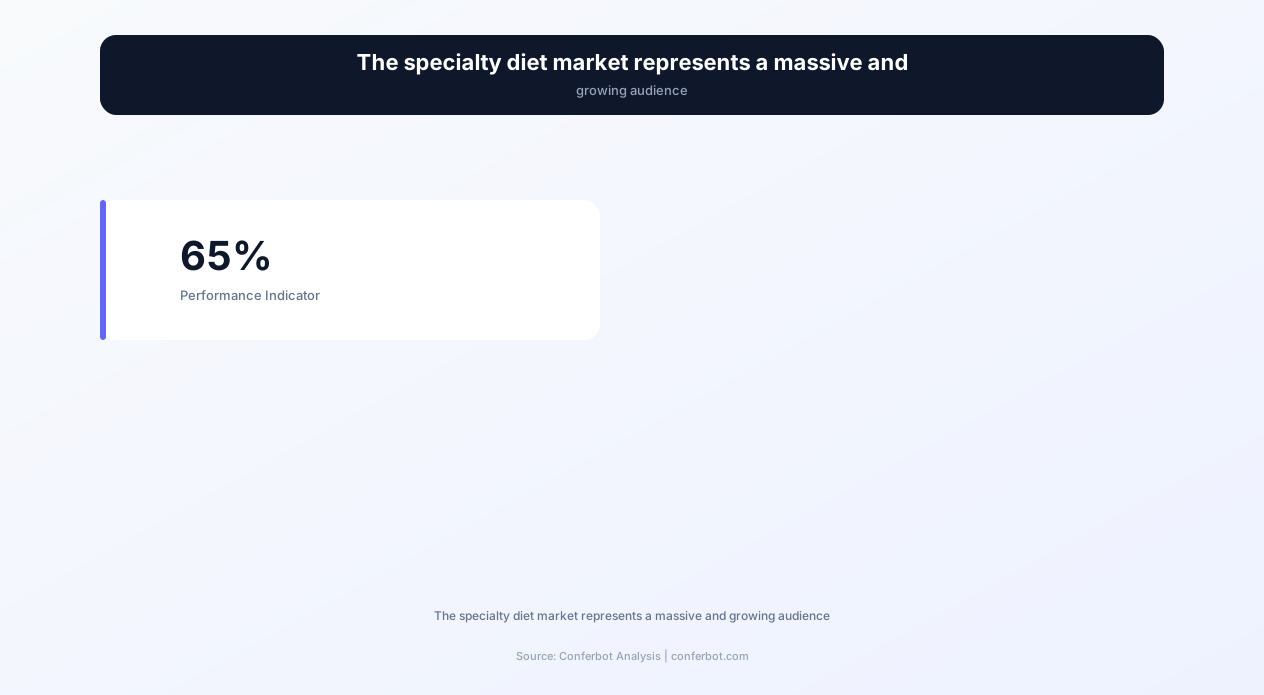
The specialty diet market is enormous and growing. In 2026, a large and growing share of consumers report following some form of dietary restriction or lifestyle diet. Keto, plant-based, and gluten-free products alone represent a multi-billion-dollar category. Yet the information landscape for specialty dieters is fragmented, contradictory, and overwhelming. A Google search for "what can I eat on keto" returns hundreds of millions of results, and a new dieter has no way to know which sources are credible.
This information chaos creates a massive opportunity for brands that can deliver structured, trustworthy dietary guidance. The chatbot format is ideal because dietary questions are inherently conversational -- "Can I eat this?", "What should I have for lunch?", "Is this restaurant keto-friendly?" -- and they occur throughout the day in real time. Users need answers while shopping, ordering at restaurants, meal prepping, and cooking, not just when sitting at a computer reading articles.
For health and wellness platforms, food brands, nutrition coaches, and recipe publishers, a specialty diet chatbot drives engagement metrics that far exceed static content: much longer session duration, higher return rates, and meaningfully higher conversion on related products and services. With Conferbot's no-code platform, you can deploy a comprehensive diet guide chatbot that covers multiple dietary lifestyles, provides medically-informed guidance, and monetizes through affiliate partnerships, premium features, and sponsored content -- all without development resources.
How the Specialty Diet Guide Chatbot Works
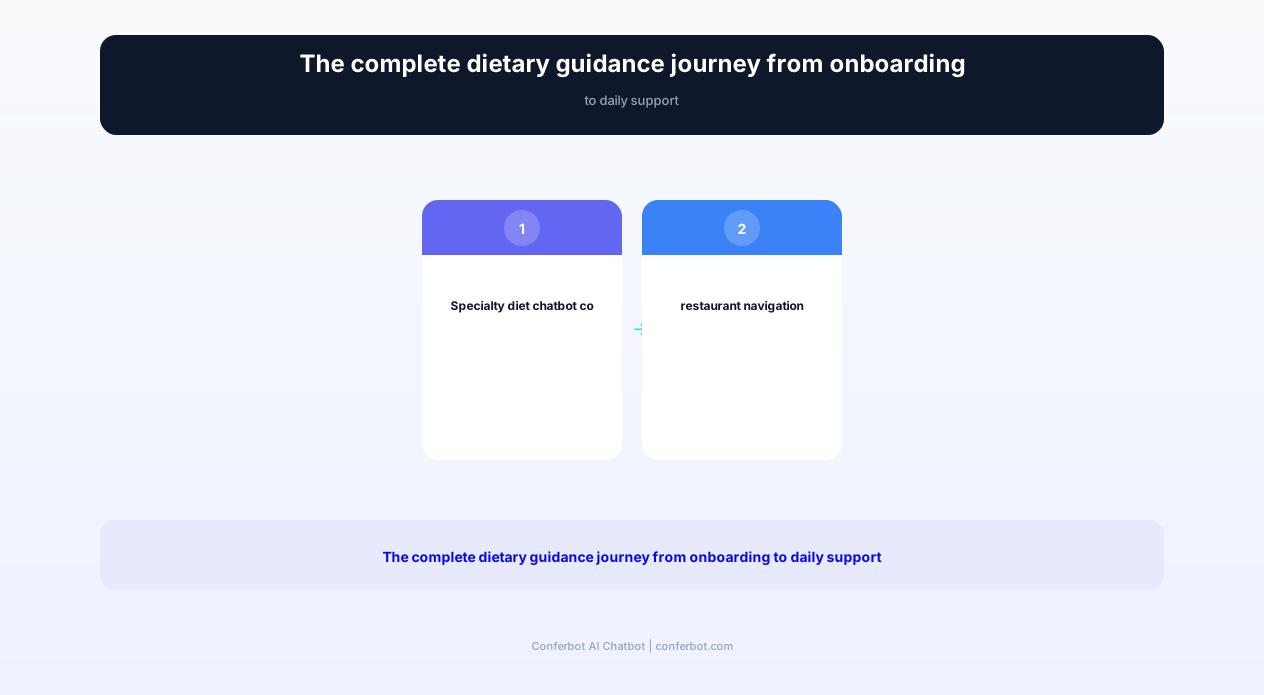
The chatbot provides comprehensive dietary guidance through an intelligent conversational framework that adapts to each user's specific diet, experience level, and daily needs. Here is the flow from initial onboarding through ongoing daily support.
Dietary Profile Setup
The conversation begins with understanding the user's dietary context. The chatbot asks which dietary lifestyle they follow (or are considering), how long they have been following it, their motivations (health, ethics, weight management, medical condition), any additional restrictions or allergies, and their current knowledge level. This profile determines the depth and tone of guidance -- a keto beginner gets fundamentals and hand-holding, while an experienced vegan gets advanced nutrition optimization and novel recipe ideas.
Daily Food Guidance
Throughout the day, users interact with the chatbot for real-time dietary decisions. Morning queries might be "What should I eat for breakfast?" or "Is this yogurt brand okay for paleo?" Lunchtime queries include "Suggest a keto lunch I can make at the office" or "What should I order at Chipotle on Whole30?" Evening queries range from dinner suggestions to social situation advice: "We are going to a friend's dinner party and I am vegan -- what should I bring?" The chatbot provides immediate, specific, actionable answers for each scenario.
Food Compliance Checking
One of the most frequently used features is the food checker. Users describe a food item or scan a barcode, and the chatbot determines whether it is compliant with their diet. This goes beyond simple ingredient checking -- the chatbot understands that technically compliant foods may still be suboptimal ("Yes, diet soda is technically keto, but artificial sweeteners can trigger cravings and stall progress for some people") and provides nuanced guidance. For processed foods, the chatbot reads ingredient lists and identifies hidden non-compliant ingredients that users commonly miss.
Restaurant Navigation
Eating out is the most challenging aspect of following a specialty diet. The chatbot provides restaurant-specific guidance: it suggests menu items that are compliant with the user's diet, warns about hidden ingredients in restaurant preparations (bread crumbs in meatballs, butter in steamed vegetables, sugar in salad dressings), and provides scripts for communicating dietary needs to servers. For popular chain restaurants, the chatbot has detailed menu analysis including nutrition information and modification suggestions.
Grocery Shopping Assistant
When users are shopping, the chatbot serves as a real-time buying guide. It generates shopping lists for a week of compliant meals, identifies diet-friendly brands and products at major retailers, compares nutritional labels between similar products, and flags common supermarket traps (products marketed as "healthy" that do not actually comply with the user's diet). The shopping assistant function is particularly popular on WhatsApp, where users access it directly in the store aisle.
Progress Tracking and Motivation
The chatbot tracks the user's dietary journey over time, noting milestones ("You have been keto for 30 days!"), monitoring reported energy levels, sleep quality, and weight changes, and providing encouragement during difficult phases like the "keto flu" or the social challenges of early veganism. This ongoing relationship transforms the chatbot from an information tool into a supportive companion that users rely on daily, driving the retention rates that make the platform valuable.
Key Features and Feature Matrix
A specialty diet guide chatbot requires deep dietary knowledge combined with practical daily-use features. Here is the complete feature matrix that powers the dietary guidance experience.
| Feature | Description | Operational Benefit | Customer Benefit |
|---|---|---|---|
| Multi-diet support | Covers 12+ dietary lifestyles including keto, vegan, paleo, gluten-free, Whole30, Mediterranean, DASH, FODMAP, carnivore, and AIP | Serves a broad audience from a single platform | Gets authoritative guidance for any dietary lifestyle |
| Food compliance checker | Analyzes any food item against the user's diet with nuanced compliant/avoid/caution ratings | Meaningfully reduces repetitive support queries | Instant answer to "can I eat this?" hundreds of times daily |
| Restaurant menu analyzer | Provides diet-compliant ordering suggestions for chain and local restaurants | Extends engagement beyond home cooking contexts | Eats out confidently without breaking their diet |
| Smart grocery lists | Generates weekly shopping lists with brand recommendations and budget optimization | Drives affiliate and retail partnership revenue | Shops efficiently with confidence every item is compliant |
| Transition coaching | Provides phased guidance for users new to a diet with graduated challenges and milestone tracking | Reduces early abandonment, increasing LTV | Transitions smoothly without overwhelm or common mistakes |
| Nutritional gap analysis | Identifies potential nutrient deficiencies common to the specific diet and recommends foods or supplements | Positions platform as medically-informed and trustworthy | Avoids health issues from unbalanced restrictive diets |
| Social situation scripts | Provides communication strategies for explaining dietary choices to family, friends, and restaurants | Addresses the #1 reported challenge driving diet abandonment | Navigates social pressure confidently and gracefully |
| Meal timing optimizer | Suggests optimal meal timing based on diet type, activity level, and goals (e.g., intermittent fasting windows for keto) | Deepens engagement with advanced optimization features | Maximizes results from their dietary approach |
Deep Dietary Knowledge Base
The chatbot's knowledge base covers each supported diet at a depth that exceeds most published resources. For keto, it understands net carbs versus total carbs, the difference between clean keto and dirty keto, the phases of fat adaptation, and common stall-breaking strategies. For veganism, it covers B12 supplementation, complete protein combinations, iron absorption optimization, and the nuances of "may contain traces of" labeling. This depth of knowledge builds the credibility that keeps users returning and referring others.
Contextual Awareness
The chatbot adapts its guidance based on context. It knows that dietary needs differ by time of day (post-workout versus bedtime), by season (heavier comfort foods in winter, lighter meals in summer), by activity level (rest day versus training day), and by social context (weekday routine versus weekend social events). This contextual intelligence means the chatbot's suggestions feel relevant and timely rather than generic, which is the key differentiator between a chatbot users rely on daily and one they try once and forget.
Evidence-Based Guidance
All dietary recommendations are grounded in nutritional science and clearly distinguish between evidence-based guidance and popular opinions. When the chatbot addresses controversial topics (artificial sweeteners on keto, soy consumption for men, intermittent fasting for women), it presents the current scientific consensus, notes areas of ongoing debate, and avoids the dogmatic positioning that characterizes much online dietary content. This balanced, evidence-based approach appeals to the growing segment of health-conscious consumers who are tired of dietary misinformation.
Ready to try Specialty Diet Guide?
Deploy this template in under 10 minutes. No coding required.
Use This Template Free →Diet-Specific Feature Deep Dive
Each dietary lifestyle has unique challenges and information needs. The chatbot provides specialized features tailored to the specific requirements of each supported diet.
Keto Diet Features
The keto module tracks net carb intake with a daily counter, provides macro ratio guidance (typically 70-75% fat, 20-25% protein, 5-10% carbs), identifies hidden carbs in common foods, explains the transition from glucose to fat-burning ("keto flu" management), and monitors signs of ketosis. It handles keto-specific questions like "How many net carbs are in this?" "Am I eating too much protein?" and "Will this knock me out of ketosis?" For the millions of Americans currently following a ketogenic diet, this level of specific guidance addresses the complexity that causes many keto dieters to quit within the first few months.
Vegan Diet Features
The vegan module goes beyond food to cover the lifestyle dimension -- clothing, cosmetics, and household products. It identifies non-vegan ingredients in processed foods (casein, whey, gelatin, carmine, lanolin), suggests plant-based alternatives for every animal product, provides complete protein combination guidance, addresses common nutritional concerns (B12, omega-3, iron, zinc, calcium), and helps users navigate the ethical and social dimensions of veganism. Restaurant guidance includes identifying truly vegan options versus items that appear vegan but contain hidden animal products.
Paleo Diet Features
The paleo module helps users identify which foods are considered ancestral and which are modern additions to avoid. It handles the gray areas that confuse most paleo followers -- white rice, ghee, dark chocolate, certain legumes -- with nuanced guidance that explains the reasoning behind different paleo schools of thought (strict paleo versus primal versus autoimmune protocol). Meal suggestions emphasize whole foods with diverse preparation methods to counter the common complaint that paleo eating becomes monotonous.
Gluten-Free Diet Features
The gluten-free module distinguishes between celiac disease (medical necessity requiring strict avoidance including cross-contamination) and gluten sensitivity (where trace amounts may be tolerable). It identifies hidden gluten in processed foods (malt flavoring, modified food starch, hydrolyzed vegetable protein), evaluates "gluten-free" product certifications, guides users through restaurant ordering with cross-contamination awareness, and provides alternatives for gluten-containing favorites. For the roughly 3 million Americans with celiac disease and the many more who manage gluten sensitivity, this chatbot provides the constantly-needed guidance that makes daily life manageable.
FODMAP and Medical Diets
For medically-prescribed diets like low-FODMAP (used for IBS management), the chatbot guides users through the structured elimination and reintroduction phases. During elimination, it identifies high-FODMAP foods in each category (fructose, lactose, fructans, galactans, polyols) and suggests compliant alternatives. During reintroduction, it helps users track which FODMAP groups trigger symptoms. The chatbot includes appropriate medical disclaimers and recommends working with a registered dietitian for medically-prescribed diets, positioning itself as a supportive tool rather than a medical advisor.
Combination Diets and Custom Protocols
Many users follow hybrid dietary approaches -- keto-vegan, paleo-AIP, gluten-free Mediterranean -- or have custom protocols prescribed by nutritionists. The chatbot handles these combinations by applying multiple filter layers simultaneously and resolving conflicts intelligently. When a user follows both keto and vegan, the chatbot focuses on the relatively narrow overlap of compliant foods (avocados, coconut products, nuts, seeds, low-carb vegetables) and provides creative meal ideas within those constraints. This flexibility to handle custom dietary combinations is something static content cannot deliver.
Before and After: Measurable Impact
Specialty diet guide chatbots deliver significant improvements across user engagement, retention, and monetization metrics.
| Metric | Without Chatbot | With Chatbot |
|---|---|---|
| Average session duration | Brief, article-length visits | Much longer, conversational sessions |
| Daily active users (returning) | A small share of total users | A substantially larger share |
| Diet adherence rate (30-day) | Baseline | Meaningfully higher |
| Product conversion rate | Baseline | Substantially higher |
| Support ticket volume | Baseline | Meaningfully lower |
| Content engagement depth | A single article per session | Several interactions per session |
| Referral rate | Baseline | Substantially higher |
| Subscription retention (monthly) | Baseline | Meaningfully higher |
The Daily Engagement Shift
The most transformative change is the shift from occasional visits to daily engagement. Static diet content follows a typical pattern: users visit heavily in the first week of starting a new diet, then engagement drops sharply as they exhaust the available articles. A chatbot breaks this pattern because dietary questions arise daily -- "What can I eat for lunch today?", "Is this product compliant?", "What should I order at this restaurant?" -- creating natural daily touchpoints. This shift represents a fundamental change in the platform's relationship with its audience.
Diet Adherence and Health Outcomes
The chatbot's impact on 30-day diet adherence is perhaps the most meaningful metric for health-focused platforms. The primary reasons people abandon specialty diets are: not knowing what to eat (solved by daily meal suggestions), accidentally eating non-compliant foods (solved by the food checker), social pressure and inconvenience (solved by restaurant guidance and social scripts), and feeling deprived or bored (solved by varied recipe suggestions and cuisine exploration). The chatbot systematically addresses each of these abandonment drivers.
Revenue Impact
The lift in product conversion rates reflects the chatbot's ability to contextually recommend products at the moment of highest relevance. When a user asks "What oil should I cook with on keto?" and the chatbot recommends MCT oil with an affiliate link, the conversion rate is dramatically higher than a banner ad for the same product on a diet article page. The improvement in subscription retention further compounds revenue, as retained subscribers represent the most profitable user segment.
Word-of-Mouth Growth
The referral rate increase is driven by the chatbot's practical daily value. When a user successfully navigates a restaurant dinner party using the chatbot's guidance, they tell their dieting friends about it. When a user finds a game-changing keto breakfast suggestion, they share it. This organic referral growth reduces customer acquisition costs and brings in users who are pre-qualified by the recommendation of someone they trust.
businesses worldwide use Conferbot templates to automate conversations
Setup and Deployment Guide
Launching a specialty diet guide chatbot with Conferbot follows a systematic process that ensures comprehensive dietary coverage and accurate guidance from day one. Here is the complete implementation roadmap.
Step 1: Select Diets to Support
Begin by identifying which dietary lifestyles your audience follows. Conferbot's specialty diet template includes pre-built modules for the most popular diets: keto, vegan, vegetarian, paleo, gluten-free, Whole30, Mediterranean, DASH, low-FODMAP, and AIP (autoimmune protocol). Activate the modules relevant to your audience and customize each with your brand's tone and any proprietary dietary guidance using the no-code editor. You can launch with 2-3 diets and add more over time based on user demand.
Step 2: Configure the Food Database
The food compliance checker requires a comprehensive food database with dietary classification. Conferbot provides a base database of 15,000+ food items already classified for all supported diets. Supplement this with your own product database, branded food items relevant to your market, and regional food items that may not be in the default database. Connect product databases through the API integration if you are a grocery retailer or food brand with a product catalog.
Step 3: Build the Restaurant Database
Add restaurant menu data for the chains and cuisines popular with your audience. Conferbot includes menu analysis for the top 50 US restaurant chains. Add local restaurant data for your market, cuisine-type guidance for restaurant categories, and menu modification instructions for each supported diet. This database expands over time as users ask about restaurants that are not yet covered, and the chatbot flags these gaps for your team to fill.
Step 4: Configure Meal Suggestions
Connect a recipe database or use Conferbot's built-in meal suggestion engine to provide diet-compliant meal ideas. Configure suggestions for all meal types (breakfast, lunch, dinner, snacks), varying complexity levels, seasonal appropriateness, and budget ranges. The meal suggestion engine learns from user preferences over time, but starting with a curated set of high-quality suggestions for each diet ensures a strong first impression that drives continued engagement.
Step 5: Set Up Transition Coaching Flows
Configure the phased transition sequences for users new to each diet. A typical sequence spans 4-6 weeks with graduated challenges, daily check-ins, troubleshooting guides for common early issues (keto flu for keto, protein combining anxiety for vegans, social pressure for all diets), and milestone celebrations. These transition flows are the highest-retention feature of the chatbot, as they create a structured journey that users are motivated to complete.
Step 6: Deploy Across Channels
Deploy the chatbot on your website (on diet guide pages, recipe pages, and product pages), WhatsApp (the primary channel for in-store shopping and restaurant guidance), Messenger (for social engagement), and Instagram (for diet-related content engagement). WhatsApp is typically the highest-engagement channel for diet chatbots because users access it in the real-world contexts where dietary decisions happen -- grocery stores, restaurants, and social events.
Step 7: Launch and Iterate
Launch with your core audience and monitor engagement through Conferbot's analytics. Track which dietary questions are asked most frequently, which features drive the highest engagement, where users drop off or express frustration, and which foods or restaurants are queried but not yet in the database. Use this data to expand coverage, refine guidance accuracy, and add new features. Dietary chatbots improve significantly over the first 60 days as the data reveals exactly what your audience needs most, allowing you to prioritize updates that have the highest impact.
Monetization and Revenue Strategies
A specialty diet guide chatbot creates multiple monetization opportunities that leverage the daily, high-intent nature of dietary guidance interactions. Here are the proven revenue strategies for 2026.
Affiliate Product Recommendations
Every dietary question is a potential product recommendation: "What sweetener should I use on keto?" leads to a monk fruit sweetener affiliate link; "I need a vegan protein powder" leads to a plant-based supplement recommendation. These contextual product suggestions convert far better than traditional display advertising, because they answer a specific question at the exact moment the user is making a purchasing decision. Specialty diet chatbots with meaningful monthly interaction volume can generate substantial monthly affiliate revenue.
Brand Partnerships and Sponsored Content
Food brands targeting specialty diet consumers pay premium rates for placement in chatbot recommendations. A keto-friendly snack brand, a vegan meal delivery service, or a gluten-free baking mix company can sponsor recommendations within their relevant diet module. These partnerships feel natural because users are literally asking for product suggestions. Sponsored placements in dietary chatbots command premium rates relative to display advertising, because the targeting precision is unmatched -- the user has self-identified their diet, is actively seeking compliant products, and is engaged in a trusted conversation.
Premium Subscription Tiers
The chatbot naturally segments into free and premium experiences. Free users receive basic food compliance checking and standard meal suggestions. Premium subscribers unlock personalized meal planning, detailed nutritional tracking, restaurant menu analysis, transition coaching programs, family profile management, and priority response times. Health and diet platforms report meaningful conversion to premium from active chatbot users, with monthly subscription pricing ranging from $4.99-12.99. The key to high conversion is ensuring the free tier demonstrates enough value to prove the premium experience is worth paying for.
Nutrition Coaching Upsell
The chatbot serves as a lead generation engine for human nutrition coaching services. Users who engage deeply with the dietary chatbot -- asking complex questions, tracking progress, expressing frustration with plateaus -- are ideal candidates for one-on-one coaching. The chatbot can suggest coaching consultations at appropriate moments: "It sounds like you might benefit from a personalized consultation with one of our registered dietitians. Would you like to schedule a session?" This warm lead generation channel converts dramatically higher than cold outreach.
Meal Kit and Delivery Partnerships
Specialty diet meal delivery and meal kit services are natural partners for diet guide chatbots. When a user asks "I am tired of cooking keto every night -- are there any good meal delivery options?" the chatbot recommends partnered services with exclusive discount codes. These referrals are highly qualified (the user has self-identified their diet and expressed a willingness to pay for convenience) and convert at a strong rate. Commission structures for meal delivery referrals typically range from $15-40 per new subscriber.
Combined Revenue Model
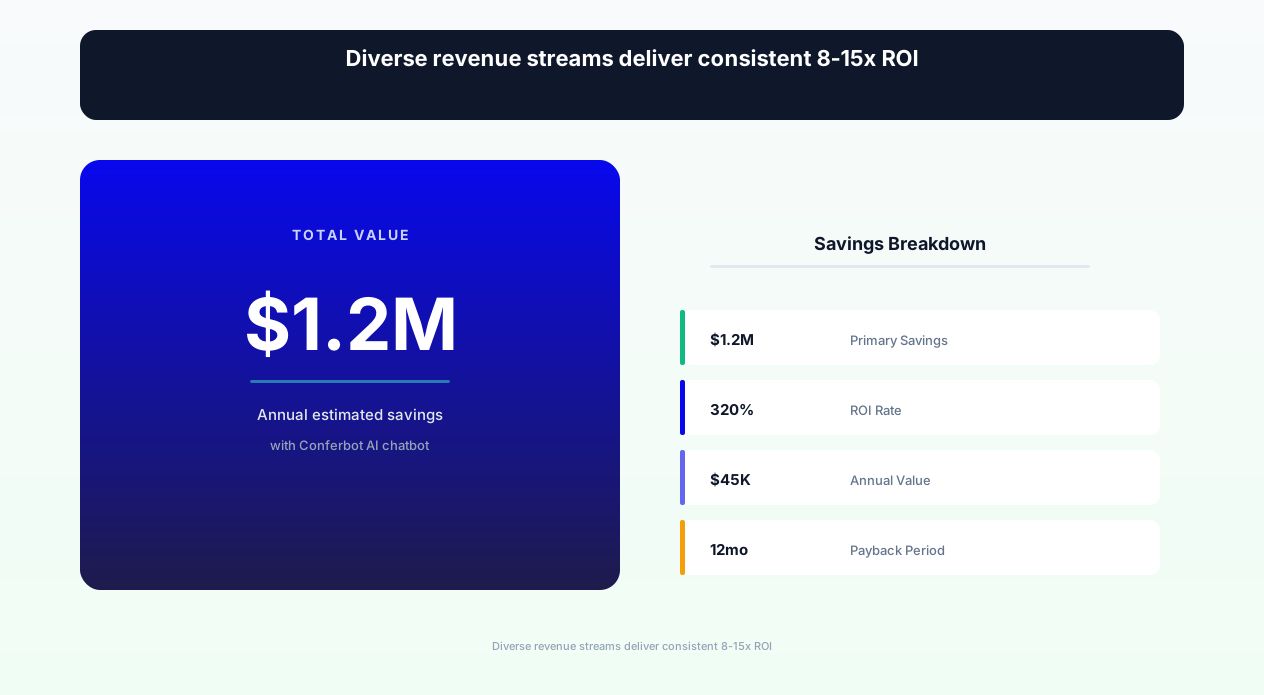
The most successful specialty diet chatbot operators combine multiple revenue streams: affiliate income provides a baseline, premium subscriptions deliver predictable recurring revenue, brand partnerships add high-margin seasonal income, and coaching upsells capture high-value users. A diet chatbot platform with a meaningful monthly active user base can generate substantial monthly revenue across all channels, with strong operating margins due to the low incremental cost of serving additional chatbot conversations. The platform cost through Conferbot is a fraction of this revenue, delivering a strong return on investment.
Specialty Diet Guide FAQ
Everything you need to know about chatbots for specialty diet guide.
Why Use a Template vs Building from Scratch?
Templates give you a proven starting structure instead of a blank canvas.
| Factor | Conferbot Template | Build from Scratch | Hire a Developer |
|---|---|---|---|
| Time to deploy | 10 minutes | 2-8 hours | 2-6 weeks |
| Cost | Free | Your time | Custom dev quote |
| Proven flows | Yes, pre-built | No | Depends |
| Updates included | Automatic | Manual | Paid |
| Multi-channel | 8+ channels | 1 channel | Extra cost |
| Analytics | Built-in | Must build | Extra cost |
Related Food And Beverage Templates
Explore more chatbot templates like this one






Learn More About Chatbots
Go deeper on how food and beverage chatbots work and how to pick the right builder.
Ready to Deploy Specialty Diet Guide?
Start with a free-forever plan. No credit card required.