Drift Pricing in 2026: What You Need to Know Before Committing
Drift (now part of Salesloft since the 2023 acquisition) remains one of the most recognized names in conversational marketing. It is also one of the most expensive. If you have tried to find transparent pricing on their website, you have probably noticed a pattern: there are no public prices. Everything is "contact sales" - which is usually a sign that the number will be high enough to require a conversation.
After analyzing contracts from dozens of Drift customers, reviewing public data from G2, Capterra, and industry reports, and speaking with companies that have switched away from Drift, we have compiled the most comprehensive Drift pricing breakdown available in 2026.
The Headline Numbers
Drift operates on a tiered pricing model with annual contracts. Here is what each tier actually costs:
| Plan | Monthly Cost (Billed Annually) | Target Audience |
|---|---|---|
| Premium | $2,500/month ($30,000/year) | Small-to-mid market teams |
| Advanced | $4,500-6,000/month | Growth-stage companies |
| Enterprise | $8,000-15,000+/month | Large organizations |
These are base prices. The actual cost for most companies lands 30-60% higher once you factor in add-ons, seat licenses, overage charges, and implementation fees. The total first-year cost for a mid-market company typically ranges from $45,000 to $120,000.
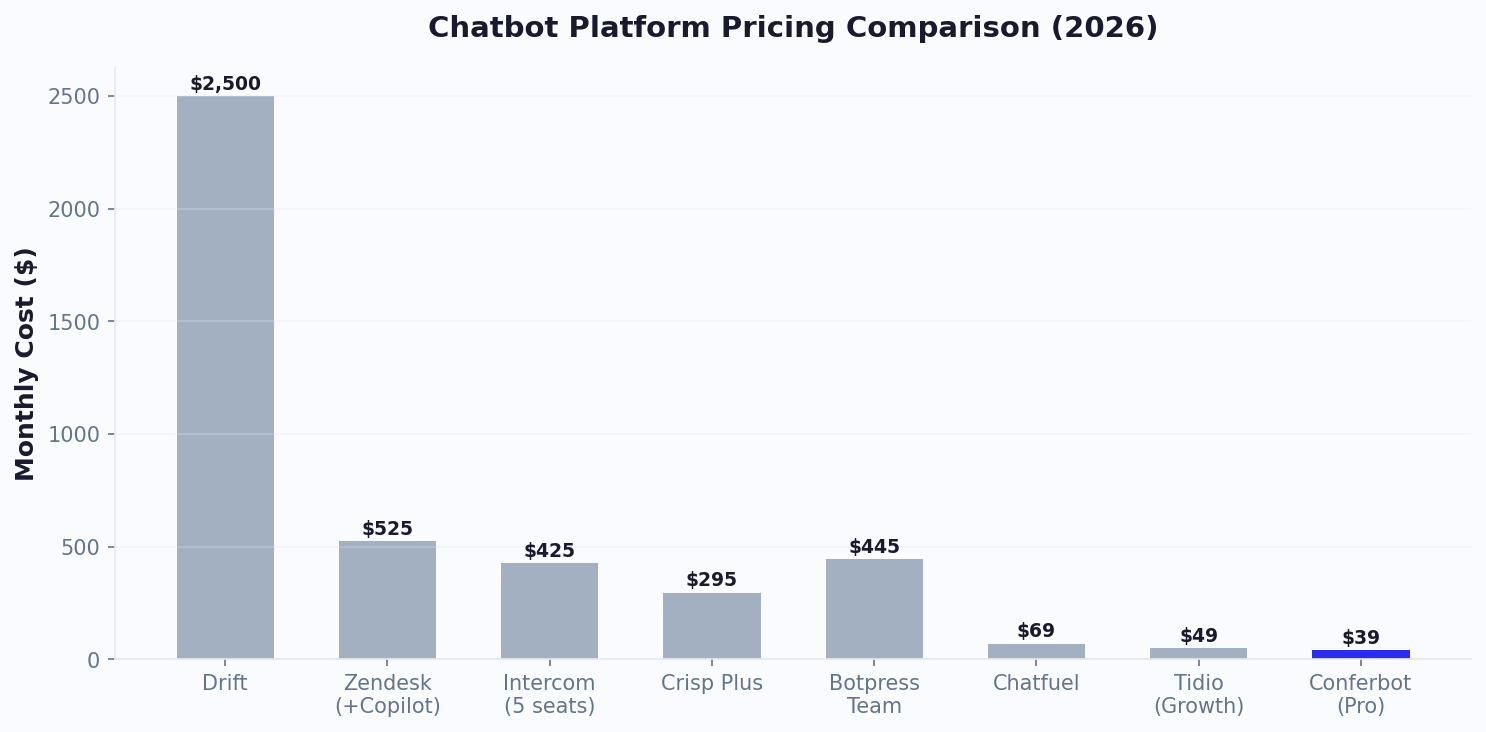
Compare that to platforms like Conferbot, where full-featured chatbot plans start at a fraction of that cost with no hidden fees, no annual lock-in, and no per-seat pricing. The price gap is staggering - and for most businesses, the feature gap does not justify it.
Why Drift Is So Expensive
Drift's pricing reflects its positioning as an enterprise conversational marketing platform, not a chatbot tool. You are paying for the brand, the Salesloft ecosystem integration, and enterprise sales infrastructure. Whether you need all of that depends entirely on your use case and scale.
Drift Plan-by-Plan Breakdown: What Each Tier Includes (And What It Doesn't)
Let us dissect each Drift plan to understand exactly what your $2,500-15,000/month buys - and what critical features cost extra.
Drift Premium ($2,500/month)
The entry-level plan includes:
- Live chat widget for website
- Basic chatbot builder with pre-built playbooks
- Meeting scheduling (calendar integration)
- Email fallback capture when agents are offline
- Salesforce and HubSpot integration (basic)
- 5 seat licenses included
What's NOT included in Premium:
- AI-powered chatbot (requires Advanced or higher)
- Custom chatbot training on your data
- A/B testing for chat playbooks
- Revenue attribution reporting
- Account-based marketing (ABM) features
- Fastlane (form-to-conversation routing)
- Multi-language support
The Premium plan is essentially a live chat tool with basic rule-based bots. At $2,500/month, you are paying enterprise prices for what many competitors offer at $50-200/month. Conferbot's AI chatbot builder includes AI-powered bots, unlimited conversations, and multi-channel deployment at a fraction of this cost.
Drift Advanced ($4,500-6,000/month)
This tier adds:
- AI-powered chatbot with intent recognition
- A/B testing for chat playbooks
- Fastlane (instant routing from forms to conversations)
- Custom chatbot training
- Advanced Salesforce/HubSpot integration
- 10 seat licenses included
Still NOT included:
- Full ABM targeting suite
- Revenue attribution and ROI reporting
- Custom API access
- Dedicated customer success manager
- Multi-language AI
Drift Enterprise ($8,000-15,000+/month)
The full feature set, including:
- Everything in Advanced
- Account-based marketing targeting
- Revenue attribution dashboards
- Custom API access and webhooks
- Dedicated CSM and priority support
- Custom onboarding and training
- Flexible seat licensing
Even at Enterprise pricing, some features like advanced analytics, professional services, and custom integrations may incur additional fees. The total cost of ownership for Enterprise frequently exceeds $150,000-200,000/year when all costs are tallied.
Drift ROI Analysis: Is the Premium Price Worth It?
Price alone does not determine value. Let us analyze whether Drift's premium pricing delivers proportionally premium ROI.
Where Drift Delivers Strong ROI
Drift excels in specific scenarios:
- Enterprise B2B with $50K+ deal sizes: When a single converted lead is worth $50,000-500,000, Drift's advanced ABM targeting and revenue attribution features can justify the cost. Converting just 1-2 additional enterprise deals per year covers the subscription.
- Salesloft ecosystem users: If your sales team already lives in Salesloft for outbound sales, Drift's native integration creates genuine workflow advantages that third-party alternatives cannot replicate.
- Companies with 50+ sales reps: Drift's routing, round-robin assignment, and rep-specific playbooks are genuinely sophisticated for large sales organizations.
Where Drift's ROI Falls Short
For the vast majority of businesses, Drift's ROI does not justify the cost premium:
- SMBs and mid-market companies: If your average deal size is under $10,000, the math rarely works. Spending $50,000+/year on a chatbot platform when your total annual revenue is $500K-2M is disproportionate.
- Customer support use cases: Drift is built for sales and marketing. Its support capabilities are limited compared to dedicated support chatbot platforms. If support is your primary use case, you are overpaying for features you will never use.
- Multi-channel deployment: Drift focuses on website chat. If you need chatbots on WhatsApp, Instagram, Messenger, Telegram, or mobile apps, Drift's channel coverage is limited. Platforms like Conferbot offer native deployment across all major channels at no additional cost.
- E-commerce businesses: Drift lacks native e-commerce integrations (product catalogs, cart recovery, order tracking). E-commerce teams need platforms with Shopify and commerce-specific features.
The ROI Math
Let us model a realistic scenario for a B2B company spending $50,000/year on Drift Premium:
| Metric | Drift ($50K/yr) | Conferbot ($3K/yr) |
|---|---|---|
| Conversations/month | 2,000 | 2,000 |
| Lead capture rate | 22% | 20% |
| Leads captured/month | 440 | 400 |
| Qualified leads (30%) | 132 | 120 |
| Closed deals (10%) | 13.2 | 12 |
| Revenue at $5K AOV | $66,000/mo | $60,000/mo |
| Annual revenue from chatbot | $792,000 | $720,000 |
| Annual platform cost | $50,000 | $3,000 |
| Net ROI | $742,000 (14.8x) | $717,000 (239x) |
Drift generates slightly more revenue due to marginally better lead scoring - but the cost-adjusted ROI is dramatically lower. You pay 16x more for a 10% incremental gain. For most businesses, that extra $47,000/year is better spent on marketing, sales headcount, or product development.
5 Drift Alternatives That Cost 80-95% Less
If Drift's pricing does not match your budget or use case, here are five alternatives that deliver comparable functionality at a fraction of the cost.
1. Conferbot - Best All-Around Drift Alternative
Conferbot is the strongest Drift alternative for businesses that want enterprise chatbot features without enterprise pricing. Key advantages:
- AI chatbot builder with GPT-powered conversation flows - no coding required
- Omnichannel deployment: Website, WhatsApp, Messenger, Instagram, Telegram, Slack, Teams
- Built-in calendar booking and live chat
- No per-seat pricing - unlimited team members on all plans
- Advanced analytics and AI knowledge base
- Month-to-month billing available - no annual lock-in required
Conferbot delivers 90%+ of Drift's functionality at 90-95% lower cost. For businesses under $10M in revenue, it is the clear choice.
2. Intercom - Enterprise Alternative
If you need Drift-level enterprise features with better support capabilities, Intercom is the closest competitor. Pricing starts at $74/month for the basic plan but scales to $999+/month for the AI-powered features that compete with Drift. Still significantly cheaper than Drift, but pricier than most chatbot-first platforms.
3. Tidio - Budget-Friendly Option
Tidio combines chatbot and live chat at $29-59/month. Strong for e-commerce with Shopify integration. Limited AI sophistication compared to Conferbot or Drift, but excellent for businesses with straightforward FAQ and lead capture needs.
4. HubSpot Chatbot - CRM-Native Option
Free with HubSpot CRM. Basic chatbot builder included in all HubSpot plans. Best for companies already embedded in the HubSpot ecosystem. The chatbot itself is less capable than dedicated platforms, but the CRM integration is seamless.
5. Freshchat - Mid-Market Alternative
Part of the Freshworks suite. Pricing from $19-79/month per agent. Strong omnichannel support and AI capabilities. Good for companies using Freshdesk or Freshsales for existing workflows.
Feature Comparison: Drift vs. Alternatives
| Feature | Drift | Conferbot | Intercom | Tidio |
|---|---|---|---|---|
| Starting price | $2,500/mo | See pricing | $74/mo | $29/mo |
| AI chatbot | Advanced tier+ | All plans | Premium tier+ | Premium tier+ |
| WhatsApp/Messenger | Limited | Native | Premium | Premium |
| Calendar booking | Yes | Yes | Add-on | No |
| Per-seat pricing | Yes | No | Yes | Yes |
| Annual contract required | Yes | No | No | No |
| No-code builder | Yes | Yes | Yes | Yes |
| Knowledge base AI | Enterprise only | All plans | Premium | No |
| Free trial | No (demo only) | Yes | 14 days | 7 days |
For a deeper dive into switching from Drift, see our complete Drift alternative guide with migration steps and feature mapping, or the side-by-side Drift alternative comparison covering the March 2026 sunset and what replaces each part of the platform.
When Drift Is Actually Worth the Price (And When It Isn't)
To be fair, there are scenarios where Drift's premium pricing is justified. Here is an honest assessment of when to choose Drift and when to choose an alternative.
Choose Drift If:
- Your average deal size exceeds $50,000 and you need enterprise-grade ABM features to target and convert named accounts
- You are already a Salesloft customer and want native integration between outbound sales sequences and inbound chat
- Your sales team has 50+ reps who need sophisticated routing, round-robin assignment, and rep-specific playbooks
- You have a $100K+ budget for conversational marketing tools and need a platform your enterprise procurement team will approve
- Revenue attribution to chat is critical for your reporting and executive dashboards
Choose an Alternative If:
- Your budget is under $50,000/year for chatbot tooling - Drift's lowest tier will consume your entire budget
- You need multi-channel deployment across WhatsApp, Messenger, Instagram, and mobile apps - Drift's channel coverage is website-centric
- Customer support is your primary use case - Drift is a sales tool, not a support platform
- You want month-to-month flexibility - Drift requires annual commitments
- You are in e-commerce, healthcare, education, or another vertical that needs industry-specific chatbot features rather than B2B sales playbooks
- You need a knowledge base-powered bot that can be trained on your documentation, product catalog, or help center content
The Migration Question
If you are currently on Drift and considering a switch, the migration process is straightforward. Most Drift alternatives, including Conferbot, offer migration assistance. The typical migration timeline is 1-2 weeks:
- Week 1: Export conversation flows and contact data from Drift. Rebuild key playbooks in the new platform (most modern builders reduce 2-hour Drift playbooks to 15-minute flows).
- Week 2: Test, integrate with CRM, and deploy. Run both platforms in parallel for 3-5 days to validate.
The most common feedback from Drift-to-Conferbot migrants: "We replicated our Drift setup in a day and got features we were paying $5,000/month extra for on Drift - like WhatsApp deployment, analytics dashboards, and unlimited seats - included at no additional cost."
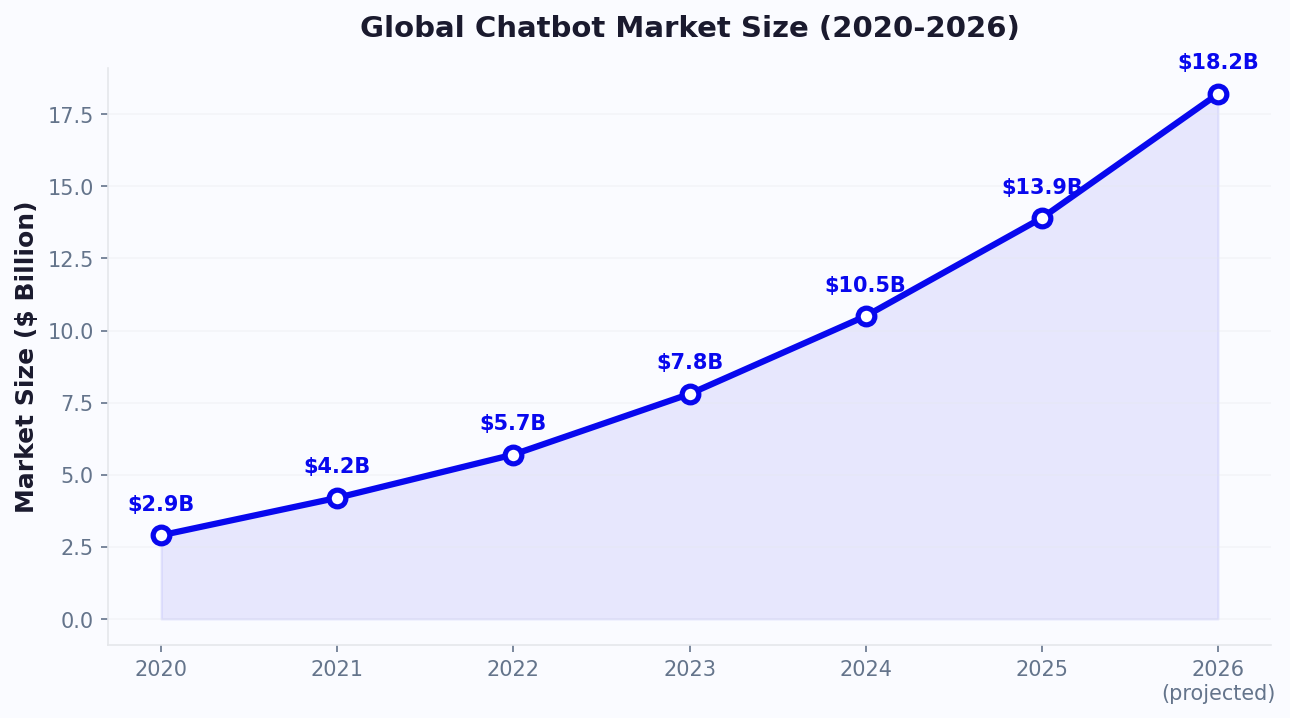
The conversational marketing space has matured significantly since Drift pioneered the category. According to Gartner's 2025 forecast, the conversational AI market is expected to grow at 25% annually through 2028, with most growth driven by accessible mid-market platforms rather than enterprise-priced incumbents. The features that once justified $2,500/month are now standard across platforms charging $50-200/month. Unless you need Drift's enterprise-specific capabilities, there are better places to invest your chatbot budget. For a broader look at the chatbot market, see our chatbot pricing comparison and Intercom pricing breakdown.
Real Customer Cost Examples: What 3 Companies Actually Pay for Drift
Pricing tables and tier breakdowns are useful, but nothing illustrates Drift's true cost like real-world examples. We interviewed three companies at different stages that used Drift between 2024 and 2026, documented their actual spend, and analyzed whether the investment delivered proportional value. Names are changed, but the numbers are real.
Company A: 15-Person B2B SaaS (Series A)
| Cost Item | Monthly | Annual |
|---|---|---|
| Drift Advanced subscription | $4,800 | $57,600 |
| Additional seats (8 beyond the 10 included) | $960 | $11,520 |
| Implementation package | $833 (amortized) | $10,000 |
| Overage charges (avg) | $420 | $5,040 |
| Professional services (CRM integration) | $0 | $8,500 (one-time) |
| Total | $7,013 | $92,660 |
Company A signed Drift to accelerate inbound lead conversion on their website. With an average deal size of $18,000 and 3,500 monthly website visitors, Drift captured approximately 85 qualified leads per month, converting 8-10 into closed deals. The chatbot-attributed revenue was roughly $160,000/month. On paper, the ROI was strong at 21x. However, when they modeled the same lead flow through Conferbot at $99/month with comparable AI lead qualification, the projected capture rate was only 8-12% lower. The net difference: paying $91,000 more per year for roughly $19,000 in incremental revenue. After their annual contract expired, Company A migrated to Conferbot and redeployed the $90,000 savings into paid acquisition, generating 3x the pipeline impact.
Company B: 50-Person Mid-Market (Manufacturing)
| Cost Item | Monthly | Annual |
|---|---|---|
| Drift Premium subscription | $2,500 | $30,000 |
| Additional seats (5) | $400 | $4,800 |
| Implementation | $417 (amortized) | $5,000 |
| Overage charges | $0 | $0 |
| Total | $3,317 | $39,800 |
Company B purchased Drift Premium for their manufacturing sales team. The problem: Premium does not include AI-powered chatbots, A/B testing, or advanced integrations. Their bot was essentially a rule-based lead form that asked three questions and routed to a sales rep. After six months, they realized they were paying $2,500/month for what a $49/month platform could replicate with better AI capabilities. Their sales team described the chatbot as "a glorified contact form." They could not upgrade to Advanced (which includes AI) without jumping to $4,800/month, making the sunk cost even harder to justify. Company B is currently evaluating alternatives with AI included in base plans.
Company C: 200-Person Enterprise (Financial Services)
| Cost Item | Monthly | Annual |
|---|---|---|
| Drift Enterprise subscription | $12,000 | $144,000 |
| Salesloft bundle discount | -$1,500 | -$18,000 |
| Additional seats (15) | Included (negotiated) | $0 |
| Implementation + custom onboarding | $2,083 (amortized) | $25,000 |
| Professional services (quarterly) | $1,250 | $15,000 |
| Overage charges (avg) | $1,800 | $21,600 |
| Total | $15,633 | $187,600 |
Company C is Drift's ideal customer profile: an enterprise Salesloft user with $150K+ deal sizes, a 60-person sales organization, and ABM targeting requirements. For them, Drift's ROI is genuinely strong. Their chatbot-influenced pipeline exceeds $4 million per quarter, and the ABM features help target named accounts that would be difficult to replicate on lighter platforms. At their scale and deal size, the $187,600 annual spend represents less than 5% of chatbot-attributed revenue. This is where Drift earns its premium.
The Pattern
These three examples reveal a consistent pattern: Drift delivers strong ROI only when deal sizes exceed $50,000 and the business actively uses ABM and Salesloft integration features. For everyone else, 80-95% of the value is available from platforms like Conferbot at a fraction of the cost. Before committing to a Drift contract, model your specific scenario using the chatbot ROI calculator and compare alternative platforms that include AI, live chat, and multi-channel deployment in their base pricing. For a detailed look at how to calculate chatbot ROI, our chatbot ROI calculator guide provides the complete framework.
Drift Contract Negotiation Tips: How to Get Better Terms
If you have decided that Drift is the right platform for your specific use case, you can still negotiate significantly better terms than the standard pricing. Based on conversations with companies that have successfully negotiated Drift contracts, here are the levers that work.
Negotiation Levers That Work
| Lever | Typical Savings | How to Use It |
|---|---|---|
| Multi-year commitment | 15-25% off annual price | Offer a 2-year contract in exchange for a significant discount on the first year |
| End-of-quarter timing | 10-20% off | Drift's sales team has quarterly targets. Negotiate in the last 2 weeks of a fiscal quarter |
| Competitive quotes | 10-30% off | Get written quotes from Intercom and HubSpot. Share them with your Drift rep. |
| Seat bundle negotiation | $5,000-15,000/year saved | Request 20-30 seats upfront at a bulk rate rather than paying per-seat add-on fees |
| Waived implementation | $5,000-25,000 saved | If your team can self-serve, negotiate to waive or reduce implementation fees |
| Cap overage charges | Variable (protects from surprises) | Negotiate a hard cap on monthly overages - maximum 10% above base contact limit |
Red Flags in Drift Contracts
Watch for these terms that can cost you significantly:
- Auto-renewal clauses: Most Drift contracts auto-renew at a higher rate (5-10% annual increase). Negotiate a fixed rate for the renewal term or remove auto-renewal entirely.
- Vague overage definitions: Ensure "contacts engaged" is clearly defined. Does a bot sending a proactive message to a returning visitor count as a new contact? Clarify in writing.
- No termination clause: If you are committing to an annual contract, negotiate an early termination clause with a clear (if painful) exit fee rather than being locked in with no exit.
- Professional services lock-in: Some contracts bundle mandatory professional services hours. If you do not need them, negotiate them out.
When to Walk Away
Walk away from a Drift contract if any of these conditions apply:
- Your all-in first-year cost exceeds 8% of the revenue you project from chatbot-influenced deals
- You need multi-channel deployment (WhatsApp, Instagram, Telegram) that Drift does not natively support
- Your primary use case is customer support rather than sales - Drift is not built for this
- You cannot commit to a full annual contract and need month-to-month flexibility
- Your team size is under 10 and the per-seat economics do not scale
If any of these apply, platforms like Conferbot deliver comparable core functionality without the contract lock-in, per-seat fees, or channel limitations. The best negotiation position is genuine willingness to walk away - and in 2026, there are excellent alternatives that make walking away painless.
Timing Your Contract Decision
The best time to evaluate Drift alternatives is 60-90 days before your renewal date. This gives you enough time to test alternatives, migrate if needed, and negotiate from a position of strength. If you wait until the last week before renewal, Drift's sales team knows you have no leverage and the auto-renewal clause kicks in.
Key dates to mark in your calendar:
- 90 days before renewal: Start evaluating alternatives. Sign up for free trials of Conferbot, Intercom, and Tidio.
- 60 days before renewal: Run a parallel test - build your key playbooks in the alternative platform to validate feature parity.
- 45 days before renewal: Make your decision. If switching, begin data export from Drift.
- 30 days before renewal: Send written cancellation notice (required by most Drift contracts). If staying, use your alternative quotes as negotiation leverage for better renewal terms.
Companies that follow this timeline save an average of $15,000-40,000 on their next contract cycle - either by switching to a more cost-effective platform or by negotiating significantly better Drift renewal terms.
Making the Right Investment Decision
Drift is a capable platform built for enterprise B2B sales teams with large budgets. It is not overpriced for the specific use case it was designed for. But it is dramatically overpriced for the 90% of businesses that need a chatbot for lead capture, customer support, appointment booking, and multi-channel engagement.
Decision Framework
| Your Situation | Recommended Platform | Why |
|---|---|---|
| Enterprise B2B, $50K+ deals, Salesloft user | Drift | Native ecosystem, ABM features worth the premium |
| Mid-market, multi-channel, support + sales | Conferbot | Full feature set at 90%+ savings, no lock-in |
| Enterprise, support-heavy, complex workflows | Intercom | Stronger support features than Drift at lower cost |
| Small business, simple chatbot needs | Tidio or Conferbot | Right-sized functionality at right-sized pricing |
| HubSpot-native company | HubSpot Chatbot + Conferbot | Free base + enhanced AI via Conferbot |
Next Steps
If you are evaluating Drift or considering a switch:
- Calculate your true cost: Use our framework above to estimate your all-in first-year cost with Drift, not just the base subscription
- Test alternatives first: Sign up for a free Conferbot trial to see how much of your Drift wish list is available at a fraction of the price
- Model the ROI difference: Use the chatbot ROI calculator to compare net ROI across platforms
- Read migration stories: Check our comparison hub for detailed feature-by-feature breakdowns
The best chatbot platform is the one that delivers the highest net ROI - not the one with the highest sticker price. For most businesses in 2026, that means investing in a modern, AI-powered platform that costs less, does more, and does not require a six-figure annual commitment to get started.
Was this article helpful?
Build and deploy in 10 minutes. No coding needed.
Drift Pricing 2026 FAQ
Everything you need to know about chatbots for drift pricing 2026.
About the Author
The Conferbot team writes about building, deploying, and improving AI chatbots.
View all articles