
Key Takeaways
- Conversational marketing means dialogue does the funnel work - qualifying, routing, educating and booking - while buyer intent is still live.
- Every qualifying question trades quantity for quality; the advantage of conversation is sequencing, not escaping the trade-off.
- Qualification is only worth the friction if a high-intent answer actually changes the next step.
- Track conversation-to-qualified-lead rate and drop-off per question - raw conversation volume is inflated by proactive prompts that can reduce real leads.
What Is Conversational Marketing?
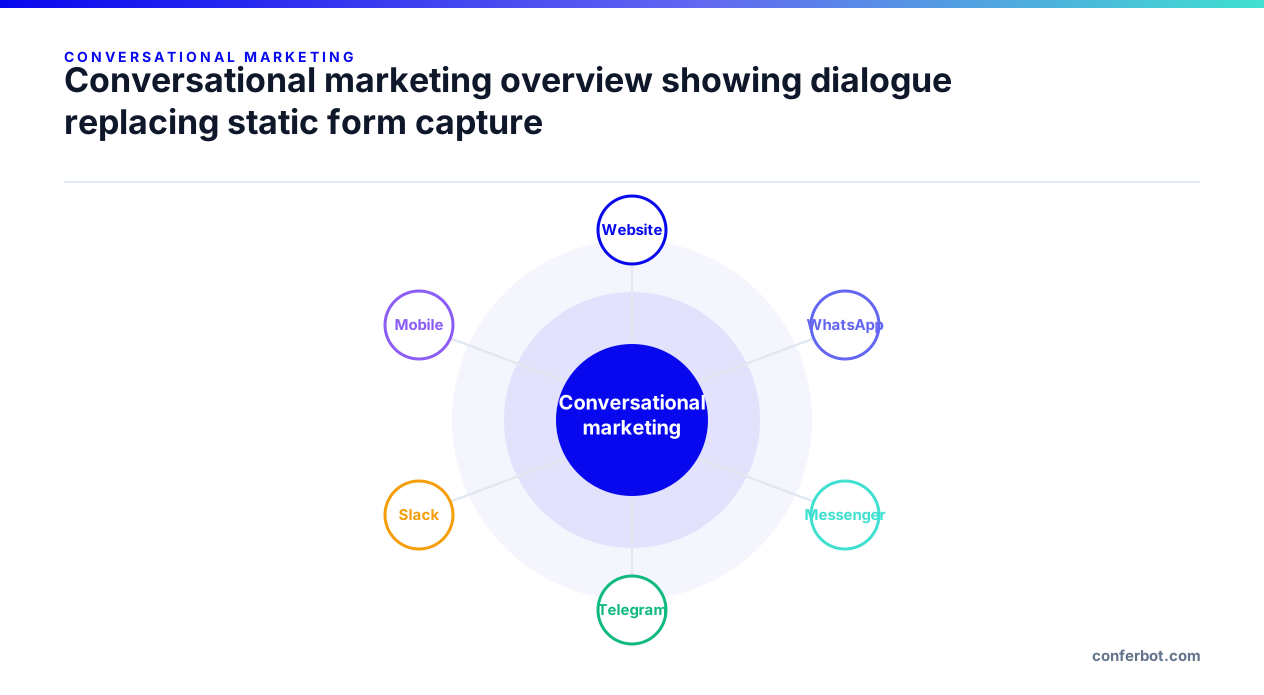
Conversational marketing is the practice of engaging buyers through real-time, two-way dialogue - website chat, messaging apps, in-product messaging - rather than through forms, gated downloads and one-way campaigns.
The core claim is about timing. A form collects information now and returns a response later; a conversation qualifies and answers in the same session, while intent is still live. The buyer sets the pace and can ask their actual question rather than choosing from a dropdown that does not describe their situation.
It is not a synonym for "having a chatbot". A widget that only opens a ticket is support tooling. Conversational marketing specifically means the dialogue is doing funnel work: qualifying, routing, educating and booking.
Conversation vs the Form
| Dimension | Form | Conversation |
|---|---|---|
| Timing | Response later | Response now |
| Question order | Fixed for everyone | Branches on answers |
| Effort shape | All cost up front | Spread across turns |
| Buyer's own question | Nowhere to put it | Answered directly |
| Data quality | Complete or abandoned | Partial data still captured |
That last row is underrated. An abandoned form yields nothing; an abandoned conversation still leaves you the answers given before the drop-off, plus the exact point where interest died.
The Qualification-Versus-Friction Trade-off
Every qualifying question improves lead quality and reduces lead quantity. Conversational marketing does not remove this trade-off - it just lets you sequence it better.
The pattern that works:
- Deliver value before asking for anything. Answer the visitor's question first. A conversation that opens with "What's your work email?" is a form wearing a costume.
- Ask qualifying questions in intent order, not CRM-field order. What the buyer wants to talk about first is rarely their company size.
- Capture contact details last, once there is a reason to stay in touch.
- Route on the answers. Qualification is only worth the friction if a high-intent answer actually changes what happens next - a booking offer, a human, a different path.
If your conversation asks five questions and every path ends in the same generic outcome, you have added friction and bought nothing.
Where It Happens
Conversational marketing is not confined to the website widget, and channel choice changes the mechanics:
- Website chat catches existing intent - people already evaluating you. Highest quality, lowest volume.
- Messaging apps such as WhatsApp let the conversation continue after the visitor leaves your site, which is the main structural advantage over web-only chat. Note that business-initiated follow-ups are constrained by message templates.
- Click-to-message ads open a conversation instead of a landing page, removing the form entirely.
- In-product messaging reaches users at the moment of confusion, which is where expansion and churn decisions are actually made.
Where this compounds is when the conversation is the same conversation across those surfaces. A buyer who asks about pricing on your site and follows up on WhatsApp should not restart - see cross-channel context.
Measuring It Honestly
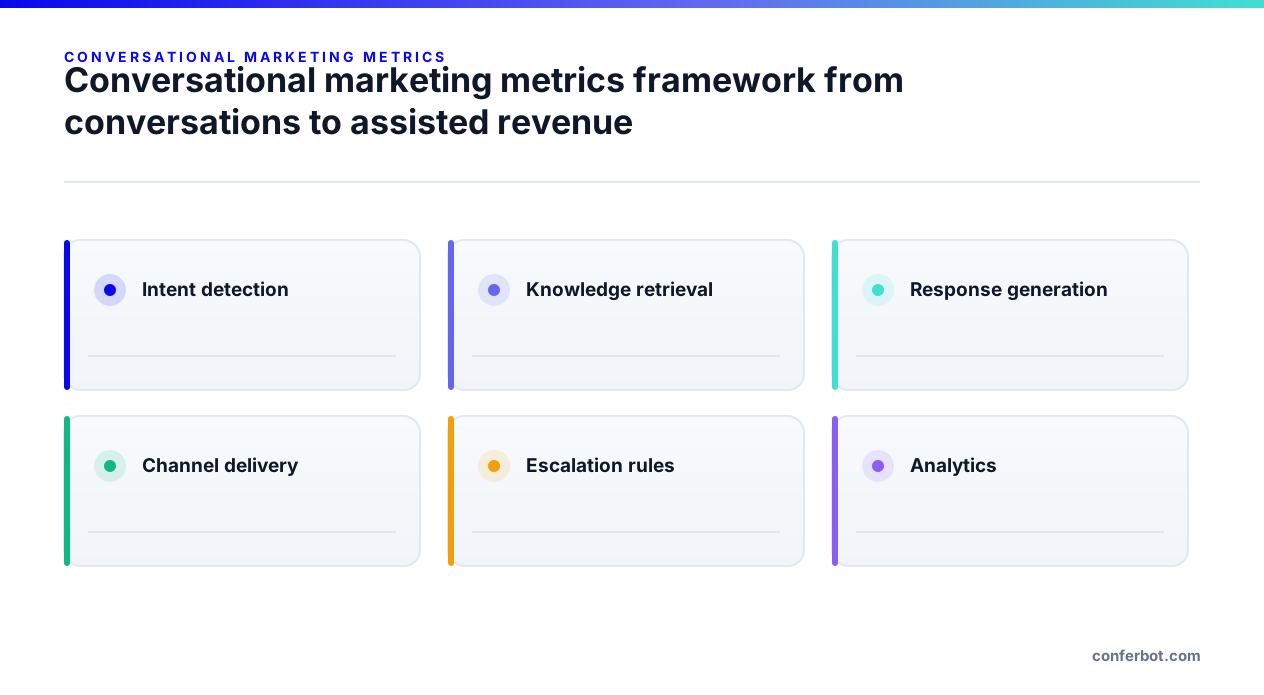
Conversational marketing is easy to declare successful and hard to prove. The metrics that survive scrutiny:
- Conversation-to-qualified-lead rate, not raw conversation count. Volume is trivially inflated by an aggressive proactive prompt.
- Qualified-lead-to-opportunity rate, which is where you find out whether the qualification logic works or just feels thorough.
- Drop-off by question. The single most actionable number - it tells you exactly which question costs you the most people.
- Time to first meaningful response, since the entire premise is immediacy.
- Assisted revenue, attributing conversations that influenced a deal rather than only those that directly closed it.
Beware the vanity trap: proactive prompts reliably increase conversations started and can simultaneously decrease qualified leads, because you are interrupting people who were not ready. Track both or you will optimise the wrong one.
Getting Started Without Overbuilding
The common failure is launching a sprawling conversational programme before knowing which conversation matters. A narrower start:
- Pick one high-intent page - pricing, a key product page, or a comparison page.
- Answer the top question asked on that page before qualifying anything.
- Add two qualifying questions maximum, and make each one change the outcome.
- Offer one clear next step: book, talk to a human, or receive something useful.
- Measure drop-off per question for a month, then remove or reorder the question that costs the most.
Expand to more pages and channels only once that single conversation converts. A conversation that works on one page will usually work on five; a conversation that fails on one page fails faster on five.
Frequently Asked Questions
What is conversational marketing?
How is conversational marketing different from using a chatbot?
Does conversational marketing replace forms?
What metrics prove conversational marketing is working?
Which channels work best for conversational marketing?
Build it yourself - free plan, no credit card required.